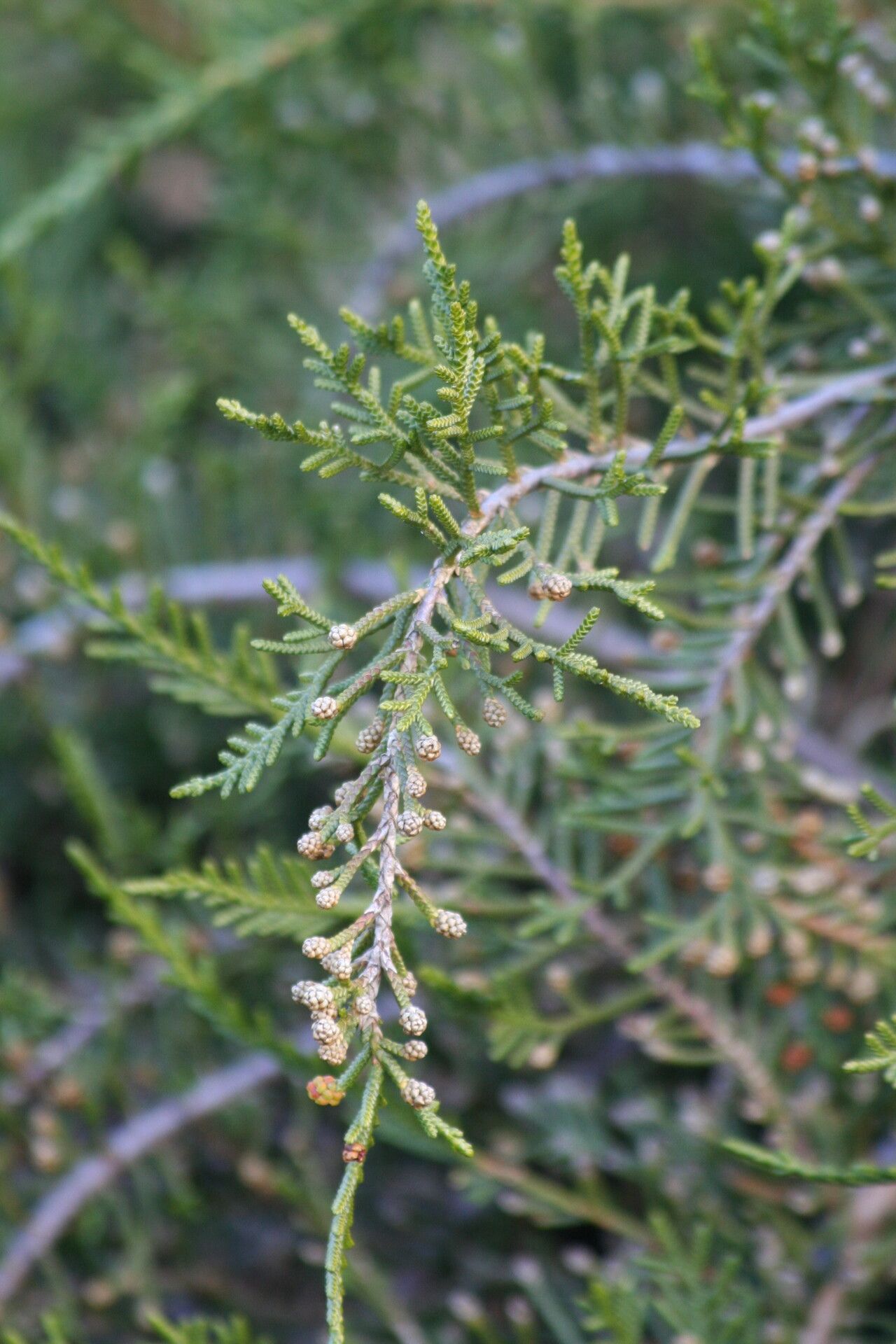
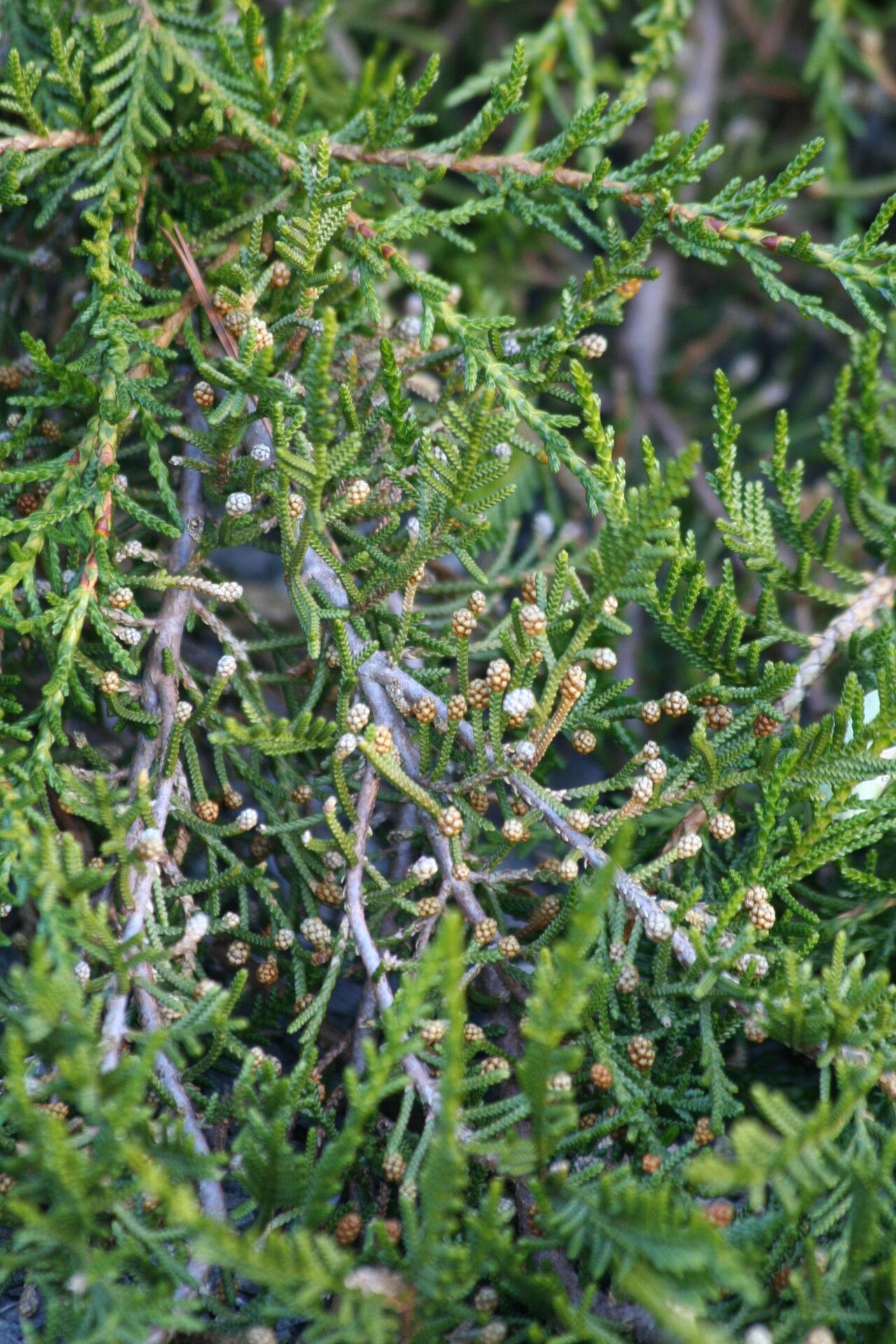
Microcachrys tetragona, known as creeping pine or creeping strawberry pine, is a species of dioecious conifer belonging to the podocarp family (Podocarpaceae). It is the sole species of the genus Microcachrys. The plant is endemic to western Tasmania, where it is a low shrub growing to 1 m tall at high altitudes. Its leaves are scale-like, arranged in opposite decussate pairs, superficially resembling those of the unrelated Diselma archeri (Cupressaceae). It shares the common name Creeping pine with several other plants. Females produce tiny, red, edible berries in summer.
Creeping pine is fairly resistant to disease and is generally not likely to develop illnesses. Regarding care, this plant is relatively low-maintenance. Planted outdoors it needs only occasional watering, and larger plants typically do not require pruning; smaller plants, however, should be pruned after they have bloomed. Creeping pine is suitable for anyone who has outdoor space, such as a garden or a deck, and it does not demand much experience in plant care.
How to keep Microcachrys Tetragona.
Light
The creeping pine thrives primarily in habitats like forest undergrowth or stony regions where it is naturally shaded. It leans towards areas with partial sunlight, but displays an adaptable and robust character by acclimating to both the entire absence of sun or full sunlight.
Temperature
The adaptability of creeping pine to diverse weather conditions, ranging from hot summers to cold winters, is exceptional. Nonetheless, there's an ideal temperature range for its growth. If temperatures rise too high, the plant may experience heat and humidity stress, which could lead to its death. In areas where temperatures near the minimum of its ability to withstand cold, it is crucial to use insulation methods to safeguard the plant.
Fertilizer
The peculiar nutritional needs of the creeping pine don't require heavy fertilization. The best time to fertilize for maximum growth is spring. Nutrient addition enhances its wellbeing, increases its immunity to bugs and ailments, and contributes to its longevity.
Botanical profile.
- Plant Type
- Shrub
- Life Cycle
- Perennial
- Genus
- Microcachrys
- Family
- Podocarpaceae
- Hardiness Zone
- 8-10
- Mature Height
- 10 cm to 30 cm
- Mature Spread
- 49 cm to 91 cm
- Leaf Color
- Dark Green
- Leaf Type
- Evergreen
- Bloom Time
- Mid winter, Late winter, Early spring
- Planting Time
- Spring, Summer, Autumn
- Harvest Time
- Mid spring, Late spring, Early summer
Other names.