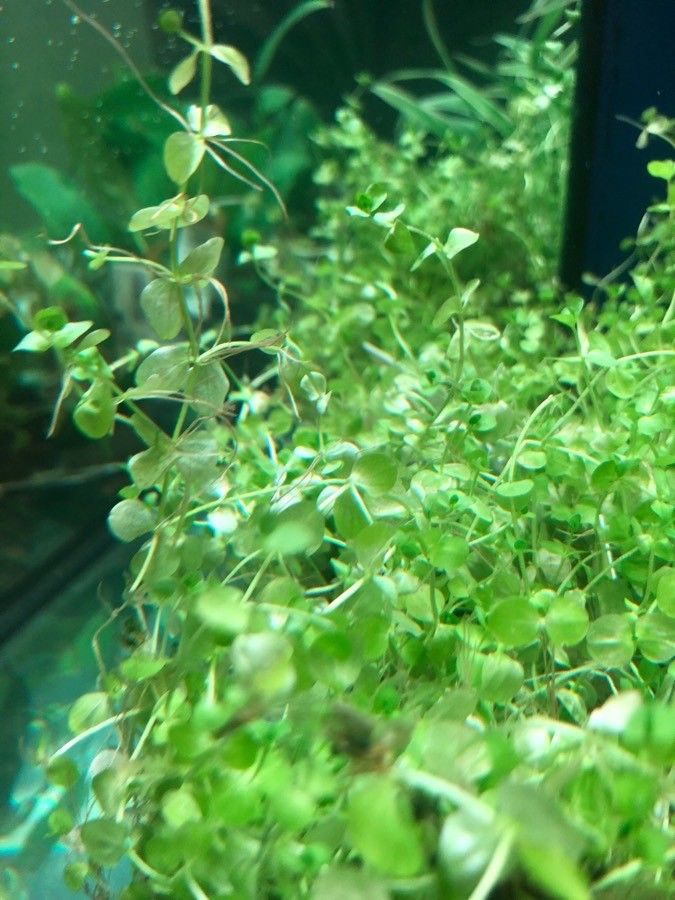
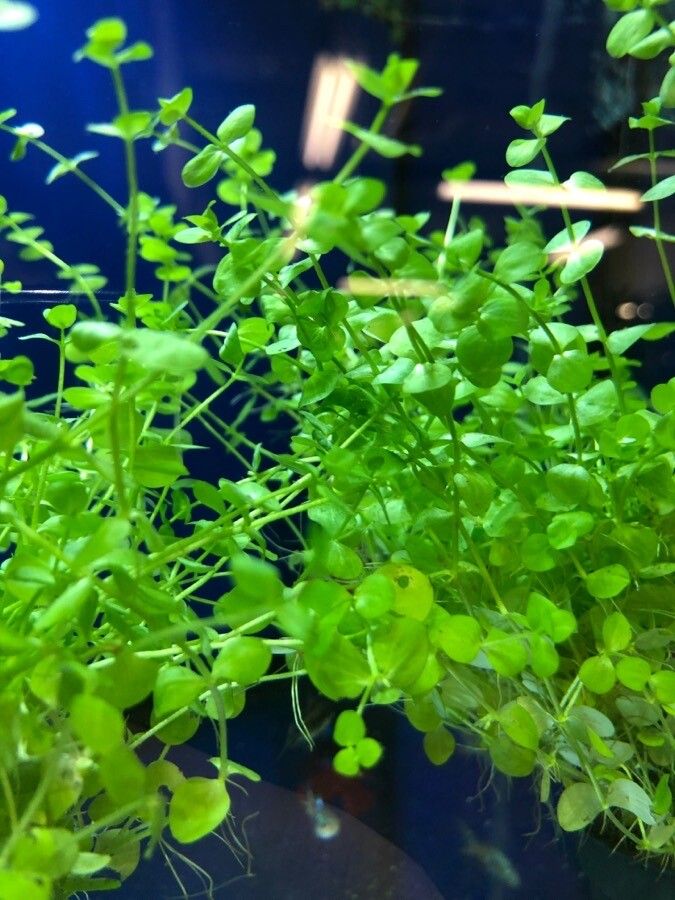
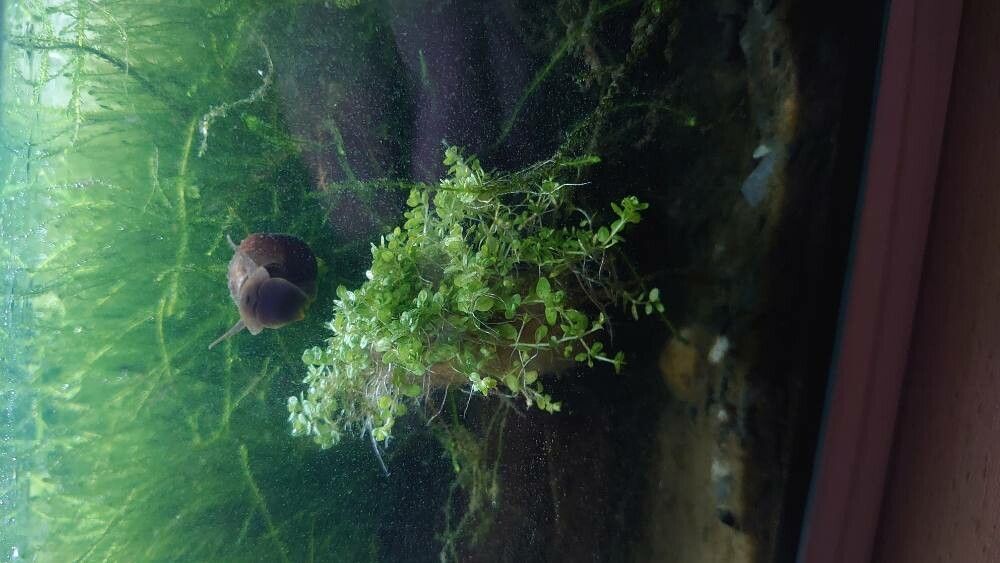
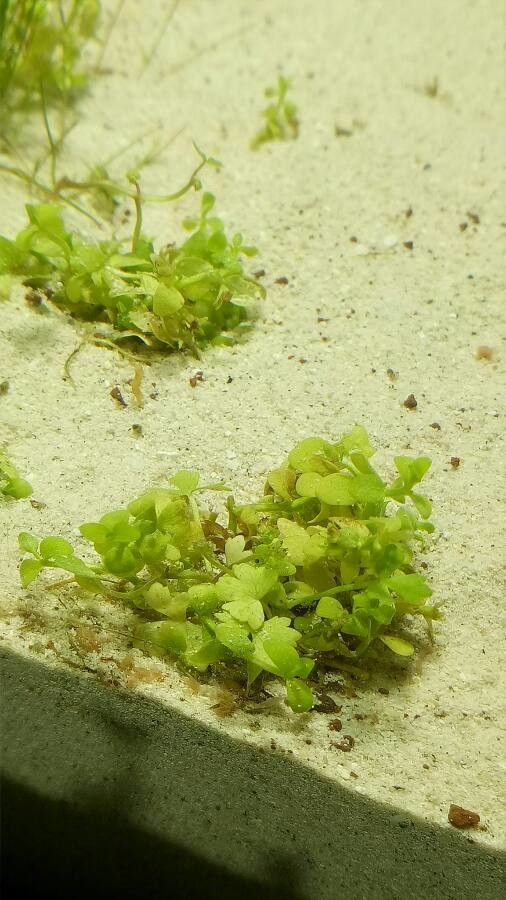
Micranthemum umbrosum, commonly known as the Baby Tears plant, is a popular aquatic plant native to South America. Belonging to the Scrophulariaceae family, it is frequently used in aquariums and aquascapes for its small size and attractive appearance.
The Baby Tears plant features small, round, bright green leaves. It grows rapidly and can form a dense carpet of foliage when grouped together. However, the delicate leaves require gentle handling during planting.
This aquatic plant thrives under moderate lighting conditions but can also grow well in low light. It prefers soft water with a pH range of 6 to 7.5, making it suitable for most aquariums.
Propagation of the Baby Tears plant is simple through stem cuttings or by dividing the clumps at their base during replanting.
In summary, Micranthemum umbrosum, or the Baby Tears plant, is an excellent addition to any aquascape. Its attractive appearance, ease of care, rapid growth, and ability to create an eye-catching carpet effect on aquarium floors or walls make it a standout choice. It pairs beautifully with other plants like Java moss or Anubias nana petite.
Shade mudflower is fairly disease-resistant and typically does not easily suffer from illnesses. Nevertheless, it can be affected by pests and diseases present in its surroundings, though such infections are usually mild. For care, this plant needs moderate maintenance. It should be pruned regularly to preserve a neat appearance and encourage healthy growth. Fertilizing can also help stimulate flowering. Shade mudflower is well suited to anyone with outdoor space, like a garden or patio, and does not demand extensive care experience. It may need more attention when kept indoors.
How to keep Micranthemum Umbrosum.
Water
The shade mudflower thrives in consistently moist conditions, preferring a stable and humid environment. To keep it healthy, water it weekly, as it can withstand short periods of dryness. This plant is best suited for aquatic or semi-aquatic settings, such as paludariums or terrariums, where water is a crucial component of its ecosystem.
Humidity
This plant needs special care because it loves high humidity levels of 60-80% or more. The best way to achieve this is by placing a humidifier near the plant. Daily misting is also essential! Make sure the room has good ventilation.
Temperature
Shade mudflower is native to tropical areas, where the climate is usually warm and humid. Consequently, it is adapted to high temperatures and humidity. It is sensitive to abrupt temperature changes and prefers a steady thermal environment, so indoor temperature swings should be avoided. It generally cannot tolerate cold and needs relatively high temperatures to grow. If the surrounding temperature falls too low, the plant may stop growing or even die.
Fertilizer
The shade mudflower flourishes with balanced nutrition. During its growth period, it needs to be fertilized every two weeks, and once a month when it is dormant. Use fertilizer at 1/4 strength to prevent root burn. Adjust the fertilization schedule as needed depending on the plant's growth stages and seasonal changes. This approach will maintain the plant's health and aesthetic appeal while preventing over-fertilization.
Pruning
To help your shade mudflower thrive, make sure to prune it carefully in the spring. Trim any overgrown stems and remove dead leaves to allow more light to reach the plant. Regular pruning helps maintain a compact shape and improves the quality of the blooms. Always use clean, sharp tools to prevent damage while pruning.
Botanical profile.
- Plant Type
- Herb
- Life Cycle
- Annual, Perennial
- Genus
- Micranthemum
- Family
- Linderniaceae
- Hardiness Zone
- 9-11
- Mature Height
- 5 cm to 10 cm
- Mature Spread
- 10 cm to 20 cm
- Leaf Color
- Light Green
- Leaf Type
- Semi-evergreen
- Flower Color
- White
- Flower Size
- 0.20 cm to 0.25 cm
- Bloom Time
- Late spring, Summer, Early fall, Mid fall
- Planting Time
- Spring, Summer, Autumn
- Harvest Time
- Summer, Fall
- Native Area
- Colombia, Cuba, Honduras, Mexico, Guatemala, Bolivia, Venezuela, Peru, Guyana, Nicaragua, Ecuador, Panama
Other names.