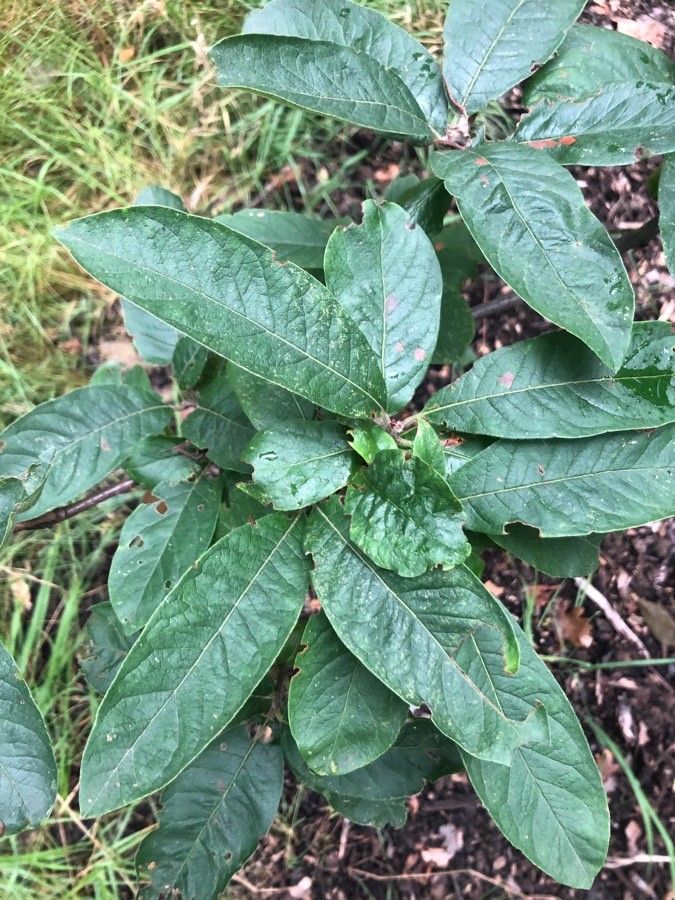
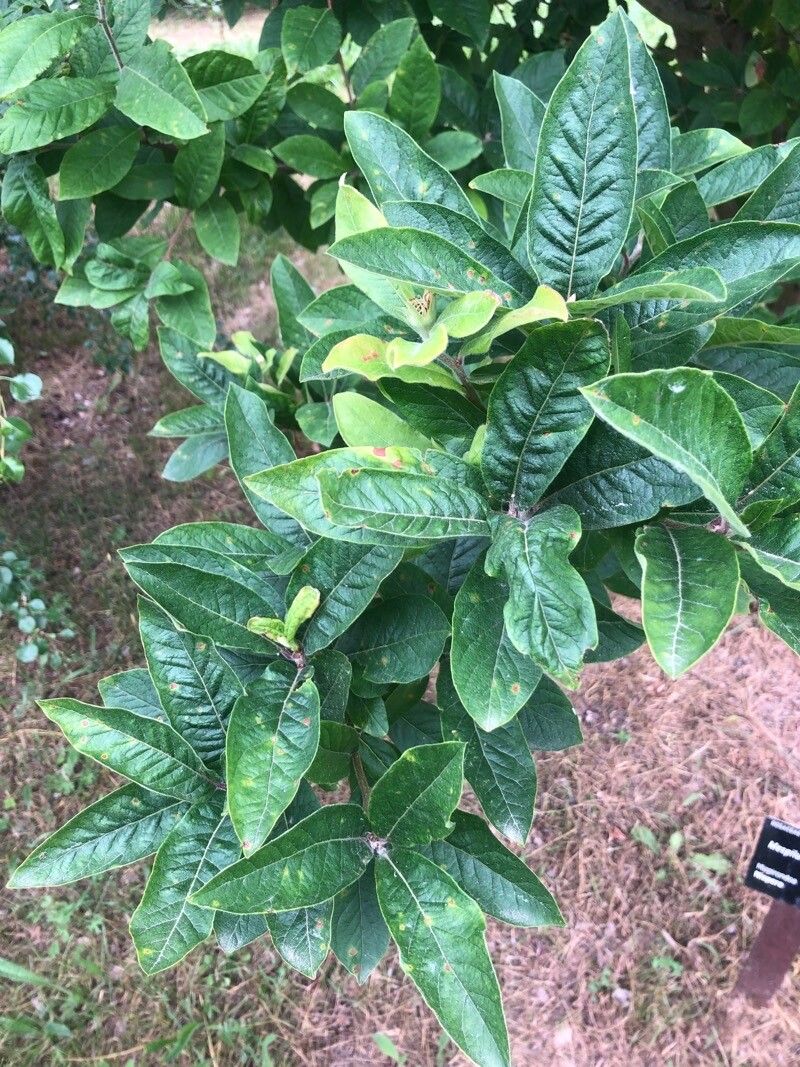
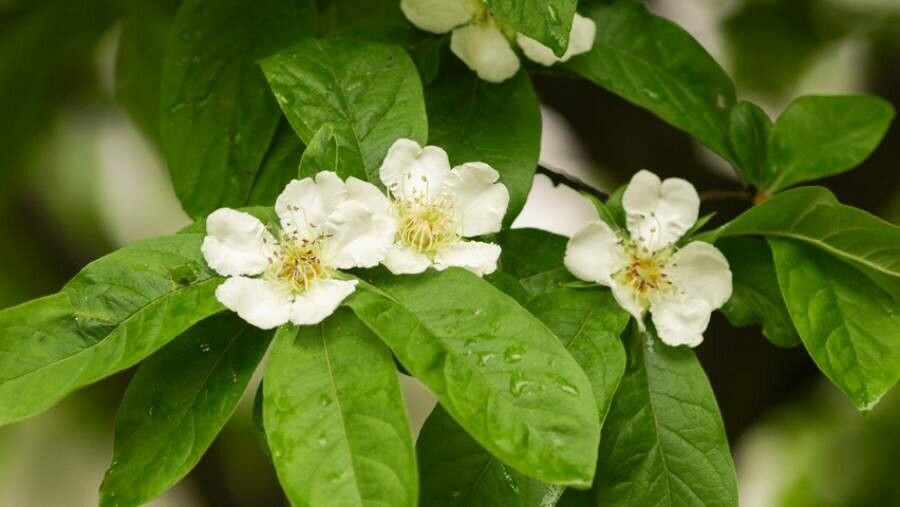
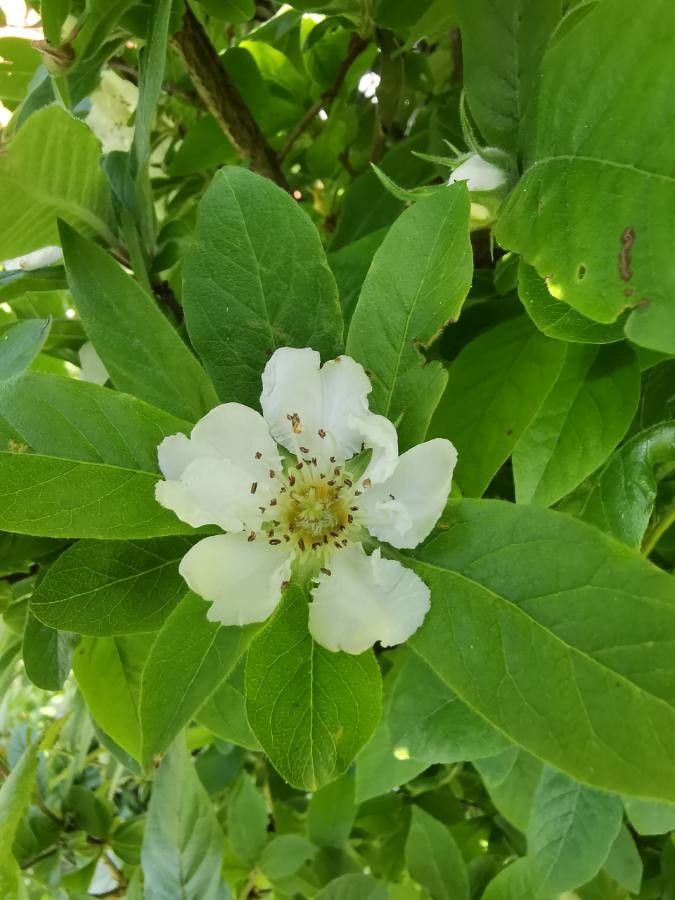
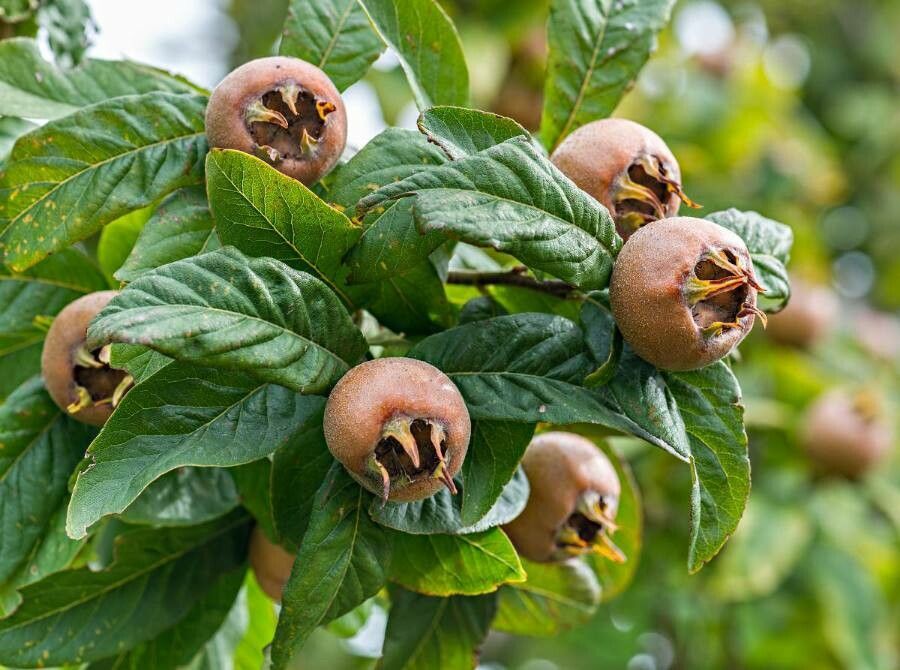
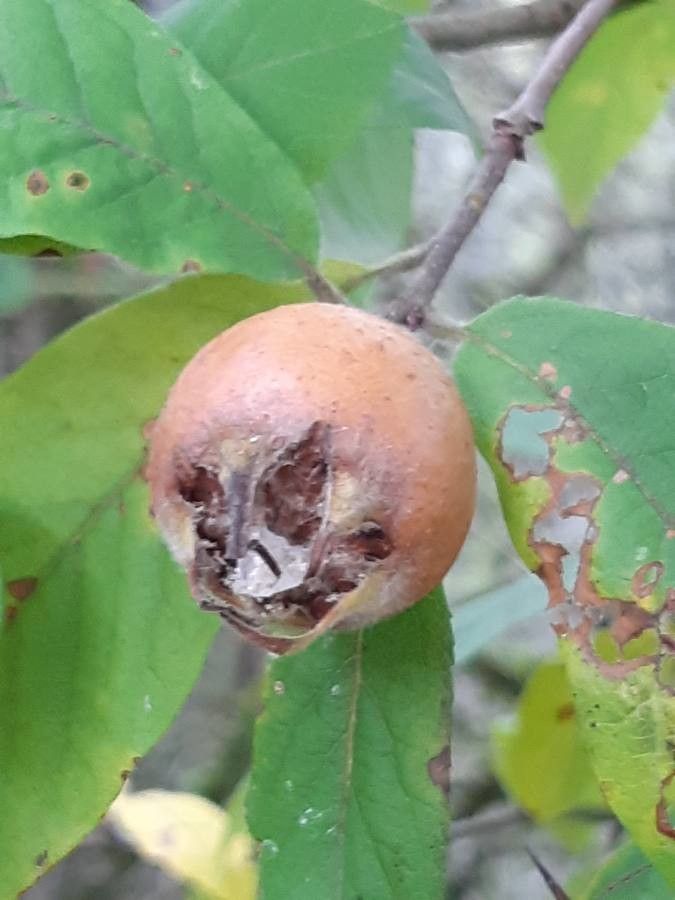
Mespilus germanica, known as the medlar or common medlar, is a large shrub or small tree in the rose family Rosaceae. The fruit of this tree, also called medlar, has been cultivated since Roman times, and is unusual in being available in winter, and in being eaten when bletted. It may be eaten raw and in a range of cooked dishes. When the genus Mespilus is included in the genus Crataegus, the correct name for this species is Crataegus germanica (Kuntze). In the southwest of England it historically had a number of vulgar nicknames, such as open-arse and monkey's bottom, due to the appearance of its large calyx.
The common medlar is fairly resistant to disease and usually does not get sick. As for care, this plant is fairly low-maintenance. When grown outdoors it needs little watering, and larger plants typically do not require pruning. Smaller plants, however, should be pruned after they have bloomed. Common medlart is suitable for anyone with an outdoor area, such as a garden or deck, and does not call for much caretaking experience.
How to keep Mespilus Germanica.
Light
The common medlar does best with abundant sunlight, though it can also thrive in places with moderate sun. During its growth cycle, sunlight encourages healthy growth and development. Its native habitat receives ample daylight, which supports its cultivation. Insufficient light can impede its growth, while excessive exposure can be harmful.
Water
The common medlar flourishes in temperate climates with moderate moisture levels and well-draining soil. It's ideal to water it every three weeks. While it thrives best outdoors, the common medlar requires less water during its dormant period in the colder months.
Humidity
This plant will thrive in moderate humidity, which is probably the level in your home. However, misting it a few times a week can be very beneficial. Make sure the room has good ventilation.
Temperature
Common medlar naturally occurs in areas where seasonal temperatures range from 41 to 89.6 °F (5 to 32 ℃). It can tolerate cold winters but does best in moderate temperatures. On scorching summer days, provide shade and plenty of water to prevent temperature stress.
Fertilizer
The common medlar requires adequate nutrients to achieve optimal fruit production. Fertilize in early spring to support new growth and bloom development. Regular fertilization keeps the plant healthy, encourages more delicious fruit, and prevents nutrient deficiency problems such as yellow leaves and poor fruit production.
Pruning
The common medlar is characterized by its distinctive fruits and spreading growth habit. To maintain this plant's health, it's important to prune it in late winter. This helps remove dead or overcrowded branches, improving airflow and managing its size. Regular pruning not only enhances fruit production but also prevents problems caused by poor air circulation, ensuring the overall well-being of the plant.
Botanical profile.
- Plant Type
- Tree, Shrub
- Life Cycle
- Perennial
- Genus
- Mespilus
- Family
- Rosaceae
- Hardiness Zone
- 5-8
- Mature Height
- 7.92 m
- Mature Spread
- 6.1 m
- Leaf Color
- Green, Yellow, Brown
- Leaf Type
- Deciduous
- Flower Color
- White
- Flower Size
- 6.35 cm
- Bloom Time
- Late spring, Early summer
- Planting Time
- Spring, Autumn
- Harvest Time
- Mid summer, Late summer, Early fall
- Native Area
- Russia, Iraq, Turkey, Germany, Iran, Cyprus, Bulgaria, Azerbaijan, Armenia, Ukraine, Turkmenistan
Other names.
Reader questions.
How should I water my Common medlar tree?
To promote excellent root development, consider putting a garden hose at the base of the plant. Avoid directly spraying the leaves. If the plant is outdoors and receiving direct sunlight, the leaves will require more watering. You can use bubblers to moisten the roots of each plant, or soaker hoses to cover the entire garden or bed when adding or removing plants to encourage deep root growth. Make sure to drain any excess water and wait for the soil to dry before watering again. Watering at ground level helps prevent diseases. On a sunny day, consider spraying the entire bush with water. Whether the plant is potted or in the ground, remember that the Common medlar prefers deep watering rather than light sprinkling.
Why should I add fertilizer to my Common medlar?
The growth of plants can deplete the soil of nutrients, especially fast-growing types. Therefore, regular fertilization is important for the Common medlar to remain healthy and produce more delicious fruit. If plants are not fertilized for a long time, they may experience various problems. Nutrient deficiency can result in issues with foliage, such as yellow leaves, red coloration, distorted shapes, withered tips, or large portions of the plant dying back. Additionally, certain nutrient deficiencies can lead to bark disorders, slow growth, poor shoot development, and a lack of fruit production.
What are the sunlight requirements for Common Medlar?
The Common Medlar (Mespilus germanica) thrives best under conditions of generous sunlight, requiring more than 6 hours of sunlight to be considered in full sun, and about 3-6 hours for partial sun. Its natural habitat is characterized by substantial daylight, which is crucial for its healthy growth and development. However, it's essential to observe the movement of sunlight in your garden to ensure plants receive the perfect balance of light and shade, as insufficient light may hinder their growth, and excessive exposure could cause damage.
What is the ideal environment for Common medlar (Mespilus germanica)?
Common medlar, or Mespilus germanica, is indigenous to regions that experience seasonal temperatures varying between 41 to 89.6 °F (5 to 32 °C). It possesses strong cold resistance, thriving in environments with cold winters and moderate temperatures. Although it tolerates cold well, during exceptionally hot summer days, providing shade and ample watering is crucial to prevent temperature-related stress. It's worth noting that while Common medlar can usually withstand winter conditions without special frost protection, in cases where temperatures are expected to fall below -25°C, taking steps to protect the plant by wrapping its trunk and branches with insulating materials is advisable. Furthermore, ensuring that the soil is moist before the onset of the first freeze in autumn can help prevent drought and water scarcity for the plant during the colder months.
What should I do if I give the Common medlar plant too much or too little water?
If you notice that the leaves of an overwatered Common medlar are turning yellow and falling off, wilting, and the plant looks unhealthy with mushy stems, it is important to adjust your watering schedule. Wilting can also be a sign of under watering, which is characterized by the leaves becoming crispy and dry. In this case, checking the soil moisture level is essential. If the soil is dry, watering the plant thoroughly will help it recover. However, the plant may still show signs of dryness and yellow leaves due to damage to the root system. Once the plant returns to normal, the yellowing leaves will stop. For Common medlar kept indoors, it's important to check moisture levels and avoid overwatering. If black spots are present, allow the soil in the pot to dry out for a few days. Overwatering can lead to root rot, so ensure the soil is never too soggy. When planting outdoors, check the soil's moisture level by feeling it with your fingers. If it's too dry, it may indicate underwatering, and adequate watering is necessary for the plant's recovery. If root rot is present, consider transferring the plant to a different pot, especially if there are discolored and slimy roots. It is essential to prevent root rot by avoiding excessive moisture and soggy soil.
When should I fertilize my Common medlar?
The ideal time to fertilize Common medlar is in early spring, before the buds appear. During this time, the plant is coming out of winter dormancy and using up stored reserves to grow new shoots. To support the development of blooms, it is recommended to fertilize about 2 to 4 weeks prior to the expected blooming period. This allows enough time for the nutrients to penetrate the soil and be absorbed by the plant. It's possible to continue fertilizing during spring, but avoid fertilizing in autumn as this can lead to excessive foliage growth late in the season, making the leaves vulnerable to winter damage.
How can artificial lighting benefit indoor Common Medlar plants?
For indoor Common Medlar plants, artificial lighting can play a significant role, especially in scenarios where natural sunlight is insufficient, such as during winter or in less sunny spaces. Such lighting promotes faster, healthier growth by mimicking natural sunlight conditions. LED lights are recommended for their capability to provide specific light wavelengths needed by plants. Full sun plants should receive 30-50W/sq ft, partial sun plants 20-30W/sq ft, and shade plants 10-20W/sq ft of artificial light. The light source should be placed 12-36 inches above the plant and kept on for 8-12 hours per day to simulate natural daylight hours adequately.
How does low temperature affect Common medlar, and what are the solutions?
Common medlar is notably cold-tolerant, performing best when temperatures remain above 5°C and preferably above -20°C during winter. If temperatures drop below -25°C, no immediate changes might be observed in the winter season; however, the plant's branches may become brittle and dry out by spring, failing to produce new shoots. To mitigate this, it is advised to prune away any dead branches that have not produced new leaves in the spring, encouraging healthy new growth.
How much should I water my Common medlar?
For optimal growth of the Common Medlar, it is important to water them deeply but infrequently. If they are in pots, make sure to soak them in a gallon of water each time, as the water storage in pots is limited and the soil tends to dry out quickly. In cold regions, watering is necessary every 3 to 5 days. Watering should be done early in the morning when the soil is dry, whether the plant is indoors or outdoors. You can also check the moisture level by feeling the soil. If the top 2-3 inches of soil are dry, then it is time for a thorough watering. On hot days, it is advisable to check the soil moisture daily, as the heat can quickly dry out the potting soil. In gardens, irrigation of the soil is necessary. In hot climates, watering once a week is recommended. Only water the plants when you notice that about 2 to 3 inches of soil have become too dry, both indoors and outdoors. Take into account the amount of rainfall received by the plant and avoid overwatering to prevent root rot. During spring and fall (when the Common Medlar generally grows), it is beneficial to add mulch about 3 to 4 inches deep around the plants to conserve water. The frequency of watering depends on the type of soil. Sandy soil drains faster, so plants in this type of soil will need more frequent watering. However, plants in clay soil can be watered less frequently, allowing 2-3 days for the soil to dry out and preventing root rot. To keep track of watering, mark the date on a calendar. If you notice the leaves starting to droop, it could indicate that you are a day late in watering the plants.
When is it not a good idea to fertilize my Common medlar?
Here are some helpful tips for fertilizing Common medlar: 1. Avoid fertilizing in the first year of growth. It's best to wait until the plant is more established. 2. Be cautious about using fertilizer if it's not necessary. Only apply it when the plant truly needs it. 3. If you pruned 20% or more of the plant the previous year, hold off on fertilizing. 4. Don't fertilize plants that are diseased or damaged, as it can do more harm than good. Instead, address the root cause of the issue. 5. Avoid fertilizing after the peak of summer, as this can cause excessive growth just before winter. 6. During hot and dry times of the year, it's best not to fertilize as dry soil doesn't distribute fertilizer effectively. Moreover, fertilizing at this time can stimulate growth that requires more water, which may not be available. 7. Save fertilizer applications for earlier in the season when temperatures are cooler. 8. Be cautious of inadvertently giving nearby plants or lawns a double-dose of fertilizer, as Common medlar can absorb it from the surroundings.
What are the signs of insufficient sunlight in Common Medlar?
Common Medlar plants may exhibit several symptoms when they do not receive adequate sunlight. These include the growth of smaller leaves than usual, leggy or sparse growth indicating a thin and stretched appearance, quicker leaf drop as a means to conserve resources, delayed or halted growth, and the development of lighter-colored or pale new leaves due to insufficient chlorophyll. Another sign of excessive sunlight is chlorosis, where leaves turn yellow because of chlorophyll breakdown, affecting the plant's ability to photosynthesize.
What should be done if Common medlar experiences high temperatures?
During the summer, it's important for the Common medlar to be maintained at temperatures below 32°C. Exposing the plant to temperatures above 35°C can result in leaves lightening in color, as well as dry and withered tips, increasing the risk of sunburn. To address this, any sunburned or dried parts should be trimmed away. Relocating the plant to a shaded location or utilizing a shade cloth can protect it from the harsh midday and afternoon sun. Additionally, watering the plant in the morning and evening helps maintain soil moisture, which is crucial for the plant’s well-being during high temperatures.