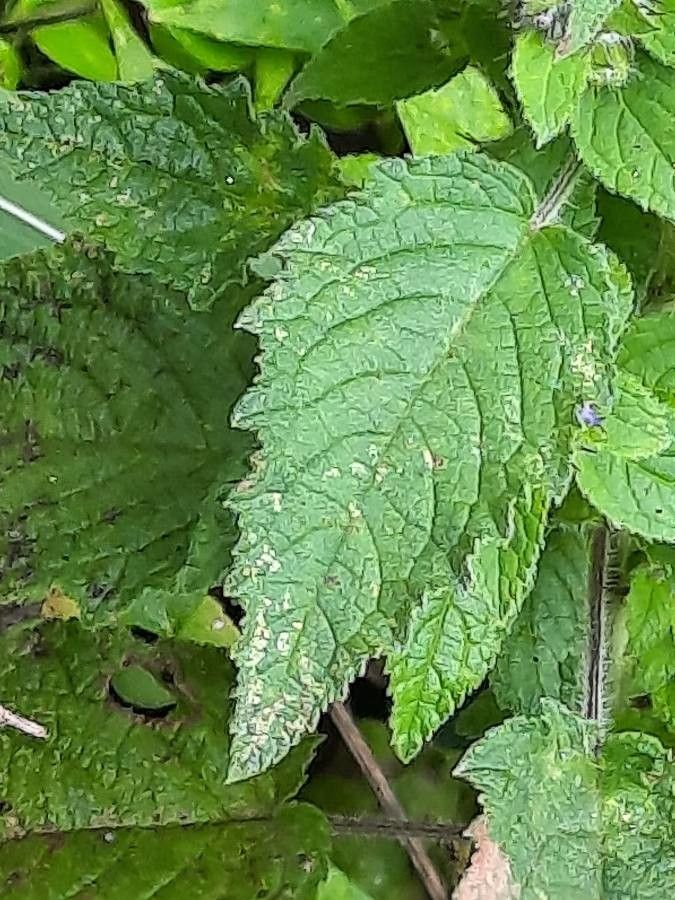
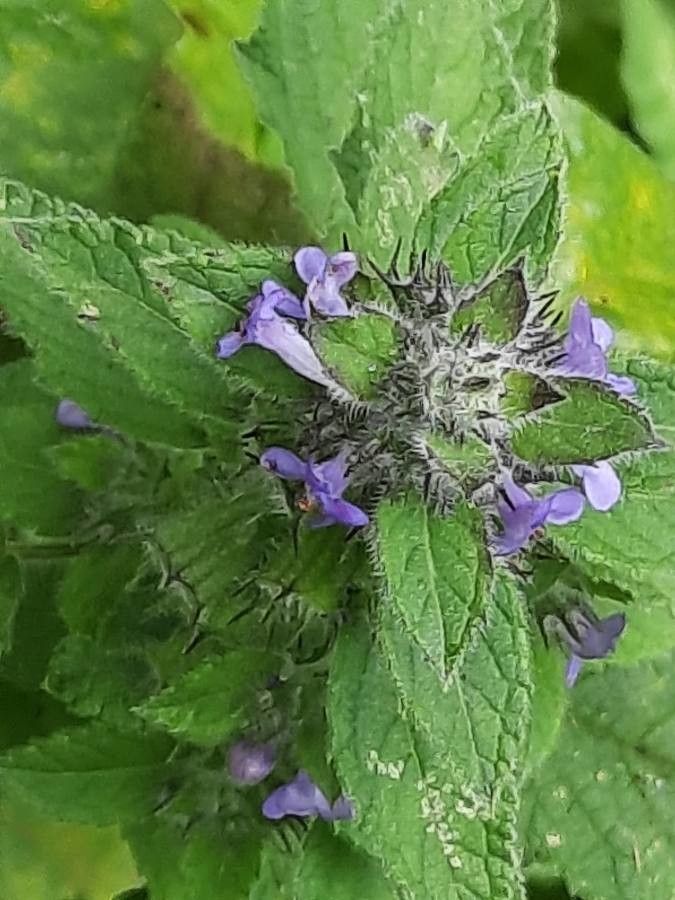
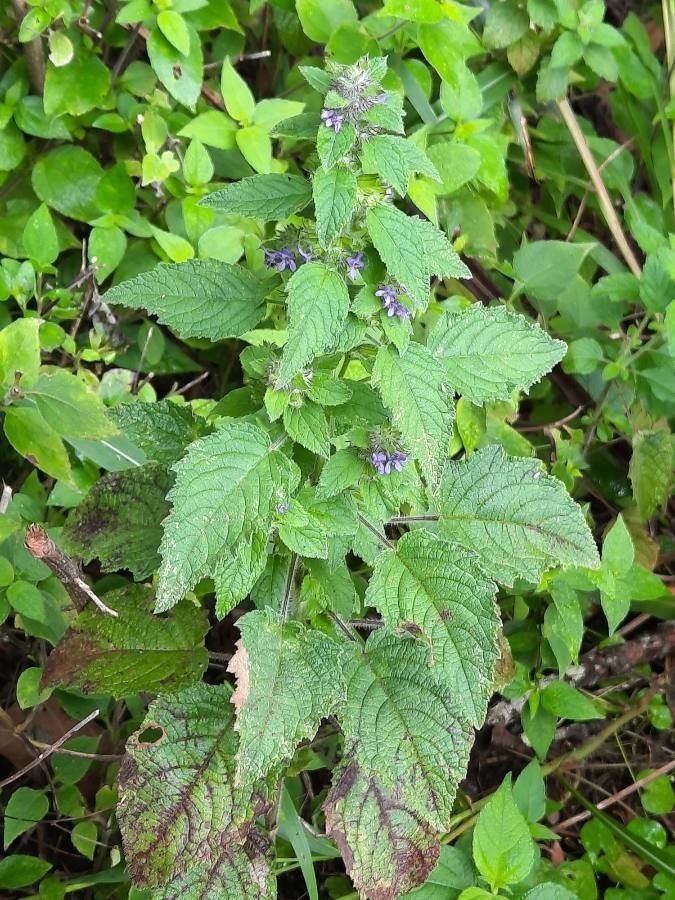
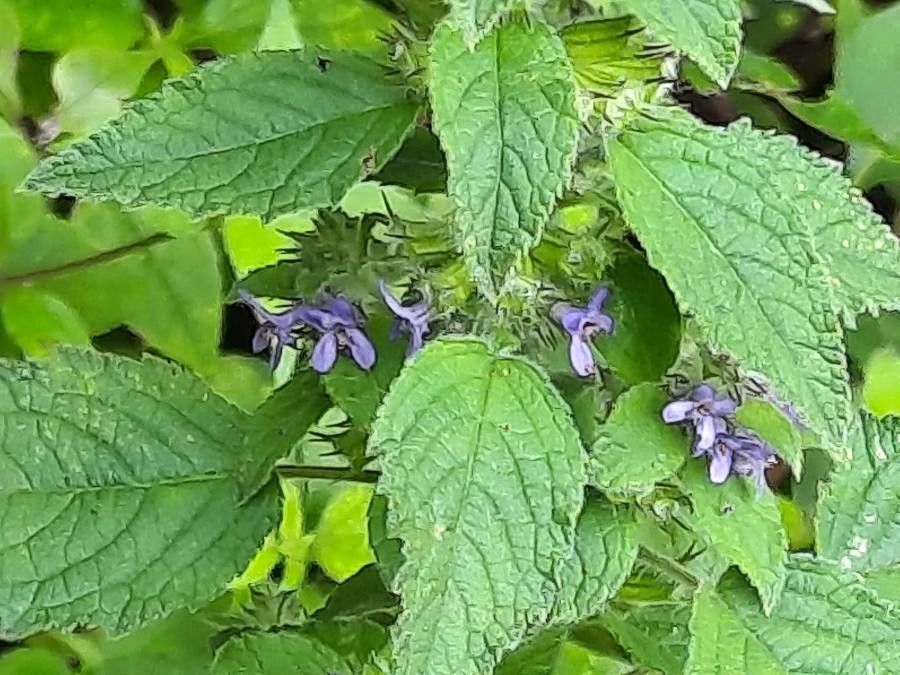
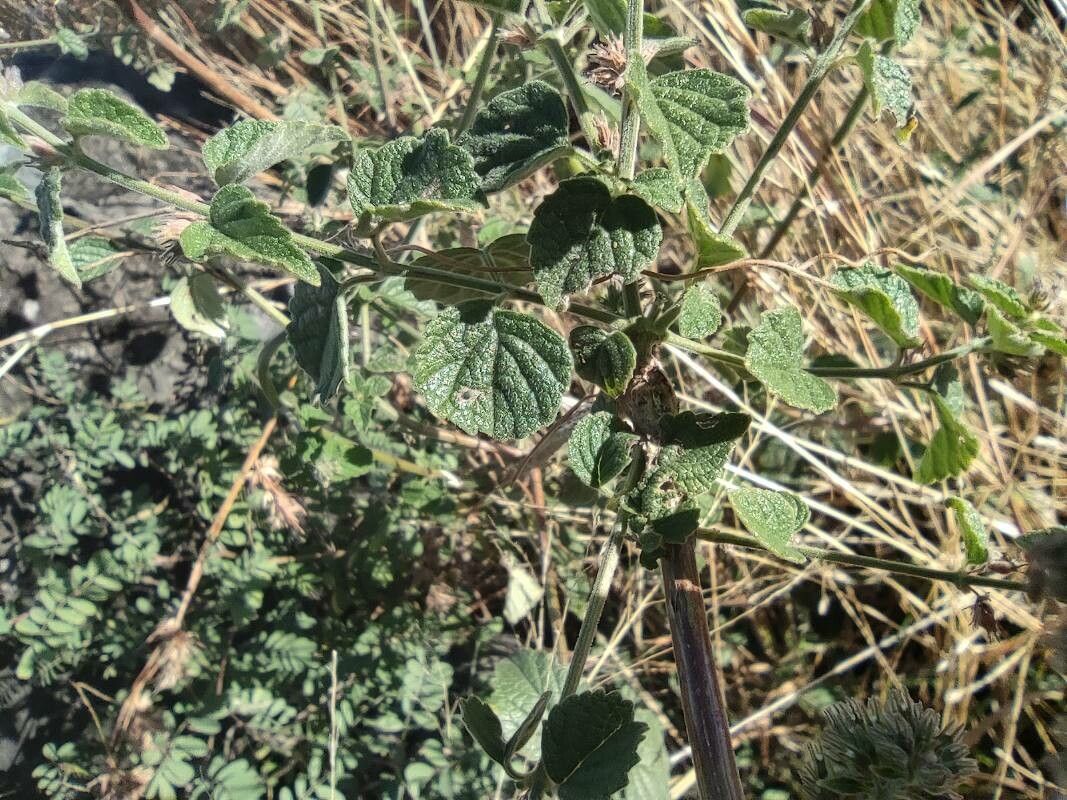
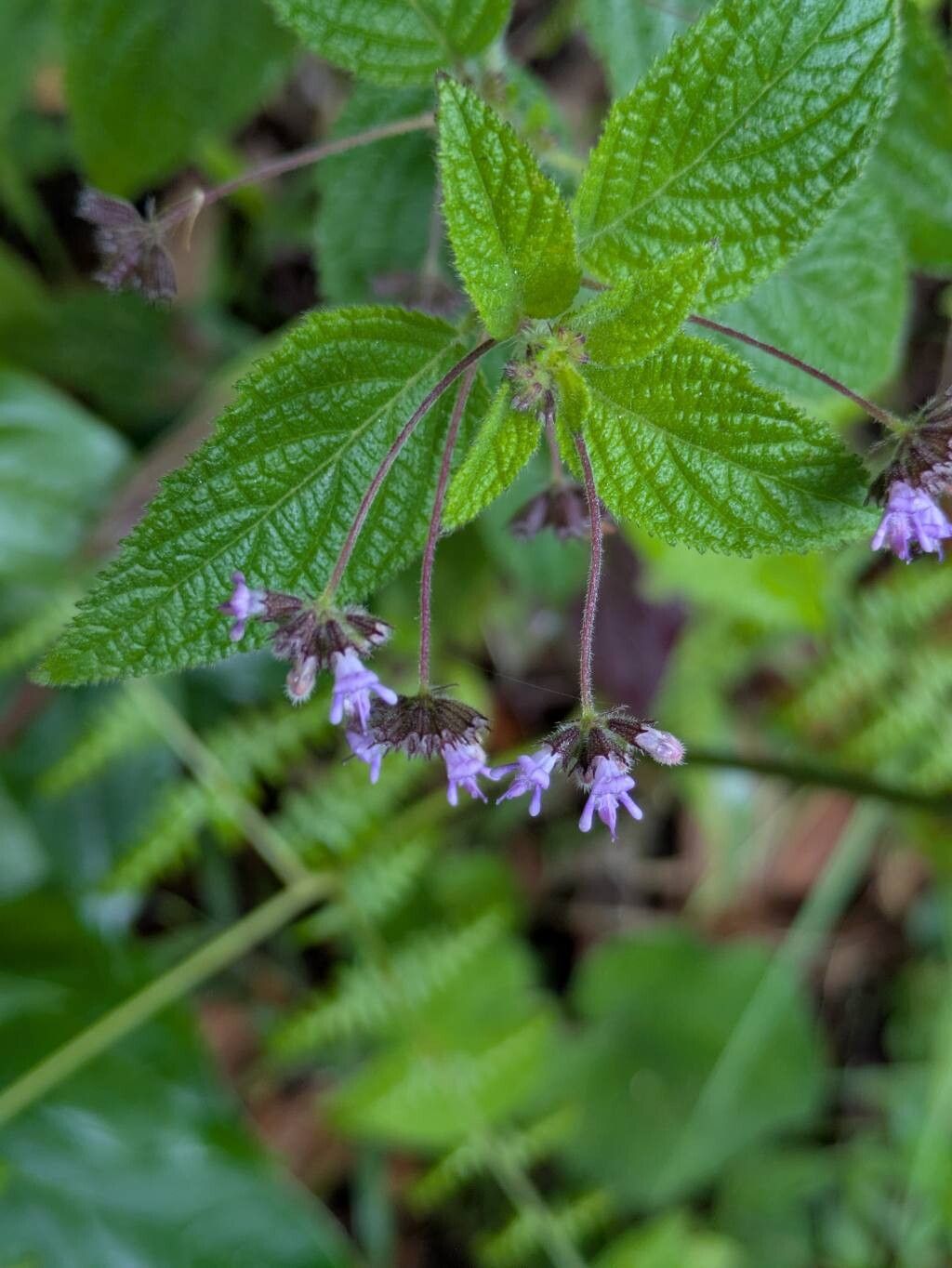
Mesosphaerum suaveolens, synonym Hyptis suaveolens, the pignut or chan, is a branching pseudocereal plant native to tropical regions of Mexico, Central, the West Indies, and South America, as well as being naturalized in tropical parts of Africa, Asia and Australia. It is generally 1–1.5 m (3.3–4.9 ft) tall, occasionally up to 3 m (9.8 ft). Stems are hairy, and square in cross section. Leaves are oppositely arranged, 2–10 cm (0.79–3.94 in) long, with shallowly toothed margins, and emit a strong minty odor if crushed. Flowers are pink or purple, arranged in clusters of 1–5 in the upper leaf axils.
Pignut is fairly resistant to disease and generally not prone to illness. However, it can be vulnerable to pests and diseases present in its surroundings. These problems are usually mild. In terms of care, this plant needs moderate maintenance. It requires regular pruning to keep a good appearance and support healthy growth. Fertilizing can also help encourage flowering. Pignut is suitable for anyone with outdoor space, such as a garden or patio, and does not demand extensive gardening experience. It may need more attention when grown indoors.
How to keep Mesosphaerum Suaveolens.
Light
The pignut does best with the maximum daily sunlight, though it can cope with less-than-ideal exposure. It comes from habitats dominated by sun. Its light needs remain largely unchanged across growth stages. However, insufficient sun can stunt growth, while too much can scorch the leaves.
Water
Pignut, native to tropical regions, thrives in conditions of high humidity and consistent moisture, preferring soil that remains evenly moist. To prevent it from drying out, pignut needs to be watered weekly. As an outdoor herb, it has adapted to seasonal rainfall, which influences its growth cycles and how efficiently it absorbs water.
Temperature
Pignut comes from tropical areas where the climate is generally warm and humid. Consequently, it is adapted to high heat and moisture. It does not tolerate abrupt temperature shifts and prefers a steady thermal environment, so indoor temperature fluctuations should be avoided. It typically cannot withstand cold conditions and needs warmer temperatures to grow. If temperatures fall too low, the plant may stop growing or could die.
Fertilizer
Pignut does well with regular, light applications of fertilizer to encourage healthy leaf development. Fertilize Pignut roughly once a month during the summer. Nitrogen is important for foliage, and adding nitrogen-rich sources helps Pignut thrive.
Pruning
Pignut is a perennial herb known for its aromatic leaves and small flowers. To encourage growth and flowering, prune it from early to late spring. Be sure to remove any dead branches and thin the plant to improve air circulation. Regularly deadhead spent blooms to support continuous blooming. Using clean tools while pruning helps minimize stress and maintain the plant's health.
Botanical profile.
- Plant Type
- Herb
- Life Cycle
- Annual, Perennial
- Genus
- Mesosphaerum
- Family
- Lamiaceae
- Hardiness Zone
- 9-11
- Mature Height
- 0.91 m to 3.05 m
- Mature Spread
- 49 cm to 91 cm
- Leaf Color
- Green, Blue
- Leaf Type
- Evergreen
- Flower Color
- White
- Flower Size
- 2.54 cm
- Bloom Time
- Summer, Fall
- Planting Time
- Spring, Autumn
- Harvest Time
- Late summer, Fall, Early winter
- Native Area
- Colombia, Bahamas, Belize, Cuba, Honduras, Mexico, Bolivia, Venezuela, Peru, Guyana, Nicaragua, Ecuador, Costa Rica, Panama, Jamaica
Other names.
Reader questions.
How should I water my Pignut?
There are various ways to water Pignut, such as using a garden hose, watering can, or other common watering tools. Pignut is not too particular about the type of water it receives, whether it's rainwater, tap water, or filtered water. It is generally advised not to water this plant from above to avoid damaging the leaves and flowers or causing disease. Instead, using a drip irrigation system is often the best method as it evenly and directly applies water to the soil. If you have a Pignut in a container, you can follow a similar approach but use a cup, watering can, or tap water to directly water the soil.
What are the sunlight requirements for Pignut?
Pignut requires above 6 hours of sunlight daily to be classified under full sun exposure, and about 3-6 hours of sunlight for partial sun. It's important to observe the movement of sunlight in your garden, selecting spots that offer a healthy balance of light and shade to ensure the well-being of your plants.
What should I do if I give my Pignut too much or too little water?
If you notice that your Pignut plant lacks moisture, a simple solution is to water it more regularly. However, overwatering can be a more serious problem, as it can lead to diseases and the decline of the plant. To avoid this, choose a growing location with plenty of sunlight to dry the soil and good drainage to prevent water from pooling. If you overwater your potted Pignut, consider transferring it to a new pot with better soil drainage and sufficient drainage holes.
How does sun exposure affect Pignut's growth?
Sun exposure plays a crucial role in the healthy growth of the Pignut, a plant that thrives best with maximum daily sun exposure. Originating from a predominantly sunny environment, the Pignut's growth stages are not significantly altered by variations in sun exposure, but insufficient sunlight can stunt its growth, while excessive exposure might cause leaf scorching.
How frequently should I water my Pignut plant?
To keep your Pignut plant healthy, it's important to water it regularly throughout the growing season. In the spring, you should water the plant about once a week. As the season progresses and the weather gets warmer, you may need to increase your watering to two or three times a week. However, watering more than this can harm your Pignut. It's important to keep the soil moist but not overly wet, regardless of how often you water. If your Pignut is in a pot, watering needs will be a bit different. The soil in a pot can heat up and dry out faster than ground soil. So, you'll generally need to water a potted Pignut more frequently. In most cases, plan to water a container-grown Pignut a few times per week, compared to just once a week for a plant in the ground.
What solutions are available for Pignuts not receiving enough sunlight?
For Pignuts not receiving adequate sunlight, several solutions are available. Indoors, gradually move the plant to sunnier locations each week until it receives at least 6 hours of direct sunlight daily, use a south-facing window for the best natural light, or consider artificial lighting with a desk or ceiling lamp on for at least 8 hours daily, or invest in professional grow lights. Outdoors, move your plants gradually to sunnier spots to avoid sunburn. If obstruction is an issue, prune obstructing trees for outdoor plants or consider transplanting to a location with better sunlight and drainage.
How much water does my Pignut require?
There are a few different ways to determine how much water to give your Pignut. One method is to feel the soil and water until the top six inches are moist. Another option is to use a set measurement, like two gallons per week, depending on the temperature and soil dryness. However, following strict guidelines can lead to overwatering. When growing Pignut in a container, you should water enough to moisten all dry layers of soil, which can be tested by sticking your finger in the soil or observing excess water coming out of drainage holes.
How do you use artificial lighting for indoor Pignuts?
For indoor Pignuts, artificial lighting is a vital solution when natural sunlight is insufficient. LED lights, customizable to provide specific wavelengths, are a popular choice. Full sun plants require 30-50W per square foot, partial sun plants 20-30W, and full shade plants 10-20W. The light source should be placed 12-36 inches above the plant, mimicking natural sunlight for 8-12 hours per day.
How can I know if I am giving enough water to my Pignut?
Avoiding overwatering your Pignut can be challenging due to its deep-rooted nature, which requires weekly soil moistening. However, Pignut is highly prone to root rot and browning when overwatered. While underwatering is less of a concern, the Pignut may wilt and exhibit dry leaves if left without water for too long.
What are the common symptoms of inadequate sunlight in Pignuts?
Symptoms of inadequate sunlight in Pignuts include smaller new leaves, leggy or sparse growth, faster leaf drop, halted new growth, paler new leaves, chlorosis, sunscald, leaf curling, wilting, and leaf scorching. These symptoms indicate the plant might be struggling with the light conditions, either too little or too much sunlight.
How should I give water to my Pignut tree all year round?
As the seasons change, the water requirements for your Pignut will also change. In spring, watering once a week should be sufficient. However, as summer approaches and temperatures rise, your Pignut will likely need more water. This may mean watering it about three times per week, especially if it is growing in a container. Containers tend to dry out faster than ground soil when it's warm outside. In autumn, when your Pignut is still blooming, it may need slightly less water since the temperature has likely decreased and the sun is not as strong as it was in summer.
How do I water my Pignut plant at different times when it is growing?
Pignut goes through various growth stages throughout the year, with some stages requiring more water than others. Starting as a seed, it is important to give extra water during germination, ensuring consistent soil moisture. Once the Pignut grows above the soil, it will need slightly less water. When the plant is fully mature, watering should be done once per week. During flower development, a little more water may be needed to assist the process.