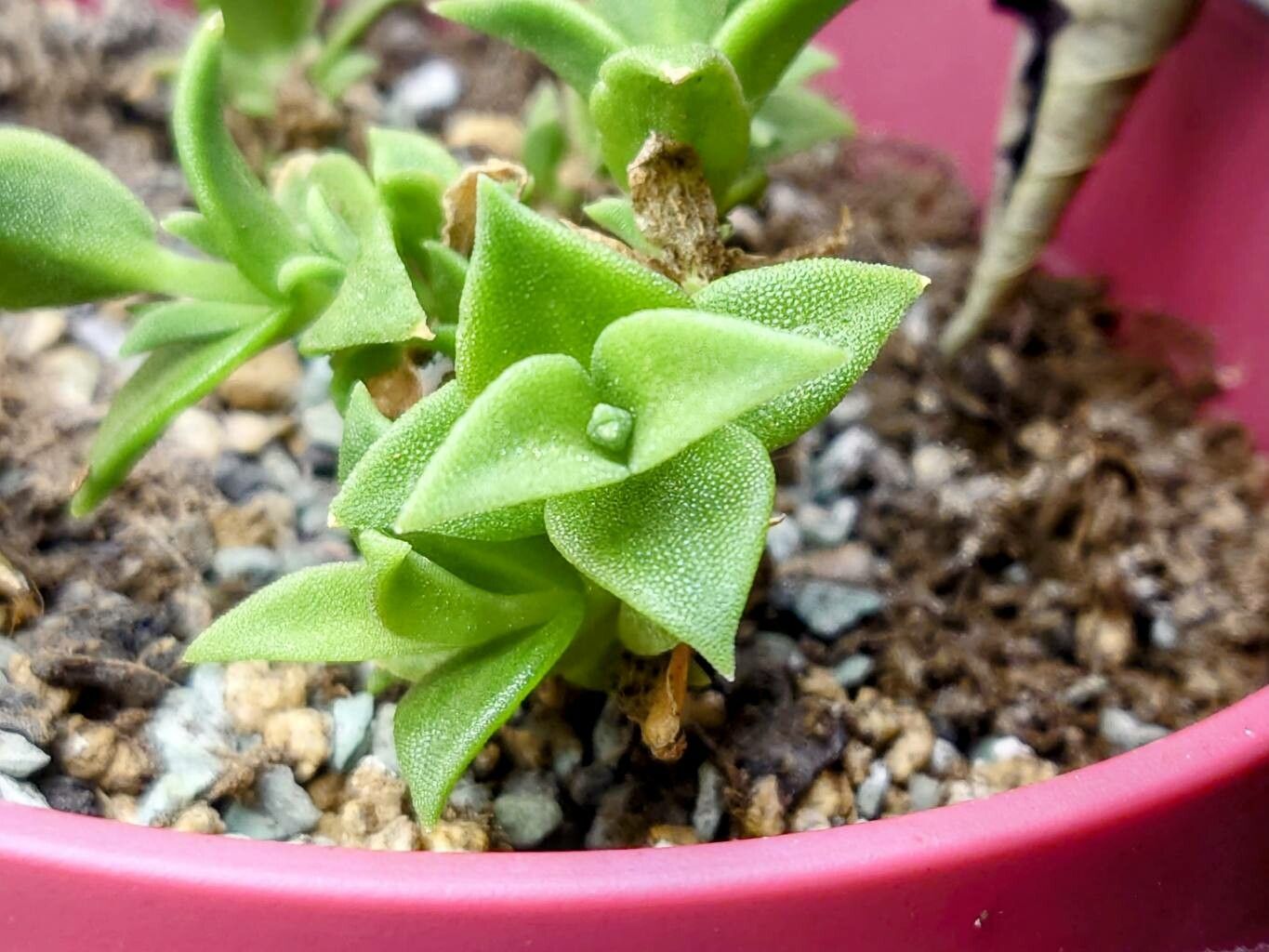
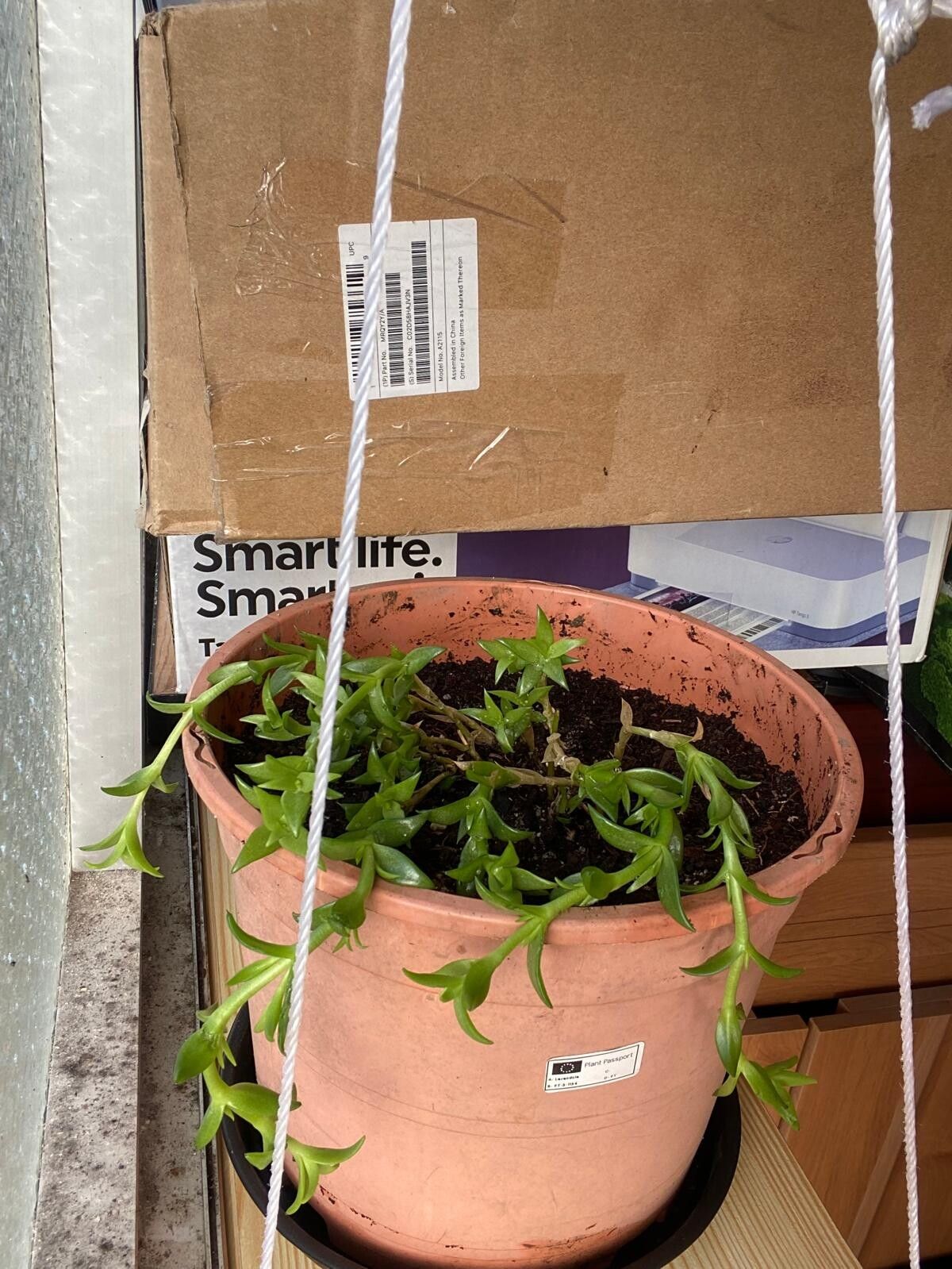
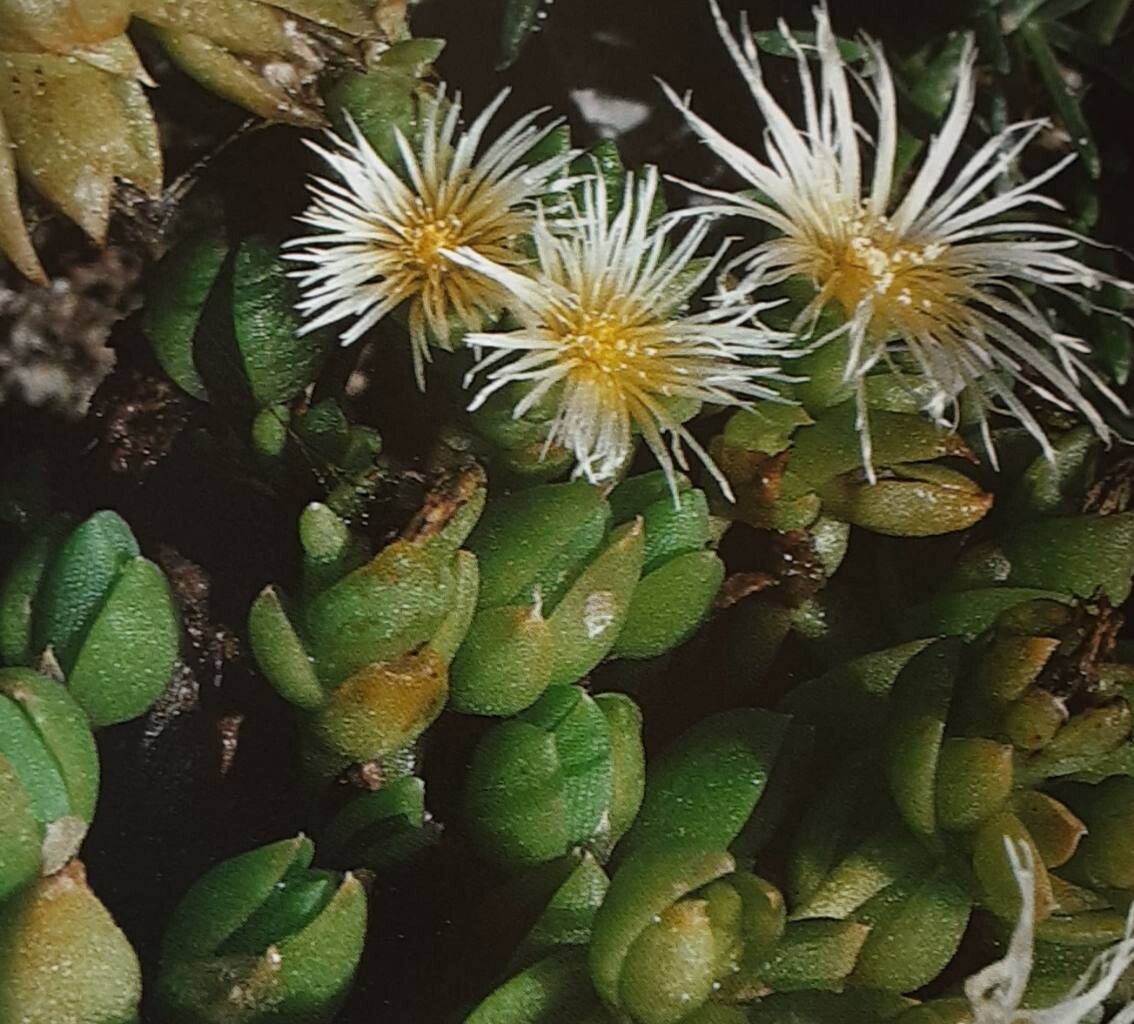
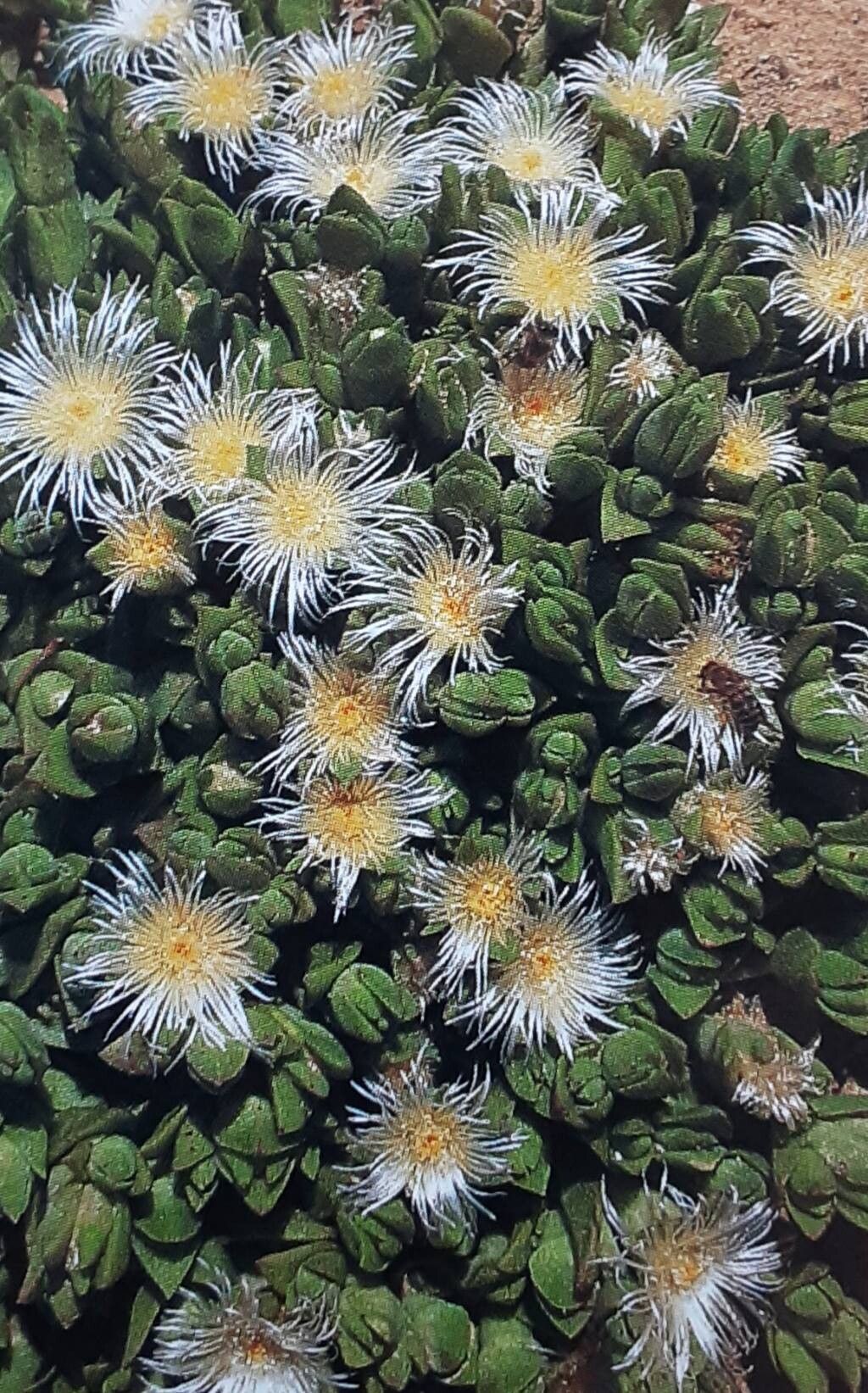
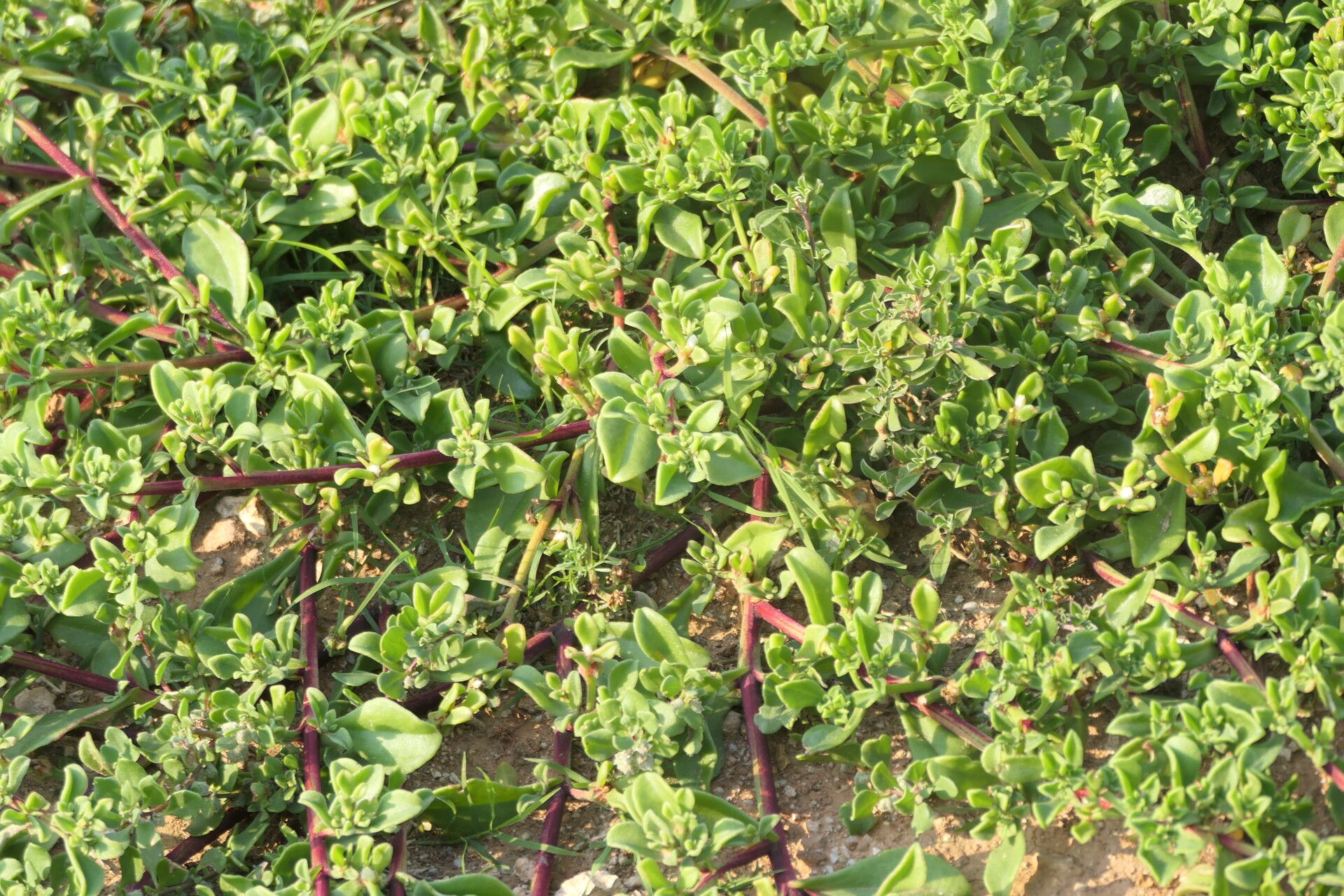
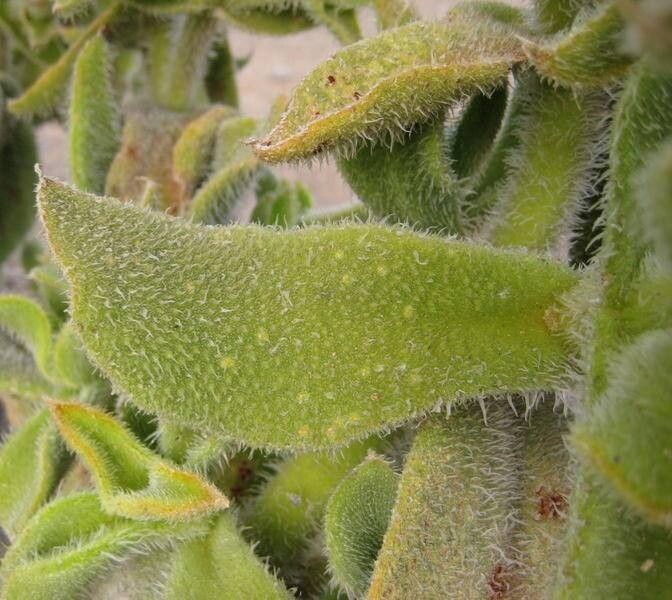
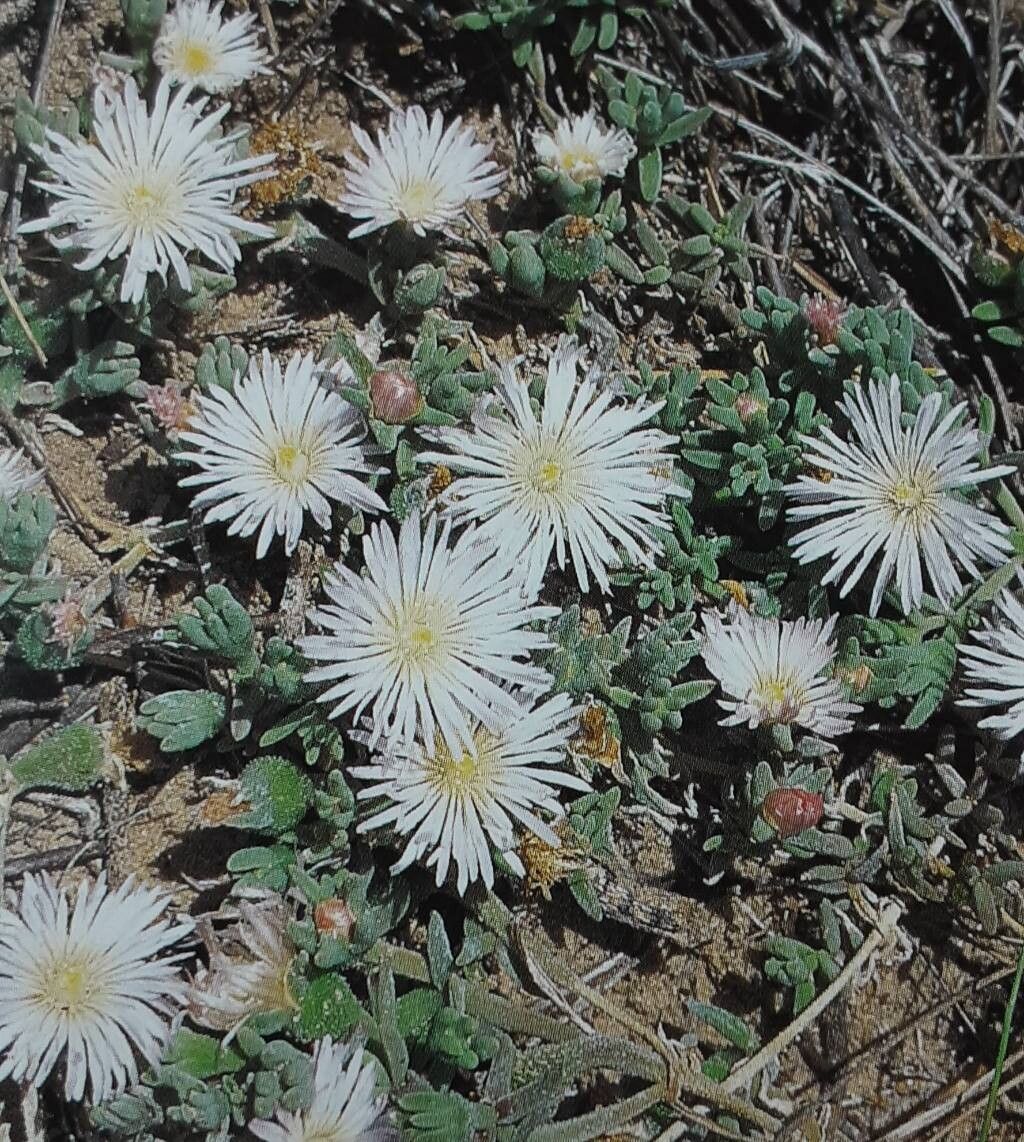
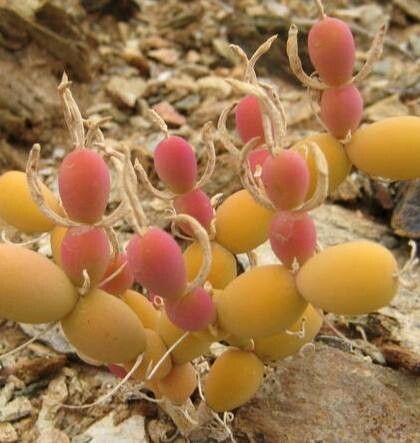
Mesembryanthemum tortuosum, often referred to by its synonym Sceletium tortuosum, is a succulent plant in the family Aizoaceae, native to the Cape Provinces of South Africa. In English, it is commonly known as kanna, or alternatively kougoed, an Afrikaans term meaning 'chewable thing', originally referring to a fermented preparation of the plant that was chewed by the Indigenous Khoisan peoples for its medical and psychoactive effects. The plant contains more than 25 alkaloids, with mesembrine-type alkaloids predominating.
Namaqua skeletonfig has moderate disease resistance but is more sensitive to humidity. It is vulnerable to disease when humidity is high and tends to develop root rot during dormancy. In terms of care, Namaqua skeletonfig is drought tolerant yet requires more water in the growing season. Watering should be greatly reduced or stopped entirely during the dormant period. Namaqua skeletonfig is appropriate for people with some growing experience, though it can be challenging to care for, particularly during dormancy. It is especially suited to those who can dedicate time to its care over the winter months.
How to keep Mesembryanthemum Tortuosum.
Light
The Namaqua skeletonfig, which is indigenous to dry areas, flourishes in strong sunshine, mirroring its original habitat that is defined by intense sunlight and scant shade. It can also tolerate semi-sunlight, demonstrating some flexibility in its growth conditions.
Temperature
Namaqua skeletonfig can bear some heat, but it predominantly flourishes and expands in the colder seasons, going into a dormant phase during summer. A shade must be provided during high summer temperatures to avoid sunburn from the strong sunlight. In extreme heat, watering needs to be minimized or stopped completely to avoid the roots getting rotten. The most active growth periods for Namaqua skeletonfig are winter and spring. It will keep steadily growing provided the temperature doesn't fall too much.
Fertilizer
For the Namaqua skeletonfig, it's adequate to lightly apply fertilizer 1-2 times annually during its growth period. Abstain from fertilizing during the winter and summer when the plant is in its dormant phase. When plants are repotted, lower the amount of fertilizer used and postpone fertilizing for a couple of months following the repotting. Applying fertilizer promotes robust growth and stimulates blossoming.
Botanical profile.
- Plant Type
- Succulent, Herb
- Life Cycle
- Perennial
- Hardiness Zone
- 9-11
- Mature Height
- 15 cm to 30 cm
- Mature Spread
- 30 cm to 61 cm
- Leaf Color
- Green, Blue
- Leaf Type
- Evergreen
- Flower Color
- Pink, White
- Flower Size
- 2.03 cm to 3.05 cm
- Bloom Time
- Late spring, Summer
- Planting Time
- Summer, Autumn
- Harvest Time
- Late summer, Fall
- Native Area
- South Africa