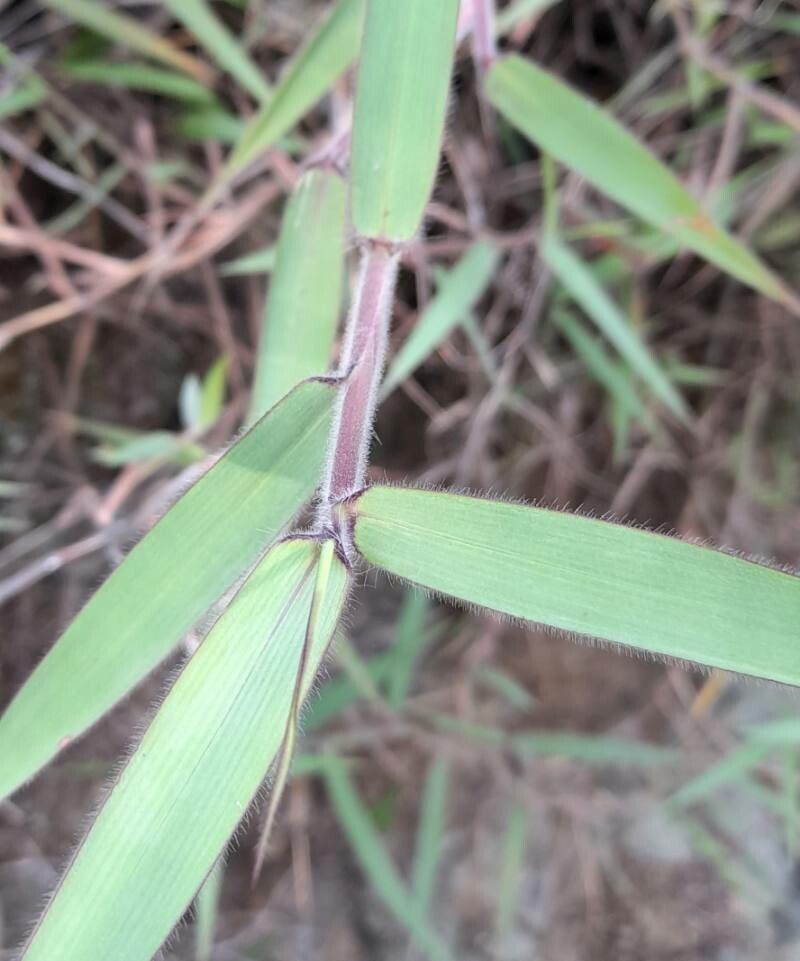
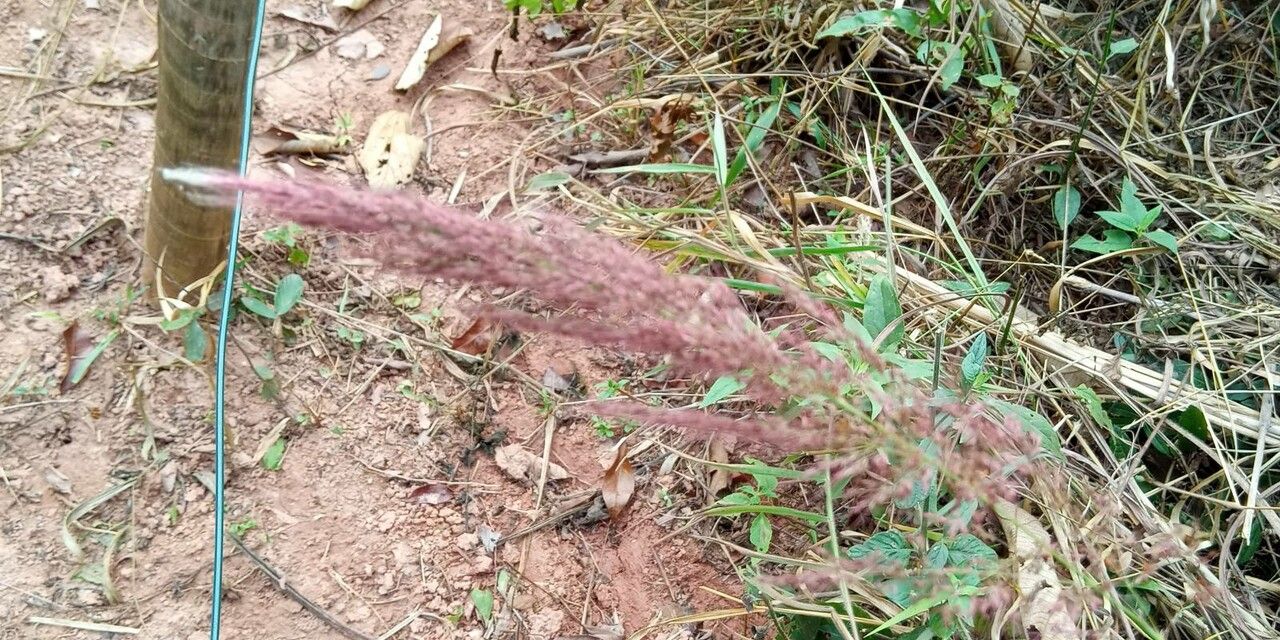
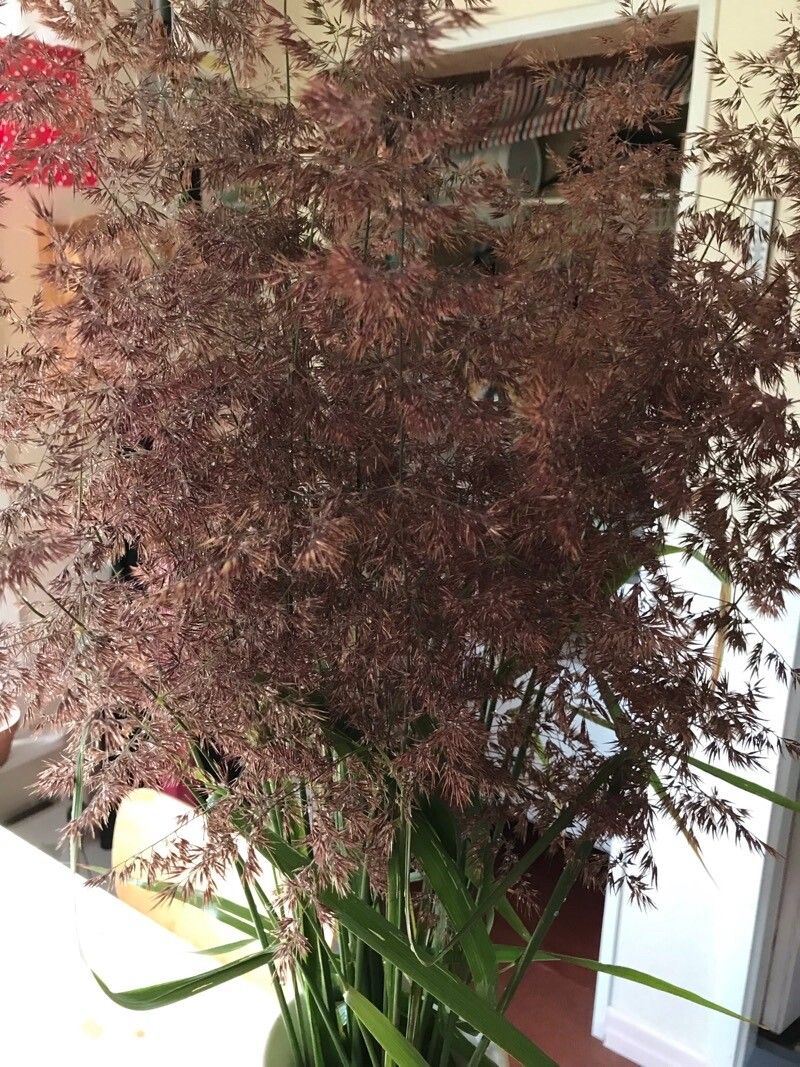
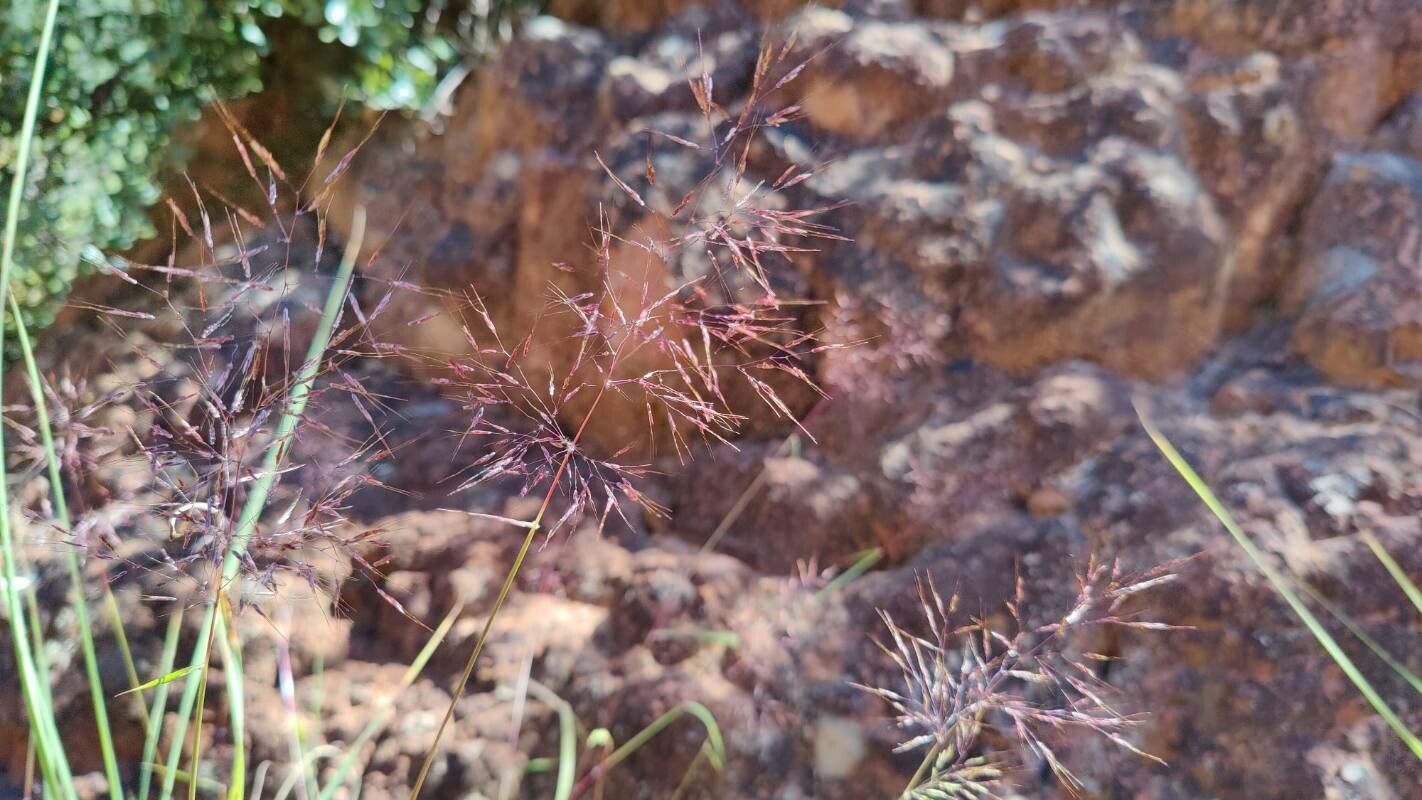
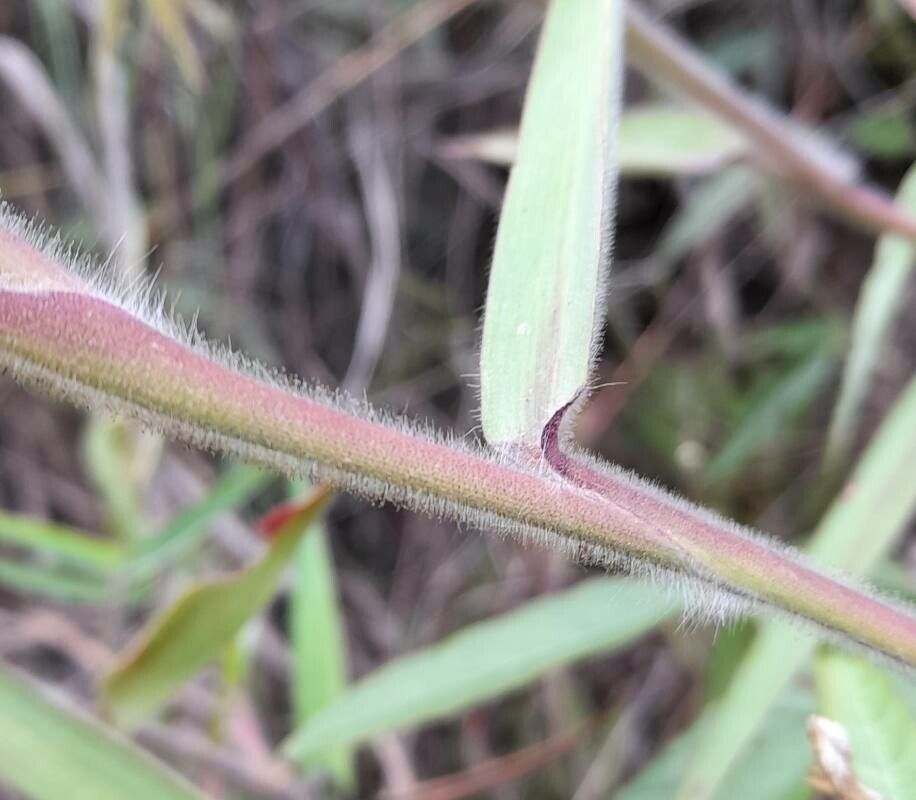
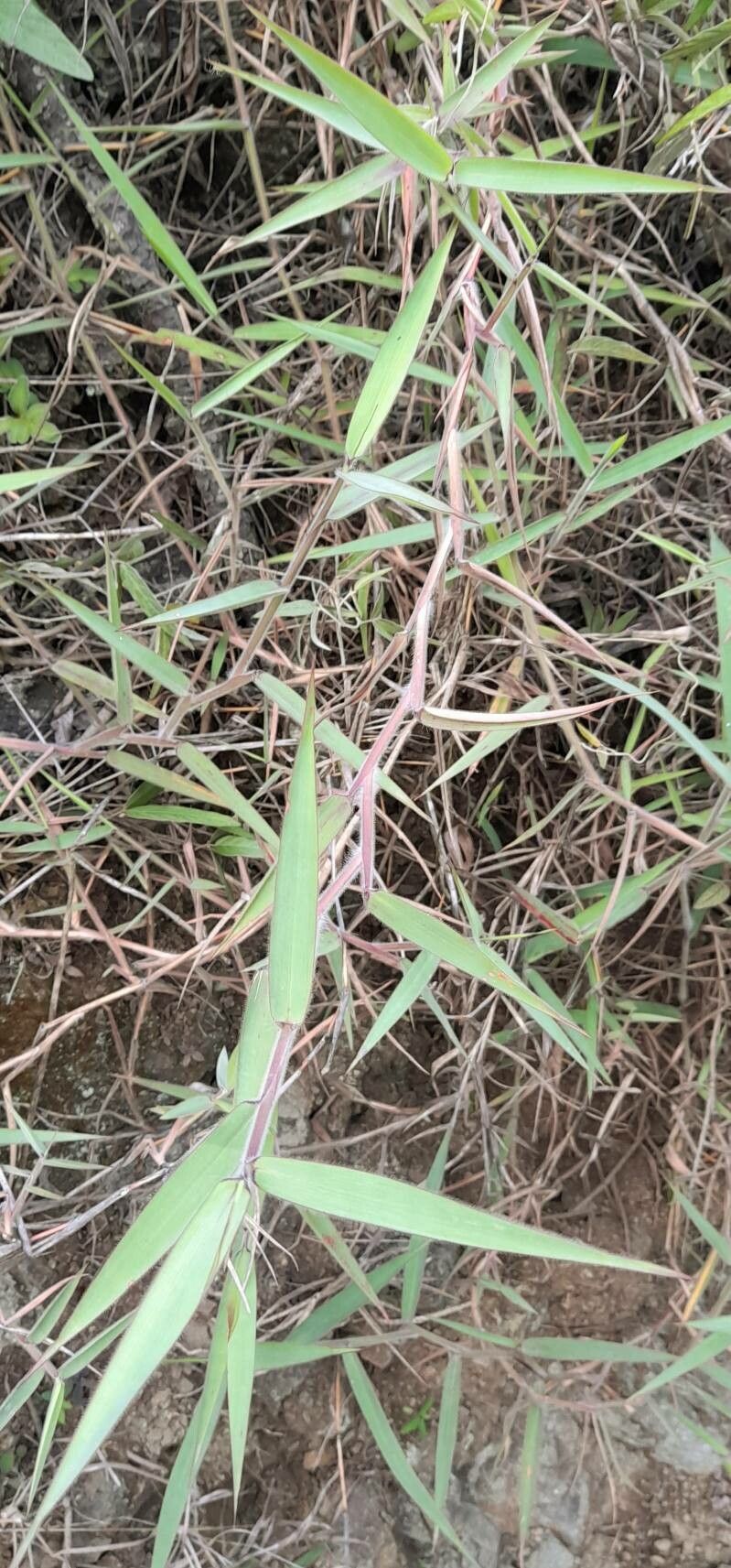
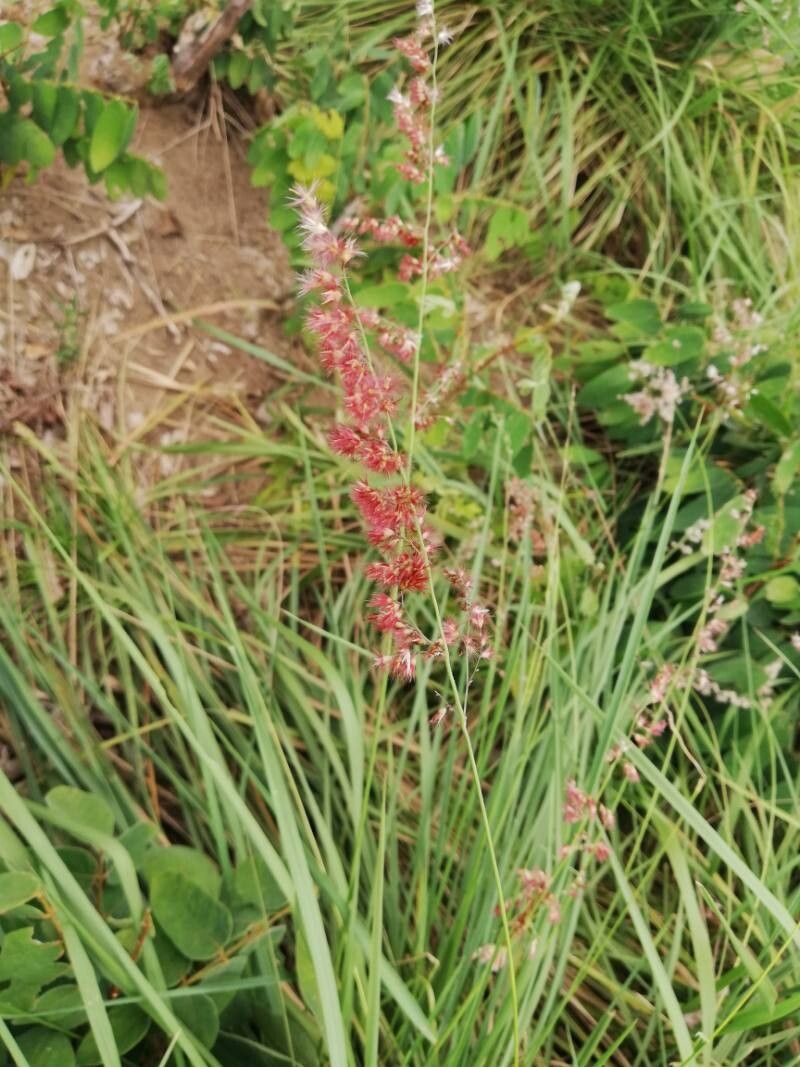
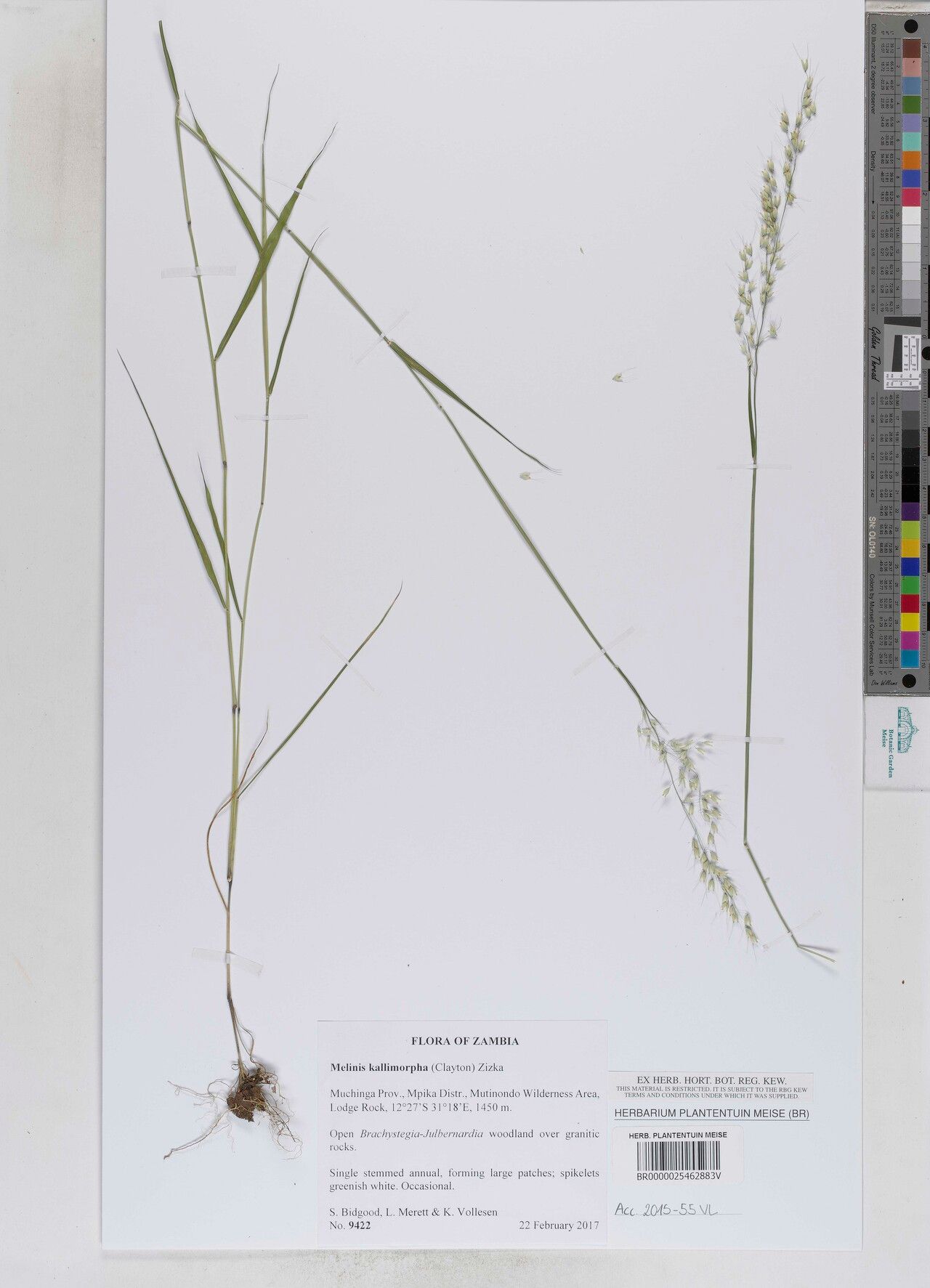
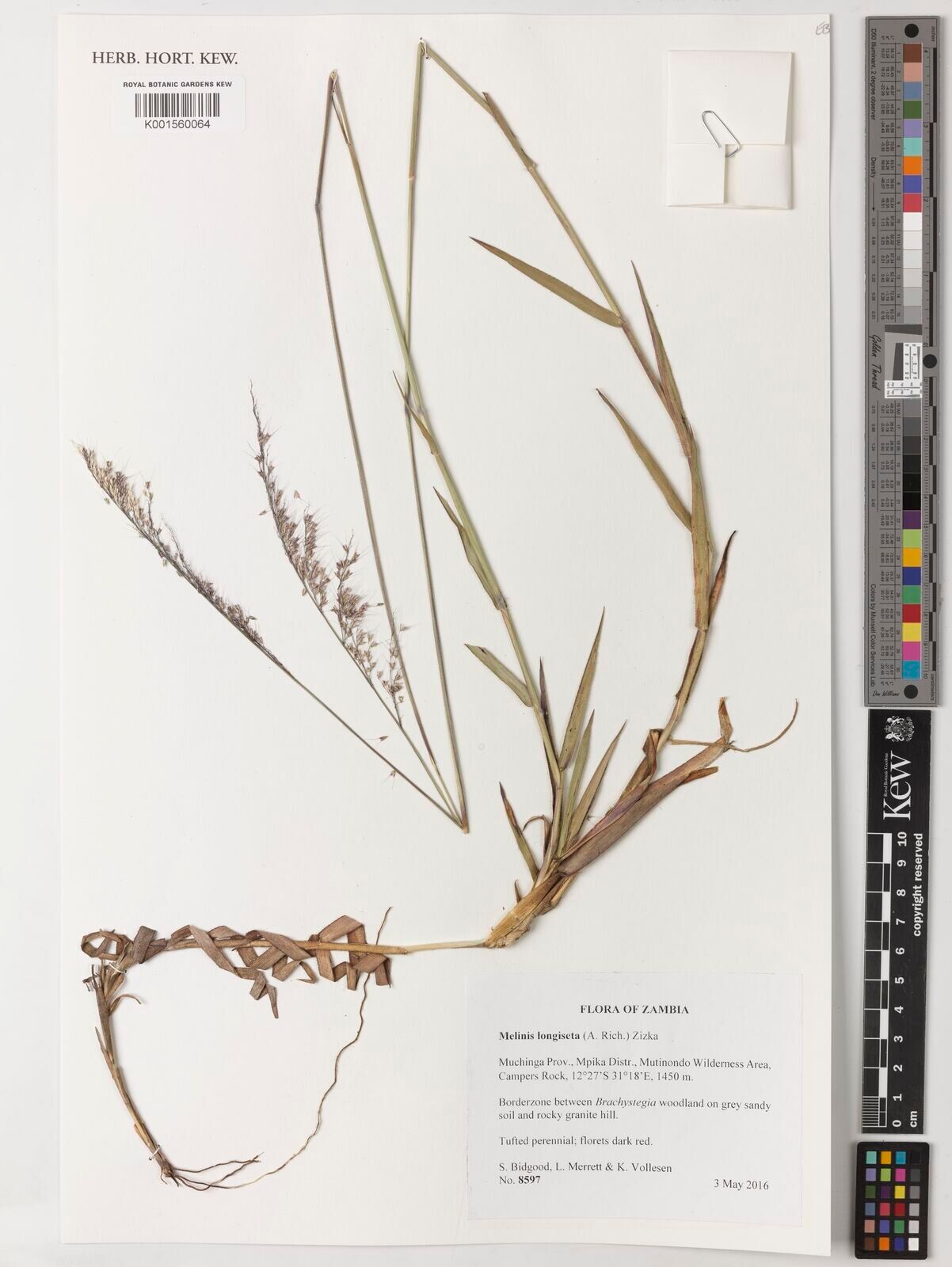
Melinis minutiflora, commonly known as molasses grass, is a species of grass.It is a perennial grass native to Africa, where it occurs in disjunct populations (an arc from central Angola to Cameroon in western central africa, the areas around Ruwenzori Mountains and Mount Kenya in eastern Africa. Its seeds are dispersed by wind. Molasses grass usually grows to be thirty to sixty inches tall, and it forms mats when its long, slender stems lay on top of each other in layers up to four feet deep. Molasses grass can spread up other plants, using them as support, like a vine. It has fragrant foliage and colorful inflorescences. It blooms for short periods with differing bloom times depending on where the grass is located. Molasses grass generally flowers in the southern hemisphere between April and June and in the northern hemisphere in November.
Molasses grass is resistant to disease and is usually not susceptible to illnesses. Regarding care, the plant is fairly low-maintenance. When grown outdoors it needs only minimal watering, and larger specimens typically do not need pruning. Smaller plants, however, should be trimmed after they finish blooming. Molasses grasst is suitable for anyone with an outdoor area, such as a garden or a deck, and does not require much gardening experience.
How to keep Melinis Minutiflora.
Light
Molasses grass is a sun-loving perennial herbaceous plant native to open habitats and commonly found in meadows and grasslands. It prefers full sun but can also tolerate partial sun.
Temperature
Molasses grass comes from tropical areas where the climate is generally warm and humid. Consequently, it is well suited to high temperatures and moisture. It does not tolerate abrupt temperature changes and prefers a steady temperature environment, so avoid temperature fluctuations indoors. It usually cannot withstand cold and needs warmer conditions to grow. If the ambient temperature falls too low, the plant may stop growing or may die.
Fertilizer
Molasses grass needs extra nutrients to encourage healthy new growth. In spring, placing compost around the plant’s base will effectively supply the needed nourishment. Fertilizing supports vigorous growth and helps the plant resist diseases and pests.
Pruning
Molasses grass has tall, slender stalks that should be pruned in early spring. Important pruning techniques include removing old stems and flower clusters to improve air circulation, reduce the risk of disease, and maintain the desired shape. Pruning at this time aligns with the grass's growth cycle, promoting healthy regrowth and enhancing its appearance.
Botanical profile.
- Plant Type
- Grass
- Life Cycle
- Perennial
- Genus
- Melinis
- Family
- Poaceae
- Hardiness Zone
- 9-11
- Mature Height
- 30 cm to 91 cm
- Mature Spread
- 0.49 m to 1.52 m
- Leaf Color
- Light Green, Olive Drab
- Leaf Type
- Deciduous
- Flower Color
- Purple
- Flower Size
- 0.20 cm to 0.25 cm
- Bloom Time
- Summer, Early fall, Mid fall
- Planting Time
- Spring, Summer, Autumn
- Harvest Time
- Late summer, Fall, Early winter
- Native Area
- Malawi, Somalia, Angola, South Africa, Zambia, Madagascar, Rwanda, Sudan, Nigeria, Guinea, Gabon, Kenya, Uganda, Tanzania, Zimbabwe, Central African Republic, Sierra Leone, Equatorial Guinea, Cameroon, Liberia, Mozambique, Burundi, Togo, Ghana, Senegal, Ethiopia, Eswatini, Côte d'Ivoire, Congo (DRC), Congo
Other names.