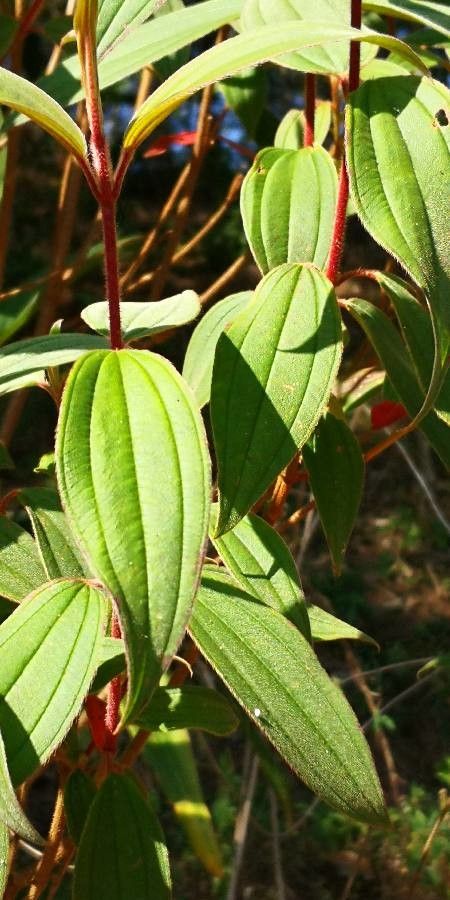
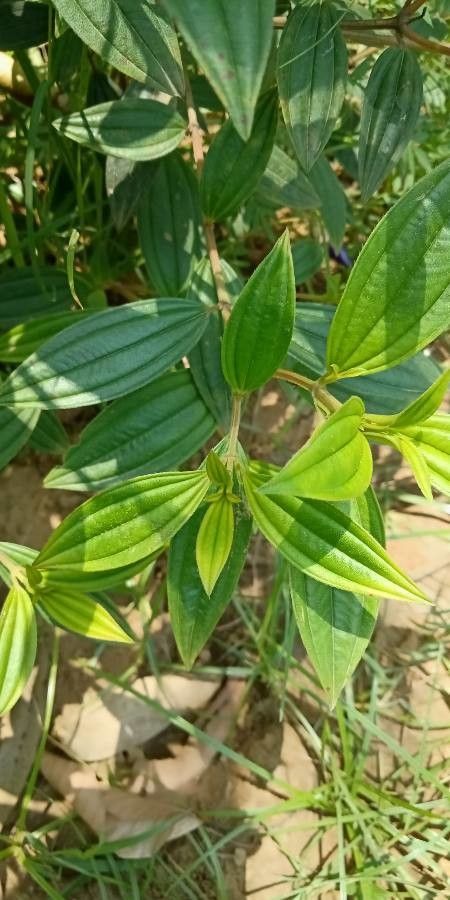
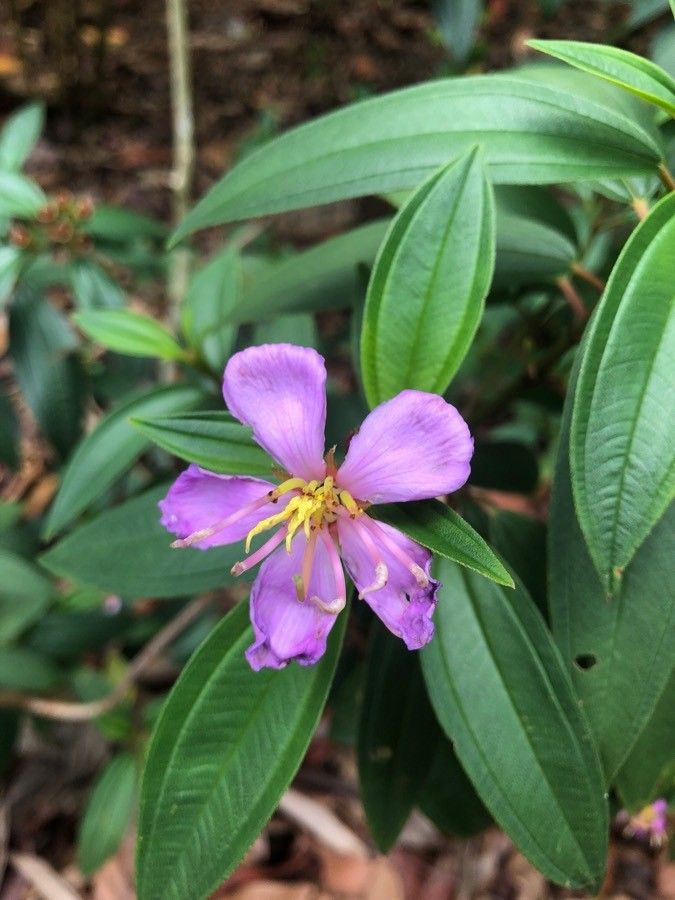
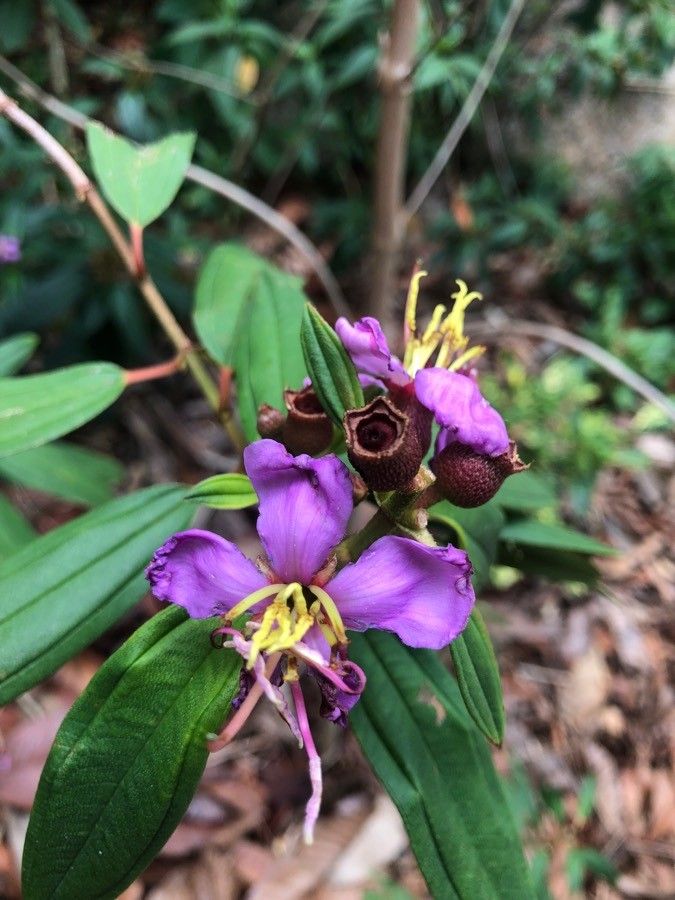
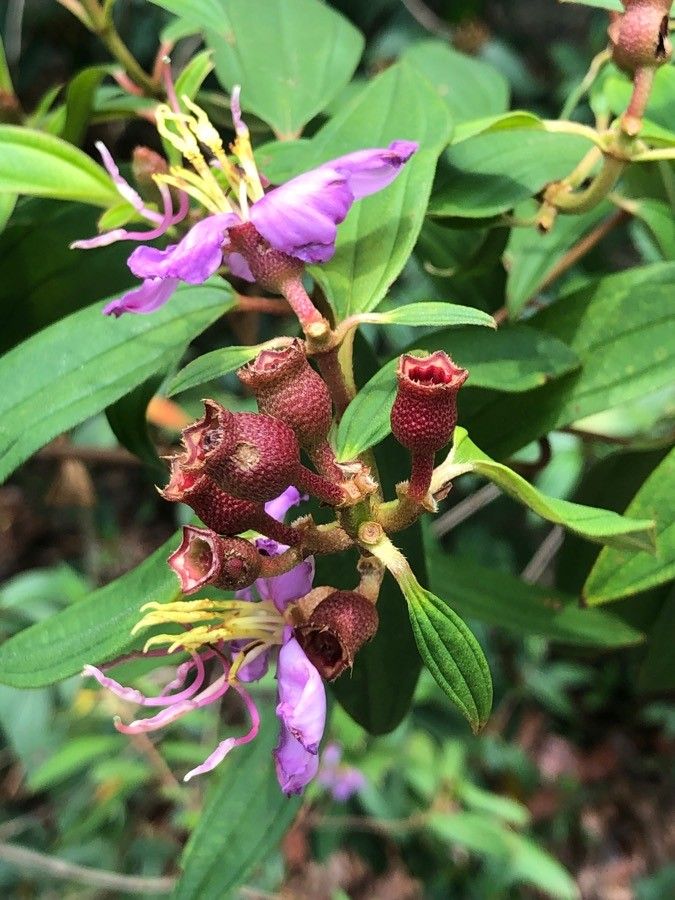
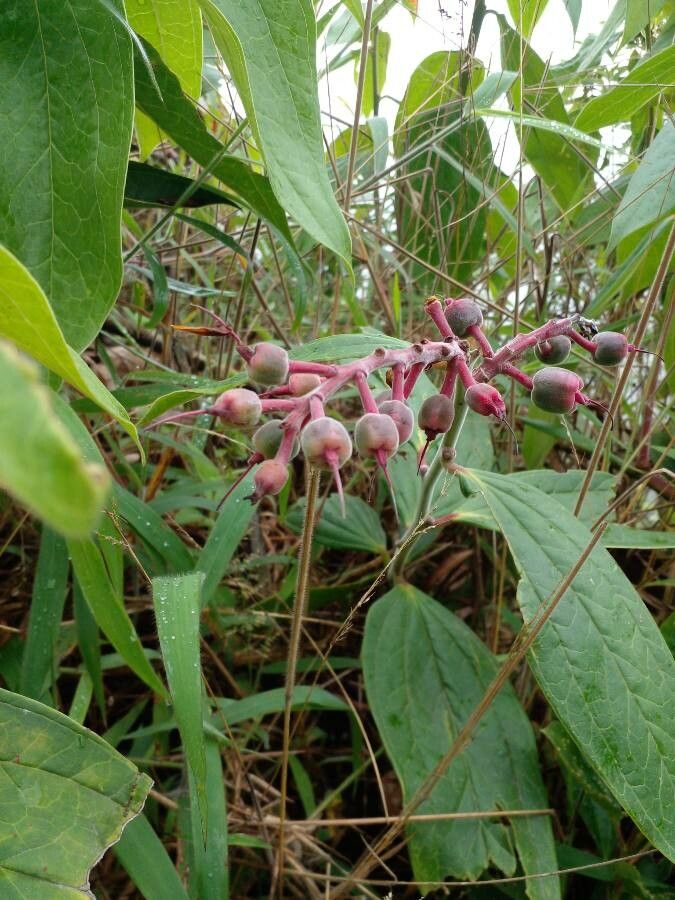
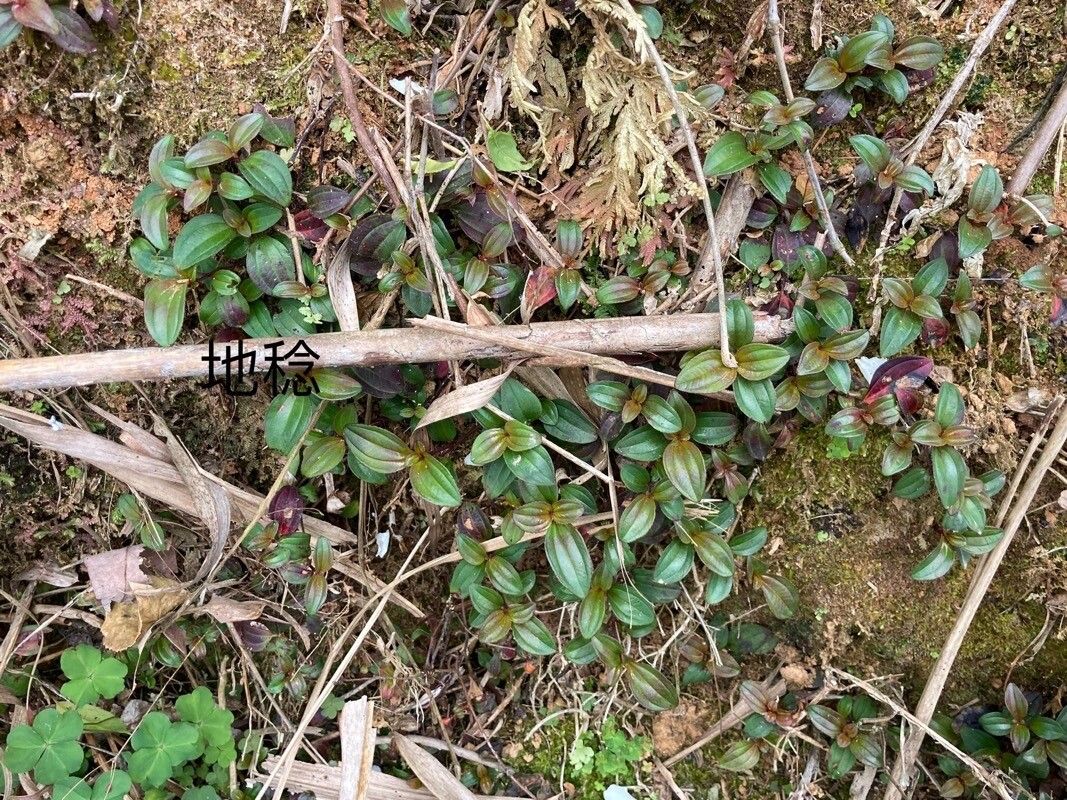
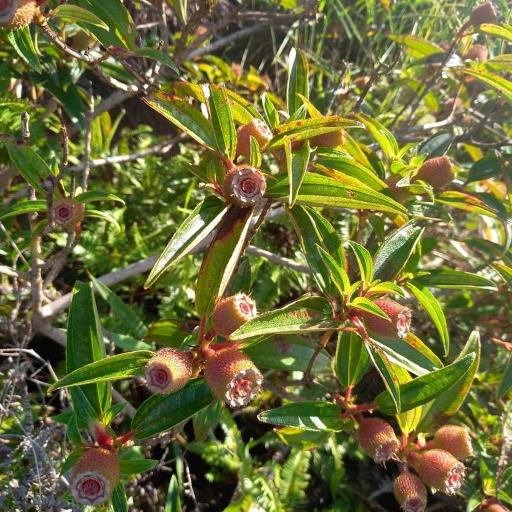
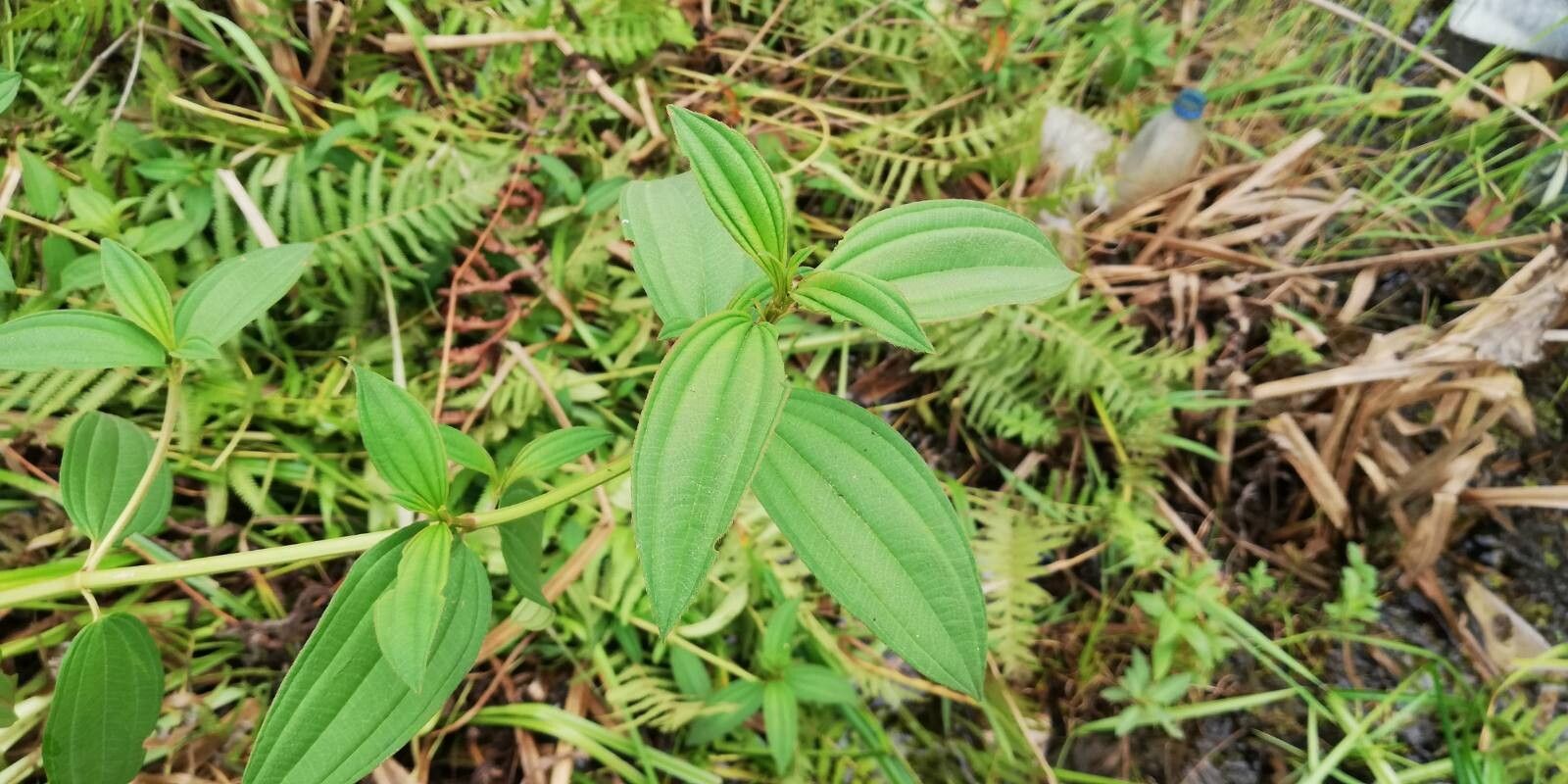
Melastoma malabathricum, known also as Malabar melastome, Indian rhododendron, Singapore rhododendron, planter's rhododendron and senduduk, is a flowering plant in the family Melastomataceae. This plant is native to Indomalaya, Japan and Australia, and is usually found between 100 and 2,800 m on grasslands and sparse forests. It has been used as a medicinal plant in certain parts of the world, but has been declared a noxious weed in the United States. M. malabathricum is a known hyperaccumulator of aluminium, and as such can be used for phytoremediation.
Malabar melastome has strong resistance to disease and is generally not prone to infections. In terms of care, this plant is fairly low-maintenance. When grown outdoors it needs minimal watering, and larger plants typically do not require pruning. Smaller plants, however, should be pruned after they have bloomed. Malabar melastomet is suitable for anyone with an outdoor area, such as a garden or a deck, and does not demand much gardening experience.
How to keep Melastoma Malabathricum.
Light
Malabar melastome typically thrives with plenty of light but can also tolerate shade or very bright light. Light promotes its growth and influences its health and fullness. Coming from environments with variable light conditions, it can endure both low and excessive light exposure.
Water
The Malabar melastome thrives in environments with high humidity and consistent moisture, requiring watering about once a week. Although it can withstand brief periods of dryness, it needs more water during growth spurts. Keeping indoor humidity levels high replicates its tropical origins and encourages healthy growth.
Temperature
Malabar melastome is commonly encountered in its native environment, where temperatures typically range from 68 to 100 °F (20 to 38 °C). It performs best within that temperature range. Seasonal temperature adjustments are advised depending upon the specific climate conditions.
Fertilizer
The best time to fertilize a Malabar melastome is in early spring when it comes out of dormancy. This encourages overall growth and supports flower development. Applying fertilizer improves the leaves, stems, and branches, and helps produce flowers that are large, vivid, and long-lasting. It also helps move nutrients from the roots to the flowers and enhances the plant’s health and resistance to disease.
Pruning
The Malabar melastome showcases vibrant flowers and evergreen leaves. For optimal shape and growth, prune it in early spring by removing dead branches and reducing overcrowding. This timing aids in recovery and flowering while promoting overall health and preventing disease.
Botanical profile.
- Plant Type
- Shrub
- Life Cycle
- Perennial
- Genus
- Melastoma
- Family
- Melastomataceae
- Hardiness Zone
- 11
- Mature Height
- 0.49 m to 1.52 m
- Mature Spread
- 2.13 m
- Leaf Color
- Green, Blue
- Leaf Type
- Evergreen
- Flower Color
- Pink, Purple
- Flower Size
- 7.62 cm
- Bloom Time
- All year round
- Planting Time
- Spring, Summer, Autumn
- Harvest Time
- All year round
Other names.
Reader questions.
How should I water my Malabar melastome?
Your Malabar melastome is not picky about how you water it. You can use any common watering tool, such as a watering can, hose, or even a cup, to moisten the soil. Regardless of the tool you choose, make sure to water the soil directly and evenly to provide sufficient moisture to all parts of the root system. It is advisable to use filtered water instead of tap water, as tap water may contain harmful particles. Additionally, it is best to use water that is at or slightly above room temperature, as extreme temperatures can shock the plant. However, the Malabar melastome generally responds well to any type of water.
What are the sunlight requirements for Malabar melastome?
Malabar melastome thrives in varying light conditions, requiring about 3-6 hours of sunlight for partial sun. For full sun or full shade, more than 6 hours of sunlight is recommended. The plant is adaptable, capable of growing in shadowed areas or intense light, reflecting its natural habitat's diverse lighting. However, monitoring how sunlight moves through your garden to find spots with an ideal light and shade balance is crucial to ensure the plants' well-being.
What is the ideal temperature range for Malabar melastome?
Malabar melastome thrives in temperatures ranging from 68 to 100 °F (20 to 38 °C). It is essential to adjust the temperature seasonally based on the specific climate conditions to ensure the plant's health. Malabar melastome is a heat-loving plant and can be adversely affected by cold temperatures. During autumn, it is recommended to bring the plant indoors if it was grown outside, placing it near a bright window but away from direct heat sources. Keeping the temperature above 20°C during winter supports its growth, while temperatures nearing 10°C can be harmful.
What should I do if I give too much water or too little water to my Malabar melastome plant?
Outdoor plants, including newly planted ones and seedlings, are susceptible to not receiving enough water. It is important to consistently water them for the first few months, especially while they are small or recently planted. Once the roots are established, Malabar melastome plants can typically rely on rainfall. When Malabar melastome plants are in pots, overwatering is a common issue. If you accidentally overwater your plant, it is important to take immediate action to address the situation. First, stop watering the plant right away to minimize the negative effects. Then, remove the plant from its pot to inspect the roots. If no root rot is present, you can return the plant to its container. However, if you do find signs of root rot, trim affected roots and consider applying a fungicide to prevent further damage. Finally, repot the Malabar melastome in well-draining soil. In the case of underwatering, simply water the Malabar melastome more frequently. Underwatering is usually easy to fix, as the plant's leaves will droop, dry out, and possibly fall off. However, they will regain their fullness after sufficient watering. Therefore, it is important to adjust your watering frequency as soon as you notice underwatering occurring.
What artificial lighting is needed for indoor Malabar melastome plants?
Indoor Malabar melastome plants benefit from artificial lighting, especially when natural sunlight is scarce, like in winter or less sunny spaces. LED lights are recommended due to their customizable wavelengths suitable for plant growth. Full sun plants need 30-50W/sq ft, partial sun plants require 20-30W/sq ft, and full shade plants need 10-20W/sq ft of artificial light. The light source should be placed 12-36 inches above the plant, mimicking natural sunlight. Generally, most plants need 8-12 hours of light per day.
How does low temperature affect Malabar melastome and how can it be managed?
Malabar melastome prefers warm climates and does not tolerate low temperatures well. It needs to be kept in conditions above 20°C, especially during winter, ensuring it remains above 10°C. Exposure to temperatures below 5°C may lead to a lightening of the leaves' color. After frost damage, the plant's leaves may turn brown or black, showing signs of wilting and drooping. To manage frost damage, trim off frost-damaged parts and move the plant to a warm indoor environment. Place it near a south-facing window for ample sunlight, but ensure it is not too close to heaters or air conditioning vents to avoid air dryness.
How often should I water my Malabar melastome plant?
If you have plants growing outdoors, they usually don't need additional watering because they can rely on rainfall. However, if your area doesn't get much rain, you should water your plants every 2 weeks in the spring and fall, more often in the summer, and less in the winter. Malabar melastome plants need more frequent watering when they are young or newly planted, but as they mature, they become more drought-tolerant. For potted plants, there are two ways to determine how often to water your Malabar melastome. Setting a predetermined watering schedule, such as once a week or every other week, can work, but it may not always be appropriate for your plant's specific growing conditions. Another option is to check the moisture level of the soil. Wait until the top two to four inches of soil, about ⅓ to ½ depth of the pot, has dried out completely before watering again. This is especially important during the summer when the plant's water needs are highest.
What symptoms indicate light deficiency in Malabar melastome?
Symptoms of light deficiency in Malabar melastome include smaller new leaves, leggy or sparse growth, faster leaf drop, slower or halted new growth, lighter-colored new leaves, chlorosis (leaves turning yellow), sunscald (pale, bleached areas on tissues), leaf curling, wilting, and leaf scorching. These signs show the plant's struggle in inadequate light conditions, affecting its health and appearance significantly.
How does high temperature affect Malabar melastome and what are the solutions?
During the summer, it is crucial to keep Malabar melastome in temperatures below 38°C to avoid overheating. Temperatures exceeding 43°C can lead to lighter leaf colors and increase the risk of sunburn. To mitigate damage from high temperatures, trim away sunburned and dried parts of the plant. Move the plant to a shaded area to protect it from the midday and afternoon sun. Ensure the plant is watered in the morning and evening to maintain soil moisture and help it stay healthy in high temperatures.
How much water does my Malabar melastome require?
When watering your Malabar melastome, you don't always need to use a lot of water. If only a few inches of soil have dried since your last watering, giving it about five to ten ounces of water each time should support healthy growth. You can also determine the water volume based on how dry the soil is. If more than half of the soil has dried out, it's a good idea to give it more water than usual, until you see excess water draining from the pot's holes. If your Malabar melastome is in an outdoor area that receives sufficient rain, it may not need additional watering. Young or recently planted ones should get 1-2 inches of rain per week, and as they grow, they can rely on rainwater except during hot weather when there is no rainfall for 2-3 weeks. In that case, give them a thorough watering to avoid stress.
How can I address light-related issues in Malabar melastome plants?
To optimize growth and address light-related issues in Malabar melastome, gradually increase sunlight exposure by moving the plant to sunnier spots weekly until it receives 3-6 hours of direct sunlight daily. For large or immovable indoor plants, consider using artificial light, keeping lamps on for at least 8 hours daily or investing in professional grow lights. Outdoors, avoid sudden light intensity changes to prevent sunburn. If obstructions block sunlight, prune interfering branches or transplant smaller plants to sunnier locations with good drainage, preferably during their dormant period.
How can I know if I'm giving enough water to my Malabar melastome?
Overwatering is a common problem for the Malabar melastome. To identify if your plant is overwatered, look for yellowing leaves and potential leaf drop. Overwatering can also cause the plant's structure to shrivel and lead to root rot. On the other hand, an underwatered Malabar melastome will start to wilt and may have brown or brittle leaves. If you notice any signs of overwatering or underwatering, take action to restore your plant's health.