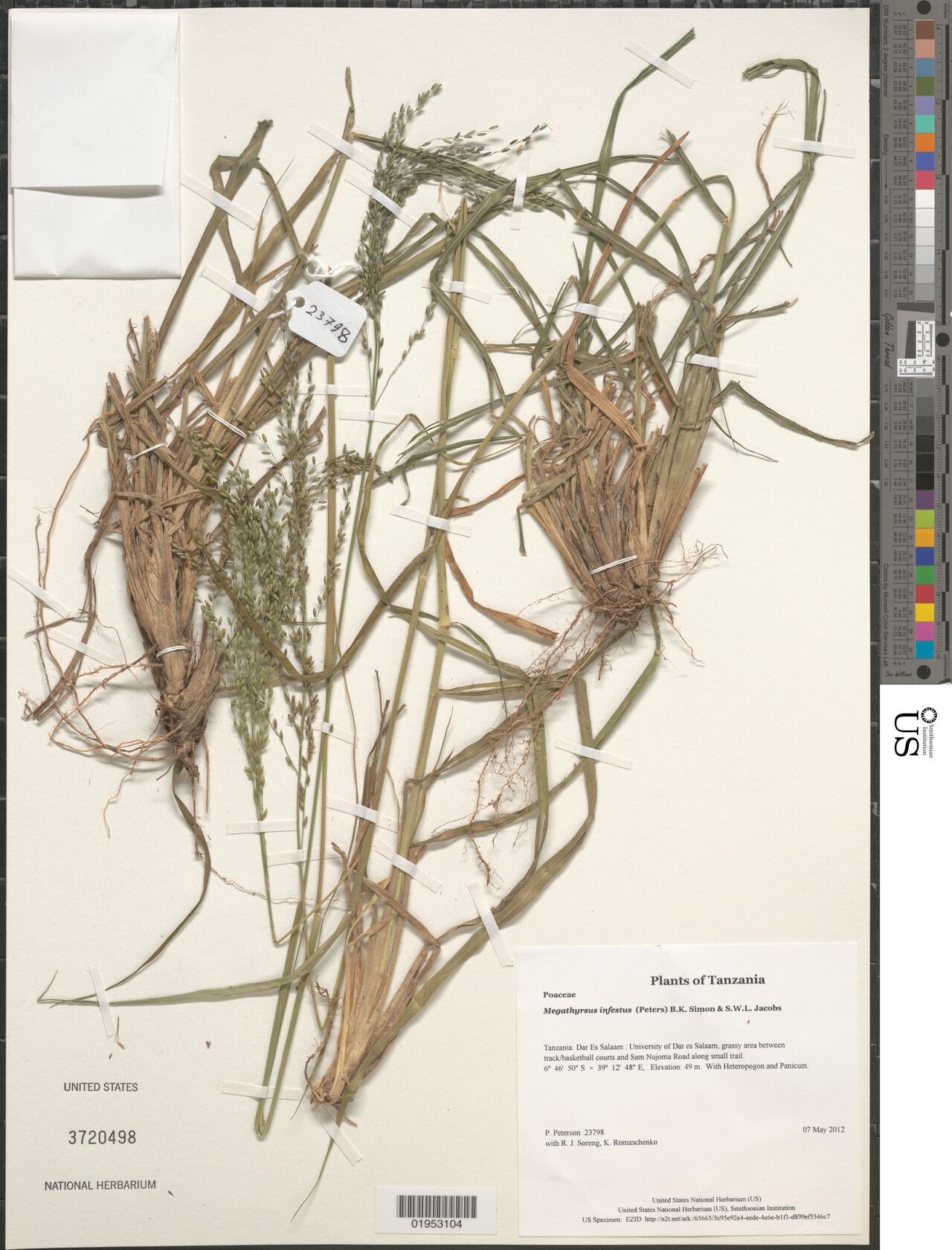
Megathyrsus maximus, known as Guinea grass and green panic grass, is a large perennial bunch grass that is native to Africa and Yemen. It has been introduced in the tropics around the world. It has previously been called Urochloa maxima and Panicum maximum. It was moved to the genus Megathyrsus in 2003.
Guinea grass has strong disease resistance and is generally not susceptible to diseases. Regarding care, this plant is fairly low-maintenance. When grown outdoors it needs little watering, and larger plants usually do not require pruning. Smaller plants, however, should be pruned after they bloom. Guinea grass is suitable for anyone with an outdoor area, such as a garden or deck, and does not demand much care experience.
How to keep Megathyrsus Maximus.
Light
Guinea grass flourishes well under plenty of sunlight and can manage in locations with limited sunlight. The plant's growth is improved by sunlight, however, too much exposure may cause it to dry out and its leaves to turn brown. Its preference for sunlight is evident in its natural habitat. A lack of sufficient sunlight can result in impaired growth.
Temperature
The indigenous habitat of Guinea grass features temperatures between 68 to 100 °F (20 to 38 ℃). The grass has a preference for hotter climates and might require a change in temperature during cooler seasons.
Fertilizer
For healthy new growth, Guinea grass necessitates extra nutrients. During the spring season, applying compost to the plant's base can efficiently supply the critical nutrition it requires. Fertilization assists in endorsing robust growth and equips the plant to resist diseases and pests.
Botanical profile.
- Plant Type
- Grass
- Life Cycle
- Perennial, Annual, Biennial
- Genus
- Megathyrsus
- Family
- Poaceae
- Hardiness Zone
- 10-12
- Mature Height
- 0.91 m to 3.05 m
- Mature Spread
- 30 cm
- Leaf Color
- Green, Dark Green
- Leaf Type
- Evergreen
- Flower Color
- Tan
- Flower Size
- 0.20 cm to 0.25 cm
- Bloom Time
- Late spring, Summer
- Planting Time
- Summer, Autumn
- Harvest Time
- Mid summer, Late summer, Early fall