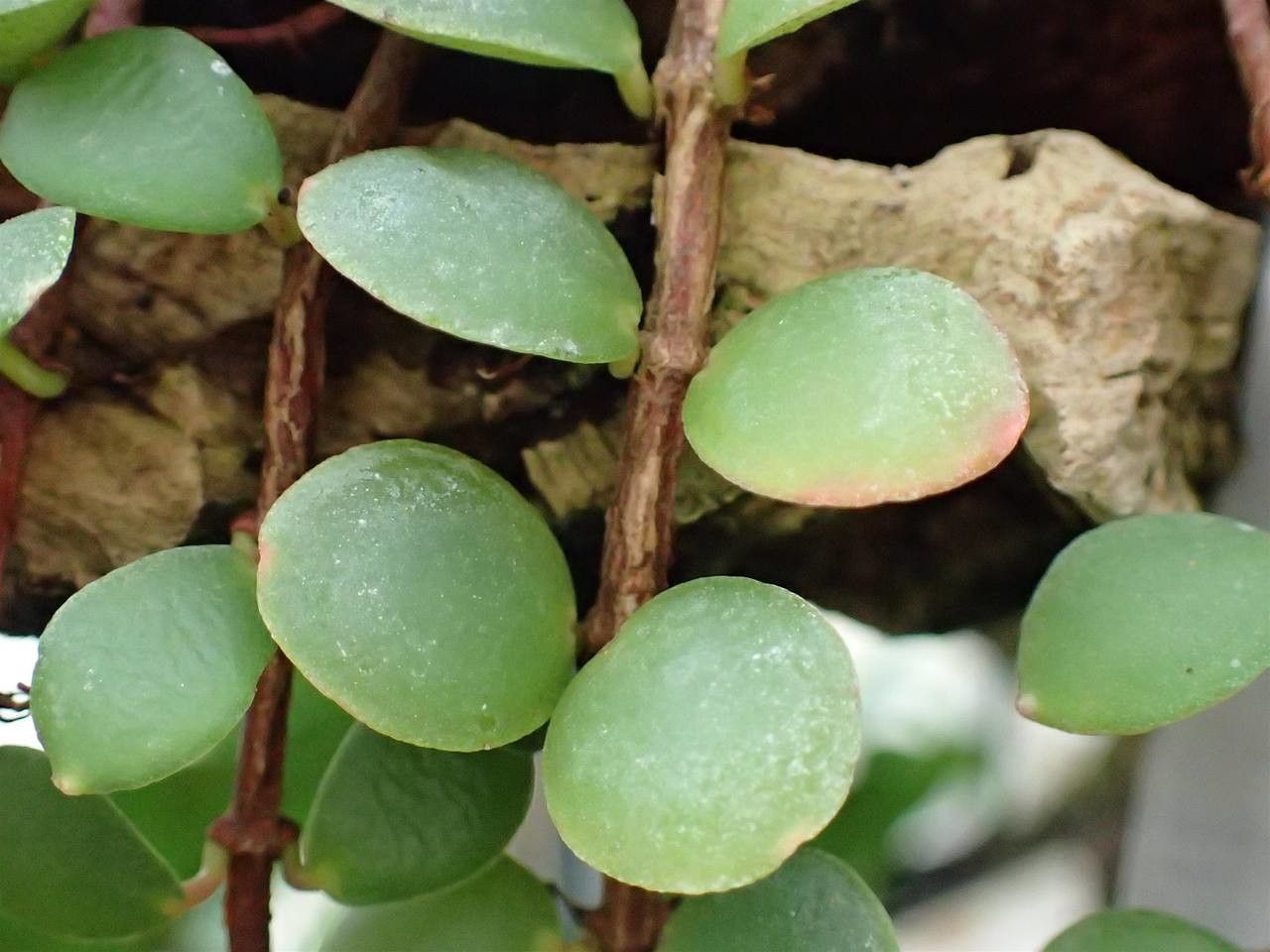
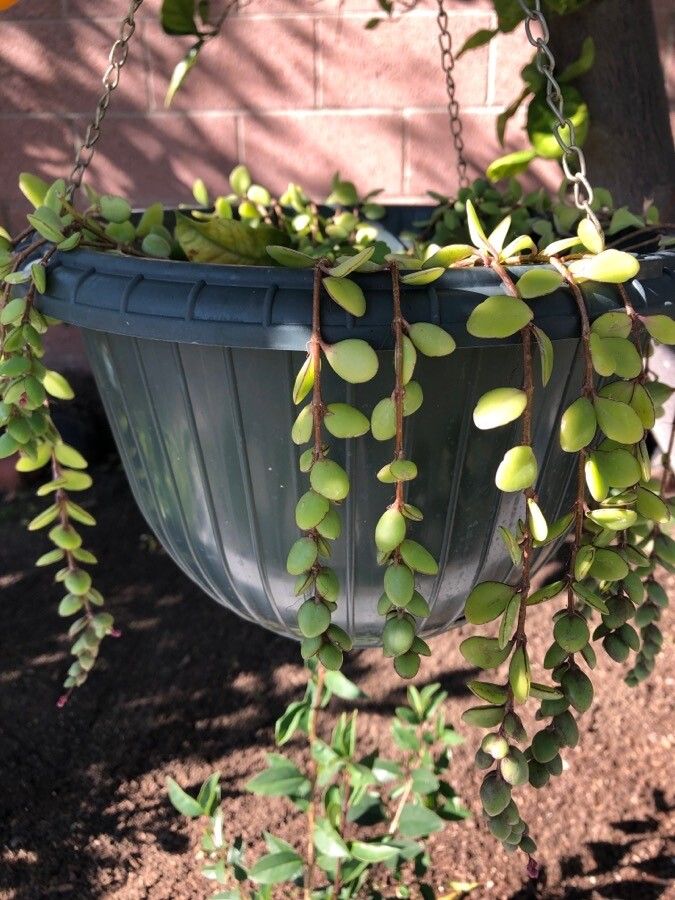
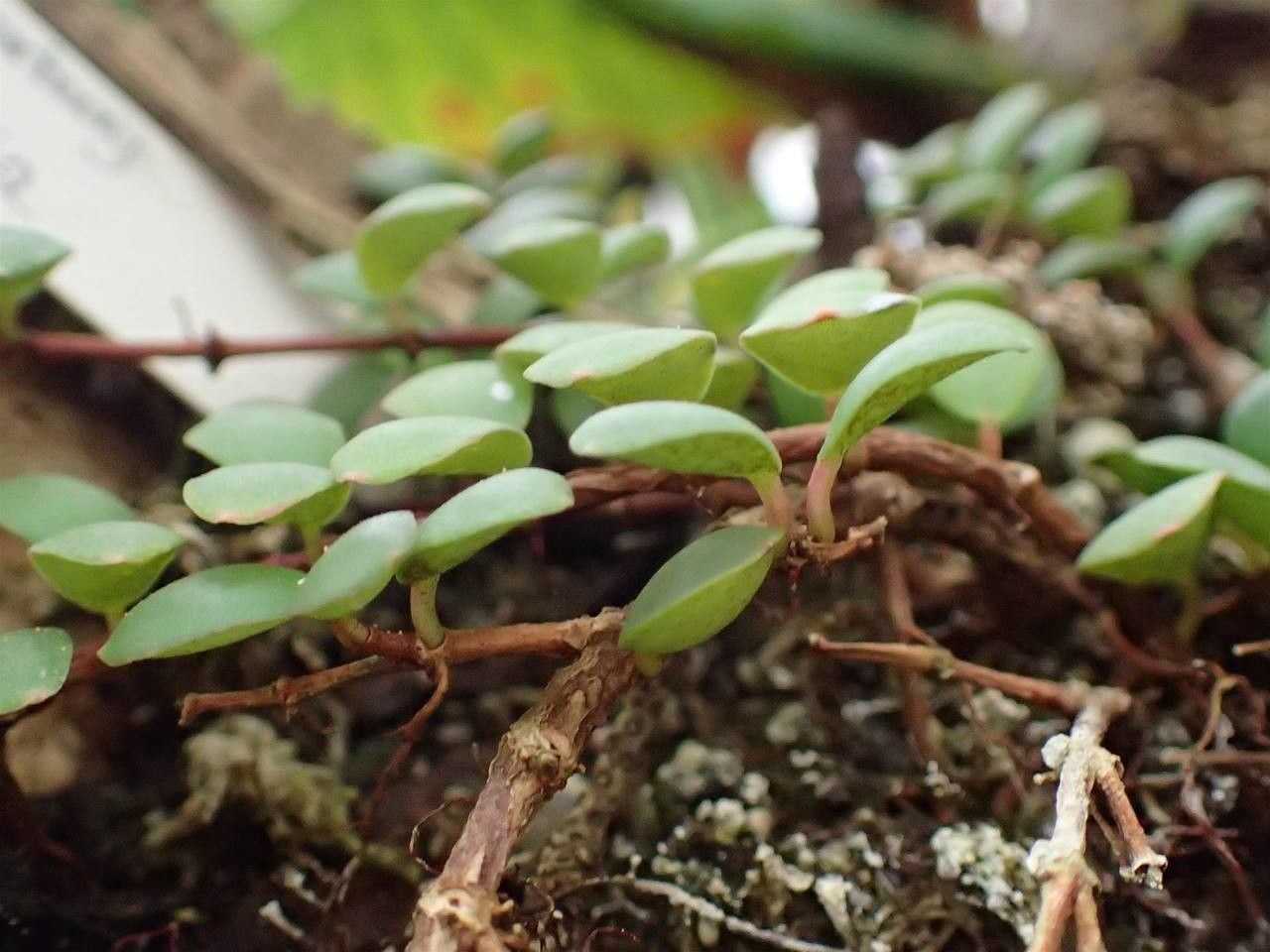
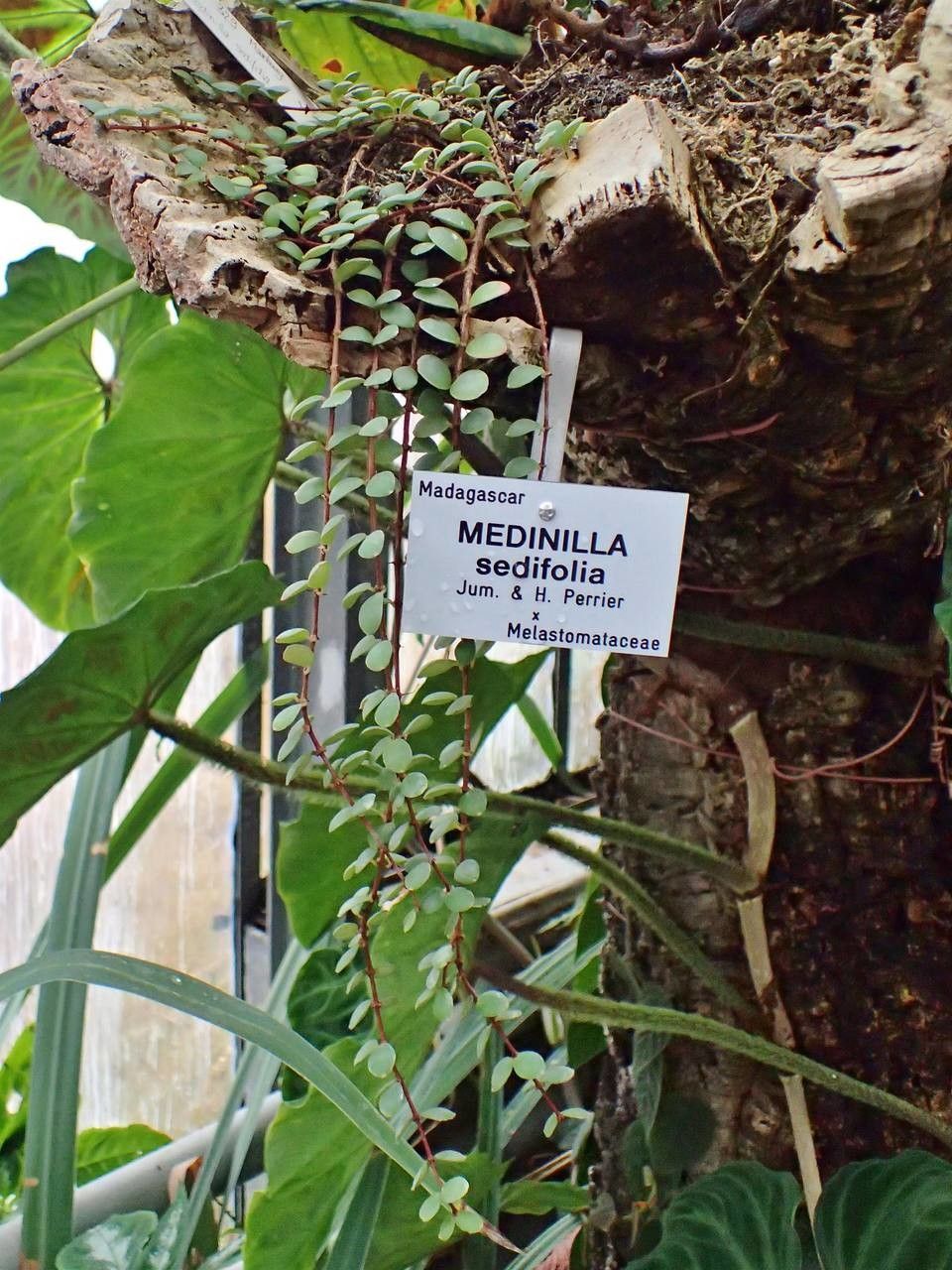
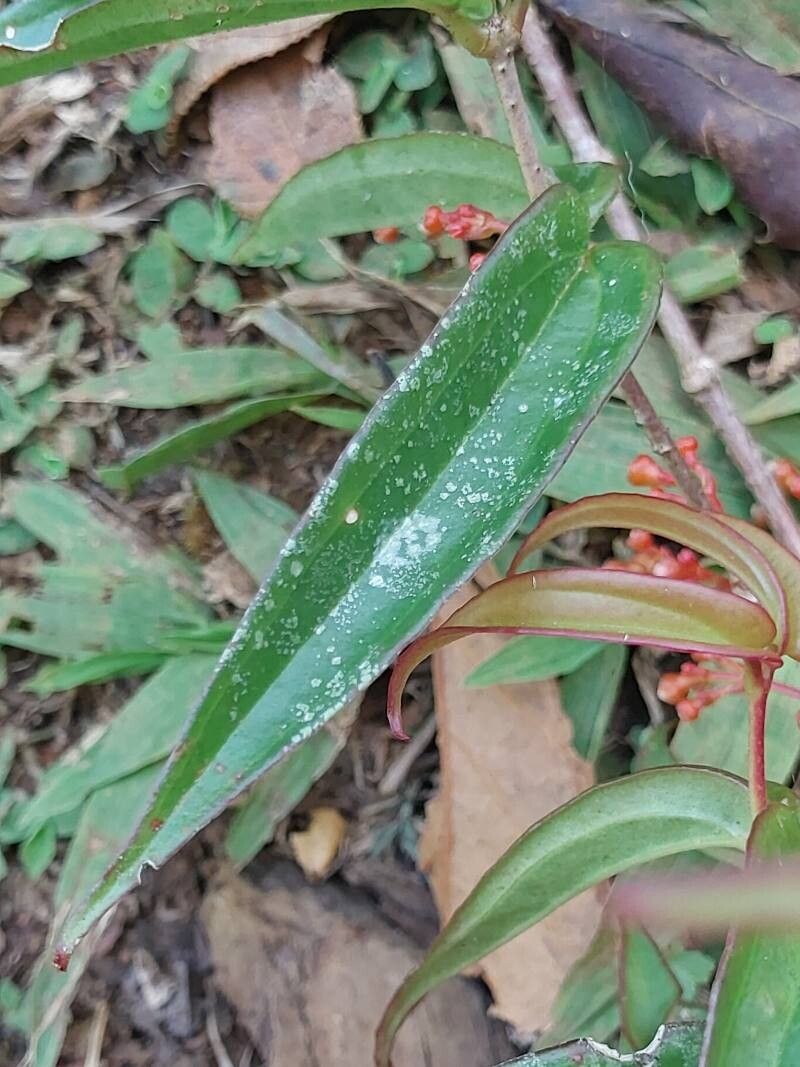
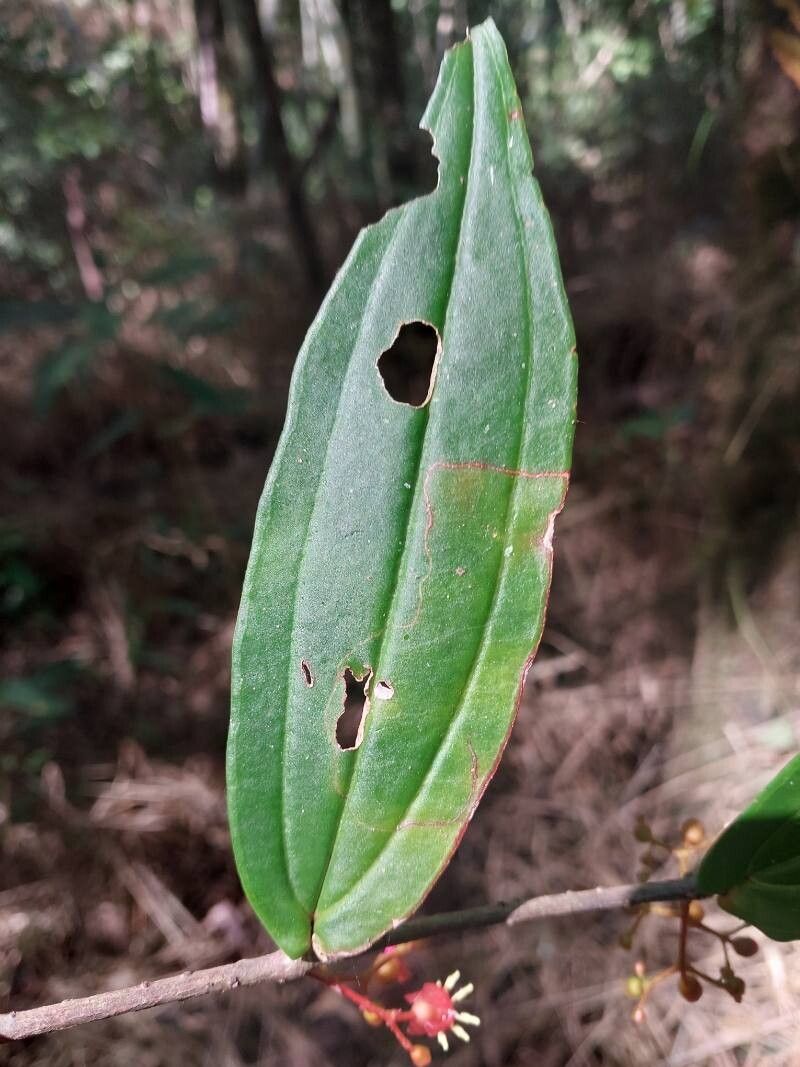
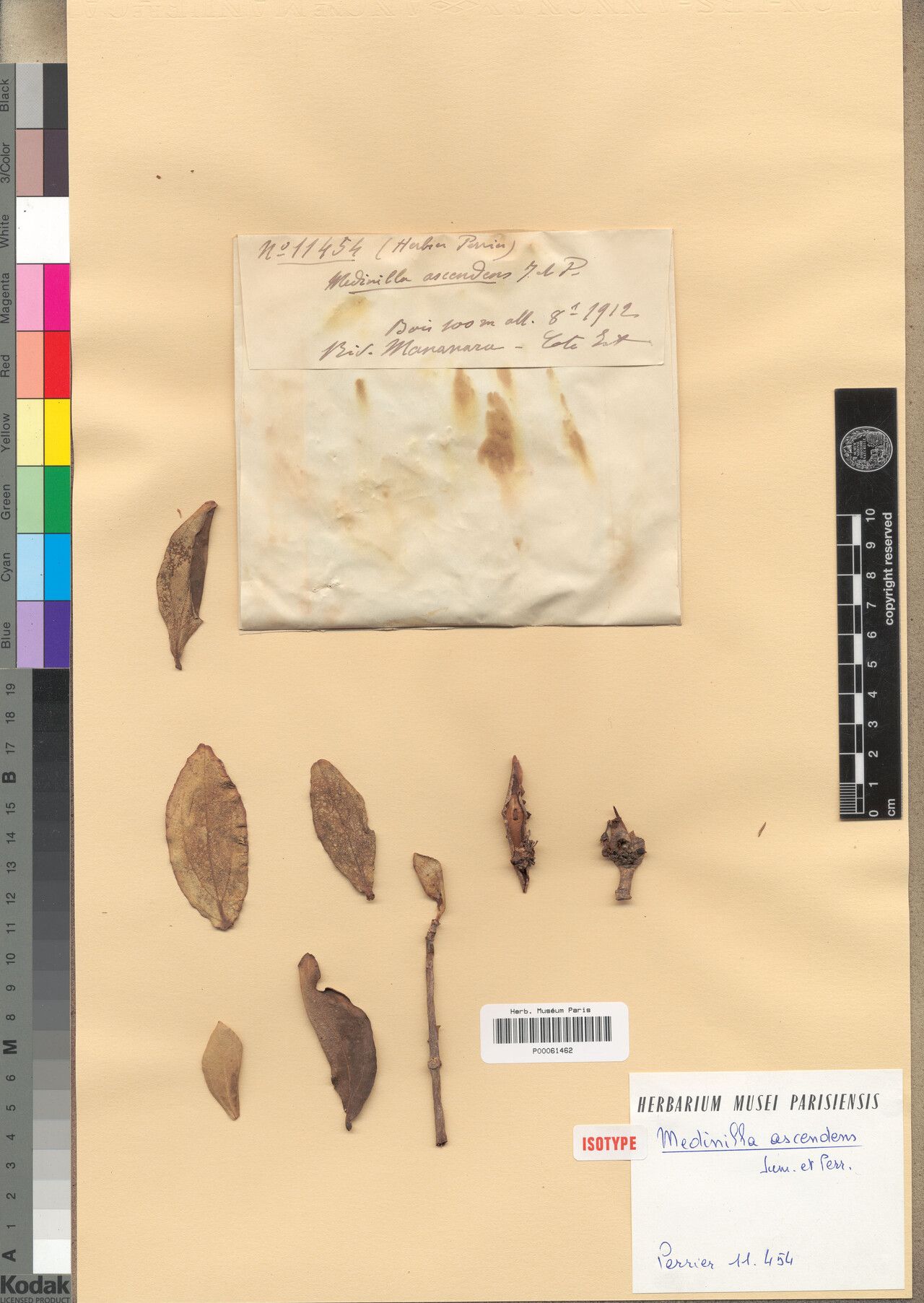
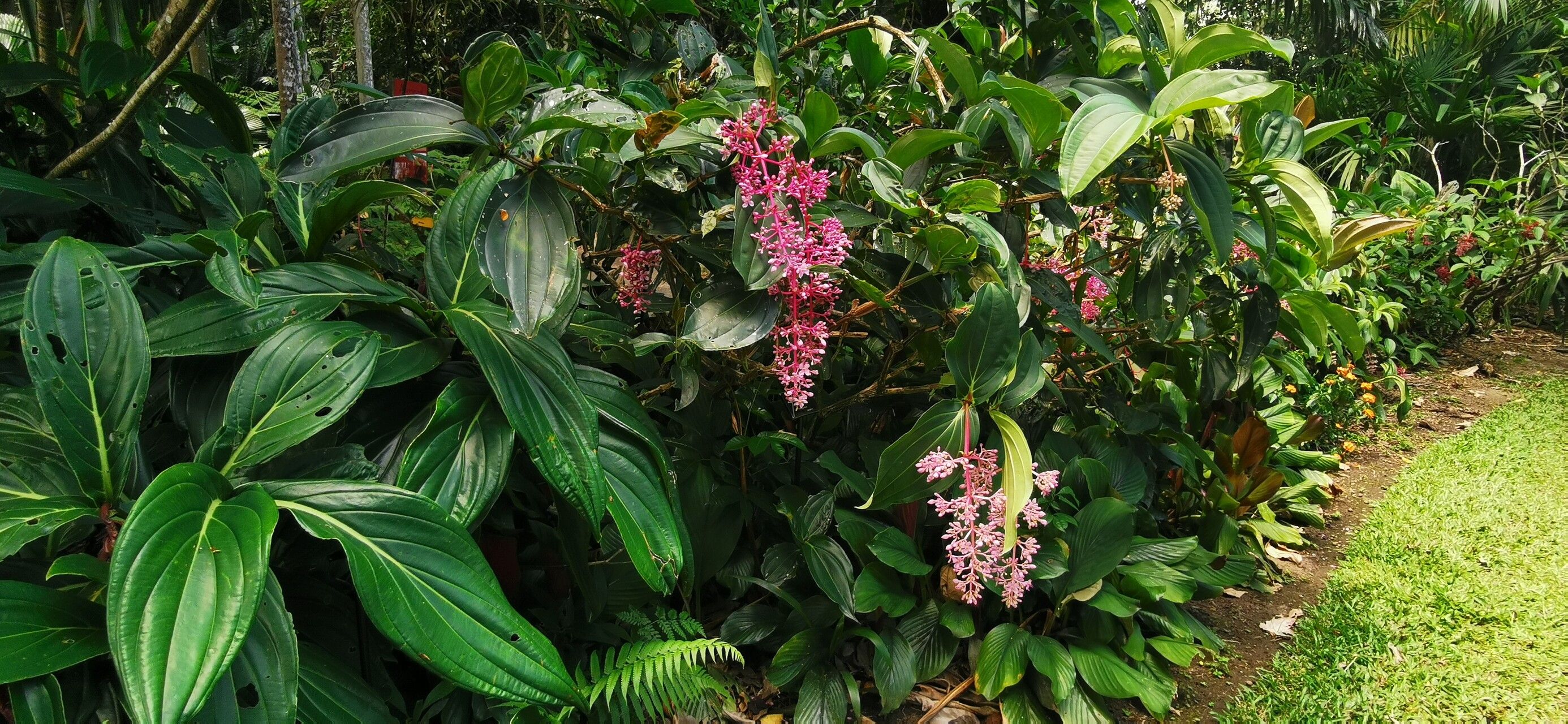
Medinilla sedifolia is a perennial plant of the family Melastomataceae that grows primarily in Madagascar, but is occasionally used as a terrarium plant, an epiphyte mounting, or in hanging pots. It is small for the genus, growing only 75–150 mm (3–6 in) tall. The waxy evergreen leaves grow on a trailing stem. It flowers twice per year, the five petaled flowers are magenta, waxy to the touch, and about 15 mm (1⁄2 in) wide when fully grown.
Medinilla sedifolia has fairly strong disease resistance and is generally not vulnerable to illnesses. However, if kept in poor conditions it can become more prone to disease. It also encounters few insect pests. Regarding care, its needs are moderate. It should receive abundant sunlight, because insufficient light can increase disease susceptibility and cause thin, leggy growth. As it is often grown indoors, it may need to be moved regularly to a bright spot. It does not need frequent watering. Overall, Medinilla sedifolia is suitable for most people, though it is best for those who can provide good light conditions.
How to keep Medinilla Sedifolia.
Light
Medinilla sedifolia naturally occurs in habitats like forest understories and rocky areas, where it experiences natural shade. It prefers partial sun but can tolerate both full sun and full shade, demonstrating its versatile and hardy nature.
Water
Medinilla sedifolia thrives best when its soil is kept consistently moist, requiring weekly watering to achieve this. Although it can tolerate moderate drought, it benefits from careful and regular hydration. Typically cultivated indoors, this plant requires attention to humidity during its active growing season to ensure optimal health and vibrant growth.
Temperature
Medinilla sedifolia comes from tropical areas, where the weather is usually warm and humid. Consequently, it is suited to high heat and moisture. It does not tolerate sudden temperature shifts and prefers a steady temperature, so avoiding indoor fluctuations is important. It generally cannot endure cold and needs higher temperatures to grow. If the ambient temperature becomes too low, the plant may stop growing or even die.
Fertilizer
Early spring, when Medinilla sedifolia breaks dormancy, is the best time to apply fertilizer. This supports overall growth and flower formation. Fertilization improves the foliage, stems, and branches, and encourages flowers that are larger, more vivid, and longer-lasting. It helps transport nutrients from the roots to the flowers and enhances the plant’s health and resistance to disease.
Pruning
The Medinilla sedifolia is a beautiful plant that features vibrant pink flowers and lush foliage, making it an excellent addition to gardens. To promote healthy growth, prune it lightly in early spring. Avoid heavy pruning, as it can stress the plant. Regular, light pruning helps maintain the plant's shape and encourages vigorous flowering, which enhances both the appearance and health of the Medinilla sedifolia.
Pot & Repot
When repotting Medinilla sedifolia, choose a pot 1–2 inches (2.5–5.1 cm) larger with ample drainage. Use a well-draining potting mix. Repot in spring or fall, ensuring that the root ball is slightly lower than the rim of the flower pot. Water thoroughly after repotting and place in a warm spot with indirect sunlight.
Botanical profile.
- Plant Type
- Shrub
- Life Cycle
- Perennial
- Genus
- Medinilla
- Family
- Melastomataceae
- Hardiness Zone
- 10-12
- Mature Height
- 30 cm to 61 cm
- Mature Spread
- 20 cm to 40 cm
- Leaf Color
- Dark Green
- Leaf Type
- Evergreen
- Flower Color
- Pink
- Flower Size
- 1.02 cm to 2.03 cm
- Bloom Time
- Late spring, Summer, Early fall
- Planting Time
- Summer
- Harvest Time
- Late summer, Fall
- Native Area
- Madagascar
Reader questions.
What are the sun requirements for Medinilla sedifolia?
Medinilla sedifolia thrives under specific sunlight conditions to ensure its happiness and health. It requires 'full sun,' meaning it should receive above 6 hours of sunlight daily. Alternatively, it can grow in 'partial sun,' which is about 3-6 hours of sunlight each day. It's important to observe how sunlight moves through your garden to find spots that offer the right balance of light and shade for these plants.
What is the botanical name of Medinilla sedifolia?
The botanical name of Medinilla sedifolia is indeed 'Medinilla sedifolia.' This name helps distinguish it scientifically from other plants and ensures accurate identification and care.