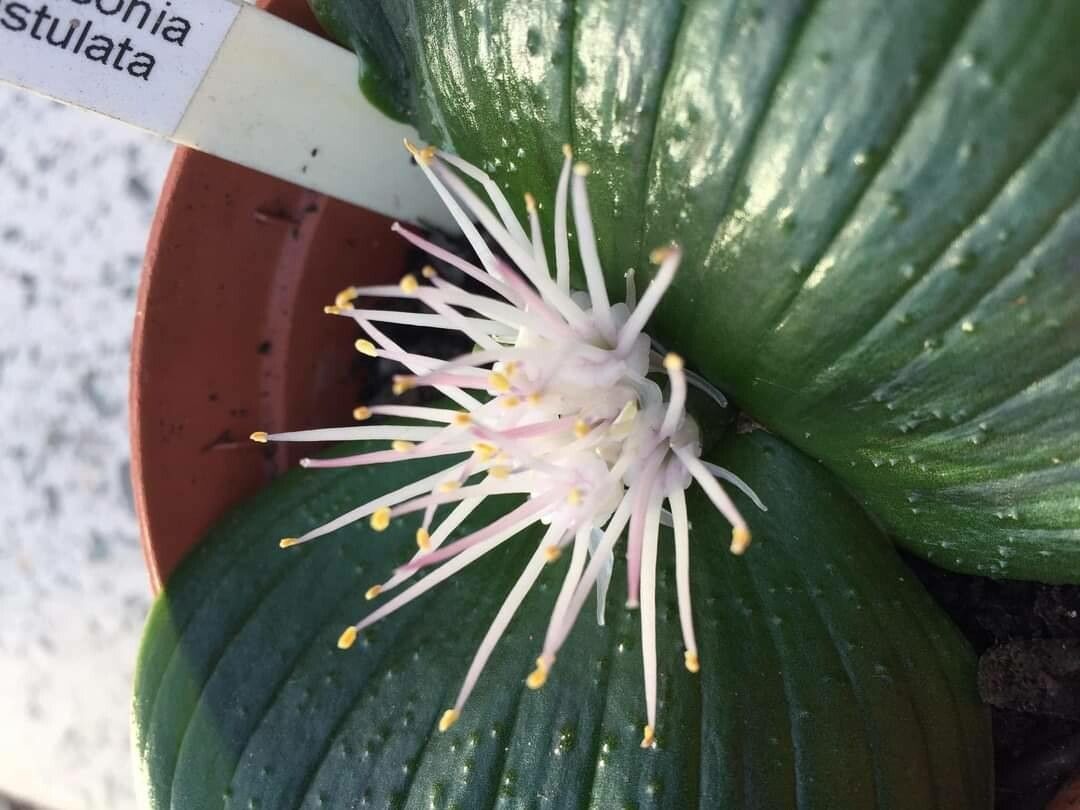
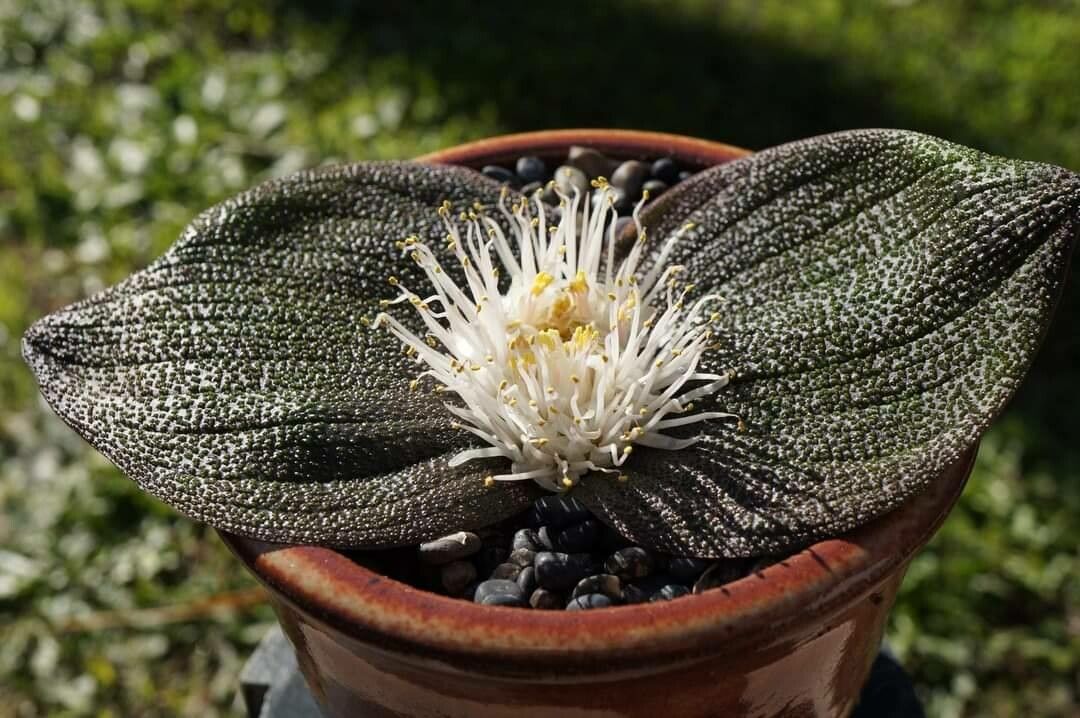
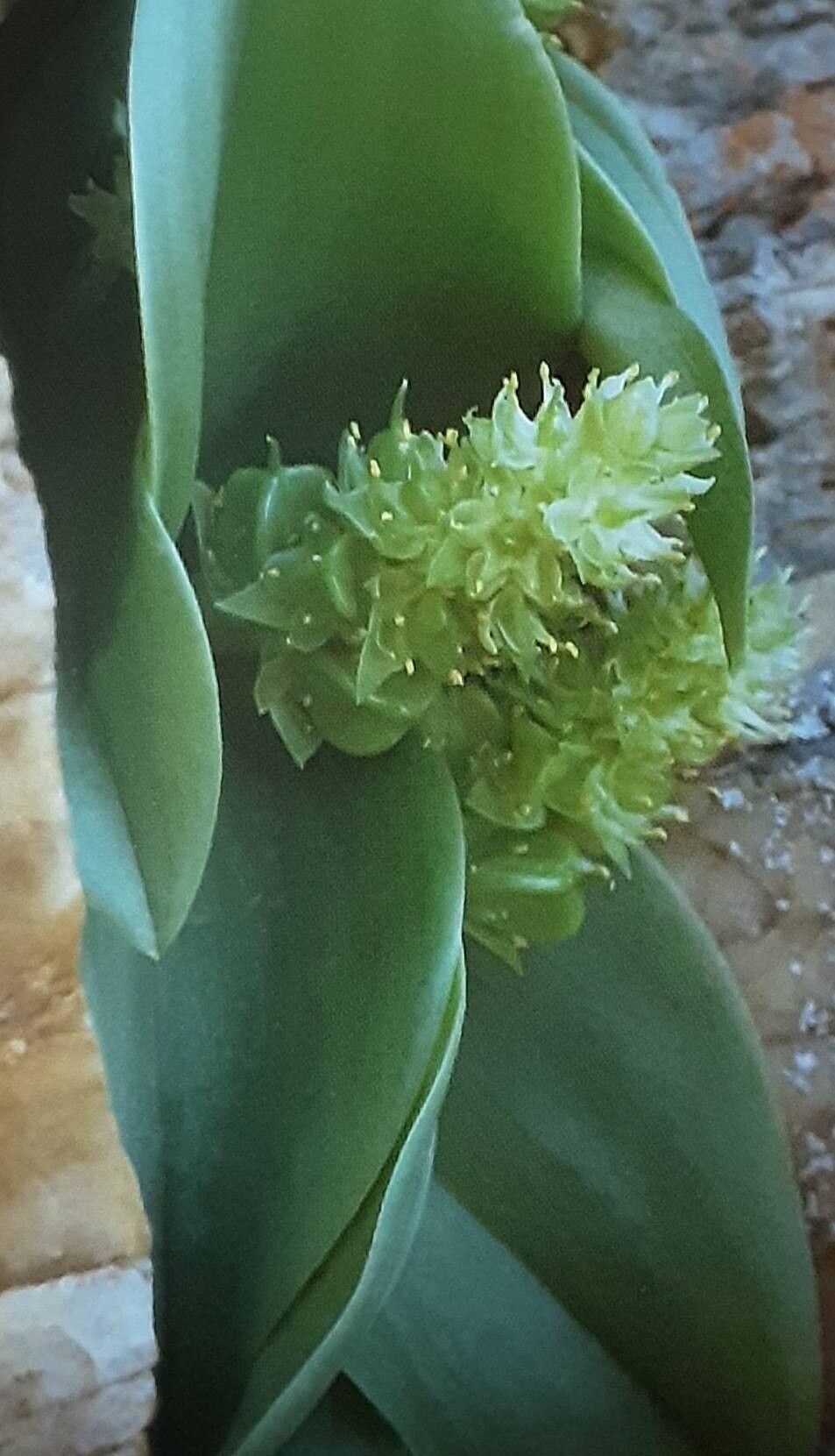
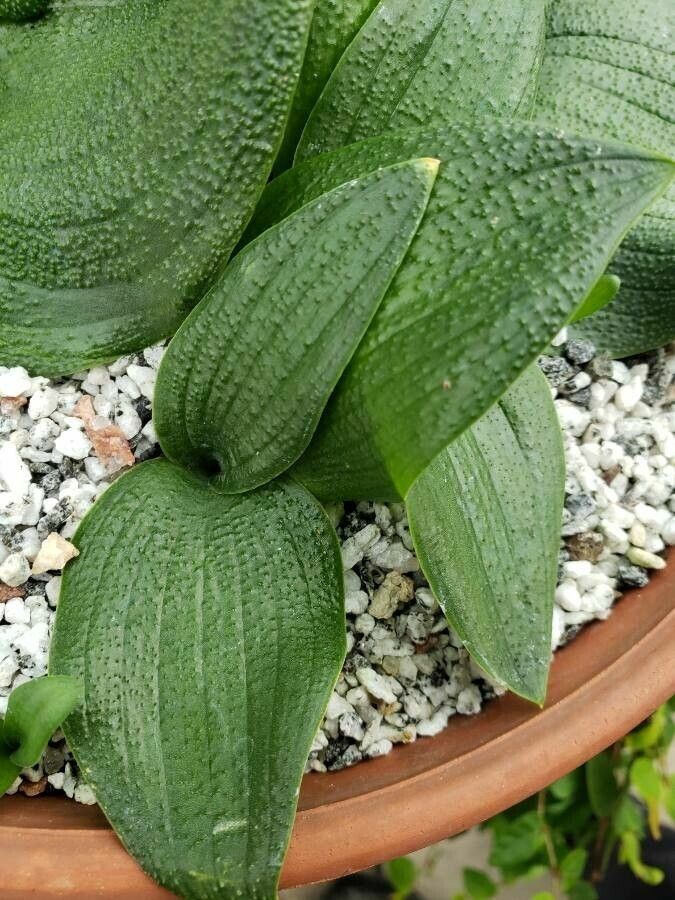
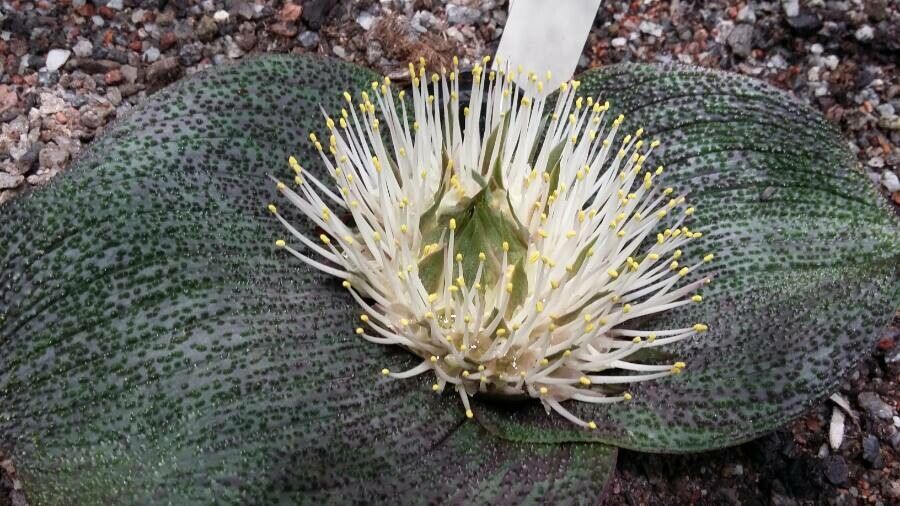
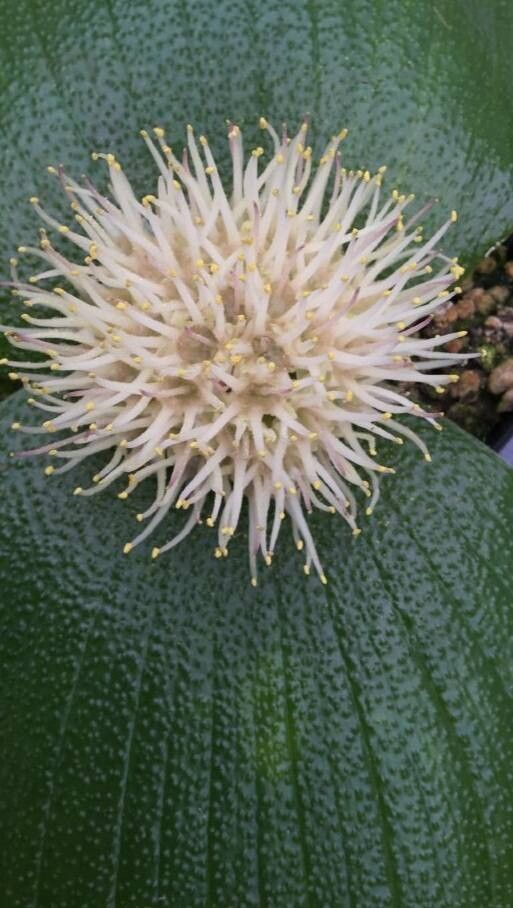
Massonia pustulata, the blistered massonia, is a species of flowering plant in the family Asparagaceae, subfamily Scilloideae, native to the Western Cape of South Africa. Growing to 10 cm (3.9 in) tall and broad, it is a small bulbous perennial with two horizontal, opposite leaves, and virtually stalkless cream or pink flowers in winter. The stamens are longer than the perianth, giving the flower the appearance of a rounded, spiky brush-head. The deep "pock marks" on the leaves give the plant its common name, as well as the specific epithet pustulata.
Blistered massonia has strong resistance to disease and is generally not prone to illnesses. However, it can be vulnerable to pests and diseases present in its surroundings. These infections are typically not severe. In terms of care, this plant demands a moderate level of maintenance. It should be pruned regularly to preserve a good appearance and encourage healthy growth. Fertilizing can also help stimulate flowering. Blistered massonia is appropriate for anyone with outdoor space, such as a garden or patio, and does not require much care experience. It may need more care when grown indoors.
How to keep Massonia Pustulata.
Light
Blistered massonia does best with a generous amount of sunlight, similar to conditions in its native habitat. A lack of sunlight can impede healthy growth, while too much can be detrimental. Its different growth stages may not need different amounts of sun.
Water
Blistered massonia is well-suited for arid conditions due to its high drought tolerance. It requires minimal watering, about once every three weeks. To mimic its natural habitat, it should be kept in a dry environment. Its ability to store water makes blistered massonia an excellent choice for homes with low humidity, as it thrives in drier climates.
Temperature
Blistered massonia can adjust to a broad span of temperatures, though its range may still be constrained by various combinations of moisture and heat. It grows most successfully in warm summer conditions with sufficient rainfall or watering. Extended stretches of cloudy, rainy weather, as well as sustained high temperatures, raise the risk of blistered massonia dying. In winter, adequate protection from cold can improve the plant's chances of survival.
Fertilizer
For Blistered massonia, the primary time to apply fertilizer is in early spring, while the flowers are forming. The proper fertilizer promotes stronger blooms and helps Blistered massonia produce attractive flowers. Fertilizing in early spring ensures good flowering throughout the season and supplies energy for dormant phases of growth.
Pruning
The blistered massonia is a bulbous perennial that has broad, wrinkled leaves and distinctive flowers. To encourage blooming, prune away dead leaves in the spring and remove spent flowers. Use sharp scissors to make clean cuts, which will improve air circulation and reduce the risk of disease. For the best care practices, consult gardening resources.
Pot & Repot
Repot blistered massonia every 2-3 years, ideally in late autumn after it has gone dormant. Choose a shallow, broad container to accommodate its horizontal growth. After repotting, place the plant in bright, indirect light. Avoid watering until you see new growth, as this encourages recovery and promotes robust blooms.
Botanical profile.
- Plant Type
- Herb
- Life Cycle
- Perennial
- Genus
- Massonia
- Family
- Asparagaceae
- Hardiness Zone
- 9-11
- Mature Height
- 15 cm
- Mature Spread
- 25 cm
- Leaf Color
- Green
- Leaf Type
- Deciduous
- Flower Color
- White
- Flower Size
- 2.03 cm to 3.05 cm
- Bloom Time
- Mid winter, Late winter
- Planting Time
- Autumn
- Harvest Time
- Early spring, Mid spring
- Native Area
- South Africa