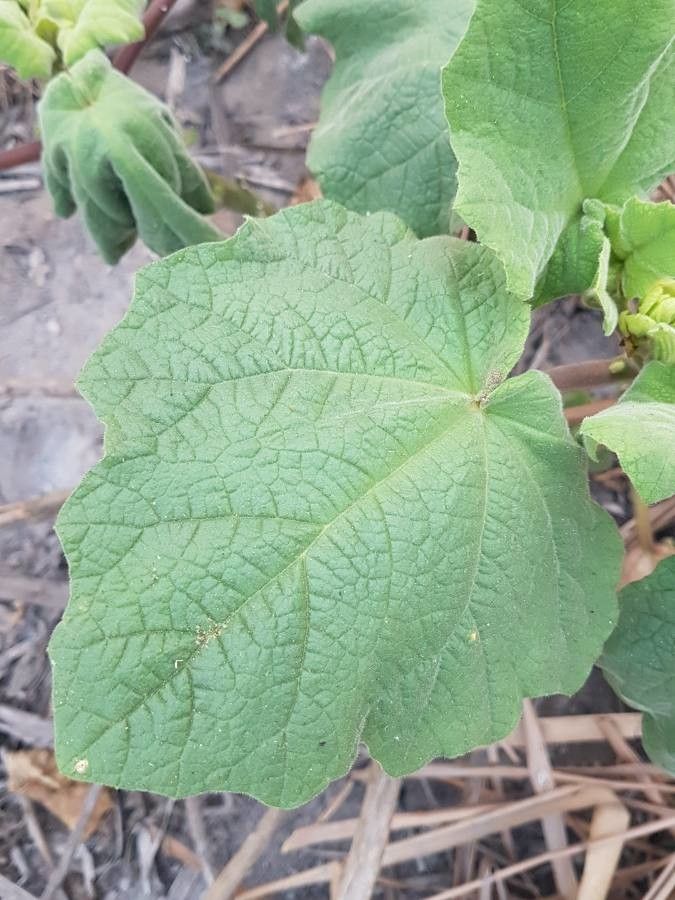
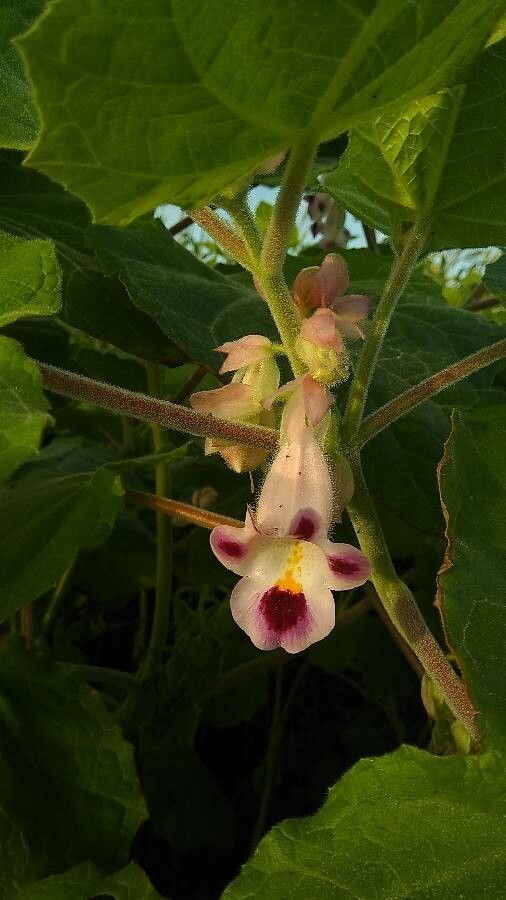
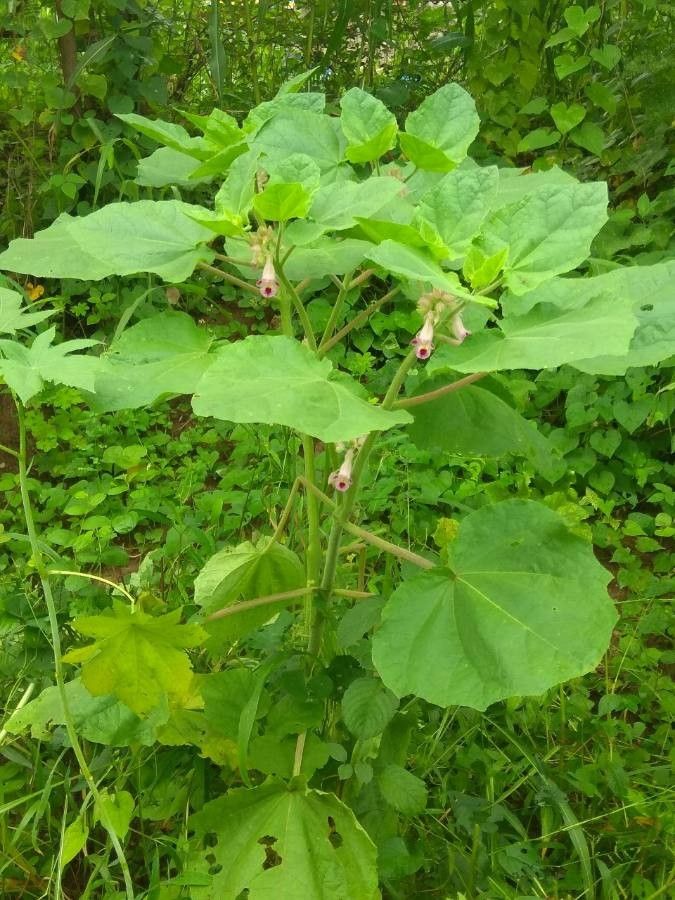
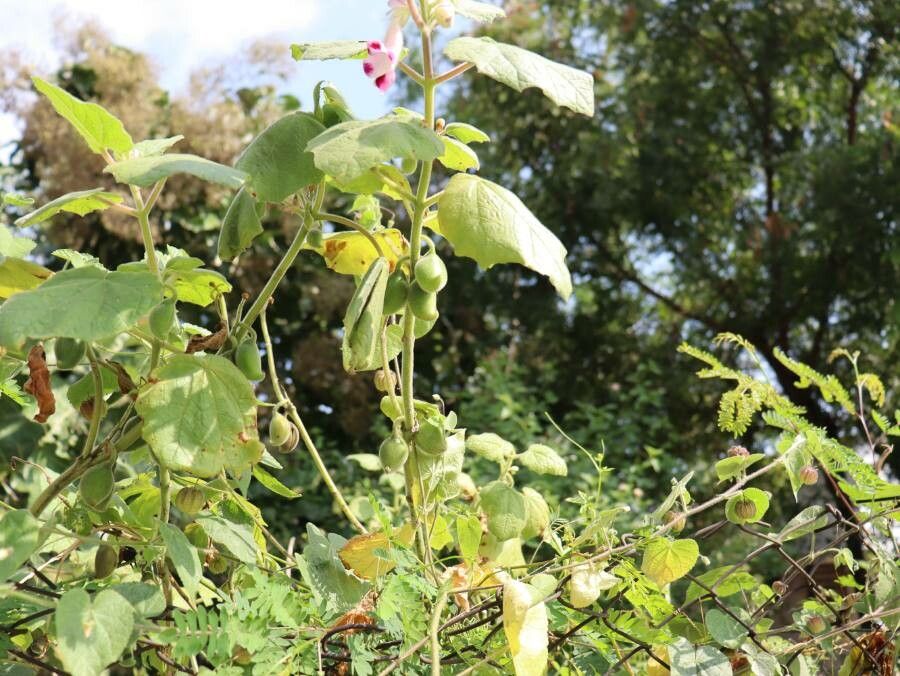
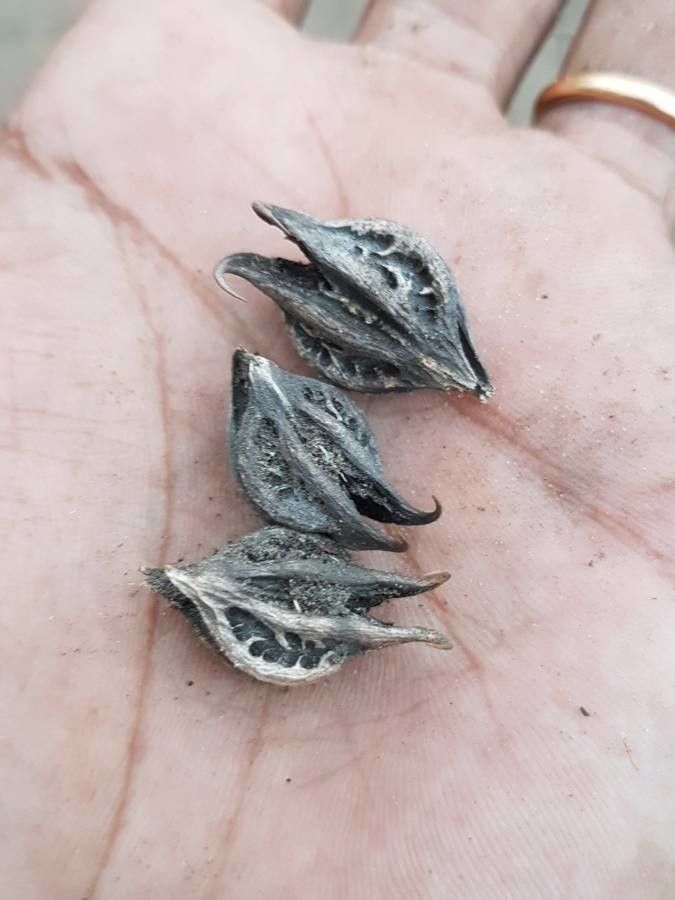
Martynia is a monotypic genus in the Martyniaceae family consisting of a single species, Martynia annua L., which is commonly known as cat's claw, tiger's claw, or iceplant. However, the name 'iceplant' may also refer to members of the unrelated plant family Aizoaceae. It is native to Mexico, Central America and the Caribbean, and has been introduced throughout the tropics. It is now quite common in rural areas of India. Martynia is used for making beads and ornaments, and has a history of folk medicine uses in the Indian subcontinent.
Cat's claw generally has strong resistance to diseases and is not highly prone to them. Still, it can be vulnerable to pests and diseases present in its environment. Such infections are typically mild. Regarding care, this plant needs a moderate amount of attention. It should be pruned regularly to preserve a tidy appearance and encourage healthy growth. Applying fertilizer can also aid in boosting bloom production. Cat's claw is well suited for anyone with an outdoor area, like a garden or patio, and does not demand extensive gardening experience. It may need extra care when cultivated indoors.
How to keep Martynia Annua.
Light
Cat's claw does best in places that receive plentiful light during the day and can also adapt to sites with reduced sunlight. Although light is ideal for its overall growth, excessive exposure can cause stressed or scorched foliage. Its native habitat has abundant sunlight.
Water
Cat's claw, a plant native to tropical regions, thrives in moist, humid environments and requires regular hydration. It's best to water it weekly. This plant grows better outdoors, where it can benefit from natural rainfall. Water is particularly important during its active growing season when its demand for moisture is highest.
Temperature
Cat's claw naturally thrives in climates with temperatures ranging from 68 to 100 °F (20 to 38 ℃). It prefers warm conditions and may need temperature regulation during colder seasons to ensure optimal growth.
Fertilizer
When most of the Cat's claw blooms have opened to full size, resume fertilizing. At the peak flowering period, feed it every three to four weeks, as weather allows. Once the Cat's claw begins producing fewer new blooms, stop fertilizing; there's no reason to fertilize when the plant can no longer produce additional blooms.
Pruning
Cat's claw is characterized by its claw-shaped seed pods and sprawling growth habit. To encourage bushier growth, enhance air circulation, and remove dead branches, it is best to prune this plant from early to late spring. Regular pruning also helps reduce its invasiveness and increase flowering. For the best results, always use clean, sharp tools when pruning.
Botanical profile.
- Plant Type
- Herb
- Life Cycle
- Annual
- Genus
- Martynia
- Family
- Martyniaceae
- Hardiness Zone
- 10-11
- Mature Height
- 91 cm
- Mature Spread
- 30 cm to 61 cm
- Leaf Color
- Green
- Leaf Type
- Semi-evergreen
- Flower Color
- White, Pink, Purple
- Flower Size
- 3.05 cm to 5.08 cm
- Bloom Time
- Summer, Early fall
- Planting Time
- Spring, Summer
- Harvest Time
- Late summer, Fall
- Native Area
- Bahamas, Belize, Cuba, Honduras, Mexico, Haiti, United States, Guatemala, El Salvador, Nicaragua, Dominican Republic, Costa Rica
Other names.
Reader questions.
How should I water my Cat's claw plant?
To water Cat's claw, you have several options such as using a garden hose with a spray nozzle or a watering can. This plant is not too particular about the type of water it receives, so you can use rainwater, tap water, or even filtered water. However, try to avoid watering the plant from above, as this can harm the leaves and flowers and potentially cause disease. Using a drip irrigation system is often the best way to water Cat's claw, as it provides even and direct hydration to the soil. If you have a container-grown Cat's claw, you can follow a similar watering approach but use a cup, watering can, or tap to apply water directly to the soil.
What are the sunlight requirements for Cat's claw?
Cat's claw requires full sun, meaning it should receive above 6 hours of sunlight daily, but it can also thrive in partial sun, with about 3-6 hours of sunlight. It's essential to watch how the sun moves through your garden and choose spots that provide a good balance of light and shade. This ensures your plants stay happy and healthy. Cat's claw originates from habitats with abundant sunlight, but it's worth noting that overexposure can lead to stressed or scorched foliage.
What is the ideal climate for Cat's Claw?
Cat's Claw thrives natively in climates with temperature ranges between 68 to 100 °F (20 to 38 °C). It prefers warm environments and may need temperature regulation during colder seasons to ensure optimal growth. As it is extremely heat-loving, any exposure to cold temperatures can harm the plant. Specifically, in autumn, for outdoor-grown Cat's Claw, it is recommended to bring the plant indoors and place it near a bright window, yet at a safe distance from heaters to avoid damage. To promote plant growth, maintaining temperatures above 20°C during the winter is beneficial, while any temperatures nearing 5°C can be detrimental.
What should I do if I give my cat's claw too much or too little water?
To remedy underwatering Cat's claw, simply water it more regularly when you notice it lacks moisture. Overwatering can be more serious if not detected early, as it can lead to diseases and decline in the plant. To prevent this, choose a proper location with sunlight and good drainage. If you overwater a potted Cat's claw, consider changing to a new pot with better drainage and add loose soil during repotting.
How should artificial lighting be used for indoor plants?
Indoor plants, including Cat's claw, require adequate lighting for optimal growth, especially when natural sunlight is insufficient. This can be particularly relevant during winter or in less sunny spaces. Artificial lighting, such as LED lights, offer a vital solution, as they can be customized to deliver specific wavelengths essential for your plants. The general guidance suggests that full sun plants need 30-50W/sq ft, partial sun plants need 20-30W/sq ft, and full shade plants need 10-20W/sq ft of artificial light. The light source should be placed 12-36 inches above the plant, mimicking natural sunlight characteristics. Moreover, the duration of exposure should typically be 8-12 hours per day to meet most plant species' needs.
What are the symptoms of low temperature exposure in Cat's Claw?
Cat's Claw is not tolerant of low temperatures and thrives best when the temperature remains above 20°C. During winter, ensuring the temperature stays above 5°C is crucial. Exposure to temperatures below 1°C may lead to the leaves lightening in color. Additionally, after frost damage, the leaves can gradually turn brown or black, displaying symptoms such as wilting and drooping.
How frequently should I give water to my Cat's claw plant?
Cat's claw requires regular watering throughout the growing season. In the spring, water the plant once a week. As the season gets warmer, you may need to increase watering to two to three times a week, but be careful not to overdo it. Make sure the soil is consistently moist but not wet. If you have a potted Cat's claw, watering will be different. Potted soil can dry out faster, so you'll need to water it more frequently. In most cases, watering a potted Cat's claw should be done a few times a week, compared to just once a week for a plant in the ground.
What are common symptoms of inadequate light in Cat's claw?
When Cat's claw is grown indoors under inadequate light, several symptoms can manifest. These include smaller new leaves, leggy or sparse growth, faster leaf drop, stalled or no new growth, lighter-colored new leaves, and various forms of damage from excessive sunlight such as chlorosis, sunscald, leaf curling, wilting, and leaf scorching. These symptoms indicate a stress response to insufficient sunlight, which impacts the plant's ability to grow healthily and perform photosynthesis effectively.
How can you treat Cat's Claw affected by low temperatures?
For Cat's Claw affected by low temperatures, the first step is to trim off the frost-damaged parts. Then, immediately move the plant indoors to a warm environment to protect it from the cold. Placing the plant near a south-facing window ensures it receives ample sunlight. However, it's important to avoid placing the plant too close to heaters or air conditioning vents, as this can cause excessive dryness in the air.
How much water should I give my Cat's claw plant?
When determining how much water to give your Cat's claw, there are a few options. Some gardeners prefer to gauge the moisture in the soil by feeling it. They suggest watering until the top six inches of soil feel moist. Another method is to measure a set amount of water to give your Cat's claw, typically around two gallons per week. This may vary depending on the temperature and how quickly the soil dries out. However, following strict guidelines like this may result in overwatering if your plant does not require that much water. When growing Cat's claw in a container, a different approach is needed. You should water enough to moisten all the layers of dry soil. You can check for moisture by sticking your finger in the soil or by watering until you see a slight trickle of excess water draining from the pot's holes.
What solutions are available for Cat's claw experiencing insufficient sunlight?
To combat insufficient sunlight for both indoor and outdoor Cat's claw plants, gradual adaptation to more sunlit conditions is key. For indoor plants, moving them to a sunnier spot or using a south-facing window can help, along with the use of desk lamps or professional grow lights for at least 8 hours a day. Outdoor plants should be moved gradually to sunnier spots to prevent sunburn. If plants are ground-based, reducing obstructions like pruning trees or transplanting to areas with better sunlight and drainage can be effective. It's important to remember that while parts of the plant already damaged by low light may not recover, new growth should be healthy following these adjustments.
What are the symptoms of high temperature exposure in Cat's Claw?
During summer, it's advised to keep the temperature for Cat's Claw below 38°C. When temperatures exceed 43°C, the plant's leaves may lighten in color, making the plant more susceptible to sunburn.