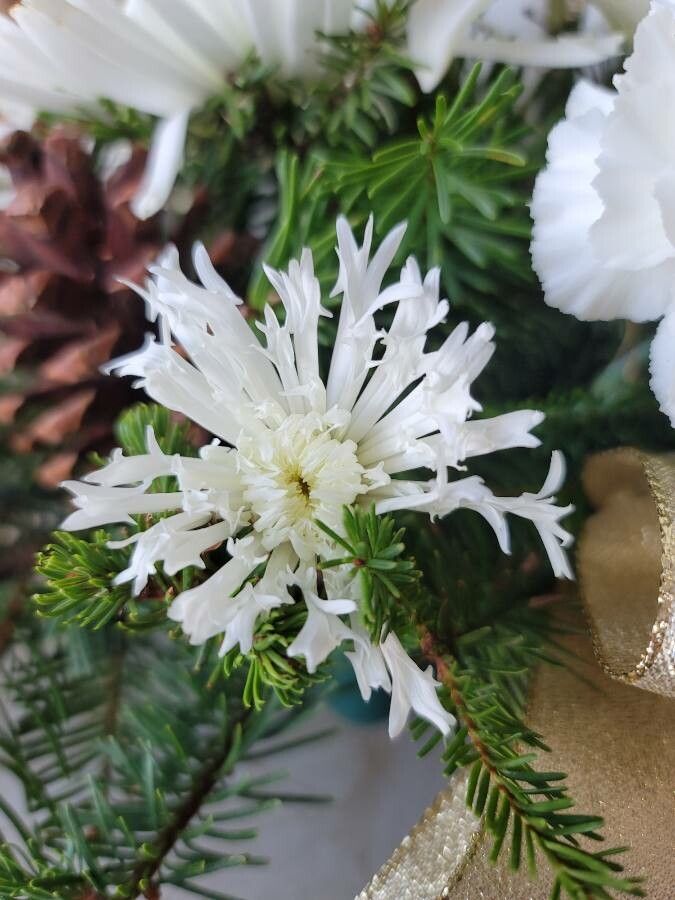
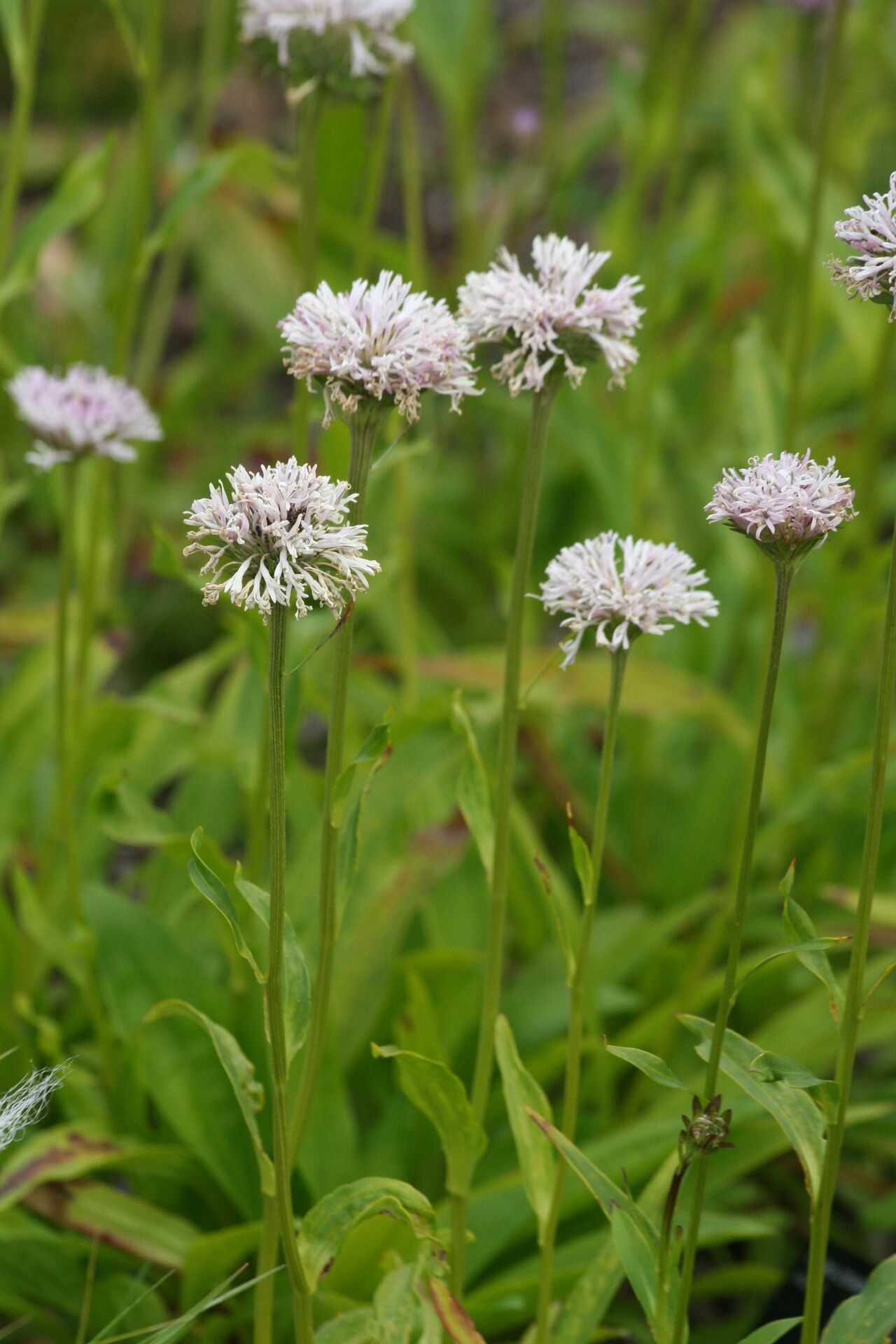
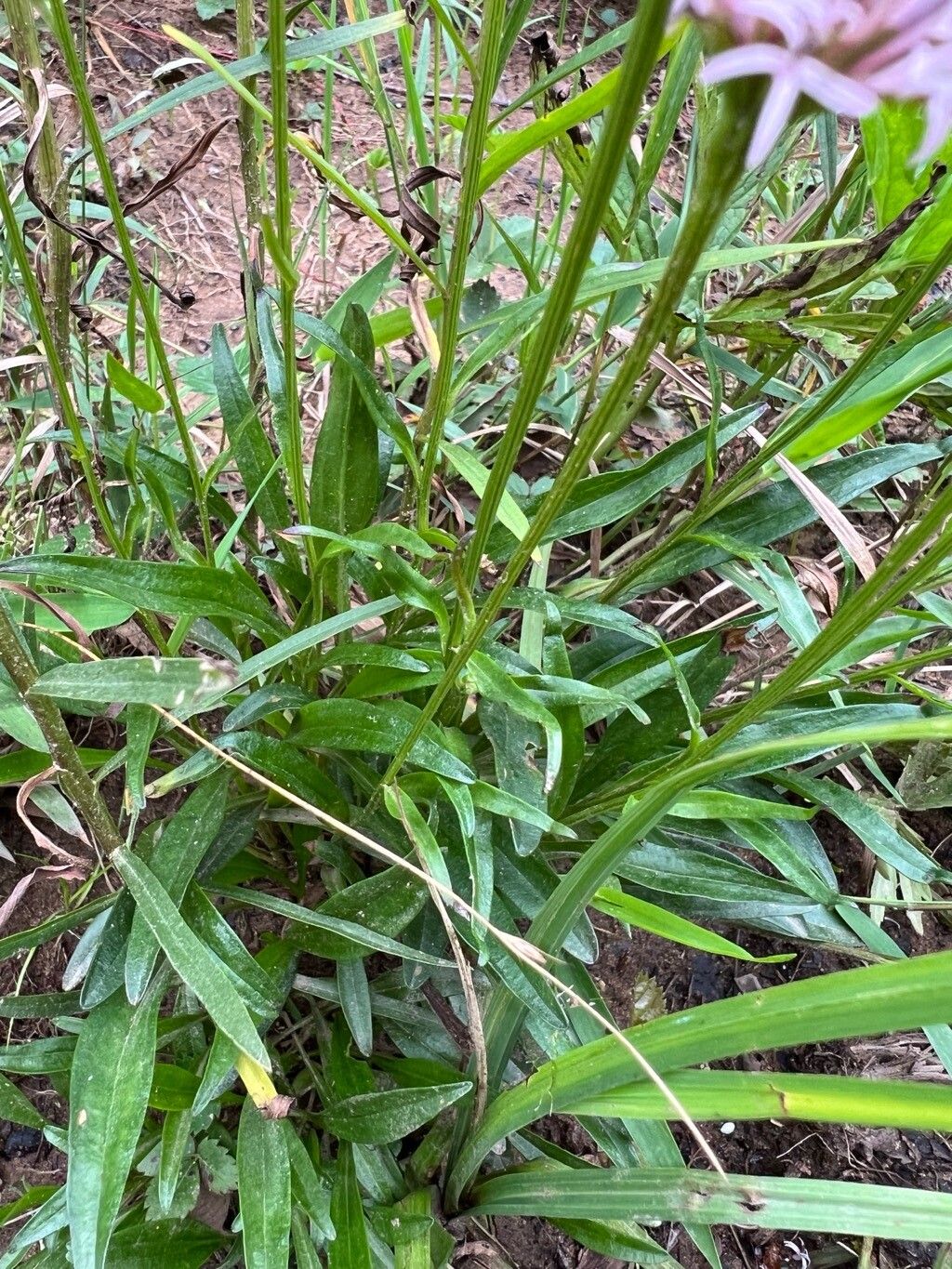
Marshallia graminifolia is a perennial herb species, endemic to the coastal plains of the Southern United States, where it often grows in bogs and in sunny locations. Like all species in the genus Marshallia, it has the common name Barbara's buttons, and is specifically known as grassleaf Barbara's buttons.M. graminifolia has two accepted subspecies, M. graminifolia subsp. graminifolia, and M. graminifolia subsp. tenuifolia (commonly known as narrowleaf Barbara's buttons or slim leaf Barbara's buttons).M. graminifolia subsp. tenuifolia grows in moist sandy habitats, such as bogs, wet savannahs and low pine woods in the south-east coastal areas of the United States, from the south coast of Georgia along the gulf coast into east Texas. It has a deep taproot, lavender to white flowers and an achene fruit. The disc shaped flowers are fragrant.
Grassleaf barbara's buttons has good resistance to disease and is generally not vulnerable to illnesses. However, it can be affected by pests and diseases present in its surroundings. These problems are usually not serious. In terms of care, this plant needs moderate maintenance. Regular pruning is required to preserve a neat appearance and encourage healthy growth. Fertilizing can also help stimulate flowering. Grassleaf barbara's buttons is suitable for anyone with outdoor space, such as a garden or patio, and does not demand much gardening experience. It may need more attention when grown indoors.
How to keep Marshallia Graminifolia.
Light
Grassleaf barbara's buttons is a sun-loving, perennial herbaceous plant native to open habitats and commonly found in meadows and grasslands. It prefers full sun but can also tolerate partial sun.
Temperature
Grassleaf barbara's buttons can tolerate a wide range of temperatures, but its distribution may still be restricted by particular combinations of moisture and heat. It does best in warm summer climates with adequate rainfall or watering. Long stretches of cloudy, rainy weather and prolonged high temperatures can raise the chances of Grassleaf barbara's buttons dying. In winter, protecting the plant from cold can increase its survival rate.
Fertilizer
The primary time to fertilize Grassleaf barbara's buttons is in early spring while the flowers are forming. The appropriate fertilizer promotes improved blooms and helps Grassleaf barbara's buttons produce attractive flowers. Fertilizing in early spring guarantees strong flowers throughout the season and supplies energy for dormant growth phases.
Pruning
Grassleaf Barbara's Buttons is a plant characterized by its grass-like leaves and button-shaped flowers. To encourage growth and maintain its shape, prune the plant in early spring by removing any dead stems and reducing overcrowding. It's important to use clean, sharp tools for pruning to prevent the spread of disease and to ensure precise cuts, which will enhance the plant's health and appearance.
Botanical profile.
- Plant Type
- Herb
- Life Cycle
- Perennial
- Genus
- Marshallia
- Family
- Asteraceae
- Hardiness Zone
- 5-9
- Mature Height
- 30 cm to 91 cm
- Mature Spread
- 20 cm to 30 cm
- Leaf Color
- Green
- Leaf Type
- Deciduous
- Flower Color
- Pink
- Flower Size
- 2.54 cm to 7.62 cm
- Bloom Time
- Summer
- Planting Time
- Spring, Summer
- Harvest Time
- Late summer, Early fall, Mid fall