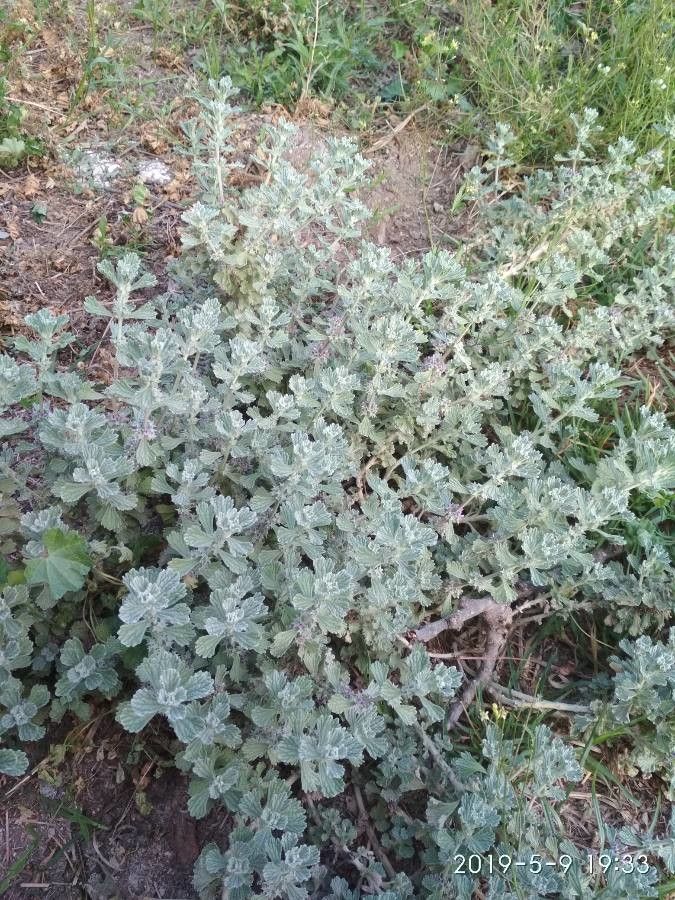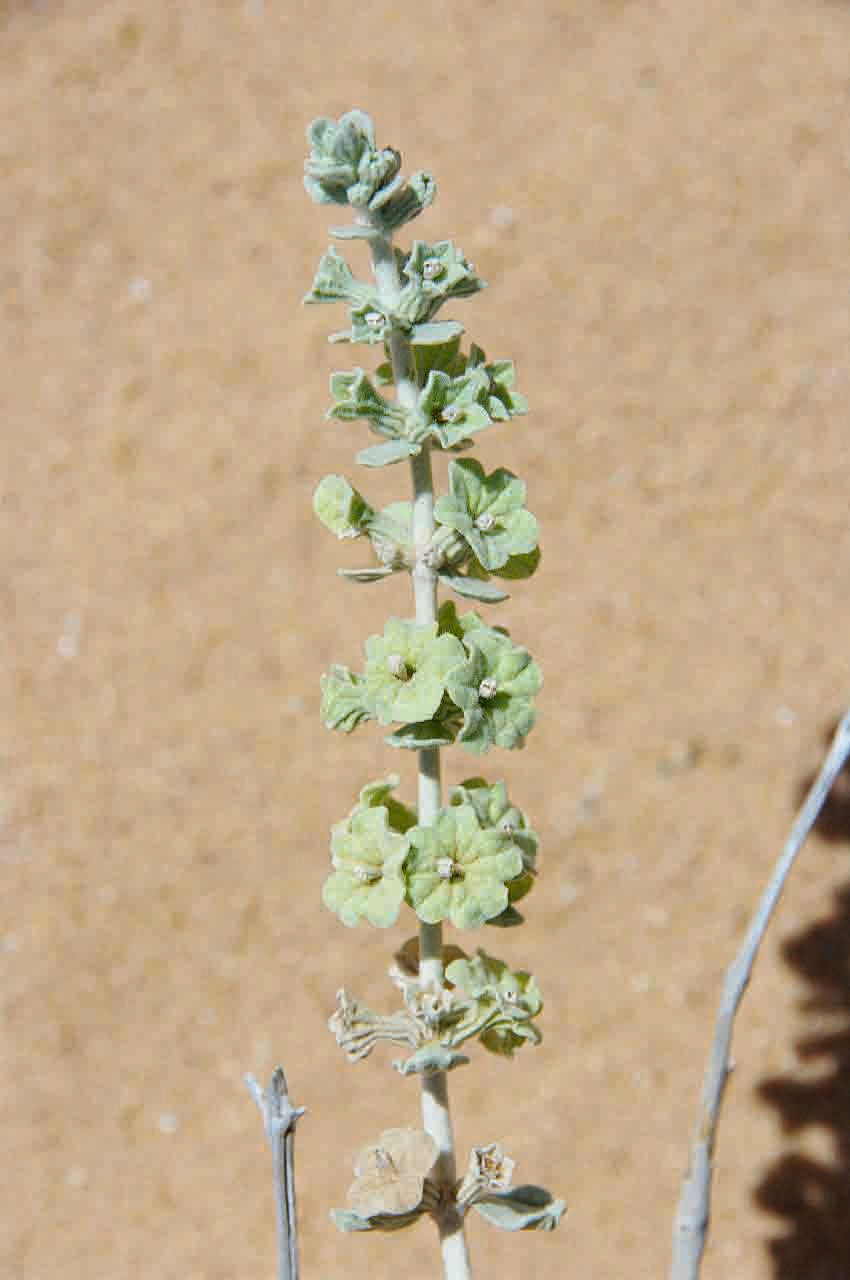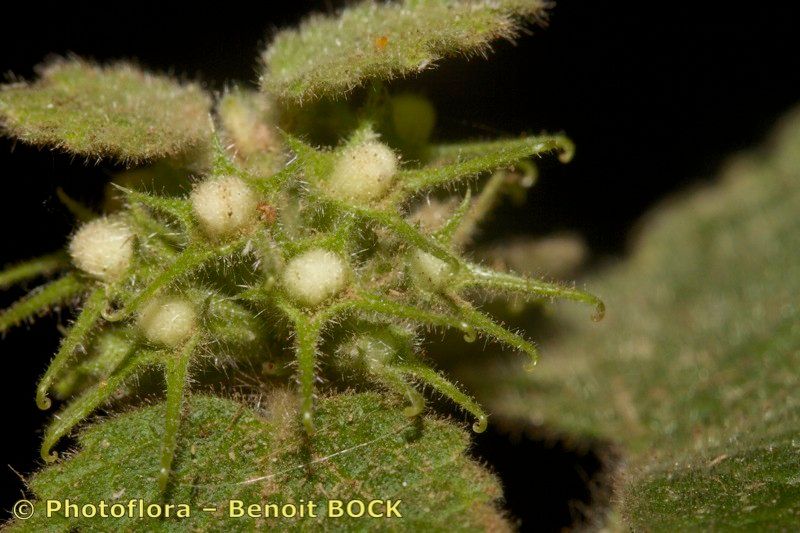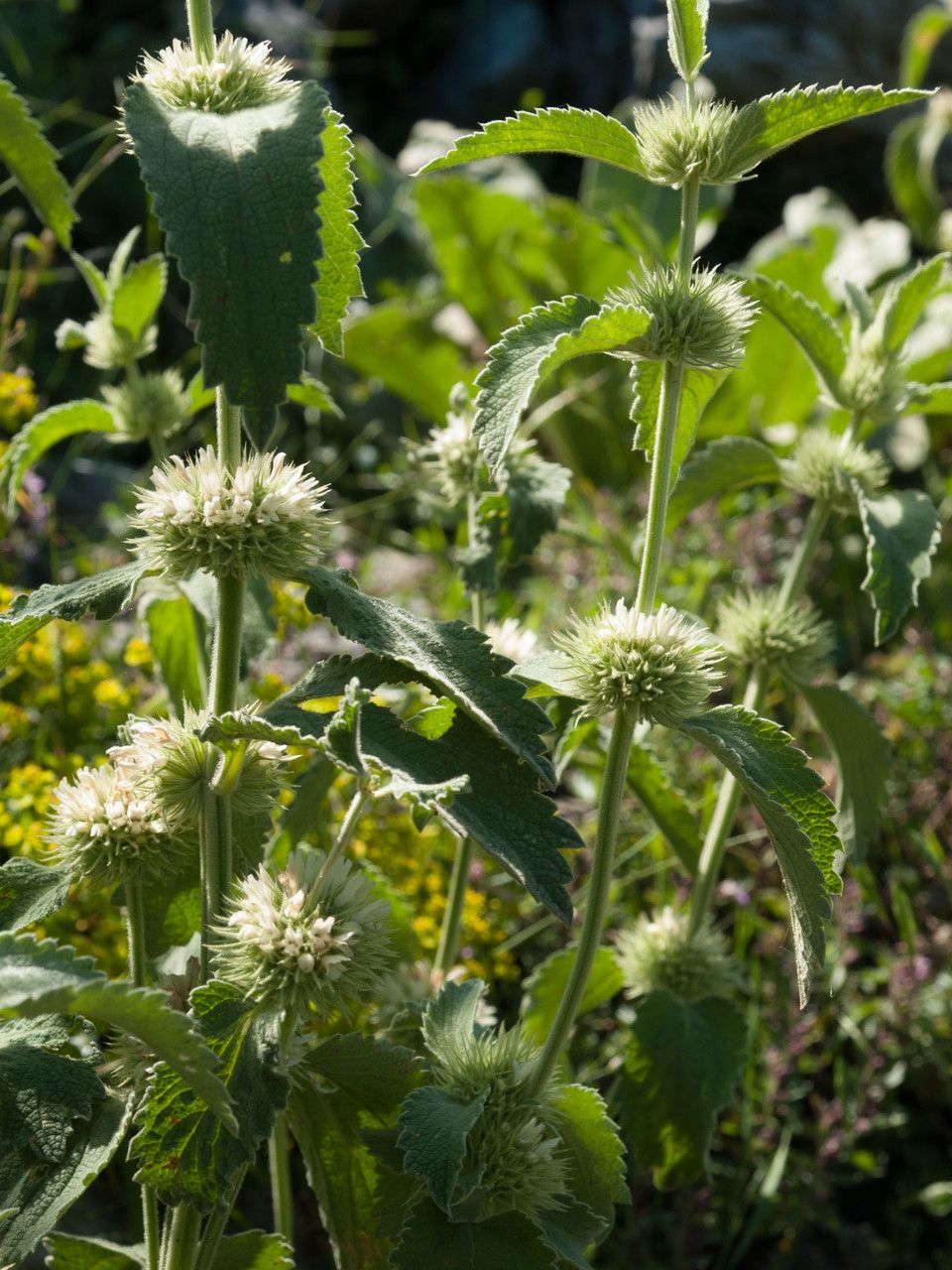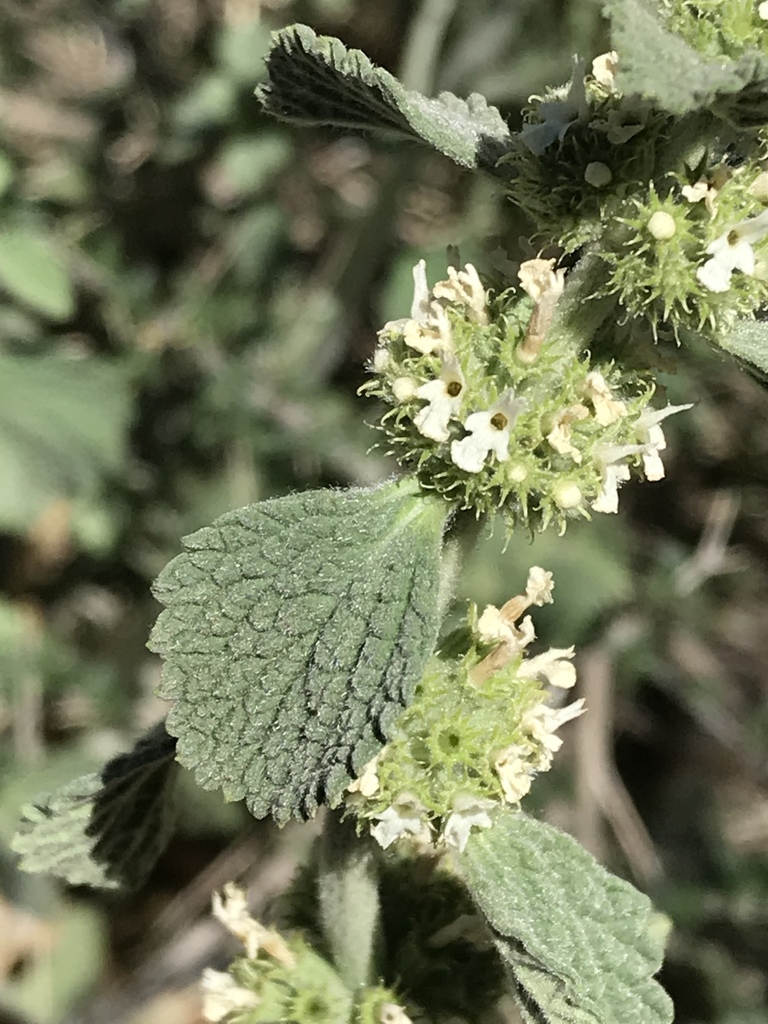
Marrubium vulgare, commonly known as white horehound, is a perennial herbaceous plant in the mint family. Native to Europe, North Africa, and Asia, it has also been naturalized in other parts of the world. The plant can grow up to 60 cm tall and features a woody stem with numerous branches. Its leaves are gray-green and have a woolly texture due to fine hairs covering them.
White horehound produces small white flowers that bloom from June through September. These flowers are arranged in whorls around the stem and have five petals with purple spots, attracting bees, butterflies, and other pollinators.
For centuries, the plant has been used for its medicinal properties, including antispasmodic, expectorant, and anti-inflammatory effects. It is commonly used as an herbal remedy for respiratory ailments such as coughs, colds, bronchitis, and asthma, among others.
White horehound can be easily grown from seeds or cuttings in well-drained soil under full sun or partial shade, making it an ideal addition to herb gardens or naturalized areas. It can attract pollinators while providing medicinal benefits.
White horehound is a plant whose genus name is thought to originate from the Hebrew word "marrob," which means "bitter juice." This plant is known for being one of the bitter herbs traditionally used in Jewish Passover rituals. Additionally, it is called "white horehound" because of its white flowers.
White horehound is fairly resistant to disease and typically does not suffer from many illnesses. Still, it can be affected by pests and diseases present in its surroundings. Such infections are generally minor. Regarding care, the plant requires moderate maintenance. Regular pruning is necessary to keep it looking good and to support healthy growth. Fertilizing can also help encourage flowering. White horehound is suitable for anyone with outdoor space, such as a garden or patio, and does not demand extensive gardening experience. It may need more attention when grown indoors.
How to keep Marrubium Vulgare.
Light
White horehound strongly prefers locations that receive ample sunlight throughout the day for healthy growth. It can also grow in places that get sunlight only for part of the day. However, too little light leads to poor growth, while too much light can cause damage.
Water
White horehound is well-suited to Mediterranean climates and thrives in dry conditions, demonstrating its drought tolerance. To mimic natural rainfall, it needs watering once a week and prefers well-drained soil. Although it can withstand overwatering, the plant benefits from consistent moisture during its growth phase. It flourishes best with a balance of sunlight and water exposure.
Temperature
White horehound is native to a temperate climate and prefers temperatures between 41 and 95℉ (5 and 35℃) for growth. In hotter conditions it may benefit from partial shade and regular watering. During colder months the plant can tolerate temperatures as low as 23℉ (-5℃) but might need protection in severe winter conditions.
Fertilizer
Typically, a single fertilizer application in spring is enough for White horehound, though several feedings can boost growth. Apply fertilizer every month to every month and a half. Fertilizing improves the appearance and function of the leaves, helping maintain even color and a healthy texture. It also promotes root development and nutrient uptake, supporting long-term plant health.
Pruning
White horehound, known for its woolly leaves and medicinal properties, requires proper care to thrive. To encourage healthy growth, it's best to prune the plant between early and late spring, right after it flowers. This process helps remove dead or damaged stems and allows you to shape the plant to your liking. Pruning also improves air circulation, reduces the risk of disease, and supports healthy regrowth. Make sure to use sanitized tools to ensure clean cuts.
Pot & Repot
When repotting White horehound, pick a pot 1-2 inches (2.5–5.1 cm) larger with plenty of drainage. Use a well-draining potting mix. Repot in spring or fall, making sure the root ball is slightly lower than the rim of the flower pot. Water thoroughly after repotting and place in a warm spot with indirect sunlight.
Toxicity
Marrubium vulgare has no toxic effects reported.
Further reading →
The toxicity and danger assessments provided are for reference only. We do not assure their accuracy, so it's crucial not to depend on them. Seek professional advice when necessary for accurate guidance.
Botanical profile.
- Plant Type
- Herb
- Life Cycle
- Perennial
- Genus
- Marrubium
- Family
- Lamiaceae
- Hardiness Zone
- 4-9
- Mature Height
- 30 cm to 91 cm
- Mature Spread
- 49 cm
- Leaf Color
- Green
- Leaf Type
- Evergreen, Deciduous
- Flower Color
- White
- Flower Size
- 0.51 cm to 0.76 cm
- Bloom Time
- Late spring, Early summer, Mid summer
- Planting Time
- Spring, Autumn
- Harvest Time
- Mid summer
- Native Area
- Libya, Egypt, Turkey, Sweden, India, Austria, Slovakia, Montenegro, Pakistan, Slovenia, Morocco, Croatia, Yemen, Belarus, Uzbekistan, Russia, Germany, Jordan, Estonia, Romania, Latvia, Belgium, Portugal, Nepal, Saudi Arabia, Netherlands, France, Tajikistan, Tunisia, Cyprus, Bulgaria, Poland, Armenia, Greece, Ukraine, Serbia, Lebanon, Lithuania, Norway, China, Afghanistan, Syria, Kyrgyzstan, Kazakhstan, Italy, Spain, Switzerland, Denmark, Finland, Israel, Bosnia and Herzegovina, Iran, Albania, Ireland, United Kingdom, Hungary, Algeria, Azerbaijan, Turkmenistan
Other names.
Reader questions.
How should I water my White horehound plant?
To care for the White horehound plant, it is important to use filtered water at room temperature. Tap water may have harmful particles, so filtered water is preferred. The plant is used to warm environments, so cold water can be a shock. Instead of overhead watering, it is better to apply filtered room temperature water directly to the soil until it is fully soaked. This helps the roots spread and collect nutrients.
Why is it necessary to use fertilizer on my White horehound plant?
The main structure of the White horehound is composed of its leaves, and proper fertilization is essential for maintaining their appearance and function. Fertilization supports consistent color and a healthy texture in the leaves, and it also aids in the growth of new roots and the maintenance of existing roots in the root system below the soil's surface. By fertilizing, you not only keep your plant healthy in the present but also enhance its ability to absorb nutrients from the soil in the future.
What are the sunlight requirements for White Horehound?
White Horehound, or Marrubium vulgare, requires a generous amount of sunlight for optimal growth. It prefers full sun, which means it should receive above 6 hours of sunlight daily. It can also grow in partial sun, with about 3-6 hours of sunlight. However, it's crucial to observe your garden's sunlight patterns to ensure you choose a location that offers a balance of light and shade suitable for the plant's needs. A warning to gardeners is to watch how sunlight moves through your garden and select spots that provide the proper balance of light and shade, ensuring the plants' happiness.
What is the ideal temperature range for growing White horehound?
White horehound, known botanically as Marrubium vulgare, is native to temperate climates and grows best in temperatures ranging from 41°F (5°C) to 95°F (35°C). It possesses strong cold resistance and can endure temperatures as low as 23°F (-5°C) without requiring special frost protection measures. However, during extreme cold where temperatures are expected to drop below -30°C, measures such as covering the plant with soil or straw are necessary to provide protection. The plant also benefits from partial shading and regular watering in hotter temperatures to maintain health and vitality.
What should I do if I give my White horehound too much or too little water?
Overwatering is a more common issue than underwatering for White horehound. When it receives too much water, the plant's stems and leaves may wilt and turn yellow. Overwatering for a long time can also lead to diseases such as root rot, mold, and mildew, which can kill the plant. While underwatering is less common, it can still happen and may cause brittle, brown leaves. It is crucial to notice signs of overwatering early to prevent irreversible damage. Reduce watering immediately if you see early signs, and check the soil's drainage. Replace poorly draining soil with a loose, well-draining potting mix. If the signs indicate underwatering, water more regularly until the signs subside.
What is the best time to add fertilizer to my White horehound plant?
If you grow your White horehound outdoors each year, it will send new growth shooting out in early spring. This signals that it's the right time to start fertilizing. Usually, a single application of fertilizer in the spring is sufficient for the plant to thrive. However, if you want to maximize its growth, you can fertilize it multiple times throughout the spring and early summer. In this case, you can feed your White horehound approximately once every month to a month and a half.
How does insufficient or excessive sunlight affect White Horehound?
White Horehound thrives in ample sunlight but suffers in inadequate lighting. Symptoms of light deficiency include small new leaves, leggy or sparse growth, premature leaf drop, halted growth, paler new leaves, and symptoms of excessive light exposure like chlorosis, sunscald, leaf curling, wilting, and leaf scorching. Insufficient sunlight can cause the plant to enter survival mode, leading to a halt in growth, while too much sunlight can damage the plant's tissues and reduce its overall health.
How to care for White horehound during winter?
To care for White horehound during winter, especially if the temperatures are expected to drop below -30°C, it is crucial to protect the plant using materials like soil or straw. Additionally, before the first freeze in autumn, watering the plant abundantly ensures the soil remains moist when it enters a frozen state, which helps prevent drought and water scarcity during winter and early spring. These steps aid in safeguarding the plant against harsh winter conditions, leveraging its strong cold resistance.
How frequently do I need to give my White horehound water?
If you have your White Horehound in a pot, the best way to check if it needs water is by sticking your finger in the soil. If the top two to three inches of soil are dry, then it's time to water it. If you have your White Horehound planted outside, you can use the same method to test the soil. Once you notice the top few inches of soil have dried out, it's time to water. In spring and early fall, you may need to water about once a week using this method. However, during extremely hot weather, you may need to water twice a week or more. It's worth noting that mature, well-established White Horehound plants can tolerate drought well.
When is it not a good time to fertilize my White horehound?
During the late fall and winter, your White horehound goes into a dormant phase and stops producing new growth. It's best to avoid fertilizing it during this time. If you choose to fertilize in the spring and summer, gradually reduce the amount as summer approaches because the plant's growth rate slows down. It's always a bad idea to fertilize your White horehound during excessively hot weather or when the soil is extremely dry as it can cause stress and lead to premature death.
What are the solutions for addressing light deficiencies in White Horehound?
To address light deficiencies in White Horehound, for indoor plants, gradually increase exposure to sunlight or use artificial lighting, ensuring at least 6 hours of direct sunlight daily. Keep plants near a south-facing window or use a lamp or plant grow lights for additional light. For outdoor plants, move them gradually to sunnier spots to avoid sunburn. Solutions also include reducing obstructions to sunlight by pruning or transplanting to sunnier locations. Note that while parts of the plant previously affected by insufficient light may not recover, new growth should be healthy with improved lighting conditions.
What are the signs and solutions for White horehound under low and high temperature stress?
For White horehound, low temperature stress appears when the plant is exposed to temperatures below -30°C, potentially leading to decreased or absent sprouting in spring, despite its cold tolerance. The solution involves removing any parts of the plant that have failed to sprout in the spring. Under high temperature stress, when the temperature exceeds 38°C, the plant's leaves may lighten in color, curl, become prone to sunburn, or in severe cases, the entire plant may wilt and dry up. The advised solution is to trim away sunburned and dried parts, move the plant to a shaded location during midday and afternoon sun, or utilize a shade cloth for protection. Additionally, watering the plant in the morning and evening to keep the soil moist will help mitigate the effects of high temperature.