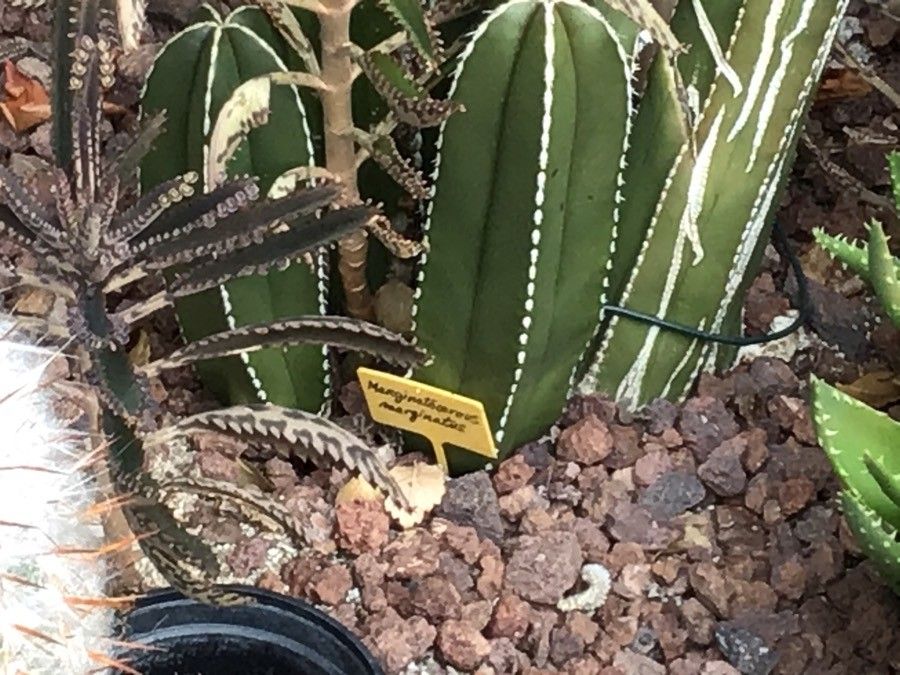
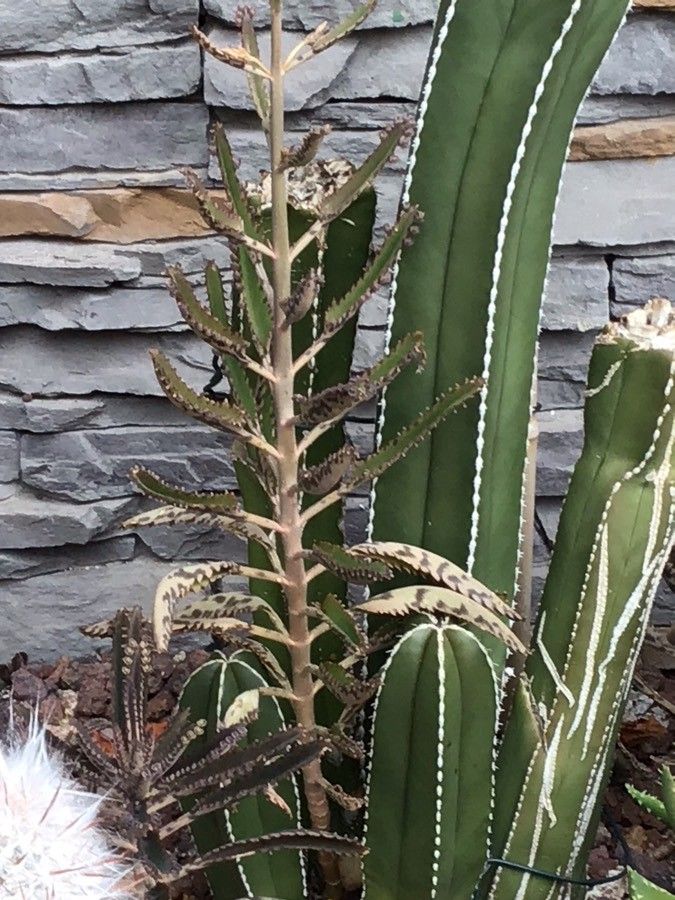
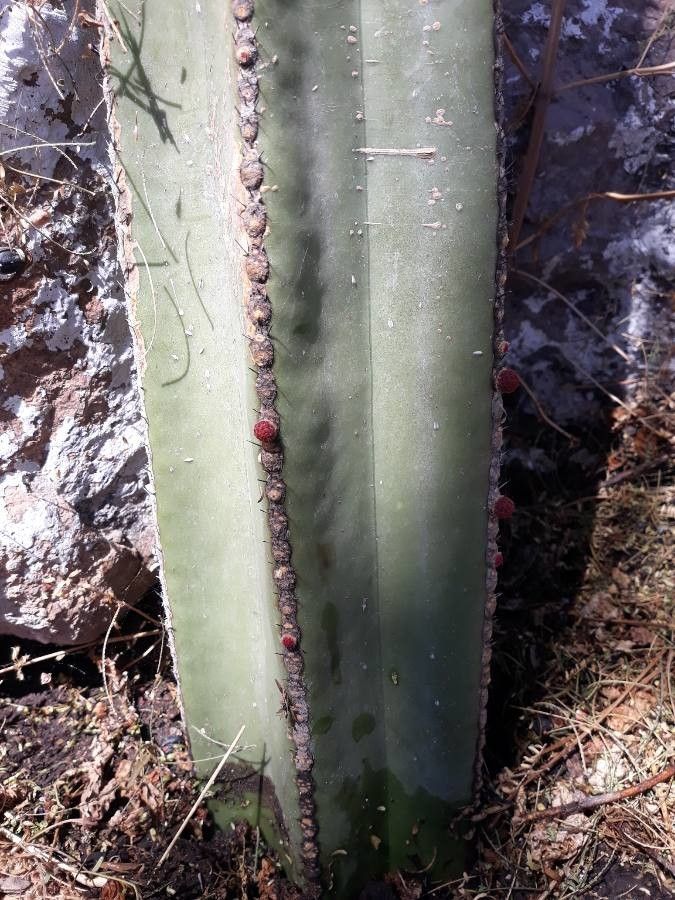
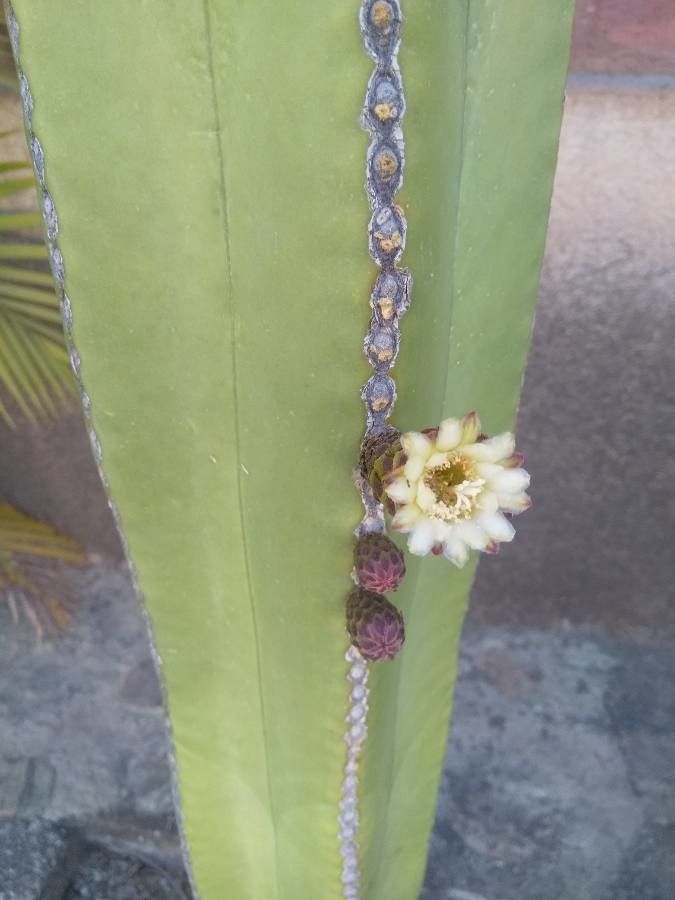
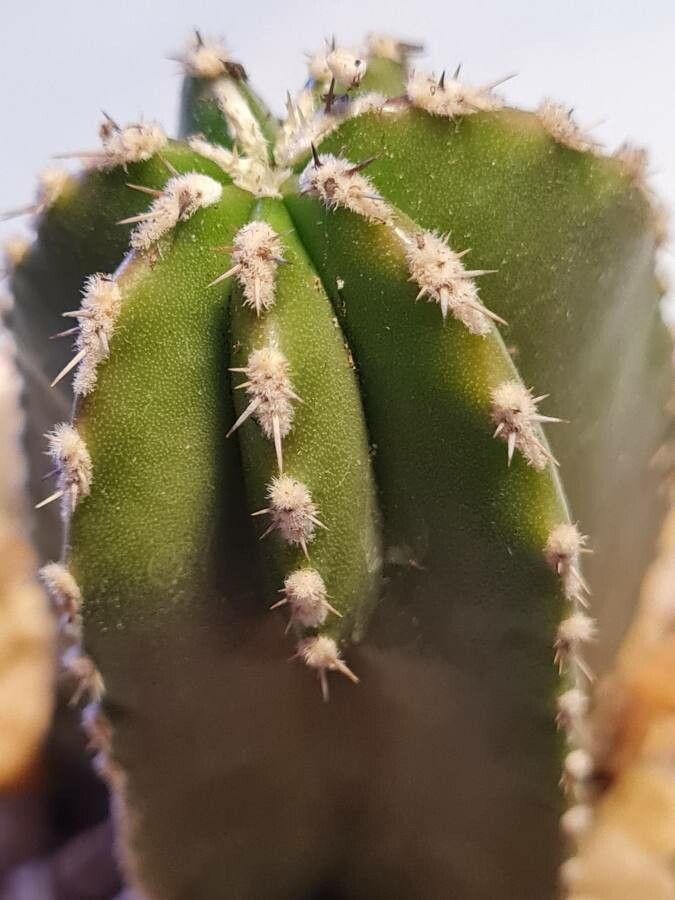
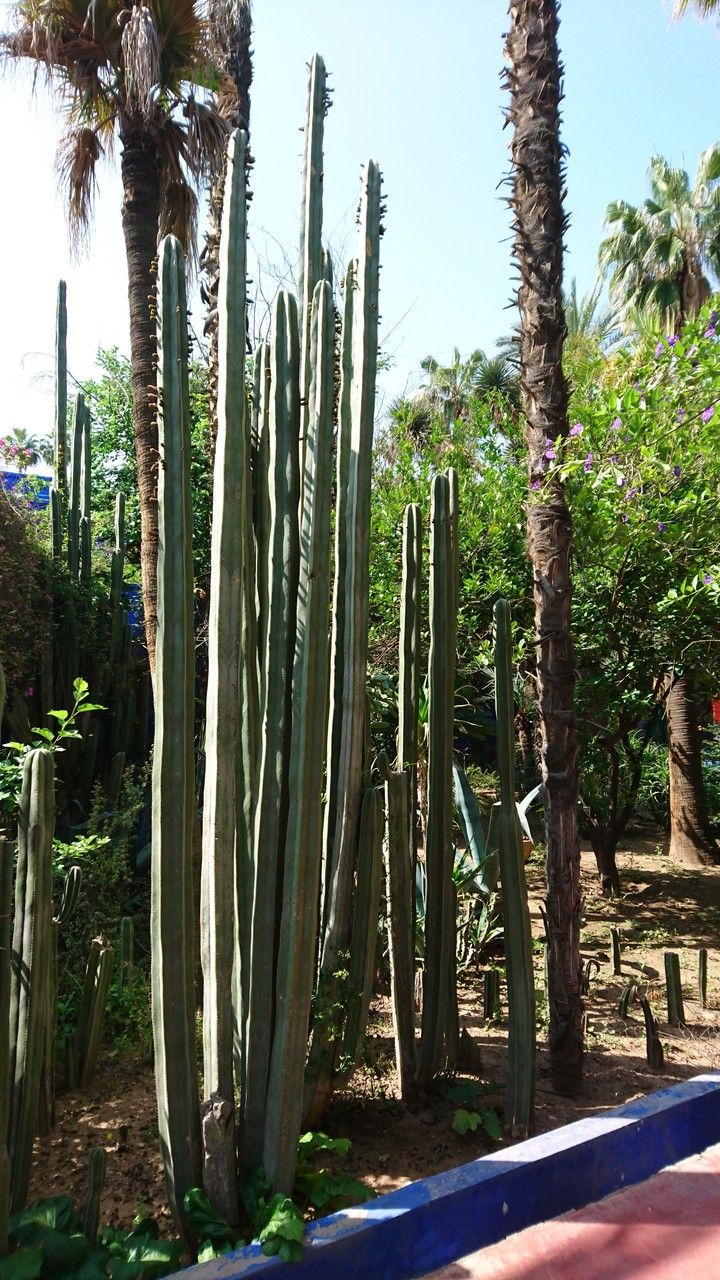
Marginatocereus marginatus, commonly known as the Organ Pipe Cactus, is a species of cactus native to Mexico and the southwestern United States. This slow-growing plant can reach heights of up to 20 feet and a diameter of 12 inches. The cactus features multiple stems that emerge from a single base, each covered with spines that can be up to 2 inches long. The Organ Pipe Cactus blooms from May through July, producing large white flowers approximately 3 inches in diameter. These flowers open at night and close during the day, attracting pollinators such as bats, moths, and bees. Adapted to hot desert climates, the Organ Pipe Cactus can survive extreme temperature fluctuations, from below freezing at night to over 100 degrees Fahrenheit during the day. It thrives in well-draining soil and requires minimal water. Unfortunately, the Organ Pipe Cactus has been listed as an endangered species due to habitat loss from human activities like mining, agricultural expansion, and urbanization. Conservation efforts by the governments of Mexico and the United States have been implemented to protect its natural habitat, including the establishment of national parks such as Saguaro National Park in Arizona, where it naturally grows. In summary, Marginatocereus marginatus is an iconic desert plant whose unique shape resembles organ pipes, giving it its common name, the "Organ Pipe Cactus."
The Mexican fence post cactus is quite resistant to disease and usually remains healthy under normal care. That said, it can be prone to mealybugs; these pests may cause some harm but generally do not pose a serious risk. Regarding care, the Mexican fence post cactus is drought-tolerant and does not need frequent watering. It can go long periods without water and requires little fertilizer. However, if light is poor and it is overwatered, it is highly susceptible to root rot. Overall, the Mexican fence post cactus is well suited for people who want a low-maintenance plant, though it is important to understand and meet its basic needs. It is especially appropriate for those who are often away for extended periods and may forget to water regularly.
How to keep Marginatocereus Marginatus.
Light
Originating from arid regions, the Mexican fence post cactus flourishes in full sun, since its native habitat is characterized by strong sunlight and minimal shade. It can also tolerate partial sun, offering some adaptability in its growth.
Humidity
This plant prefers dry conditions, so don't mist it. However, watering it less often can also thrive in higher humidity.
Temperature
Mexican fence post cactus flourishes in climates similar to its native environment, favoring temperatures of 68 to 100 °F (20 to 38 ℃). To recreate these conditions, it should be protected during colder months from temperatures that drop below 25 °F (-4 ℃).
Fertilizer
For Mexican fence post cactus, apply light doses of fertilizer one to two times a year during the active growing season. Do not fertilize in winter or summer, when the plant is dormant. Cut back on feeding for repotted plants and wait a couple of months after repotting before applying fertilizer. Fertilizing helps maintain healthy growth and promotes blooms.
Botanical profile.
- Plant Type
- Succulent, Tree
- Life Cycle
- Perennial
- Genus
- Marginatocereus
- Family
- Cactaceae
- Hardiness Zone
- 9-12
- Mature Height
- 3.35 m
- Mature Spread
- 10 cm
- Leaf Color
- Dark Green
- Leaf Type
- Evergreen
- Flower Color
- Pink, White
- Flower Size
- 5.08 cm to 6.35 cm
- Bloom Time
- Late spring, Summer
- Planting Time
- Spring, Summer, Autumn
- Harvest Time
- Late summer, Fall
Other names.