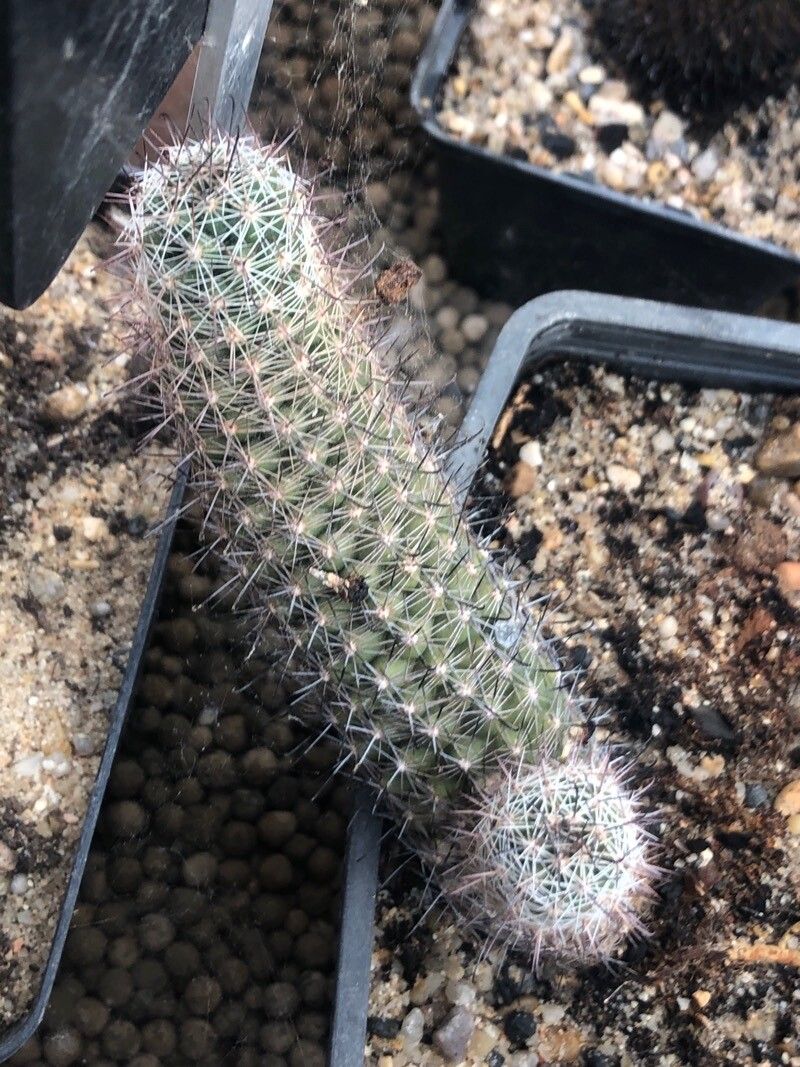
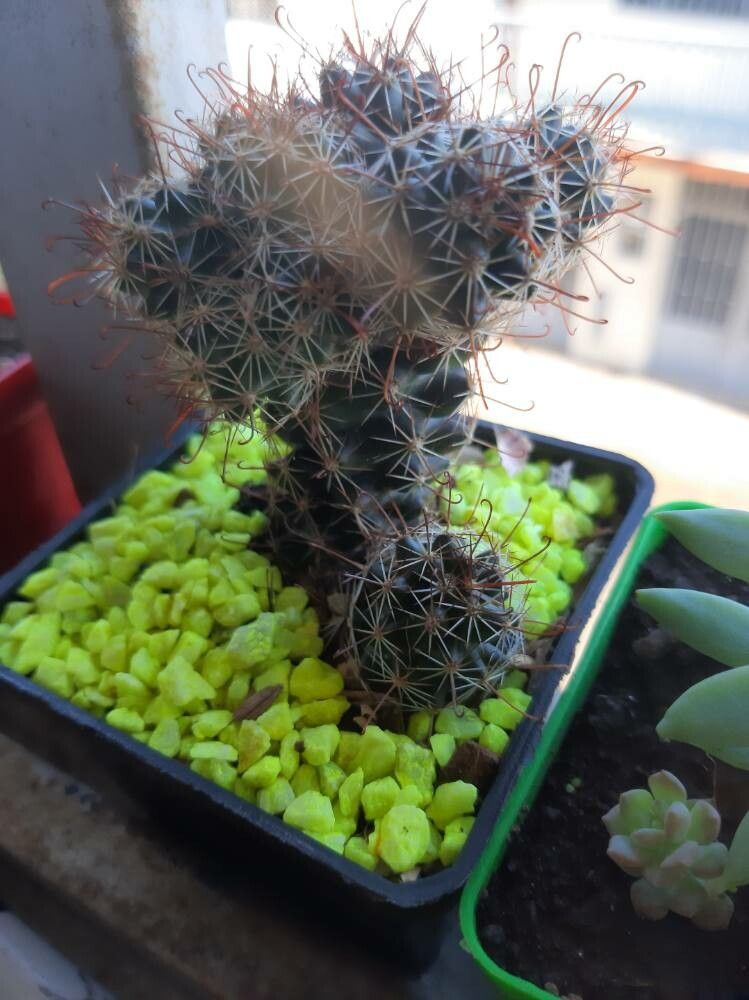
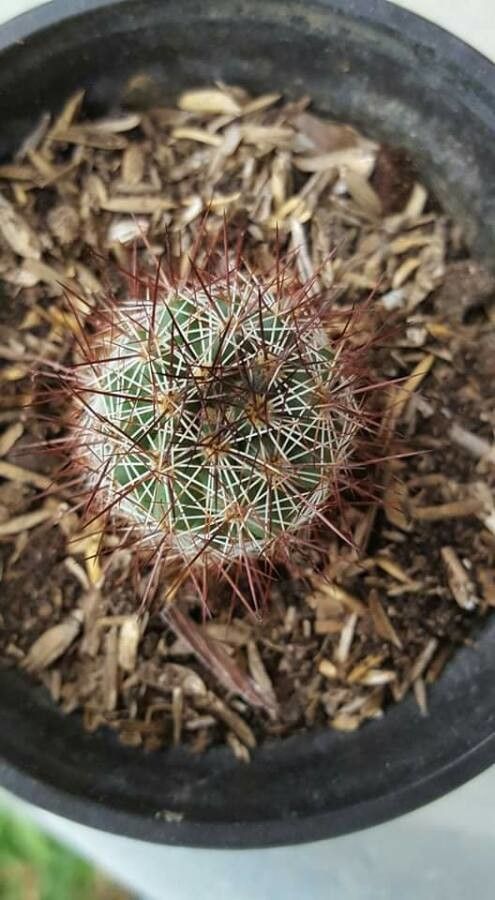
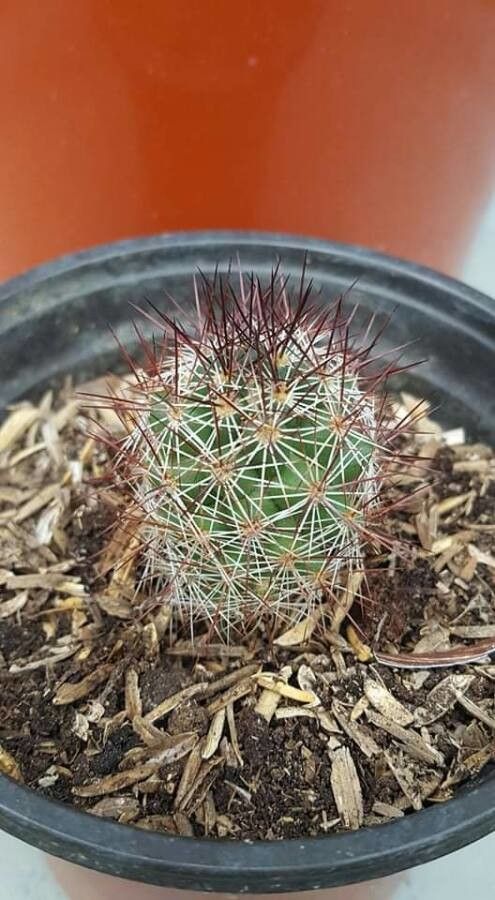
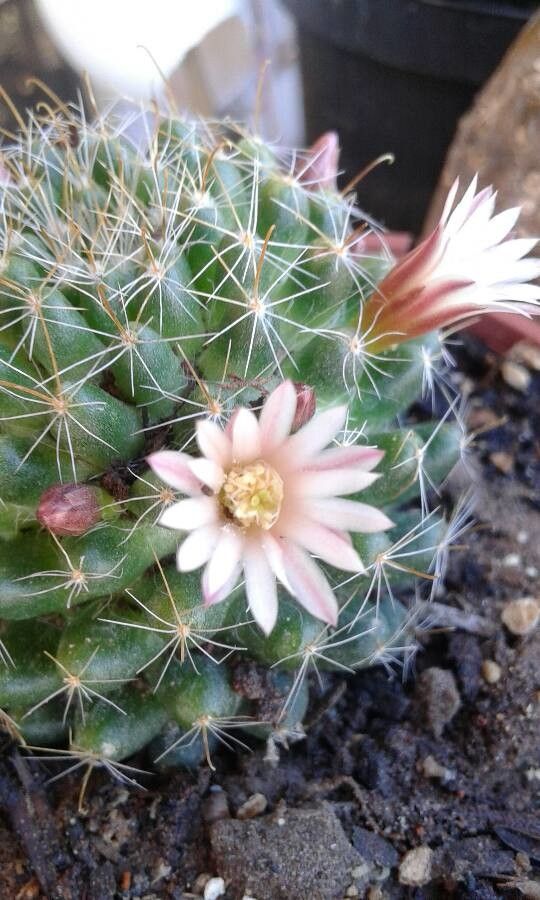
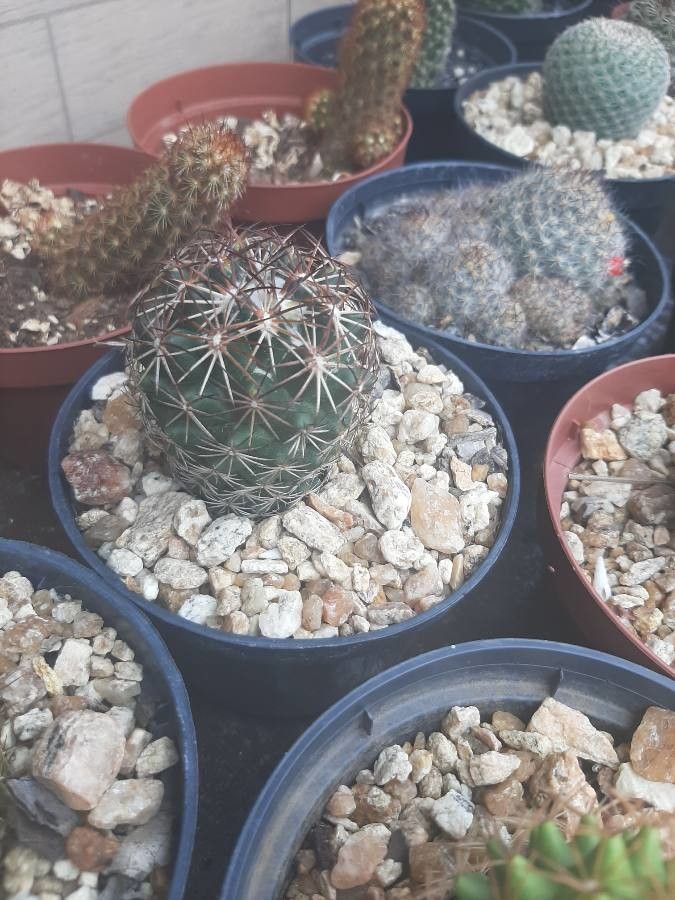
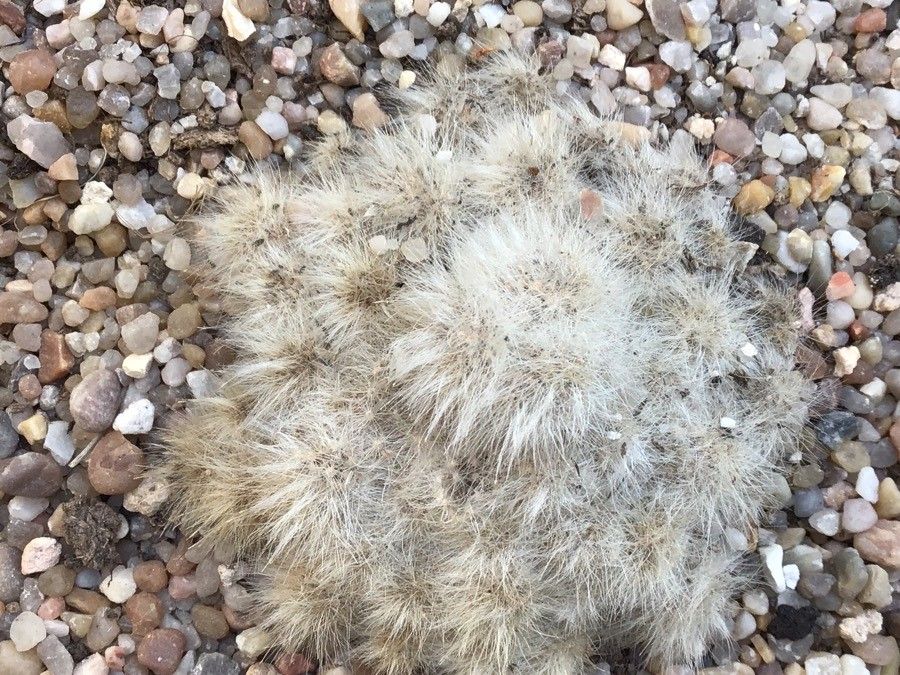
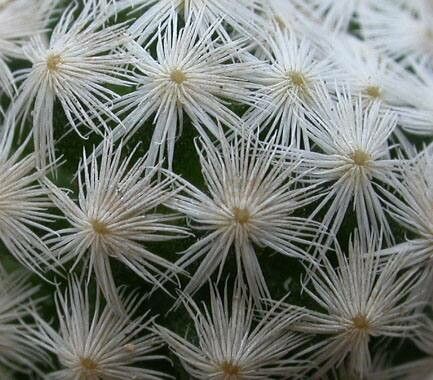
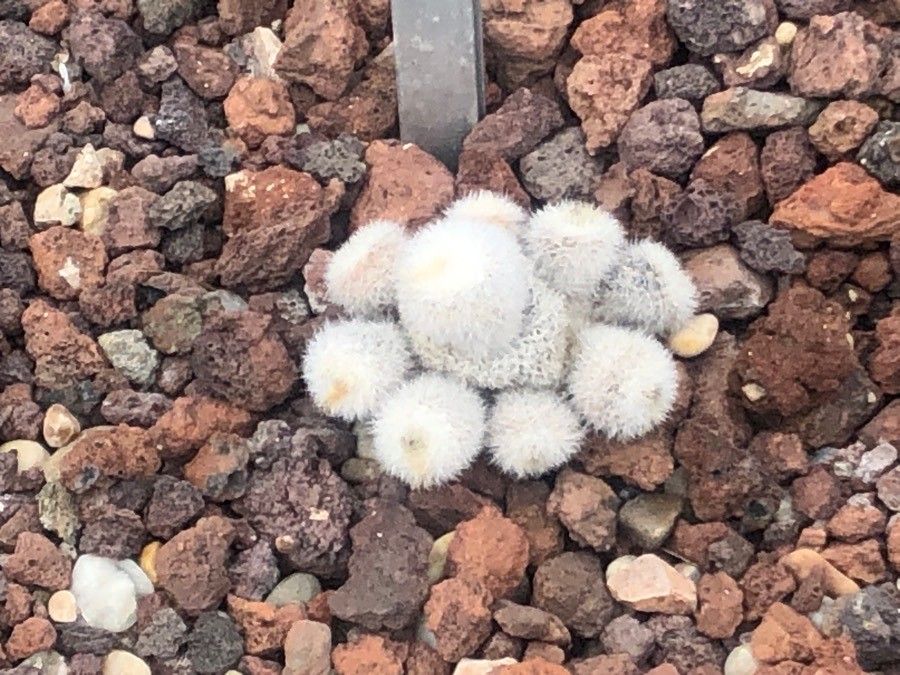
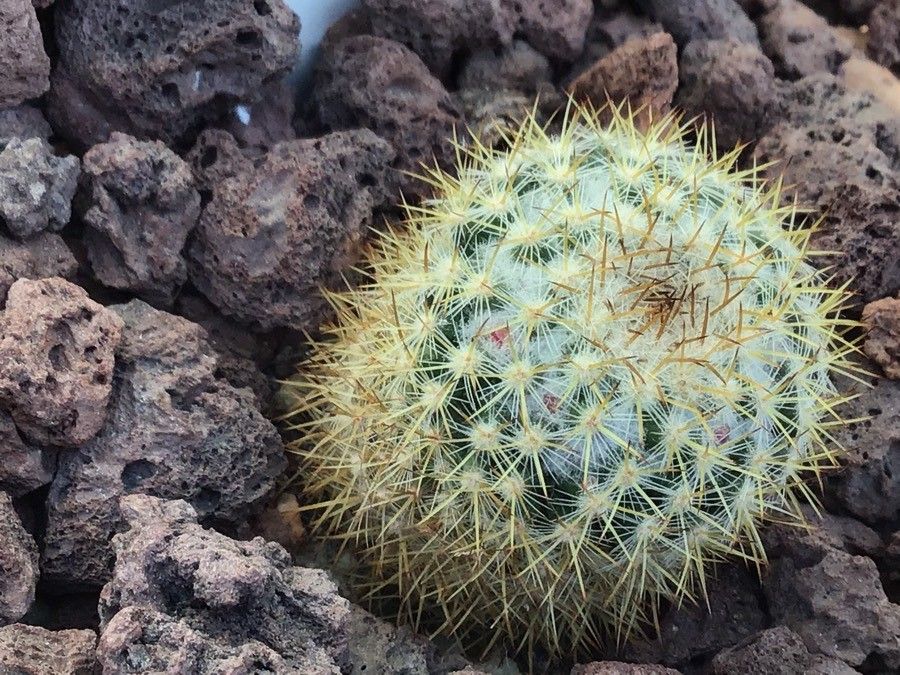
Mammillaria thornberi is a small cactus species native to the Sonoran Desert in Mexico and the United States. This slow-growing plant typically reaches up to 10 cm (4 inches) in height and 5 cm (2 inches) in diameter. It features cylindrical stems covered with small, white spines that grow from tubercles arranged in spirals around the stem.
In the spring, Mammillaria thornberi produces bright pink flowers that bloom at the top of its stem. These flowers are about 2 cm (0.8 inches) wide and consist of numerous petals arranged around a central stigma.
Mammillaria thornberi is an easy-to-care-for plant that requires well-draining soil, bright sunlight, and occasional watering during its growing season. It can be propagated from seeds or offsets produced at the base of mature plants.
Popular among collectors for its attractive appearance and ease of cultivation, it is important to note that Mammillaria thornberi can be toxic if ingested by humans or pets due to its alkaloid content.
Thornber's nipple cactus shows strong resistance to disease and, under normal care, does not tend to become ill easily. That said, it can be vulnerable to mealybugs; these pests may cause some harm but are typically not a major concern. Regarding care, Thornber's nipple cactus is drought-tolerant and does not require frequent watering. It can endure extended intervals without water and needs little fertilizer. However, if lighting is inadequate and the plant is overwatered, it is very prone to root rot. In general, Thornber's nipple cactus is a good choice for those who prefer low-maintenance plants, though it's still important to meet its basic needs. It is especially appropriate for people who are away for long periods and might forget to water regularly.
How to keep Mammillaria Thornberi.
Light
Thornber's nipple cactus is native to areas with dappled light, like the understory of forests or rocky sites that offer natural shade. It prefers partial sun but can tolerate full sun.
Temperature
Thornber's nipple cactus performs best in warm conditions and needs higher temperatures during the growing season to support growth and metabolic processes. It prefers abundant sunlight, suitable moisture, and good airflow. It is vulnerable to harm from very low temperatures and from overwatering, so maintaining a balance is important and extreme heat or excessively dry conditions should also be avoided.
Fertilizer
For Thornber's nipple cactus, light applications of fertilizer once or twice a year during the growing season are sufficient. Avoid fertilizing in winter and summer when the plant is dormant. Cut back on fertilizer for repotted plants and wait a couple of months after repotting before feeding. Fertilizing helps maintain healthy growth and promotes flowering.
Botanical profile.
- Plant Type
- Succulent
- Life Cycle
- Perennial
- Genus
- Mammillaria
- Family
- Cactaceae
- Hardiness Zone
- 9-11
- Mature Height
- 10 cm to 20 cm
- Mature Spread
- 5 cm to 10 cm
- Leaf Color
- Green
- Leaf Type
- Evergreen
- Flower Color
- Pink
- Flower Size
- 1.52 cm to 2.03 cm
- Bloom Time
- Mid spring, Late spring, Early summer
- Planting Time
- Spring, Summer, Autumn
- Harvest Time
- Mid summer, Late summer, Early fall
Other names.