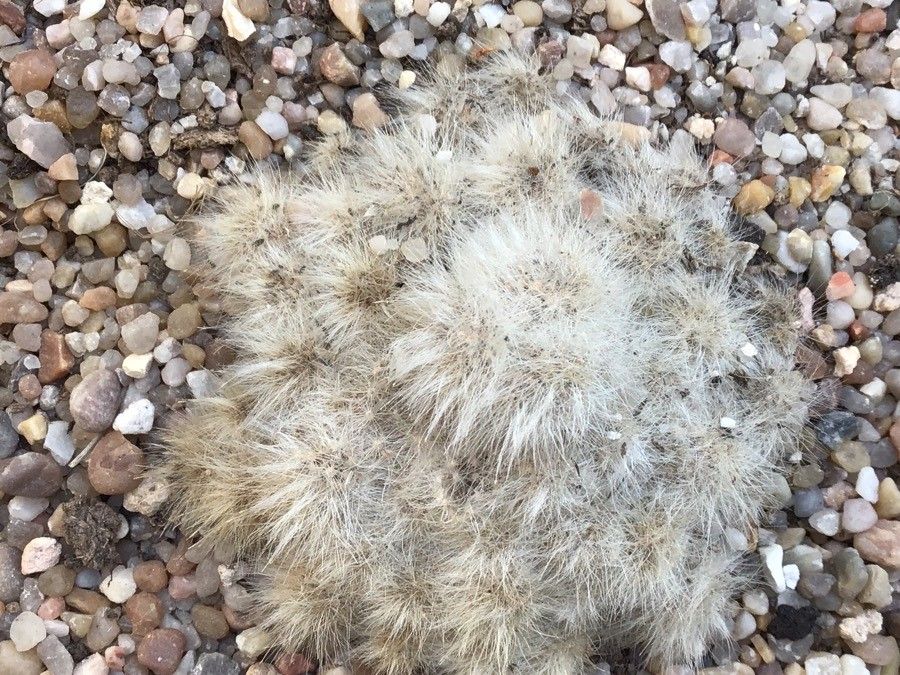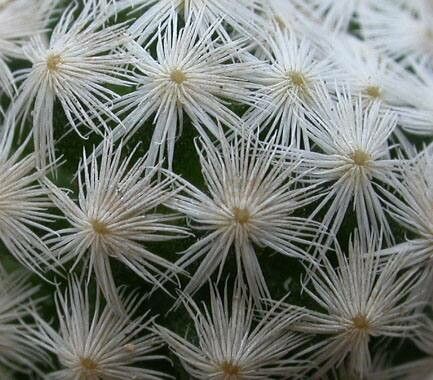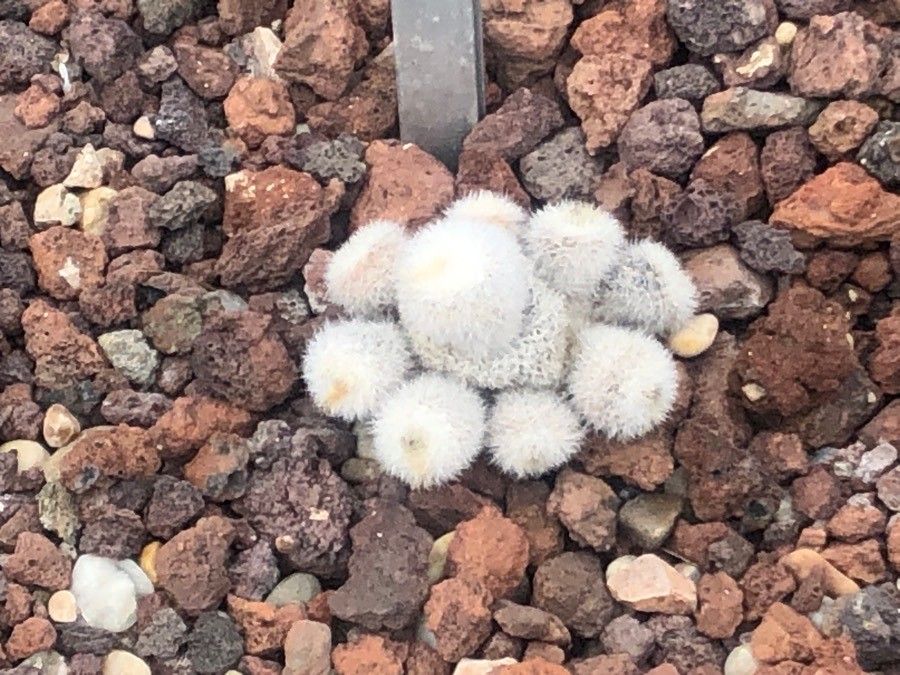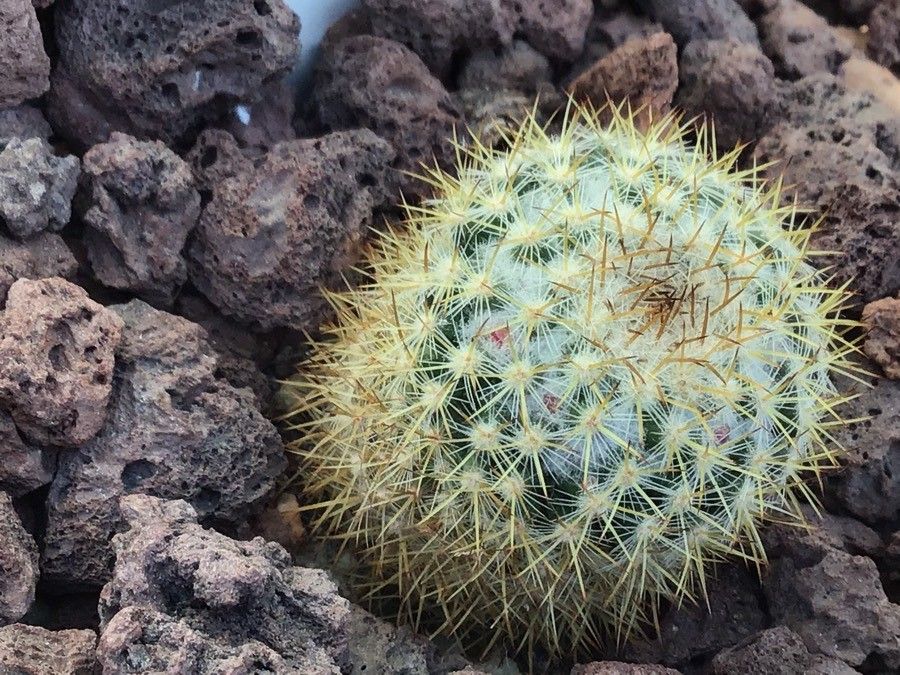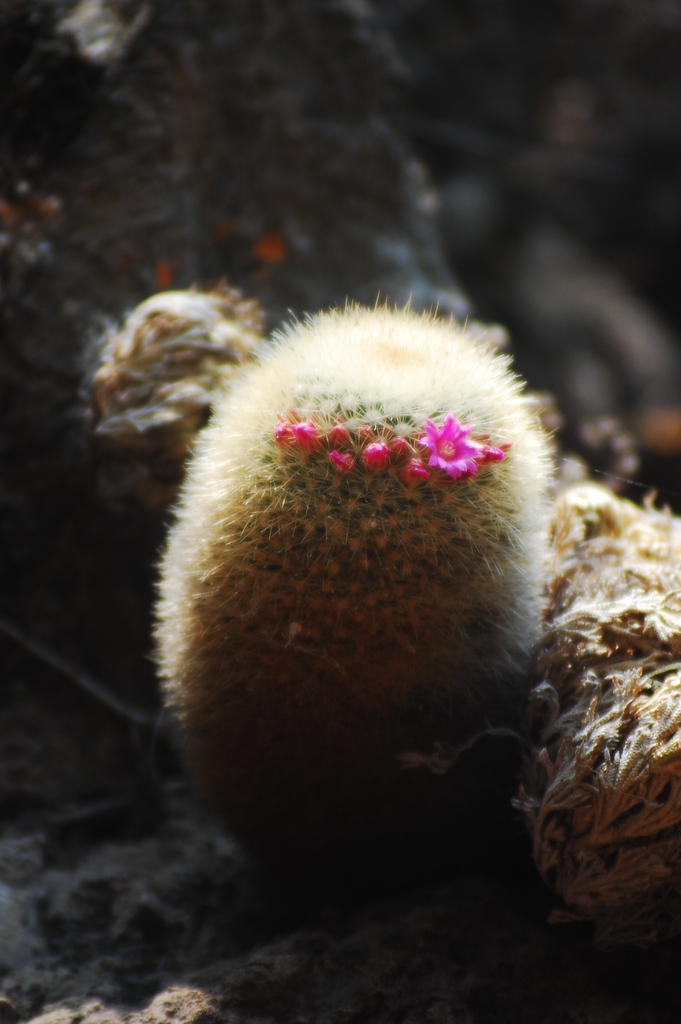
Mammillaria spinosissima, a cactus species native to Mexico, is a small, globular plant that can reach up to 10 cm in height and 15 cm in diameter. Its numerous cylindrical green stems are covered in white spines that can grow up to 2 cm long. This species produces small, pink or white flowers that bloom from the top of the plant during spring and summer.
Mammillaria spinosissima thrives in well-draining soil, requiring moderate watering during the growing season and minimal watering during its winter dormancy. While it prefers bright sunlight, it should be shielded from direct exposure during the hot summer months.
Often cultivated as an ornamental plant, Mammillaria spinosissima is favored for its attractive appearance and ease of care. It can be propagated through offsets or seeds, making it an excellent choice for beginners seeking a low-maintenance addition to their succulent or cactus collection.
Mammillaria spinosissima, a plant recognized with the Royal Horticultural Society's Award of Garden Merit, has been widely cultivated since at least the early 1800s. This species can grow up to 30 cm in height, typically reaching its full size within 5 to 10 years. FUN FACT · FROM THE LIBRARY
Spiny Pincushion Cactus: As its name suggests, the spiny pincushion cactus is a small, round cactus covered in sharp spines, making it resemble a pincushion. It belongs to the genus "Mammillaria," which comes from the Latin word for 'nipple.' This name highlights the bumpy tubercles that characterize the surface of this cactus.
The Spiny pincushion cactus is fairly disease-resistant and tolerates normal care without becoming ill easily. That said, it can be vulnerable to mealybugs; these pests may cause some damage but are typically not a serious threat. Regarding care, the Spiny pincushion cactus is drought-tolerant and does not need frequent watering. It can withstand long periods without water and requires little fertilizer. However, if lighting is poor and it is overwatered, it is highly prone to root rot. Overall, the Spiny pincushion cactus is well-suited to people who want to spend less time tending their plants, though its basic needs should still be met. It is especially appropriate for those who are often away for extended periods and might forget to water regularly.
How to keep Mammillaria Spinosissima.
Light
The spiny pincushion cactus thrives in settings where it receives abundant sunlight. While it can tolerate somewhat lower light levels, the solar energy it captures greatly improves its growth. Native to sun-drenched habitats, both too little and too much light can compromise its health, producing pale coloration or sunburn.
Water
The spiny pincushion cactus is ideal for arid climates, demonstrating excellent drought tolerance and a preference for low humidity. It efficiently stores water, needing to be watered only every three weeks. If grown indoors, ensure the soil drains well to prevent root rot, as overwatering is more damaging than underwatering.
Humidity
This plant prefers dry conditions, so don't mist it. However, watering it less often can also thrive in higher humidity.
Temperature
The spiny pincushion cactus does best in temperatures of 68 to 100 ℉ (20 to 38 ℃), matching the subtropical and tropical conditions where it naturally grows. In very hot summers it can tolerate temperatures up to 110 ℉ (43 ℃), but it is prone to harm from sudden winter temperature drops and must be kept above 50 ℉ (10 ℃) to avoid cold damage.
Fertilizer
For Spiny pincushion cactus, light doses of fertilizer 1-2 times a year during the growing season are sufficient. Do not fertilize in winter or summer when it is dormant. Reduce fertilizer for repotted plants and wait a couple of months after repotting before applying fertilizer. Fertilizing helps maintain healthy growth and encourages blooming.
Pruning
The spiny pincushion cactus requires very little pruning. It is recommended to remove any withered flowers and branches, as this helps the plant conserve nutrients for healthy growth.
Pot & Repot
Repot the spiny pincushion cactus in spring or summer, picking a pot slightly larger than the current one with good drainage. Use a sandy or gritty cactus mix that drains well. Handle the plant carefully to avoid the spines. Let the cactus dry out before repotting to help prevent root rot. After repotting, wait about a week before watering so the roots can heal.
Toxicity
This plant is not hazardous to people or animals. In fact, the Spiny Pincushion Cactus is a common cactus in the wild. Its fruits have been consumed in Mexico, Belize, and Guatemala. It can be parboiled and served with other wild vegetables in a salad.
Further reading →
The toxicity and danger assessments provided are for reference only. We do not assure their accuracy, so it's crucial not to depend on them. Seek professional advice when necessary for accurate guidance.
Botanical profile.
- Plant Type
- Succulent, Shrub
- Life Cycle
- Perennial
- Genus
- Mammillaria
- Family
- Cactaceae
- Hardiness Zone
- 9-12
- Mature Height
- 30 cm
- Mature Spread
- 6 cm to 10 cm
- Leaf Color
- Green, Dark Green
- Leaf Type
- Evergreen
- Flower Color
- Pink, Purple
- Flower Size
- 2.03 cm
- Bloom Time
- Late spring, Early summer, Mid summer
- Planting Time
- Spring
- Harvest Time
- Mid summer
- Native Area
- Mexico
Other names.
Reader questions.
What should I do if I give my Spiny pincushion cactus too much or too little water?
Spiny pincushion cacti are able to survive without water for long periods of time, so it's rare to see one suffering from lack of watering. However, if you forget to water your cactus for a month or longer, you may notice that it looks thirsty and has leaf damage. An underwatered cactus is easy to identify - its leaves will appear shriveled, dry, and flat, and may even turn brown or drop off. To remedy this, simply give the cactus plenty of water by submerging the pot in water for 5-10 minutes until you feel moisture on the surface of the soil. Remove any dried out leaves to encourage new growth. On the other hand, overwatering can be dangerous and even fatal to Spiny pincushion cacti. Too much moisture leads to root rot, which prevents the roots from absorbing nutrients and water. Symptoms of overwatering include yellow, swollen, and translucent leaves. The leaves may burst open and eventually turn brown or black before falling off. To treat an overwatered cactus, change its growing conditions by providing more air ventilation and adjusting the frequency of watering. Check the soil to confirm overwatering as the cause. If caught early, it may be possible to save the plant by removing it from the pot, rinsing the roots clean, and removing any rotten or unhealthy roots. Dip the remaining healthy roots in fungicide and replant the cactus in fresh, well-draining soil. With proper care, the cactus should recover and produce new growth in the next growing season.
Why should I add fertilizer to my Spiny pincushion cactus?
Applying plant food during the growing season to Spiny pincushion cactus helps provide nutrients for healthy growth. Even though it already stores water and nutrients, fertilizing can further support its growth and encourage blooming in mature specimens.
What are the sunlight requirements for the Spiny Pincushion Cactus?
The Spiny Pincushion Cactus thrives in environments with abundant sunlight, requiring full sun conditions of above 6 hours of sunlight daily to flourish optimally. It can also tolerate partial sun conditions, which means about 3-6 hours of sunlight. Observing how sunlight moves through your garden will help in choosing spots that offer the right balance of light and shade for these plants, ensuring their health and happiness.
What are the ideal temperature conditions for a Spiny Pincushion Cactus?
The Spiny Pincushion Cactus thrives in temperatures ranging from 68 to 100°F (20 to 38°C), reflecting its native subtropical and tropical climates. It can endure up to 110°F (43°C) during hot summers, but it's vulnerable to sudden drops in temperature during winter. It's crucial to keep it above 50°F (10°C) to avoid cold damage. In lower temperatures, especially when it falls below 50°F (10°C), its growth slows and it may enter a dormant state. During the cold months, it's advisable to move the plant indoors and place it near a south-facing window to ensure it gets enough sunlight. If natural light is insufficient, consider using supplemental lighting. Low outdoor temperatures require a halt in watering to prevent root rot. A temporary greenhouse or protective wrapping can provide extra insulation during cold spells.
How frequently do I need to water my Spiny pincushion cactus?
To determine when to water a Spiny pincushion cactus, the soil moisture should be checked. This can be done by sticking a finger or moisture meter into the soil. If the soil is dry, it is time to water. When using a deep pot, a stick or chopstick can be used to check the moisture below the surface. If it is slightly damp, wait a few days and check again. Generally, in summer, watering every two weeks is sufficient, while in winter, watering once a month is adequate. However, there are factors to consider that may affect the frequency of watering. The section below provides some considerations to help determine how often to water.
When should I fertilize my Spiny pincushion cactus?
Spiny pincushion cactus, like all plants, benefits from extra nutrients, but it only requires a small amount of fertilizer during the growing season. It is recommended to fertilize your Spiny pincushion cactus in spring and autumn, avoiding winter and summer when it is dormant. When you repot the cactus, be cautious about the amount of fertilizer you use and wait a couple of months before starting to fertilize it again.
How does sunlight affect the growth and health of Spiny Pincushion Cactus?
Sunlight is crucial for the growth and health of the Spiny Pincushion Cactus, influencing its ability to thrive. In its native environment, which is bathed in sunlight, the cactus utilizes the energy from the sun to optimize its growth. Adequate exposure to sunlight is essential, as both lack of and excessive light can lead to problems such as pale coloration or sunburn, impacting the plant's health negatively.
How should you care for a Spiny Pincushion Cactus in low temperatures?
The Spiny Pincushion Cactus is best suited to high temperatures and struggles with low temperatures, requiring special care when the mercury dips below 20°C. To prevent damage in winter, keep it above 0°C, as temperatures below -5°C can lead to weakening, wilting, and potential root rot. After mild frost damage, symptoms might not appear immediately but expect wilting after a week. To manage frost damage, trim frostbitten areas and check if the roots have rotted -- if so, remove the rotted roots and propagate through cuttings. Move the cactus to a warmer, indoor location near a south-facing window for ample sunlight. Use supplemental lighting if natural sunlight is insufficient.
What do I need to think about when watering my Spiny pincushion cactus?
To properly water your Spiny pincushion cactus, there are a few environmental factors to consider. These include the size of the container, the type of soil, the temperature, and the humidity. Firstly, the container and soil you choose will determine the watering frequency and amount. It's important to use a container with good drainage to allow excess water to escape. A smaller container will hold less moisture, so it will need to be watered more often. On the other hand, a larger pot will retain moisture for longer and require less frequent watering. Avoid using an oversized pot, as this can lead to overwatering. When repotting, choose a container that is just one size larger than the current one. Additionally, a shallow container is ideal as Spiny pincushion cactus has shallow roots. Furthermore, the watering needs of the Spiny pincushion cactus will vary depending on the season. In winter, when the plant is not actively growing, it requires less water. The cooler air reduces evaporation, so the soil retains moisture for longer. On the other hand, during the active growing season in spring and autumn, the cactus will need more frequent watering. The climate of your location also plays a role in watering frequency. If you live in a humid area with regular rainfall, you will need to water the cactus less often compared to a dry and arid climate. Keep in mind that even within the same geographic location, conditions can vary with the seasons and the usage of indoor heating or air conditioning. For outdoor planting, once the Spiny pincushion cactus has established a root system in the ground, it typically doesn't require additional watering as it can rely on precipitation and dew. However, during extended dry periods, occasional watering may be necessary. If you are growing the cactus in a container, you can move it outside during suitable spring and summer temperatures and bring it back indoors when the temperature drops. When kept outside, the cactus will generally need more water due to increased sun exposure, even if it is on a shaded porch.
When is it best to not put fertilizer on my Spiny pincushion cactus?
The Spiny pincushion cactus goes through a period of dormancy, like many other plants. During this time, it is best to refrain from fertilizing. Both in the summer and winter, the plant stops growing, so it is advisable to avoid applying fertilizer during these seasons. Additionally, it is recommended to wait a couple of months after repotting in the spring before resuming fertilization.
Can artificial lighting be used for Spiny Pincushion Cactus and how?
Yes, artificial lighting can be an effective solution for growing Spiny Pincushion Cactus indoors, especially when natural sunlight is insufficient. LED lights are recommended due to their ability to provide specific wavelengths needed by plants. Full sun plants require 30-50W/sq ft, partial sun plants 20-30W/sq ft, and full shade plants 10-20W/sq ft of artificial light. The light source should be placed 12-36 inches above the plant, mimicking natural sunlight as closely as possible, with most plants requiring 8-12 hours of light per day.
What are the symptoms and solutions for a Spiny Pincushion Cactus exposed to high temperatures?
Exposure to high temperatures, especially above 38°C, can halt the growth of a Spiny Pincushion Cactus, leading to water loss, wilting, and increased susceptibility to sunburn. To mitigate damage from high temperatures, remove any sunburned or rotten parts and protect the cactus from direct afternoon sunlight until it shows signs of recovery. In case of root rot, cease watering until new roots develop. Ensuring the cactus isn't exposed to temperatures exceeding its tolerance is crucial for its health and growth.