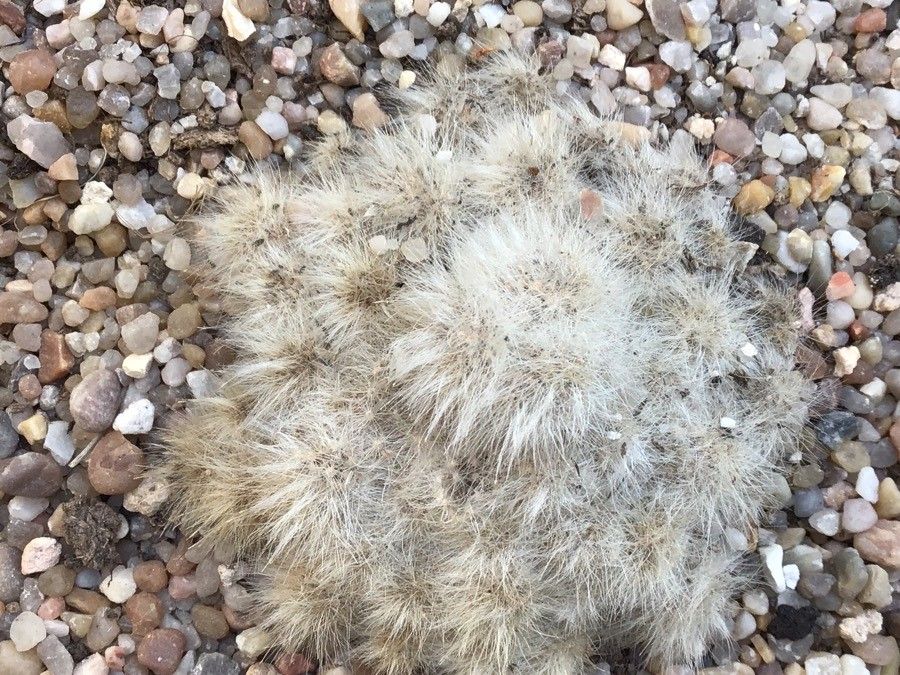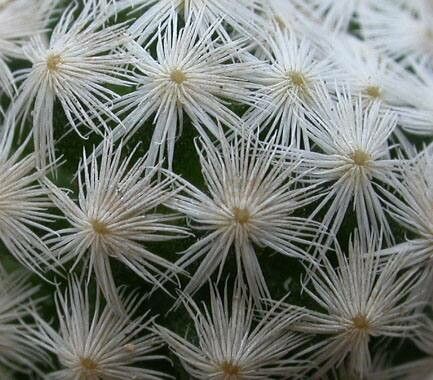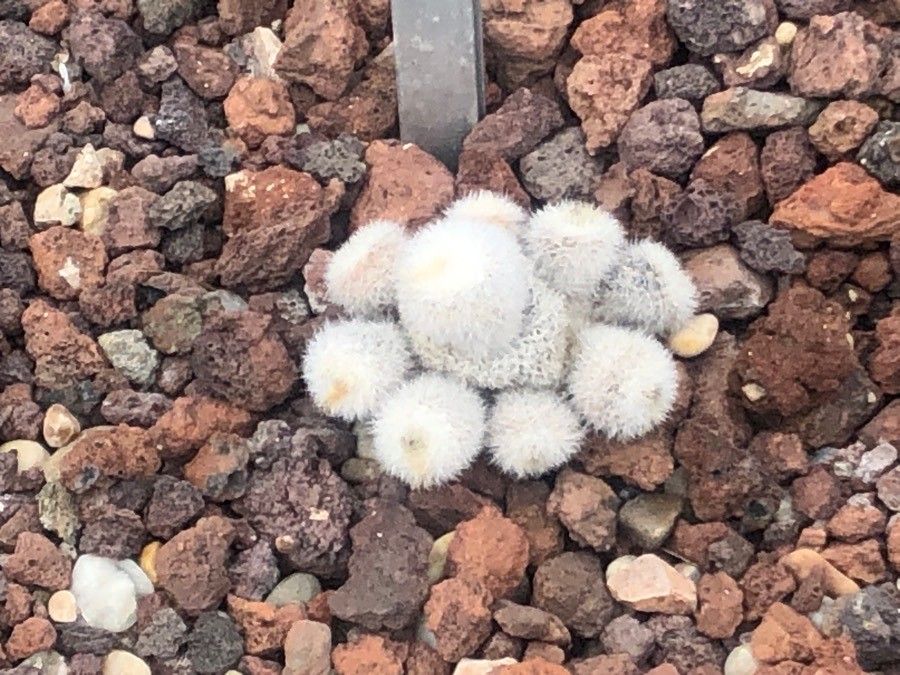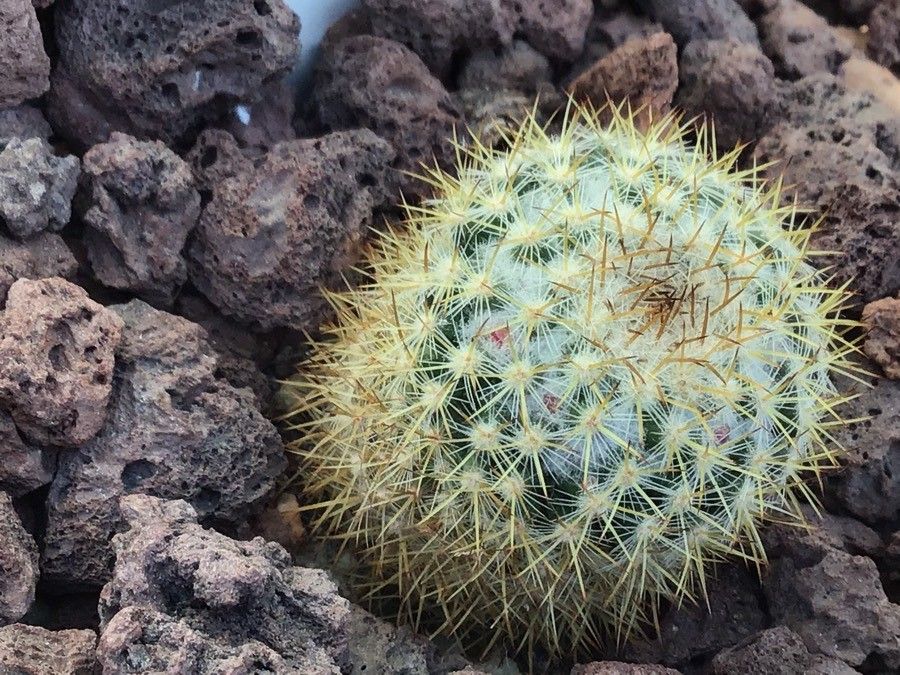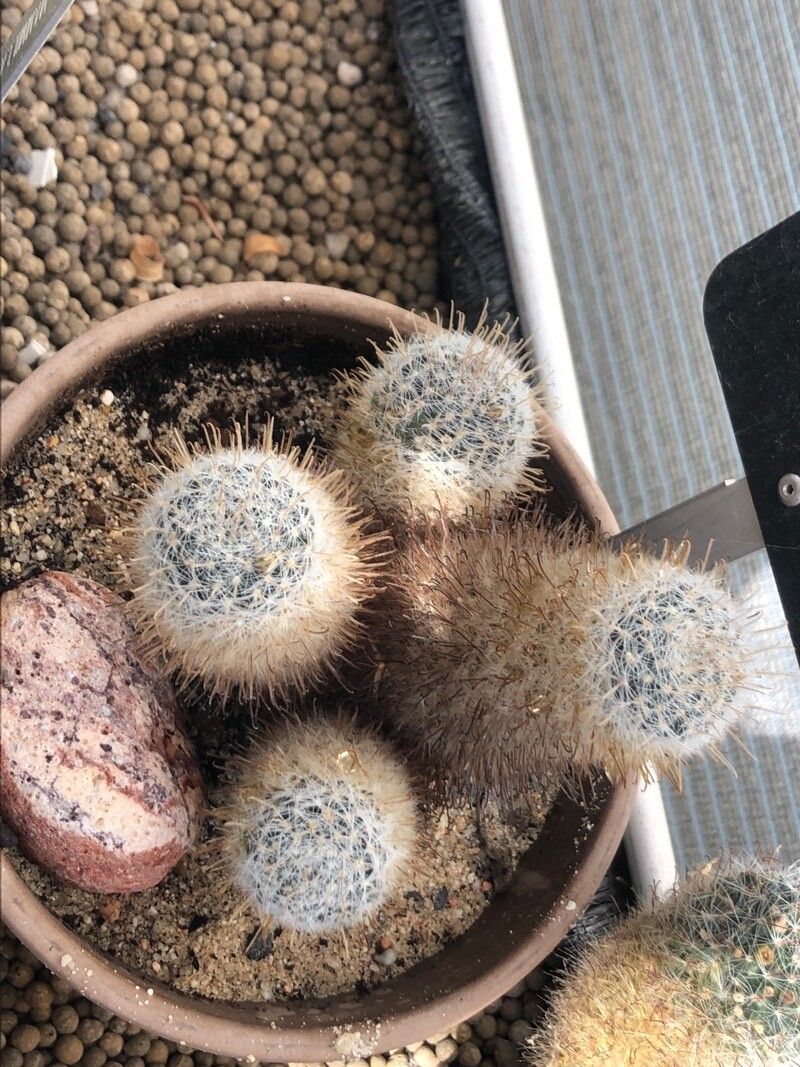
Mammillaria duwei is a species of flowering plant in the cactus family. It is endemic to Mexico, where it occurs only in the state of Guanajuato. It is known from only one location. It is known commonly as the biznaguita.This is a critically endangered species due to its limited distribution and illegal collecting for trade. There are perhaps 500 mature individuals left in the wild.
Biznaguita has strong resistance to disease and, with normal care, does not get sick easily. It can, however, be prone to mealybugs, which may cause some damage but are typically not a serious threat. In terms of care, Biznaguita is drought-tolerant and does not need frequent watering. It can withstand long intervals without water and does not require much fertilizer. Nevertheless, if lighting is poor and the plant is overwatered, it is highly susceptible to root rot. Overall, Biznaguita is a good choice for people who want to spend less time tending their plants, but it remains important to understand and meet its basic needs. It is especially well suited to people who are often away for extended periods and may forget to water their plants regularly.
How to keep Mammillaria Duwei.
Light
Biznaguita, which originates from dry regions, flourishes under full sun, as it's accustomed to an environment marked by intense sunlight and scarce shade. However, it also tolerates partial sun, exhibiting a certain degree of adaptability in its development.
Water
Biznaguita, a plant native to arid regions, is highly drought-tolerant and requires minimal watering, usually only once every three weeks. It thrives in low humidity and full sun exposure, making outdoor cultivation ideal. Growing it outdoors not only promotes flowering but also helps optimize water retention in its fleshy tissues.
Temperature
Biznaguita is somewhat resistant to heat, but it ideally flourishes and expands its growth during the colder seasons, entering a state of inactivity during the summer. It's crucial to offer shade during the high summer temperatures to prevent damage from harsh sunlight. Watering needs to be decreased or completely stopped during the most scorching season to avoid root decay. Biznaguita witnesses robust development during winter and spring. Provided that the temperature doesn't fall excessively, it will persistently grow at a steady pace.
Fertilizer
For Biznaguita, minor amounts of fertilizer applied 1-2 instances per annum during the growth season are adequate. Omit fertilization during winter and summer when the plant is in a dormant stage. Diminish the fertilizer quantity for plants that have been repotted and allow for a few months to pass after repotting before resuming fertilization. The purpose of fertilization is to promote robust growth and induce flowering.
Pruning
Biznaguita requires minimal pruning. However, regularly removing withered flowers and branches can help optimize nutrient use, promoting healthy growth.
Pot & Repot
For Biznaguita, the repotting should be done in spring or summer, selecting a pot a bit bigger than its present one that has excellent drainage. Exercise caution to dodge the spikes while handling the cactus. Choose a well-draining, sandy, or gritty mix for the cactus. Make sure the cactus is completely dry before the repotting process to hinder root decay. Following the repotting, refrain from watering for one week to let the roots recuperate.
Botanical profile.
- Plant Type
- Succulent
- Life Cycle
- Perennial
- Genus
- Mammillaria
- Family
- Cactaceae
- Hardiness Zone
- 9-11
- Mature Height
- 10 cm
- Mature Spread
- 5 cm
- Leaf Color
- Green
- Leaf Type
- Evergreen
- Flower Color
- Pink, White
- Flower Size
- 1.02 cm to 1.52 cm
- Bloom Time
- Mid spring, Late spring, Early summer
- Planting Time
- Spring, Summer
- Harvest Time
- Mid summer, Late summer, Early fall
- Native Area
- Mexico