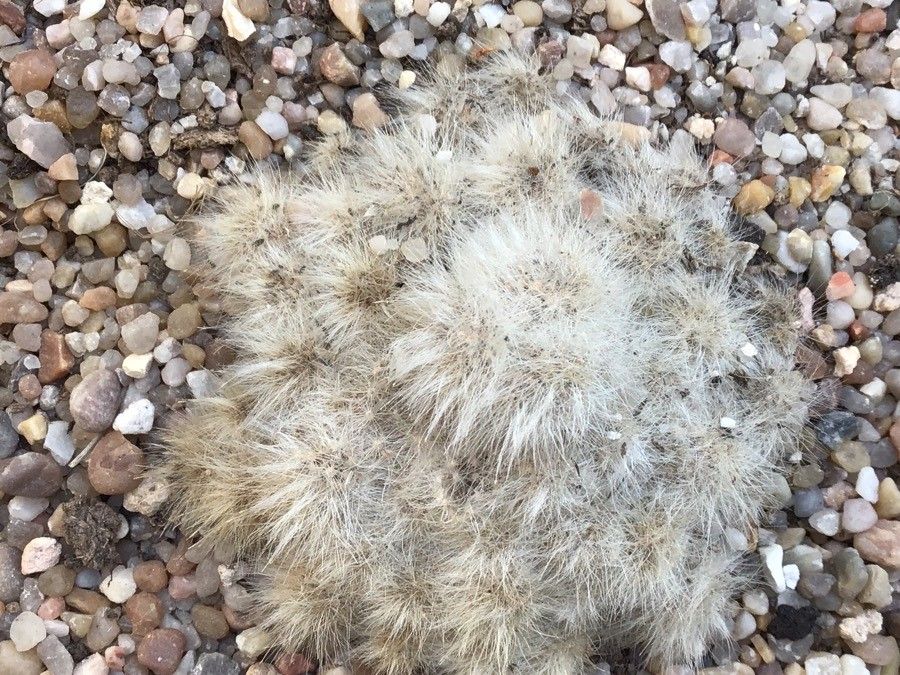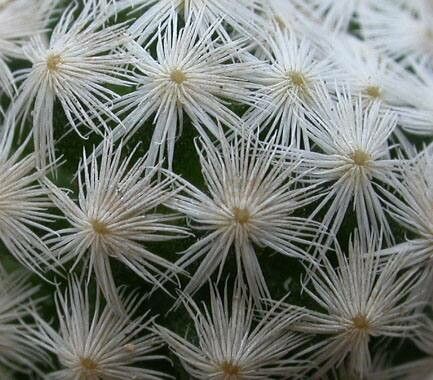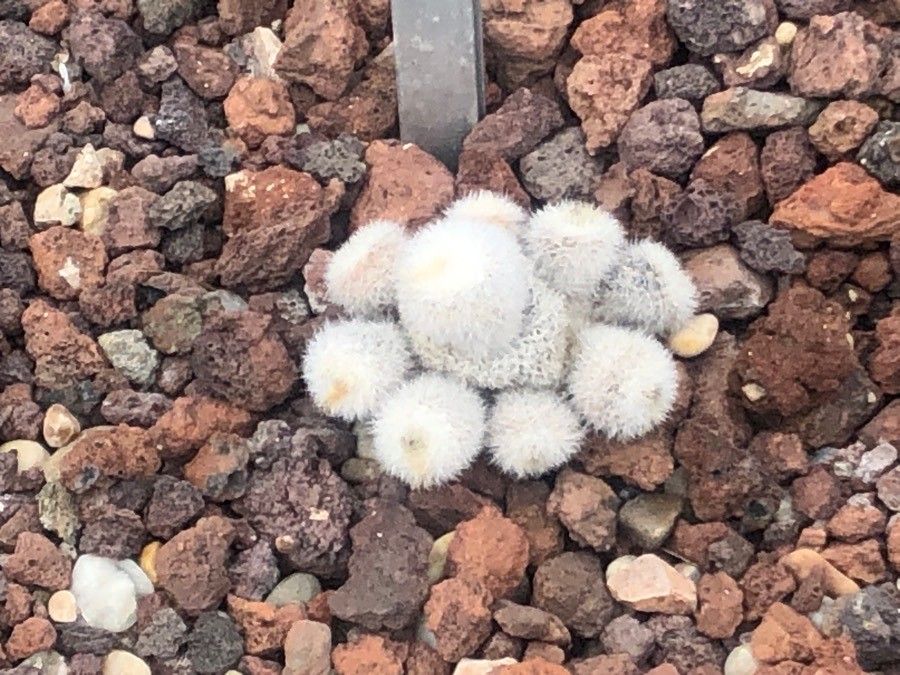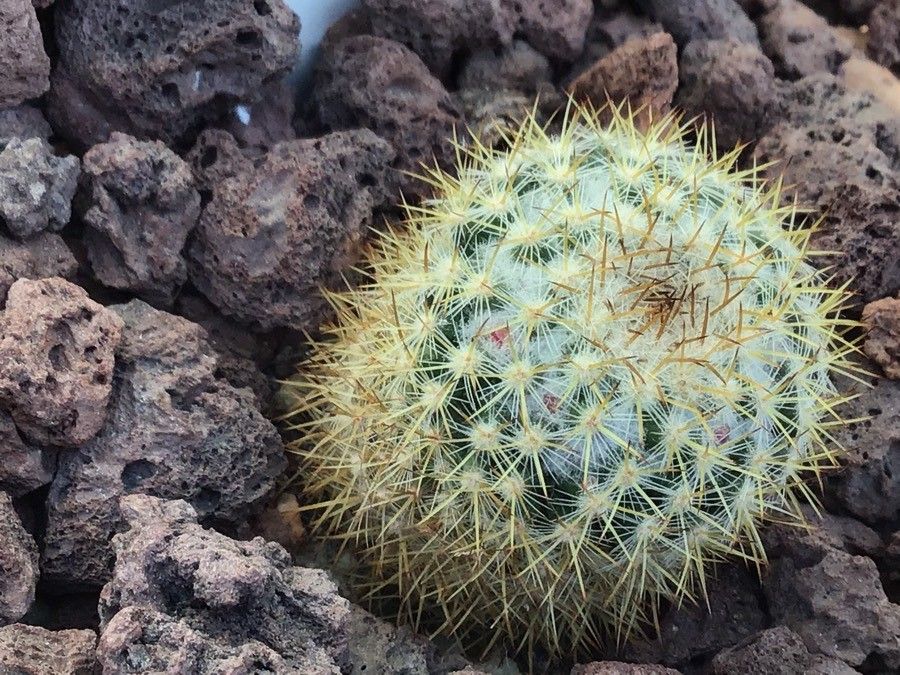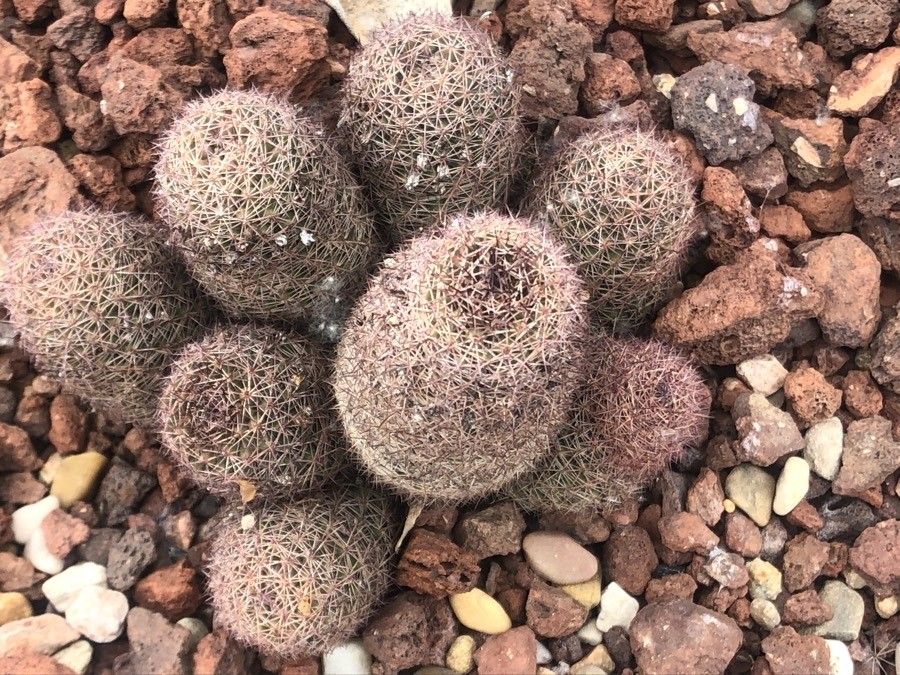
Mammillaria dioica is a species of cactus native to Mexico. This small, globular cactus typically grows up to 10 cm in height and 8 cm in diameter. The plant features numerous tubercles—small bumps on its surface that produce spines. These spines are usually white or yellow and can grow up to 2 cm long.
Mammillaria dioica blooms with small, pink or white flowers from late spring through early summer. These flowers are followed by red or green fruits that contain numerous seeds.
This cactus thrives in well-draining soil and bright sunlight but can also tolerate partial shade. It requires minimal watering during the growing season and should be kept dry during the winter months.
Mammillaria dioica is commonly grown as an ornamental plant due to its unique appearance and ease of care. Additionally, it has medicinal properties and has been traditionally used to treat various ailments such as fever, inflammation, and pain.
Overall, Mammillaria dioica is an intriguing cactus species with unique characteristics, making it a popular choice for both indoor and outdoor gardening enthusiasts.
Strawberry cactus has strong resistance to disease and, under normal care, does not become sick easily. That said, it can be vulnerable to mealybugs; these pests can do some harm but typically do not pose a major threat. Regarding care, Strawberry cactus tolerates drought and does not need frequent watering. It can endure extended periods without water and requires little fertilizer. However, if kept in poor light and watered too much, it is very prone to root rot. In general, Strawberry cactus is a good choice for people who prefer low-maintenance plants, though it remains important to meet its basic needs. It is especially appropriate for those who are away for long stretches and may forget to water regularly.
How to keep Mammillaria Dioica.
Light
The strawberry cactus flourishes when exposed to abundant sunlight, similar to its natural desert environment. Sunlight promotes its robust flowering and development, with varying stages not requiring different light intensities. It can withstand too much or too little light without negative effects, demonstrating its innate toughness.
Water
The strawberry cactus, which originates from arid regions, is highly drought-tolerant and thrives with minimal moisture. It should be watered infrequently, approximately once every three weeks, particularly during its dormant period in the cooler months. This cactus prefers well-draining soil and is ideally suited for outdoor environments.
Temperature
The strawberry cactus originates from temperate climates and thrives in temperatures between 68 and 106 °F (20 to 41 ℃). During periods of extreme heat, it benefits from additional shading and ventilation to promote its growth and longevity.
Fertilizer
For the Strawberry cactus, applying a small amount of fertilizer 1-2 times annually during its growing period is adequate. Refrain from fertilizing it in winter and summer, when it is in a dormant state. Lessen the amount of fertilizer for plants that have been repotted and hold off for a few months after repotting before you fertilize. Fertilizing aids in robust growth and promotes flowering.
Pruning
Strawberry cactus requires minimal pruning. It is important to remove any withered flowers and branches so that the plant can allocate nutrients more effectively, promoting healthy growth.
Pot & Repot
Rehouse the Strawberry cactus during the spring or summer season, opting for a container that is modestly larger than its existing one and has efficient drainage. Select a sandy or gritty cactus blend that drains well. Be cautious while handling to evade the spikes. Let the cactus dry prior to repotting to avert root decay. Post repotting, delay watering for about a week to provide the roots with healing time.
Botanical profile.
- Plant Type
- Succulent
- Life Cycle
- Perennial
- Genus
- Mammillaria
- Family
- Cactaceae
- Hardiness Zone
- 10-13
- Mature Height
- 30 cm
- Mature Spread
- 10 cm
- Leaf Color
- Green
- Leaf Type
- Evergreen
- Flower Color
- Red, Pink
- Flower Size
- 2.54 cm
- Bloom Time
- Spring, Early summer
- Planting Time
- Spring, Summer
- Harvest Time
- Summer, Early fall
Other names.
Reader questions.
What are the sunlight requirements for Strawberry Cactus?
Strawberry Cactus requires full sun exposure, which means it should receive above 6 hours of sunlight daily. Sunlight is crucial for its growth and blooming, reflecting its desert origins where it thrives under intense sunlight. However, the plant displays resilience to varying light densities, meaning that both an excess and a deficit of light might not adversely impact the plant significantly. It is essential to observe how sunlight moves through your garden and select locations that offer a balanced exposure of light and shade, ensuring the plants' well-being.
What is the native climate for Strawberry cactus?
Strawberry cactus is native to temperate climates and thrives in temperatures ranging from 68 to 106 °F (20 to 41 °C). It loves heat but requires protection from extreme conditions. During high heat seasons, providing some shade and extra ventilation can boost its growth and ensure its survival.
How can artificial lighting be used for Strawberry Cactus indoors?
When natural sunlight is insufficient, especially during winter or in less sunny spaces, indoor Strawberry Cactus can benefit significantly from artificial lighting to ensure optimal growth. LED lights are a popular choice because they can be customized to provide specific wavelengths needed by plants. For full sun plants, 30-50W per square foot of artificial light is recommended, with partial sun plants needing 20-30W and full shade plants 10-20W per square foot. The light source should be placed 12-36 inches above the plant to mimic natural sunlight, and plants generally require 8-12 hours of light per day.
What should I do with my Strawberry cactus during winter?
Strawberry cactus gradually stops growing and enters a dormant state in winter. It's important to move it indoors when the outdoor temperature drops below 5°C to protect it from the cold. Ideally, it should be placed near a south-facing window to get as much sunlight as possible. If natural light is inadequate, supplemental lighting can be used. Additionally, when the temperature falls below 20°C, the plant's growth slows, and you should reduce or stop watering to prevent root rot. For outdoor plants, halt watering entirely in low temperatures and consider using a temporary greenhouse or wrap the plant with plastic film or fabric for insulation.
What are the symptoms of light deficiency in Strawberry Cactus?
Strawberry Cactus may show various symptoms when exposed to suboptimal lighting, including smaller new leaves, leggy or sparse growth, faster leaf drop, slower or halted growth, lighter-colored new leaves, chlorosis, sunscald, leaf curling, wilting, and leaf scorching. These symptoms indicate a lack of sufficient sunlight, which is crucial for the plant's photosynthesis and overall health.
How does Strawberry cactus react to low temperatures?
Strawberry cactus prefers high temperatures and struggles to tolerate low temperatures, thriving best above 20°C. During winter, it's crucial to keep it above 5°C. Exposure to temperatures below 1°C can cause the plant to become weak, wilt, and become prone to root rot. Mild frost damage may not show immediate symptoms, but the plant could gradually wither after a week.
How can I address insufficient sunlight for Strawberry Cactus?
To combat insufficient sunlight for Strawberry Cactus, consider gradually moving your plants to a sunnier location, ensuring they receive at least 6 hours of direct sunlight daily. For indoor plants, you can use artificial light, such as desk lamps or professional grow lights, for at least 8 hours daily if the plant is large or not easily movable. For outdoor and garden plants, reduce obstructions to sunlight by pruning trees or relocating plants to sunnier spots. Remember to make these adjustments gradually to prevent sunburn and ensure new growth is healthy. It should be noted that parts of the plant affected by insufficient light may not recover, but new growth will be healthy with increased light exposure.
What should I do if my Strawberry cactus is affected by low temperatures?
If your Strawberry cactus suffers from low temperature exposure, trim off the frostbitten areas and check for root rot. If the roots have rotted, they need to be removed, and you can propagate the plant through cuttings. Move the plant to a warm environment indoors and place it near a south-facing window to ensure it gets enough sunlight. Supplemental lighting can be used if natural light is insufficient.
How does Strawberry cactus handle high temperatures?
In summer, it's important to keep Strawberry cactus in temperatures below 41°C. Exposure to temperatures above 45°C can halt its growth and make the plant lose water, wilt, and become more prone to sunburn.
What should I do if my Strawberry cactus suffers from high temperature damage?
For Strawberry cacti affected by high temperatures, remove any sunburned or rotten parts. Protect the plant from direct afternoon sunlight until it recovers and resumes growth. If the plant has suffered from root rot, cease watering until new roots form.
What is the botanic name of Strawberry cactus?
The botanic name of Strawberry cactus is Mammillaria dioica.