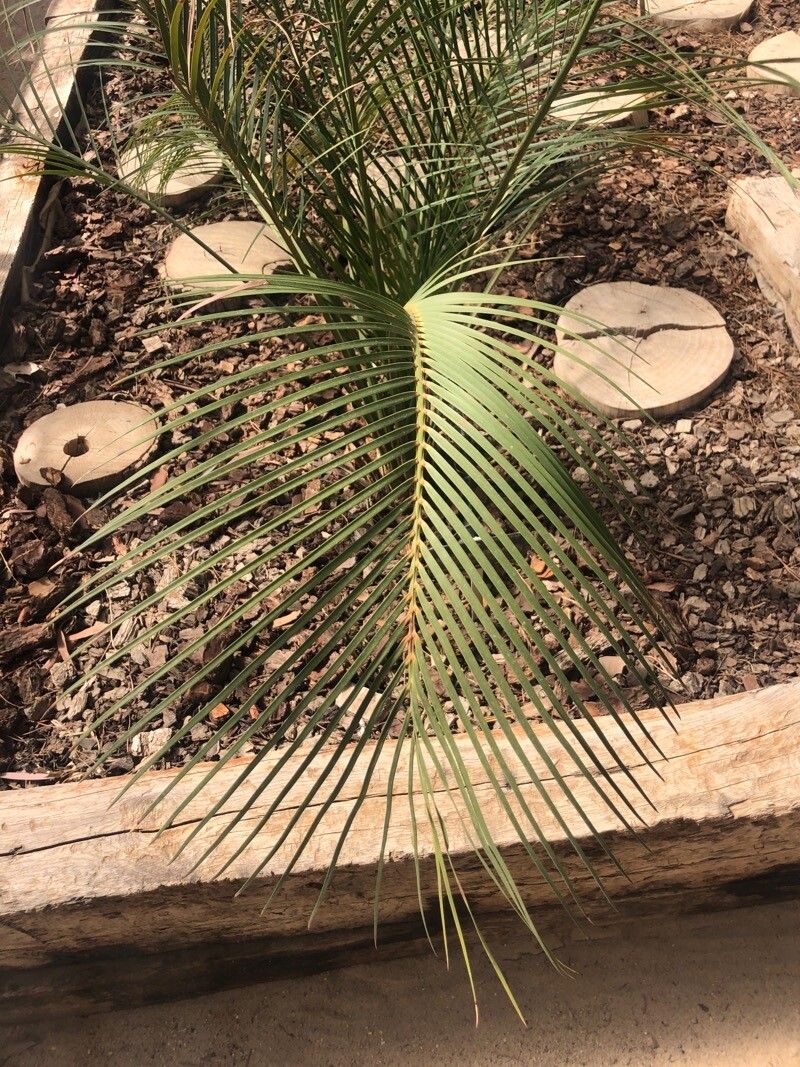
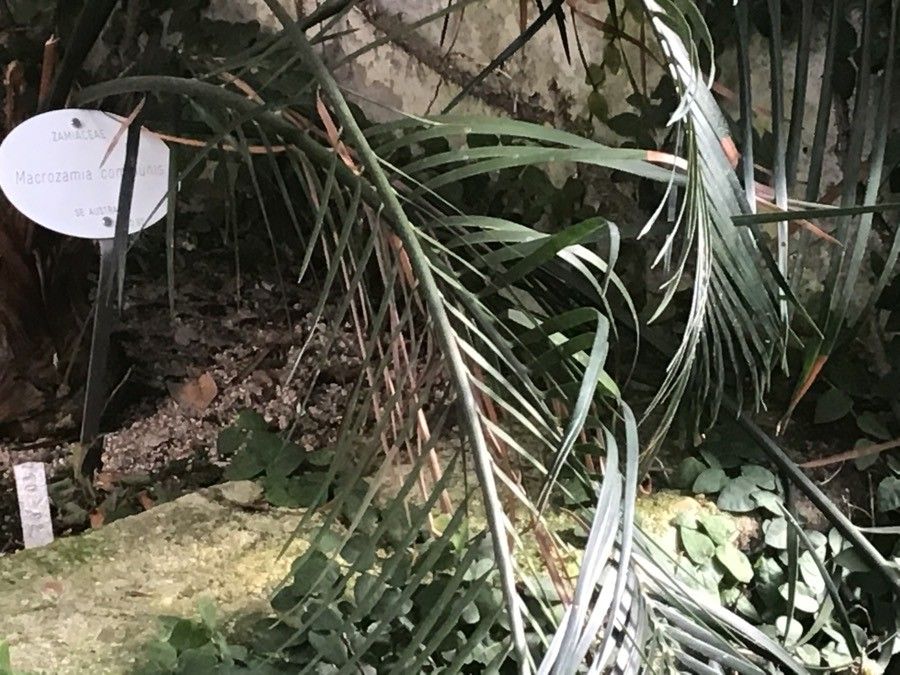
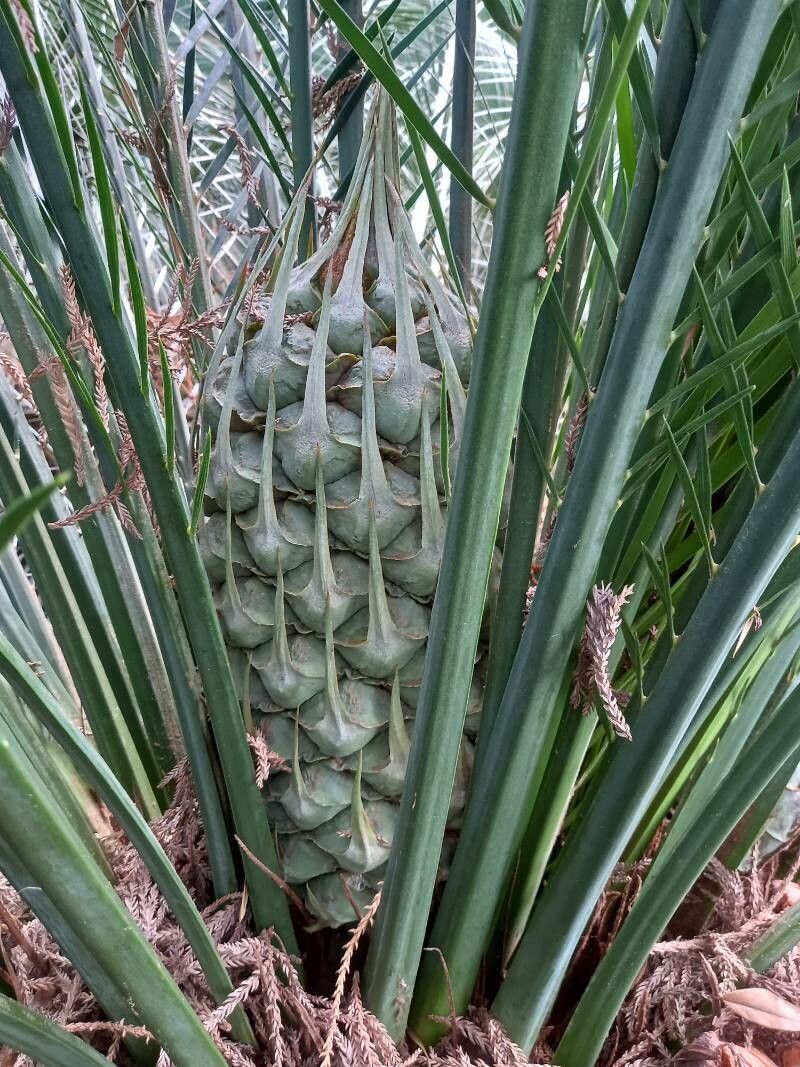
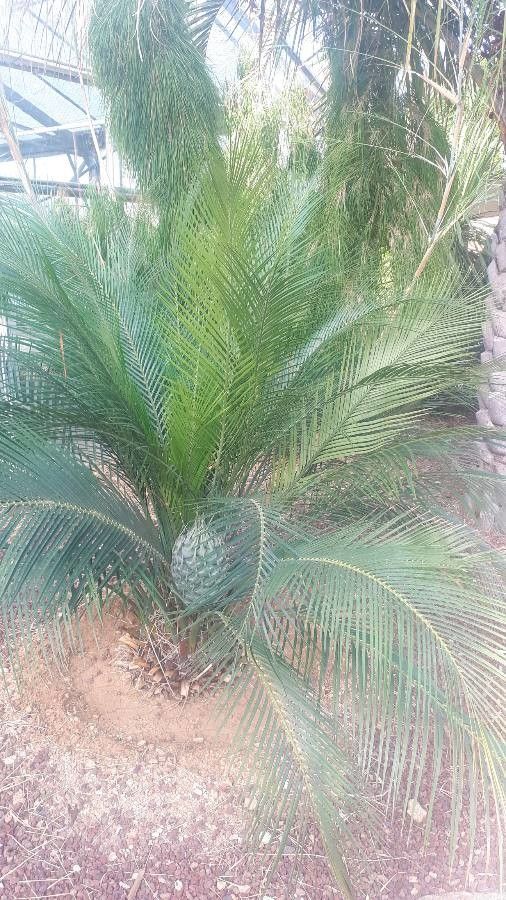
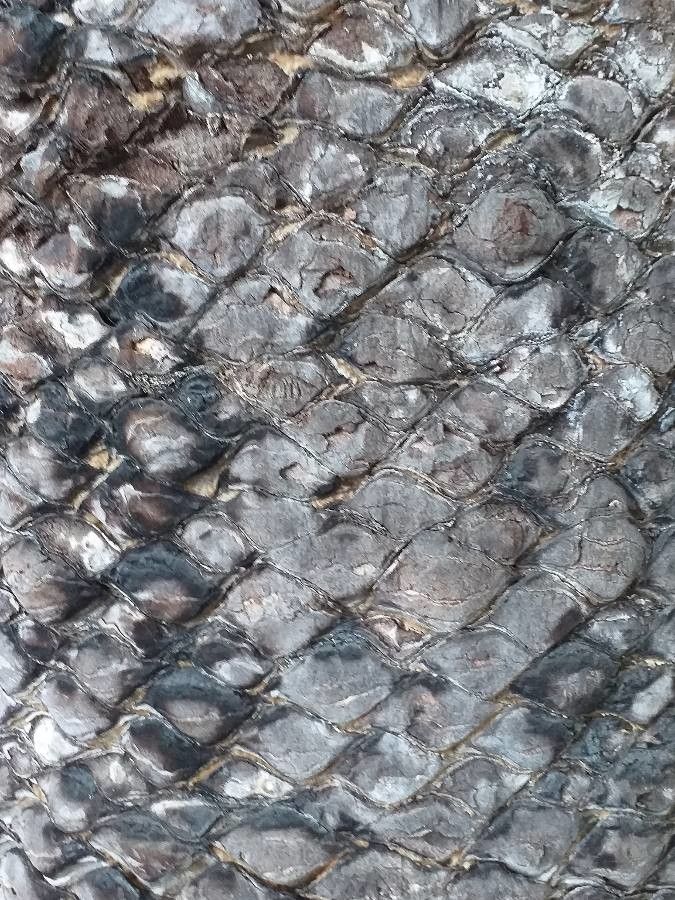
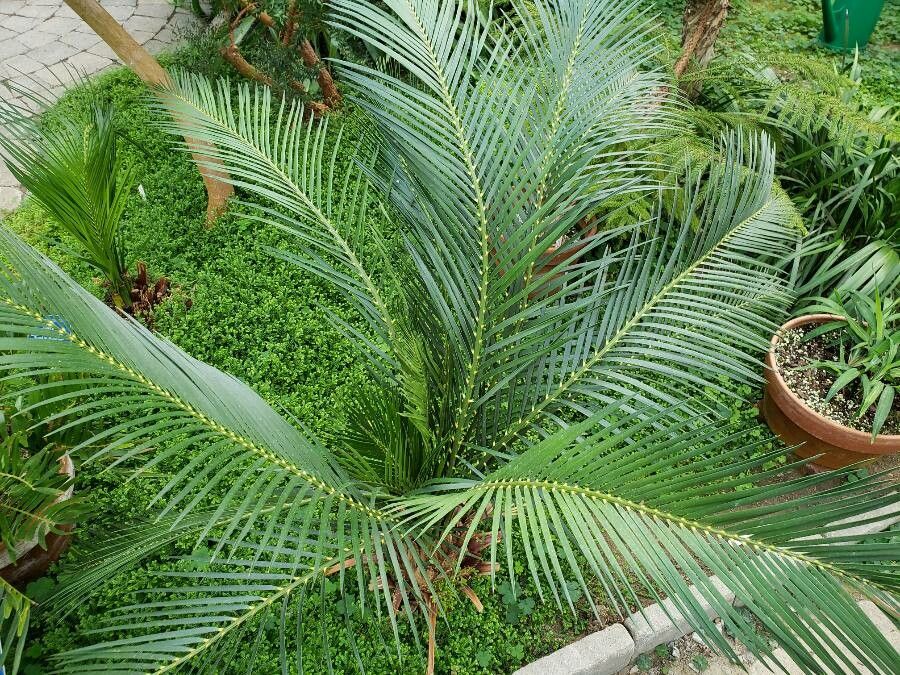
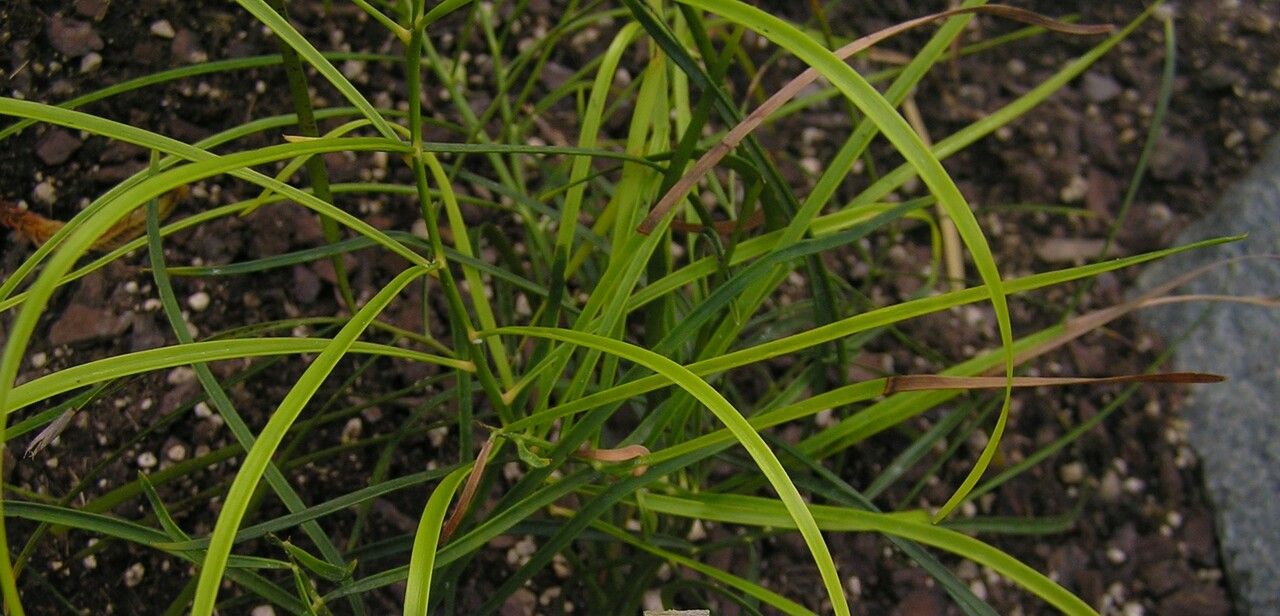
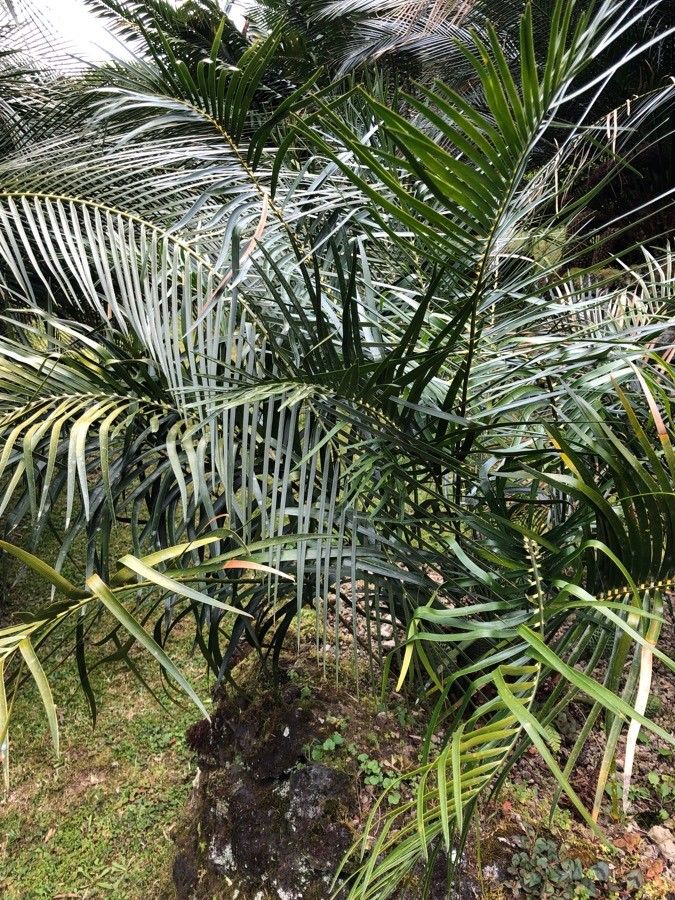
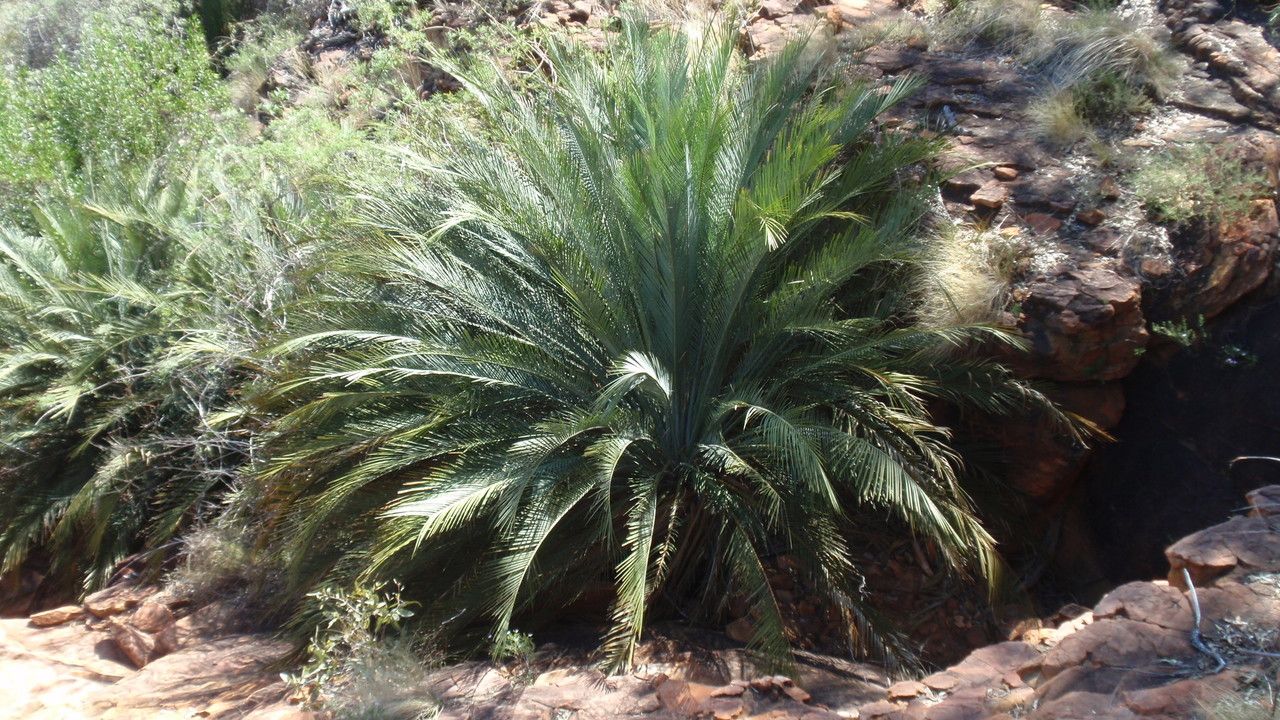
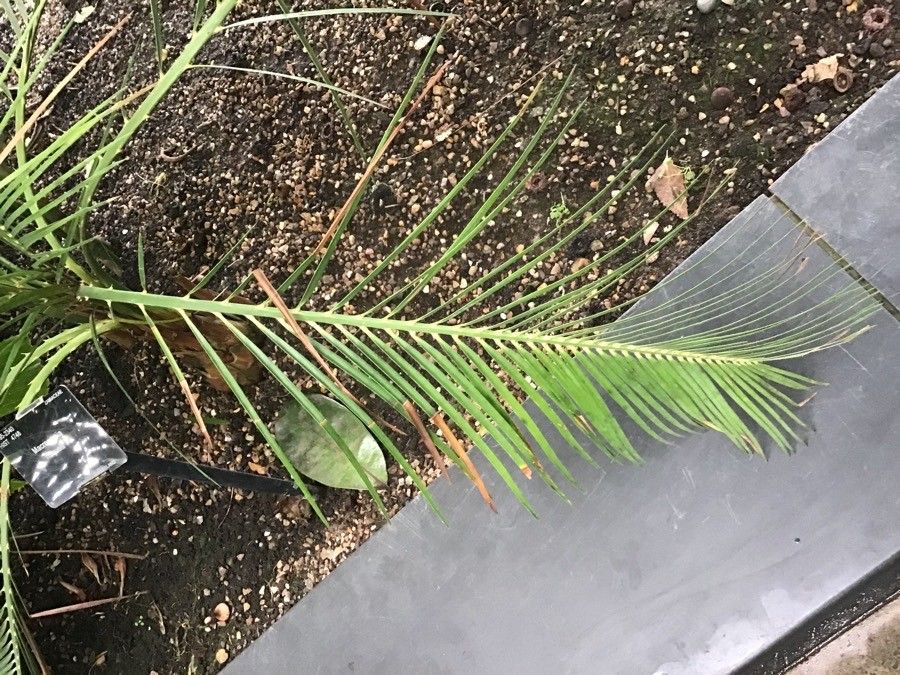
Macrozamia communis, commonly known as the Burrawang or Cycad Palm, is a species of cycad native to Australia. This plant features a stout trunk that can grow up to 3 meters tall and 30 centimeters in diameter, topped with a crown of large, glossy green leaves. The pinnate leaves can reach lengths of up to 2 meters. The Burrawang produces male and female cones on separate plants, with the female cones being larger. These female cones yield bright red seeds that are toxic if ingested. Macrozamia communis thrives in well-drained soils under full sun or partial shade and can withstand drought conditions once established. It is often used as an ornamental plant in gardens due to its attractive foliage, though caution is advised because of its toxic properties. The International Union for Conservation of Nature (IUCN) has listed the species as vulnerable, citing habitat loss from agricultural and urban expansion as well as over-collection for horticultural purposes. Conservation efforts focus on protecting remaining populations through legislation and habitat restoration programs.
Burrawang shows strong resistance to diseases and is usually not prone to them. In terms of care, the plant is fairly low maintenance. When grown outdoors it needs only light watering, and larger specimens typically do not require pruning. Smaller plants, however, should be pruned after they finish flowering. Burrawangt is suitable for anyone with an outdoor area, such as a garden or deck, and does not demand much gardening experience.
How to keep Macrozamia Communis.
Light
Burrawang naturally occurs in habitats like forest understories or rocky sites, where natural shade is present. It favors partial sun yet can tolerate both full sun and full shade, showing its versatility and hardiness.
Water
The Burrawang, a plant native to arid regions of Australia, is highly drought-tolerant and thrives with minimal moisture. It only needs to be watered about once a week. This evergreen species conserves water through its tough foliage, making it well-suited for different climates and an excellent choice for outdoor cultivation.
Temperature
Burrawang shows strong adaptability to temperature, tolerating high heat and wide temperature swings. In hot conditions, one should monitor watering and provide proper shade to avoid sunburn. On the other hand, Burrawang is relatively sensitive to low temperatures; it can cope with some cold, but excessively low temperatures can cause frost damage.
Fertilizer
Burrawang has particular nutrient needs and does not require heavy fertilization. The best time to fertilize for optimal growth is spring. Supplying nutrients improves its health, increases its resistance to pests and diseases, and supports its long lifespan.
Pruning
Burrawang, a distinctive cycad, benefits from strategic pruning in early spring when new growth begins. To improve its health and airflow, remove any dead or damaged fronds at the base. Be careful not to over-prune, and make sure to sanitize your tools to minimize the risk of disease. This will enhance both the plant's vitality and its appearance.
Botanical profile.
- Plant Type
- Palm
- Life Cycle
- Perennial
- Genus
- Macrozamia
- Family
- Zamiaceae
- Hardiness Zone
- 9-11
- Mature Height
- 2.44 m
- Mature Spread
- 1.52 m
- Leaf Color
- Dark Green
- Leaf Type
- Evergreen
- Bloom Time
- Late fall, Early winter
- Planting Time
- Spring, Autumn
- Harvest Time
- Mid spring, Late spring, Early summer
Other names.