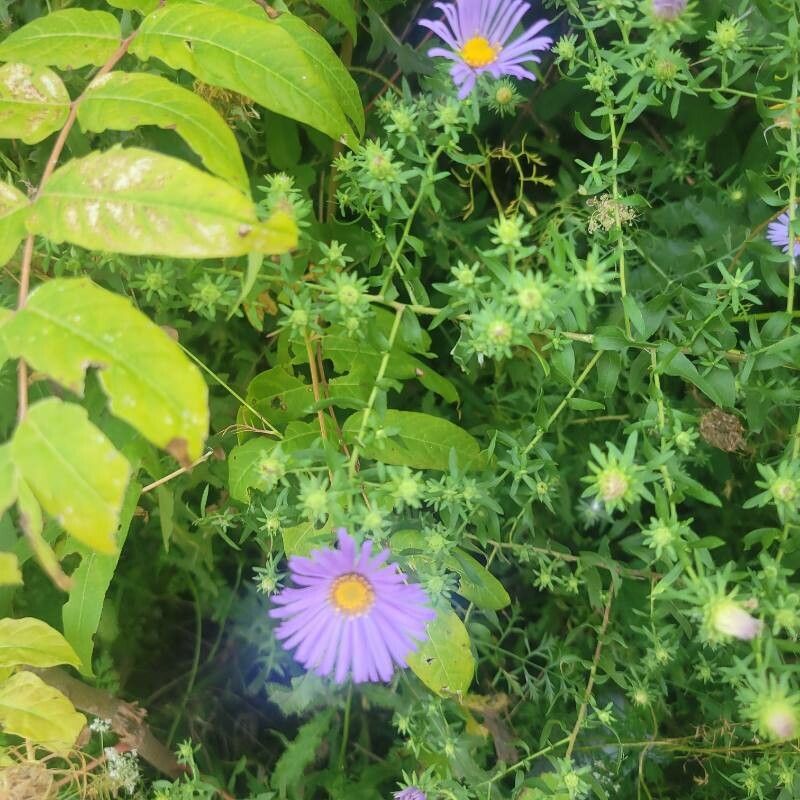
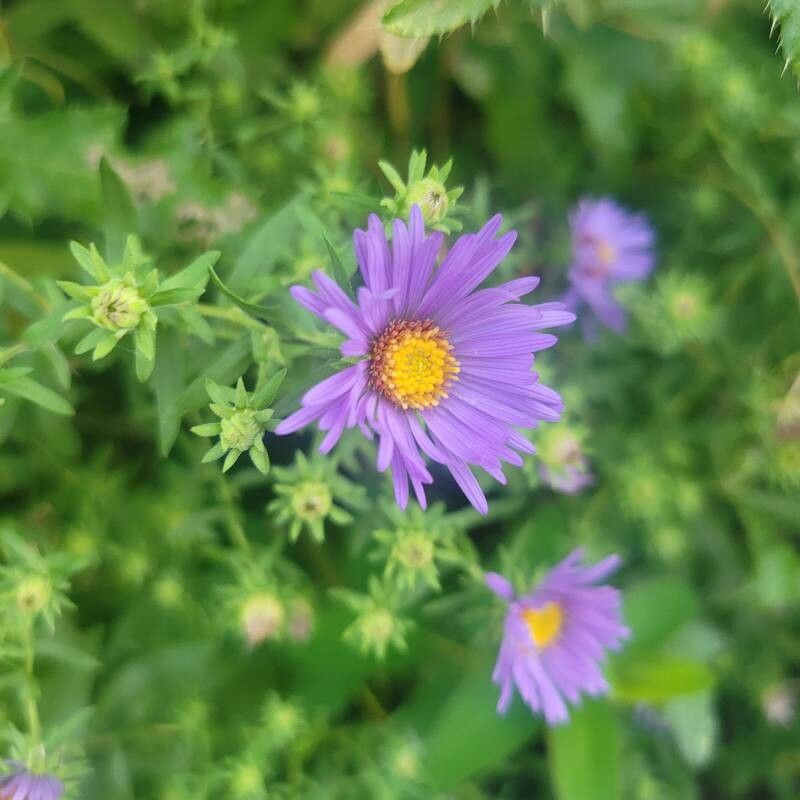
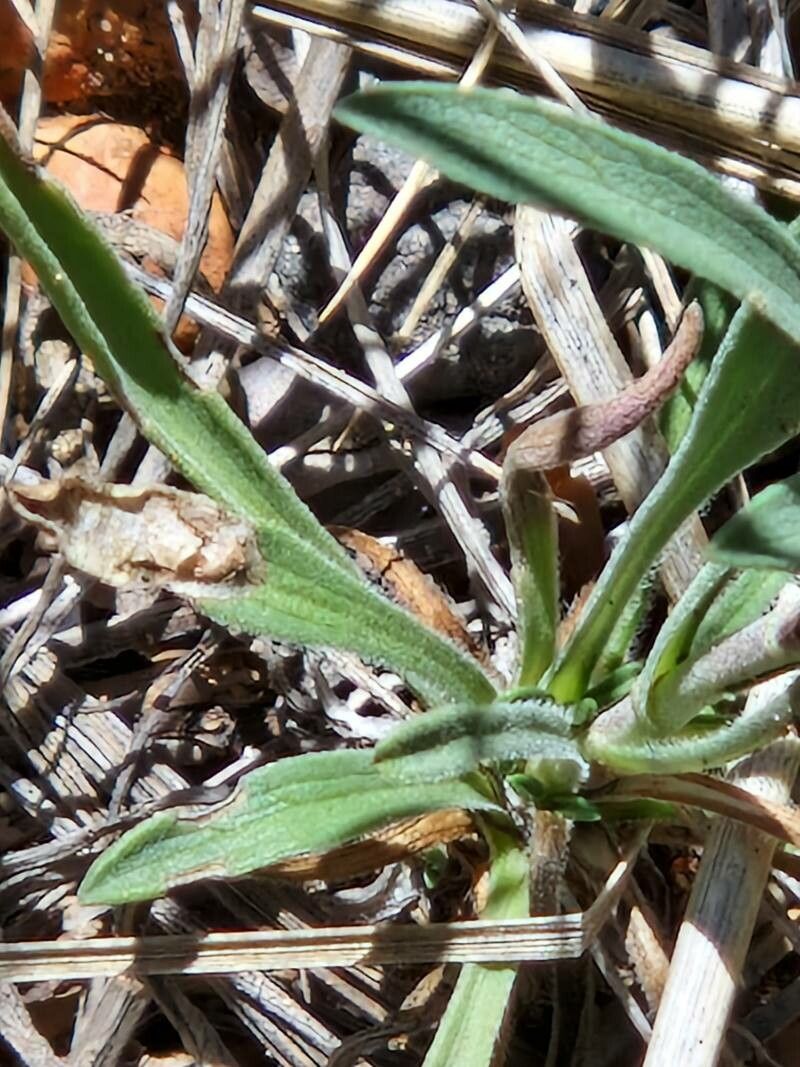
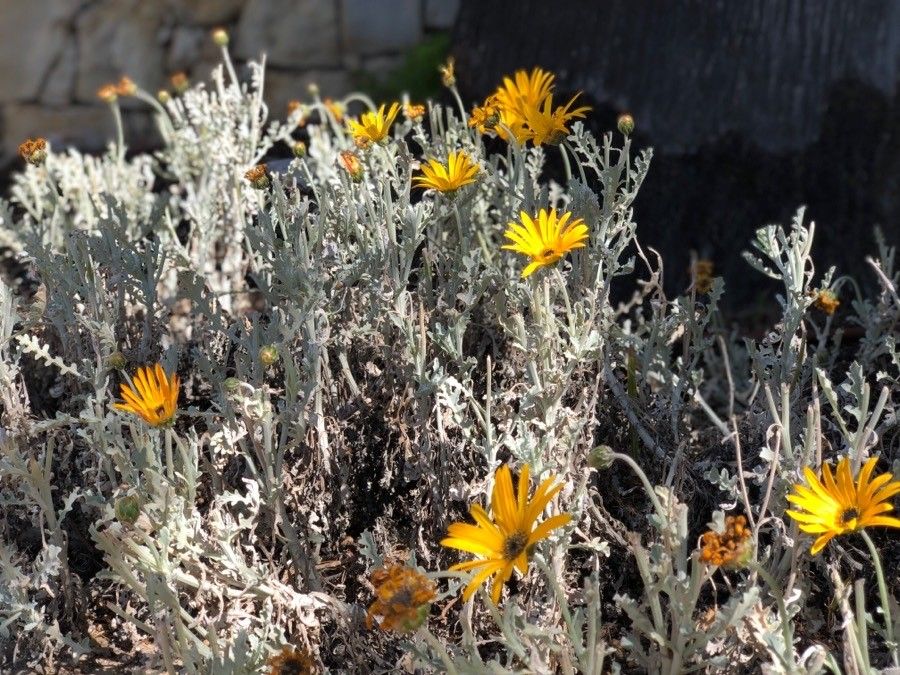
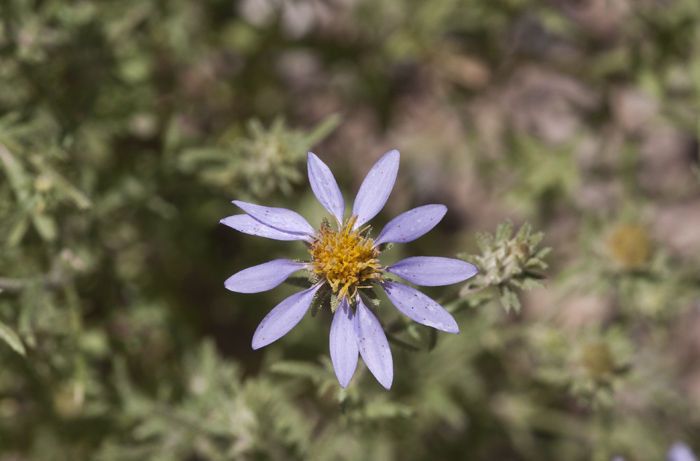
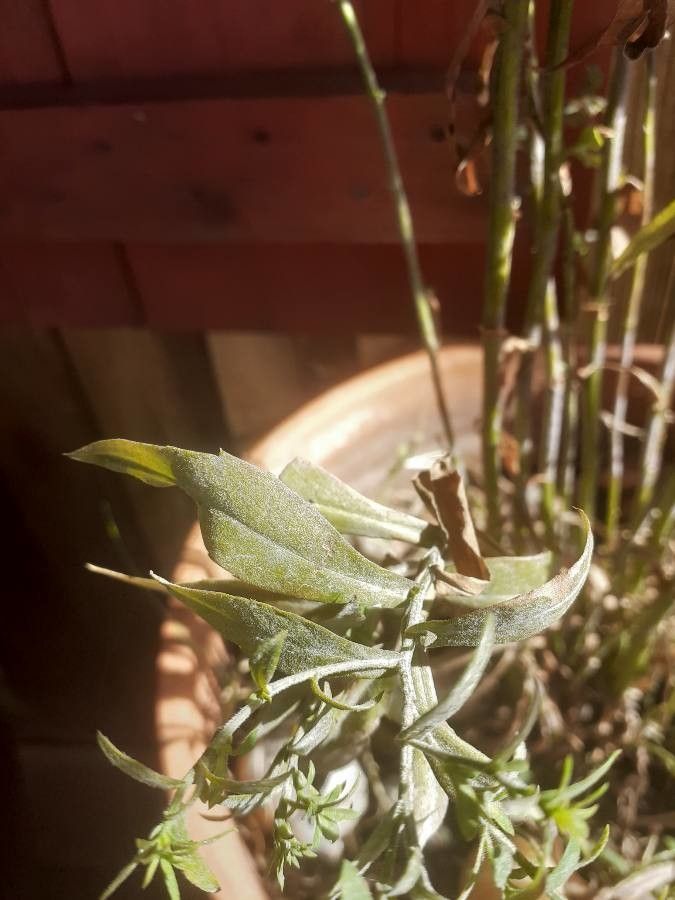
Machaeranthera asteroides, the fall tansyaster, is a North American species of plants in the sunflower family. It is native to the southwestern United States (California, Arizona, Nevada, New Mexico, Colorado, Utah) and northern Mexico (Chihuahua, Sonora, Baja California).Machaeranthera asteroides is a biennial or perennial herb with a woody taproot. It often grows in a clump of several stems. Ray florets in the flower heads are white or purple, and female. Disc florets are yellow and bisexual. VarietiesMachaeranthera asteroides var. asteroides - California, Arizona, Nevada, New Mexico, Chihuahua, Sonora Machaeranthera asteroides var. lagunensis (D.D.Keck) B.L.Turner Baja California; Laguna Mountains in San Diego County in California Machaeranthera asteroides var. glandulosa B.L.Turner - Arizona, Nevada, New Mexico, Utah
Mount laguna aster shows strong disease resistance and is generally not prone to illnesses. However, it can be affected by pests and diseases present in its surroundings. These problems are typically not serious. In terms of upkeep, the plant needs moderate maintenance. It should be pruned regularly to preserve a neat appearance and encourage healthy growth. Fertilizing can also assist in promoting blooms. Mount laguna aster is appropriate for anyone with outdoor space, such as a garden or patio, and does not require extensive care experience. It may need more attention when grown indoors.
How to keep Machaeranthera Asteroides.
Light
Originating from open spaces, the Mount laguna aster is a perennial herb that loves the sun and often flourishes in meadows and grasslands. Although it prefers full sunlight, it can also withstand environments with partial sun.
Temperature
The Mount Laguna Aster displays a strong ability to adapt to temperature, demonstrating resilience to both high temperatures and considerable fluctuations in temperature. During periods of elevated temperatures, it's critical to monitor the watering schedule and offer suitable shading to avoid damage from the sun. Nevertheless, the Mount Laguna Aster displays a relatively low resistance to colder temperatures. Although it can handle a degree of cold, exceptionally cold conditions can result in frost injury.
Fertilizer
The optimal period to feed a Mount laguna aster is in the early phase of spring, when it comes out of dormancy and starts to actively grow. Supplying nutrients through fertilization aids in robust growth. Even though the fertilization requirement for Mount laguna aster is relatively low, yearly fertilization could improve its durability and encourage superior, more durable blooms.
Botanical profile.
- Plant Type
- Herb
- Life Cycle
- Perennial
- Genus
- Machaeranthera
- Family
- Asteraceae
- Hardiness Zone
- 5-9
- Mature Height
- 30 cm to 61 cm
- Mature Spread
- 20 cm to 40 cm
- Leaf Color
- Green
- Leaf Type
- Deciduous
- Flower Color
- Yellow, White
- Flower Size
- 2.03 cm to 3.05 cm
- Bloom Time
- Mid summer, Late summer, Early fall
- Planting Time
- Spring, Summer, Autumn
- Harvest Time
- Early fall, Mid fall
- Native Area
- Mexico
Other names.