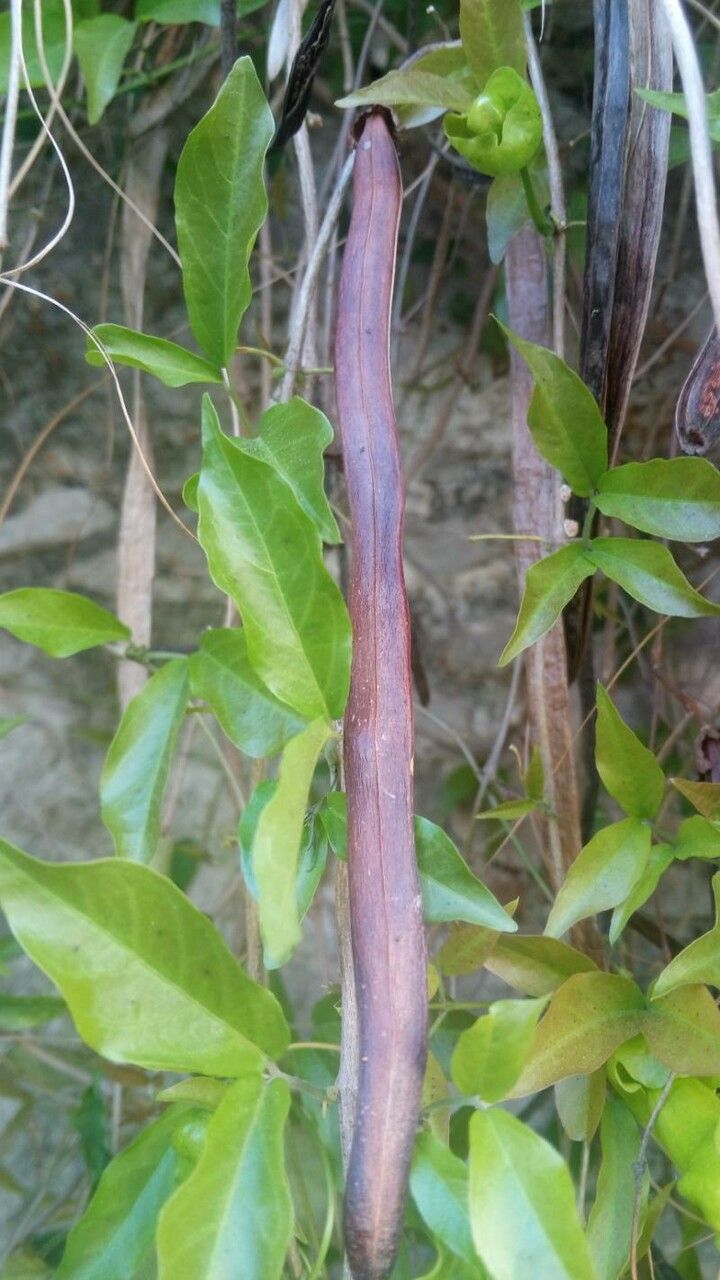
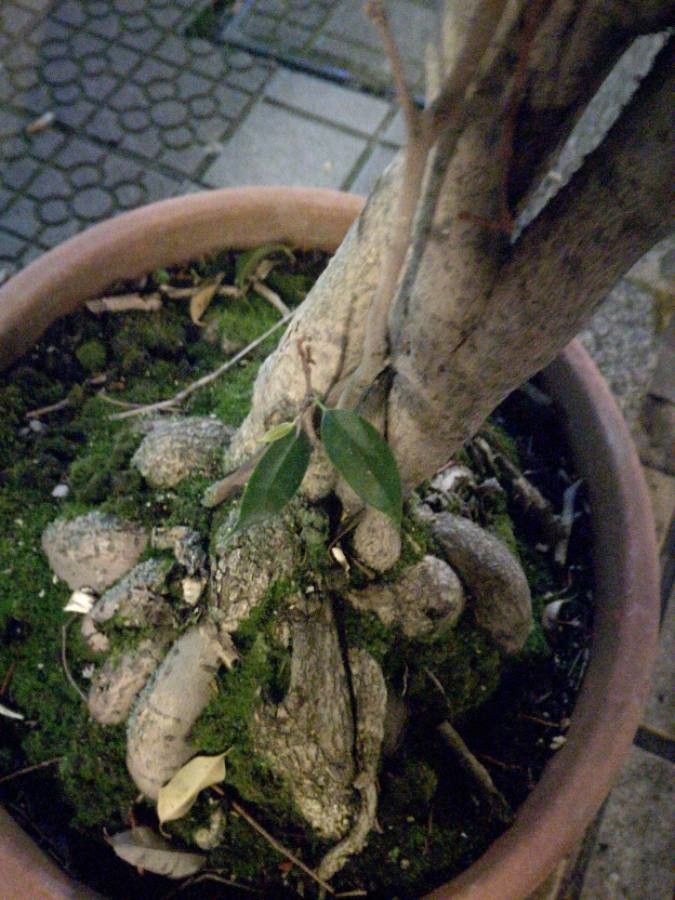
Macfadyena unguis-cati, commonly known as Cat's Claw Vine, is a fast-growing climbing plant belonging to the Bignoniaceae family. Native to Central and South America, it has been introduced to many other parts of the world due to its ornamental value. The plant features long, slender stems that can grow up to 20 feet in length, adorned with sharp thorns resembling a cat's claws.
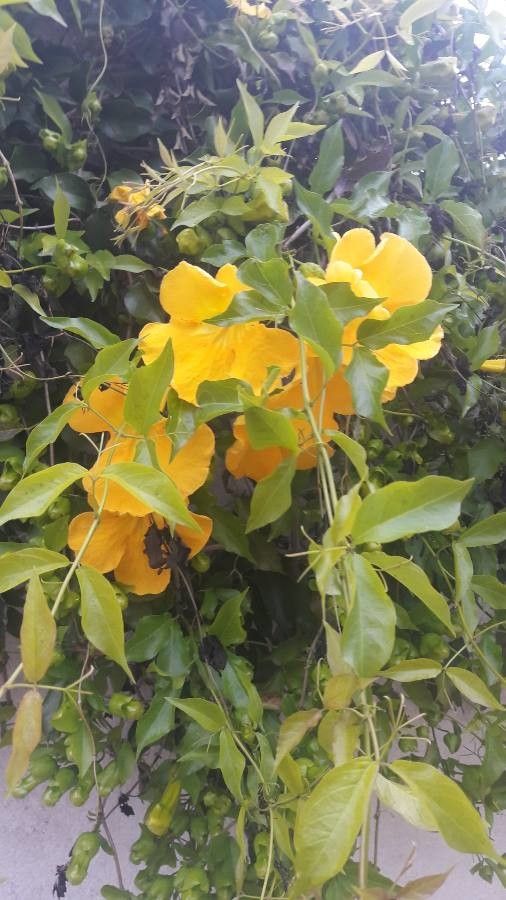
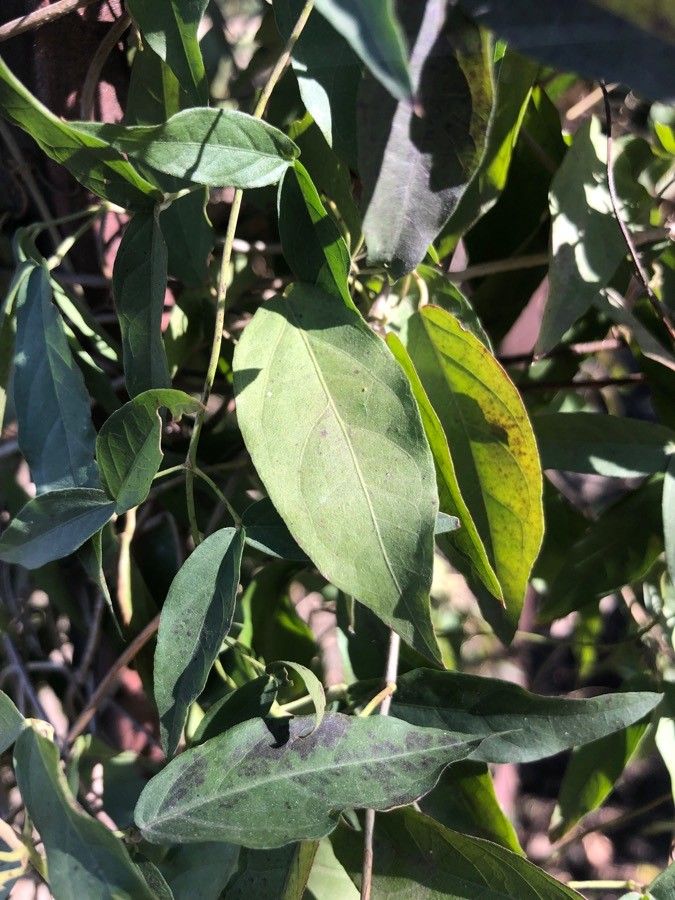
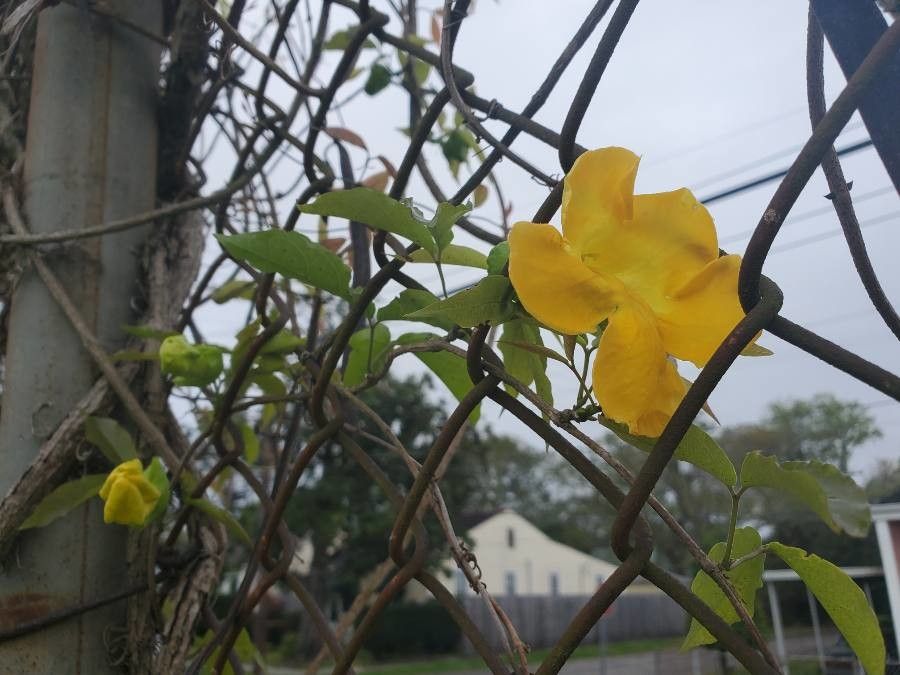
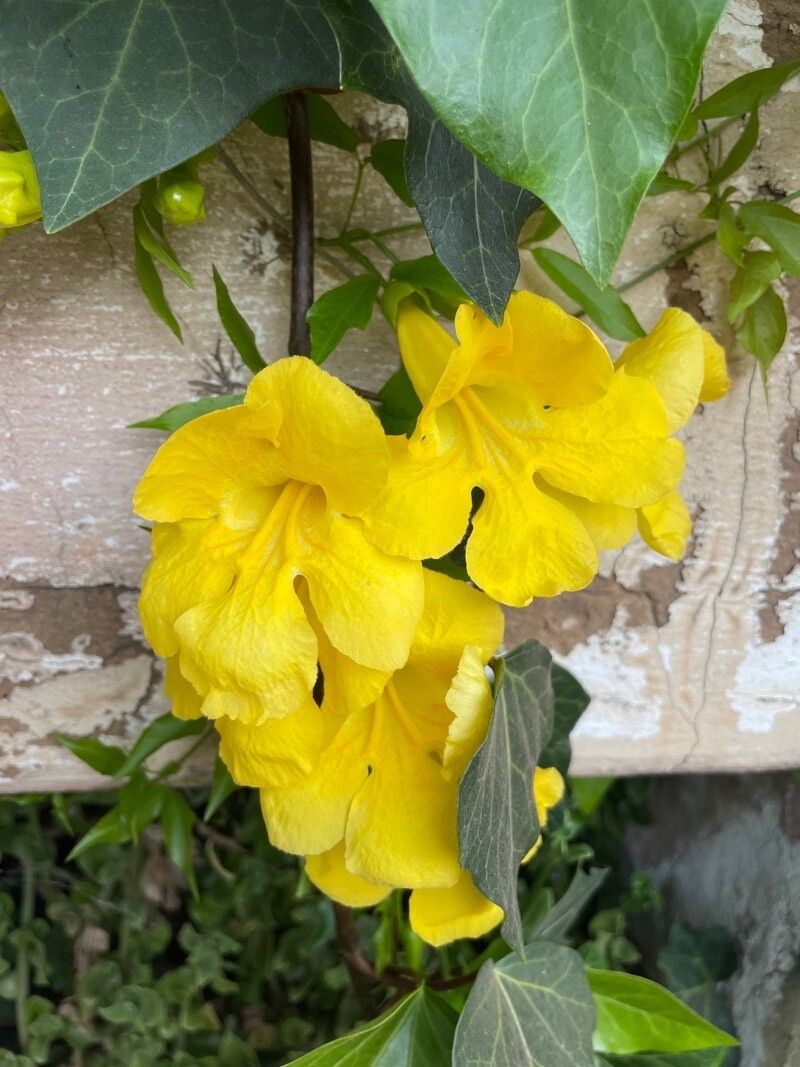
The leaves of Macfadyena unguis-cati are dark green, glossy, and oval-shaped. Its trumpet-shaped, bright yellow flowers bloom from late spring through early fall, attracting bees, butterflies, and hummingbirds.
Cat's Claw Vine thrives in full sun or partial shade and prefers well-draining soil, though it can tolerate a wide range of soil types. Once established, it is drought-tolerant but benefits from regular watering during dry spells.
Often used as an ornamental plant, Cat's Claw Vine is valued for its attractive foliage and showy flowers, which add vibrant color to gardens and landscapes. However, it can become invasive if not properly managed due to its rapid growth rate and ability to self-seed or root at nodes where it touches the ground.
Overall, Macfadyena unguis-cati is an appealing, low-maintenance climbing vine that enhances outdoor spaces while also providing habitat for pollinators such as bees and hummingbirds.
Cat's claw creeper has strong disease resistance and is typically not susceptible to illnesses. In terms of care, this plant is fairly low-maintenance. When grown outdoors, it needs little watering, and larger plants usually do not require pruning. However, smaller plants should be pruned after they have bloomed. Cat's claw creepert is suitable for anyone with an outdoor area, such as a garden or deck, and does not require much care experience.
How to keep Macfadyena Unguis Cati.
Light
Cat’s claw creeper needs ample sunlight for strong growth and performs best with continuous, unblocked sun exposure. It can persist in spots with somewhat less light, but its vigor and flowering may be reduced. Too much or too little sun can result in poorer health.
Temperature
Cat's claw creeper is native to areas with temperatures between 59 to 95 °F (15 to 35 °C). Growing it in different climates may require supplemental heating during colder seasons.
Fertilizer
Timing is important when fertilizing Cat's claw creeper. Apply fertilizer in early spring and continue once a month through early summer. Fertilizer helps produce lovely blooms and supplies energy during both dormant periods and active growth.
Botanical profile.
- Plant Type
- Vine
- Life Cycle
- Perennial
- Genus
- Macfadyena
- Family
- Bignoniaceae
- Hardiness Zone
- 8-10
- Mature Height
- 20.12 m
- Mature Spread
- 3.05 m
- Leaf Color
- Green
- Leaf Type
- Evergreen
- Flower Color
- Yellow
- Flower Size
- 4.06 cm to 5.08 cm
- Bloom Time
- Mid spring, Late spring, Summer
- Planting Time
- Spring, Summer, Autumn
- Harvest Time
- Mid summer, Late summer, Fall
- Native Area
- Belize, Honduras, Mexico, Guatemala, Peru, Dominican Republic, Trinidad and Tobago, Panama, Uruguay, Colombia, Bahamas, Cuba, Paraguay, Argentina, Bolivia, Venezuela, Brazil, Guyana, El Salvador, Nicaragua, Ecuador, Suriname, Costa Rica
Other names.