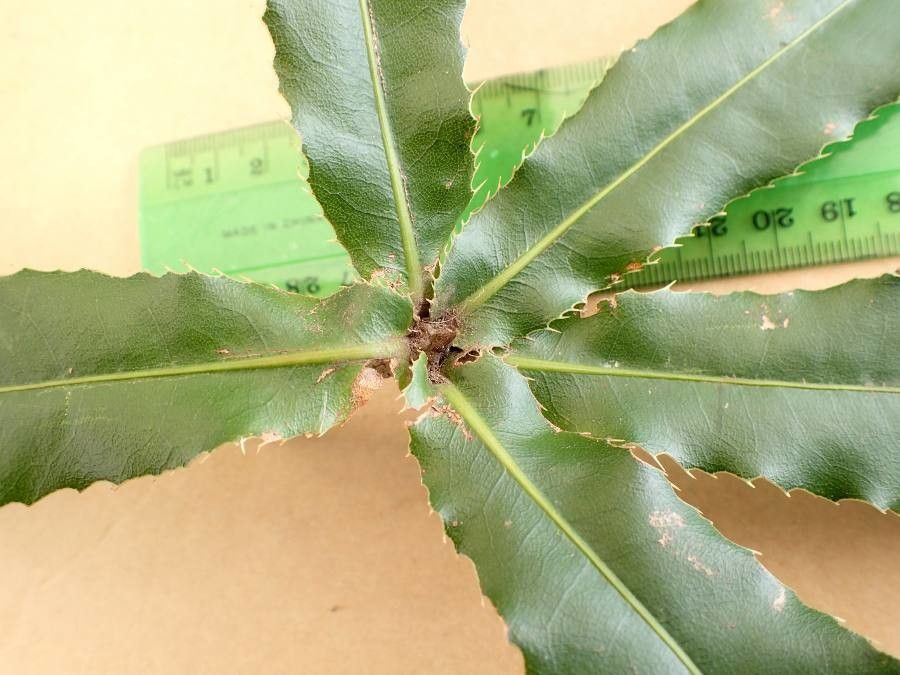
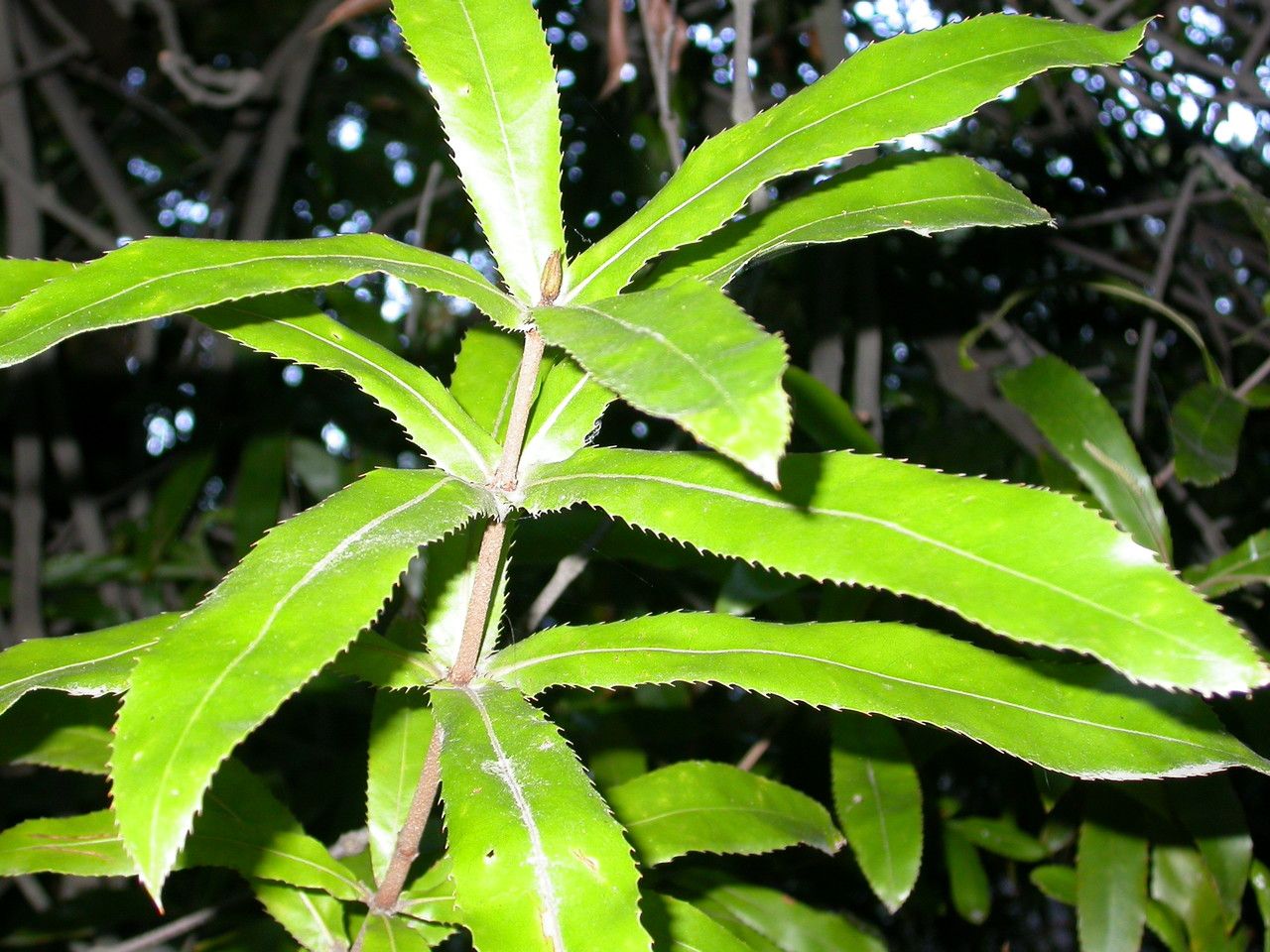
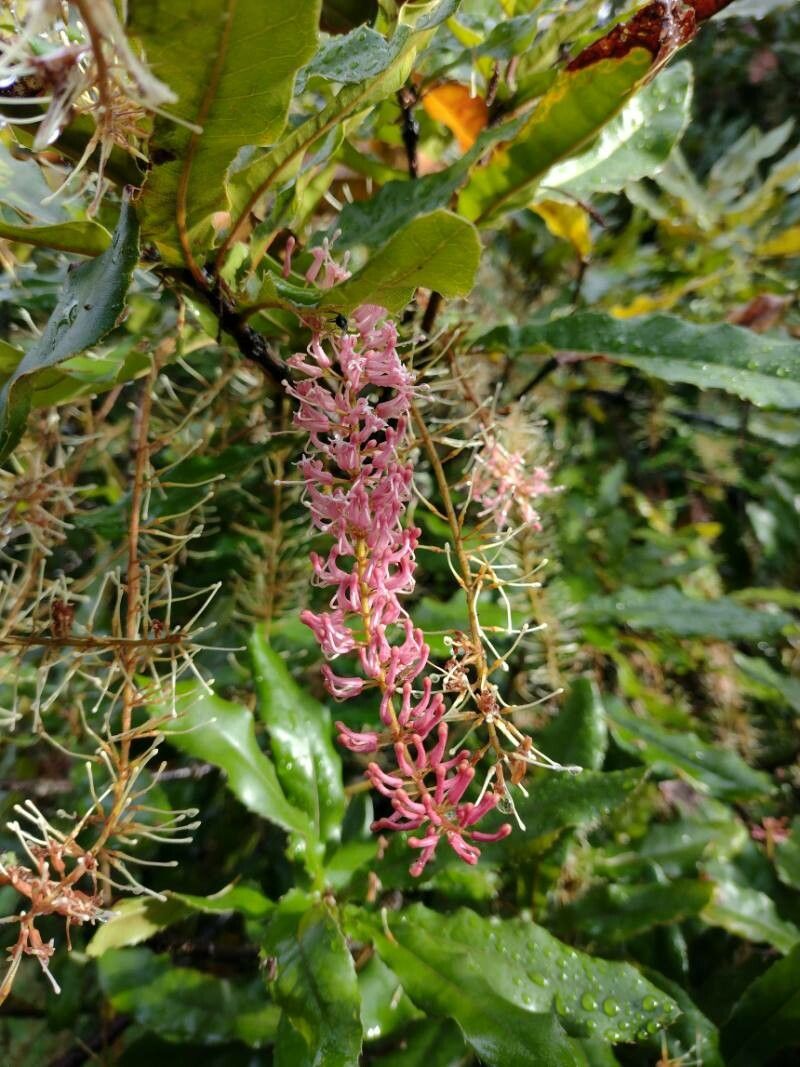
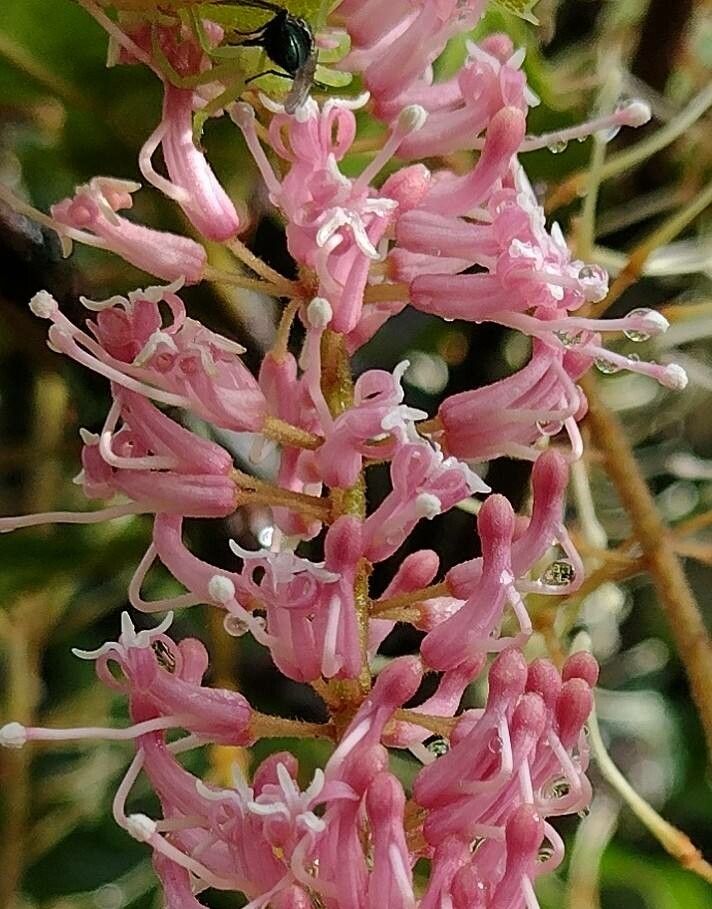
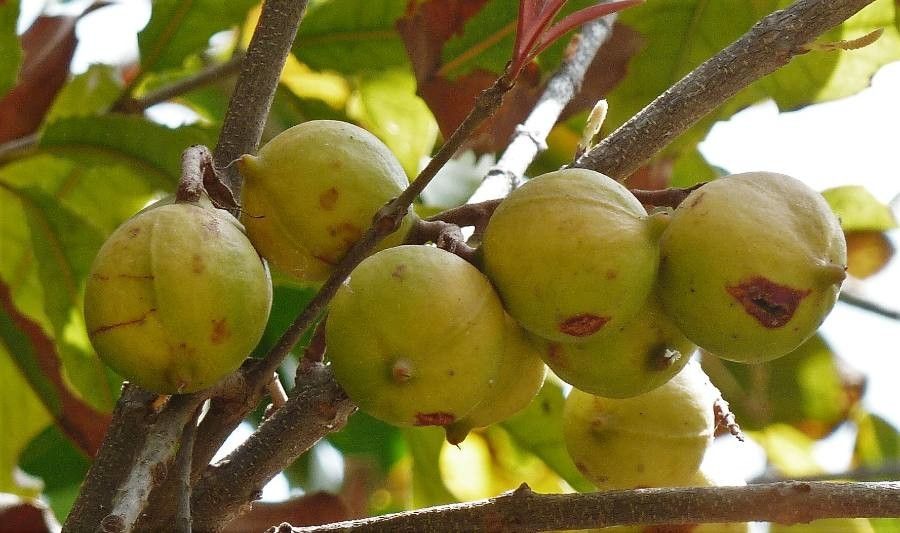
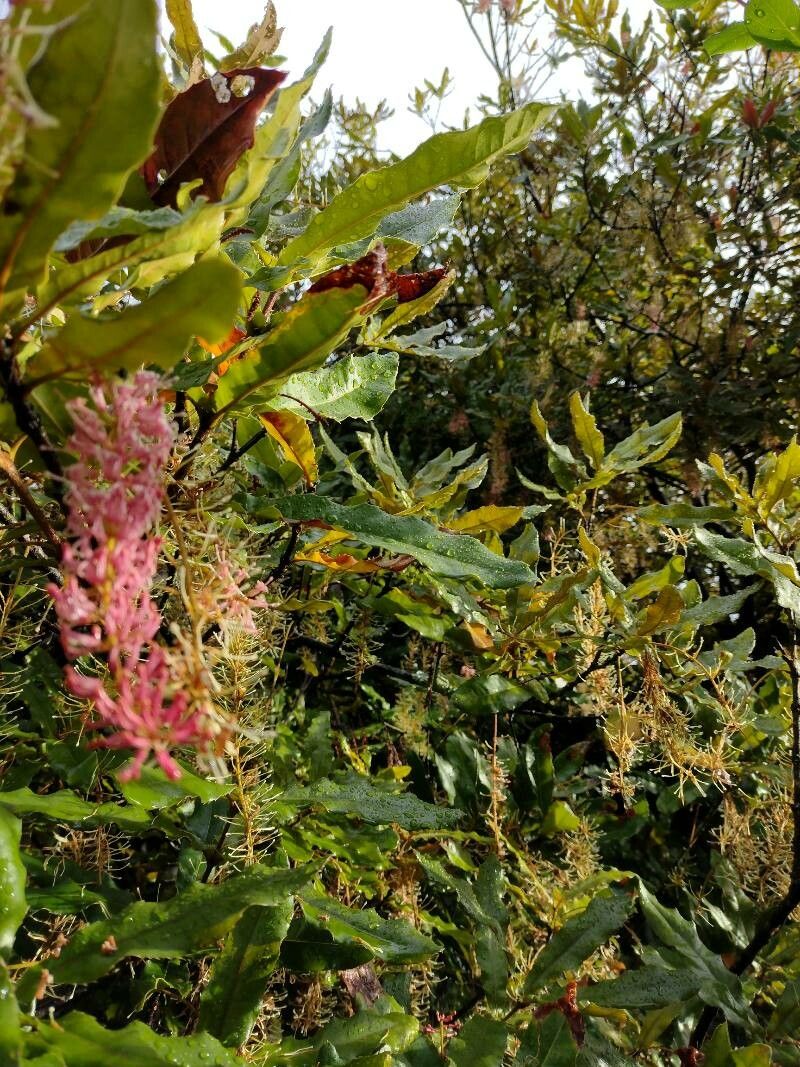
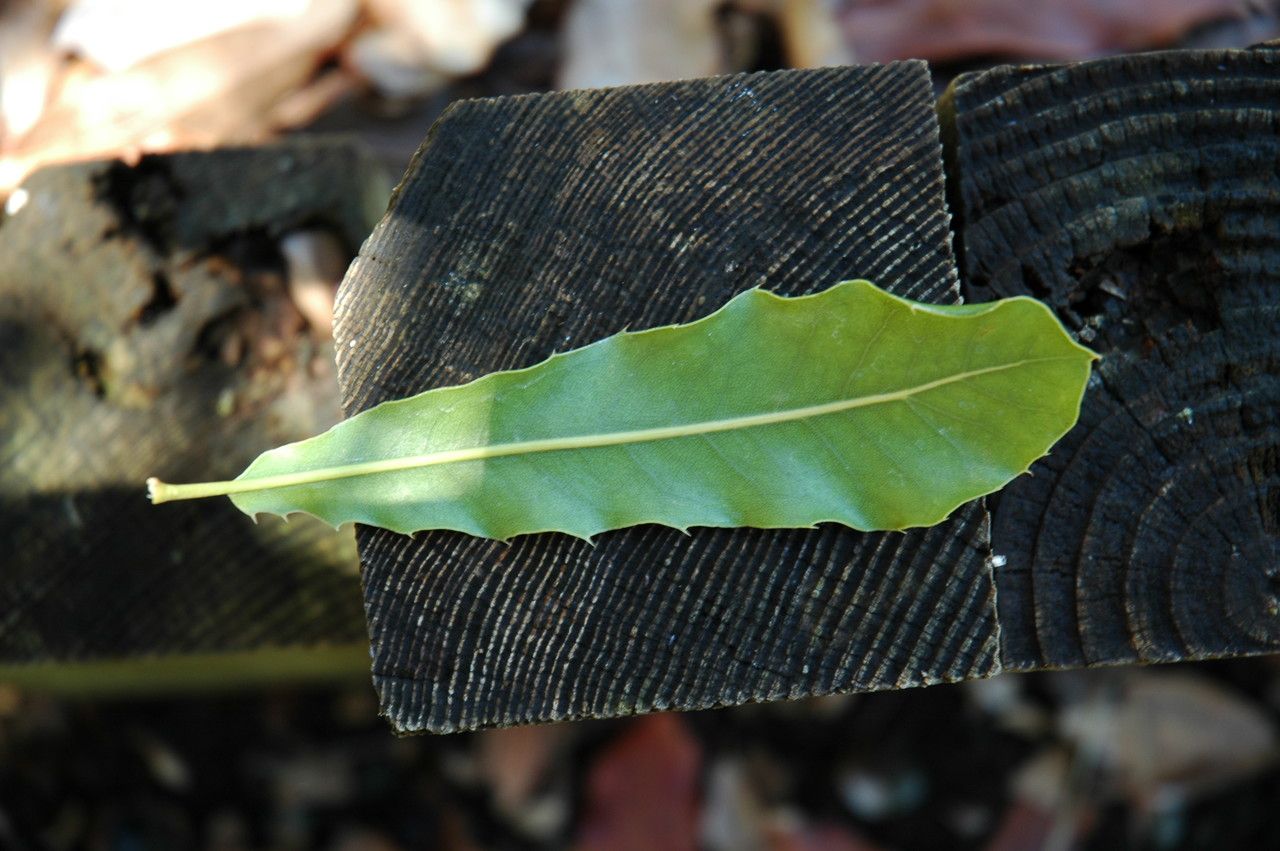
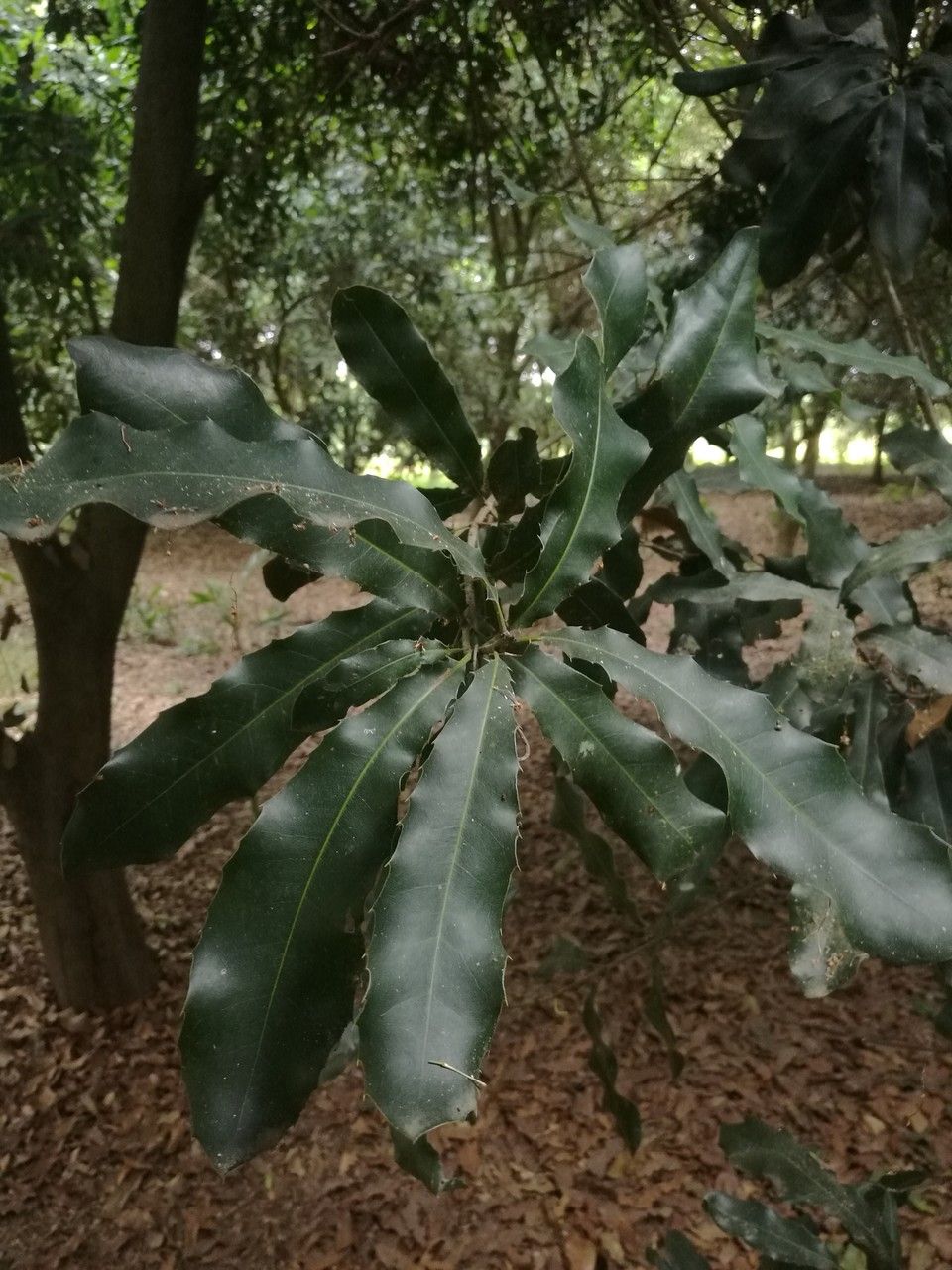
Macadamia tetraphylla is a tree in the family Proteaceae, native to southern Queensland and northern New South Wales in Australia. Common names include macadamia nut, bauple nut, prickly macadamia, Queensland nut, rough-shelled bush nut and rough-shelled Queensland nut. This species has dense foliage and grows up to 18 metres in height. The leaves, which have toothed margins, are 7 to 25 cm in length. As the species name "tetraphylla" implies, it usually has four leaves more or less equally spaced around each leaf node, whereas the other main commercial species "integrifolia" has a variable leaf number but usually three. It has long, pendant white to creamy pink to purple flowers, followed by woody, rounded fruits which are 2 to 3 cm in diameter and contain edible seeds. As one common name implies, the shell of this species is often dimpled or "rough shelled" as compared to the integrifolia, which has a smooth shell, and always white flowers. It has been introduced to Mexico and has done well in the states of Michoacán and Jalisco and has become an important export crop for the Mexican market. Hawaii is the largest exporter of this crop worldwide. Both species of Macadamia have not done well in the pure tropics, with no fully successful plantations less than 15 degrees from the equator. Major plantations in Costa Rica, at 10 degrees north, are said to produce much less than in Hawaii at 19 to 22 degrees north, in one case 20% the production. Plantations in Guatemala at 15 degrees north are successful. However, individual seedling trees have produced well in the pure tropics and need to be selected. One grower noted that the integrifolia flowers in Costa Rica have no aroma, leading to low and erratic pollination. Macadamia tetraphylla has a higher sugar content than integrifolia, leading to problems of burning when baked in cookies and other desserts, thus most commercial macadamias are of the integrifolia species to assure conformity of roasting and baking results. Many tetraphylla or hybrids of tetraphylla and integrifolia are grown in home orchards. The higher sugar content of tetraphylla is preferred by some, especially for eating raw.
Macadamia nut plants have strong resistance to disease and are generally not susceptible to illnesses. In terms of care, this plant is fairly low-maintenance. When grown outdoors it needs only light watering, and larger plants typically do not require pruning. Smaller plants, however, should be trimmed after they finish blooming. Macadamia nut is appropriate for anyone with outdoor space, like a garden or deck, and does not demand much prior care experience.
How to keep Macadamia Tetraphylla.
Light
Macadamia nut grows best in a setting that receives a generous amount of sunlight throughout the day. Its native habitats—lush forests and coastal scrublands—highlight the importance of plentiful solar exposure for healthy growth. This also stresses that a balanced amount of light is necessary, since too little or too much can negatively affect its development.
Water
Macadamia nuts, which come from subtropical climates, thrive in consistently moist and well-draining soil. Once they are established, these plants show moderate drought tolerance. To ensure optimal pollination and nut production, especially in regions with limited rainfall during the flowering phase, it is important to water them every two weeks.
Temperature
The macadamia nut originates from temperate climates and does best in temperatures of 68 to 100°F (20 to 38 ℃). In colder seasons, measures may be necessary to keep indoor temperatures within that range.
Fertilizer
Use organic fertilizers (e.g., fish emulsion or compost) instead of chemical fertilizers for macadamia nut. Supply higher levels of nitrogen and phosphorus to young plants during spring. Incorporate compost or fertilizer into the soil before or after planting. For mature plants, supplement in spring with a balanced fertilizer or one targeted to a specific deficiency. Nutrient deficiency causes small leaves, short branches, yellow/bronze foliage, acidic fruits, premature fruit fall, and splitting.
Pruning
Macadamia nut trees have evergreen leaves and produce nuts, thriving best with structured pruning. To enhance airflow and light penetration, it's important to prune the trees from early to late winter, which helps maintain an open canopy. This practice is essential as it boosts disease resistance and overall vigor, both of which are crucial for achieving an optimal yield.
Botanical profile.
- Plant Type
- Tree, Shrub
- Life Cycle
- Perennial
- Genus
- Macadamia
- Family
- Proteaceae
- Hardiness Zone
- 9-12
- Mature Height
- 3.66 m to 9.75 m
- Mature Spread
- 3.66 m to 7.62 m
- Leaf Color
- Green
- Leaf Type
- Evergreen
- Flower Color
- Pink, Cream, White, Green
- Flower Size
- 2.54 cm
- Bloom Time
- Early fall, Mid fall
- Planting Time
- Autumn
- Harvest Time
- Spring
Other names.
Reader questions.
How should I water my Macadamia nut plant?
Your Macadamia nut is not too particular about how you water it. You can use various common watering tools, such as watering cans, hoses, or even cups. It is important to apply the water directly to the soil, making sure to evenly moisten all areas to provide water to the entire root system. Using filtered water can be beneficial, as tap water may have harmful particles. Additionally, it is best to use water that is at or slightly above room temperature to avoid shocking the Macadamia nut. However, the plant typically responds well to any water you use.
Why should I add fertilizers to my Macadamia nut tree?
Regular fertilization is necessary for Macadamia nut trees due to their energy-intensive foliage. These trees must allocate energy not only for leaf maintenance but also for the development of stems, branches, roots, and other essential structures. If fertilization is neglected, there are two likely outcomes. Firstly, the leaves will lose their natural color and texture, resulting in an overall unhealthy appearance that diminishes their ornamental value. Secondly, the tree's growth will be stunted or produce weak branches that may break easily.
What are the sunlight requirements for Macadamia nut plants?
Macadamia nut plants, with their botanic name Macadamia tetraphylla, thrive in environments that receive generous amounts of sunlight throughout the day, requiring more than 6 hours of sunlight to grow optimally. Originating from lush forests and coastal scrublands, these plants highlight the importance of abundant solar exposure for healthy growth. It's essential to monitor the sunlight in your garden closely, choosing spots that offer the right balance of light and shade to ensure the plants' well-being. In cases where natural sunlight is insufficient, especially indoors, artificial lighting such as LEDs tailored to provide specific wavelengths can support plant growth, mimicking the natural environment's conditions.
What is the native climate for Macadamia nut, and how does it affect its care?
The Macadamia nut, botanically known as Macadamia tetraphylla, is native to temperate climates and thrives in temperatures ranging between 68 to 100°F (20 to 38°C). This affinity for warmth means that the Macadamia nut is highly sensitive to cold temperatures. During cooler seasons or when grown outdoors, care should be taken to maintain this optimal temperature range by bringing the plant indoors and placing it near a bright window, yet at a distance from heaters to avoid damage. It's crucial to ensure the temperature stays above 20°C, especially during winter, as any approach towards 0°C can be detrimental to the plant's health.
What should I do if I give my Macadamia nut tree too much or too little water?
When planting outdoor plants, especially new ones or seedlings, it's important to remember that they can easily suffer from lack of watering. For the first few months, make sure to water these small or recently planted trees regularly. Once the roots are well-established, Macadamia nut trees can mostly rely on rain. If you have a Macadamia nut tree in a pot, overwatering is more likely to occur. If you accidentally overwater your plant, take immediate action to fix the situation. Stop watering the plant right away to minimize the effects of overwatering. Then, remove the Macadamia nut tree from its pot and check the roots. If none of the roots show signs of root rot, you can put the plant back in its container. But if you find any affected roots, trim them off and consider using a fungicide to prevent further damage. Finally, repot the Macadamia nut tree in well-draining soil. On the other hand, if your Macadamia nut tree is underwatered, simply water it more frequently. This issue is usually easy to fix. When a plant is underwatered, its leaves will droop, dry out, and may even fall off. However, with proper watering, the leaves will quickly return to their fullness. So, make sure to adjust your watering frequency as soon as you notice underwatering.
What are some common symptoms of inadequate lighting for Macadamia nuts?
Insufficient lighting can lead to a variety of symptoms in Macadamia nut plants, indicating the need for better light exposure. Some of these symptoms include smaller new leaves, leggy or sparse growth, faster leaf drop, slower or halted new growth, lighter-colored new leaves indicating a lack of chlorophyll, and several conditions related to too much sun, such as chlorosis, sunscald, leaf curling, wilting, and leaf scorching. These issues underscore the plant's struggle with inappropriate light levels, whether it be too little or excessive exposure.
How should you care for a Macadamia nut plant during low temperature periods?
During low temperature periods, it's vital to protect the Macadamia nut plant from cold damage as it prefers warm temperatures and struggles with anything below 20°C. Winter care includes keeping the plant above 0°C to avoid damage. Exposure to temperatures below -5°C can lead to lighter leaf color, eventually turning brown or black with symptoms of wilting and drooping after frost damage. To remedy frost damage, trim off the affected parts and immediately move the plant indoors to a warm spot, preferably near a south-facing window, ensuring ample sunlight while avoiding the placement near heaters or air conditioning vents which can cause air excessive dryness.
How can I address and prevent lighting issues for my Macadamia nut plant?
To mitigate and prevent light-related issues in Macadamia nut plants, consider several strategies based on the plant's location. Indoors, gradually move the plant to sunnier locations until it receives at least 6 hours of direct sunlight daily, utilizing south-facing windows or artificial grow lights for additional support as necessary. For outdoor plants, adjust the plants’ exposure to sunlight carefully to avoid shock, ensuring a gradual adaptation to more intense light. Addressing obstructions that block sunlight and considering transplantation to better-lit areas can also benefit the plant. While parts of the plant affected by light deficiency may not recover, new growth will be healthy with improved lighting conditions.
What steps should be taken if a Macadamia nut plant experiences high-temperature stress?
High-temperature stress in Macadamia nut plants, indicated by leaf color lightening and increased susceptibility to sunburn above 43°C, demands immediate action to mitigate damage. Such conditions require trimming away the sunburned and dried-up parts of the plant. To protect it from the harsh effects of high temperatures, particularly in summer, it's advisable to relocate the plant to a shaded area, especially from the midday and afternoon sun. Additionally, ensure the soil remains moist by watering the plant during cooler times of the day, such as in the morning and evening.