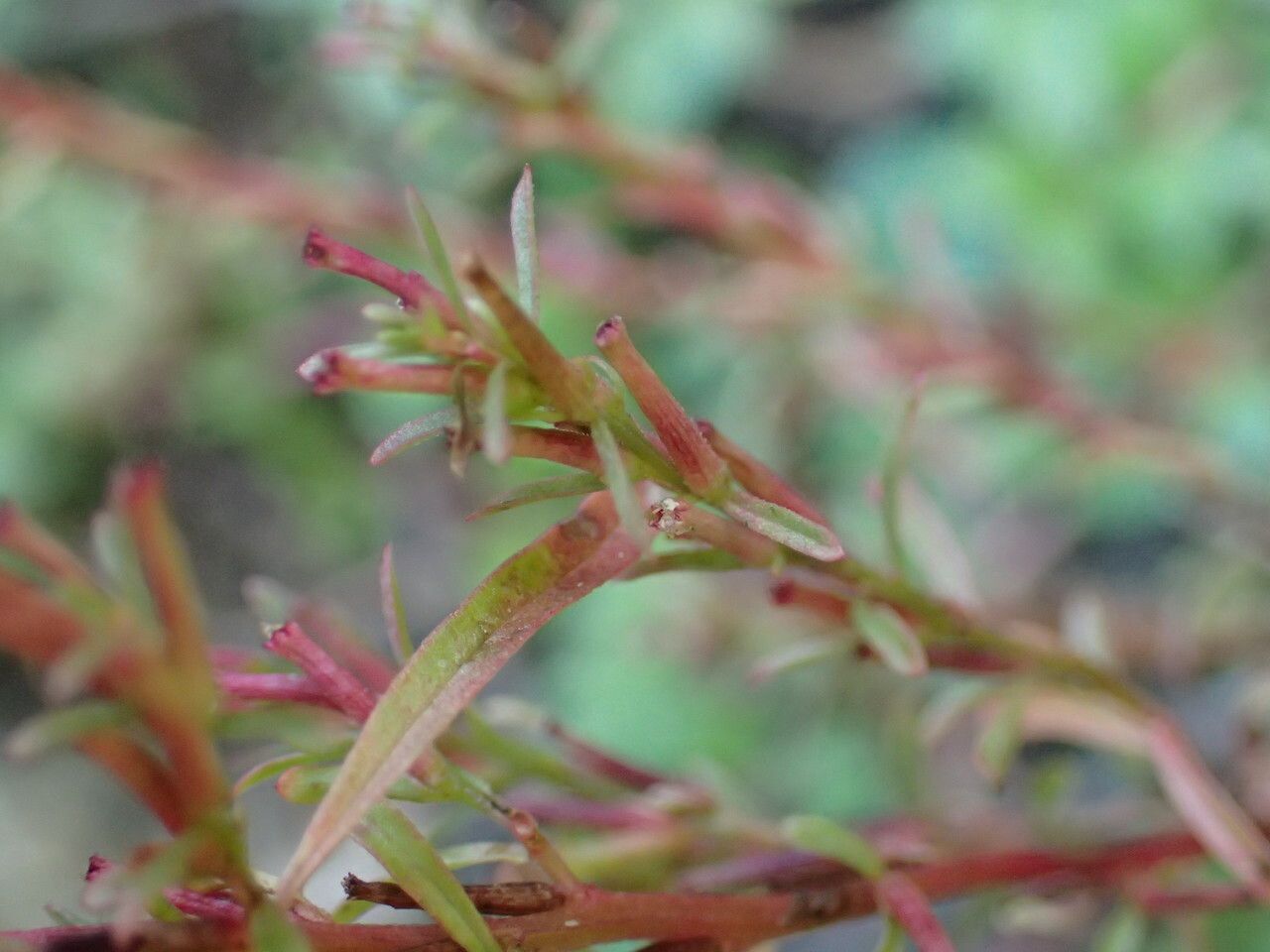
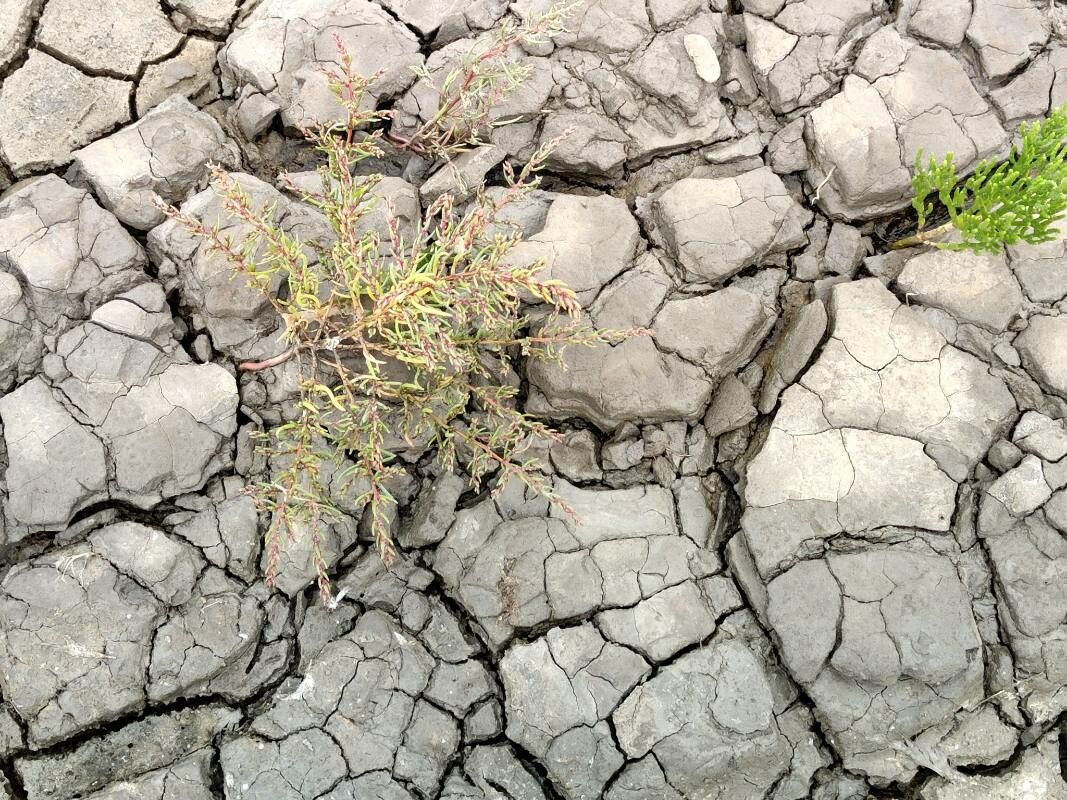
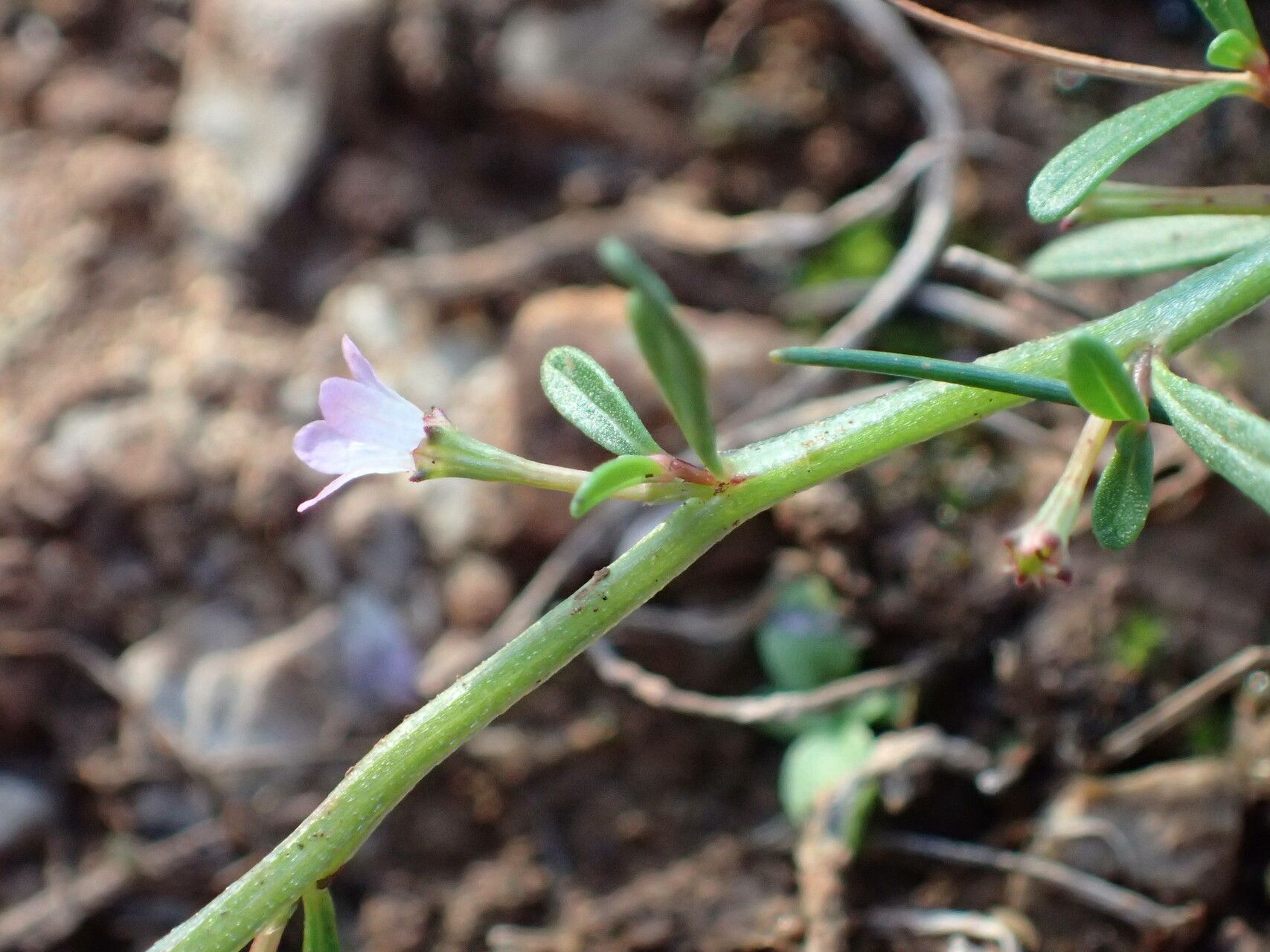
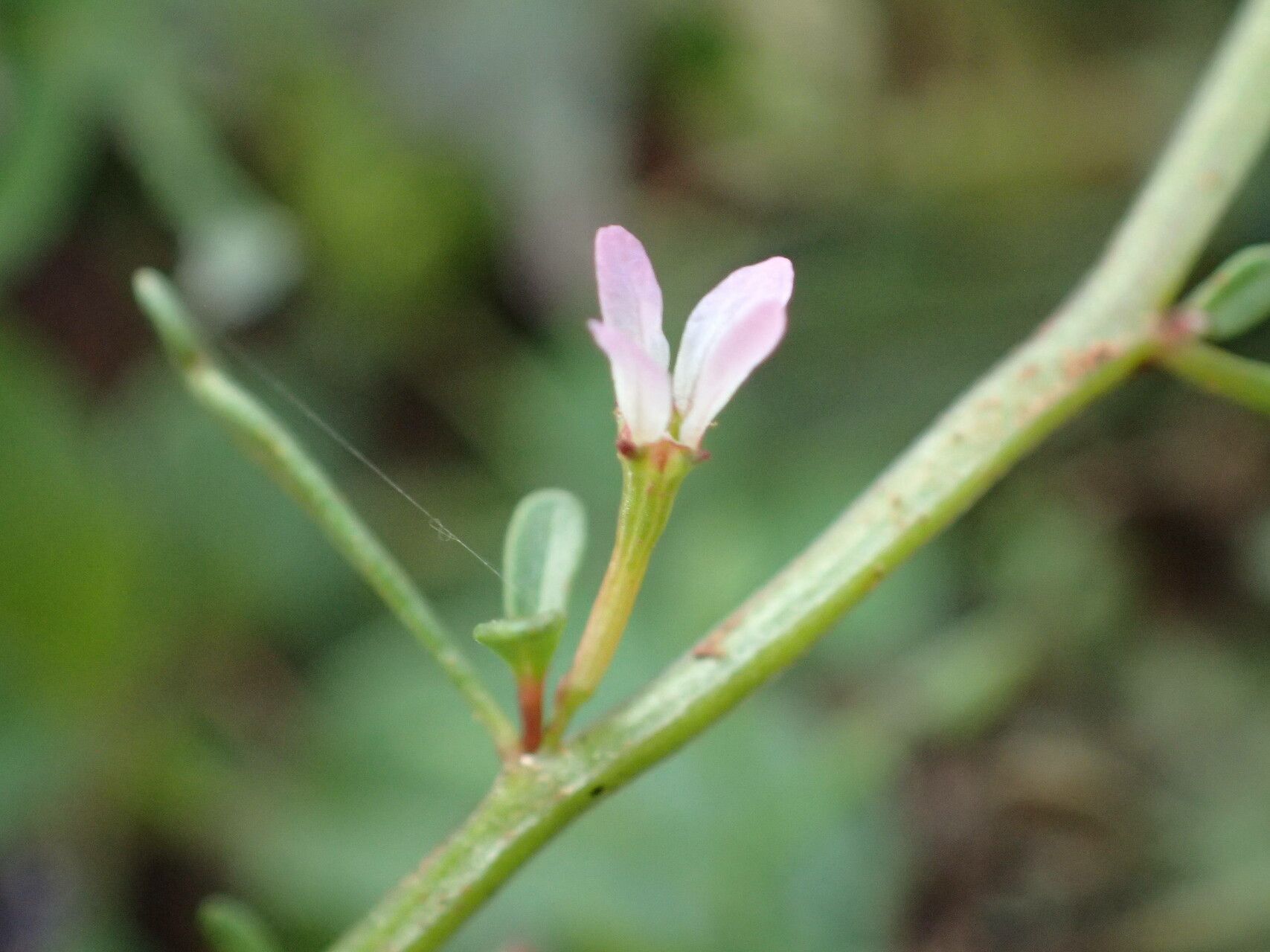
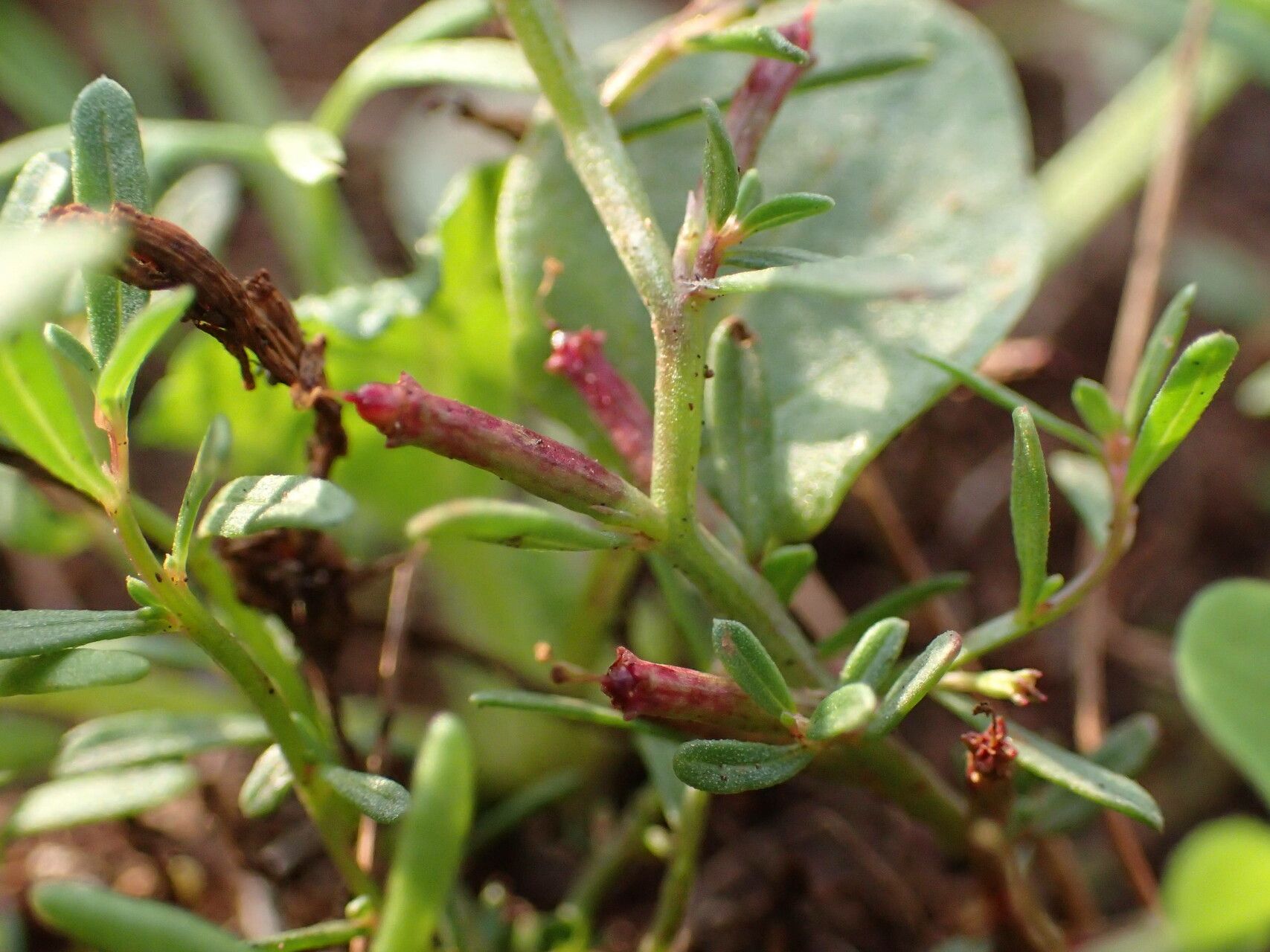
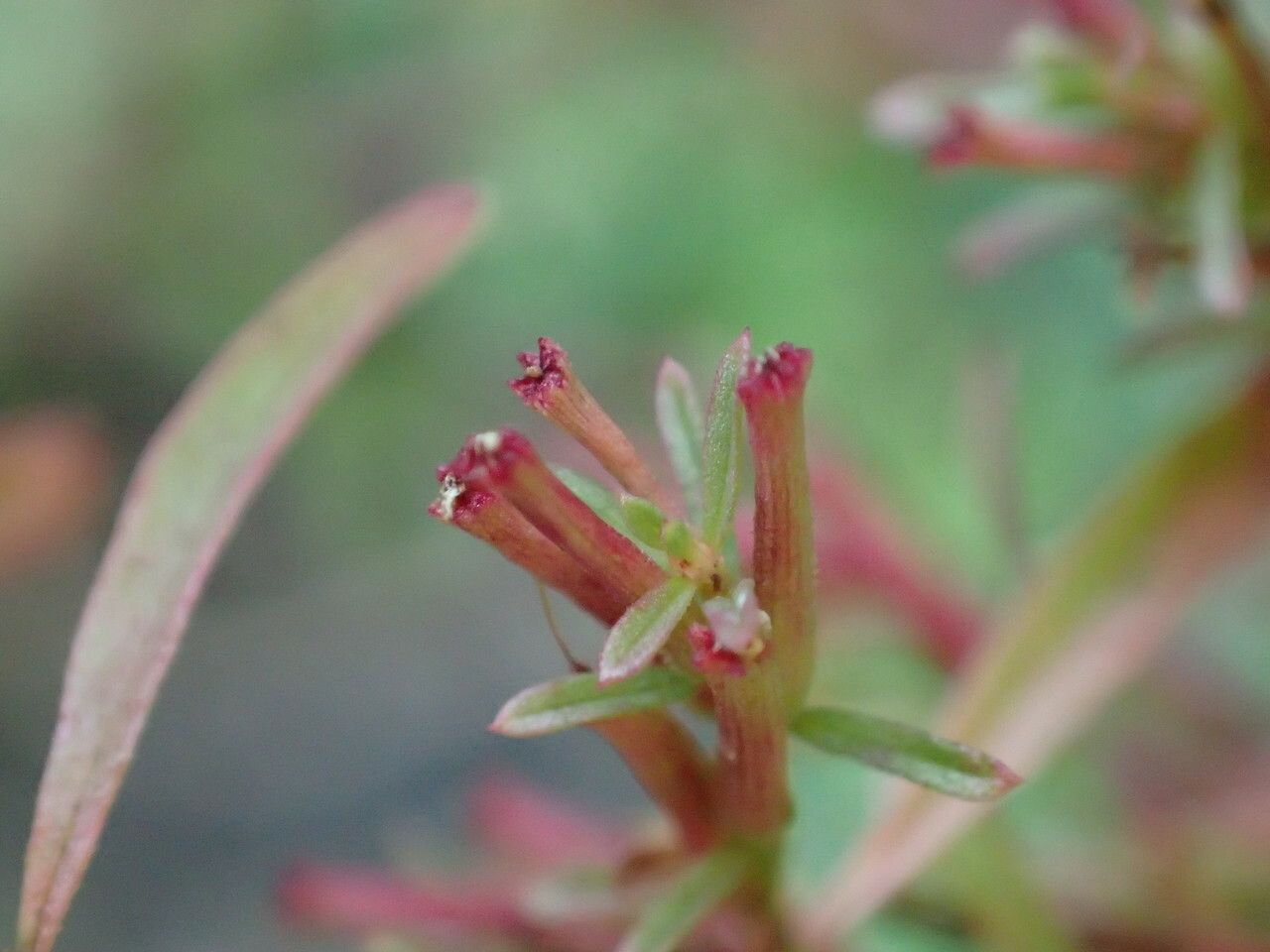
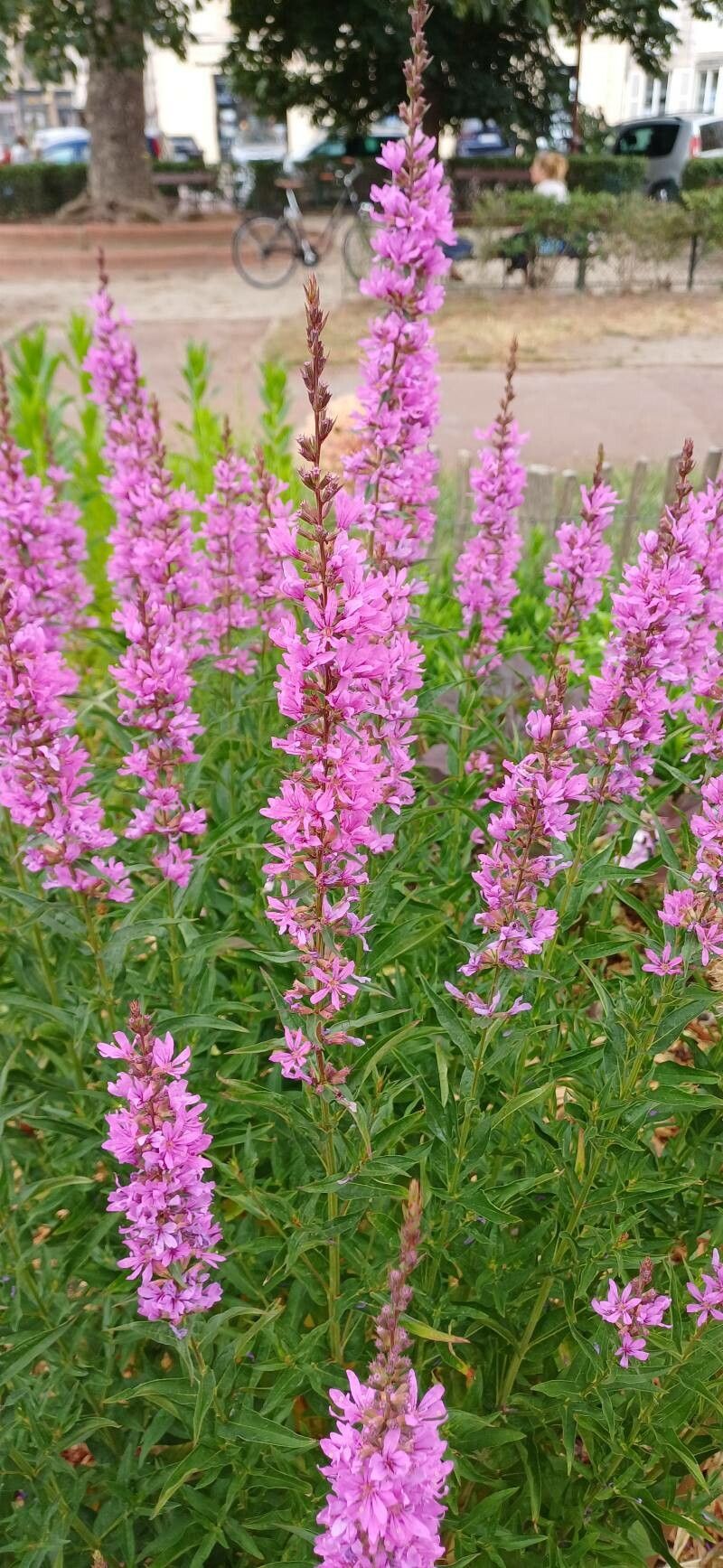
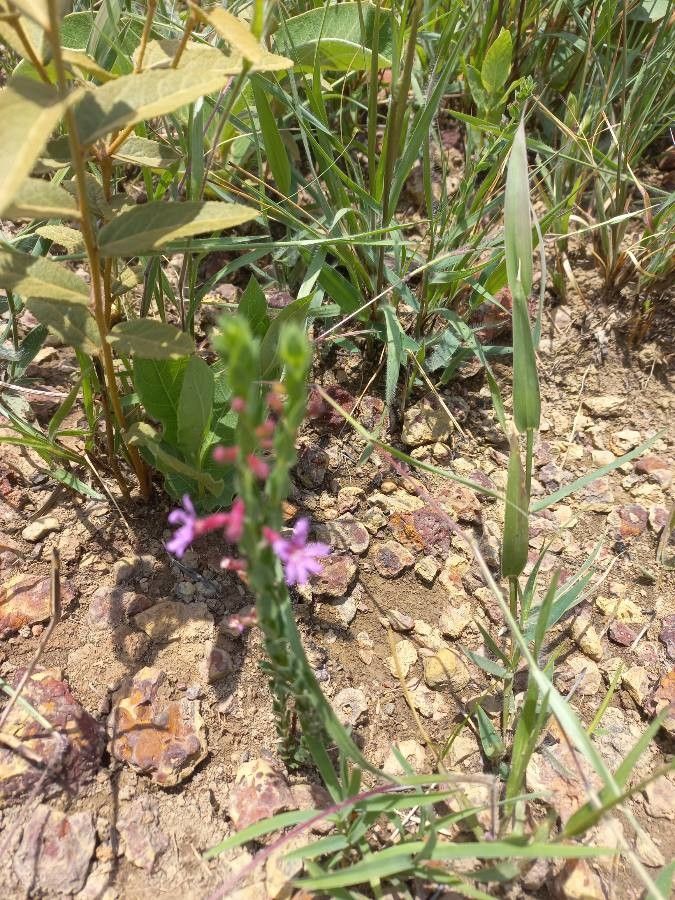
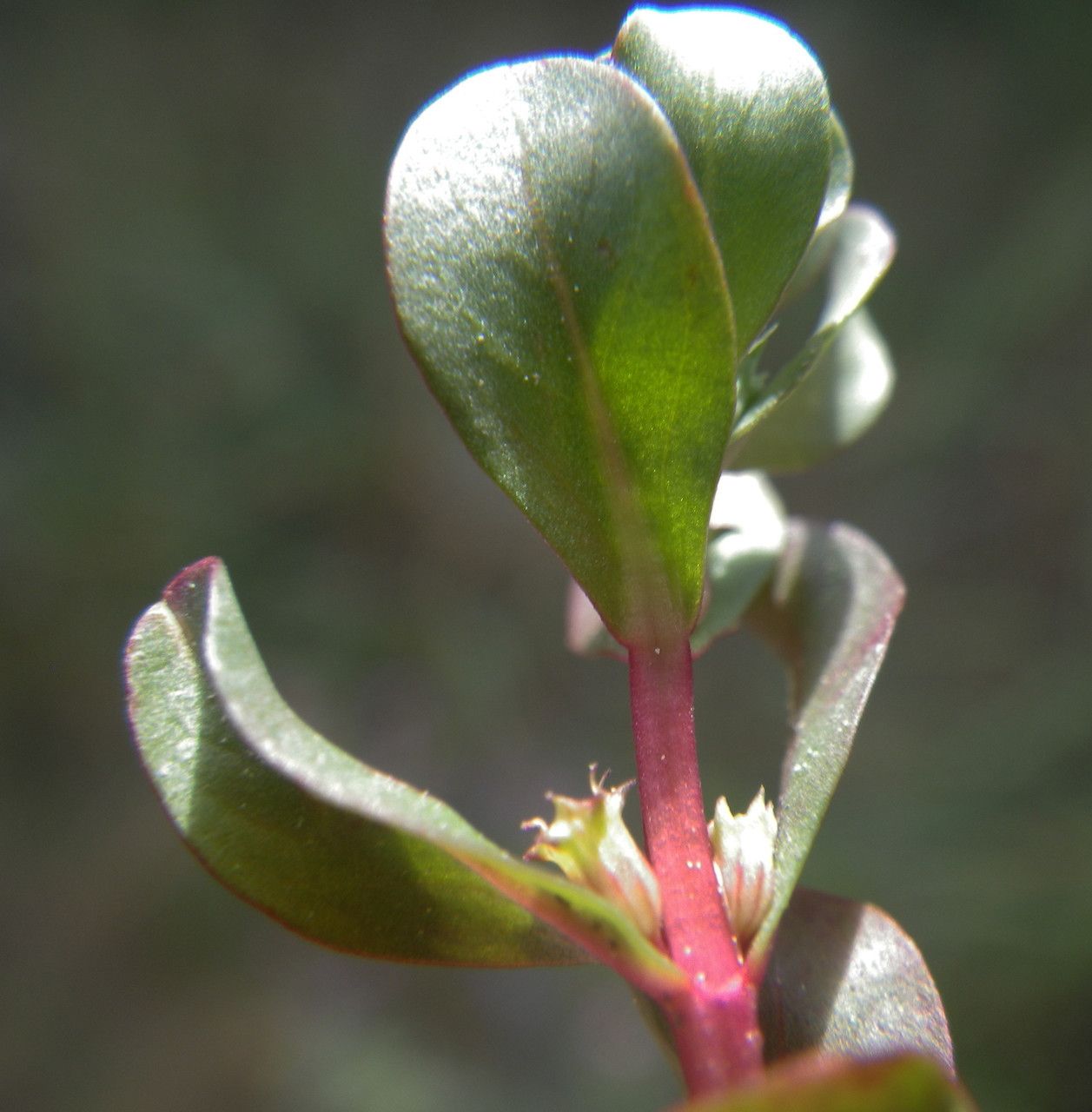
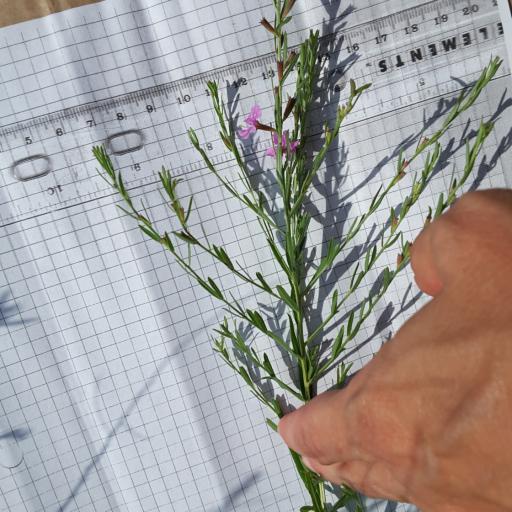
Lythrum tribracteatum is a species of flowering plant in the loosestrife family known by the common name threebract loosestrife. It is native to Europe, and it is found in parts of western North America as an introduced species. It often grows in moist habitat, such as ponds. This is an erect, branching annual herb growing up to about 30 centimeters in maximum height. The oblong leaves are up to 2.5 centimeters long and arranged oppositely on the lower stem, and alternately on the upper. Clusters of small flowers grow in the leaf axils, each with glandular bright red sepals and tiny lavender petals.
Three-bract loosestrife has strong resistance to disease and is generally not liable to illnesses. Still, it can be affected by pests and diseases found in its environment. Such infections are typically mild. Regarding care, this plant is moderately demanding. It should be pruned routinely to preserve a tidy appearance and encourage healthy growth. Applying fertilizer can also support increased flowering. Three-bract loosestrife is appropriate for anyone with outdoor areas like a garden or patio and does not demand extensive gardening experience. It can need extra attention if cultivated indoors.
How to keep Lythrum Tribracteatum.
Light
Three-bract loosestrife is a sun-loving, herbaceous perennial that comes from open habitats and often thrives in meadows and grasslands. It prefers full sun but can also tolerate partial sun conditions.
Water
Three-bract loosestrife flourishes in wet environments, needing weekly watering to stay healthy. Though typically grown outdoors because of its love for rain, it also does well in containers. When grown in pots, however, careful water management is crucial.
Temperature
Three-bract loosestrife can tolerate a wide range of temperatures, but its distribution may still be restricted by different combinations of moisture and heat. It grows best in warm summer climates with sufficient rainfall or watering. Extended periods of cloudy, rainy weather or sustained high temperatures can raise the risk of Three-bract loosestrife dying. In winter, adequate protection from cold can increase the plant's survival rate.
Fertilizer
One fertilizer application in spring is generally enough for Three-bract loosestrife, although repeated feedings can boost growth. Apply fertilizer roughly every month to six weeks. Fertilization improves leaf appearance and performance, helping maintain even color and a healthy texture. It also promotes root development and nutrient uptake, supporting the plant’s long-term health.
Pruning
The herbaceous perennial known as three-bract loosestrife thrives in moist environments and displays bright pink flowers. To promote healthy growth and maintain its shape, it's best to prune the plant from early to late spring. This regular pruning helps eliminate dead stems, preventing the plant from becoming leggy and improving airflow, which reduces the risk of disease. For optimal results, be sure to use clean, sharp tools.
Botanical profile.
- Plant Type
- Herb
- Life Cycle
- Perennial
- Genus
- Lythrum
- Family
- Lythraceae
- Hardiness Zone
- 6-9
- Mature Height
- 5 cm to 30 cm
- Mature Spread
- 10 cm to 30 cm
- Leaf Color
- Green
- Leaf Type
- Deciduous
- Flower Color
- Pink, Purple
- Flower Size
- 0.25 cm to 0.51 cm
- Bloom Time
- Summer
- Planting Time
- Spring, Summer, Autumn
- Harvest Time
- Late summer, Early fall, Mid fall
- Native Area
- Libya, Egypt, Turkey, Tajikistan, Tunisia, Slovakia, Montenegro, Cyprus, Bulgaria, Greece, Croatia, Morocco, Ukraine, Lebanon, Uzbekistan, Russia, Serbia, Afghanistan, Syria, Italy, Kazakhstan, Spain, France, Iran, Albania, Azerbaijan, Algeria, Hungary, Turkmenistan, Portugal
Other names.
Reader questions.
What are the sunlight requirements for Three-bract loosestrife?
Three-bract loosestrife, also known by its botanical name Lythrum tribracteatum, has specific sunlight requirements to thrive. For 'Full sun' exposure, it needs above 6 hours of sunlight daily. When it comes to 'Partial sun,' about 3-6 hours of sunlight per day is sufficient. It's important to observe the way sunlight moves through your garden to identify spots that offer the right balance of light and shade. Such careful placement ensures the plant's well-being, contributing to its health and growth.
What is Three-bract loosestrife?
Three-bract loosestrife, known botanically as Lythrum tribracteatum, is a species of plant. There is no further information provided on its characteristics, habitat, or care in the provided data.