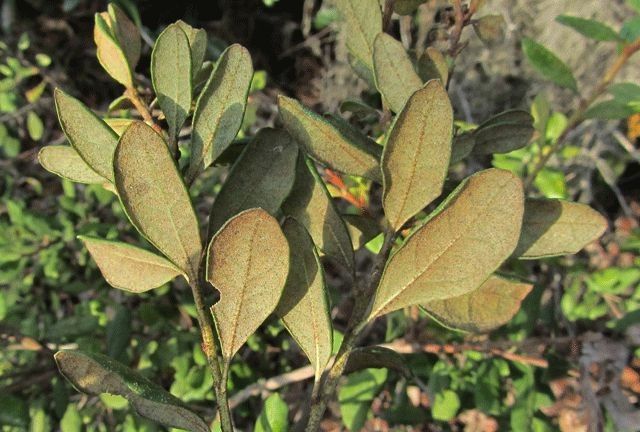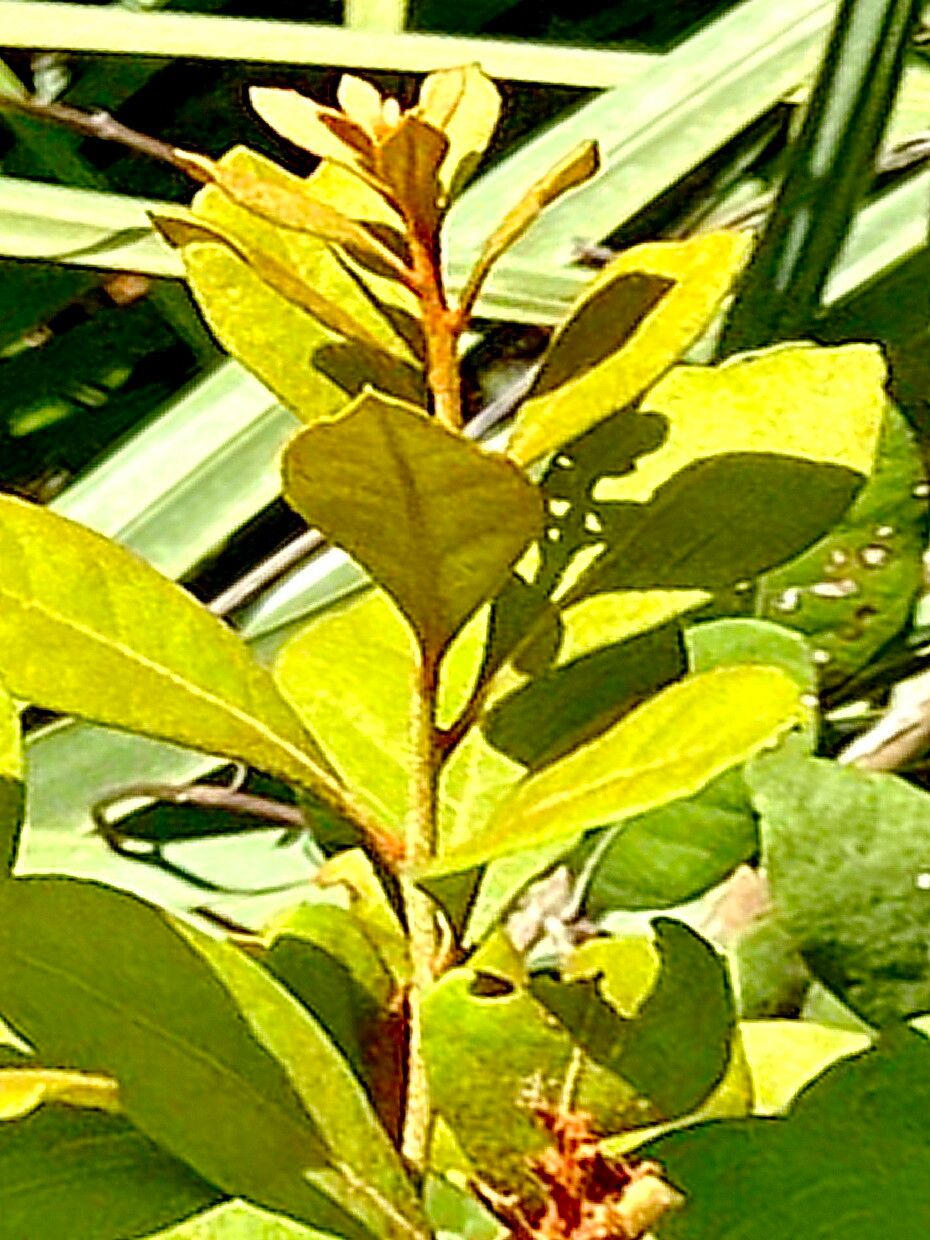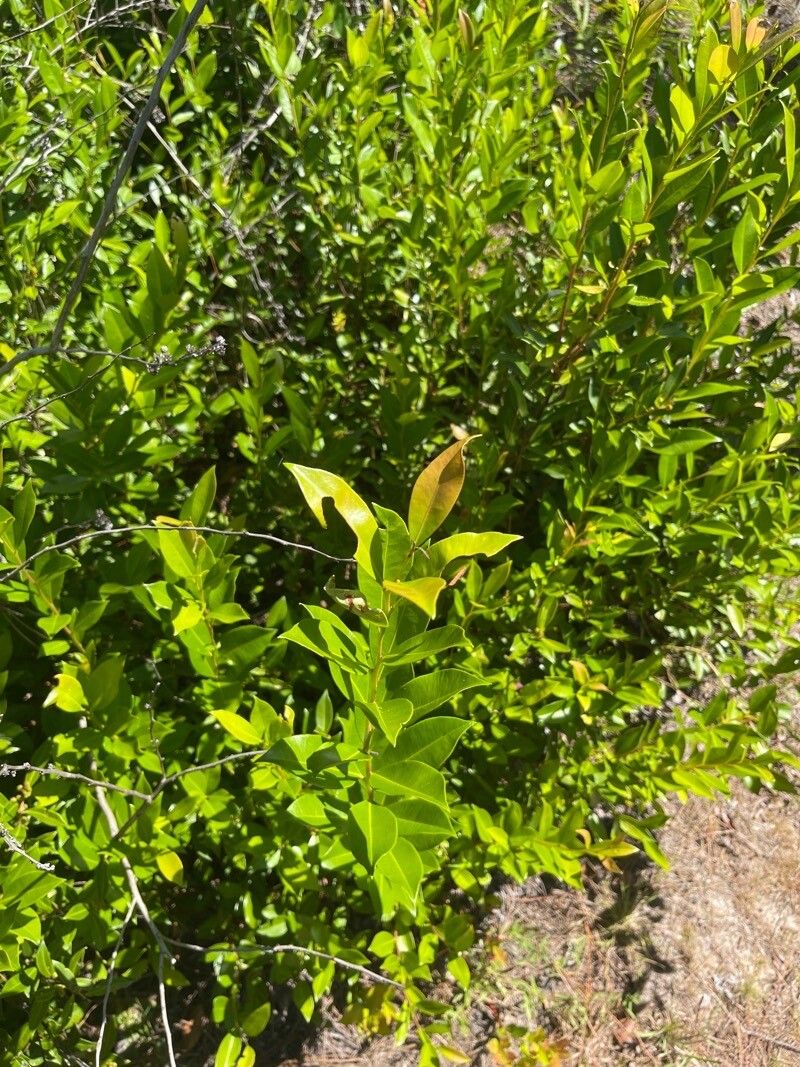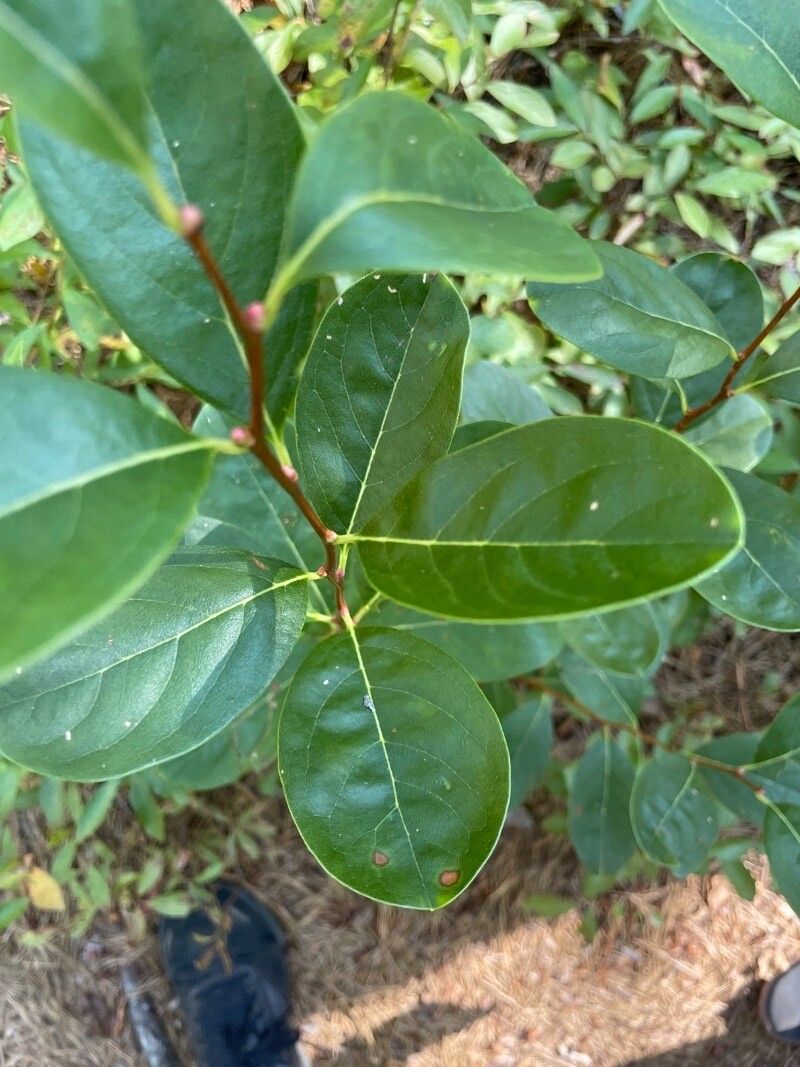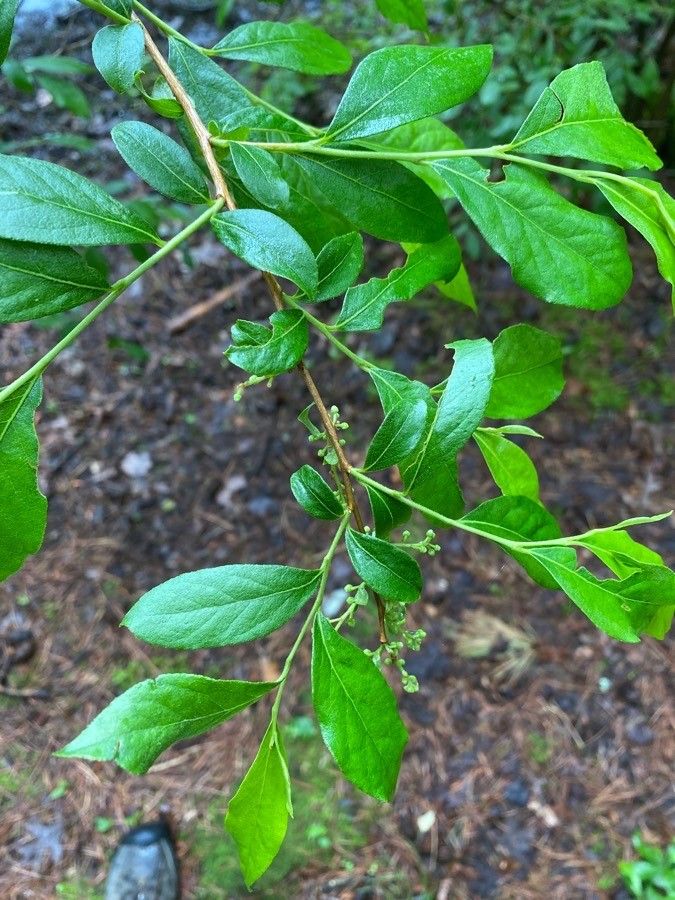
Lyonia ligustrina is a species of flowering plant in the family Ericaceae known by the common names maleberry and he-huckleberry. It is native to the eastern United States from Maine to Florida and west to Texas and Oklahoma.This shrub grows up to 4 meters tall. It has long rhizomes which may send up new stems up to 4 meters apart. The stems have longitudinally furrowed bark. The leaves may be deciduous or not, depending on variety. They are oval in shape and up to 10.5 centimeters long by 5 wide. The small flowers are white. The fruit is a small, dry capsule.This is a common plant in several types of habitat, including savanna, bog, forest, pocosin, and swamp. It often occurs in ecotones. It can grow in wet and dry habitat types. It is tolerant of fire, budding and sending up shoots from its rhizome if aboveground parts are burned away. It grows in fire-prone habitat types, such as pine barrens.The plant gets its common names from the fact that it produces hard, dry capsules instead of fleshy, juicy, edible fruits like other Ericaceae species such as huckleberries and blueberries.
Maleberry has strong resistance to disease and is typically not susceptible to illnesses. Regarding maintenance, this plant is fairly easy to care for. Planted outdoors it needs little watering, and larger specimens usually do not require pruning. Smaller specimens, however, should be trimmed after flowering. Maleberryt is appropriate for anyone who has an outdoor area, like a garden or deck, and it does not demand extensive gardening experience.
How to keep Lyonia Ligustrina.
Light
Maleberry grows best with abundant sunlight but can tolerate moderate shade. The plant's healthiest development depends on considerable sun exposure, especially in its early stages. Its native habitat indicates it adapts to various light conditions. Excessive sun can cause harm, while insufficient light may impede growth.
Water
Maleberry is a hardy plant that thrives in its native environment with little care. It prefers dry conditions and needs watering only once every three weeks. Its remarkable drought tolerance allows it to manage water uptake efficiently, ensuring it can survive even during periods of low rainfall in the growing season.
Temperature
Maleberry is highly adaptable to a variety of climates, from very hot summers to cold winters. It nonetheless has an optimal temperature range for growth. If temperatures become too high, the plant can suffer from heat and humidity stress, which may lead to its death. In areas where temperatures approach the lower limit of its cold tolerance, it is important to provide insulation to protect the plant.
Fertilizer
Timing is important when fertilizing Maleberry. Start feeding in early spring and continue once a month through early summer. Fertilizer promotes attractive blooms and supplies energy during both dormant and active growth periods.
Pruning
The maleberry is a deciduous shrub known for its dense growth and bell-shaped flowers. To keep it healthy, prune it every year in early spring. Use thinning cuts to remove any dead branches and shape the shrub by cutting back to outward-facing buds. This promotes good air circulation, encourages healthy growth, and enhances flowering while also reducing the risk of disease.
Botanical profile.
- Plant Type
- Shrub
- Life Cycle
- Perennial
- Genus
- Lyonia
- Family
- Ericaceae
- Hardiness Zone
- 3-9
- Mature Height
- 1.83 m to 3.66 m
- Mature Spread
- 1.83 m to 3.66 m
- Leaf Color
- Green, Gray, Silver
- Leaf Type
- Deciduous
- Flower Color
- White
- Flower Size
- 2.54 cm
- Bloom Time
- Late spring, Early summer
- Planting Time
- Spring, Summer, Autumn
- Harvest Time
- Late summer, Early fall, Mid fall
Other names.
Reader questions.
Should I change how often I water my Maleberry based on the time of year or the weather?
The Maleberry plant requires outdoor conditions and relies on rain for watering, except during dry weather when you will need to water it. In the spring and fall, keep the soil damp but not too wet, alternating between dry and moist conditions. During the summer, hot weather can cause water to evaporate quickly, so water more frequently if there is no rainfall. In winter, the Maleberry needs less water because it goes dormant and loses its leaves. Use well-draining soil and terracotta pots to help the water evaporate. During this dormant period, the plant can rely on fall and winter rains. In spring, cultivate and encourage growth when the temperature rises. Good drainage is important year-round, especially during winter. If the plant is in a pot, water it well, particularly in summer, and ensure adequate drainage to prevent cold and wet roots. Water the root system deeply once or twice a week, avoiding shallow sprinkles that reach the leaves. Even during dormancy, don't let the Maleberry dry out completely in the fall or winter. Avoid overwatering as the plant doesn't like to sit in water for too long, and ensure the soil drains well to prevent winter damage. Apply mulch to reduce stress, conserve water, and promote healthy blooms.
What kind of sunlight does Maleberry need?
Maleberry plants thrive in areas that receive full or partial sun. They particularly flourish with direct morning sunlight, but during the summer, it is important to shield them from intense afternoon sun. In temperate climates, excessive hot afternoon sun can cause leaf burn, resulting in a negative impact on the plant's well-being and aesthetics.