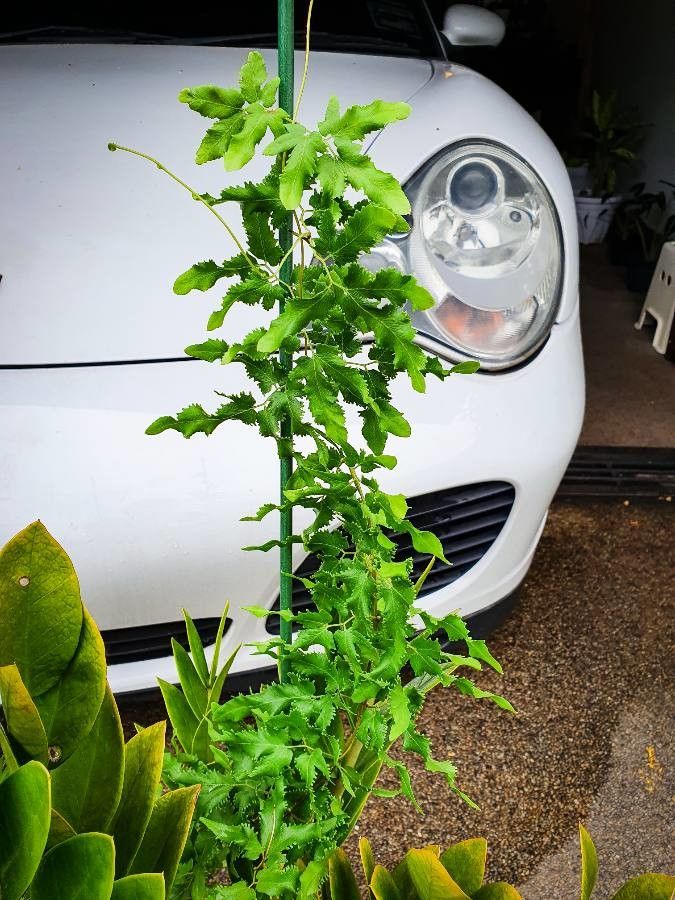
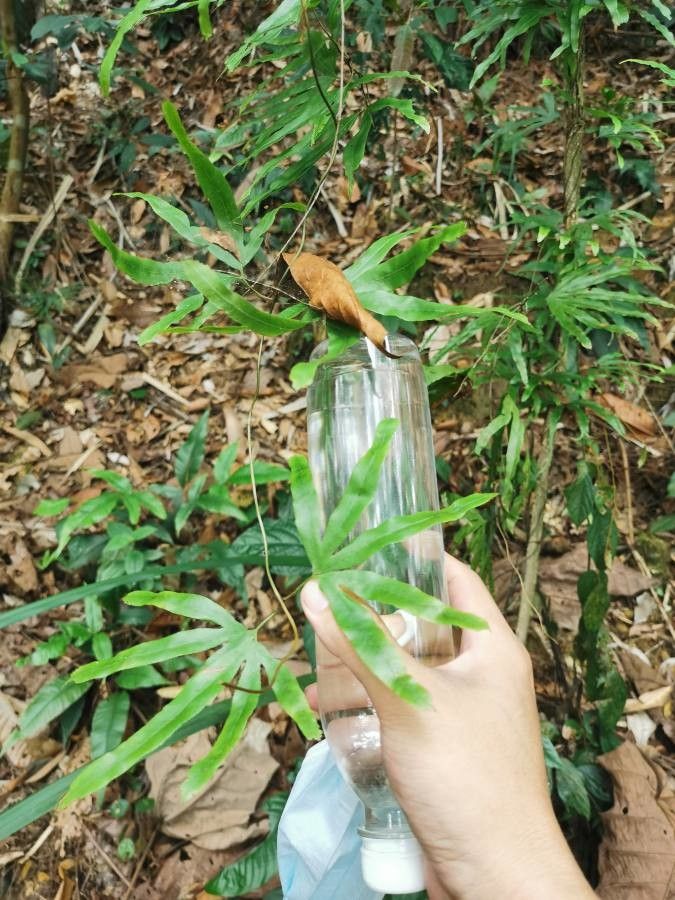
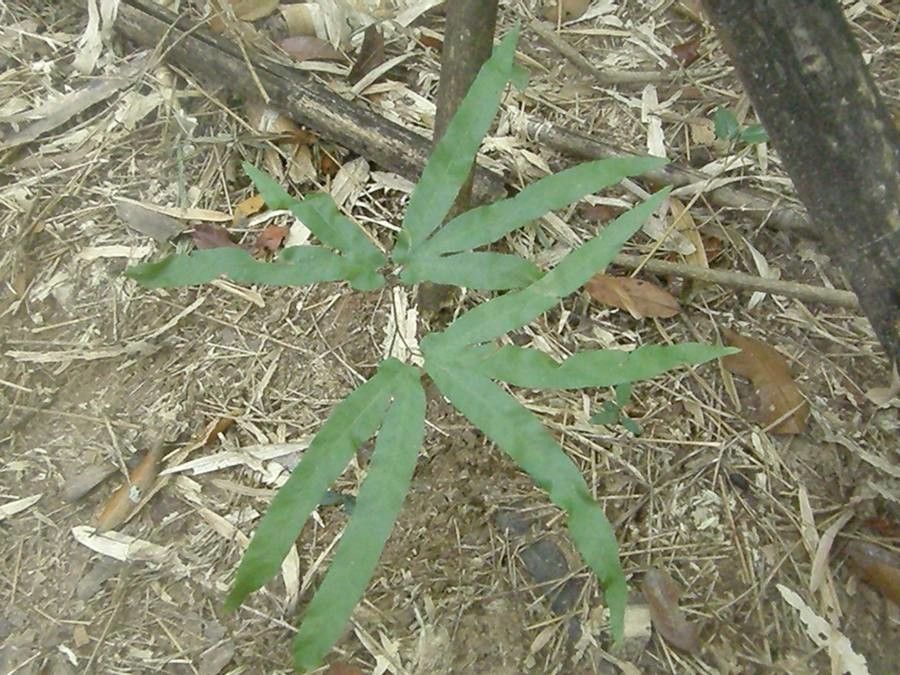
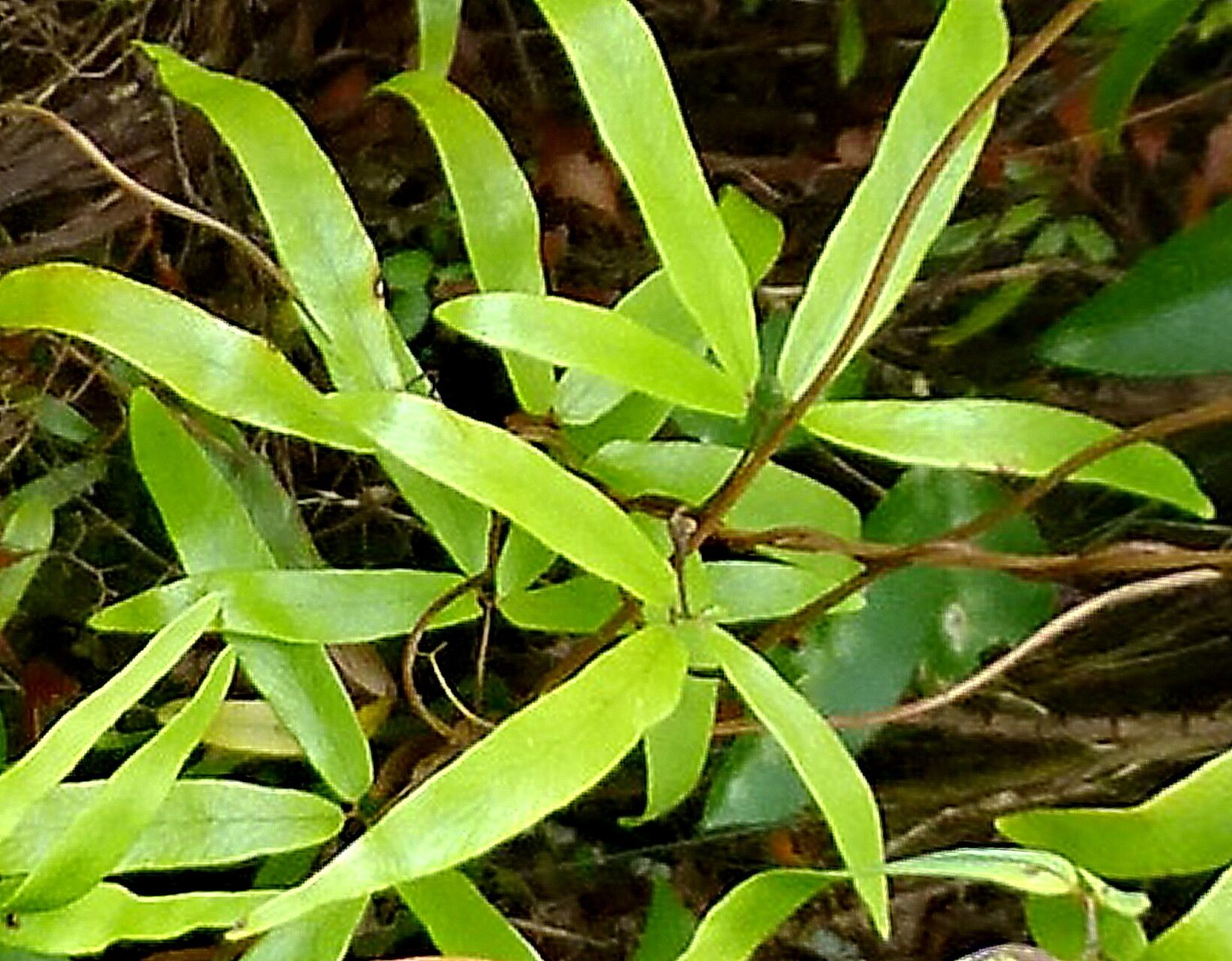
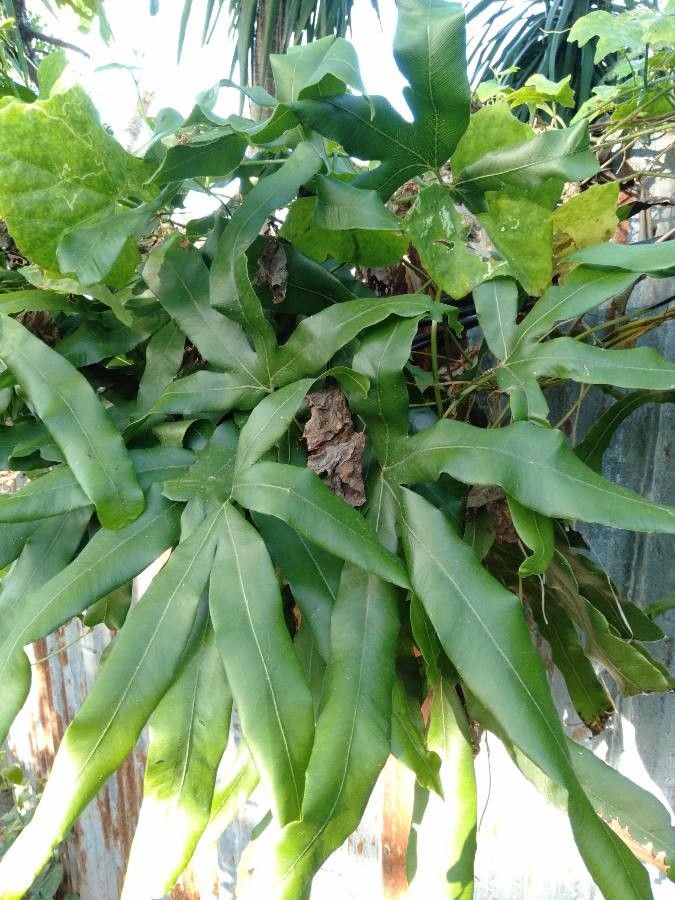
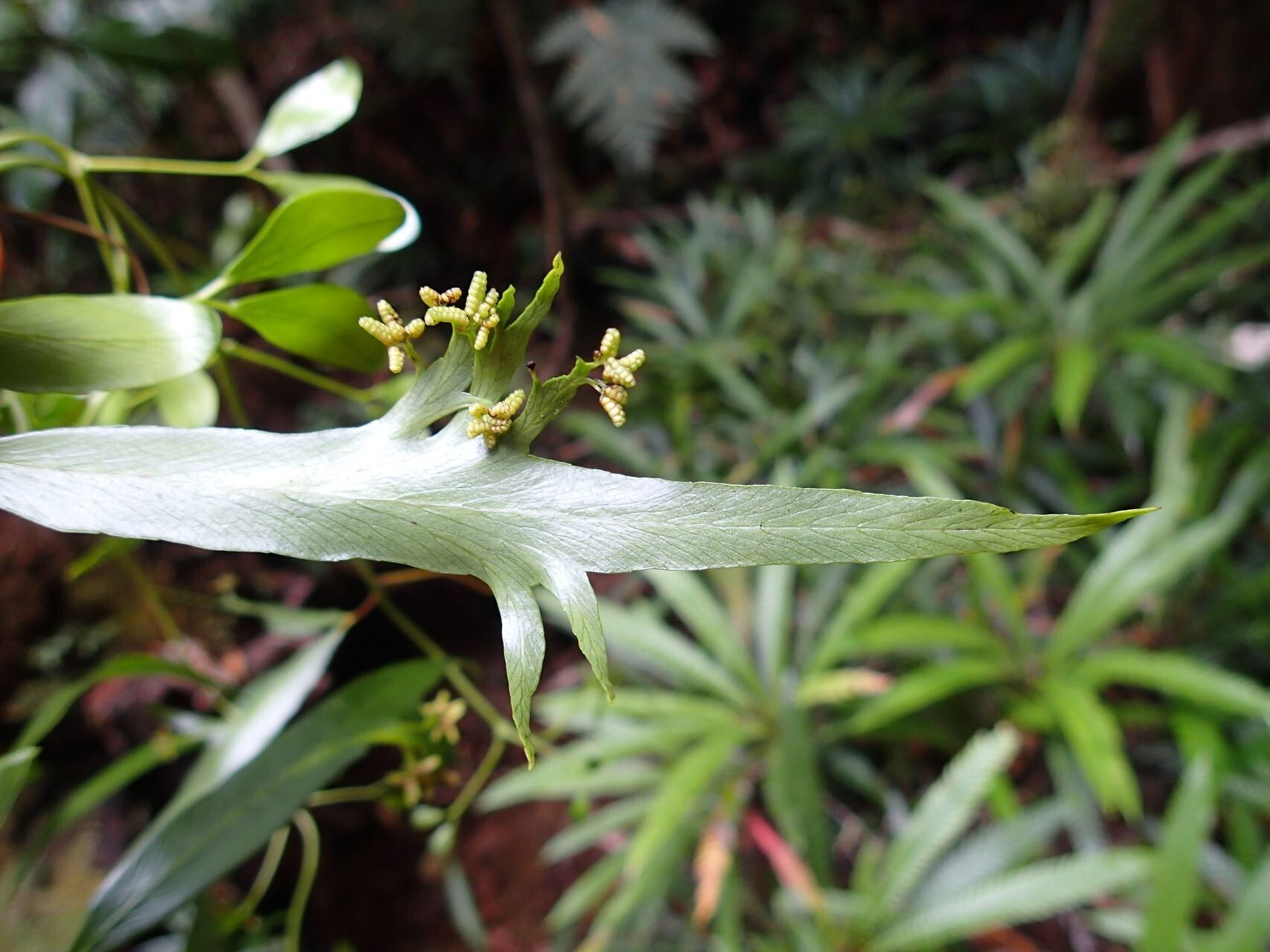
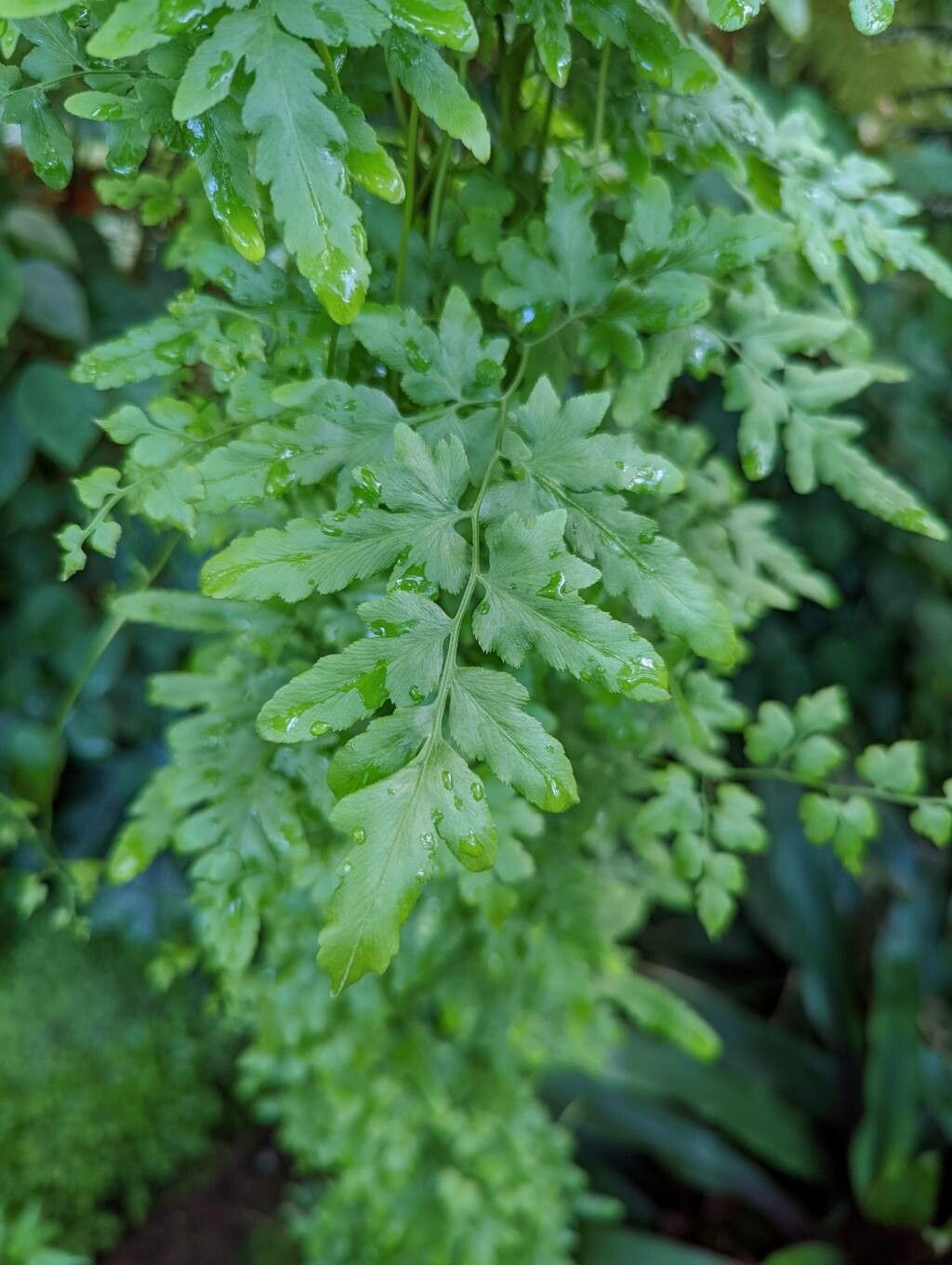
Lygodium flexuosum, also known as the flexuose climbing fern, is a rhizomatous perennial climbing fern native to tropical and subtropical Asia and northern Australia. It produces thin, wiry fronds that twine and climb, arising from horizontal rhizomes and stolons on or beneath the ground. The pinnae are oppositely arranged, triangular in shape, with fertile pinnae margins forming finger-like projections that bear sporangia for spore production. Unlike flowering plants, this species reproduces by spores and often forms dense vine growth in wet tropical habitats.
Maidenhair creeper resists disease well and is generally unlikely to suffer from illnesses. In terms of care, this plant is fairly low-maintenance. When grown outdoors it needs only light watering, and larger specimens usually do not require pruning. However, smaller plants should be trimmed after they finish blooming. Maidenhair creepert is suitable for anyone with outdoor space, such as a garden or deck, and does not need extensive care experience.
How to keep Lygodium Flexuosum.
Light
Maidenhair creeper is native to habitats such as forest understories or rocky areas, where it grows in natural shade. It favors partial sun but can tolerate full sun or full shade, reflecting its versatile and hardy nature.
Water
Maidenhair creeper thrives in environments with consistent moisture and high humidity, although it can tolerate moderate drought. It generally needs watering every three weeks. Typically grown outdoors, this plant benefits from natural rainfall, which helps support its growth without the need for frequent manual watering.
Temperature
Maidenhair creeper comes from tropical areas, where the climate is generally warm and humid. As a result, it is well adapted to high temperatures and moisture. It does not tolerate sudden temperature changes and prefers a stable temperature environment, so avoiding temperature fluctuations indoors is important. It usually cannot withstand cold temperatures and needs higher temperatures to grow. If the temperature falls too low, the plant may stop growing or even die.
Fertilizer
Fertilization is essential to caring for the Maidenhair creeper. Regular feeding during the active growing season preserves the energy needed for its showy foliage and supports overall growth. Failing to fertilize can lead to unhealthy leaves, reduced ornamental value, and stunted or weak growth that is more susceptible to breaking.
Pruning
The Maidenhair creeper is a climbing fern known for its twining fronds and delicate, lacy foliage. To maintain its health and appearance, it's best to prune the plant in early spring. This helps manage its growth, remove any dead fronds, and improve air circulation. Be careful not to over-prune, as doing so can affect its climbing ability and reduce its ornamental appeal.
Botanical profile.
- Plant Type
- Vine
- Life Cycle
- Perennial
- Genus
- Lygodium
- Family
- Schizaeaceae
- Hardiness Zone
- 8
- Mature Height
- 7.01 m
- Mature Spread
- 0.91 m to 2.13 m
- Leaf Color
- Green, Dark Green
- Leaf Type
- Semi-evergreen
- Planting Time
- Spring, Summer, Autumn
- Native Area
- Nepal, Sri Lanka, India, Malaysia, Philippines, Bangladesh, Laos, China, Indonesia, Cambodia, Vietnam, Myanmar, Japan, Papua New Guinea, Bhutan, Singapore, Thailand
Other names.
Reader questions.
How frequently should I water my Maidenhair creeper?
The Maidenhair creeper prefers deep and infrequent watering. If you're planting them in pots, be sure to soak them in a gallon of water each time since the soil in pots dries out quickly. In colder regions, you'll need to water every 3 to 5 days. Water the plant early in the morning when the soil is dry, both indoors and outdoors. To determine if watering is needed, check the soil. If the top 2-3 inches are dry, it's time for a full watering. During hot days, check the soil moisture daily, as heat can dry it out quickly. If you have a garden, irrigation is necessary. In hot climates, water once a week when 2 to 3 inches of soil become too dry indoors or outdoors. Take into account rainfall and avoid overwatering to prevent root rot. Maidenhair creepers typically grow in spring and fall. When planting outdoors, use 3 to 4 inches of mulch to conserve water. In sandy soil, water more frequently as it drains faster. In clay soil, water less frequently to avoid root rot. Keep track of watering dates on a calendar and watch for drooping leaves as a sign of possible delayed watering.
What are the sunlight requirements for Maidenhair creeper?
Maidenhair creeper thrives in environments like forest understories or rocky areas naturally shaded, preferring partial sun but can tolerate full shade. This means it should receive about 3-6 hours of sunlight daily for partial sun conditions, and for full shade, less than 3 hours of sunlight is sufficient. It's important to observe the movement of sunlight through your garden to find spots that offer the right balance of light and shade to ensure the plant's health and happiness.
What is Maidenhair creeper also known as?
Maidenhair creeper is also known by its botanical name, Lygodium flexuosum.
Do I need to change how often I water my Maidenhair creeper based on the different times of year or weather conditions?
The Maidenhair creeper is an outdoor plant that relies on rainwater, but may need additional watering during dry weather. During spring and fall, the soil should be kept moist but not soaked, and alternating between dry and moist soil conditions will help it grow. In the summer, hot weather and lack of rain can cause water to evaporate quickly, so additional watering may be necessary to keep the soil moist. However, during winter, the plant needs less water as it goes dormant and loses its leaves. Using a well-draining soil mixture like terracotta can help with drainage during this period. Once the plant starts growing again in spring, you can encourage its growth and blooming by watering it regularly. Good drainage is important for the plant's overall health, especially during winter. When the plant is in a pot, it has limited root growth and should be watered more frequently during summer. It's best to water the plant deeply once or twice a week, avoiding shallow sprinkles that only wet the leaves. Even during dormancy, the plant should not be allowed to dry out completely in fall or winter, as this can be harmful. Overwatering, however, should be avoided as the plant does not tolerate sitting in water. Applying mulch can help reduce stress, conserve water, and facilitate healthy blooms.
How should artificial lighting be used for Maidenhair creeper indoors?
If natural sunlight is insufficient, especially during winter or in less sunny spaces, artificial lighting can be a vital solution for Maidenhair creeper's growth indoors. LED lights are recommended because they can provide specific wavelengths needed by plants. The intensity of artificial light should vary with the plant's sunlight requirements: 30-50W/sq ft for full sun conditions, 20-30W/sq ft for partial sun, and 10-20W/sq ft for full shade. The artificial light source should be positioned 12-36 inches above the plant, mimicking natural sunlight, with a duration of 8-12 hours per day to promote faster, healthier growth.
What are the symptoms of light deficiency or excess in Maidenhair creeper?
When Maidenhair creeper is grown indoors with insufficient light, it may exhibit symptoms such as smaller new leaves, leggy or sparse growth, faster leaf drop, and slower or no new growth. Insufficient sunlight can lead to lighter-colored or yellow leaves (chlorosis) due to a lack of chlorophyll and essential nutrients. Excessive sunlight exposure can cause symptoms like sunscald, leaf curling, wilting, leaf scorching, and chlorosis, indicating damage to leaves or stems and reduced plant health.
How can lighting conditions be improved for Maidenhair creeper?
For optimal growth, gradually adapt Maidenhair creeper to brighter conditions by moving it to sunnier spots each week until it receives the desired amount of direct sunlight (3-6 hours) daily. If the plant is large or not easily movable, consider using artificial lighting. Indoors, keep a desk or ceiling lamp on for at least 8 hours a day, or use professional grow lights for sufficient illumination. Outdoors, avoid sudden light intensity changes to prevent sunburn. When dealing with obstructions to sunlight, consider pruning or transplanting the plant to a sunnier location doing so carefully during its dormant period.