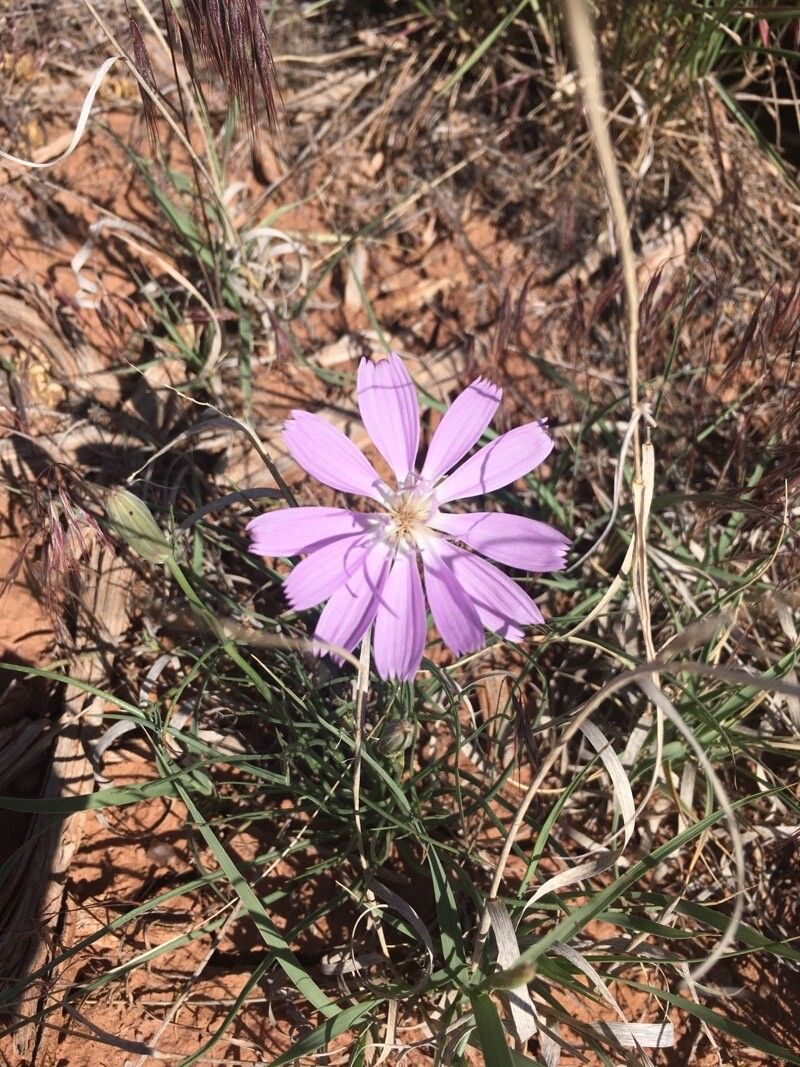
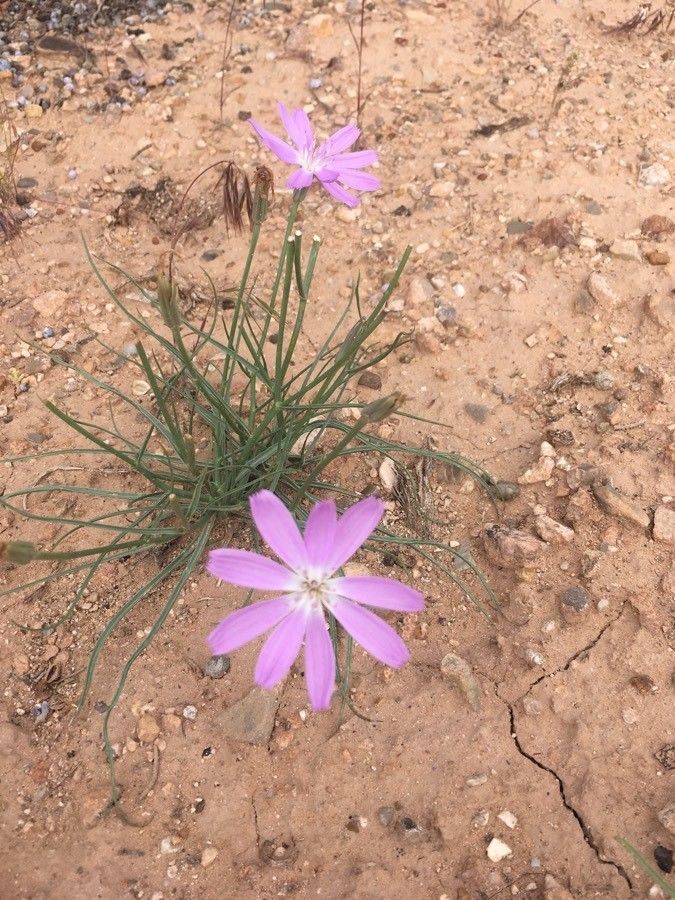
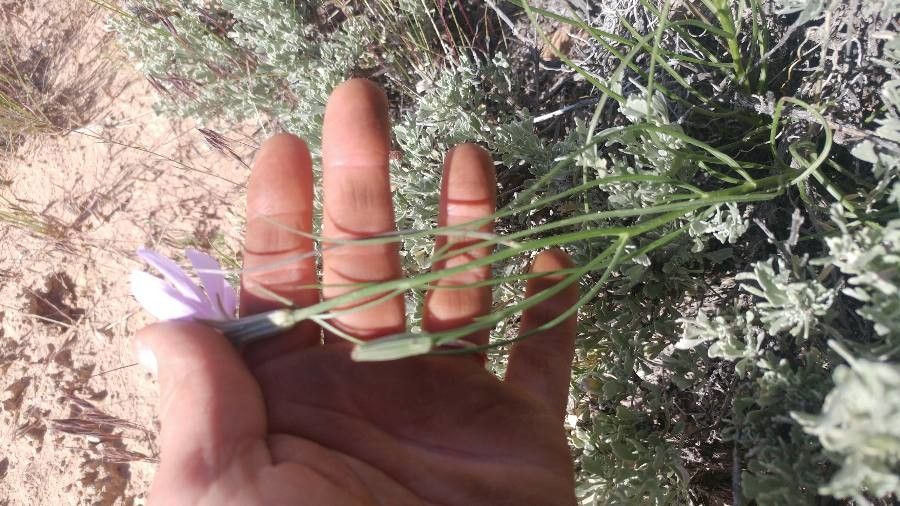
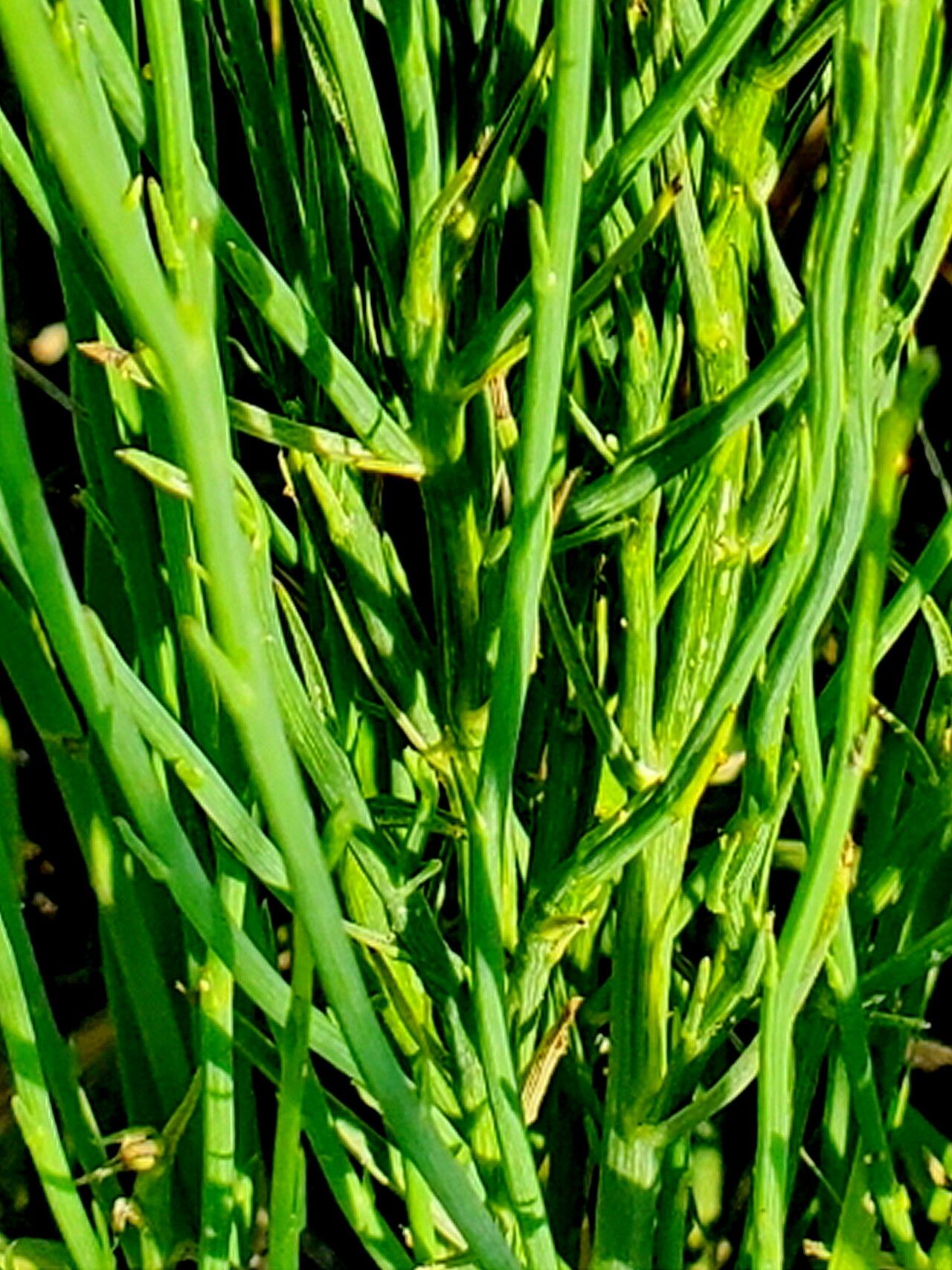
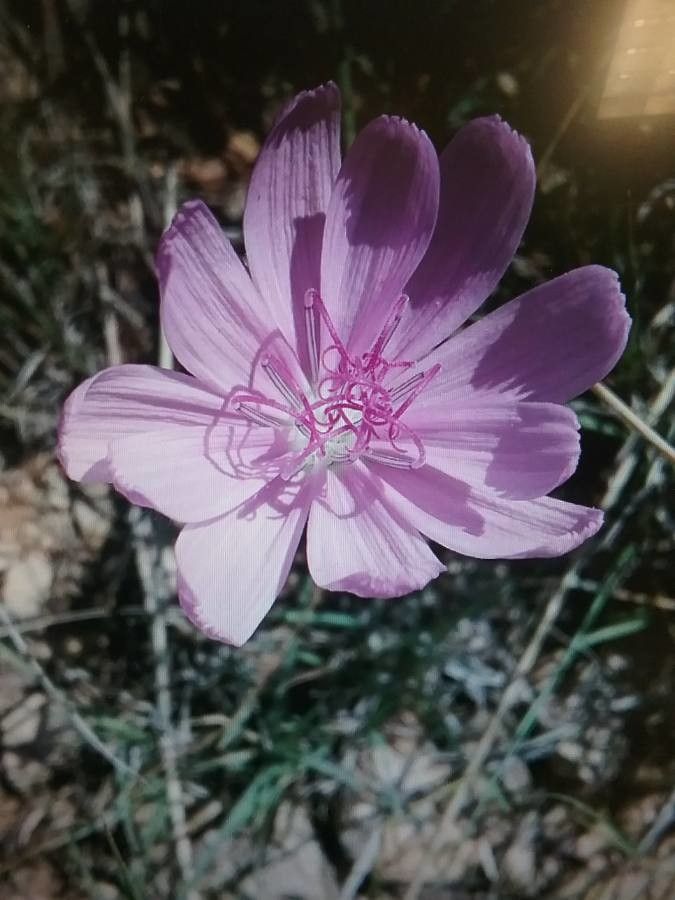
Lygodesmia grandiflora, the largeflower skeletonplant or showy rushpink, is a perennial plant in the family Asteraceae found in the Colorado Plateau and Canyonlands region of the southwestern United States.: 112 The plant grows up to 10–30 centimeters (4–12 in) tall. Its stems are thin and flexuous. The narrow leaves are larger towards the base. The stem bears one or sometimes a few flower heads, which have 6–15 pink to bluish rays about 4 cm (1+1⁄2 in) long. Unusually for its family, it has no disc florets. It flowers early in summer.
Largeflower skeletonplant has strong resistance to disease and is generally not easily affected by illnesses. Still, it can be vulnerable to pests and diseases found in its environment. Such infections are typically mild. Regarding care, this plant needs a moderate amount of attention. It should be pruned regularly to preserve a neat appearance and healthy growth. Applying fertilizer can also encourage flowering. Largeflower skeletonplant is appropriate for anyone with outdoor space, like a garden or patio, and does not demand extensive gardening experience. It may require additional care when cultivated indoors.
How to keep Lygodesmia Grandiflora.
Light
Largeflower skeletonplant is a perennial herbaceous species that favors sunny conditions and originates from open habitats, commonly occurring in meadows and grasslands. It prefers full sun but can also tolerate partial sun.
Water
The largeflower skeletonplant is well-suited to arid environments and thrives in dry conditions. It is drought-tolerant and only requires watering once a week. This plant flourishes in full sunlight and well-draining soil. Its growth cycle is adapted to the occasional rains typical of its natural habitat, making it an excellent choice for xeriscaping.
Fertilizer
Usually a single fertilizer application in spring is enough for Largeflower skeletonplant, but repeated feedings can maximize growth. Feed about once a month to every six weeks. Fertilization improves the leaves' appearance and function, helping to maintain even color and a healthy texture. It also promotes root development and nutrient uptake for the plant’s long-term health.
Pruning
To ensure healthy growth for the largeflower skeletonplant, it's important to prune it between early and late spring. Start by trimming away any dead stems, then lightly shape the plant to maintain its form. Always use clean tools to prevent disease, and avoid heavy pruning or doing so in extreme weather conditions. This approach promotes good airflow and reduces the risk of disease, leading to robust plant health.
Botanical profile.
- Plant Type
- Herb
- Life Cycle
- Perennial
- Genus
- Lygodesmia
- Family
- Asteraceae
- Leaf Type
- Semi-evergreen
Other names.