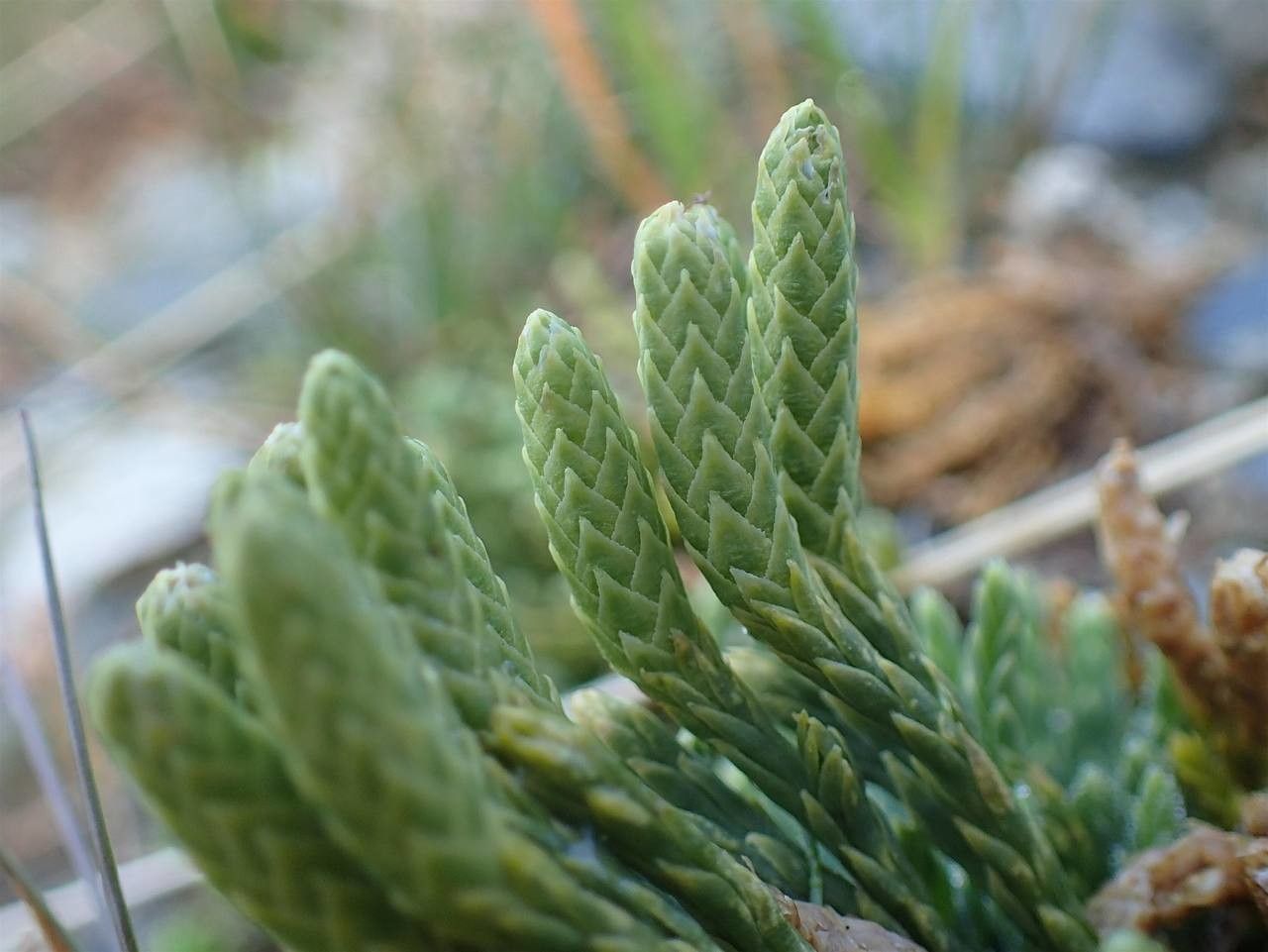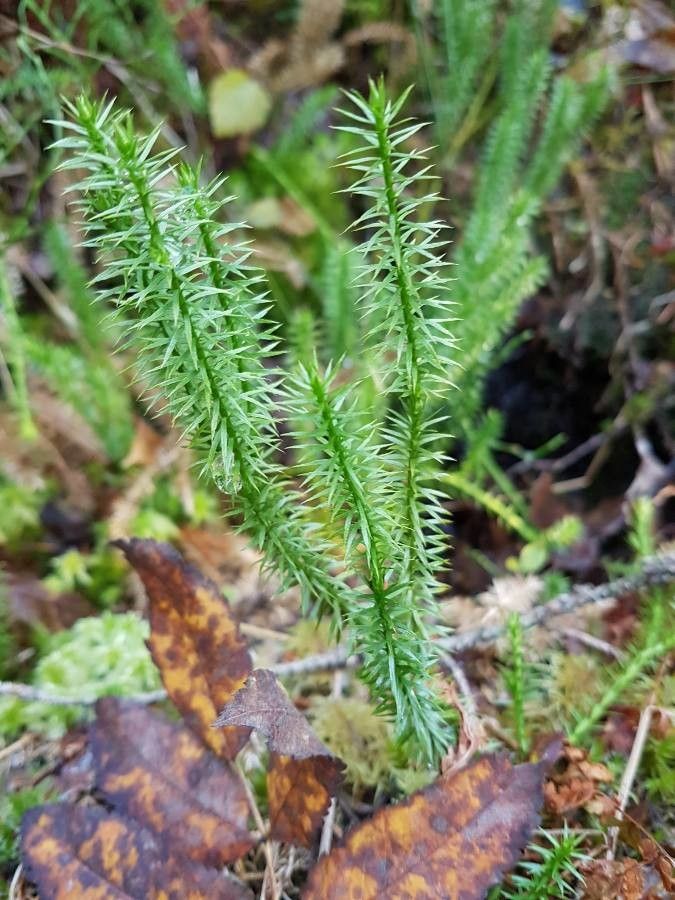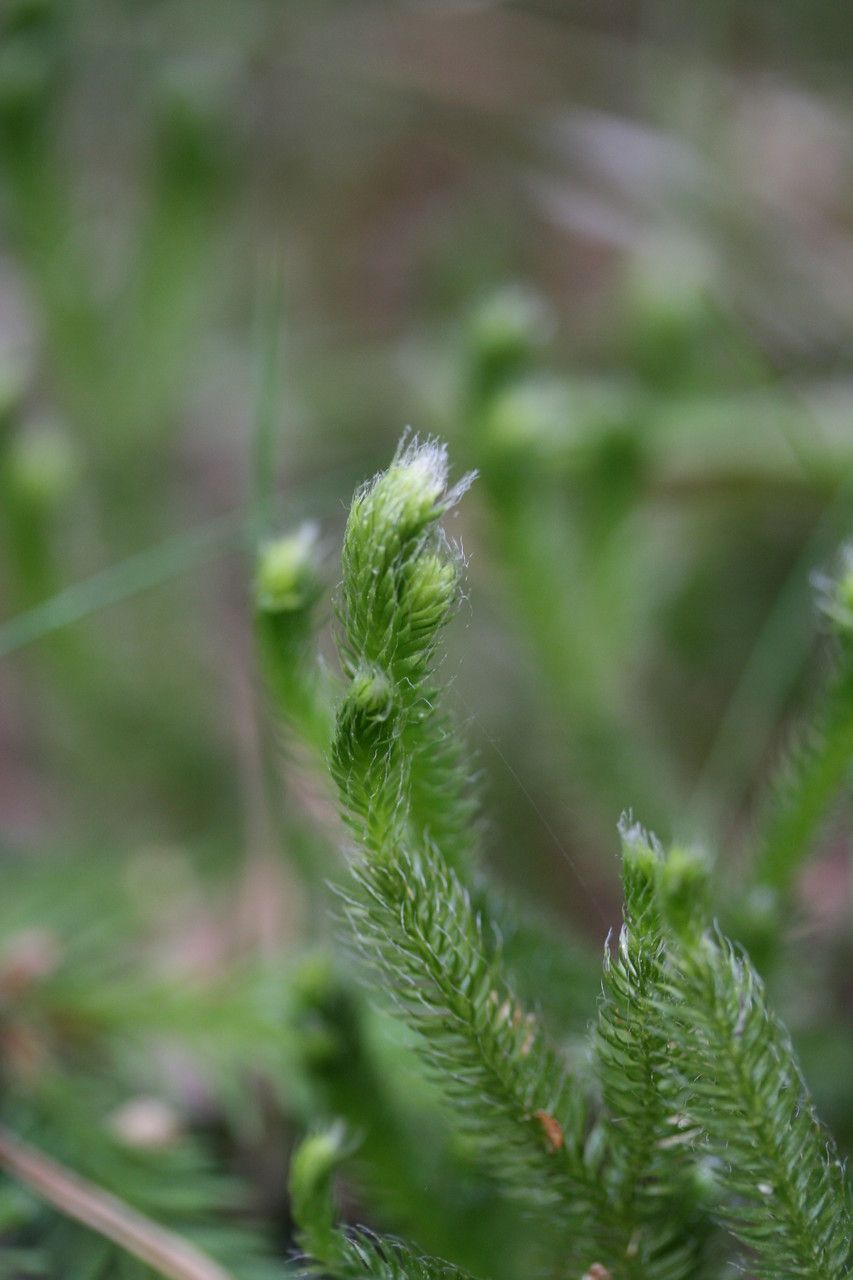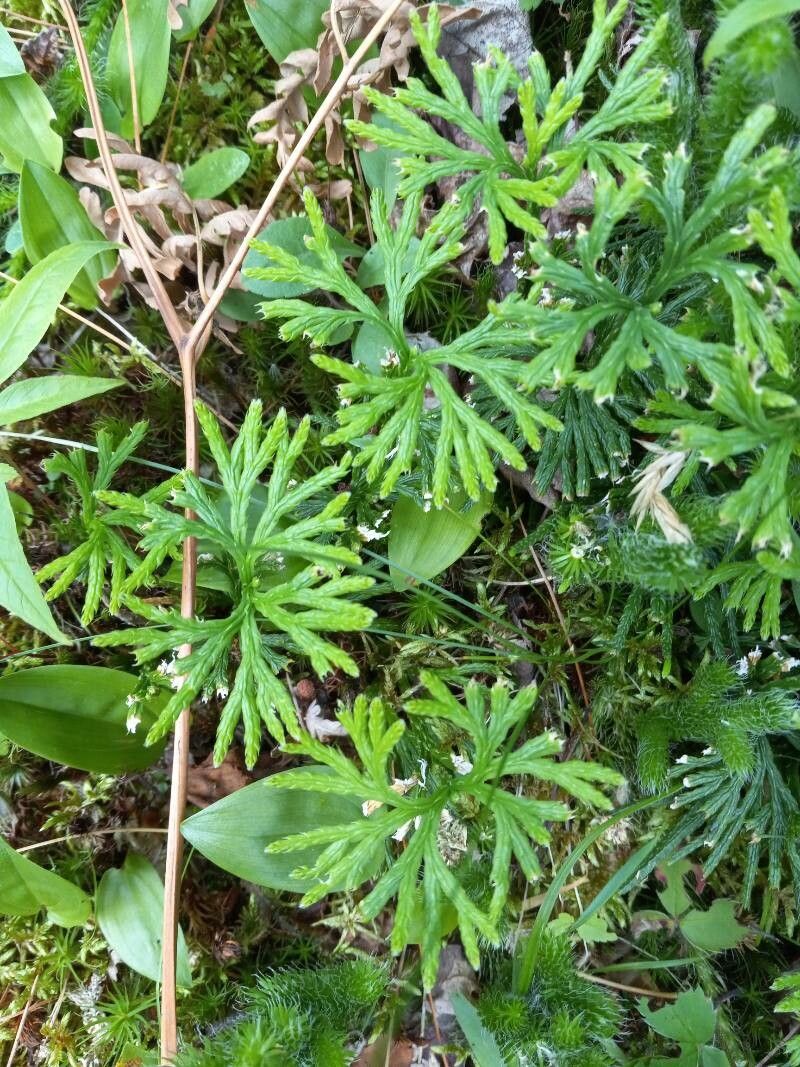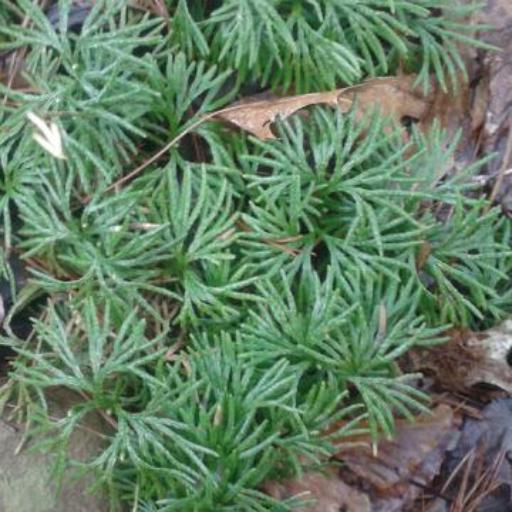
Diphasiastrum digitatum is known as groundcedar, running cedar or crowsfoot, along with other members of its genus, but the common name fan clubmoss can be used to refer to it specifically. It is the most common species of Diphasiastrum in North America. It is a type of plant known as a clubmoss, which is within one of the three main divisions of living vascular plants. It was formerly included in the superspecies Diphasiastrum complanatum. For many years, this species was known as Lycopodium flabelliforme or Lycopodium digitatum. Its common name is due to its resemblance to cedar boughs lying on the ground. Its leaves are scale-like and appressed, like a mature cedar, and it is glossy and evergreen. It normally grows to a height of about four inches (10 cm), with the spore-bearing strobili held higher. This plant was once widely harvested and sold as Christmas greenery, and populations were widely depleted for this reason. However, it has recovered throughout its range, and makes large clonal colonies, carpeting the forest floor. It prefers disturbed areas and coniferous forests, where it can form dense monocultures. The subterranean, brown gametophytes may live for years in the soil before developing vegetative shoots. According to expert sources its range is in the higher Appalachian mountains northward, and its range ends in northern Georgia and Alabama, but isolated stands have sprung up elsewhere. In the Appalachian Mountains of Southwest Virginia, the plant is known locally as "Bear's Paw." This species was also once one of the principal clubmoss species used for collection of Lycopodium powder, used as a primitive flashpowder. Diphasiastrum digitatum is the accepted synonym of Lycopodium digitatum. Diphasiastrum digitatum, is also known commonly as Southern Ground Cedar, Fan Clubmoss, Running Pine, and Running Ground Cedar. Diphasiastrum digitatum lacks flowers or seed and is classified as a Lycopod. They are commonly found in North America with a perennial life cycle and a sporulating season from July to October.
Fan clubmoss typically resists disease well and faces relatively few insect pests. Its care is regarded as difficult because it needs a consistently moist environment and frequent watering. At the same time, the roots are prone to rot if the plant is overwatered or kept in poorly ventilated conditions. Fan clubmoss is appropriate for people with some growing experience, as most individuals can keep it alive for a period. Still, the plant may have difficulty thriving and its leaves can dry out and become less healthy over time.
How to keep Lycopodium Digitatum.
Light
Fan clubmoss flourishes under conditions of shade, gaining substantial advantages from the lack of direct sunlight. This preference is derived from its natural environment which is typically devoid of intense sunlight. Excessive light may be potentially detrimental to the plant, leading to strain or potential injury to its unique leaves.
Temperature
The thermal preferences of the fan clubmoss are intrinsically linked to its natural habitat. It flourishes in climate zones where the temperatures consistently fall between 41 and 90 ℉ (5 to 32 ℃). In the cold winter months, it can cope with lower temperatures by entering a state of dormancy. Conversely, in the warmer summer months, regular hydration is essential for it to acclimate to the increased heat.
Pot & Repot
When you decide to repot the Fan Clubmoss, opt for a container that is 1-2 inches (2.5-5 cm) larger in size and provides sufficient drainage. Ensure the potting mixture drains well. It’s best to repot in spring or autumn and ensure that the plant's root ball is positioned slightly beneath the rim of the pot. Provide plenty of water once repotting is complete and position it in a cozy location that gets indirect sun exposure.
Botanical profile.
- Plant Type
- Fern
- Life Cycle
- Perennial
- Genus
- Lycopodium
- Family
- Lycopodiaceae
- Hardiness Zone
- 4-7
- Mature Height
- 13 cm to 25 cm
- Mature Spread
- 15 cm to 30 cm
- Leaf Color
- Green
- Leaf Type
- Evergreen
- Flower Color
- Green, Yellow, Brown
- Bloom Time
- Summer
- Planting Time
- Spring, Summer, Autumn
- Harvest Time
- Mid summer, Late summer, Early fall