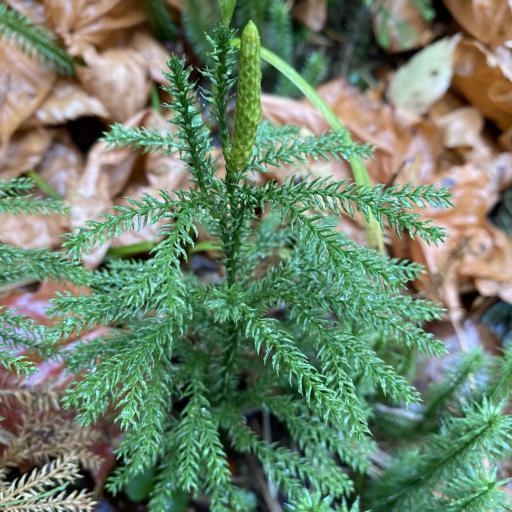
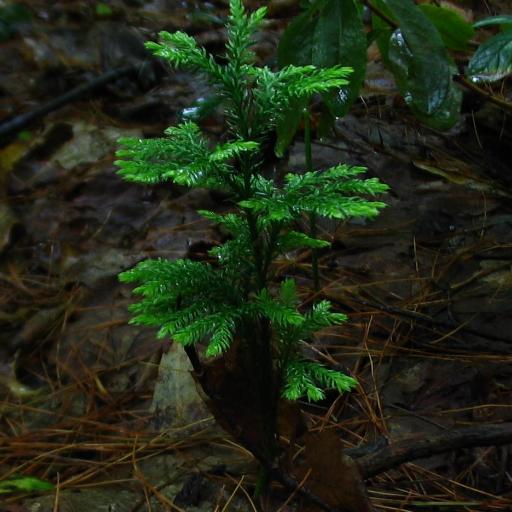
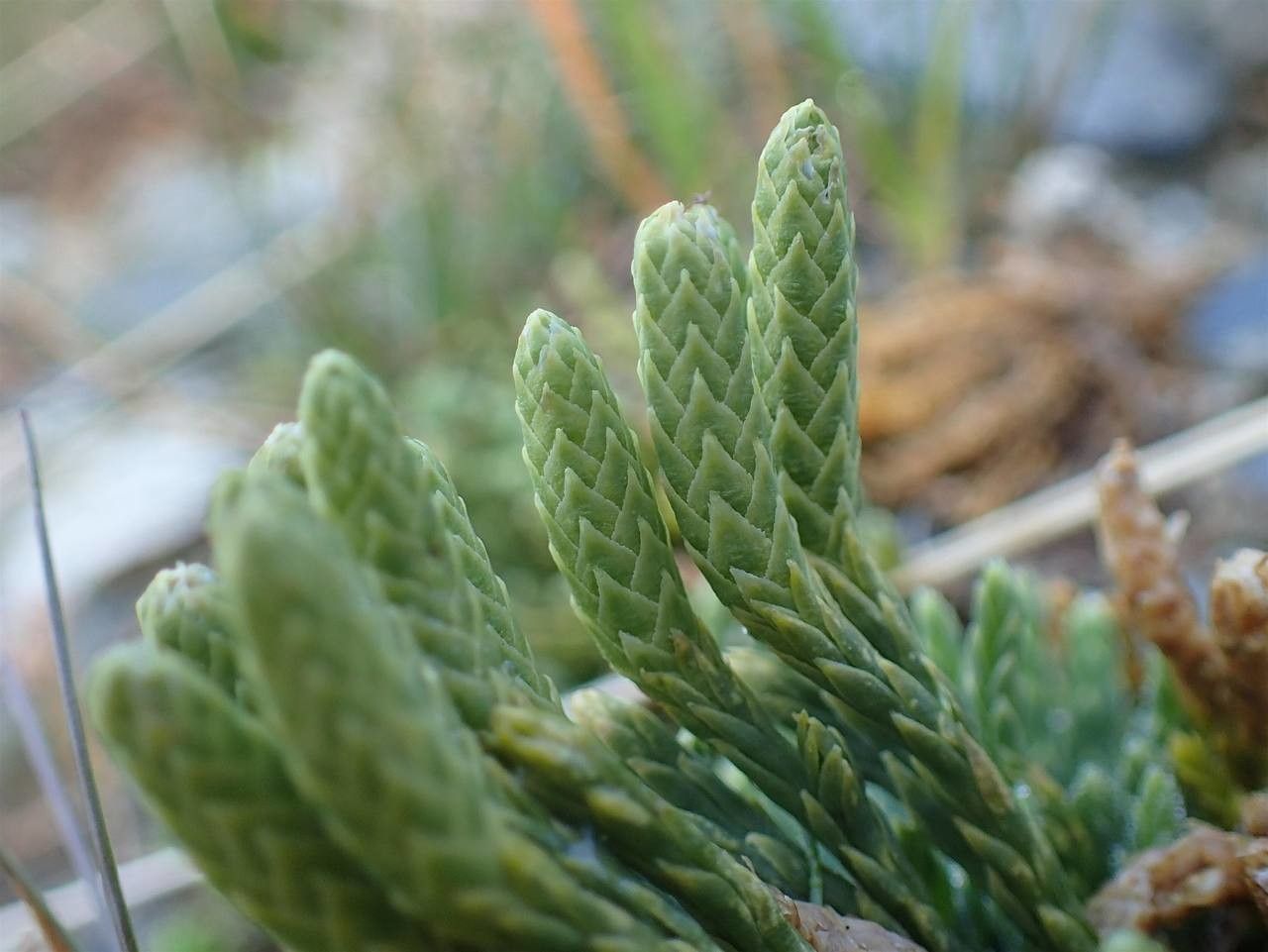
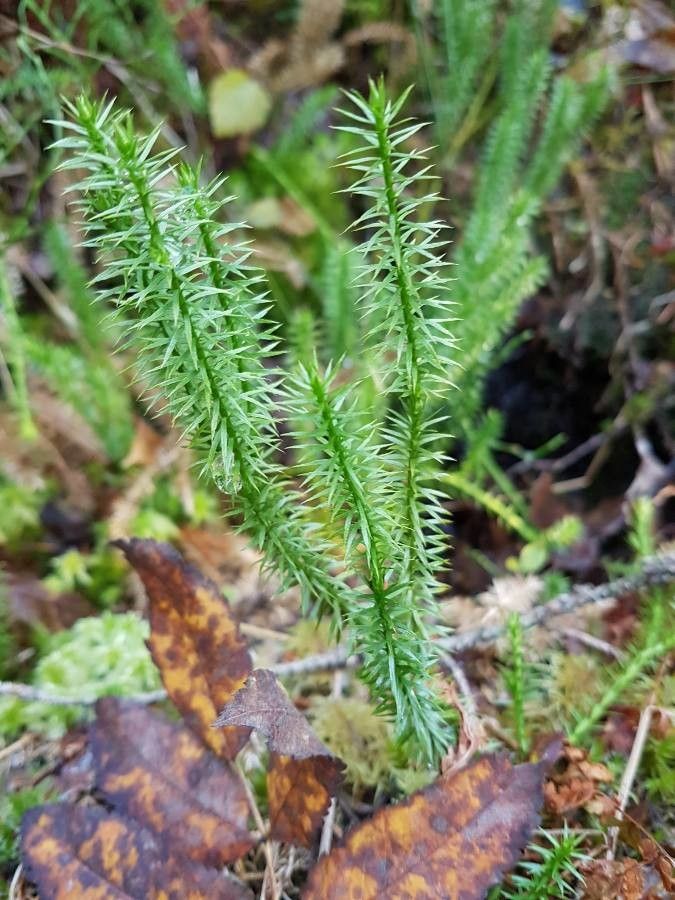
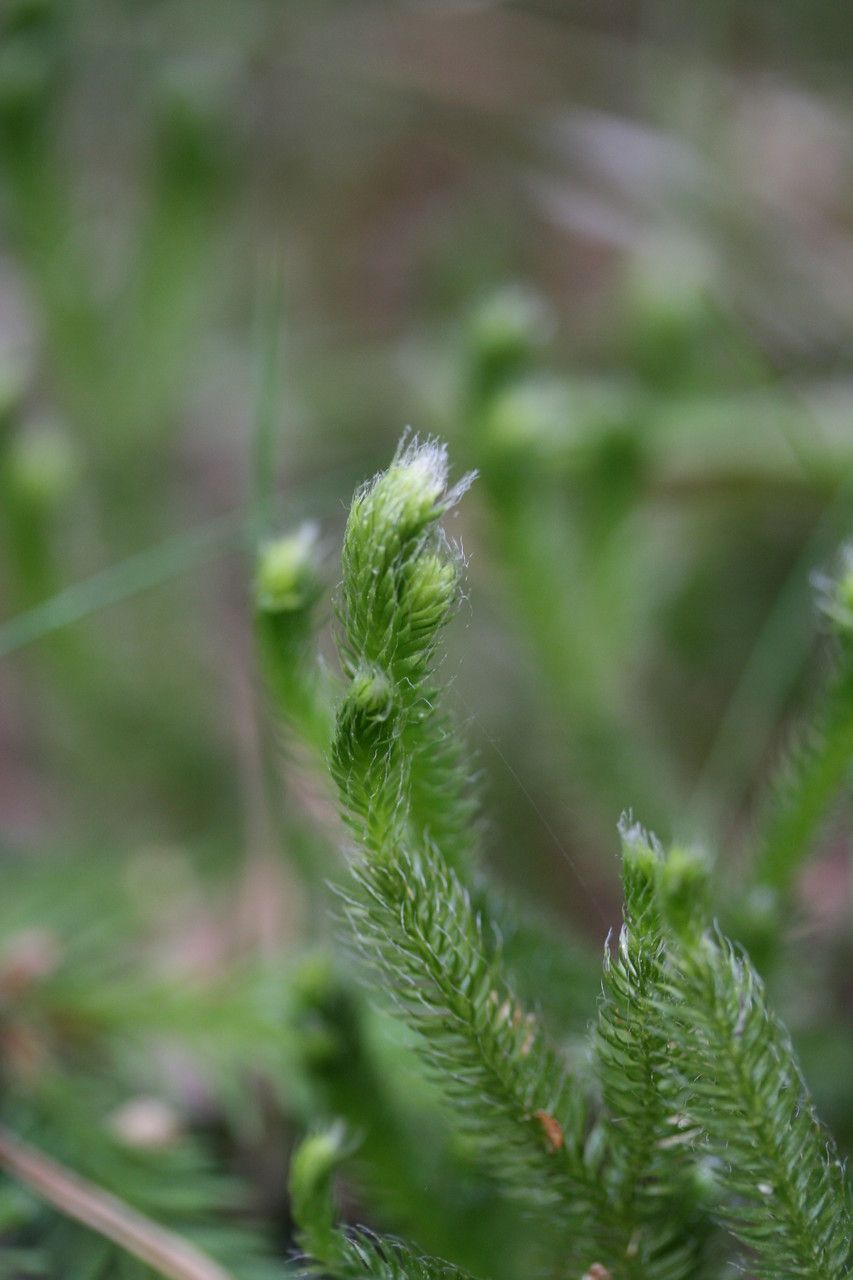
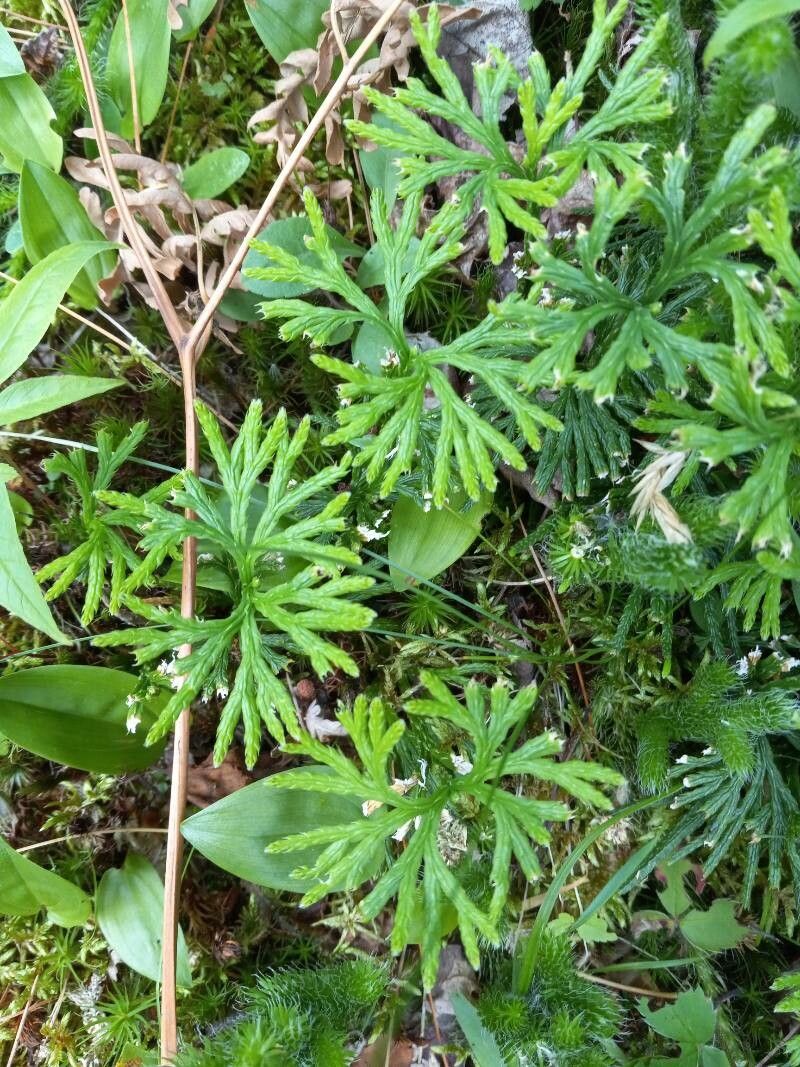
Dendrolycopodium dendroideum, synonym Lycopodium dendroideum, known as tree groundpine, is a North American species of clubmoss. It is part of a complex of species colloquially known as groundpine, which taxa were formerly lumped into the species Lycopodium obscurum. The species is native to Russia and also to the colder parts of North America (all states and provinces in Canada except Nunavut; northern and east-central United States including Alaska). The genus Dendrolycopodium is accepted in the Pteridophyte Phylogeny Group classification of 2016 (PPG I), but not in other classifications, which submerge the genus in Lycopodium. Dendrolycopodium dendroideum prefers humus-rich, sandy, moist but not completely saturated soils. It is very similar to D. obscurum except for side shoots that are round in cross-section rather than flat, and having leaves all the same size.
Treelike clubmoss generally has strong resistance to diseases and is not usually affected by them. Still, it can be vulnerable to pests and illnesses present in its environment, though these problems are typically mild. Regarding care, this plant needs a moderate level of attention. It should be pruned regularly to keep a neat appearance and encourage healthy growth. Applying fertilizer can also help stimulate flowering. Treelike clubmoss is well suited for anyone who has outdoor space, like a garden or patio, and does not demand extensive plant-care experience. It may, however, require more attention when cultivated indoors.
How to keep Lycopodium Dendroideum.
Light
Treelike clubmoss favors moderate sun exposure, thriving where light is neither too intense nor too scarce, a pattern that points to its origin in areas abundant with dappled light. Excessive sun can be harmful, while very low light levels can impede its growth.
Temperature
Treelike clubmoss can tolerate a wide range of temperatures, but its distribution can still be restricted by various combinations of moisture and heat. It grows best in warm summer conditions with sufficient rainfall or watering. Extended periods of cloudy, rainy weather, as well as prolonged high temperatures, can increase the chance of Treelike clubmoss dying. In winter, adequate protection from cold can improve the plant's chances of survival.
Fertilizer
One fertilizer application in spring is generally enough for Treelike clubmoss, though repeated feedings can maximize growth. Apply fertilizer every one to one and a half months. Fertilizing improves the leaves' appearance and function, maintaining consistent color and a healthy texture. It also encourages root development and nutrient uptake, supporting long-term plant health.
Botanical profile.
- Plant Type
- Herb
- Life Cycle
- Perennial
- Genus
- Lycopodium
- Family
- Lycopodiaceae
- Hardiness Zone
- 3-7
- Mature Height
- 10 cm to 30 cm
- Mature Spread
- 10 cm to 20 cm
- Leaf Color
- Dark Green
- Leaf Type
- Evergreen
- Flower Size
- 2.03 cm to 4.06 cm
- Planting Time
- Spring, Autumn
- Harvest Time
- Late summer, Early fall, Mid fall
- Native Area
- Russia, Canada, United States, Japan, Koppen, South Korea, China
Other names.