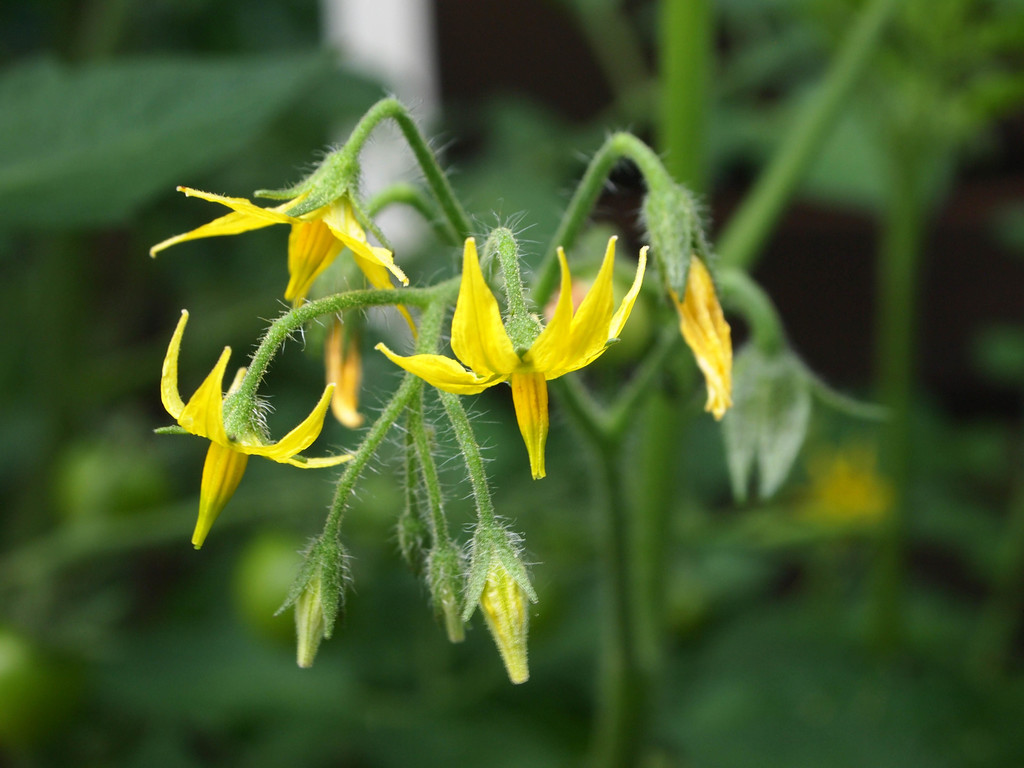
The tomato is the edible berry of the plant Solanum lycopersicum, commonly known as the tomato plant. The species originated in western South America, Mexico, and Central America. The Mexican Nahuatl word tomatl gave rise to the Spanish word tomate, from which the English word tomato derived. Its domestication and use as a cultivated food may have originated with the indigenous peoples of Mexico. The Aztecs used tomatoes in their cooking at the time of the Spanish conquest of the Aztec Empire, and after the Spanish encountered the tomato for the first time after their contact with the Aztecs, they brought the plant to Europe, in a widespread transfer of plants known as the Columbian exchange. From there, the tomato was introduced to other parts of the European-colonized world during the 16th century.Tomatoes are a significant source of umami flavor. They are consumed in diverse ways: raw or cooked, and in many dishes, sauces, salads, and drinks. While tomatoes are fruits—botanically classified as berries—they are commonly used culinarily as a vegetable ingredient or side dish.Numerous varieties of the tomato plant are widely grown in temperate climates across the world, with greenhouses allowing for the production of tomatoes throughout all seasons of the year. Tomato plants typically grow to 1–3 meters (3–10 ft) in height. They are vines that have a weak stem that sprawls and typically needs support. Indeterminate tomato plants are perennials in their native habitat, but are cultivated as annuals. (Determinate, or bush, plants are annuals that stop growing at a certain height and produce a crop all at once.) The size of the tomato varies according to the cultivar, with a range of 1–10 cm (1⁄2–4 in) in width.
Tomato has moderate resistance to disease and is not highly prone to leaf spot or powdery mildew. It may incur some insect damage, but that is likely to be minor. The care required is rated easy, as it only needs regular watering and occasional fertilizing. It generally does not require pruning. Tomato is suitable for most people to grow outdoors with little attention, and it can also be grown indoors with some care and effort.
How to keep Lycopersicon Esculentum.
Light
Tomato plants do best when given abundant sunlight throughout the day. Insufficient sun can hinder their growth, while too much exposure may scorch the leaves. Different growth stages can exhibit varying tolerances to sunlight. Although they come from regions with plentiful sun, they can also adjust to moderate light conditions.
Water
To sustain healthy development, tomatoes need frequent watering in well-drained soil. Water your tomato plants often enough to keep the soil wet but not saturated. Pushing your finger into saturated dirt reveals visible water. Increase the frequency with which you water your tomato plant if the leaves curl in on themselves at the edges and become yellow. Tomatoes need at least an inch of water every week over their roots.
Humidity
This plant needs special care because it loves high humidity levels of 60-80% or more. The best way to achieve this is by placing a humidifier near the plant. Daily misting is also essential! Make sure the room has good ventilation.
Temperature
Tomatoes originate from relatively temperate areas and perform best in temperatures between 68 and 95°F (20 to 35℃). In cooler conditions, using a heating system is advisable. In very hot weather, a shade cloth can help maintain optimal growth.
Fertilizer
To nourish tomato plants, use organic or commercial fertilizer high in nitrogen for leaf development, phosphorus for roots and flowering, and potassium for photosynthesis and maximum fruit yield. Plant in spring, enrich the soil with compost or manure, and fertilize seedlings when they reach a height of 2–4 inches (5.1–10.2 cm). Insufficient macronutrients cause slow growth, wilting, and reduced fruit quality.
Pruning
There are various reasons for pruning vegetable plants: to assist in restricting a plant’s size, to encourage bushy, compact growth, to remove dead or diseased stems, and to produce greater, healthier fruit harvests. Flower buds may be clipped off to push the plant's energy into fewer fruits that mature quicker. Vining plants may become invasive in a limited garden area. If required, whole vines may be cut down to the primary stem to keep plants under control. Never cut away more than 1/3 of the plant, or it may become weak and unproductive. Remove veggies as soon as they develop. Leaving them on the plant any longer than required might damage taste and texture, and older fruit drains energy from smaller growing fruits.
Pot & Repot
When repotting Tomato, choose a pot that is 1–2 inches (2.5–5.1 cm) larger in diameter and make sure it has good drainage. Use a well-draining potting mix and consider adding perlite for extra drainage. Repot in spring or early summer, then water thoroughly and keep it in a shady spot at first.
Botanical profile.
- Plant Type
- Herb
- Life Cycle
- Annual, Perennial
- Genus
- Lycopersicon
- Family
- Solanaceae
- Hardiness Zone
- 2-10
- Mature Height
- 0.91 m to 3.05 m
- Mature Spread
- 1.52 m
- Leaf Color
- Green
- Leaf Type
- Deciduous
- Flower Color
- Yellow
- Flower Size
- 2.03 cm to 2.54 cm
- Bloom Time
- Late spring, Early summer, Mid summer
- Planting Time
- Spring, Summer
- Harvest Time
- Mid summer, Late summer
- Native Area
- Honduras, Mexico, Peru, Nicaragua, Ecuador, Costa Rica, Panama