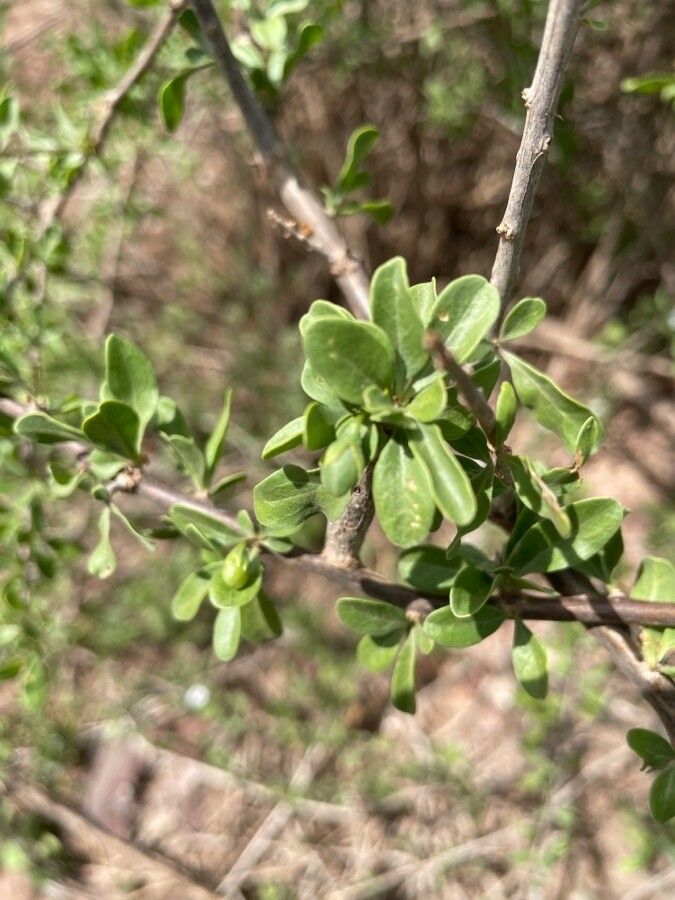
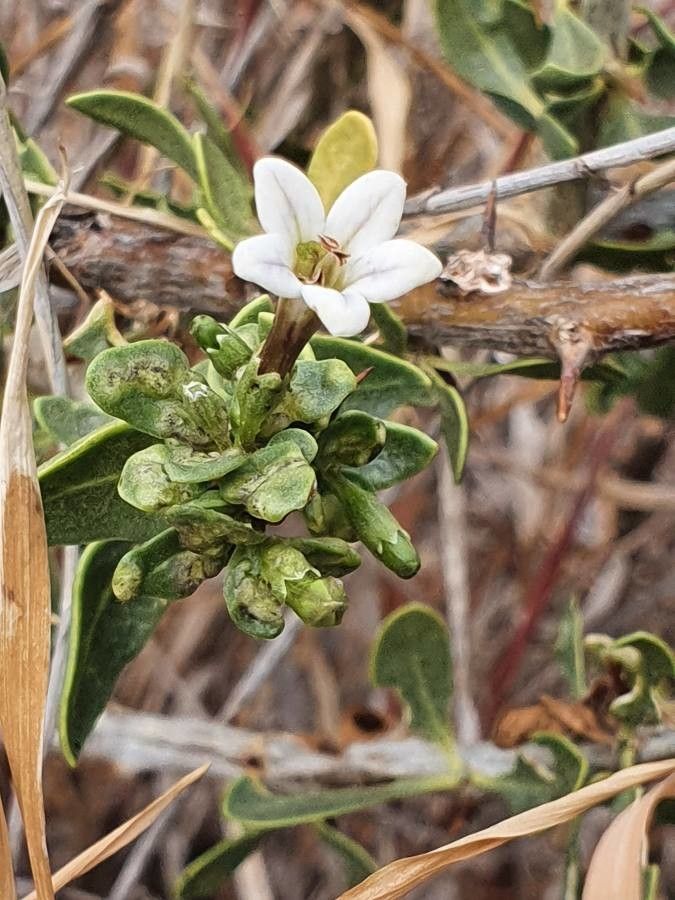
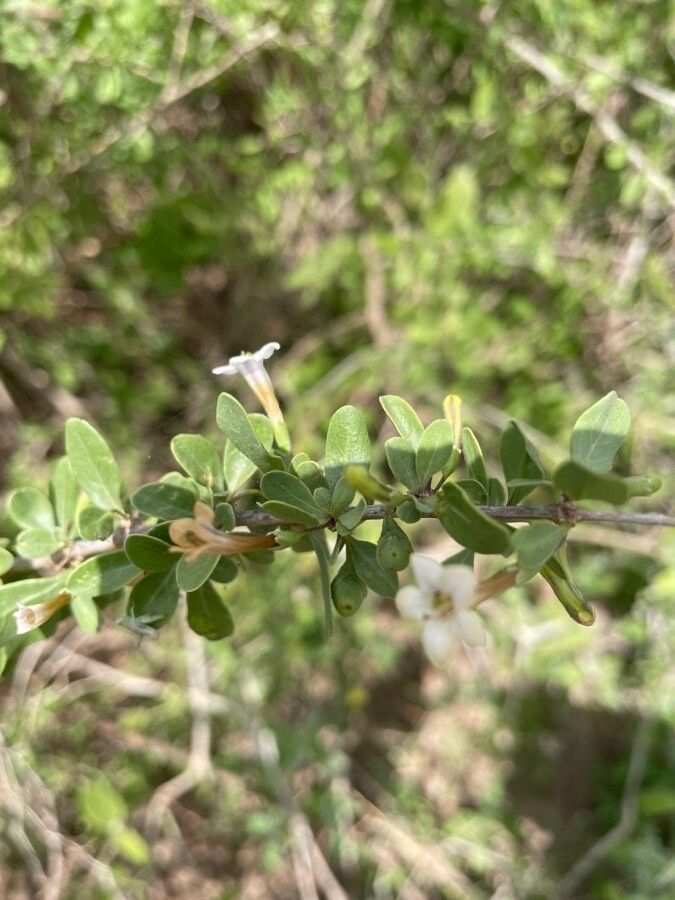
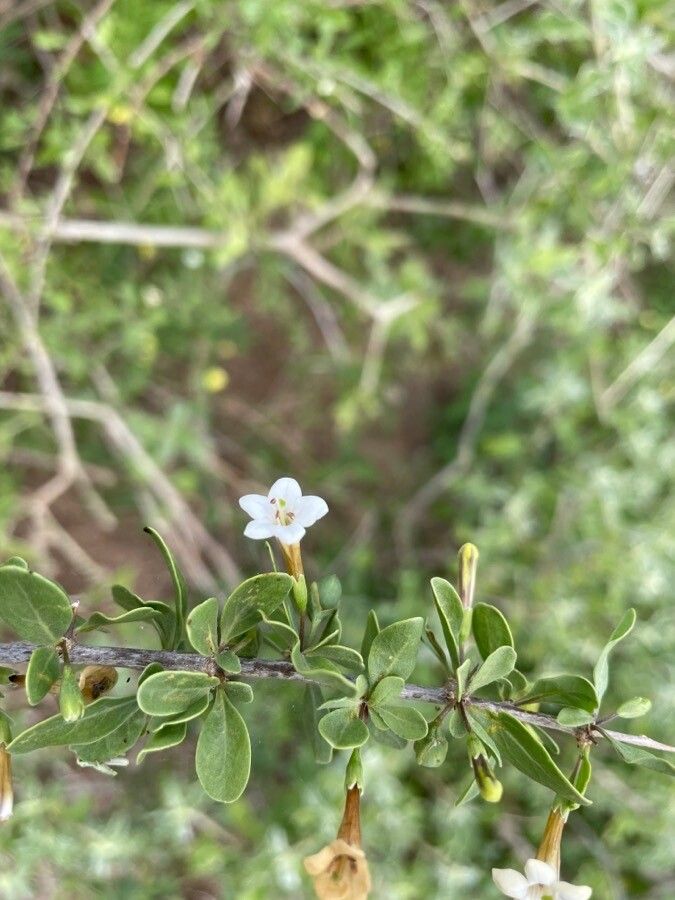
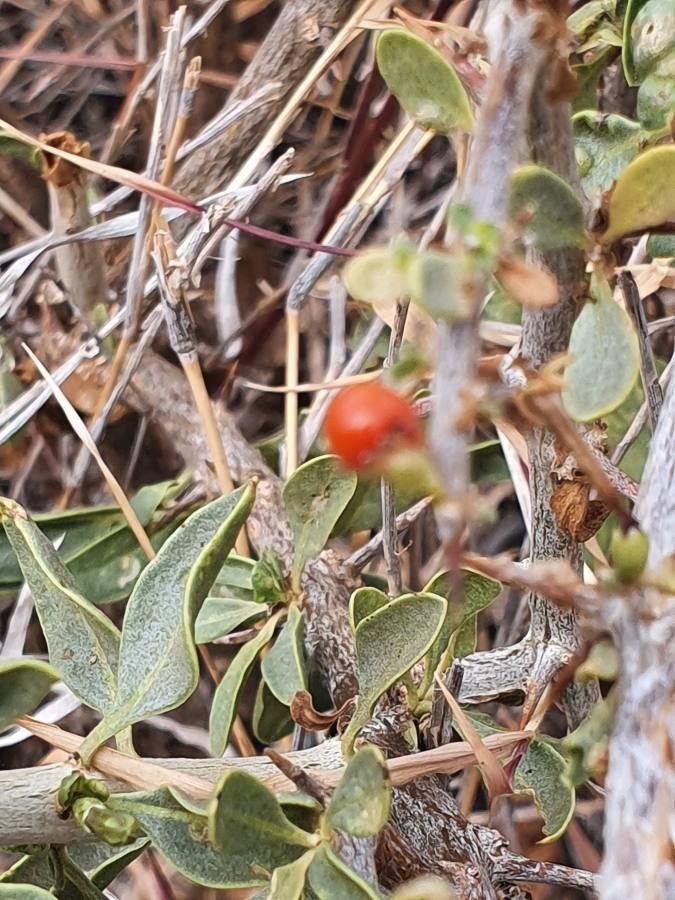
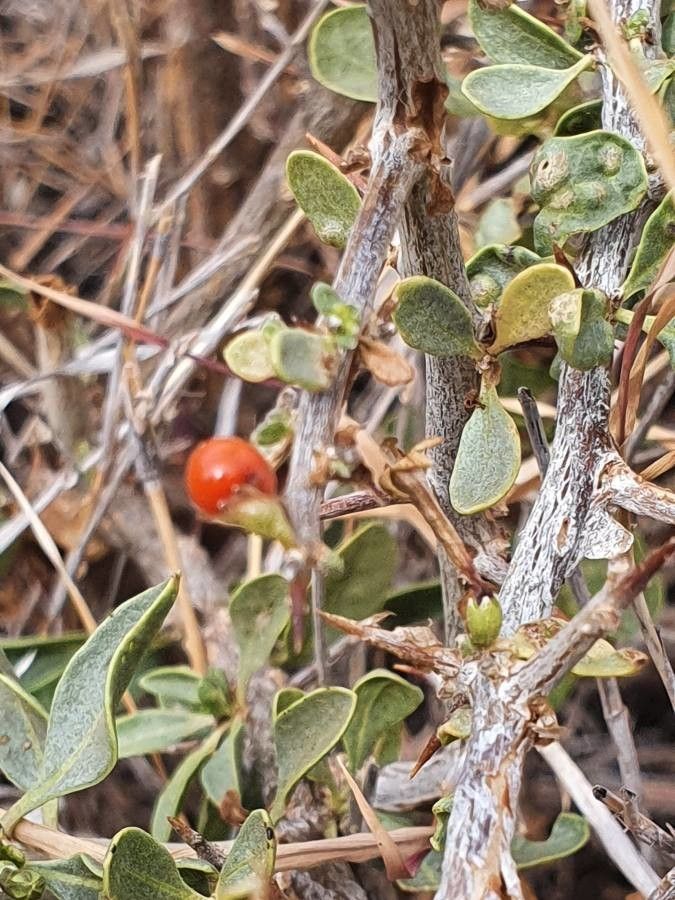
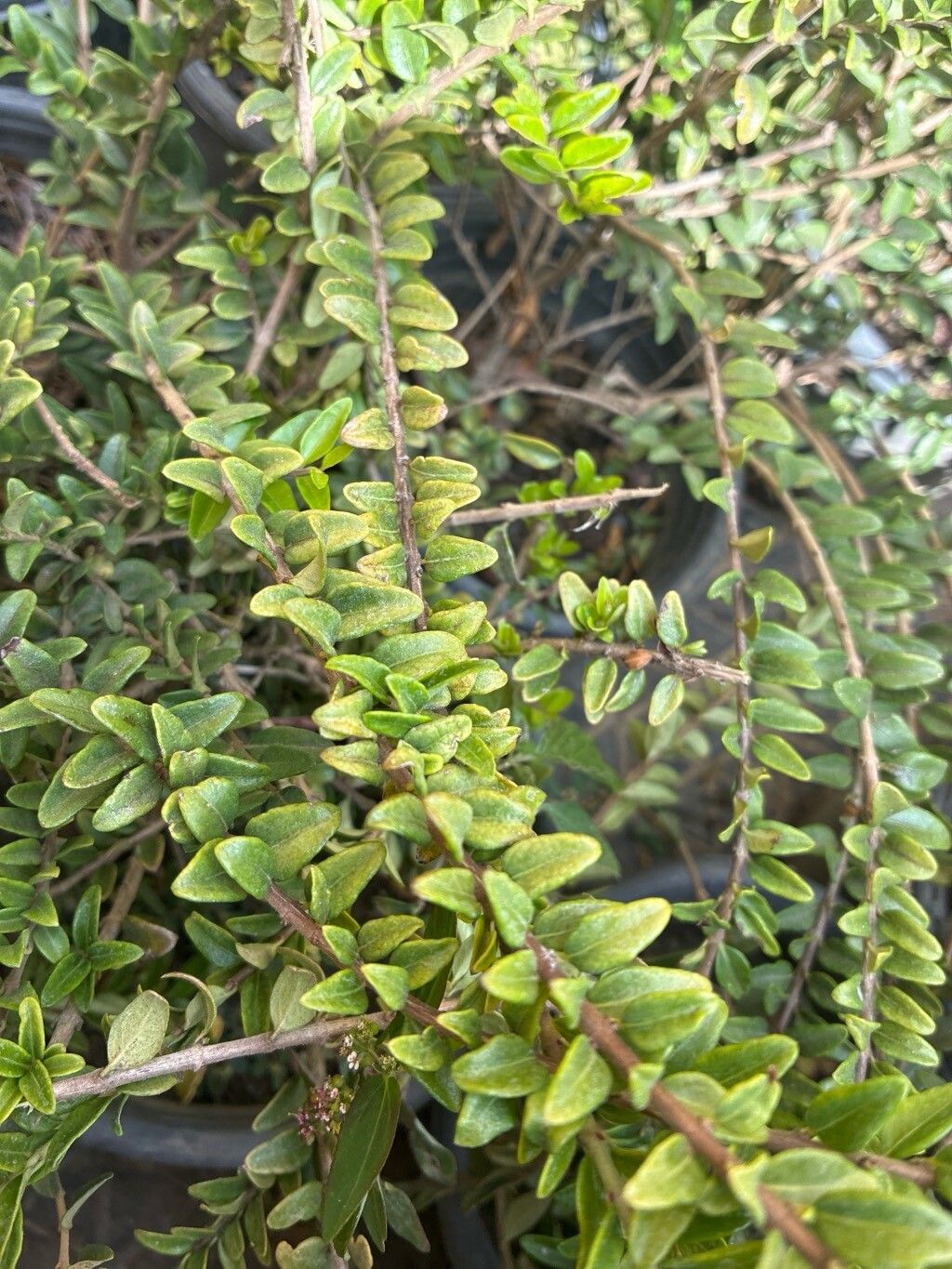
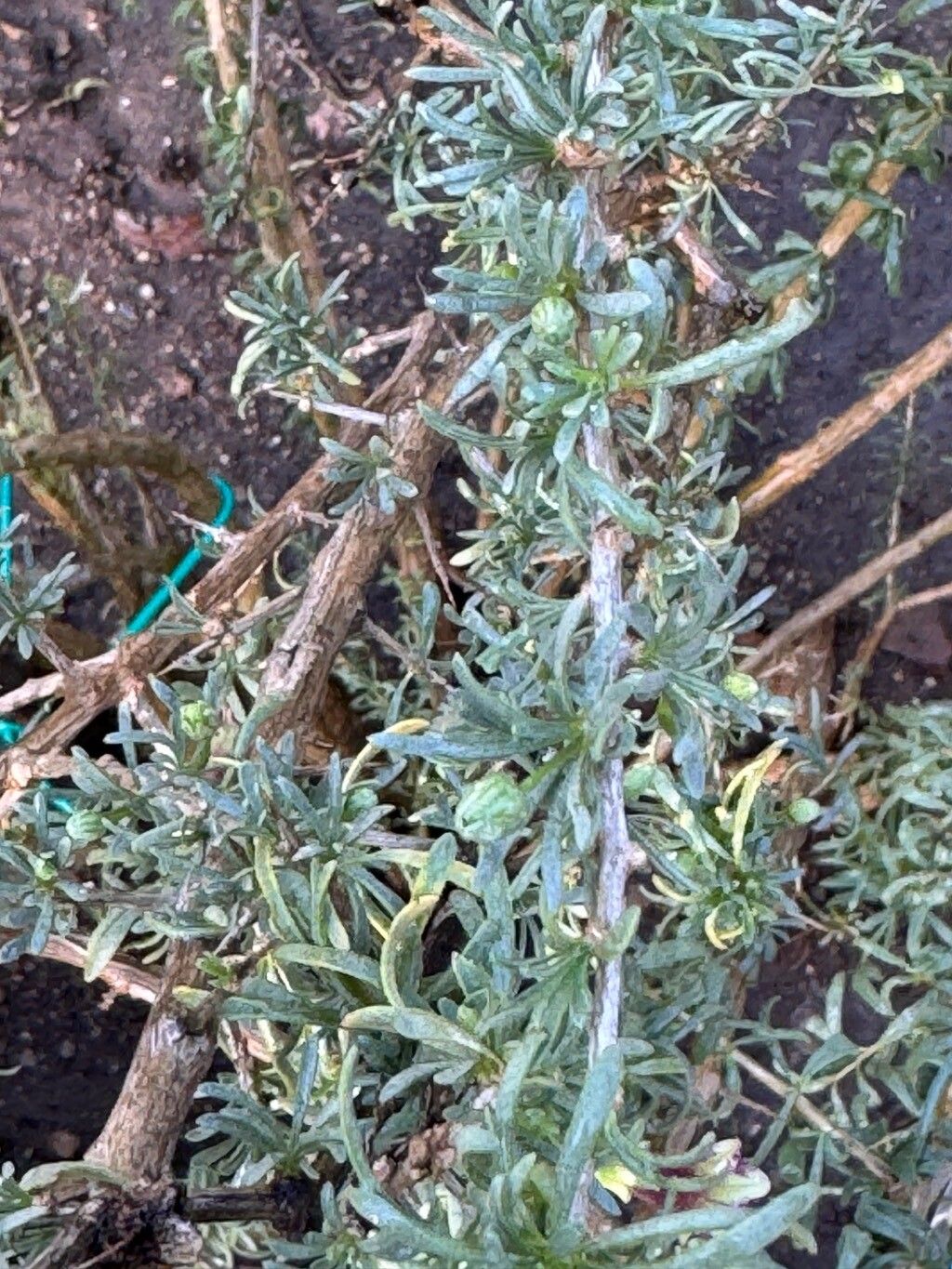
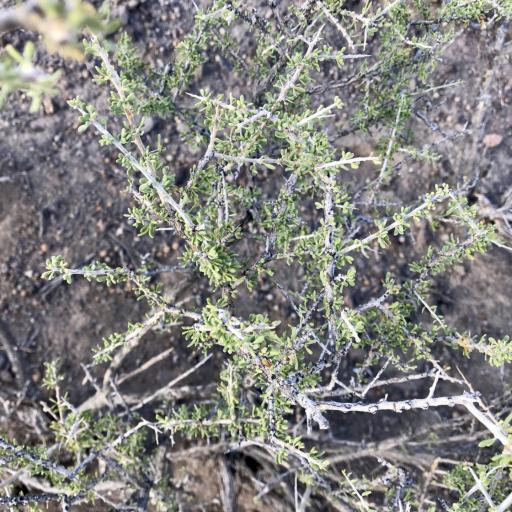
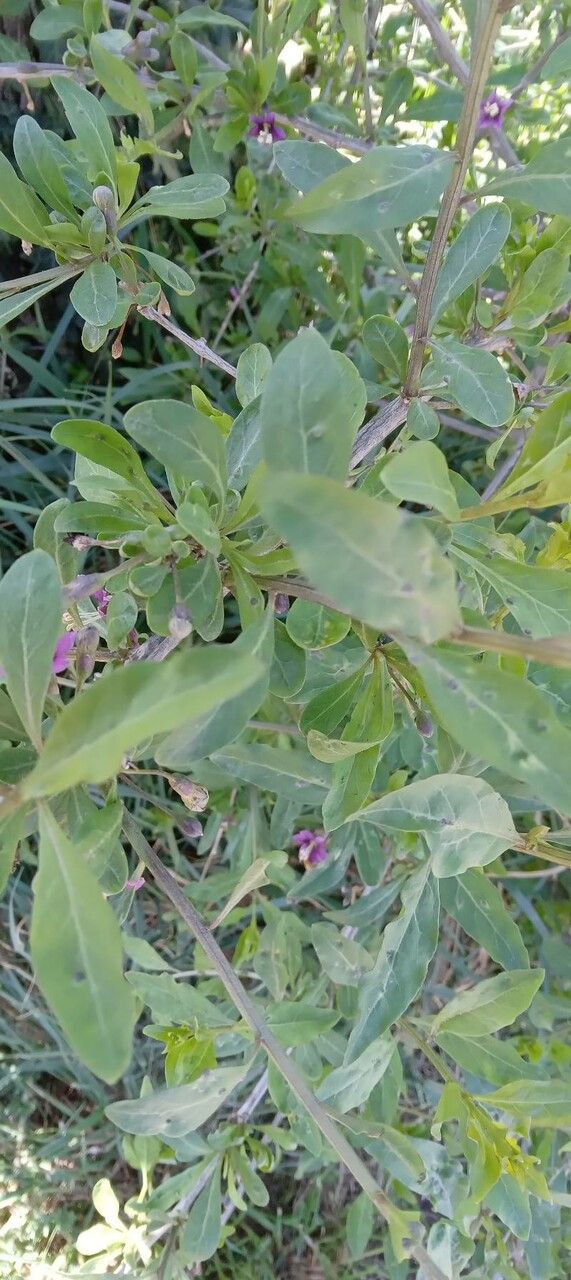
Lycium shawii, desert thorn or Arabian boxthorn is a species of thorny shrub adapted to desert environments, and can be found throughout the Arabian peninsula, and some places in Africa. The thin leaved, rigid bush grows up to 3 metres (9.8 feet) high, with a lot of branches and alternating spines that vary in size, and grow along the branches and on their tips. The leaves narrow towards their base. It produces small whitish-pink or purple flowers from September until April, and red pea-sized seedy berries that are edible. Habitats include gravel plains and foothills up to 4,000 ft (1,200 m), as well as wadis. Plants often growing nearby include Acacia tortilis and Prosopis cineraria.
Arabian boxthorn is well resistant to disease and is generally not susceptible to illnesses. Regarding care, this plant is fairly low-maintenance. When grown outdoors it needs only light watering, and larger plants usually do not require pruning. Smaller plants, however, should be pruned after they finish blooming. Arabian boxthorn is suitable for anyone with an outdoor area, such as a garden or deck, and does not demand extensive gardening experience.
How to keep Lycium Shawii.
Light
Arabian boxthorn is native to open habitats, such as sunny meadows and forest margins, where abundant light is present. It performs best in Full Sun but can also tolerate Partial Sun, showing good adaptability to different light conditions.
Temperature
Arabian boxthorn comes from tropical areas, where the climate is generally warm and humid. Consequently, it is well suited to high temperatures and moisture. It does not tolerate sudden temperature changes and prefers a steady thermal environment, so avoiding temperature fluctuations indoors is important. It typically cannot withstand cold and requires warmer conditions to grow. If the ambient temperature falls too low, the plant may stop growing or even die.
Fertilizer
The best time to fertilize an Arabian boxthorn is in early spring, when it comes out of dormancy. This stimulates overall growth and flower development. Fertilizing improves the foliage, stems, and branches and encourages large, vibrant, long-lasting flowers. It also helps transport nutrients from the roots to the flowers and enhances the plant's health and resistance to disease.
Botanical profile.
- Plant Type
- Shrub
- Life Cycle
- Perennial
- Genus
- Lycium
- Family
- Solanaceae
- Hardiness Zone
- 9-11
- Mature Height
- 0.91 m to 3.05 m
- Mature Spread
- 0.91 m to 2.13 m
- Leaf Color
- Green
- Leaf Type
- Evergreen
- Flower Color
- White
- Flower Size
- 0.51 cm to 1.02 cm
- Bloom Time
- Mid spring, Late spring, Early summer
- Planting Time
- Spring, Summer, Autumn
- Harvest Time
- Mid summer, Late summer, Early fall
- Native Area
- Saudi Arabia, Libya, Somalia, Egypt, Turkey, India, Djibouti, Malawi, United Arab Emirates, South Africa, Zambia, Sudan, Eritrea, Pakistan, Yemen, Kenya, Uganda, Tanzania, Zimbabwe, Iraq, Oman, Eswatini, Ethiopia, Iran, Kuwait, Qatar, Botswana
Other names.