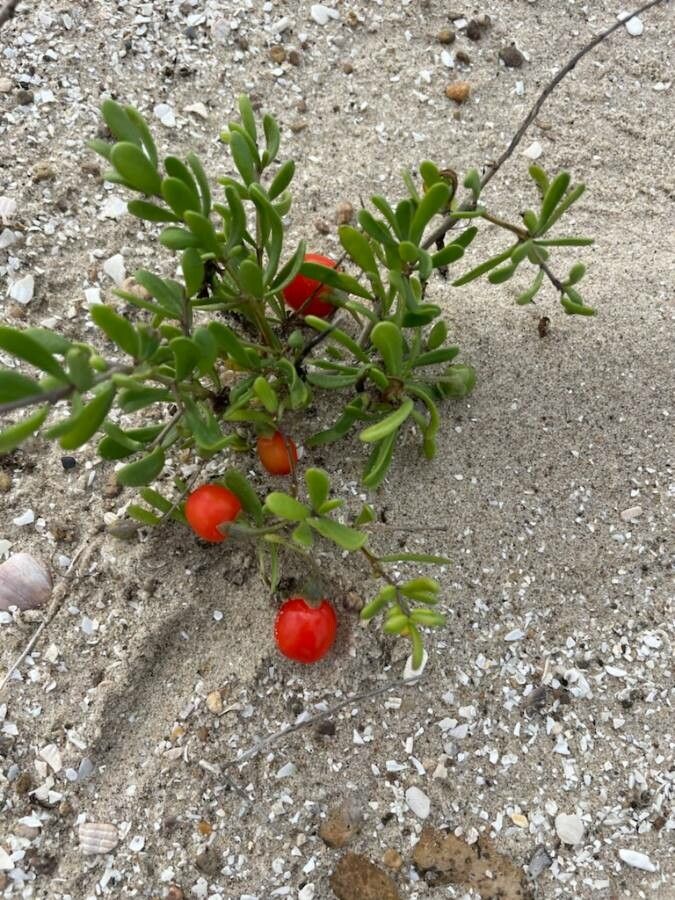
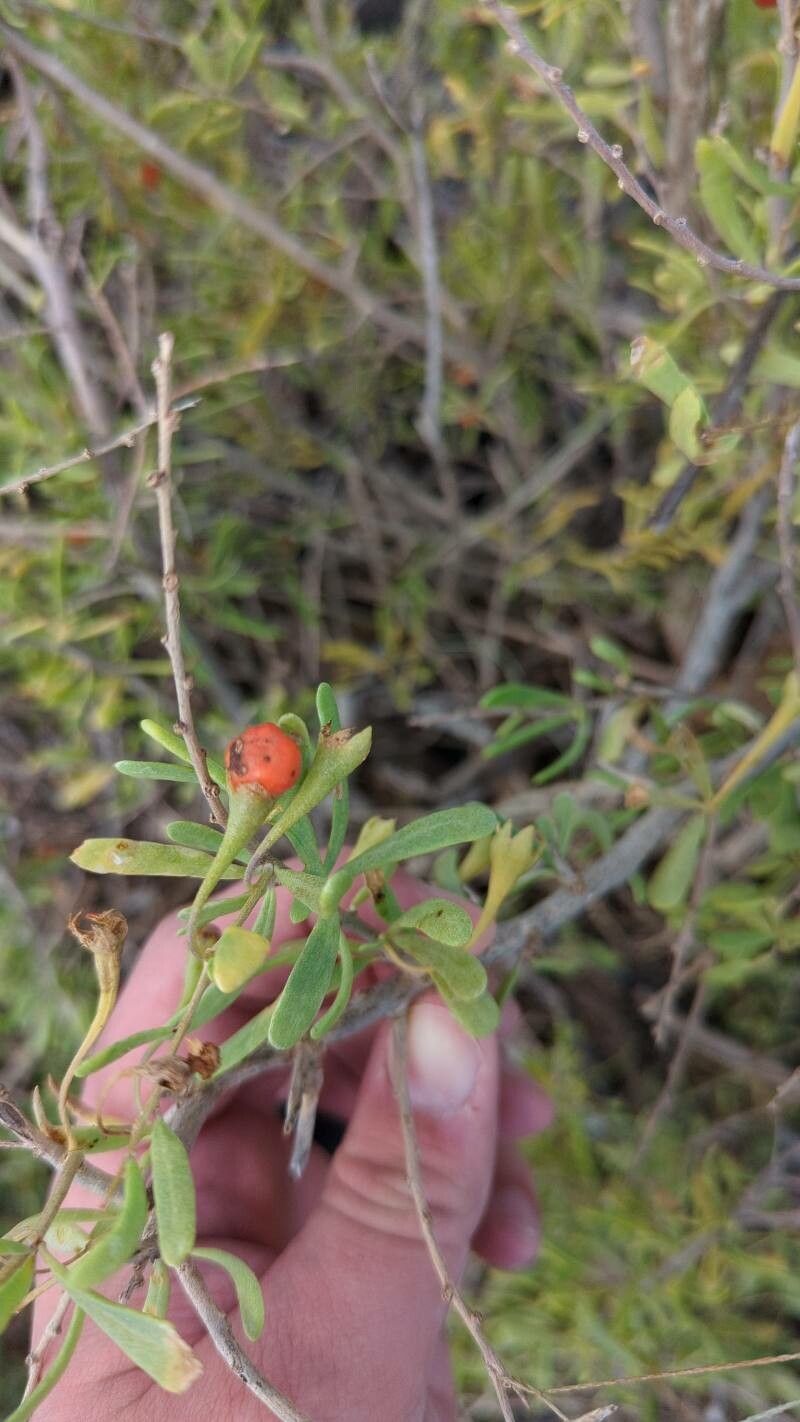
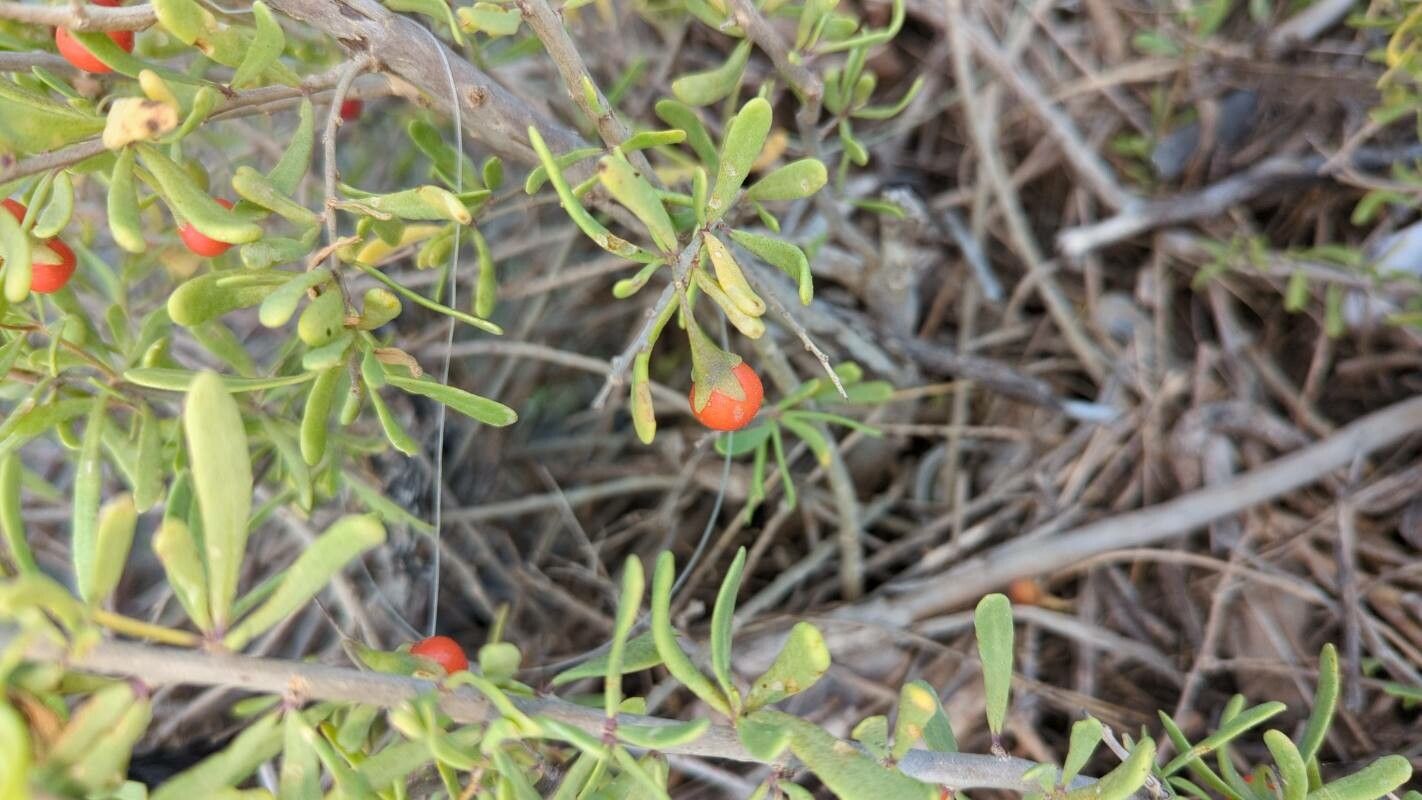
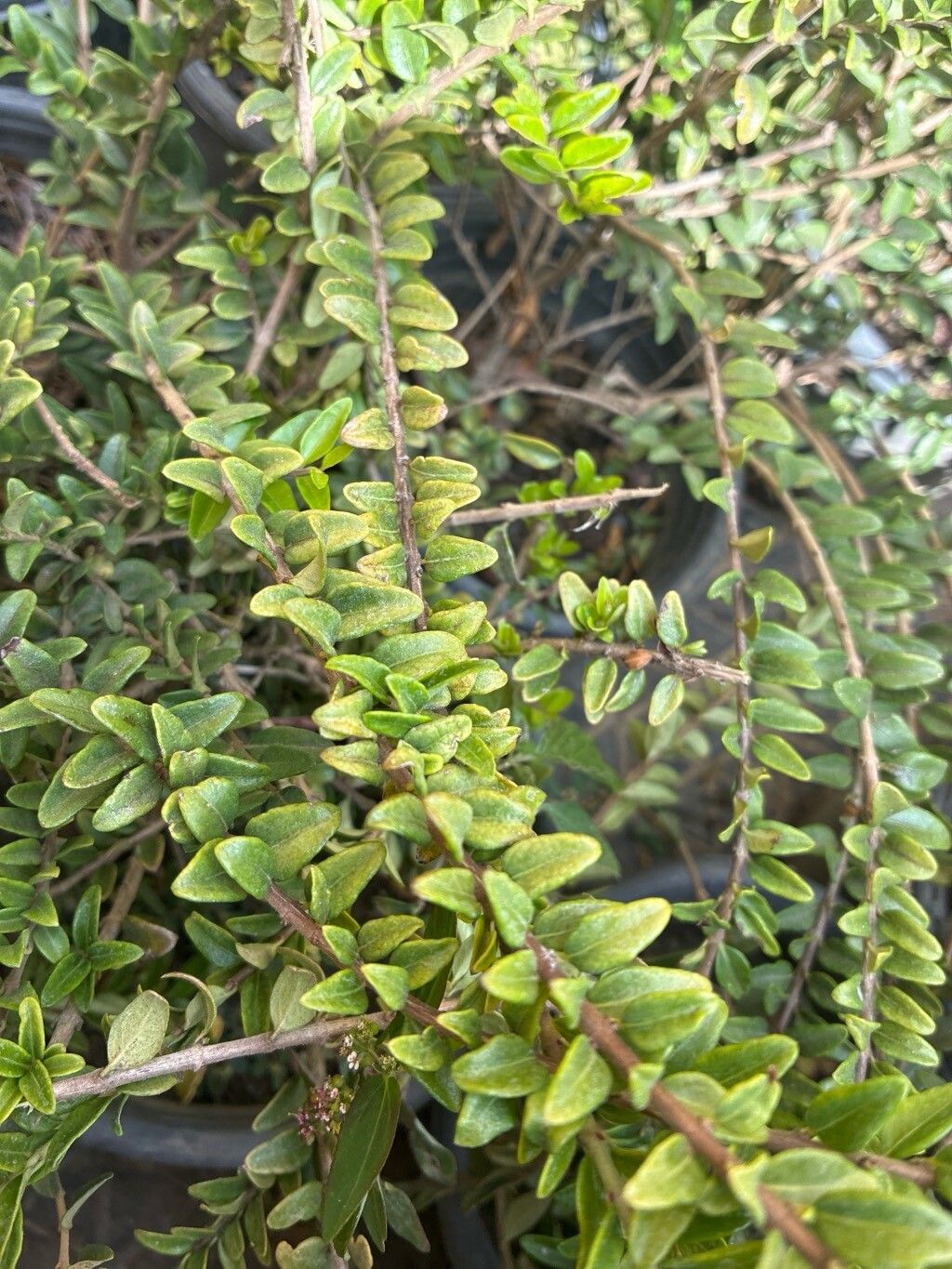
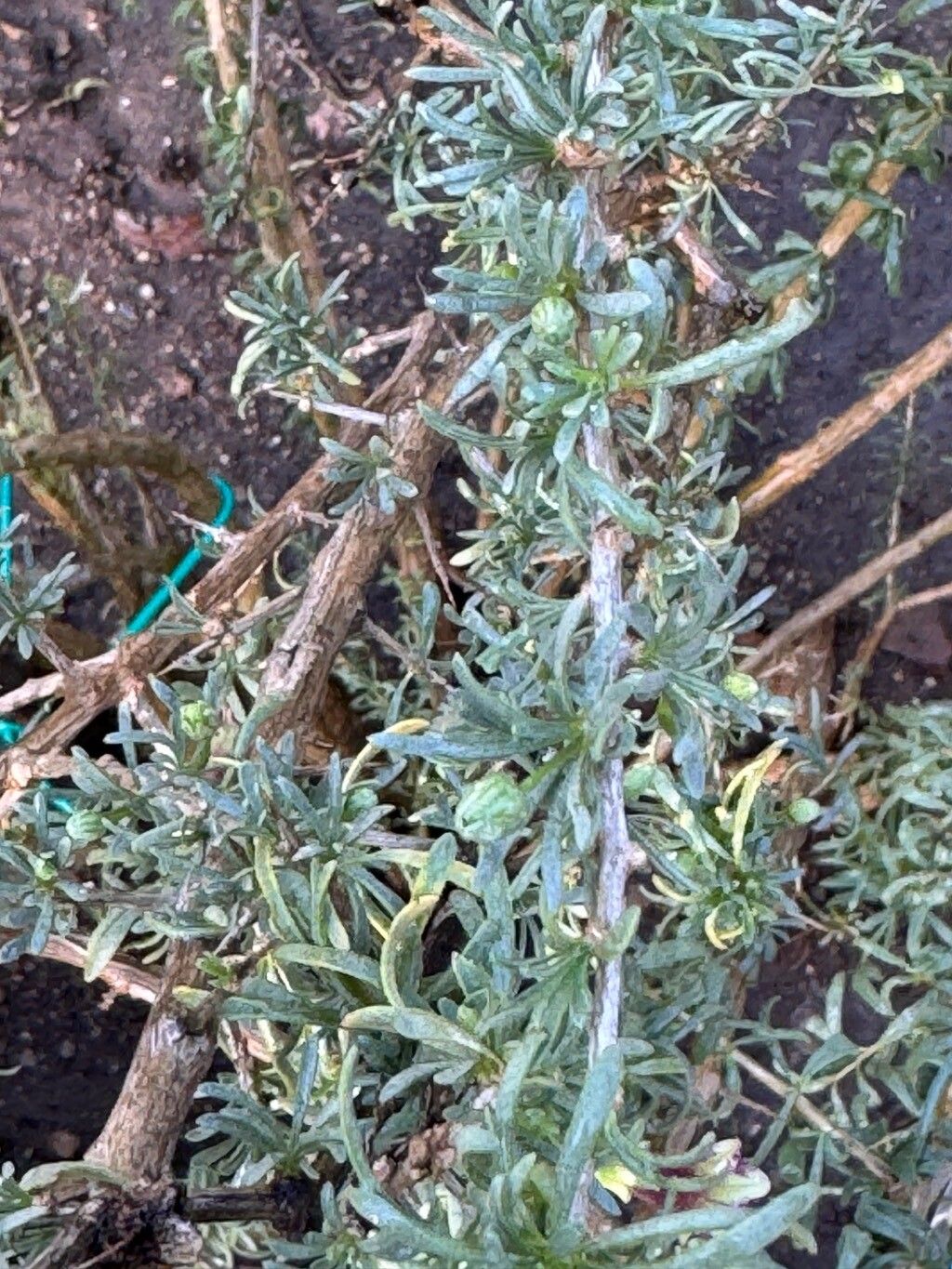
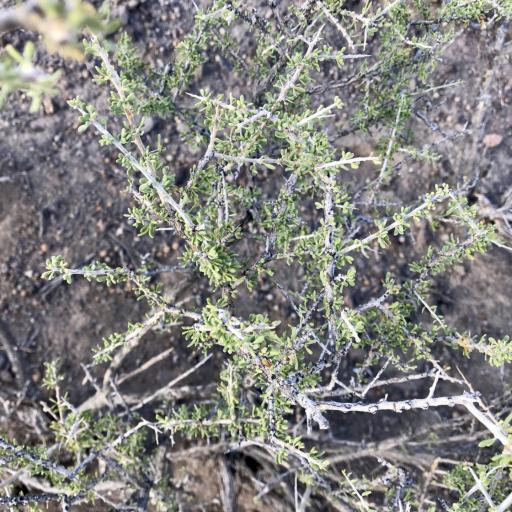
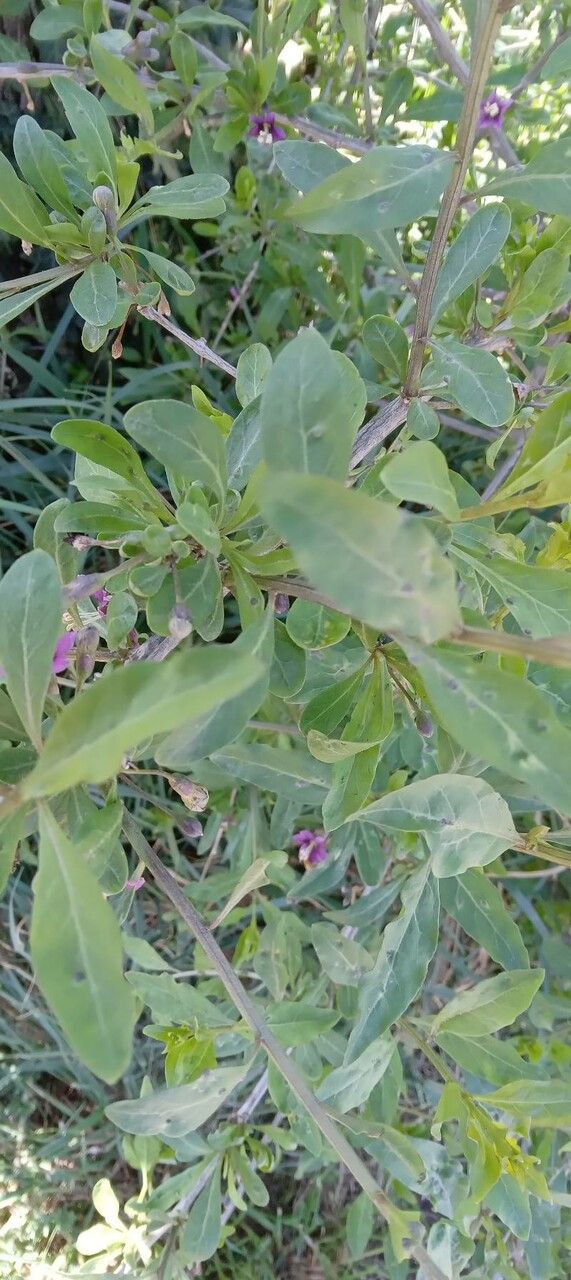
Lycium berlandieri, commonly known as Berlandier's wolfberry or chaparral wolfberry, is a flowering plant in the nightshade family. It is native to the southwestern United States and northern Mexico, thriving in arid and semi-arid regions. The plant typically reaches a height of 1 to 2 meters and features thorny branches with small green leaves. From May to July, it produces small purple flowers, followed by red berries that ripen from August to October.
Traditionally, indigenous peoples have used the berries of Lycium berlandieri for their medicinal properties. The berries are rich in antioxidants and have demonstrated anti-inflammatory effects. In addition to their medicinal uses, the berries have served as a food source for both humans and animals.
Lycium berlandieri is an adaptable plant that can grow in various soil types, although it prefers well-drained soils with full sun exposure. While it can tolerate drought conditions, occasional watering may be necessary during prolonged dry spells.
Overall, Lycium berlandieri is an intriguing species with both medicinal and ecological significance within its native range.
Berlandier's wolfberry demonstrates strong resistance to disease and is generally not prone to illnesses. As for care, the plant is fairly low-maintenance. When grown outdoors it needs only minimal watering, and larger specimens typically do not require pruning. Smaller plants, however, should be pruned after they have bloomed. Berlandier's wolfberryt is suitable for anyone with outdoor space, such as a garden or deck, and does not demand much gardening experience.
How to keep Lycium Berlandieri.
Light
Berlandier's wolfberry is native to open habitats, such as sunny meadows and forest margins, which provide abundant light. It does best in Full Sun but can also withstand Partial Sun, adjusting well to a range of sunlight conditions.
Temperature
Berlandier's wolfberry comes from tropical areas, where the climate is usually warm and humid. Consequently, it is adapted to high heat and moisture. It is sensitive to sudden temperature shifts and prefers a consistent temperature, so indoor temperature fluctuations should be avoided. It typically cannot tolerate cold and needs higher temperatures to grow. If the surrounding temperature falls too low, the plant may stop growing or even die.
Fertilizer
Use organic fertilizers (for example, fish emulsion or compost) instead of chemical ones for Berlandier's wolfberry. Give young plants increased nitrogen and phosphorus in spring. Work compost or fertilizer into the soil before or after planting. For established plants, apply a balanced fertilizer or one that addresses specific deficiencies in spring. Nutrient shortages lead to small leaves, short shoots, yellow or bronze foliage, sour fruit, early fruit drop, and fruit splitting.
Pruning
Berlandier's wolfberry is a drought-tolerant shrub characterized by its thorny branches and vibrant berries. To keep your plant healthy and well-shaped, prune it in early spring. This helps remove dead wood, shape the plant, and improve sunlight penetration. Ensure you use clean tools to prevent the spread of disease, and refer to horticultural resources for best practices.
Botanical profile.
- Plant Type
- Shrub
- Life Cycle
- Perennial
- Genus
- Lycium
- Family
- Solanaceae
- Hardiness Zone
- 7-11
- Mature Height
- 1.83 m to 3.66 m
- Mature Spread
- 0.91 m to 2.13 m
- Leaf Color
- Green
- Leaf Type
- Deciduous
- Flower Color
- Lavender, White
- Flower Size
- 1.02 cm to 1.52 cm
- Bloom Time
- Mid spring, Late spring, Summer, Early fall
- Planting Time
- Spring, Summer
- Harvest Time
- Summer, Fall
- Native Area
- Mexico
Other names.