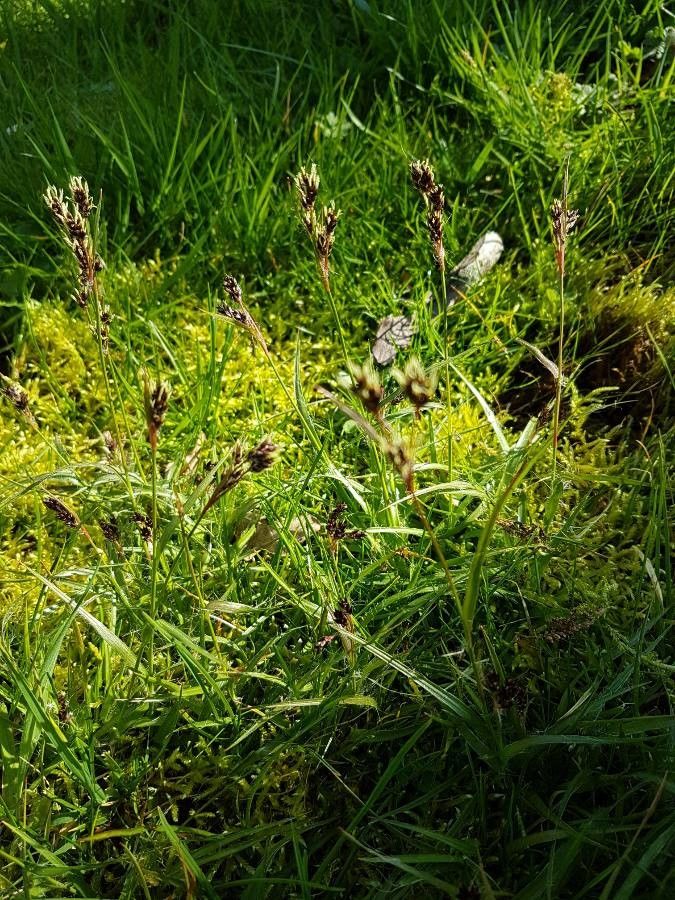
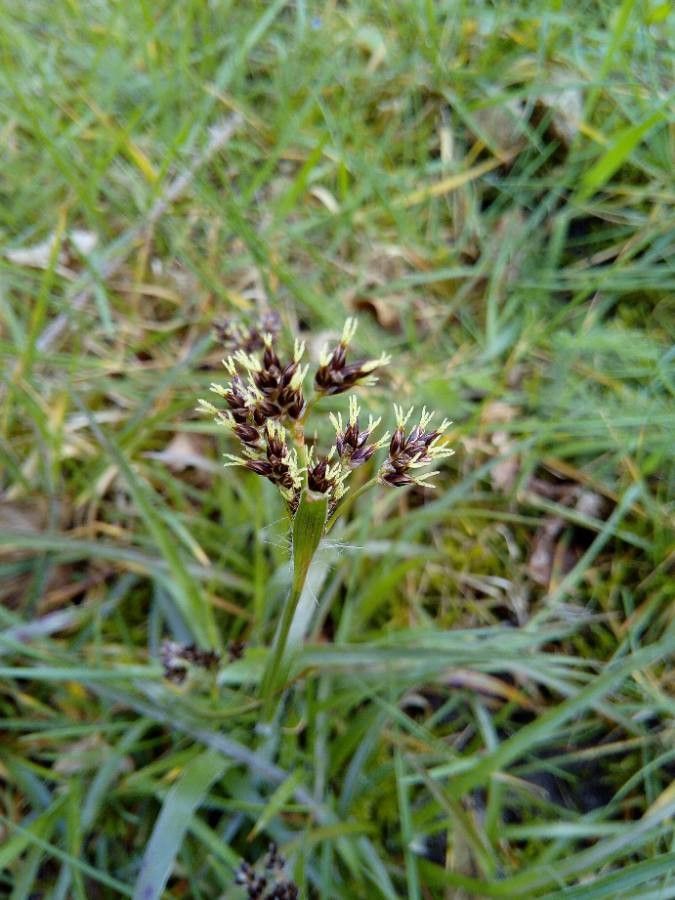
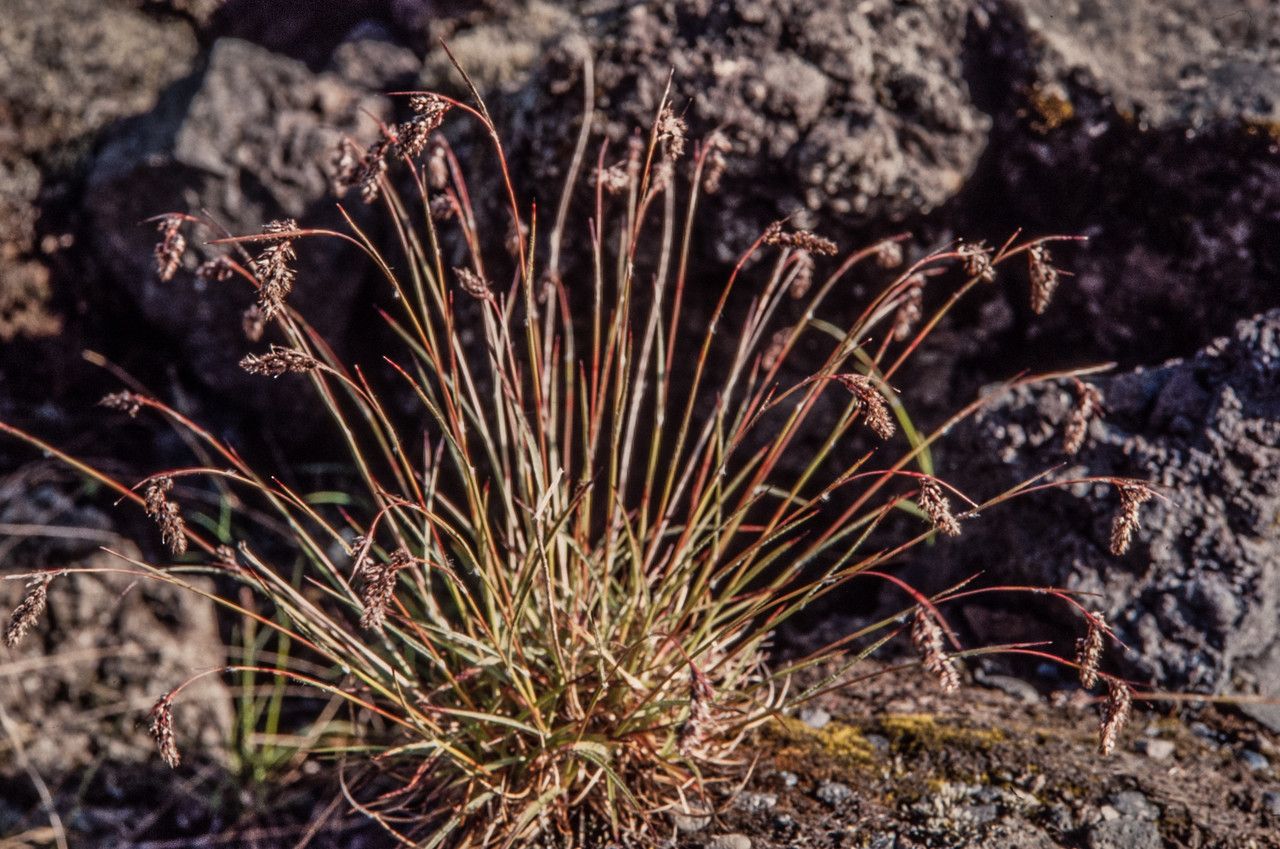
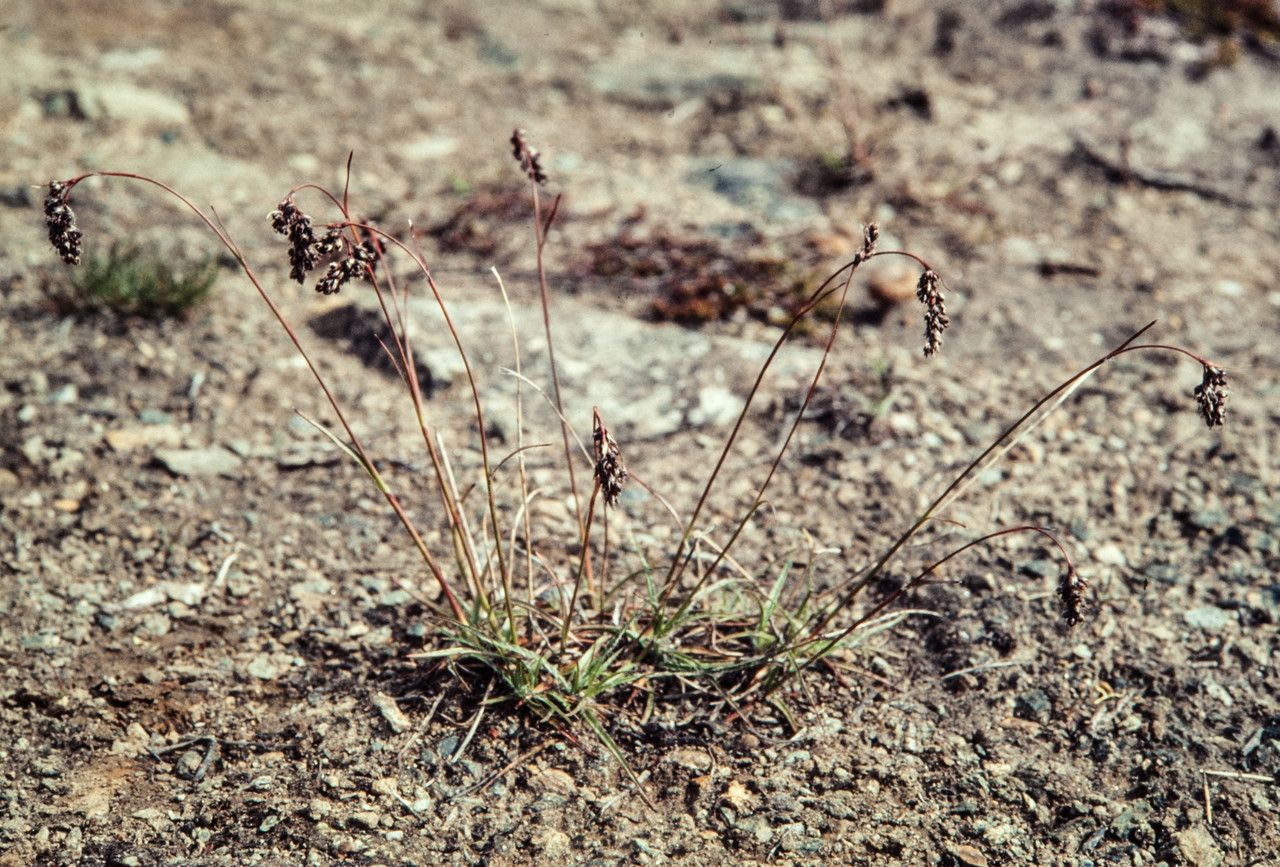
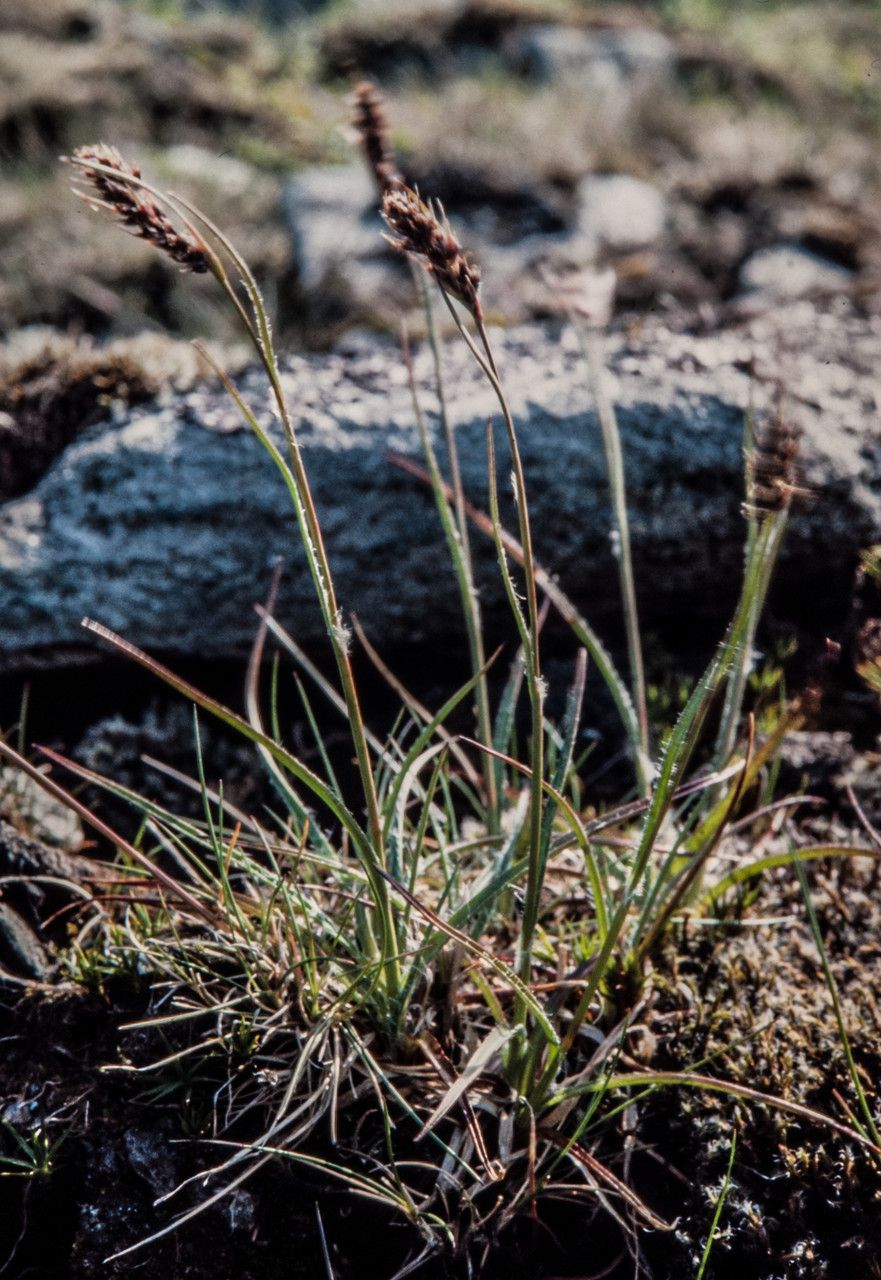
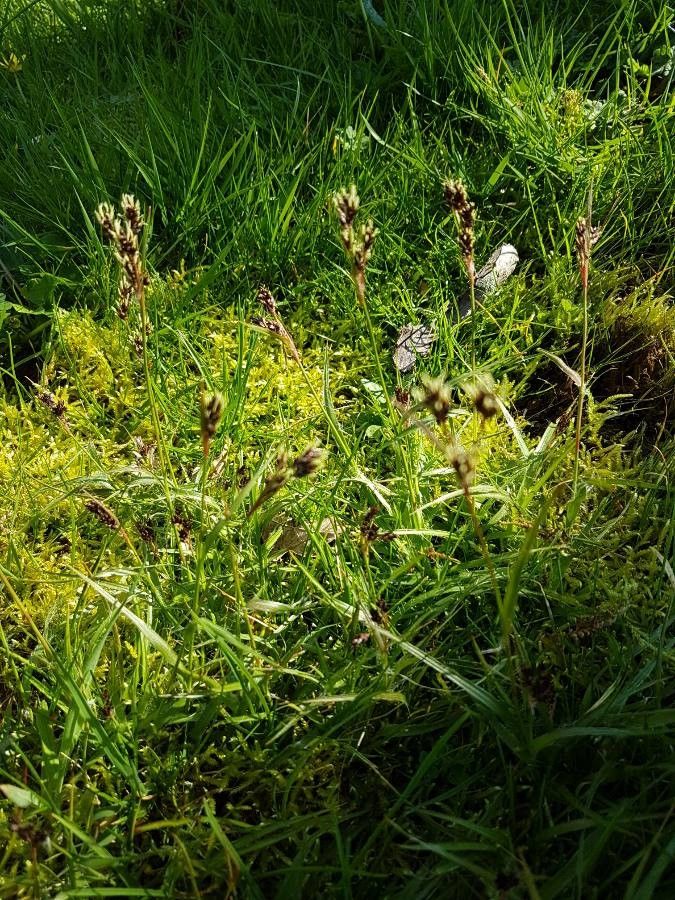
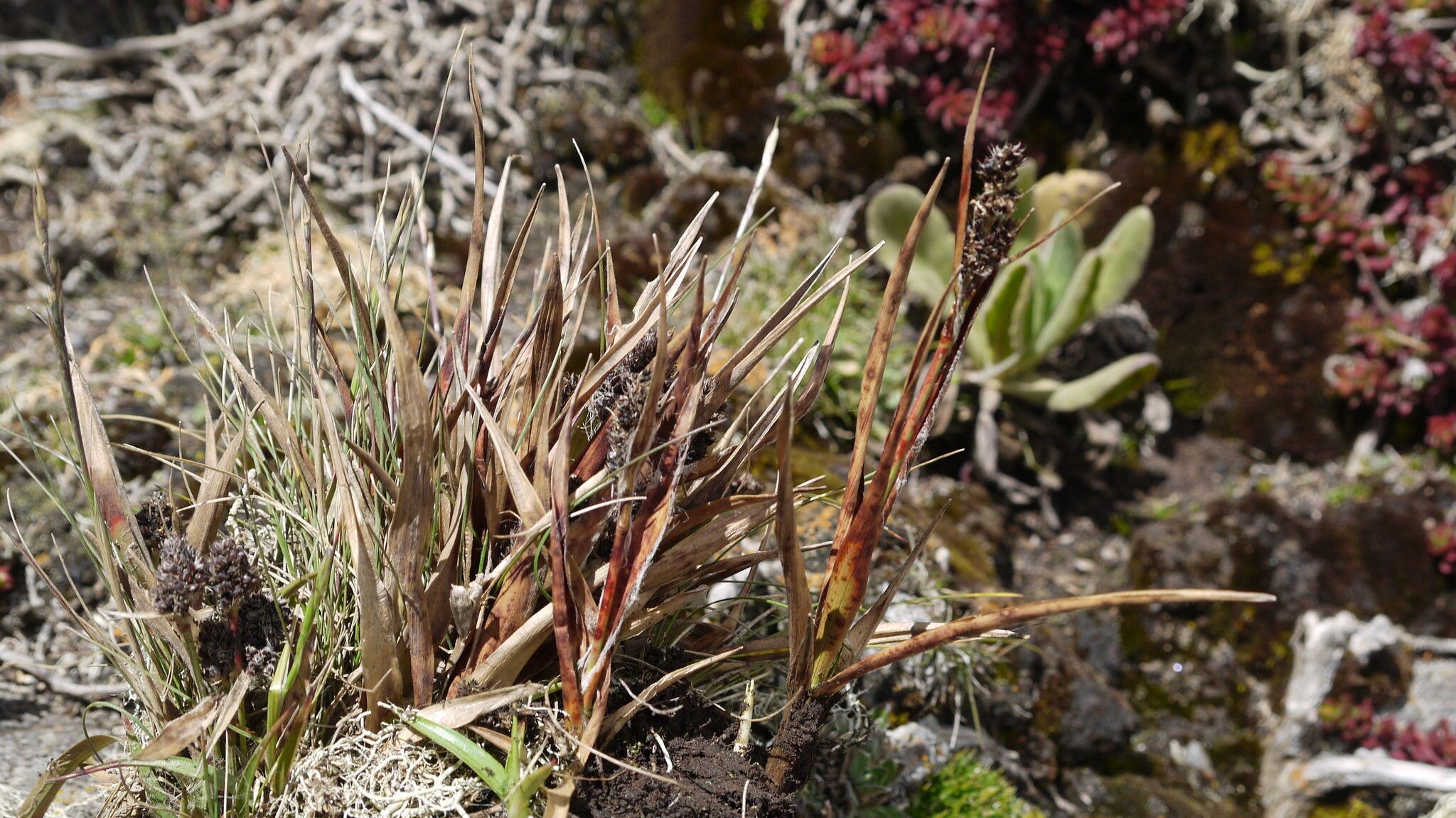
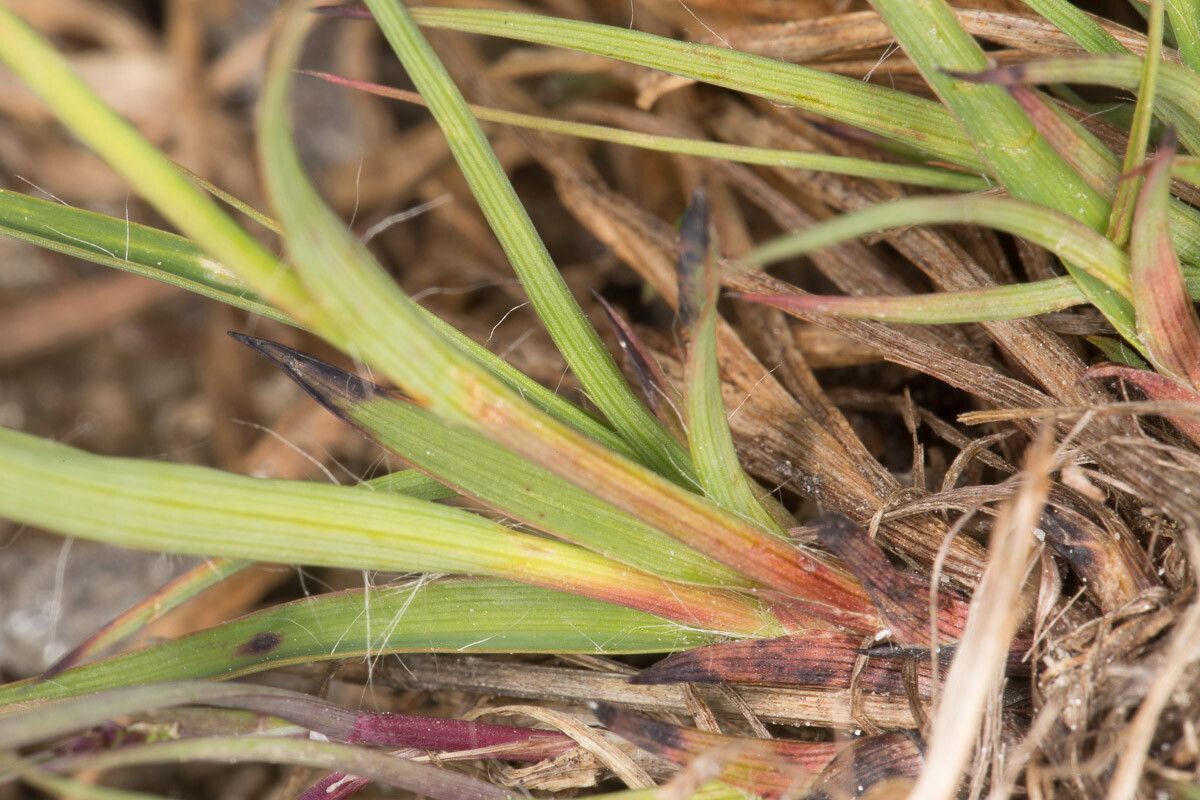
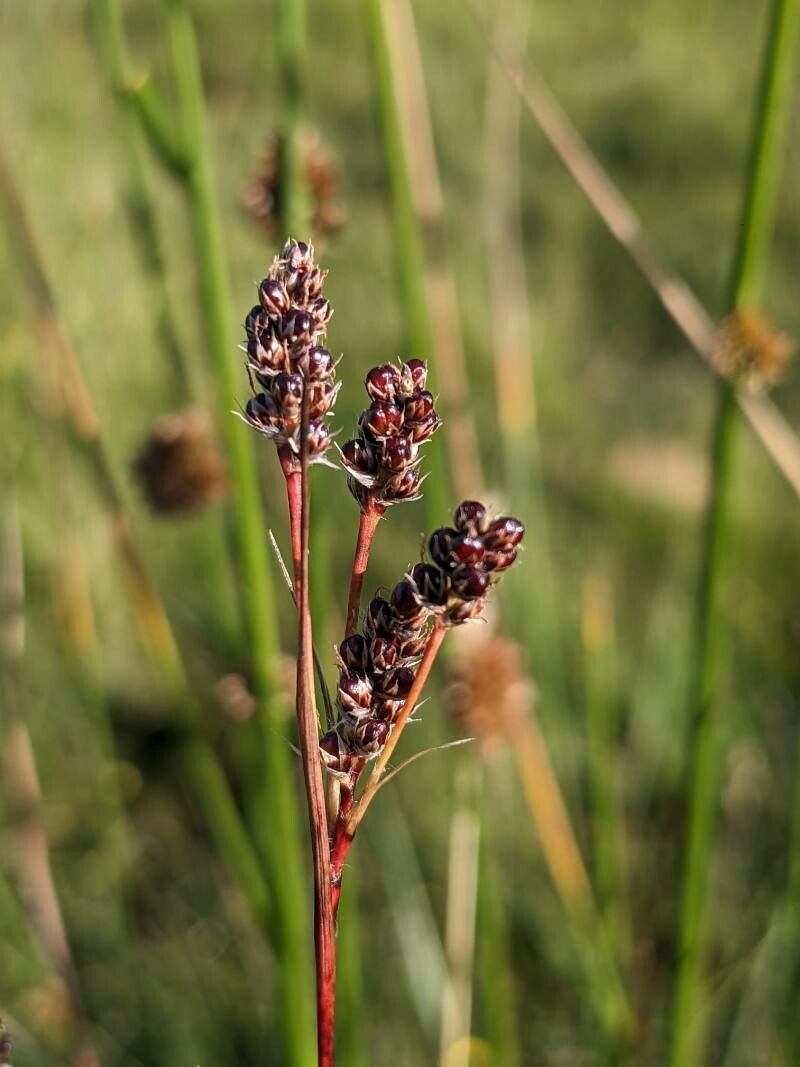
Luzula spicata is a species of flowering plant in the rush family known by the common name spiked woodrush. It has a circumpolar distribution, occurring throughout the northern Northern Hemisphere in Europe, Asia, and North America. It grows in subalpine and alpine climates. It occurs at low elevations in colder regions, such as tundra; farther south it is restricted mainly to high mountains. It is a perennial herb forming grasslike clumps of several erect, reddish stems up to about 33 centimeters in maximum height. The stem is thick and its base is buried several centimeters in the soil where it attaches to the roots. The inflorescence is an array of several clusters of brown bristle-tipped flowers. The surrounding bracts and the sheaths surrounding the leaf bases are lined with hairs.
Spiked woodrush is resistant to disease and is generally not susceptible to illnesses. Regarding care, this plant is fairly low maintenance. When grown outdoors it needs minimal watering, and larger plants typically do not need pruning. Smaller plants, however, should be pruned after they have finished blooming. Spiked woodrush is suitable for anyone with outdoor space, such as a garden or deck, and does not demand extensive care experience.
How to keep Luzula Spicata.
Light
Spiked woodrush is a sun-loving, perennial herbaceous plant native to open habitats and commonly found in meadows and grasslands. It prefers full sun but can also tolerate partial sun.
Water
Spiked woodrush thrives in the cool, moist environments typical of alpine regions and prefers soil that remains consistently damp. It needs weekly watering and has a highly efficient root system that rapidly absorbs water, which helps it withstand areas with variable rainfall.
Fertilizer
Spiked woodrush benefits from extra nutrients to encourage healthy new growth. In spring, adding a layer of compost around the plant’s base will effectively supply the needed nourishment. Fertilizing supports vigorous development and helps the plant fend off diseases and pests.
Pruning
The spiked woodrush features grass-like leaves that grow in dense tufts and has distinctive spikelet flowers. To maintain its health, prune it in early spring before new growth begins, removing any dead leaves to improve air circulation. Additionally, thin out crowded stems to promote healthier growth. Be sure to use sterilized tools to prevent the spread of diseases.
Botanical profile.
- Plant Type
- Grass
- Life Cycle
- Perennial
- Genus
- Luzula
- Family
- Juncaceae
- Hardiness Zone
- 3-8
- Mature Height
- 6 cm to 32 cm
- Mature Spread
- 5 cm to 15 cm
- Leaf Color
- Green, Blue
- Leaf Type
- Evergreen
- Flower Color
- Brown, Tan
- Flower Size
- 0.25 cm to 0.51 cm
- Bloom Time
- Late spring, Early summer
- Planting Time
- Spring, Autumn
- Harvest Time
- Mid summer, Late summer
Other names.
Reader questions.
What should I do if I give my Spiked woodrush too much or too little water?
To ensure optimal growth of this beautiful ornamental grass, proper watering is crucial. When planted in the ground, any watering issues can typically be resolved. However, in a container, both too much or too little water can quickly lead to the demise of Spiked woodrush. Insufficient watering can cause stunted growth, while overwatering can cause yellow leaves with brown tips. Additionally, underwatering can result in drooping leaves, weak seed head production, and browned foliage. If you suspect improper watering, the first step is to determine whether the issue is excessive or inadequate watering. If overwatering is the problem, immediately cease watering. Patience may be required, as it can take weeks for heavy soils to dry out. Once new growth is observed, test the moisture level of the soil to decide whether additional watering is necessary. Conversely, if underwatering is the issue, simply give the grass a thorough watering and observe if it rebounds. Importantly, remember that deep, infrequent watering is favorable over frequent shallow watering. This encourages the development of deep roots in the grass, making it more resilient to drought and less susceptible to watering-related problems.
Why should I put fertilizer on my Spiked woodrush?
Fertilizing Spiked woodrush is important for a few reasons. Firstly, it provides your plant with the necessary nutrients for healthy new growth. Additionally, these extra nutrients also benefit the health of the older growth and improve your plant's ability to resist diseases and pests.
How frequently should I water my Spiked woodrush plant?
The watering needs of Spiked woodrush vary depending on the planting location. Generally, watering this grass once a week is recommended. However, in hot climates, watering once or twice a week during the summer may be necessary. In moderate climates, watering once every seven days or more may be sufficient. Grass in containers usually requires more frequent watering compared to grass in the ground. Additionally, the location of the grass, whether in full sun or part shade, also affects watering frequency. Shaded grasses need less frequent watering than those in the ground. It is important to water Spiked woodrush only when the soil is dry. To determine when to water, you can press your finger a couple of inches into the soil or check the weight of a potted grass using a portable scale. Signs of insufficient water include folded blades and thinner appearance. Despite its drought tolerance, regular and deep watering will result in vibrant color. In its natural habitat, Spiked woodrush grows in open scrubland, exposed to extreme heat, bright sun, and intermittent rain. While this grass is drought-resistant, it still requires care and attention. Consistent watering is recommended for optimal growth. Newly planted Spiked woodrush will require more frequent watering until it establishes deep roots. For potted grass, the soil may dry out quickly, especially if exposed to prolonged direct sunlight. Testing the soil every 3 to 4 days and watering when dry is necessary. In-ground Spiked woodrush generally needs less watering, depending on the soil type. Clay soil retains moisture below the surface even if it feels dry on top, while sandy soil drains quickly and requires more frequent watering.
When should I fertilize my Spiked woodrush?
To ensure the survival of Spiked woodrush in your garden, it is important to understand the appropriate timing for fertilization. Being a plant that doesn't require many nutrients and doesn't thrive when it is dying back, it doesn't need additional fertilization. While you may choose to apply diluted fertilizer at the beginning of the growing season, it is generally not suggested. Instead, a good alternative would be to apply mulch or compost around the base of the plant.
What do I need to be cautious about when watering my Spiked woodrush in various seasons, climates, or growth stages?
You can easily determine if you are watering enough by observing how fast your grasses are growing. Spiked woodrush, for example, tends to double in size within a year during the hottest months. If the weather is hot but your grass is not growing vigorously, you may need to adjust your watering schedule. In winter, you could potentially water just once a month, but it's still a good idea to check the soil for moisture. During the growth cycle in warmer months, the grass will require more water than usual. However, during winter and cooler months, the need for water will decrease significantly. The key thing to remember about Spiked woodrush is to always let the soil dry out completely before watering.
When is the best time to not fertilize my Spiked woodrush?
If you don't use packaged fertilizers, there's no need to worry about when to stop feeding Spiked woodrush. Just add a layer of compost or mulch in the spring, which will be sufficient to keep the plant happy all year. During the winter when the plant is dormant, there's no need to mulch or compost.
What kind of fertilizer does my Spiked woodrush need?
Instead of rushing out to buy fertilizer from a garden center, you can simply use compost in the spring to provide the necessary nutrients for spiked woodrush. Additionally, if you mulch your garden annually, the bark will serve as a consistent source of food for the plant, keeping it healthy and content.
How do I give nutrients to my Spiked woodrush plant?
If you are using mulch or compost for Spiked woodrush, the steps are the same. First, place a layer of the chosen material, ensuring it covers the plant's base. If you decide to use both mulch and compost, decrease the amount of compost used. Additionally, applying a layer of mulch can provide dual benefits by retaining moisture in the soil and nourishing your plant.
What will happen if I give too much fertilizer to my Spiked woodrush?
If you don't use liquid or granulated plant food, there's no need to worry about over-fertilizing Spiked woodrush. However, if you are adding fertilizer to the soil, be careful to avoid root burn. Excessive nitrogen and other nutrients can harm the plant's sensitive roots and cause it to slowly die off.