Lunaria rediviva, commonly known as perennial honesty or moonwort, is a herbaceous perennial plant that belongs to the Brassicaceae family. Native to Europe and Asia, it thrives in woodlands, meadows, and rocky areas. The plant can grow up to 60 cm in height with a spread of up to 45 cm.
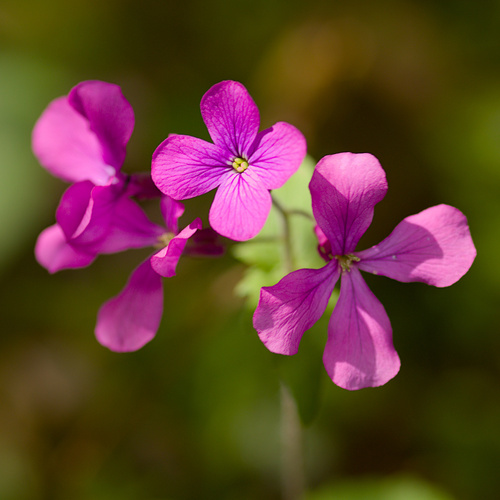
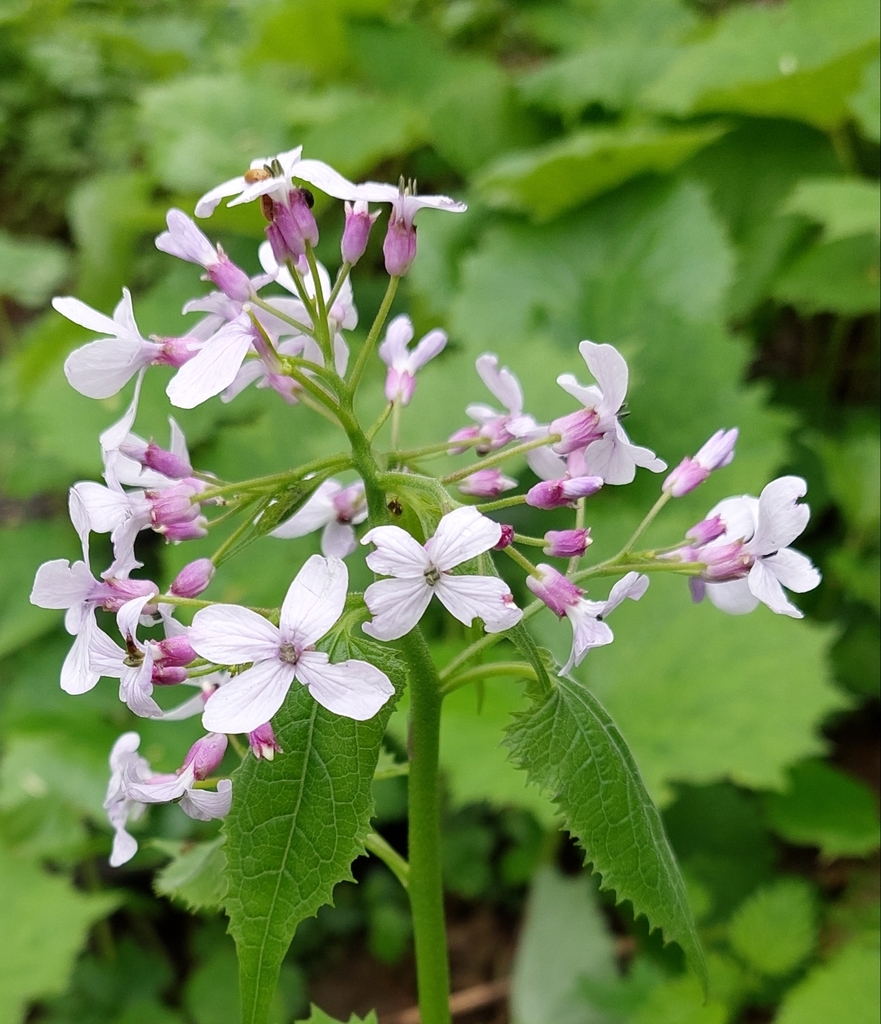
The leaves of Lunaria rediviva are heart-shaped with serrated edges and are alternately arranged on the stem. The flowers, which are pale purple or white, have four petals that form a cross shape. These blooms appear from late spring through early summer.
The most distinctive feature of Lunaria rediviva is its seed pods, which resemble silver coins when they dry out in late summer or early autumn. These pods have been used for decorative purposes for centuries.
Lunaria rediviva prefers well-drained soil in partial shade but can also tolerate full sun if the soil remains moist. It is relatively easy to grow from seed, though it may take several years before the plant flowers.
In traditional medicine, Lunaria rediviva has been used as an expectorant and diuretic to treat respiratory issues such as coughs and bronchitis, as well as urinary tract infections.
Overall, Lunaria rediviva is an attractive plant that adds beauty to any garden. Additionally, its medicinal properties have been utilized for centuries by various cultures around the world.
Perennial honesty is fairly disease-resistant and usually not prone to illnesses. However, it can be affected by pests and diseases present in its environment, though these problems are typically mild. For care, this plant needs moderate maintenance. Regular pruning is required to keep a tidy appearance and support healthy growth. Fertilizing can also encourage flowering. Perennial honesty is well suited to anyone with outdoor space, such as a garden or patio, and does not demand extensive care experience. It may need more attention when grown indoors.
How to keep Lunaria Rediviva.
Light
Perennial honesty prefers areas with moderate light for healthy development, though it can adapt to stronger light levels if needed. Native to habitats with filtered light, it thrives in those conditions. Excessive or insufficient light can harm it.
Water
Perennial honesty thrives in consistently moist soil with moderate humidity, similar to its native European woodland habitats. Watering it weekly mirrors these natural conditions, supporting the plant best during its active growing season when its water needs are highest.
Temperature
Perennial honesty is native to temperate regions and prefers temperatures between 41 and 89.6 °F (5 and 32 ℃). It tolerates seasonal changes but may benefit from some shading during very hot summer conditions.
Fertilizer
The best time to fertilize Perennial honesty is in early spring, when it is coming out of dormancy and beginning active growth. Fertilization supplies essential nutrients for healthy development. Although Perennial honesty has fairly low fertilizer requirements, feeding it once a year can improve its survival and encourage stronger, longer-lasting flowers.
Pruning
Perennial honesty has heart-shaped leaves and fragrant flowers. It benefits from pruning in the spring to remove dead stems. Regularly deadheading the plant enhances its blooming. Using clean tools prevents disease, and effective pruning helps maintain a strong structure. This results in a healthy and vibrant display throughout the growing season.
Botanical profile.
- Plant Type
- Herb
- Life Cycle
- Perennial
- Genus
- Lunaria
- Family
- Brassicaceae
- Hardiness Zone
- 5-8
- Mature Height
- 91 cm
- Mature Spread
- 30 cm to 46 cm
- Leaf Color
- Green
- Leaf Type
- Deciduous
- Flower Color
- Lavender, White
- Flower Size
- 2.54 cm
- Bloom Time
- Mid spring, Late spring, Early summer
- Planting Time
- Autumn, Spring
- Harvest Time
- Mid summer, Late summer, Early fall
- Native Area
- Sweden, Austria, Czech Republic, Slovakia, Montenegro, Bulgaria, Poland, Croatia, Slovenia, Belarus, Ukraine, Serbia, Russia, Lithuania, Hungary, Germany, Italy, Spain, Switzerland, Denmark, Estonia, Albania, Romania, Latvia, Belgium, France
Other names.
Reader questions.
How should I water my perennial honesty plant?
To ensure the health of the Perennial honesty plant, it is best to water it using filtered water at room temperature. Tap water may contain particles that can harm the plant. Since the Perennial honesty is adapted to warm environments, it is important to avoid using cold water, which may shock the plant. It is also recommended to avoid overhead watering as it can lead to problems with the foliage. Instead, gently pour filtered room temperature water onto the soil until it is thoroughly soaked. This will provide benefits to the plant by moistening the roots and allowing them to spread in the soil to gather nutrients.
When should I fertilize my Perennial honesty?
The best time to fertilize a Perennial honesty is in the late winter to early spring when it is coming out of dormancy and entering a period of active growth. Fertilizing during this time promotes healthy growth and helps the plant start the season strong. While early spring is generally the most beneficial time to fertilize, fertilizing in the fall is also acceptable. However, it is not recommended to feed a Perennial honesty during the summer or winter seasons.
What are the sunlight requirements for plants in general?
Plants generally require different amounts of sunlight, categorized broadly as partial sun and full sun. Partial sun refers to about 3-6 hours of sunlight, whereas full sun means the plant needs more than 6 hours of sunlight for optimal growth. It's important to observe the movement of sunlight through your garden to choose spots that offer a balanced environment of light and shade, ensuring your plants thrive.
What is the native climate for Perennial honesty?
Perennial honesty, botanically known as Lunaria rediviva, thrives in temperate climates. It prefers temperatures ranging from 41°F (5°C) to 89.6°F (32°C), showing strong adaptability to seasonal temperature fluctuations. While it has strong cold resistance and usually doesn't require special frost protection measures in winter, care should still be taken if winter temperatures are expected to drop below -25°C. In such cases, protecting the plant with soil or straw and watering it abundantly before the first freeze of autumn to ensure the soil remains moist can be beneficial. This preparation helps in preventing drought and water scarcity for the plant during the cold winter and early spring months.
What should I do if I give my Perennial honesty plant too much water or too little water?
Overwatering is a more common issue and can harm your Perennial honesty. When this plant gets too much water, its stems and leaves may wilt and turn yellow. Over time, overwatering can also cause diseases like root rot, mold, and mildew, which can kill the plant. Underwatering is less likely, but still possible. In this case, the leaves of the plant will become brittle and brown. It's important to recognize the signs of overwatering early on. Some diseases, like root rot, can't be fixed if you wait too long. If you notice signs of overwatering, reduce how often you water the plant and check the soil drainage. If the soil doesn't drain well, replace it with a loose, well-draining potting mix. If your Perennial honesty seems to be getting too little water, simply water it more frequently until the signs of underwatering disappear.
Why should I put fertilizer on my Perennial honesty plant?
Fertilization plays a vital role in the growth of Perennial honesty and other plants. It provides essential nutrients that support both the above-ground and below-ground development of the plant. However, Perennial honesty has relatively low fertilization needs and can sometimes thrive without it. Nonetheless, annual fertilization can greatly benefit Perennial honesty by promoting its survival and enhancing the quality and longevity of its flowers. Therefore, those who wish to maintain the best appearance of their Perennial honesty should prioritize annual fertilization.
What are the essential lighting conditions for Perennial honesty?
Perennial honesty thrives in zones of moderate light exposure but can adapt to higher levels of sunlight if necessary. It originally grows in habitats with filtered light, making such conditions ideal. Both excessive and insufficient light exposure can negatively affect its growth. In cases where natural sunlight is inadequate, especially during winter or in dimmer indoor locations, artificial lighting can be crucial. The use of LED lights, which can be tailored to provide specific light wavelengths, is advisable. Depending on their sunlight needs, plants may require 10-50W/sq ft of artificial light, with the light source placed 12-36 inches above the plant for 8-12 hours per day to mimic natural daylight hours.
How does Perennial honesty react to low and high temperatures?
Perennial honesty is notably tolerant to cold, flourishing best when the temperature remains above 5°C. However, during winter, it's crucial to ensure the temperature stays above -20°C. Dropping below -25°C might not show immediate detrimental effects during winter, but it can lead to decreased sprouting or even no sprouting in spring. To mitigate this, removing any parts that fail to sprout in spring is recommended. On the flip side, during summer, it's important to keep the plant below 32°C. Exceeding 35°C may result in lighter colored leaves, susceptibility to curling, sunburn, and in severe cases, wilting and drying of the plant. To counteract these effects, trimming sunburned and dried parts, relocating the plant to a shaded location, or using a shade cloth during peak sun hours and maintaining soil moisture through watering in the morning and evening are effective solutions.
How often should I water my Perennial honesty plant?
If your Perennial honesty plant is in a pot, the most precise way to determine if it needs water is by checking the soil with your finger. If the first two to three inches of soil feel dry, it's time to water. If you grow your Perennial honesty outdoors in the ground, you can use a similar method to test the soil. Again, if the first few inches of soil are dry, it's time to water. Typically, you'll need to water this plant about once a week during spring and early fall. However, during extremely hot weather, you may need to water it twice or more per week. It's worth noting that mature, well-established Perennial honesty plants can tolerate drought well.
When is it best to not put fertilizer on my Perennial honesty plant?
Fertilizing Perennial honesty should only be done in late winter and early spring, as this plant has low fertilization needs and one annual feeding is enough. Fertilizing during spring, summer, and fall can easily lead to overfertilization, unless you missed fertilizing in the spring, in which case it is okay to fertilize in the fall. Additionally, there is no need to fertilize this plant during the winter when it is in a dormant growth phase and does not put forth new growth.
What symptoms indicate light deficiency or excess in Perennial honesty?
Perennial honesty exhibits various symptoms under insufficient or excessive light conditions. Light deficiency may lead to smaller leaves, leggy growth, premature leaf drop, halted growth, lighter-colored leaves, and lack of new growth. Conversely, excessive light can cause chlorosis, sunscald, leaf curling, wilting, and leaf scorching. These symptoms reflect the plant's struggle to adapt to inadequate or overly harsh lighting conditions.
How much water does my Perennial honesty plant need?
When watering your Perennial honesty, don't be afraid to give it a generous amount of water. Make sure the top two to three inches of soil are dry before watering, and then water thoroughly to soak the entire soil. You should add enough water to see excess water flowing out of the drainage holes at the bottom of the pot. If you don't see excess water draining, you may have not given enough water. However, be careful not to let water accumulate in the soil, as this can be harmful to the plant. On the other hand, if water is not draining well through the pot, this could be a sign of poorly draining soil, which is not good for the plant's health. If the plant is outside, receiving about 1 inch of rain per week is sufficient.