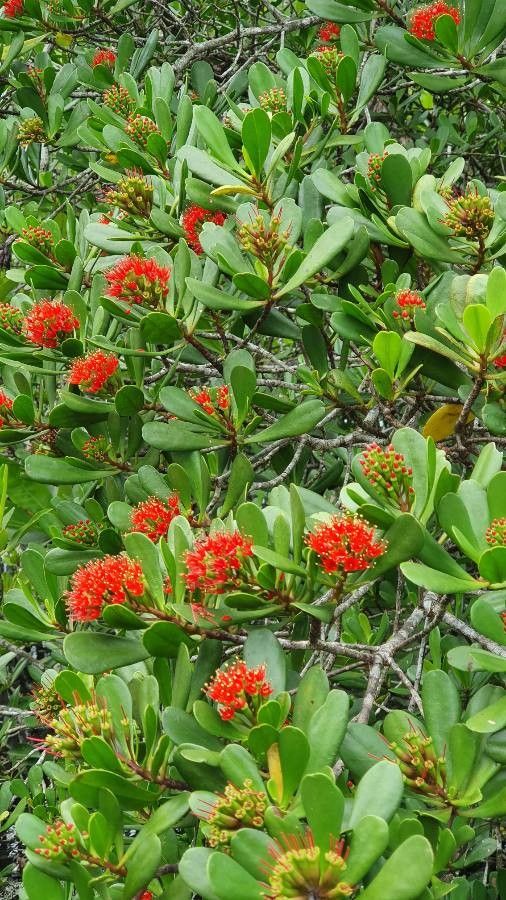
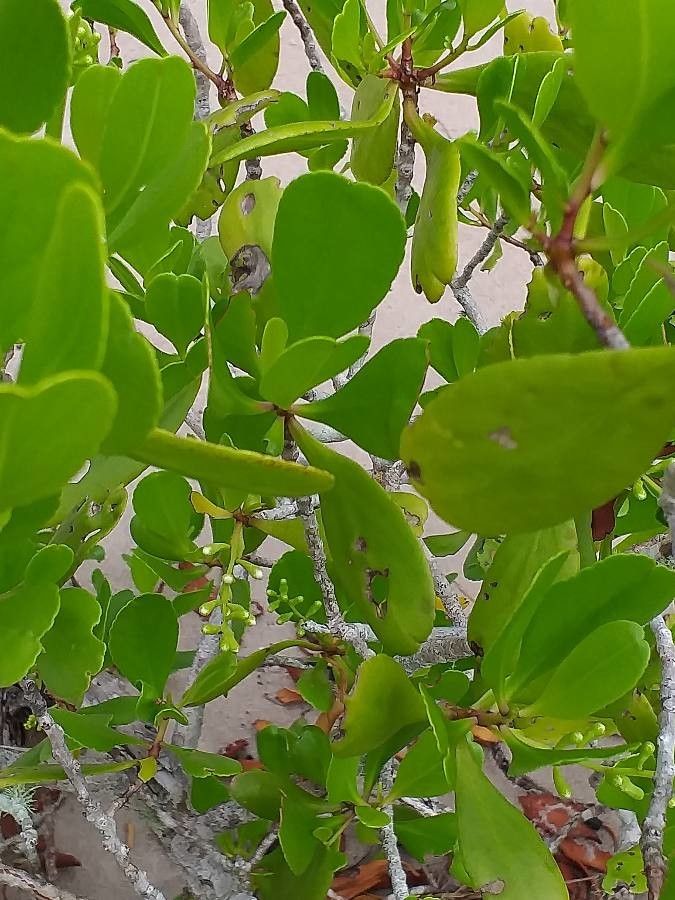
Lumnitzera is an Indo-West Pacific mangrove genus in the family Combretaceae. An English common name is black mangrove. (However, "black mangrove" may also refer to the unrelated genus Avicennia.) Lumnitzera, named after the German botanist, Stephan Lumnitzer (1750-1806), occurs in mangroves from East Africa to the Western Pacific (including Fiji and Tonga), and northern Australia.
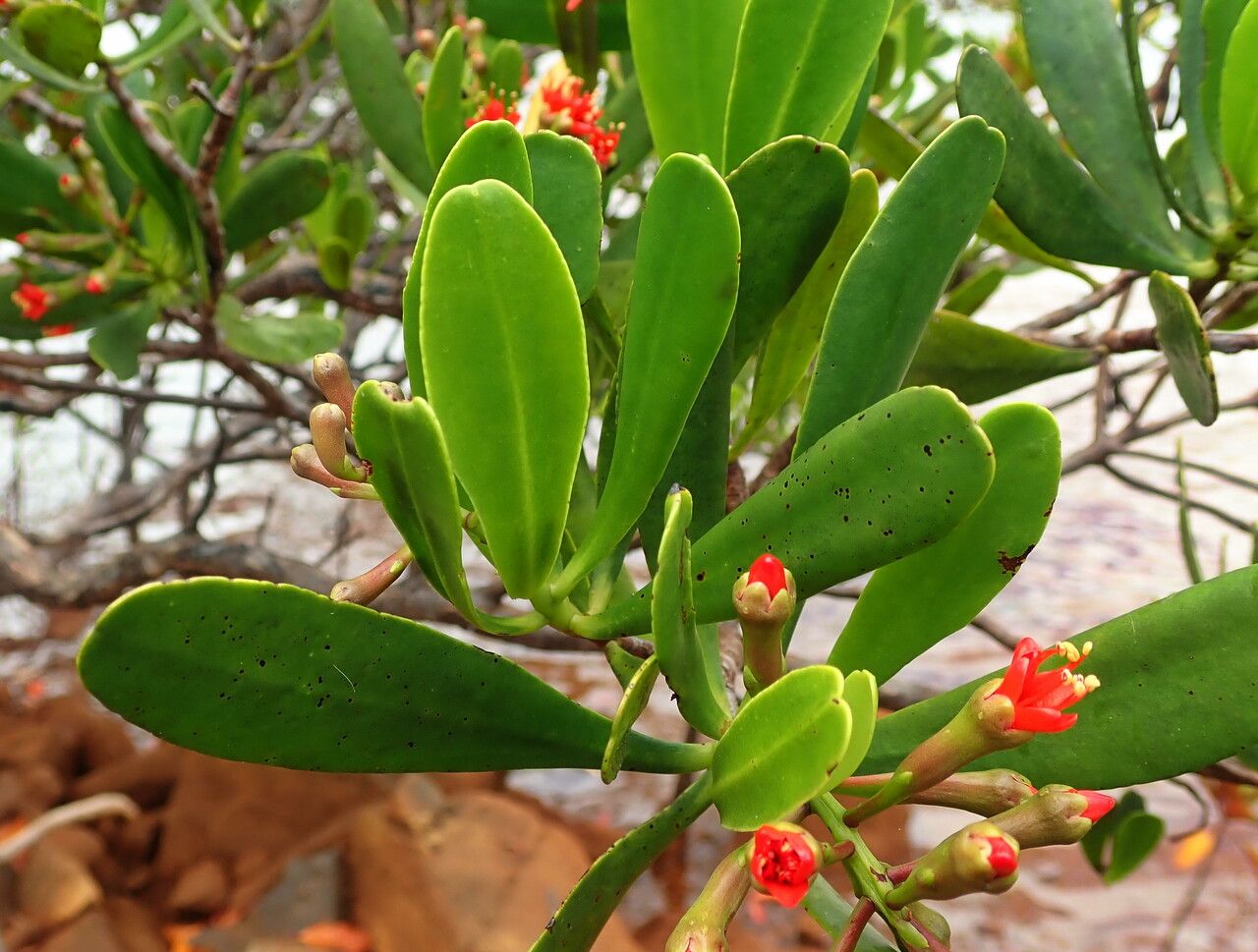
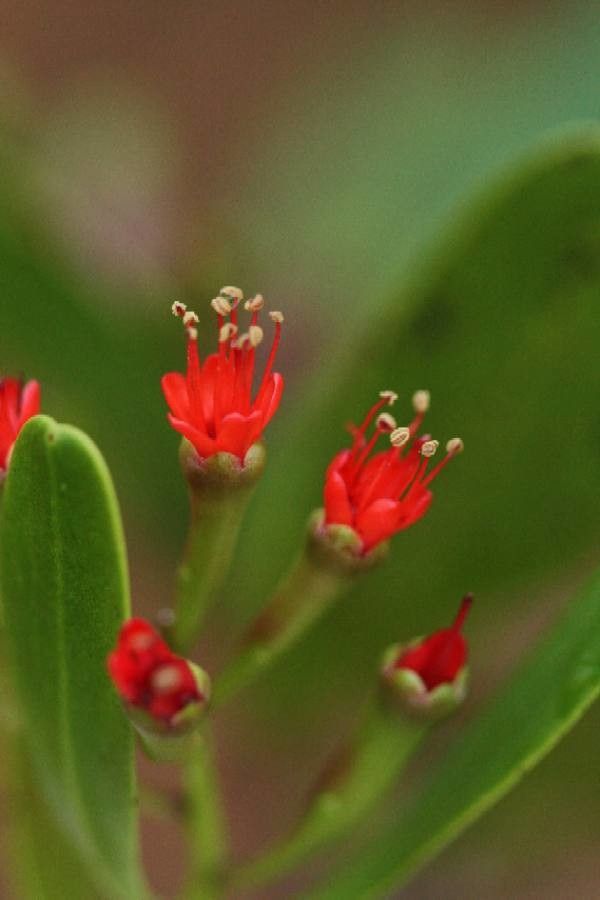
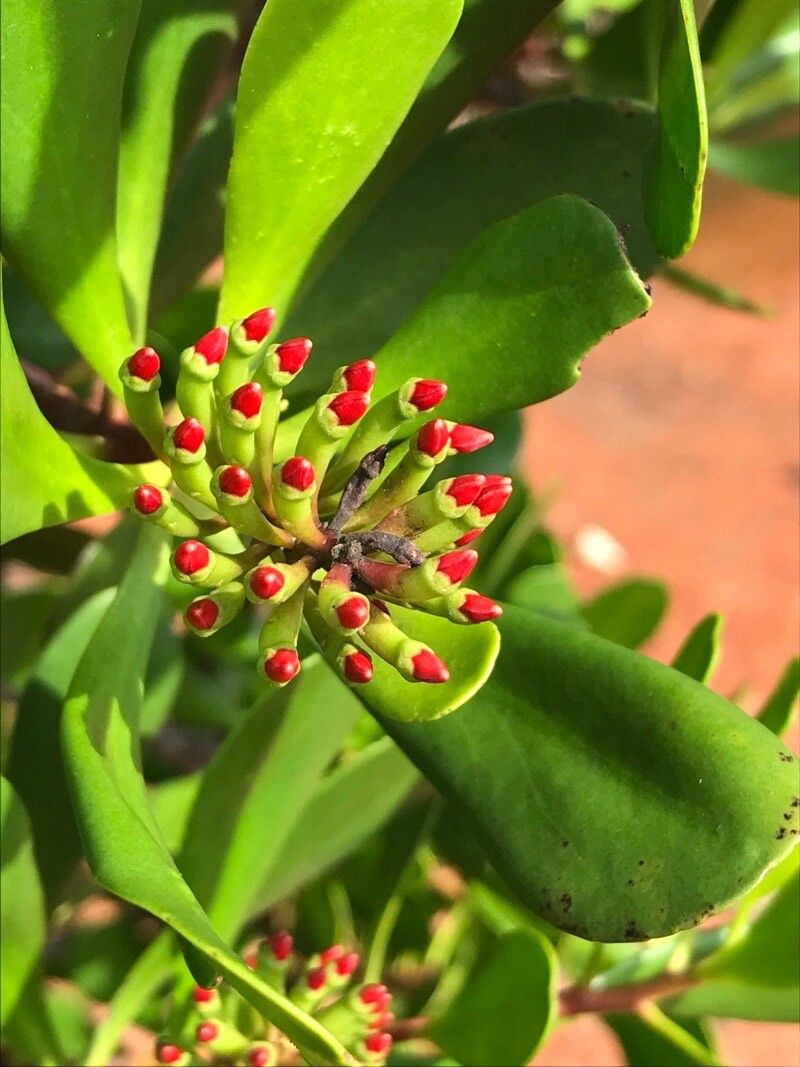
The genus has two species of similar vegetative appearance but with differing flower colour. Lumnitzera littorea has red flowers whereas Lumnitzera racemosa has white flowers. Both species have flat and spoon-shaped (spathulate) leaves with emarginate tips. L. racemosa dominates in the western part of the range and L. littorea dominates in the east. Hybrids occur within the zone of overlap (Lumnitzera × rosea).Three genera of the tropical woody family Combretaceae, Laguncularia, Conocarpus, and Lumnitzera, are found in mangroves but Lumnitzera is the only one to occur in the Indo-West Pacific mangroves, including Australia.Lumnitzera racemosa var. racemosa (Tonga mangrove, Afrikaans: Tonga-wortelboom, Zulu: Isikhaha-esibomvu) is a protected tree in South Africa.
Kirala is fairly disease-resistant and is usually not prone to illnesses. In terms of care, this plant is relatively low-maintenance. When grown outdoors it needs minimal watering, and larger plants typically do not require pruning. Smaller plants, however, should be pruned after they finish blooming. Kiralat is suitable for anyone who has an outdoor area, such as a garden or deck, and it does not demand much prior care experience.
How to keep Lumnitzera Littorea.
Light
Kirala comes from open habitats—such as sunny meadows and forest margins—that provide abundant light. It does best in Full Sun but can also tolerate Partial Sun, showing good adaptability to different light conditions.
Water
Kirala thrives in environments with consistent moisture and high humidity, making regular watering essential. Ideally, it should be watered twice a week. Although it can tolerate moderate drought, it's important to ensure adequate hydration to maintain its foliage and promote growth throughout the year, especially during peak seasons in its evergreen outdoor habitats.
Temperature
Kirala comes from tropical areas, where the climate is generally warm and humid. As a result, it is well adapted to high temperatures and humidity. It does not tolerate sudden temperature shifts and prefers a stable temperature environment, so avoiding temperature fluctuations indoors is important. It usually cannot endure cold temperatures and requires higher temperatures for growth. If the surrounding temperature falls too low, the plant may stop growing or even die.
Fertilizer
Early spring, as the Kirala breaks dormancy, is the best time to fertilize. This encourages overall growth and flower development. Fertilizing improves foliage, stems, and branches and supports flowers that are larger, more vivid, and longer-lasting. It also helps transport nutrients from the roots to the blooms and enhances the plant's health and resistance to disease.
Pruning
Kirala is known for its vibrant red flowers and dense foliage. To ensure healthy growth and proper airflow, it's best to prune the plant in early spring. Start by removing any dead or diseased branches, and then trim back overgrown areas to maintain its shape. Regular pruning helps prevent pest infestations and encourages a bushier growth habit. Always use clean, sharp tools to minimize damage to the plant.
Botanical profile.
- Plant Type
- Tree
- Life Cycle
- Perennial
- Genus
- Lumnitzera
- Family
- Combretaceae
- Hardiness Zone
- 10-12
- Mature Height
- 24.99 m
- Mature Spread
- 2.13 m to 4.88 m
- Leaf Color
- Green
- Leaf Type
- Semi-evergreen
- Flower Color
- Red
- Flower Size
- 3.05 cm to 4.57 cm
- Bloom Time
- Late spring, Summer, Early fall
- Planting Time
- Spring, Summer, Autumn
- Harvest Time
- Late summer, Fall
- Native Area
- Sri Lanka, Malaysia, Indonesia, Cambodia, Vietnam, Myanmar, Philippines, Singapore, Fiji, Brunei, China
Reader questions.
What are the sunlight requirements for Kirala?
Kirala (Lumnitzera littorea) thrives in conditions that meet its specific sunlight needs. For full sun exposure, it requires above 6 hours of sunlight daily. If the plant is in partial sun, it should receive about 3-6 hours of sunlight each day. It's important to observe the movement of sunlight through your garden to find the ideal spots that offer a perfect balance of light and shade, ensuring the plant's well-being and happiness.