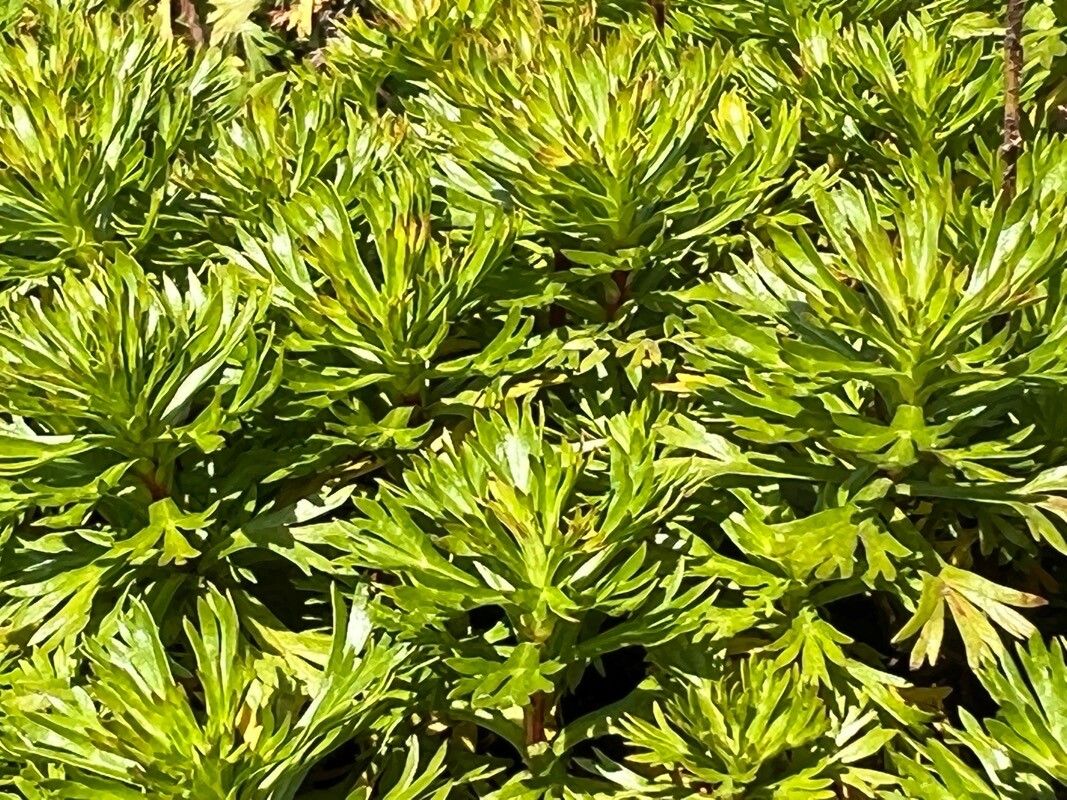
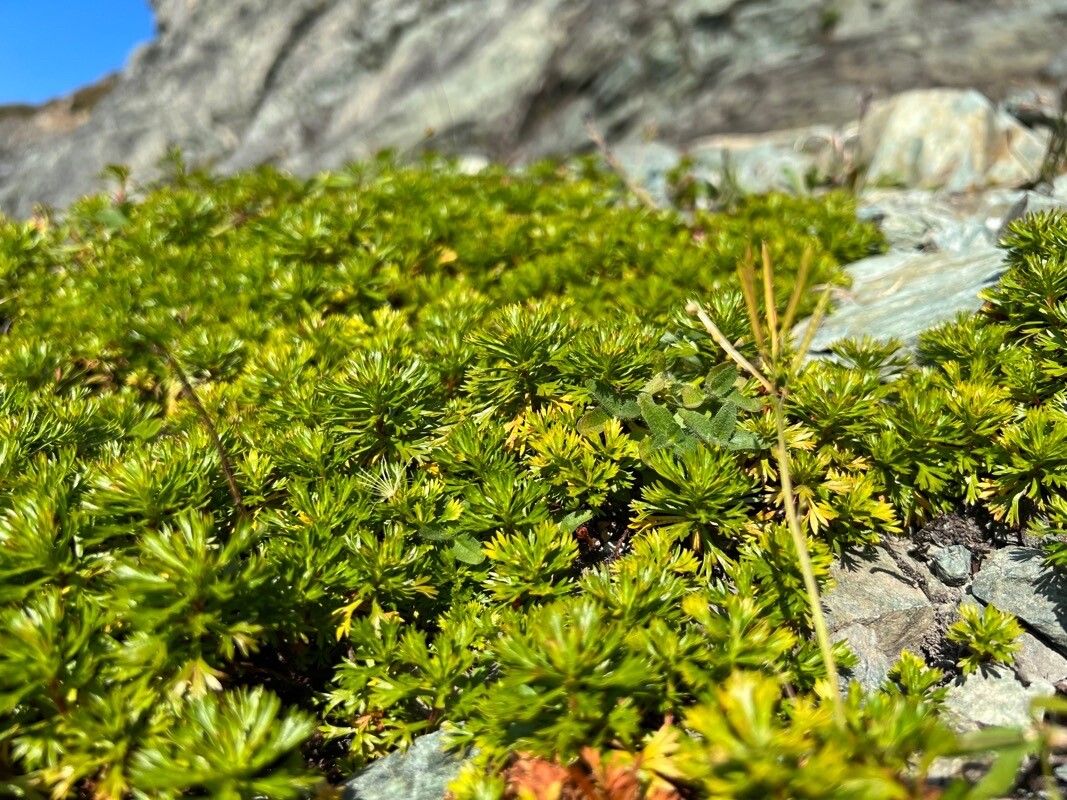
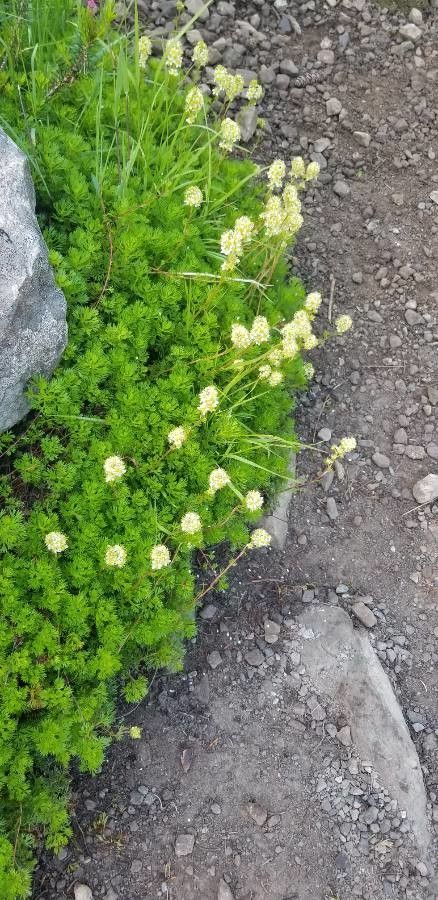
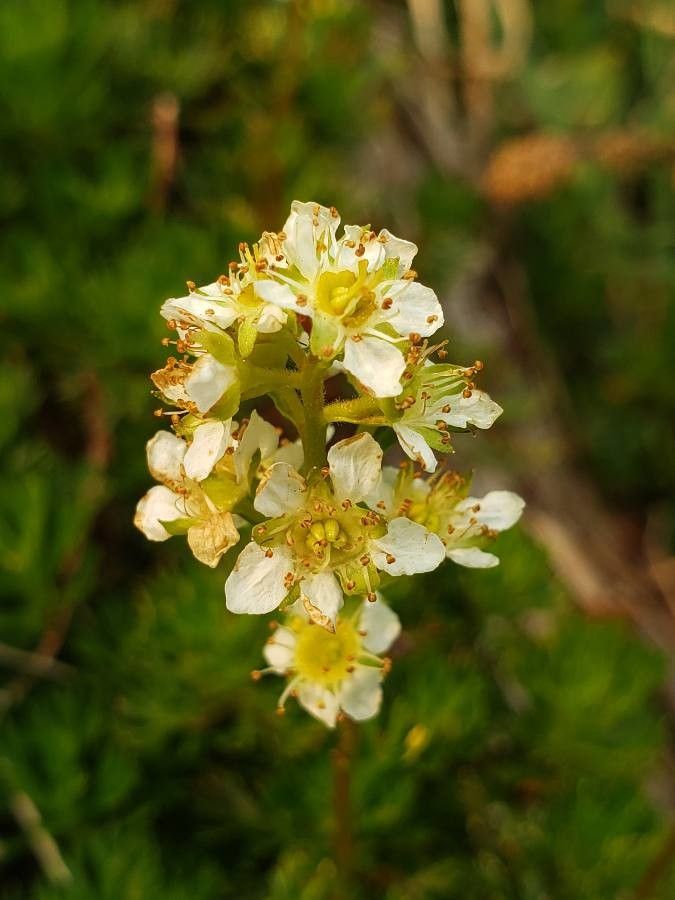
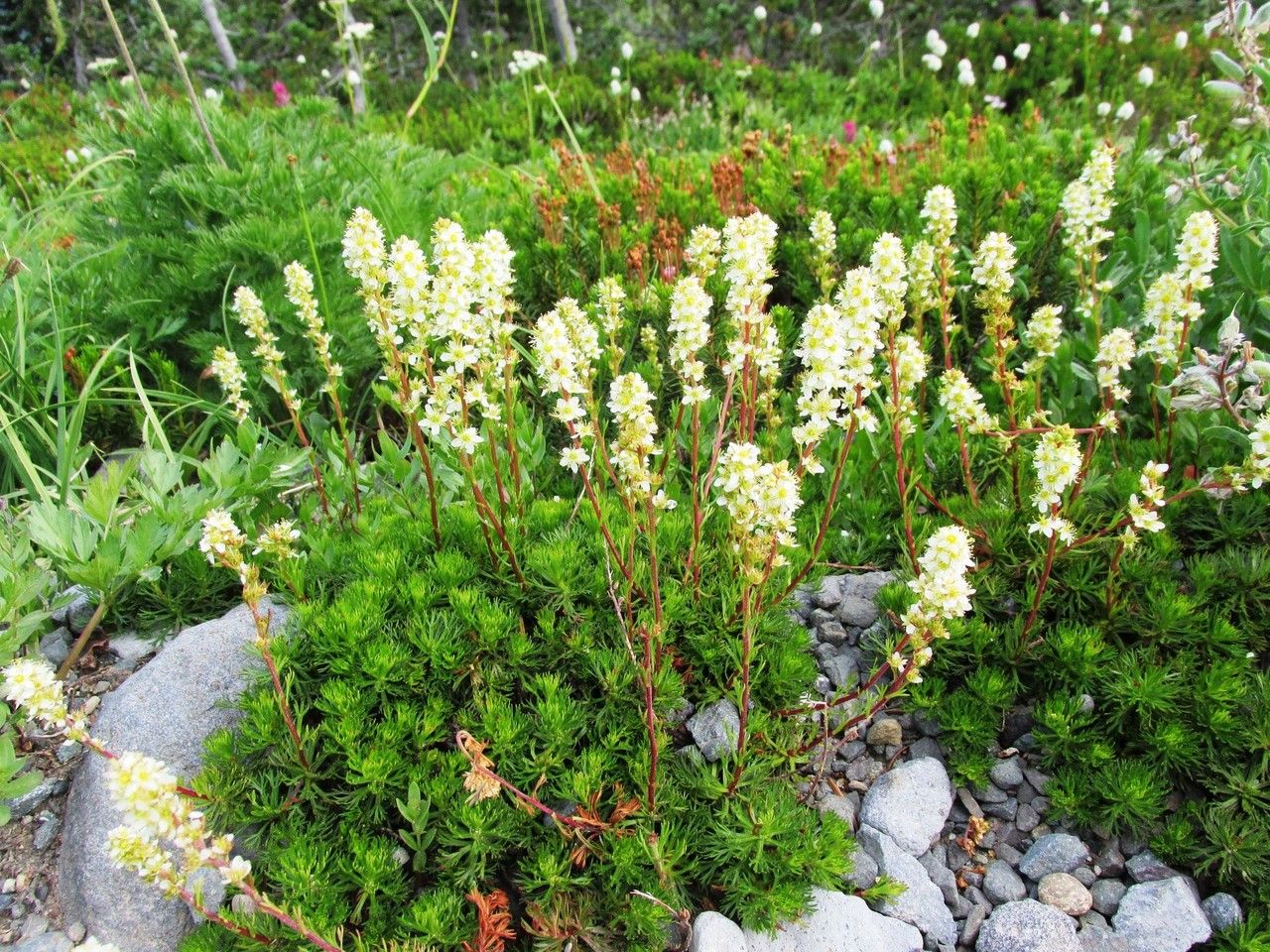
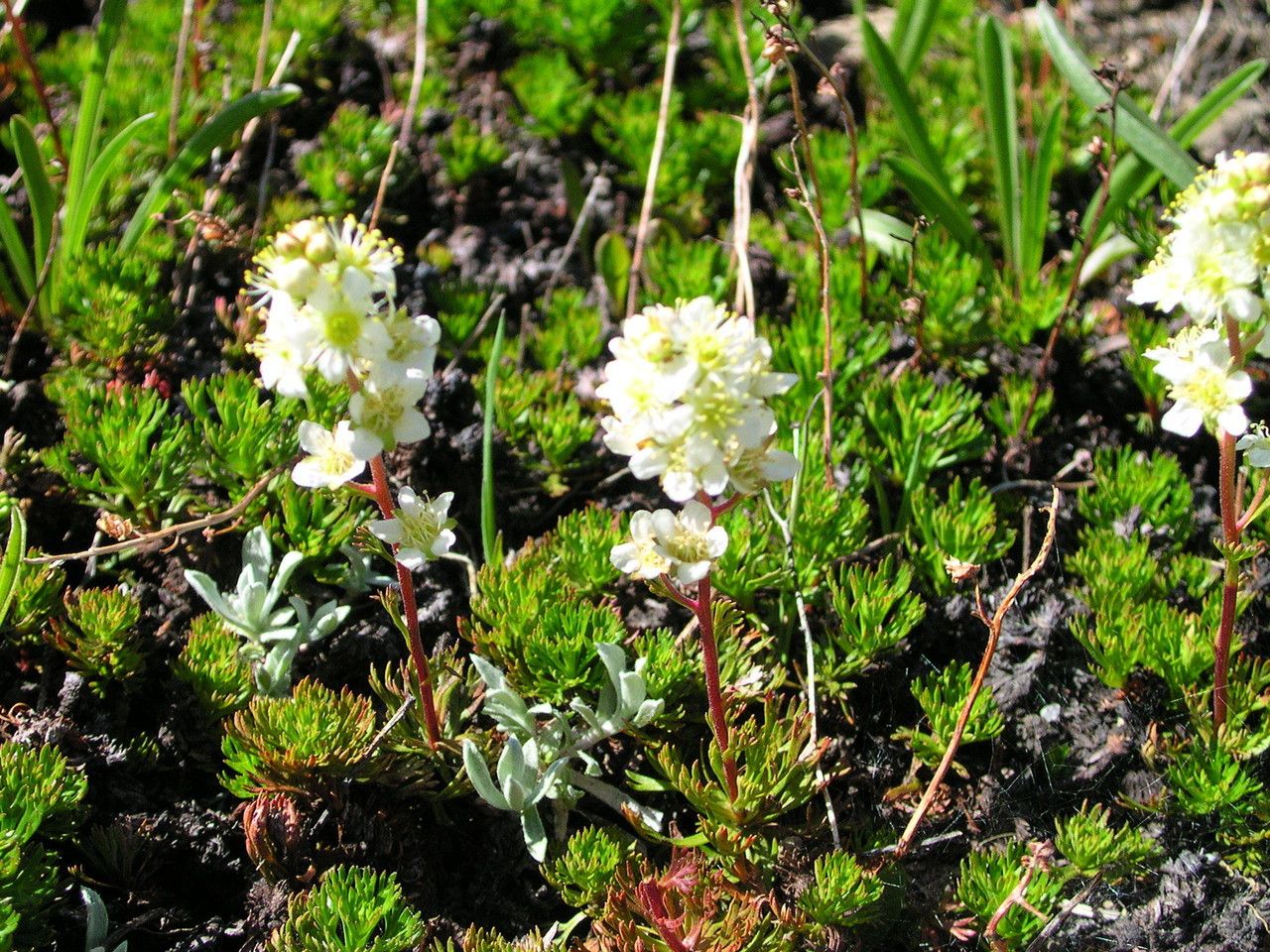
Luetkea is a genus of herbaceous plants in the family Rosaceae. One species is accepted. Luetkea pectinata (partridgefoot or luetkea) is a mat-forming semi-shrub. It is endemic to the cold portions of western North America occurring in subarctic Alaska, Yukon, western Northwest Territories, and subalpine to alpine regions of British Columbia, southwestern Alberta, Washington, Oregon, Idaho, northern California and western Montana. The inflorescence of L. pectinata is a dense and erect terminal cluster 10 to 150 mm high with several to many short-stalked flowers. The leaves are 7 to 20 mm long and two or three times three-dissected. The last segments are linear or lanceolate. The fruit is a follicle with several seeds. Partridge-foot is the only member of the genus Luetkea, which commemorates Count Luetke, a Russian captain and explorer of the early 1800s who mapped the coastline of Alaska.
Partridgefoot is fairly disease-resistant and generally not prone to illnesses. However, it can be vulnerable to pests and diseases present in its surroundings. These infections are typically not severe. For care, this plant needs moderate maintenance. It requires regular pruning to keep a good appearance and support healthy growth. Fertilizing can also help encourage flowering. Partridgefoot is suitable for anyone with outdoor space, such as a garden or patio, and does not require extensive care experience. It may need more attention when grown indoors.
How to keep Luetkea Pectinata.
Light
Partridgefoot does best with moderate sunlight, reflecting its native forest habitat sheltered by tree canopy. Although it can tolerate low light, insufficient photosynthesis may cause its health to suffer. Conversely, excessive sunlight can lead to dehydration or wilting.
Water
Partridgefoot, a plant native to mountainous regions, thrives in consistently moist soil and requires weekly watering to stay hydrated. It prefers cooler temperatures and benefits from the morning dew, which is essential for maintaining its moisture balance. However, it is important to avoid waterlogged or overly dry conditions to ensure its optimal growth.
Temperature
Partridgefoot is a plant native to areas where temperatures range from 32 to 90°F (0 to 32°C). It performs best in those conditions. In colder winters, it may need measures to keep temperatures within that range.
Fertilizer
One fertilizer application in spring is typically enough for Partridgefoot, although repeated feedings can boost growth. Fertilize every month to six weeks. Fertilization improves the leaves' appearance and function, encouraging even color and a healthy texture. It also promotes root development and nutrient uptake, supporting long-term plant health.
Pruning
Partridgefoot is a plant characterized by its mat-forming growth and small white flowers. To promote a healthy shape and growth, it should be pruned from early to late spring. Removing dead stems will improve airflow, and making cuts after the plant has flowered can encourage a second bloom. Always use clean tools to prevent the spread of disease.
Pot & Repot
When repotting Partridgefoot, select a pot 1-2 inches (2.5–5.1 cm) larger with good drainage. Use a well-draining potting mix. Repot in spring or fall, making sure the root ball sits slightly below the rim of the flower pot. Water thoroughly after repotting and place it in a warm spot with indirect sunlight.
Botanical profile.
- Plant Type
- Herb
- Life Cycle
- Perennial
- Genus
- Luetkea
- Family
- Rosaceae
- Hardiness Zone
- 1-8
- Mature Height
- 10 cm to 15 cm
- Mature Spread
- 30 cm
- Leaf Color
- Green
- Leaf Type
- Evergreen
- Flower Color
- White, Yellow, Cream
- Flower Size
- 2.54 cm
- Bloom Time
- Early summer, Mid summer
- Planting Time
- Spring, Summer
- Harvest Time
- Late summer, Early fall
Other names.
Reader questions.
What's the difference between watering my Partridgefoot inside and outside?
The Partridgefoot is commonly grown indoors by gardeners who live in non-temperate or non-tropical regions. It's important to note that when planted in a container, the soil may dry out faster compared to ground soil. Additionally, drying elements like air conditioning units can make the Partridgefoot require more frequent watering. However, if the plant is grown outdoors and receives sufficient rainfall, it may not need much watering at all. On the other hand, indoor gardeners will need to water the Partridgefoot more regularly since they won't have the option of rain soaking the soil.
What will happen if I use too much fertilizer on my Partridgefoot?
Overfertilization is a possible issue with the Partridgefoot plant, as it does not require large amounts of fertilizer each year. If you use a fertilizer with high levels of nitrogen, the leaves may turn brown, become discolored, lose moisture, and curl at the edges. To prevent these complications, many gardeners choose to fertilize their Partridgefoot only once a year in early spring.
What are the sunlight requirements for Partridgefoot?
Partridgefoot requires about 3-6 hours of sunlight daily, which is considered partial sun exposure. It's important to observe the movement of sunlight in your garden to find the perfect balance of light and shade that ensures the plant's health. The plant thrives under moderate sunlight, similar to its natural forest habitat conditions. However, inadequate light can lead to reduced photosynthesis, while excessive sunlight may cause dehydration or wilting.
What is the origin and ideal temperature range for Partridgefoot?
Partridgefoot, known botanically as Luetkea pectinata, is a plant that originates from regions where the temperature ranges between 32 to 90°F (0 to 32°C). It thrives best within these temperature conditions, making it well-suited to environments that do not typically exceed or fall below these temperature ranges.
What is the most effective way to give water to my Partridgefoot?
To properly water the Partridgefoot plant, it is best to use filtered water at room temperature. Tap water may have particles that could harm the plant's health, so filtered water is preferred. The water should be at room temperature or slightly warmer because the Partridgefoot is accustomed to a warm environment, and cold water could shock its system. Instead of watering from above, it is recommended to pour the filtered room temperature water directly onto the soil until it is completely soaked. This method is beneficial as it moistens the roots and aids in their spread through the soil to gather necessary nutrients.
Why should I add fertilizer to my Partridgefoot plant?
The main structure of the Partridgefoot consists of its leaves. Fertilization plays a vital role in making sure these leaves look great and function properly. By fertilizing correctly, you can ensure that your Partridgefoot maintains consistent color and a healthy texture. Fertilization also benefits the plant below the surface by helping it grow new roots and maintain existing ones. This not only keeps your plant healthy in the present, but also improves its ability to absorb nutrients from the soil in the future.
How can artificial lighting be used for Partridgefoot?
When natural sunlight is insufficient, especially during winter or in less sunny spaces, artificial lighting becomes essential for Partridgefoot's growth. LED lights are beneficial as they can be adjusted to provide specific light wavelengths needed by the plant. The right amount of artificial light varies: full sun plants need 30-50W/sq ft, partial sun plants need 20-30W/sq ft, and full shade plants require 10-20W/sq ft. The light source should be placed 12-36 inches above the plant, simulating the natural daylight hours, with most plants needing 8-12 hours of light per day.
How does Partridgefoot handle cold temperatures and what measures should be taken in extreme cold?
Although Partridgefoot possesses strong cold resistance and special frost protection measures are usually not necessary during winter, care should be taken when winter temperatures are expected to drop below -45°C. To protect the plant in such extreme conditions, it can be covered with insulating materials like soil or straw. Additionally, ensuring the soil is moist before the first freeze in autumn helps prevent drought and water scarcity for the plant during winter and early spring.
What should I do if I give my Partridgefoot plant too much water or too little?
Overwatering can harm your Partridgefoot plant more than underwatering. When your Partridgefoot gets too much water, its stems and leaves may wilt and turn yellow. Prolonged overwatering can also cause diseases like root rot, mold, and mildew that can kill your plant. Partridgefoot plants are less likely to be underwatered because they can handle some drought. However, if underwatering does happen, the leaves may become brittle and brown. It's important to recognize the signs of overwatering early when caring for your Partridgefoot. Some diseases caused by overwatering, like root rot, may not be fixable if you wait too long. If you notice early signs of overwatering, reduce your watering schedule immediately. Check the soil quality and replace it with well-draining potting mix if it drains poorly. If you find signs of underwatering, simply water your plant more regularly until the signs improve.
When should I fertilize my Partridgefoot plant?
If you grow your Partridgefoot outdoors, it will send out new growth in early spring. This is a sign that it's time to start fertilizing. Usually, one application of fertilizer in the spring is enough for a Partridgefoot to do well. But if you want to maximize growth, you can fertilize multiple times throughout spring and early summer. In this case, you can feed your Partridgefoot every month to month and a half.
What are the signs of inadequate or excessive sunlight in Partridgefoot?
Symptoms of insufficient light include smaller new leaves, leggy or sparse growth, faster leaf drop, slower or no new growth, lighter-colored new leaves, indicating a lack of chlorophyll and essential nutrients. Excessive sunlight can lead to chlorosis (leaves turning yellow), sunscald (damaged leaves or stems from intense sunlight), leaf curling (a defense mechanism against sunlight), wilting (due to increased water loss), and leaf scorching (brown, dry, crispy edges on leaves). These symptoms show the plant's struggle with light conditions, affecting its health and growth.
What are the symptoms and solutions for Partridgefoot when it experiences low temperatures?
Partridgefoot is cold-tolerant and thrives best when kept above 0°C. In a scenario where temperatures fall below -45°C, the plant may not show immediate noticeable changes during winter, but its ability to sprout during springtime might be decreased or completely halted. If this occurs, the recommended solution is to remove the parts of the plant that have failed to sprout in the spring.