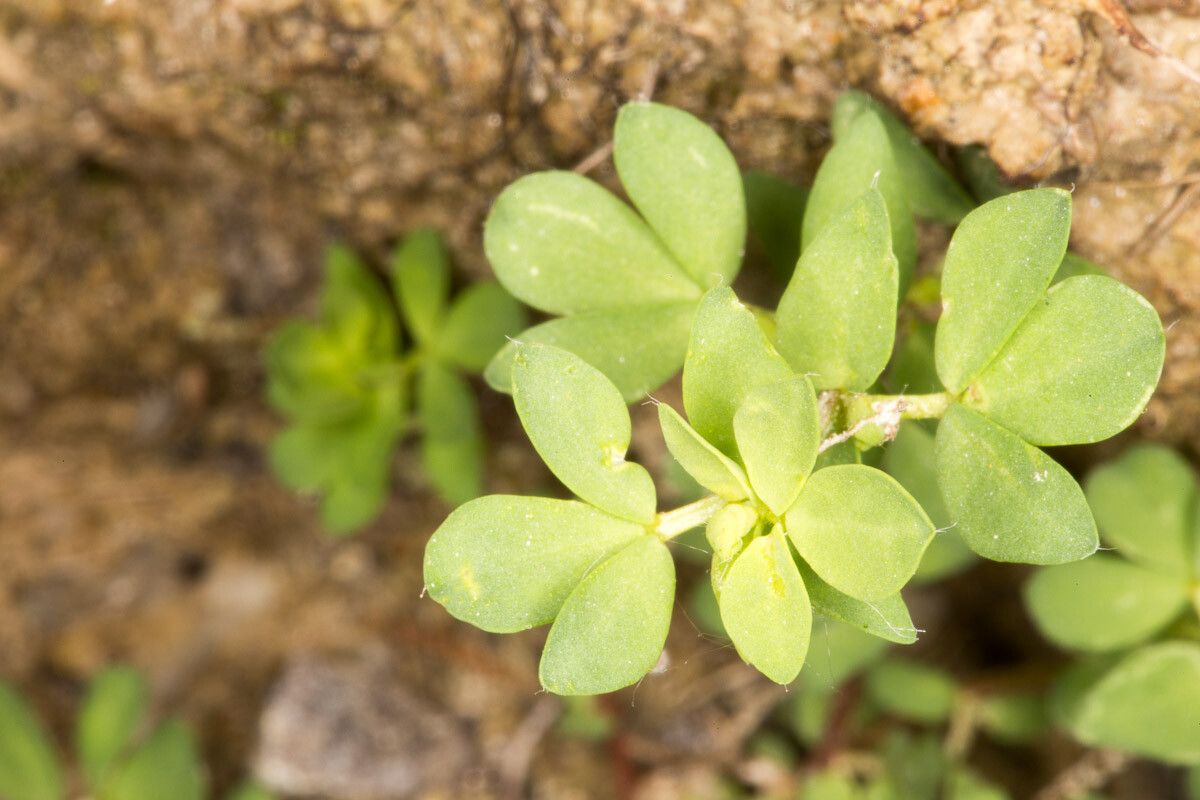
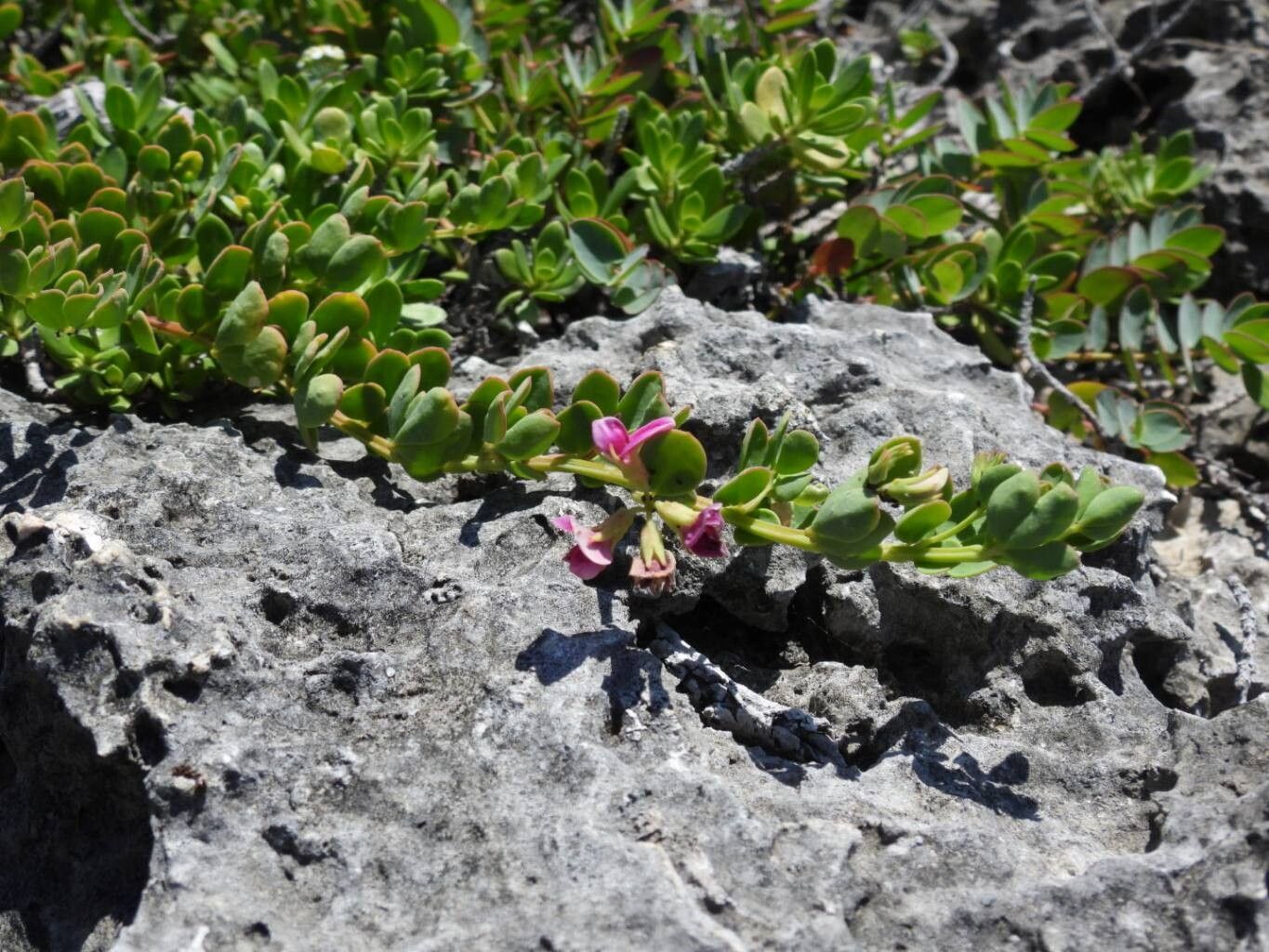
Lotus berthelotii, commonly known as the Parrot's Beak or the Canary Island Bird's Foot Trefoil, is a perennial plant that belongs to the Fabaceae family. Native to the Canary Islands and Madeira, this plant is widely cultivated as an ornamental addition to gardens and landscapes.
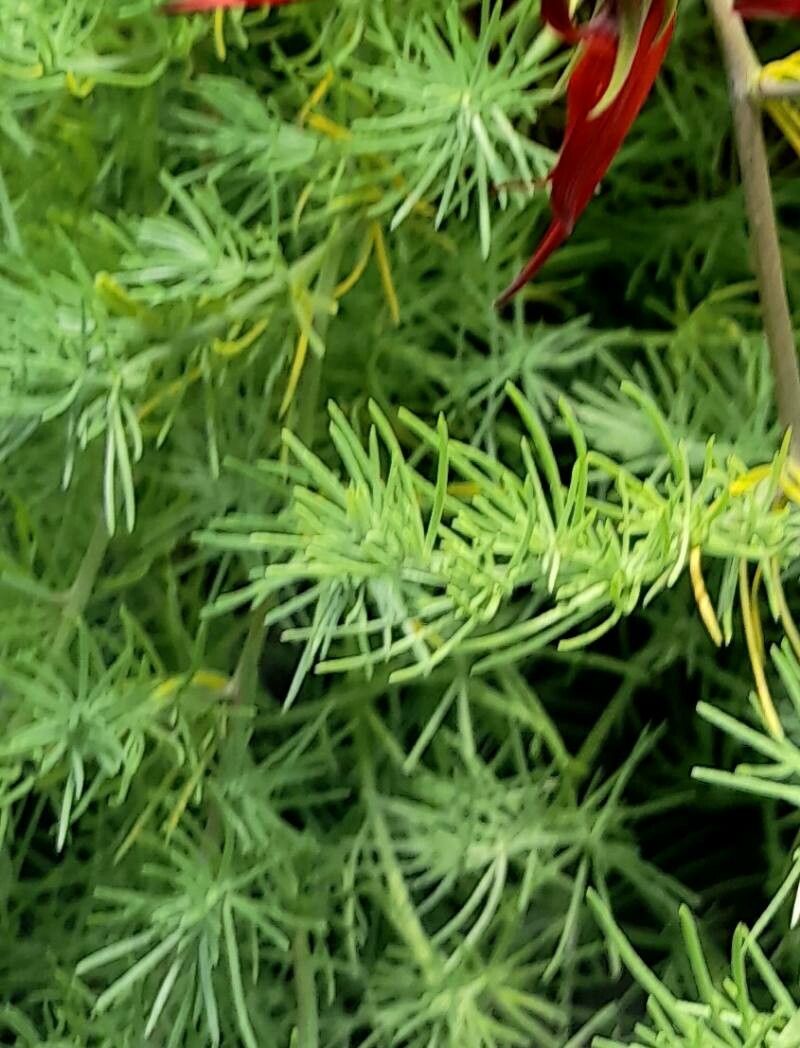
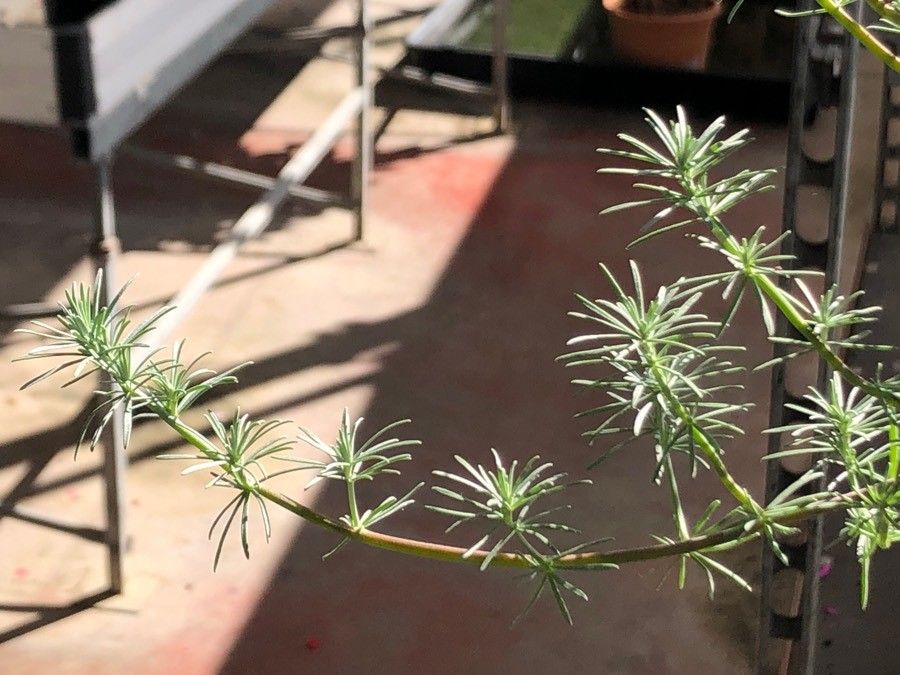
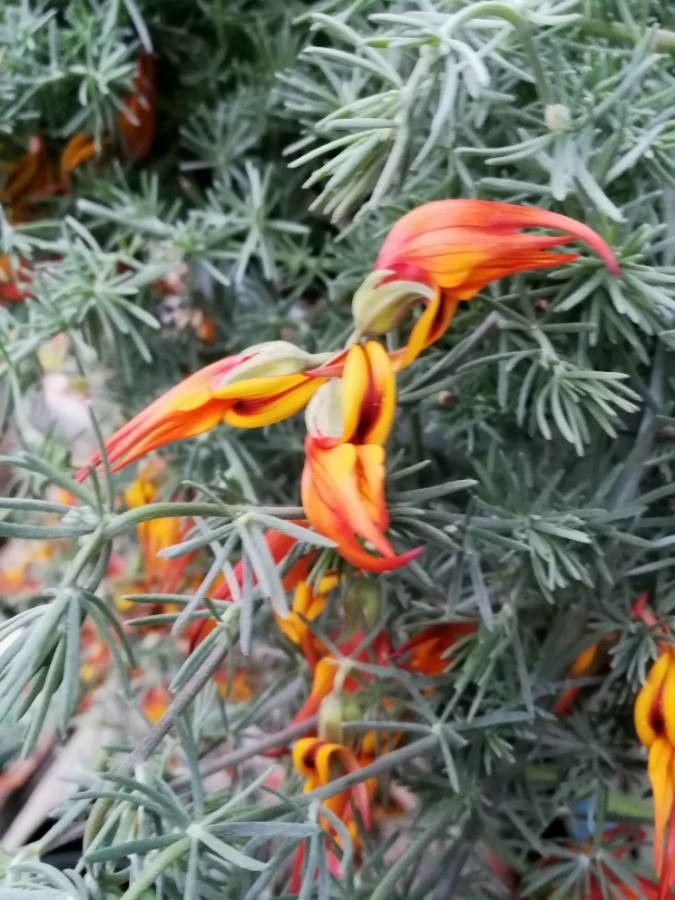
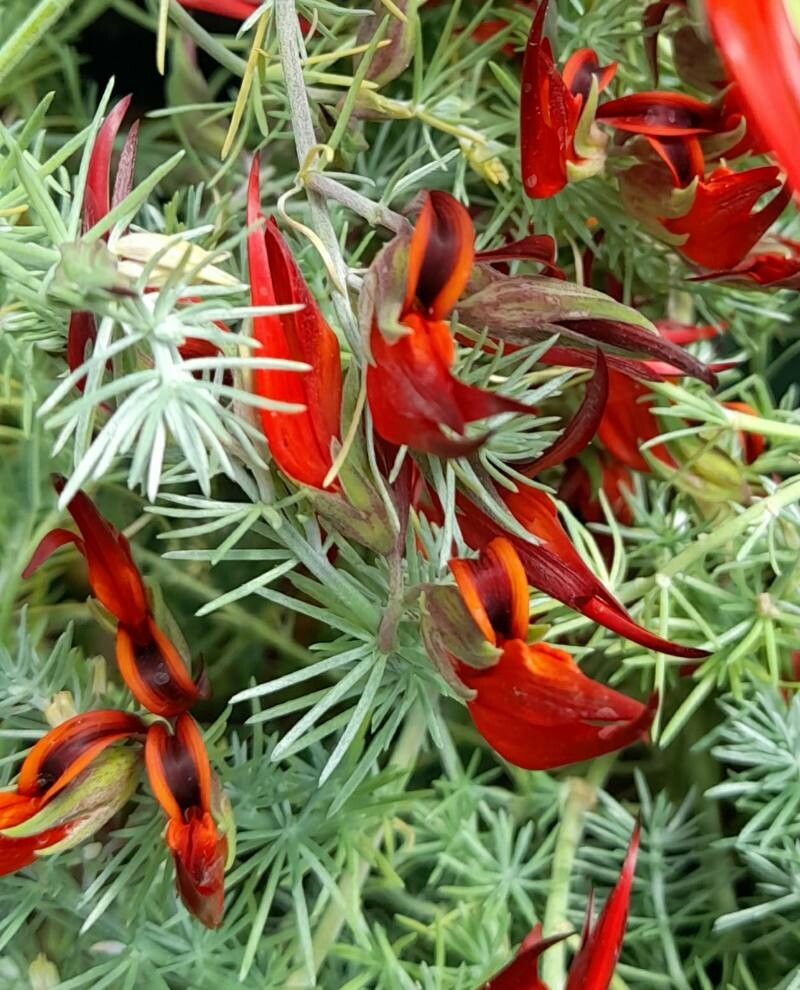
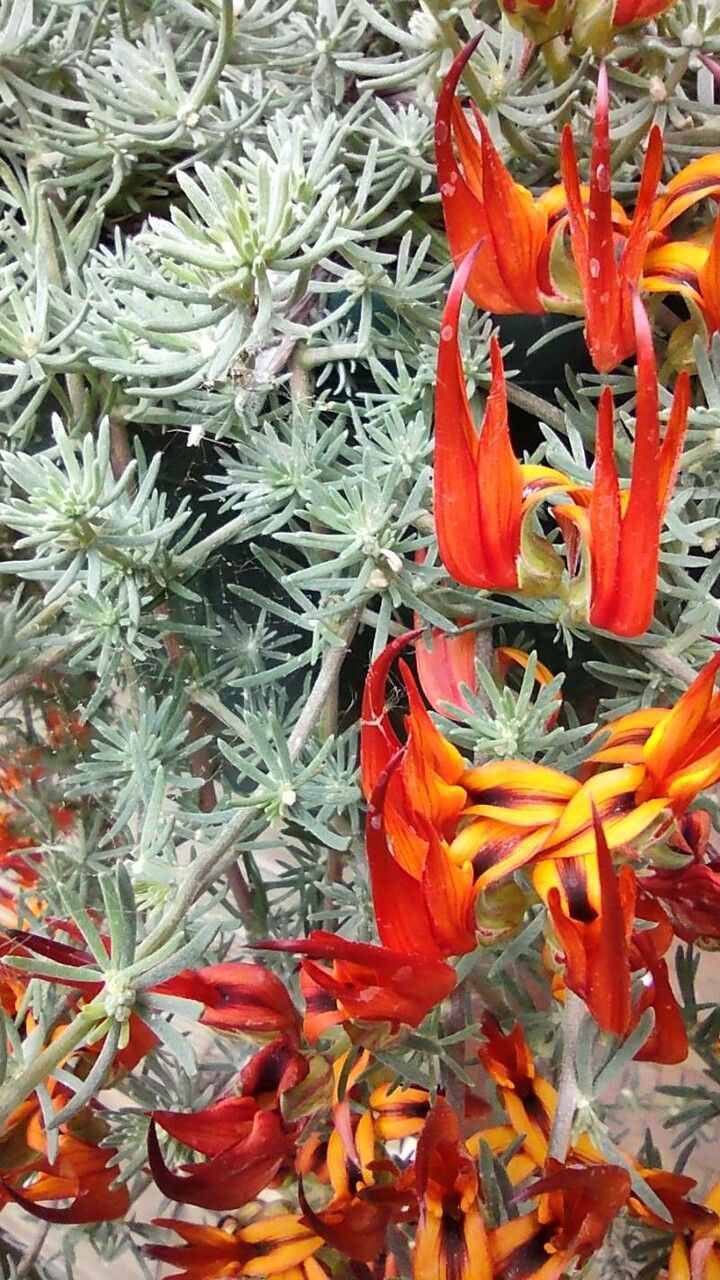
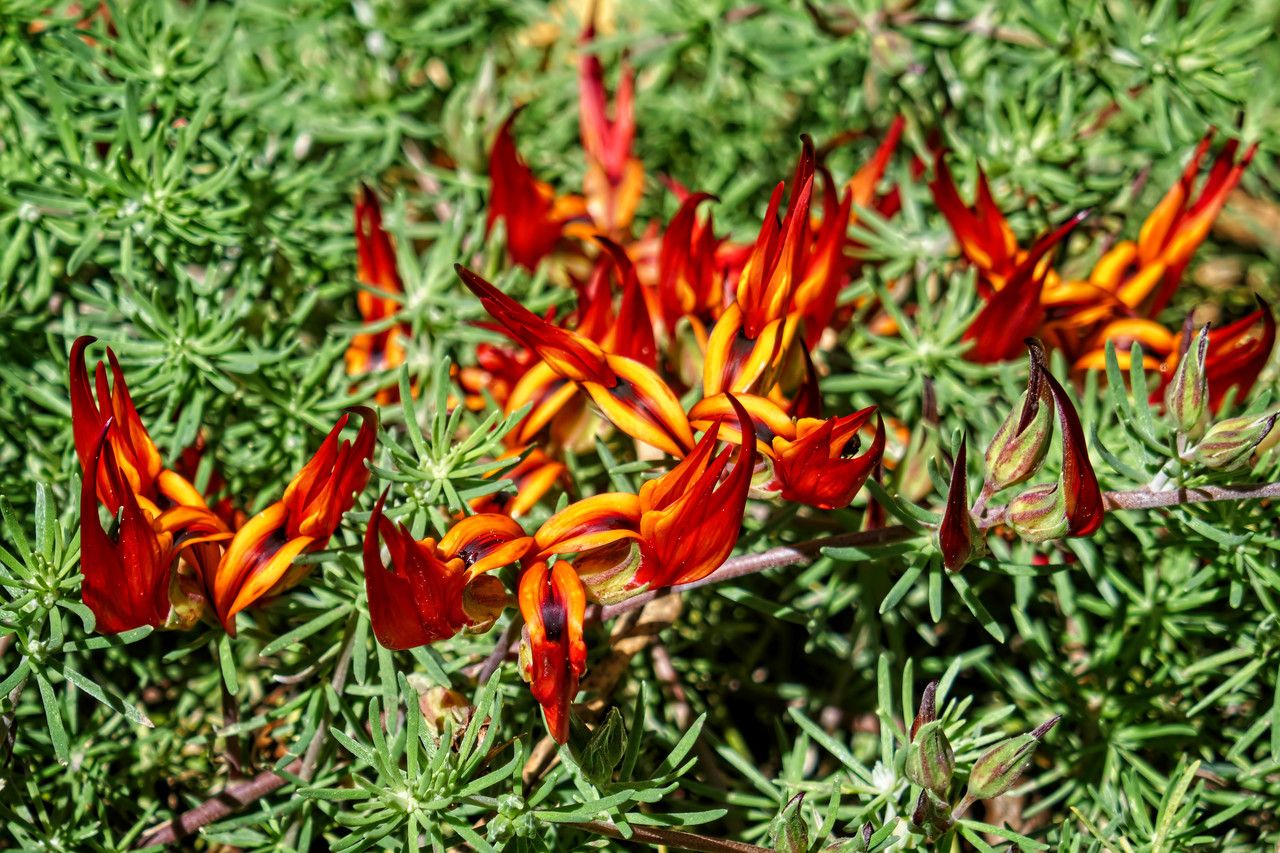
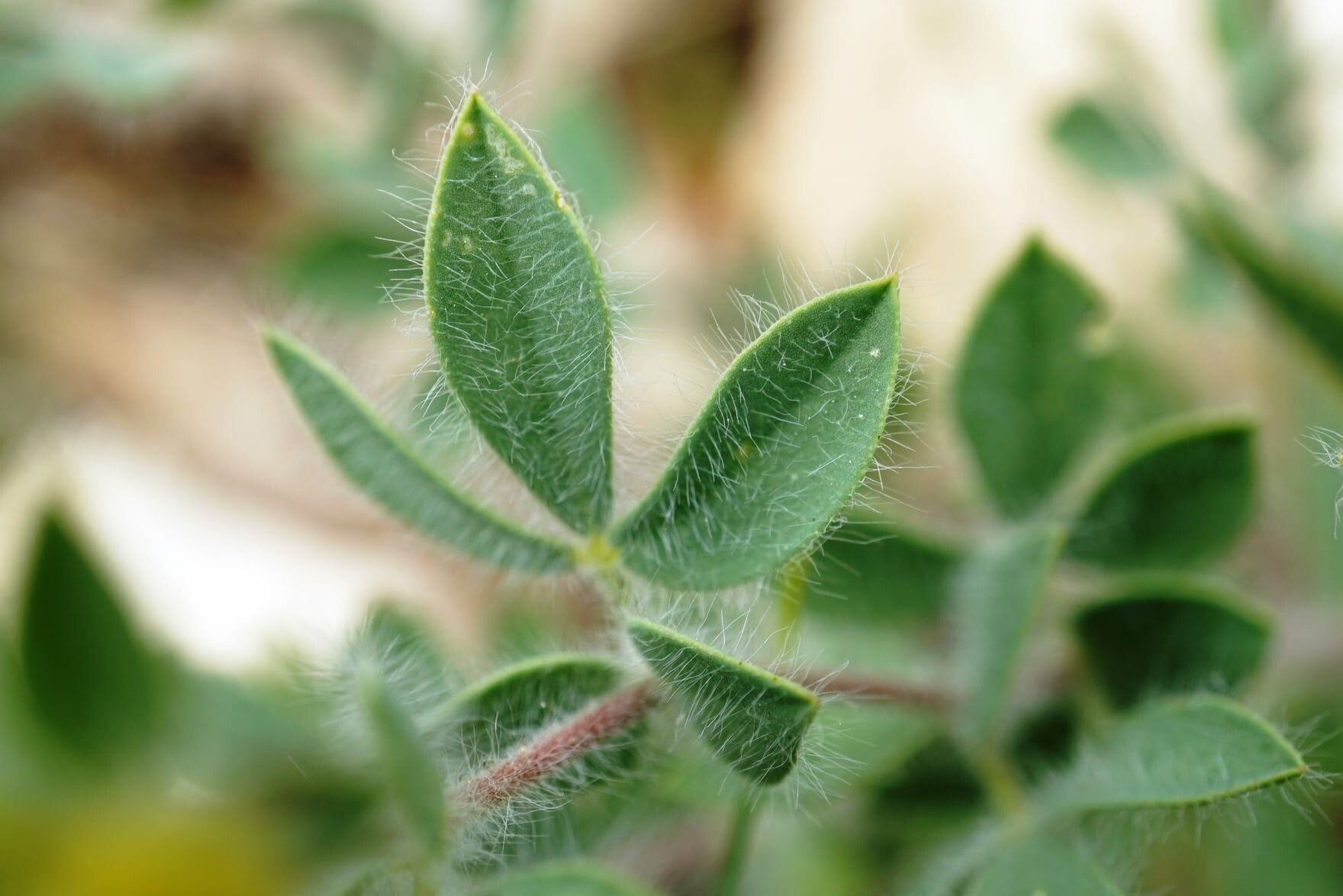
The Parrot's Beak features a trailing habit with slender stems that can grow up to 30 cm long. Its small, narrow leaves are gray-green in color. The plant's most striking feature is its unique flowers, which resemble a parrot's beak or claw. These bright orange-red flowers with yellow tips bloom from spring through summer.
This plant thrives in well-drained soil with full sun exposure but can also tolerate partial shade. During its growing season, it requires moderate watering but should be kept dry during its winter dormancy.
The Parrot's Beak has gained popularity among gardeners due to its unique appearance and low maintenance requirements. It can be grown in containers or hanging baskets, where it will trail over the edges, creating an attractive display of color throughout the growing season.
Overall, Lotus berthelotii is an eye-catching ornamental plant that adds vibrancy to any garden or landscape setting while requiring minimal care. It is a great choice for both novice gardeners and experienced horticulturists alike.
Coral gem is fairly disease-resistant and generally not prone to illnesses. Nevertheless, it can be affected by pests and diseases present in its environment. These problems are usually mild. Regarding care, the plant needs moderate maintenance. Regular pruning is required to keep a neat appearance and support healthy growth. Fertilizing can also encourage flowering. Coral gem is a good choice for anyone with outdoor space, such as a garden or patio, and does not demand extensive experience in plant care. It may need more attention when kept indoors.
How to keep Lotus Berthelotii.
Light
Coral gem does best with ample sunlight but can tolerate light shade. The plant's health and growth depend heavily on getting enough sun. Too little light leads to poor growth, while too much can cause sunburn.
Water
The coral gem, native to the Canary Islands, flourishes in moderate climates with consistent moisture. It requires weekly watering to grow optimally but can tolerate periods of drought. As an evergreen plant, it retains its foliage throughout the year, benefiting from steady soil moisture. This is especially important when grown outdoors, where it can develop a beautiful cascading growth.
Humidity
This plant will thrive in moderate humidity, which is probably the level in your home. However, misting it a few times a week can be very beneficial. Make sure the room has good ventilation.
Temperature
Coral gem adapts well to temperature, able to withstand higher heat and larger temperature fluctuations. In hot weather, attention should be paid to watering and providing adequate shade to avoid sunburn. However, Coral gem is less tolerant of cold; although it can endure some chill, overly cold conditions can cause frost damage.
Fertilizer
The best time to fertilize a Coral gem is in early spring, as it comes out of dormancy and begins active growth. Fertilization supplies essential nutrients for healthy development. Although the Coral gem requires relatively little fertilizer, applying it once a year can improve its survival and encourage better, longer-lasting flowers.
Pruning
The Coral Gem plant is known for its vibrant trailing foliage and striking red flowers. To encourage healthy growth and abundant blooms, lightly prune in early to late spring. Remove any dead or damaged stems, but be careful not to make heavy cuts, as this can harm the delicate stems. Always use clean, sharp tools to minimize damage and prevent disease.
Pot & Repot
Repot the Coral Gem every 2-3 years in early spring to support its cascading growth. Use a medium-sized pot with good drainage. After repotting, place the plant in bright, indirect light and keep the soil slightly moist to encourage recovery and healthy foliage.
Botanical profile.
- Plant Type
- Herb
- Life Cycle
- Perennial, Annual
- Genus
- Lotus
- Family
- Fabaceae
- Hardiness Zone
- 9-11
- Mature Height
- 15 cm to 30 cm
- Mature Spread
- 61 cm to 91 cm
- Leaf Color
- Gray, Silver
- Leaf Type
- Evergreen
- Flower Color
- Red
- Flower Size
- 2.03 cm to 3.05 cm
- Bloom Time
- Late spring, Summer, Early fall, Mid fall
- Planting Time
- Spring, Summer, Autumn
- Harvest Time
- Mid summer, Late summer, Fall
Other names.
Reader questions.
How should I water my Coral gem plant?
To properly water the Coral gem plant, it is recommended to use filtered water at room temperature. Tap water may contain harmful particles that can affect the health of the plant. The water should be at least at room temperature or slightly warmer since the Coral gem is accustomed to warm environments and cold water may shock it. It is also advisable to avoid overhead watering as it can cause issues with the foliage. Instead, gently apply your filtered room temperature water directly to the soil until it is completely soaked. This method helps to moisten the roots, aiding their spread through the soil and nutrient absorption.
Why do I have to put fertilizer on my Coral gem?
The main structure of the Coral gem is made up of its leaves, and fertilization is crucial for both their appearance and function. Proper fertilization ensures that the leaves maintain consistent color and a healthy texture. Fertilization also benefits the plant's roots, helping it grow new roots and maintain existing ones. This not only keeps the plant healthy presently but also improves its ability to absorb nutrients from the soil in the future.
What are the sunlight requirements for a Coral Gem (Lotus berthelotii)?
The Coral Gem (Lotus berthelotii) thrives best under full sunlight, requiring more than 6 hours of direct sunlight per day. It can also grow in partial sun, which means about 3-6 hours of sunlight daily. It's essential to observe how sunlight moves through your garden to find the perfect spot that offers a balance of light and shade, ensuring the plant's wellbeing. Sufficient sun exposure is crucial for the plant's health and growth; inadequate light leads to poor growth, while excessive light can cause sunburn.
What is the common name of Lotus berthelotii?
The common name of Lotus berthelotii is Coral gem.
What should I do if I give my Coral gem plant too much or too little water?
Overwatering is a more common issue for the health of your Coral gem. It can cause wilting and yellowing of the stems and leaves, as well as diseases like root rot, mold, and mildew that can be fatal to the plant. Underwatering is less common, but still possible. Signs of underwatering include brittle and brown leaves. It's important to recognize the signs of overwatering early on, as some diseases cannot be reversed if left too long. If you notice early signs, reduce watering and check the soil's drainage. Replace it with a well-draining potting mix if necessary. If the signs indicate underwatering, increase watering until the signs improve.
When should I fertilize my Coral gem plant?
If you choose to grow your Coral gem outdoors each year, you can expect new growth to start appearing in early spring. This is an indication that it is time to begin fertilizing for the year. Usually, a single application of fertilizer in the spring is enough for a Coral gem to thrive. However, if you want to promote maximum growth, you can fertilize multiple times throughout the spring and early summer. In this case, you can feed your Coral gem approximately once every month to a month and a half.
How does artificial lighting support Coral Gem's growth?
Artificial lighting can be vital for the Coral Gem's growth, especially when natural sunlight is not sufficient, like in winter or less sunny spaces. LED lights are recommended because they can provide specific wavelengths needed by the plant. Full sun plants require 30-50W/sq ft of artificial light, partial sun plants 20-30W/sq ft, and full shade plants 10-20W/sq ft. The light source should be placed 12-36 inches above the plant, mimicking natural sunlight as closely as possible. It's also advised to ensure the plant receives 8-12 hours of light per day, simulating natural daylight hours for optimal growth.
What are the botanical characteristics of Coral gem?
The botanical name of Coral gem is Lotus berthelotii.
How often should I give water to my Coral gem?
If your Coral gem plant is potted, the most accurate way to determine if it needs water is by sticking your finger into the soil. If you find that the top two to three inches of soil are dry, then it's time to water it. If you have your Coral gem plant growing outdoors in the ground, you can use a similar method to check the soil. Again, if the first couple of inches of soil have dried out, then it's time to water it. Typically, during the spring and early fall, following this method will require watering the plant about once a week. However, during extremely hot weather, you may need to water it two or more times per week. It's worth mentioning that mature and well-established Coral gem plants have a remarkable ability to survive drought.
When should I not fertilize my Coral gem?
During the late fall and winter, your Coral gem goes into a dormant phase where it doesn't grow. So, you shouldn't fertilize it during this time. When spring and summer come, if you choose to fertilize multiple times, start reducing the amount of fertilizer as summer approaches because the growth rate of your Coral gem will also slow down. It's not a good idea to fertilize your Coral gem when the weather is very hot or the soil is extremely dry. Doing so can stress it out and cause it to die early.
What are some common symptoms of insufficient or excessive sunlight in Coral Gem?
Symptoms of insufficient sunlight in Coral Gem include smaller new leaves, leggy or sparse growth, faster leaf drop, slower or no new growth, and lighter-colored new leaves indicating a lack of chlorophyll. Excessive sunlight can cause chlorosis, sunscald, leaf curling, wilting, and leaf scorching. Chlorosis turns leaves yellow due to chlorophyll breakdown, sunscald manifests as pale or necrotic spots, leaf curling minimizes water loss, wilting indicates loss of turgor pressure, and leaf scorching appears as brown, dry patches on leaves.
What are the essential care tips for Coral gem?
There is no specific care information provided for Coral gem.