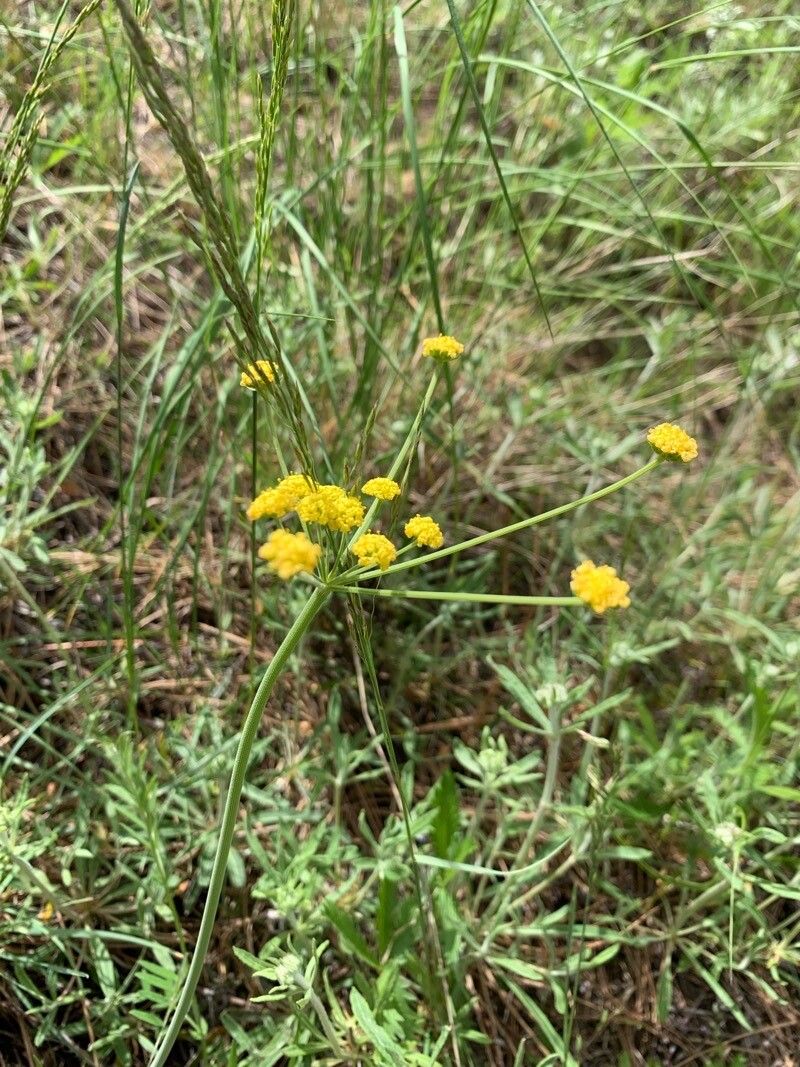
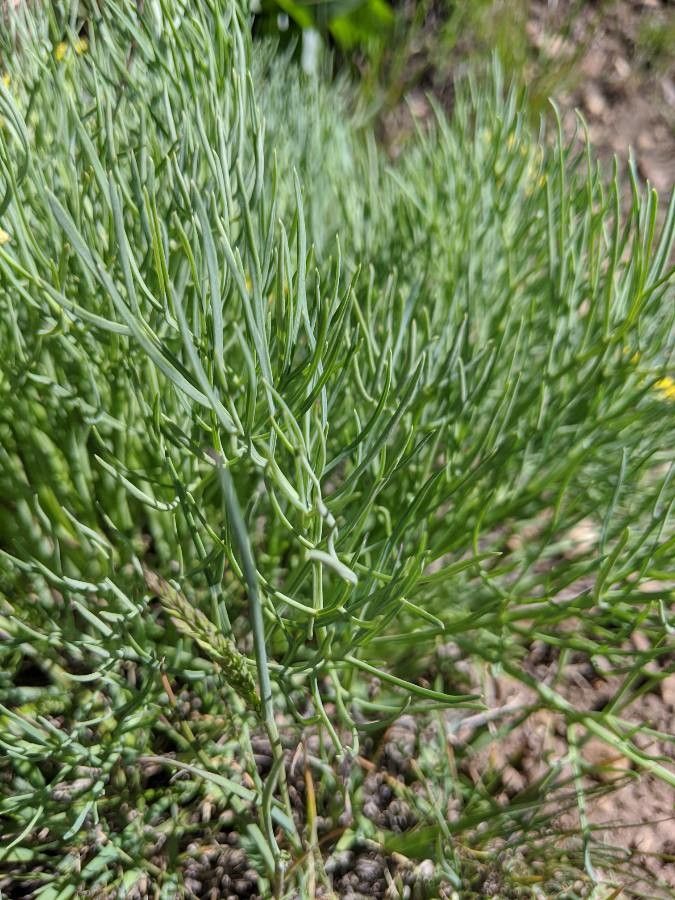
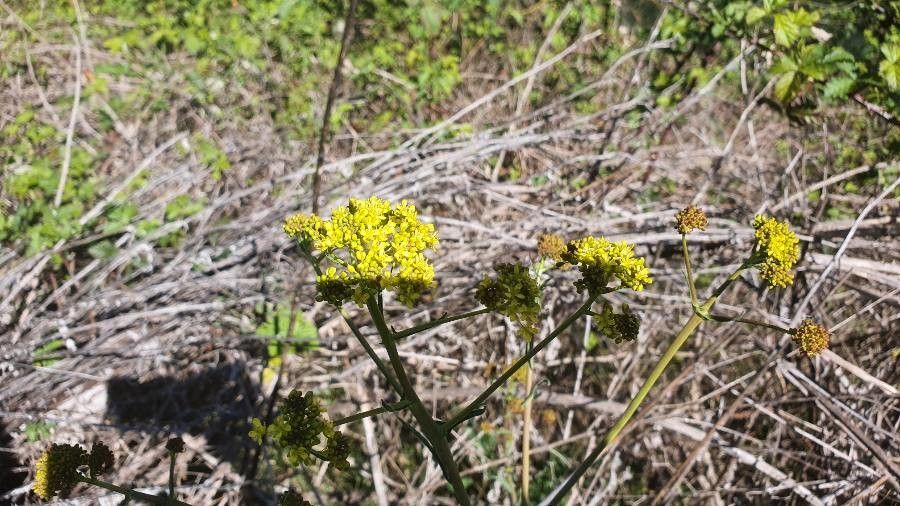
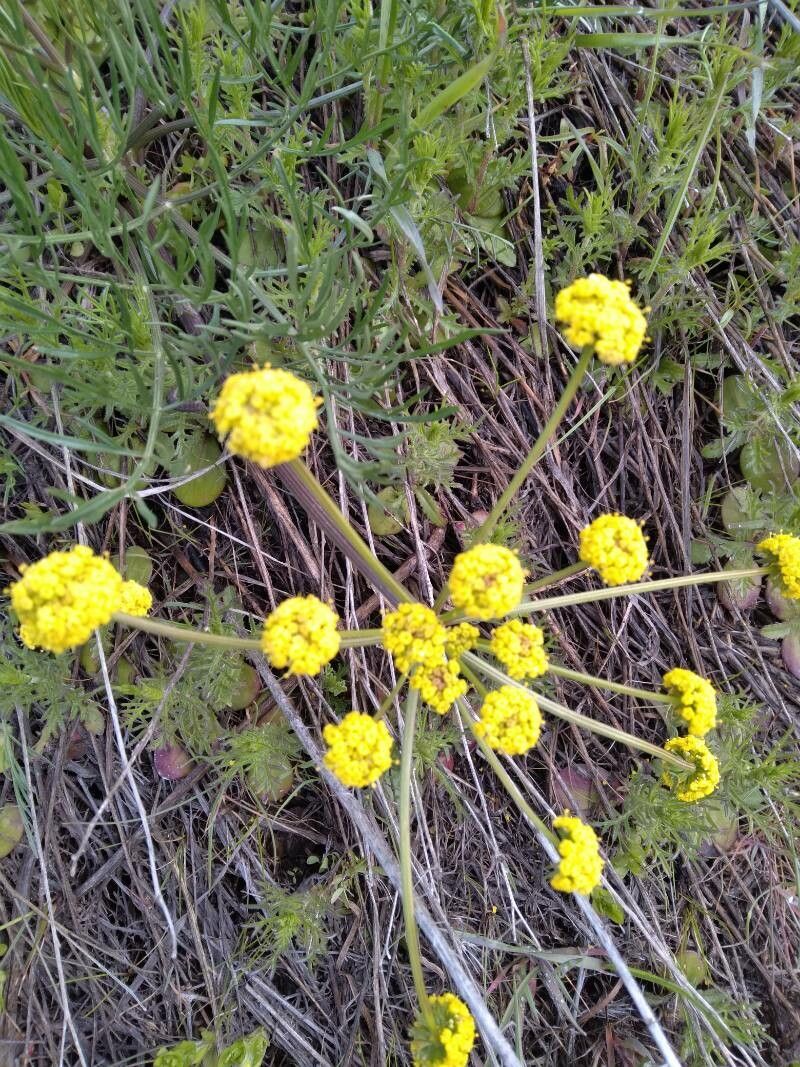
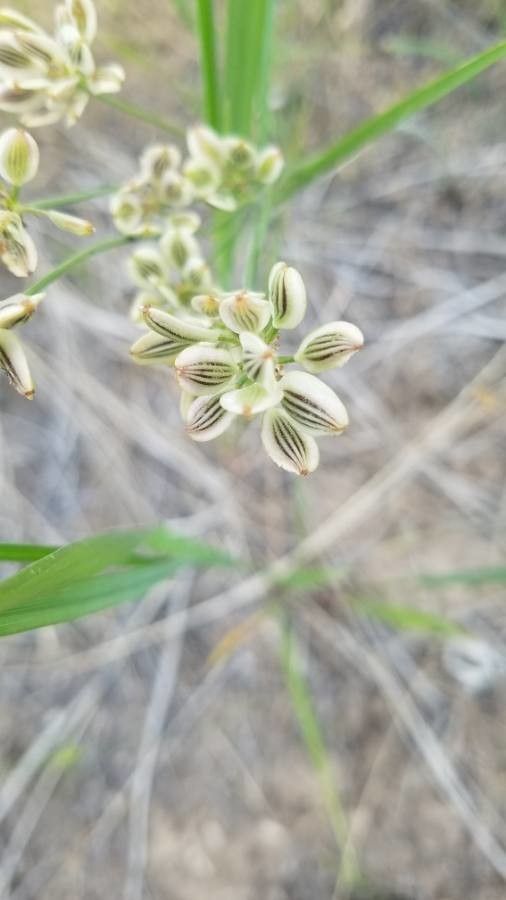
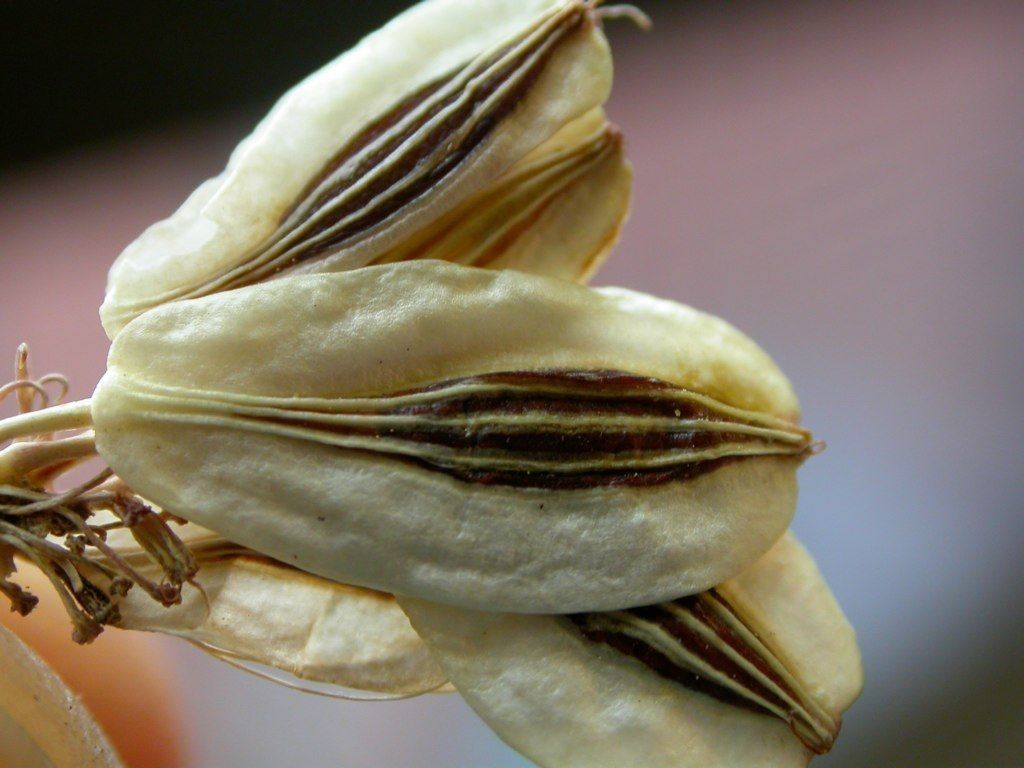
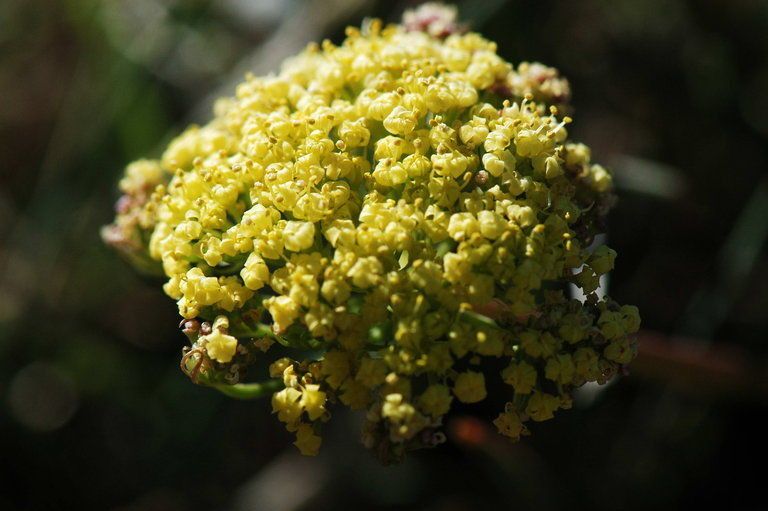
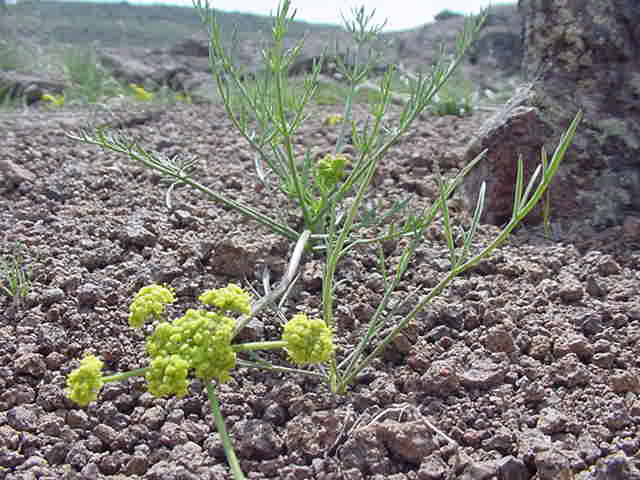
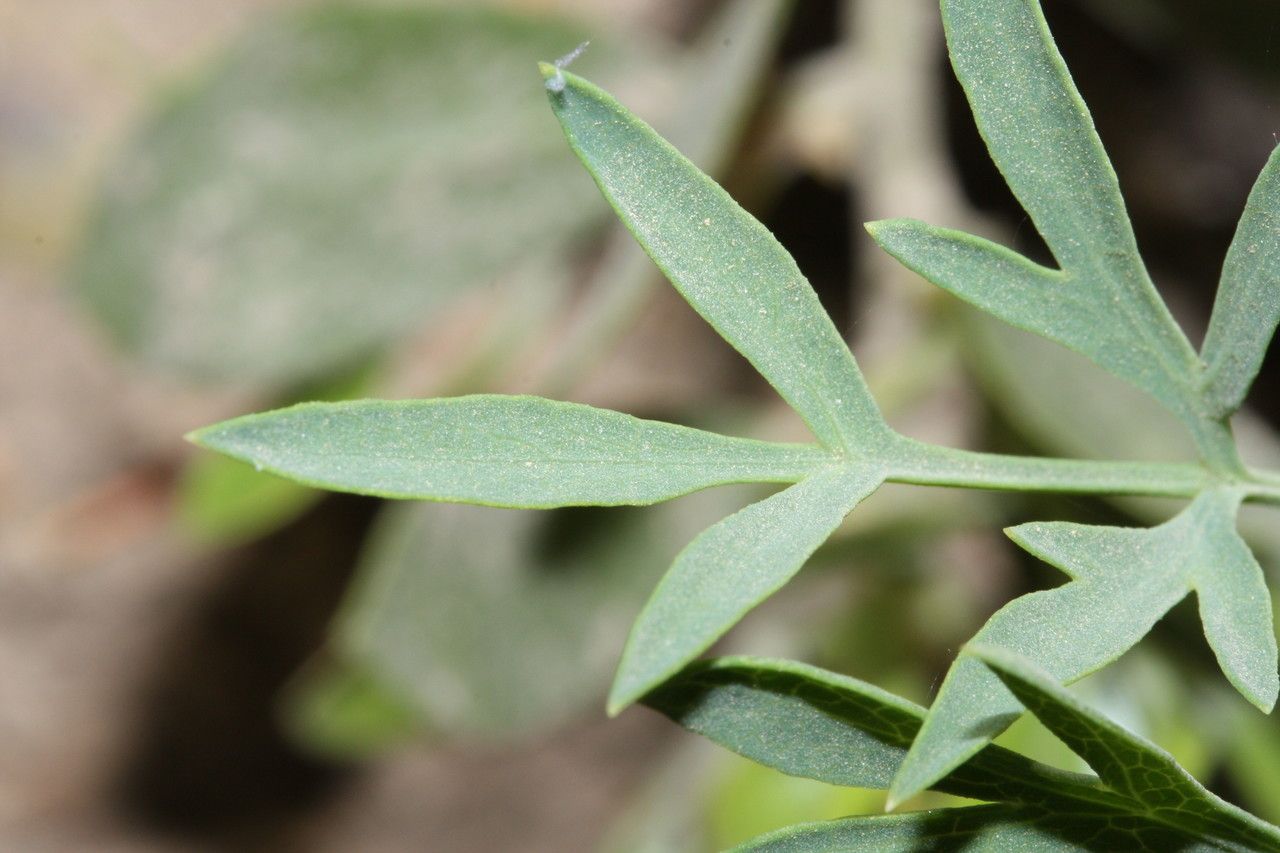
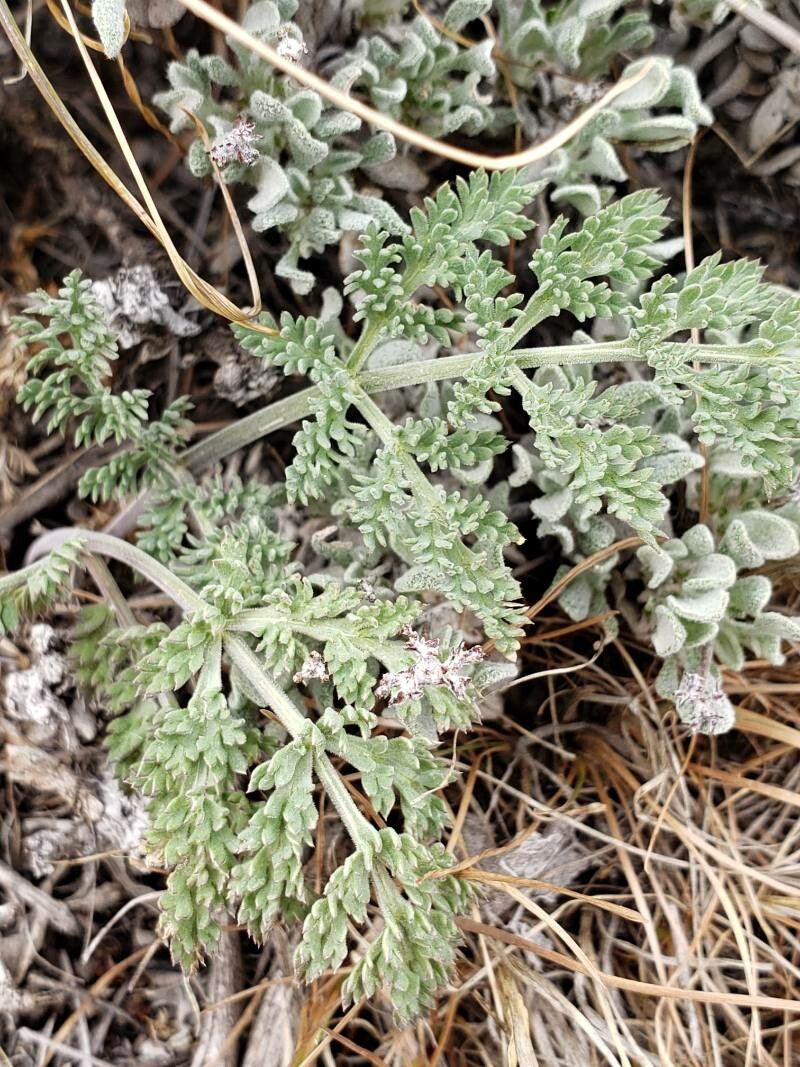
Lomatium triternatum is a species of flowering plant in the carrot family known by the common name nineleaf biscuitroot. It is native to western North America from British Columbia to California to Colorado, where it grows in many types of habitat. It is a hairy perennial herb growing up to a meter tall from a taproot. The leaves emerge from the lower part of the stem. Each is generally divided into three leaflets which are each subdivided into three linear leaflike segments. The inflorescence is an umbel of yellow flowers, each cluster on a ray up to 10 centimeters long, altogether forming a flat formation of umbels.
Nineleaf biscuitroot is fairly resistant to disease and generally does not readily develop illnesses. Nonetheless, it can be vulnerable to pests and diseases present in its surroundings. These problems are typically mild. Regarding care, this plant requires moderate maintenance. It should be pruned regularly to preserve an attractive appearance and healthy growth. Fertilizing can also help encourage flowering. Nineleaf biscuitroot is appropriate for anyone with outdoor space, such as a garden or patio, and does not demand much experience in plant care. It may need more attention when cultivated indoors.
How to keep Lomatium Triternatum.
Light
The nineleaf biscuitroot does best in areas rich in sunlight and can withstand moderate sun exposure. However, too much or too little light can hinder its growth. Originally, the plant grew in landscapes with plentiful solar exposure. Throughout its various growth stages, sufficient sun exposure is essential for its optimal health and wellness.
Water
Nineleaf biscuitroot is well-suited for dry conditions, needing moderate watering only about once a week due to its drought-resistant nature. It grows in rocky terrains and excels at retaining water, making it an excellent choice for xeriscaping in areas with limited rainfall.
Temperature
Nineleaf biscuitroot naturally occurs in habitats with temperatures that usually range from 32 to 77°F (0 to 25°C). It particularly does well in these cooler conditions. If needed, alter the ambient temperature during hotter months to preserve this preference.
Fertilizer
A single spring application of fertilizer is generally enough for Nineleaf biscuitroot, though multiple feedings can further enhance growth. Feed once every month to month and a half. Fertilization improves the leaves' appearance and function, helping maintain consistent color and a healthy texture. It also promotes root development and nutrient uptake for the plant's long-term health.
Pruning
Nineleaf biscuitroot is known for its yellow flower umbels and flourishes with proper care. To encourage healthy growth, prune it carefully from early to late spring. Remove any damaged stems and spent flowers to enhance circulation, prevent overcrowding, and promote overall vigor. This not only improves the plant's health but also enhances the beauty of your garden.
Botanical profile.
- Plant Type
- Herb
- Life Cycle
- Perennial
- Genus
- Lomatium
- Family
- Apiaceae
- Hardiness Zone
- 3
- Mature Height
- 91 cm
- Mature Spread
- 25 cm to 46 cm
- Leaf Color
- Green, Dark Green
- Leaf Type
- Semi-evergreen
- Flower Color
- Yellow, Green
- Flower Size
- 2.03 cm to 10.16 cm
- Bloom Time
- Mid spring, Late spring
- Planting Time
- Spring, Summer
- Harvest Time
- Early summer, Mid summer
Other names.
Reader questions.
How frequently should I water my Nineleaf biscuitroot plant?
If your Nineleaf biscuitroot plant is in a pot, the most accurate way to determine if it needs water is to stick your finger in the soil. If the top two to three inches of soil feels dry, it needs watering. If you have your Nineleaf biscuitroot plant outdoors in the ground, you can use the same method. When the first few inches of soil have dried out, it's time to water. Typically, during the spring and early fall, watering once a week is sufficient. However, in extremely hot weather, you may need to water twice or more per week. Nevertheless, mature and well-established Nineleaf biscuitroot plants are great at surviving drought.
What are the sunlight requirements for Nineleaf biscuitroot?
Nineleaf biscuitroot thrives best in locations that receive full sun, which is above 6 hours of sunlight daily, but it can also endure partial sun, meaning about 3-6 hours of sunlight. It's important to observe the movement of sunlight through your garden to find spots that offer an ideal balance of light and shade, as too much or too little light can hinder the plant's growth. Originally growing in areas with significant solar exposure, the right amount of sunlight is crucial at all stages of its growth for optimal health.
What is the ideal temperature range for Nineleaf biscuitroot?
Nineleaf biscuitroot thrives in environments where temperatures typically range from 32 to 77°F (0 to 25°C). This plant prefers cooler climates and is highly tolerant of cold temperatures, not requiring additional frost protection during winter. However, it's crucial to adjust the surrounding temperature in hotter months to maintain this temperature preference, ensuring the plant's health and growth.
What's the difference between watering my Nineleaf biscuitroot inside and outside?
For gardeners living outside of temperate and tropical regions, it is recommended to grow the Nineleaf biscuitroot indoors. When growing indoors, it's important to consider that soil in a container can dry out faster than ground soil. Additionally, factors like air conditioning units can cause the Nineleaf biscuitroot to require more frequent watering compared to when it is planted outdoors. In cases where the plant is grown outside and receives regular rainfall, watering may not be necessary. However, for indoor growth, watering will be essential as rainwater cannot naturally soak the soil.
How can artificial lighting be used for Nineleaf biscuitroot indoors?
Indoor Nineleaf biscuitroot plants require adequate lighting for optimal growth. When natural sunlight is insufficient, especially in winter or less sunny spaces, artificial lights become necessary. Using the right artificial light, like LED which provides specific wavelengths needed by plants, helps in promoting healthier growth. Full sun plants need 30-50W/sq ft of light, partial sun plants 20-30W/sq ft, and full shade plants 10-20W/sq ft. The light source should be placed 12-36 inches above the plant, simulating natural sunlight as closely as possible, and kept on for 8-12 hours per day depending on the plant's needs.
How do you care for Nineleaf biscuitroot during winter?
Before the first freeze of autumn, it is advisable to water Nineleaf biscuitroot generously. This practice ensures the soil around the plant remains moist and enters a frozen state properly. Such a precaution helps in preventing drought and water scarcity for the plant during the challenging winter and early spring periods. Despite its high cold tolerance, taking steps to maintain soil moisture can be beneficial for its survival and thriving.
How should I water my Nineleaf biscuitroot plant?
To water the Nineleaf biscuitroot effectively, you should use filtered water at room temperature. Tap water may have harmful particles, so it's best to avoid it. Since this plant is used to warm environments, it's important to use room temperature or slightly warmer water to prevent shock. Additionally, overhead watering should be avoided as it can cause problems with the foliage. Instead, gently pour filtered room temperature water onto the soil until it is completely soaked. This method helps to moisten the roots, promoting their spread and nutrient absorption.
What are the symptoms of inadequate lighting for Nineleaf biscuitroot?
Symptoms of inadequate lighting in Nineleaf biscuitroot include smaller than usual new leaves, leggy or sparse growth due to extended spaces between leaves or stems, accelerated leaf drop as the plant sheds old leaves to conserve resources, slower or halted growth as the plant enters survival mode, paler new leaves indicating a lack of chlorophyll, chlorosis (yellowing leaves due to chlorophyll breakdown), sunscald from intense sun exposure, leaf curling as a defense against excessive sun, wilting from increased water loss, and leaf scorching, characterized by brown, dry leaf edges from too much sunlight.
What should you do if the winter temperature drops below -35°C?
Nineleaf biscuitroot is extremely cold-tolerant, capable of withstanding winter temperatures down to -35°C. However, if temperatures fall below this point, you might not observe any immediate changes during the winter. Still, there could be a decrease in sprouting or no sprouting at all come springtime. In such cases, during spring, it is recommended to remove any parts of the plant that have failed to sprout, which could help promote new growth and maintain the plant's health.
What should I do if I give my Nineleaf biscuitroot plant too much water or too little water?
Overwatering is a more common issue than underwatering when it comes to the health of your Nineleaf biscuitroot. If the plant receives too much water, its stems and leaves may wilt and turn yellow. Overwatering can also lead to diseases like root rot, mold, and mildew, which can be fatal for the plant. Underwatering is less likely, as the Nineleaf biscuitroot is drought tolerant. However, if it does happen, the leaves may become brittle and brown. It is important to identify signs of overwatering early on. Some diseases caused by overwatering, like root rot, may not be reversible if left untreated for too long. If you notice these signs, reduce your watering schedule and consider replacing poorly draining soil. On the other hand, if your Nineleaf biscuitroot lacks water, simply increase your watering frequency until the plant recovers.
How can I adjust the light conditions to promote healthy growth in Nineleaf biscuitroot?
To ensure your Nineleaf biscuitroot receives optimal light, gradually introduce it to sunnier spots outdoors or move it closer to a south-facing window indoors, providing at least 6 hours of direct sunlight daily. For large or immobile plants indoors, consider supplementing with artificial light, keeping it on for a minimum of 8 hours a day. Outdoors, adjust plant locations gradually to prevent sunburn. If sunlight is obstructed, such as by trees, pruning may be necessary. For smaller plants, you might consider transplanting them during their dormant period to a location with better sun exposure and drainage. Note that parts of the plant already affected by poor light may not recover, but new growth should be healthy with improved lighting.
How do you protect Nineleaf biscuitroot from high temperatures?
Performing well in cooler climates, Nineleaf biscuitroot is not tolerant of high temperatures. Growth may halt, and the plant becomes susceptible to rot if the temperature exceeds 25°C. To protect it, trim away any sunburned and dried-up parts. Additionally, consider moving the plant to a location shaded from the midday and afternoon sun. Using a shade cloth can also be effective. Ensure the soil remains moist by watering the plant in the morning and evening.