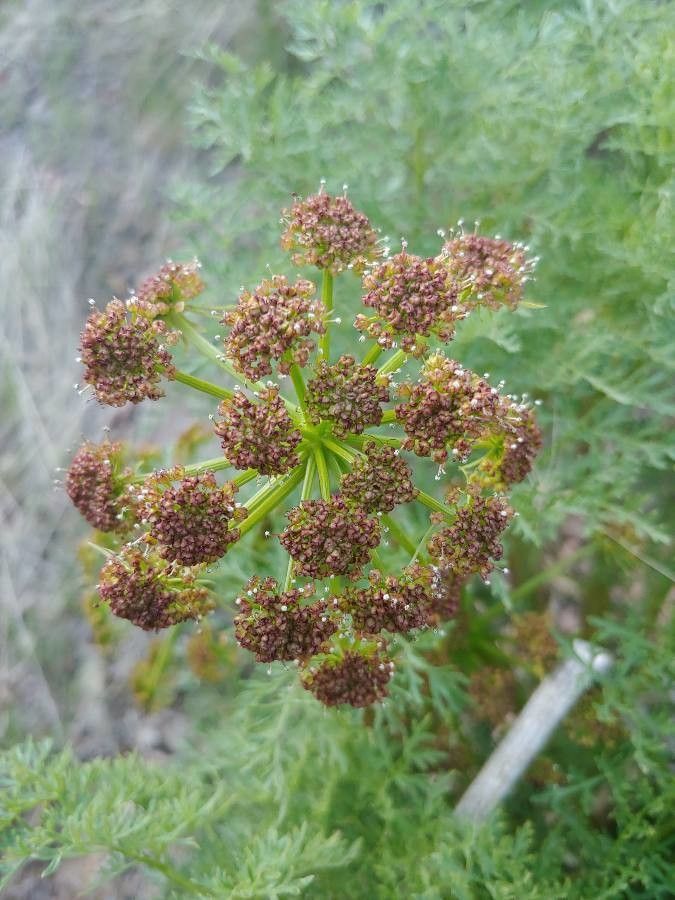
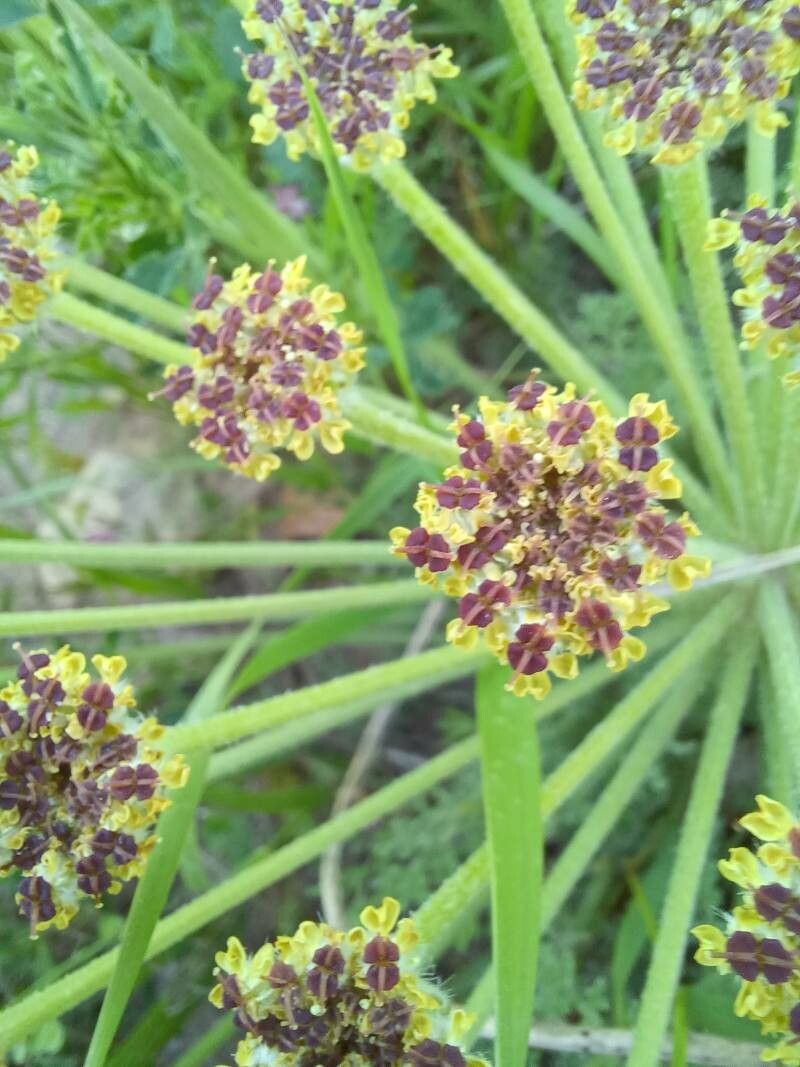
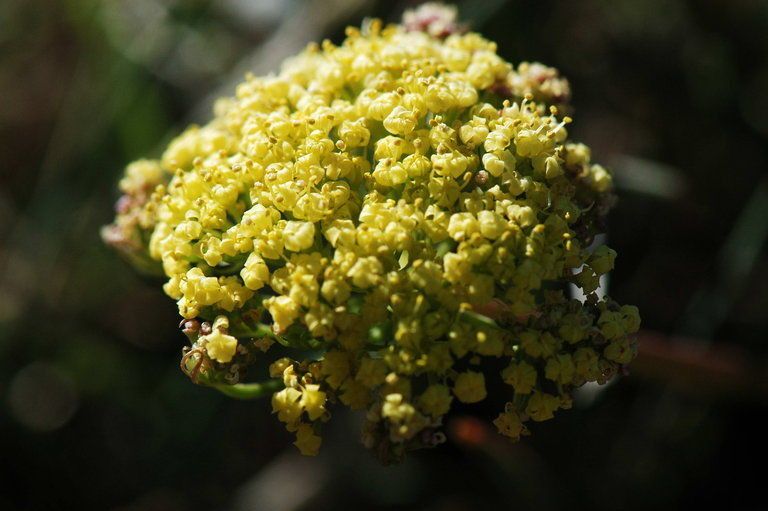
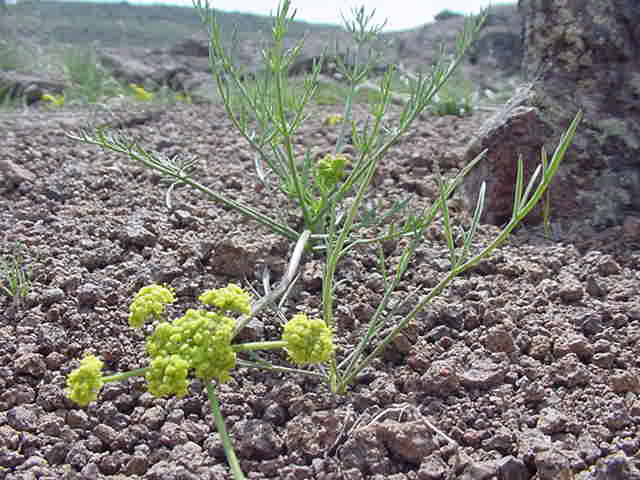
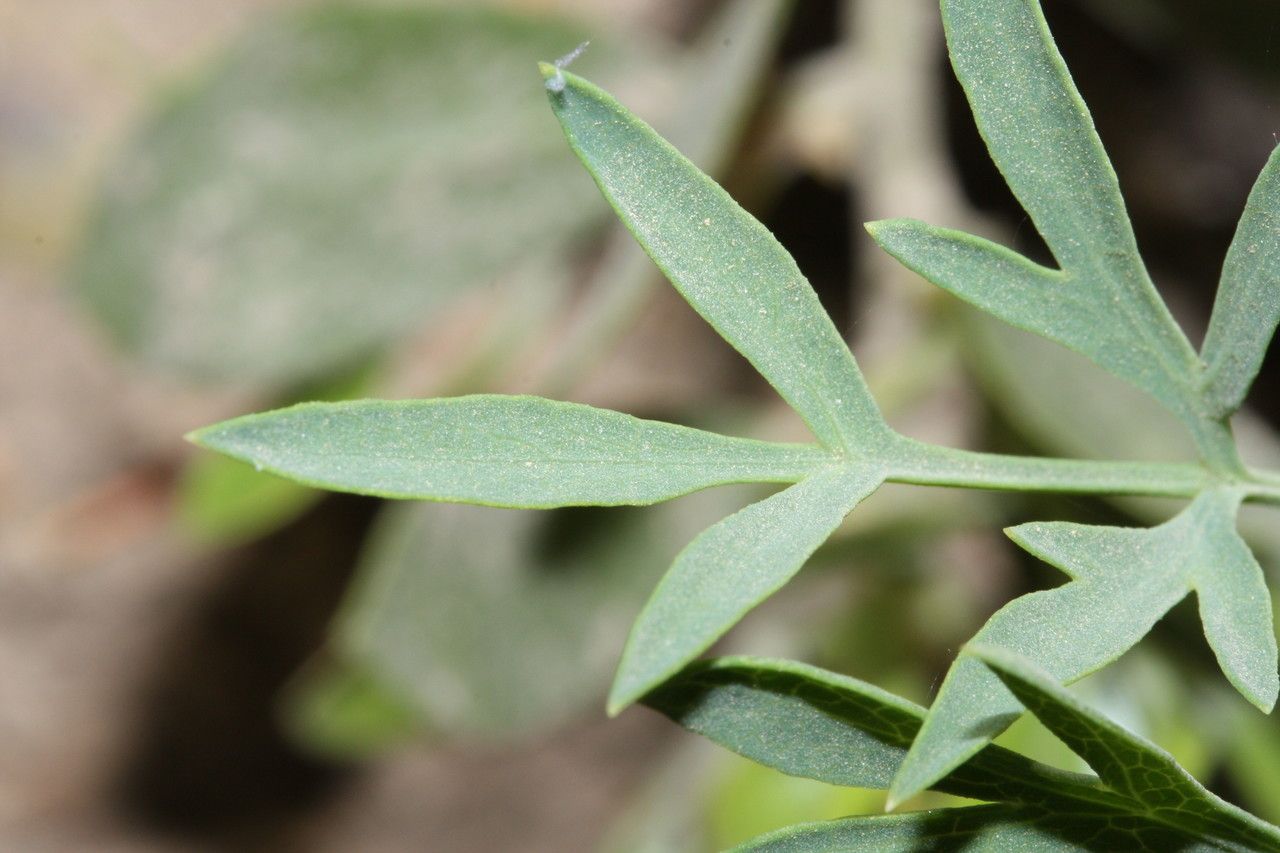
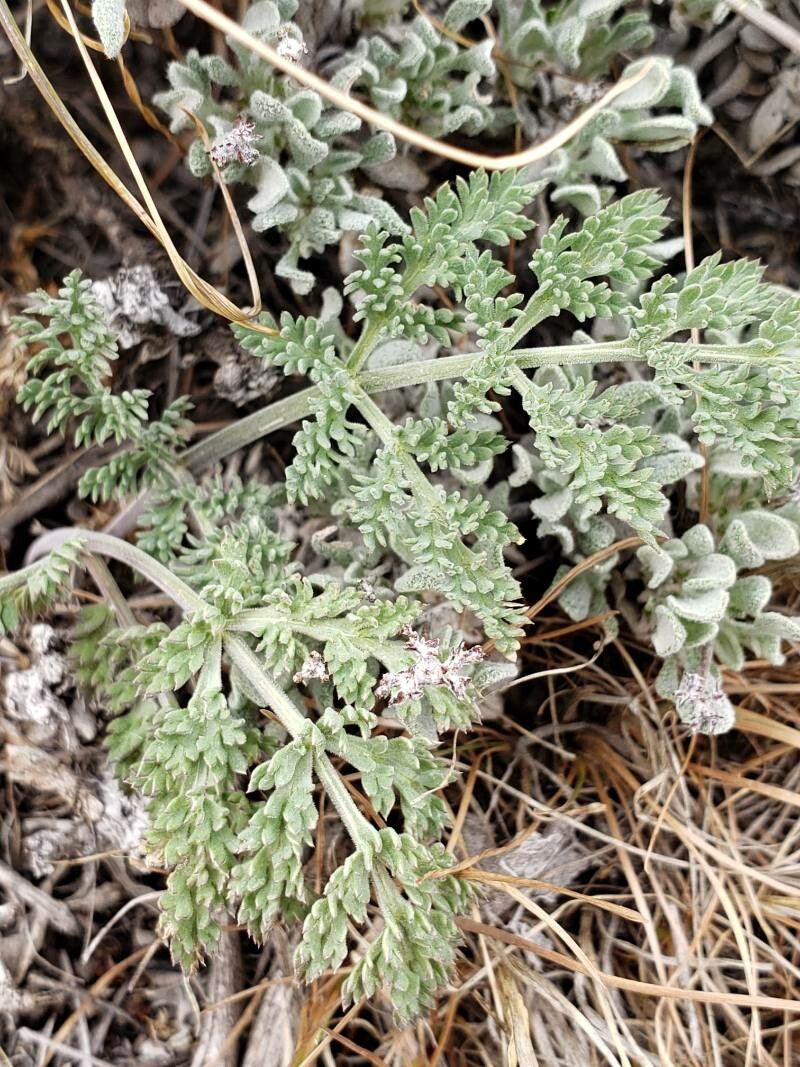
Lomatium mohavense, commonly known as Mohave desertparsley, is a perennial herbaceous plant in the Apiaceae family. Native to the southwestern United States, it thrives in the Mojave Desert and surrounding regions. This plant typically reaches up to 1 meter in height and features a woody stem with feathery leaves divided into numerous small leaflets. It produces small, yellowish-white flowers arranged in umbrella-like clusters at the ends of long stalks.
Traditionally, Native American tribes have used Lomatium mohavense for various medicinal purposes, including treating respiratory infections, coughs, colds, sore throats, and fever. The plant contains compounds such as coumarins, which exhibit anti-inflammatory properties.
Adapted to harsh desert conditions with minimal water availability, Lomatium mohavense has deep roots extending up to 3 meters into the soil to access water. It plays a crucial role in its ecosystem by providing food for pollinators like bees and butterflies.
Despite its ecological importance and medicinal benefits, Lomatium mohavense populations face threats from habitat loss due to urbanization and agricultural activities. Therefore, conservation efforts are essential to safeguard this species, ensuring it continues to support ecosystems and contribute to traditional medicine practices.
Mojave desertparsley is fairly disease-resistant and typically does not suffer from illnesses. Still, it can be affected by pests and diseases present in its environment. Such infections are usually mild. In terms of care, the plant requires moderate maintenance. Regular pruning is needed to preserve a neat appearance and promote healthy growth. Fertilizing can also help encourage flowering. Mojave desertparsley is suitable for anyone with outdoor space, like a garden or patio, and does not demand extensive care experience. It may need more attention when grown indoors.
How to keep Lomatium Mohavense.
Light
Mojave desertparsley is a perennial herbaceous plant that favors sunny locations and is native to open habitats, commonly thriving in meadows and grasslands. It prefers full sun but can also tolerate partial sun.
Water
Mojave desertparsley is highly drought-tolerant and thrives with minimal moisture, reflecting its origins in arid regions. To mimic its natural environment, it requires weekly watering to simulate the sparse hydration it typically receives. Adapted to harsh climates, Mojave desertparsley efficiently regulates water loss and retains moisture during dry spells.
Temperature
Mojave desertparsley can tolerate a broad range of temperatures, though its range may still be restricted by specific combinations of moisture and heat. It grows best in warm summer conditions when there is sufficient rainfall or watering. Extended stretches of cloudy, rainy weather or prolonged high temperatures can raise the chance of Mojave desertparsley dying. In winter, protecting the plant from cold improves its chances of survival.
Fertilizer
One fertilizer application in spring is generally enough for Mojave desertparsley, though repeated feedings can enhance growth. Apply fertilizer about every month to six weeks. Fertilizing improves the leaves' appearance and function, helping maintain uniform color and a healthy texture. It also encourages root development and better nutrient uptake for sustained plant health.
Pruning
Mojave desertparsley is a perennial herb known for its aromatic leaves and yellow flowers. To encourage growth, improve airflow, and reduce the risk of disease, it's best to prune dead stems from early to late spring. Make sure to use sterile tools when pruning to promote vigorous blooms and maintain the plant's long-term health.
Botanical profile.
- Plant Type
- Herb
- Life Cycle
- Perennial
- Genus
- Lomatium
- Family
- Apiaceae
- Hardiness Zone
- 6-9
- Mature Height
- 10 cm to 40 cm
- Mature Spread
- 15 cm to 25 cm
- Leaf Color
- Green, Light Green
- Leaf Type
- Deciduous
- Flower Color
- Yellow
- Flower Size
- 0.25 cm to 0.51 cm
- Bloom Time
- Early spring, Mid spring
- Planting Time
- Spring, Summer
- Harvest Time
- Late spring, Early summer
Other names.
Reader questions.
What are the sunlight requirements for Mojave desertparsley?
Mojave desertparsley thrives best when exposed to full sun, which means it requires above 6 hours of sunlight daily. However, it can also tolerate partial sun conditions, requiring about 3-6 hours of sunlight. This adaptability makes it suitable for various garden locations, ensuring that with the right balance of light and shade, your Mojave desertparsley will grow happily and healthily.
How does artificial lighting support Mojave desertparsley growth indoors?
When natural sunlight is insufficient, especially during winter or in less sunny spaces, artificial lighting can play a crucial role in supporting the growth of Mojave desertparsley indoors. Adequate lighting is essential for optimal growth. LED lights are recommended because they can be customized to provide specific wavelengths of light necessary for the plant. Full sun plants, like Mojave desertparsley, generally need 30-50 watts per square foot, while partial sun plants require 20-30 watts per square foot. The artificial light source should be placed 12-36 inches above the plant to mimic natural sunlight and kept on for 8-12 hours per day to imitate the length of natural daylight hours conducive to the plant species.
What are common symptoms of light deficiency in Mojave desertparsley?
When Mojave desertparsley does not receive adequate sunlight, it may exhibit various symptoms signaling this deficiency. These include smaller new leaves compared to mature ones, leggy or sparse growth due to elongated spaces between leaves or stems, faster leaf drop as the plant conserves resources, slowed or halted growth indicating a survival mode due to poor lighting, lighter-colored new leaves or chlorosis reflecting a lack of essential nutrients and chlorophyll, and symptoms of too much sunlight like sunscald, leaf curling, wilting, and leaf scorching, which impact the plant's health and photosynthetic capacity.
What are the solutions for Mojave desertparsley experiencing light deficiency?
To address light deficiency in Mojave desertparsley, gradually moving the plant to a location with at least 6 hours of direct sunlight daily is beneficial. For indoor plants, using south-facing windows and keeping curtains open during the day maximizes sunlight exposure. If moving the plant isn't feasible, consider artificial lighting, such as keeping a desk or ceiling lamp on for a minimum of 8 hours daily or investing in professional grow lights. For outdoor plants, finding the best sunlit spot and avoiding sudden changes in light intensity are key. Minimizing obstructions, like pruning trees that block sunlight, and transplanting smaller plants during their dormant period to sunnier locations can also help improve light exposure and promote healthy new growth after increasing light exposure.