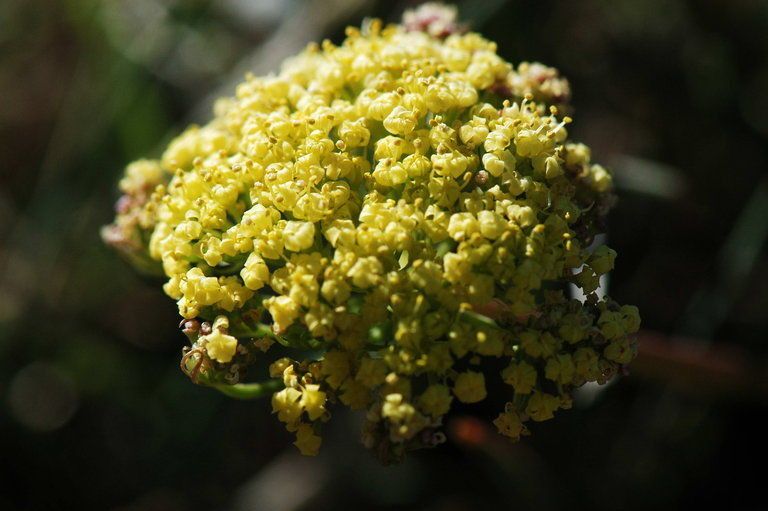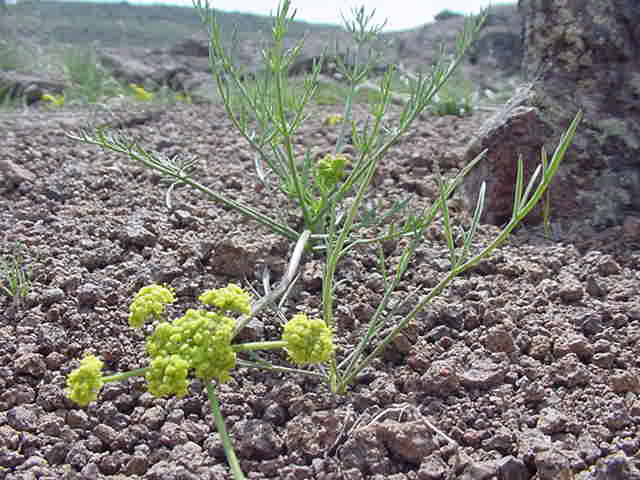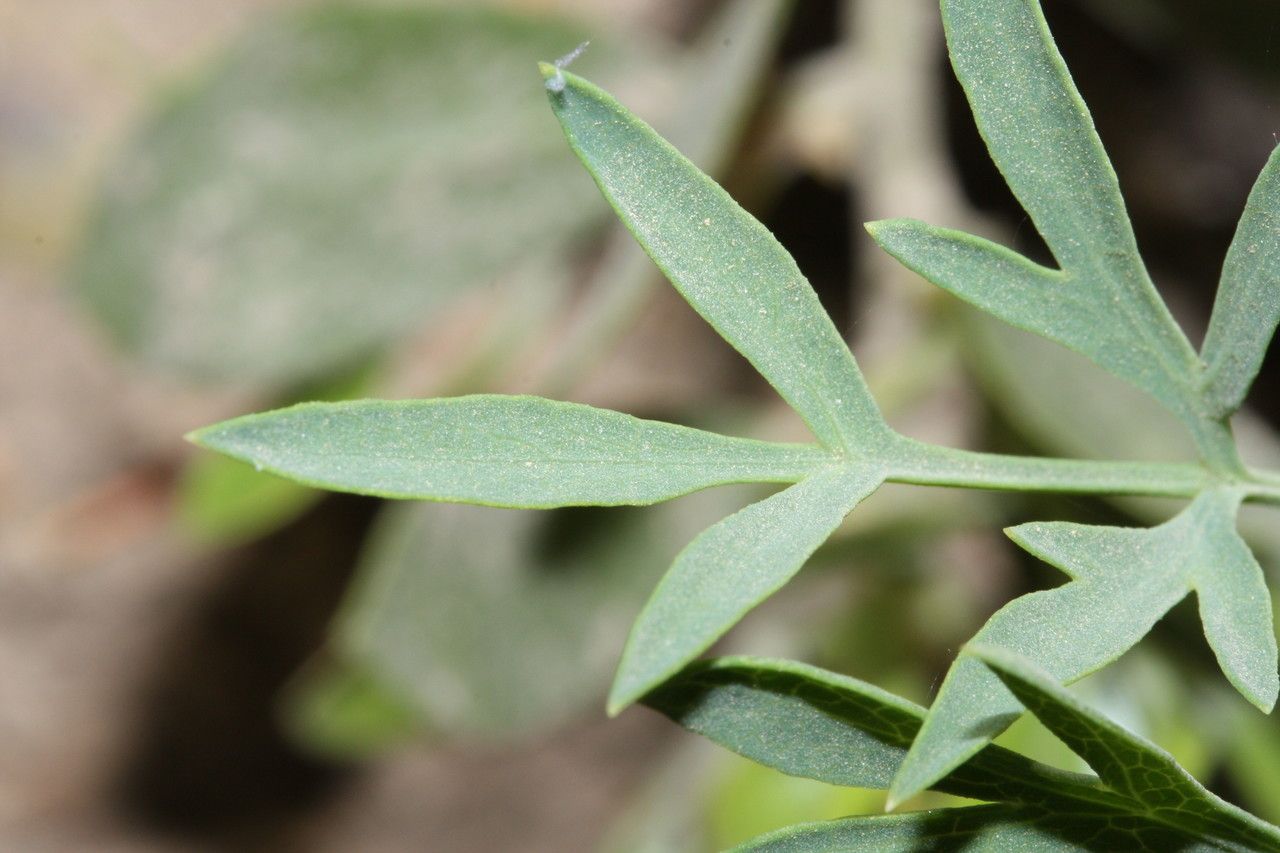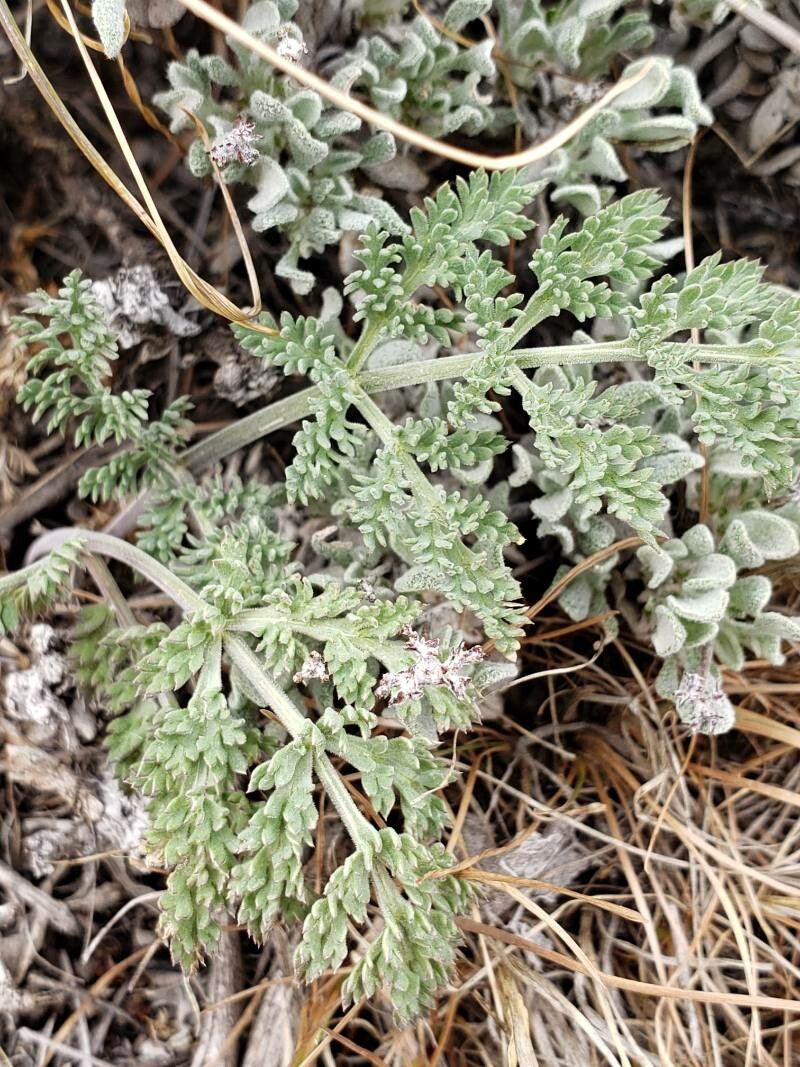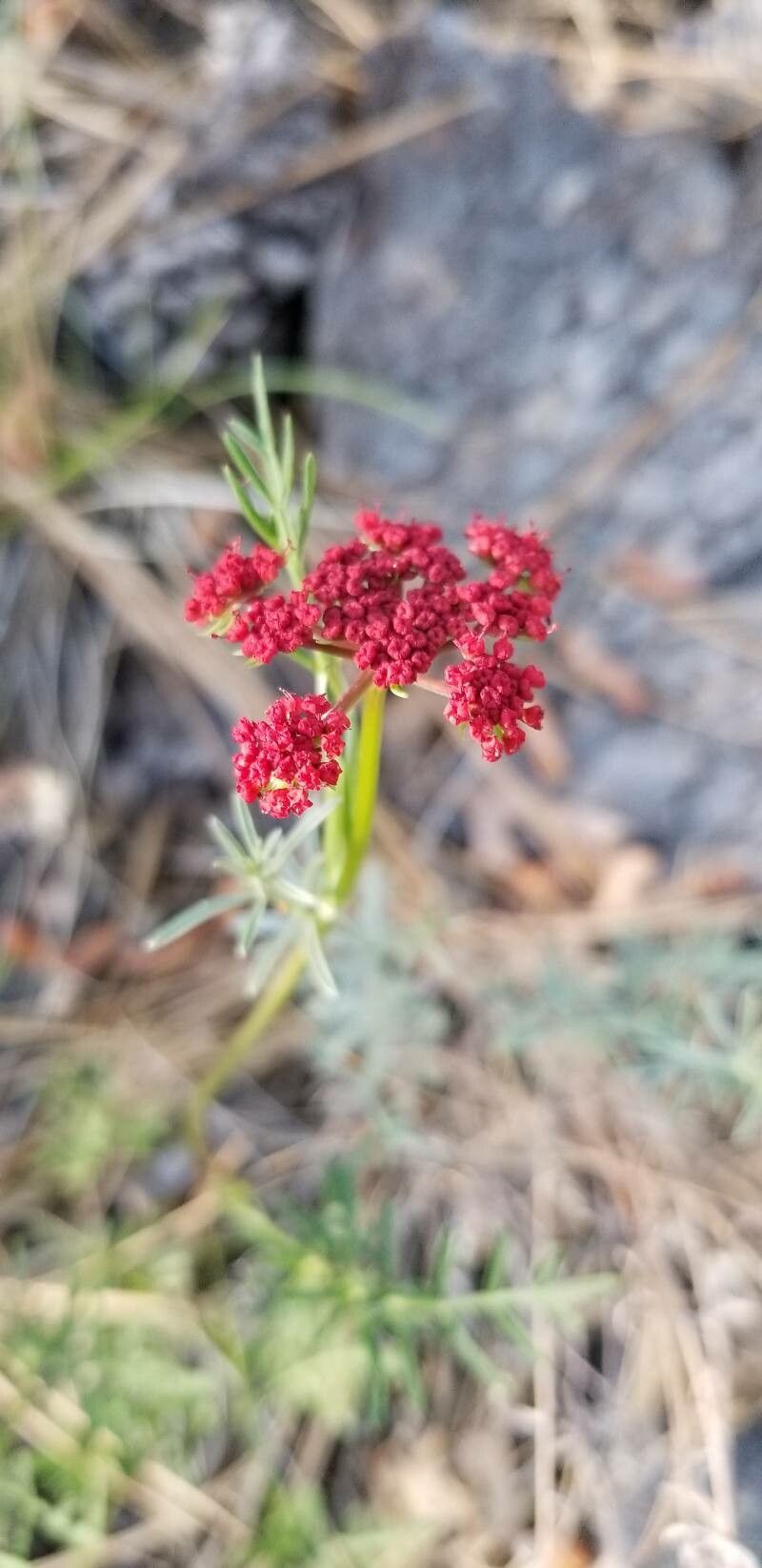
Lomatium hooveri, known commonly as Hoover's biscuitroot, is a perennial herbaceous plant belonging to the Apiaceae family. Native to the western United States, it is predominantly found in California and Nevada. The plant can grow up to one meter tall, featuring a woody base and leaves that are finely dissected into numerous small leaflets. Its small, yellowish-white flowers are arranged in umbels at the ends of long stalks.
Traditionally, Lomatium hooveri has been utilized by Native American tribes for its medicinal properties. It has been employed to treat respiratory infections, coughs, colds, and sore throats, as well as for its antiseptic qualities. Additionally, indigenous people have used the plant for food, such as making biscuits from its roots.
Lomatium hooveri thrives in dry, rocky soils at elevations ranging from 1,000 to 2,000 meters above sea level. Unfortunately, habitat loss due to human activities such as mining and urbanization has significantly reduced its populations, leading to its listing under the Endangered Species Act.
In conclusion, Lomatium hooveri is an important medicinal herb with significant cultural value. Conservation efforts are essential to protect this species, which faces threats from habitat loss caused by human activities.
How to keep Lomatium Hooveri.
Pruning
The plant boasts vibrant clusters of yellow flowers and fern-like leaves. To maintain its health, prune Hoover's biscuitroot in early spring by removing any dead or damaged stems. This helps improve air circulation and encourages healthy growth. Regular pruning also promotes robust development, extends the blooming period, and enhances the plant's overall vitality.