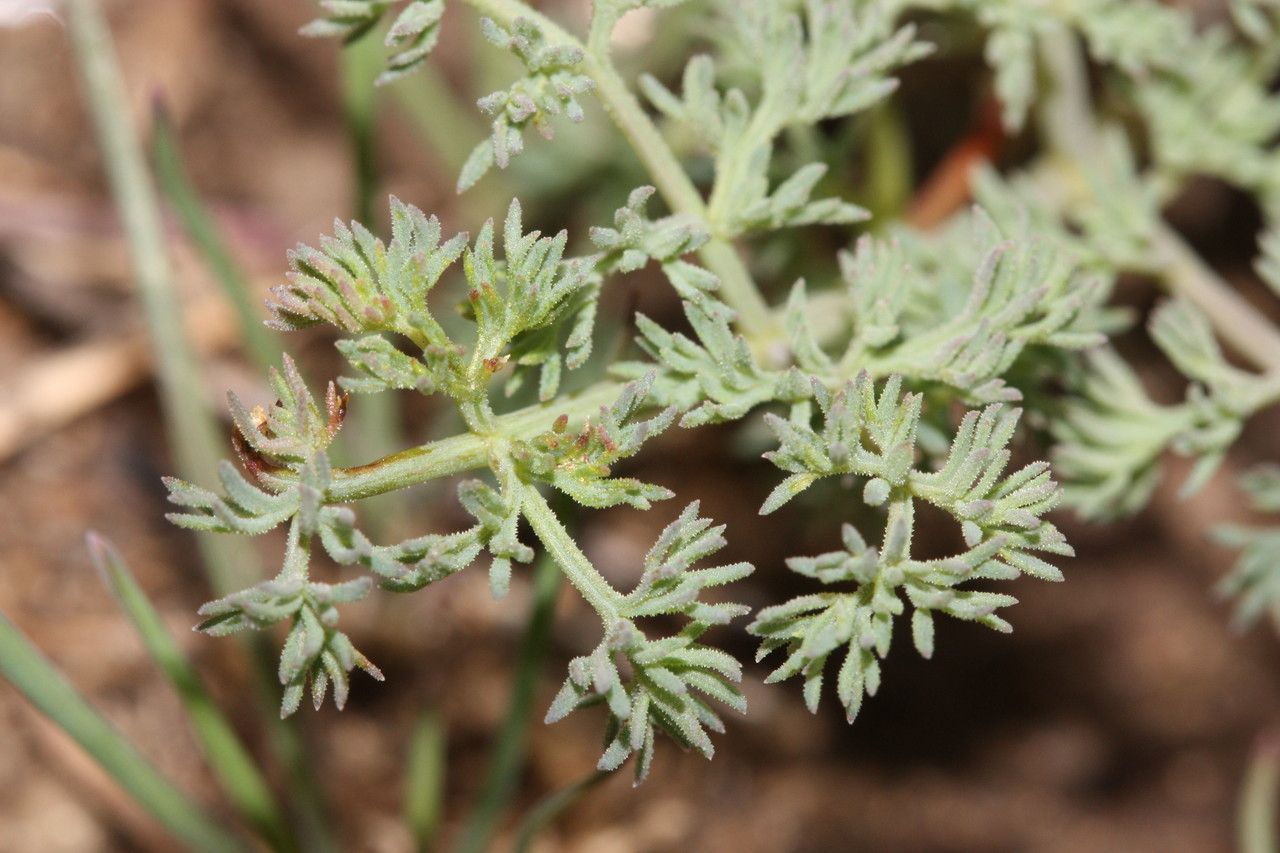
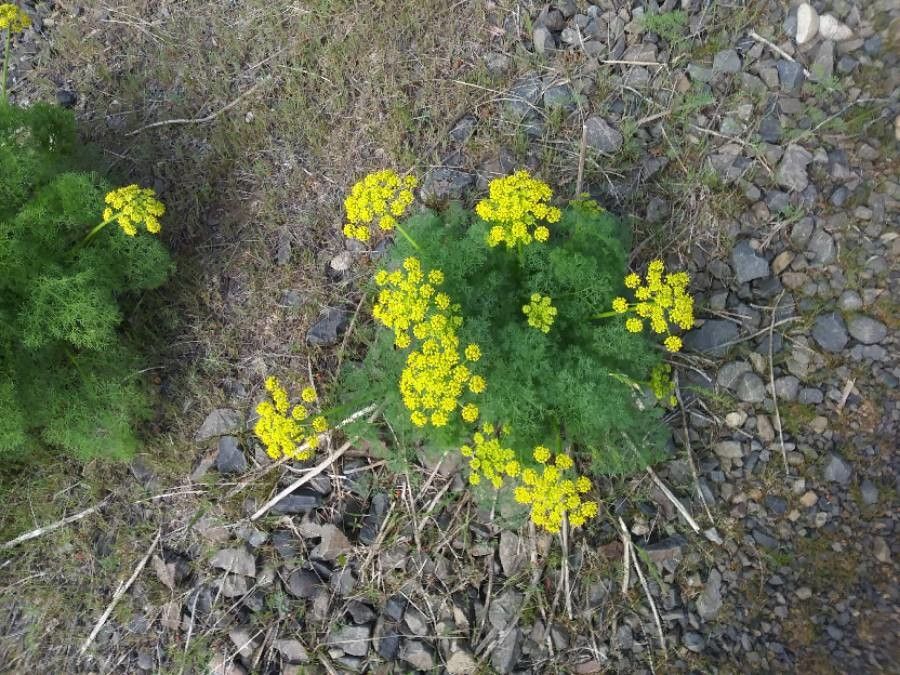
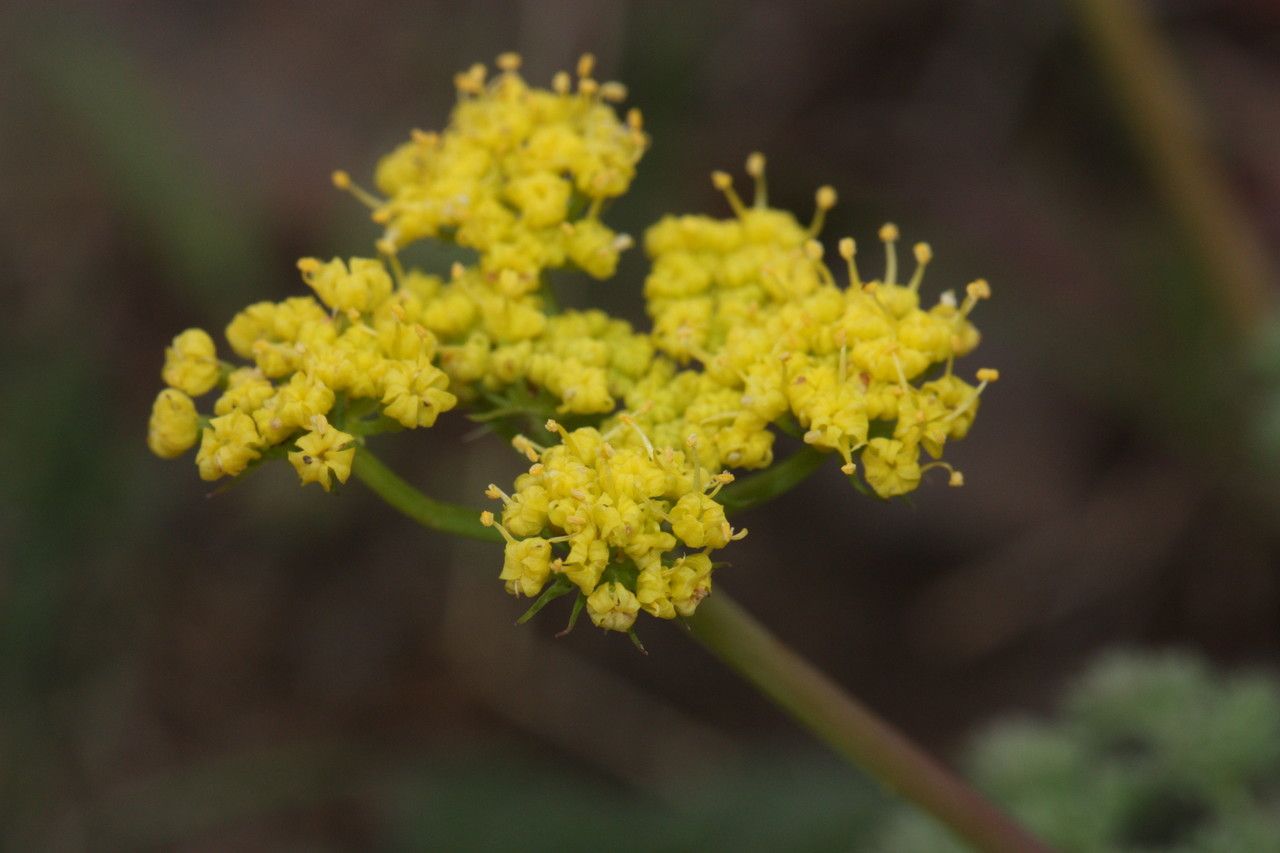
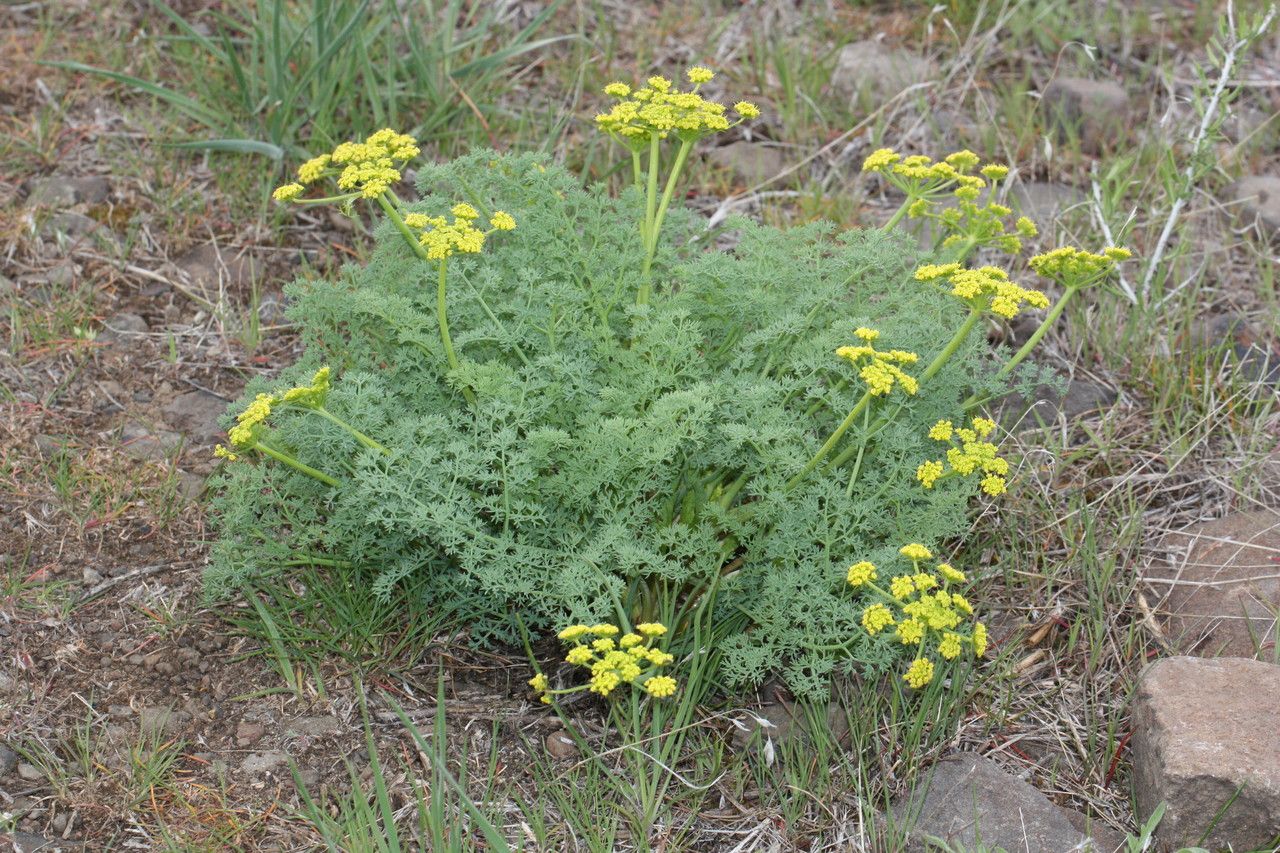
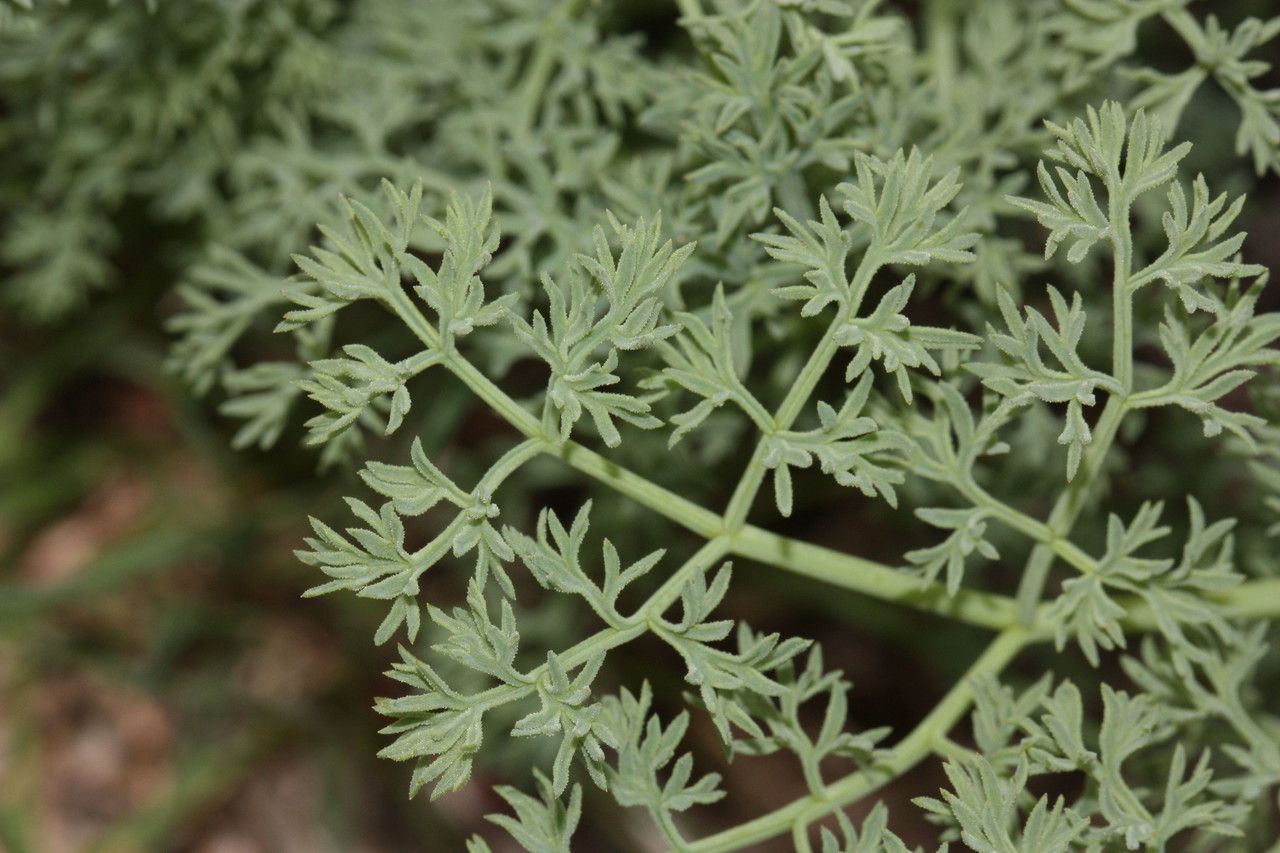
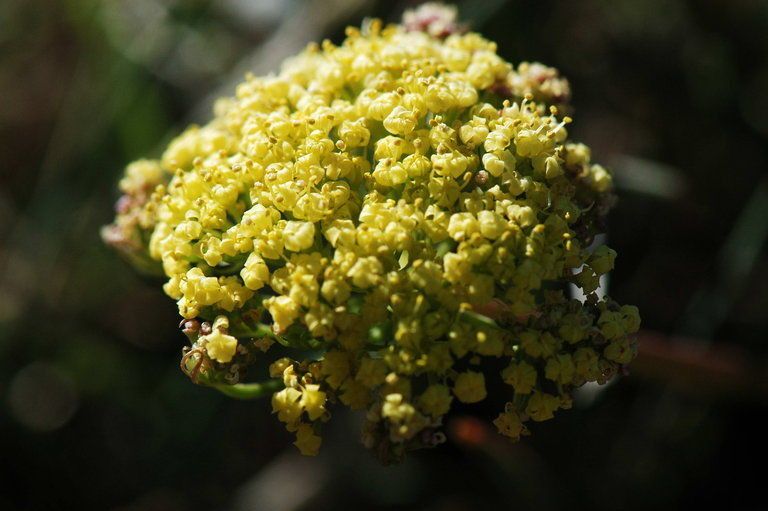
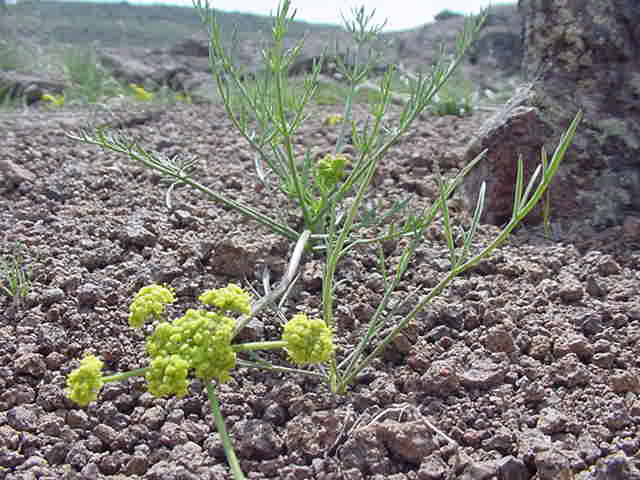
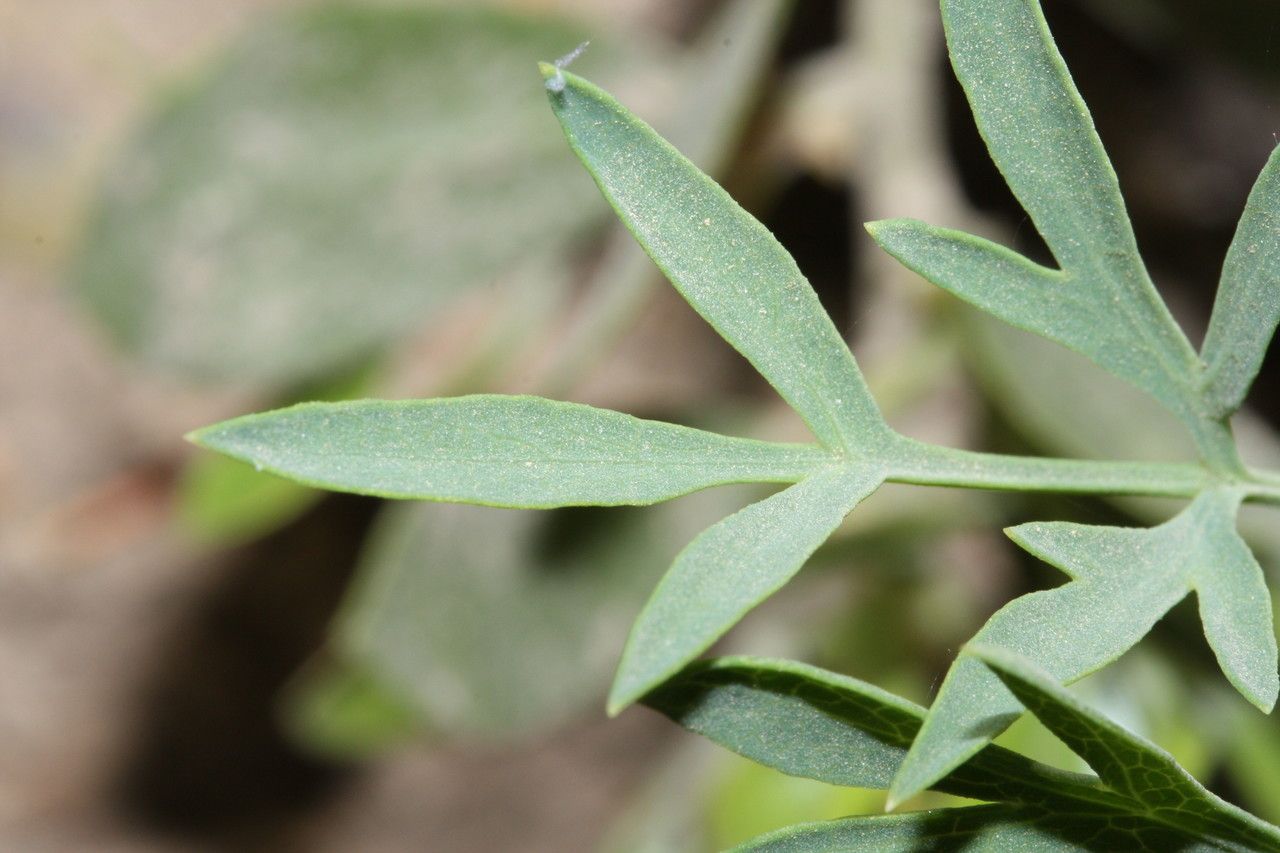
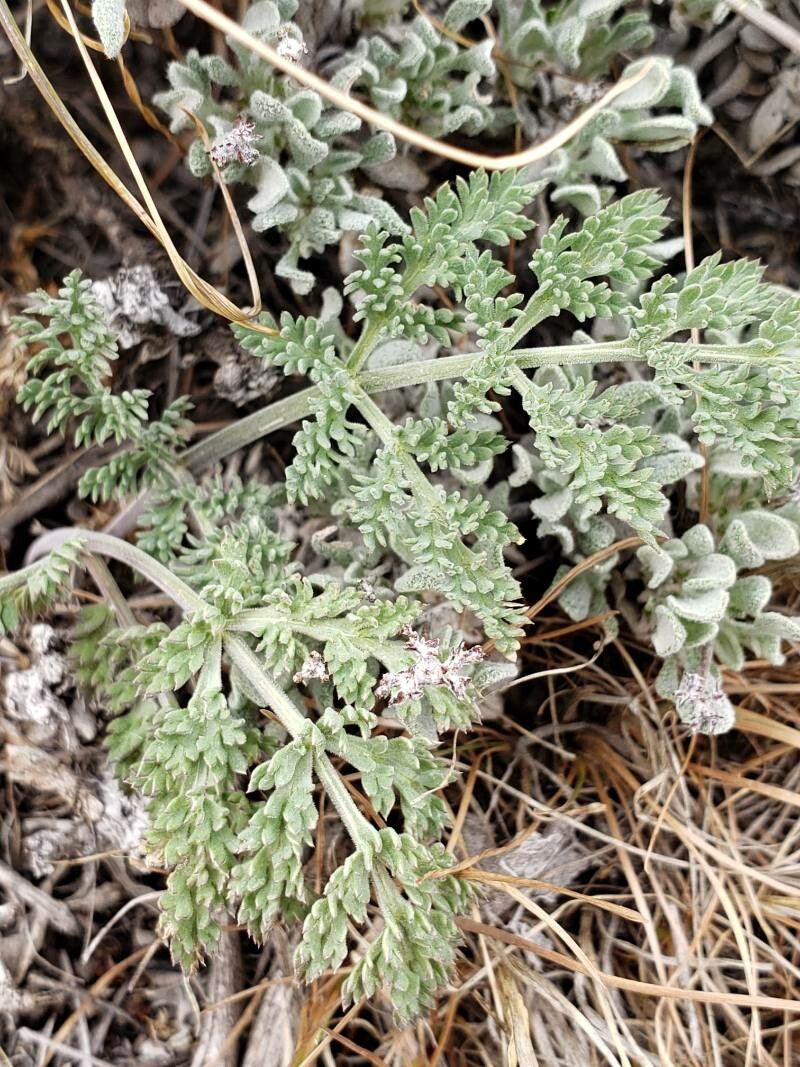
Lomatium grayi, commonly known as Gray's biscuitroot, Gray's desert parsley, or pungent desert parsley, is a perennial herb of the family Apiaceae. It is native to Western Canada in British Columbia, and the Western United States, including from the Eastern Cascades and northeastern California to the Rocky Mountains.It is a perennial herb found growing in dry rocky banks and slopes. It grows throughout the sagebrush steppe and also in pinyon–juniper woodland. It has a lifespan of 5–7 years.
Gray's biscuitroot has strong disease resistance and is usually not prone to illnesses. However, it can be affected by pests and diseases present in its environment. These infections are typically minor. In terms of care, the plant requires moderate maintenance. It needs regular pruning to keep a good appearance and encourage healthy growth. Fertilizing can also help stimulate flowering. Gray's biscuitroot is a good choice for anyone with outdoor space, such as a garden or patio, and does not demand extensive care experience. It may need more attention when grown indoors.
How to keep Lomatium Grayi.
Light
Gray's biscuitroot prefers sites that get uninterrupted sunlight all day for optimal growth. Native to sunny habitats, the plant can tolerate locations with no light, but this may reduce its vigor. Both excessive and insufficient light can cause poor growth and diminished health.
Water
Gray's biscuitroot is well-adapted to arid conditions and exhibits strong drought tolerance, thriving with minimal moisture. It generally prefers weekly watering. This plant efficiently balances water retention and usage, making the most of rainwater during the growing season. This allows it to ensure reproduction and growth even when precipitation is unpredictable.
Temperature
Gray's biscuitroot comes from habitats where the usual temperature ranges from 41 to 90 °F (5 to 32 ℃). It grows best within that range. It's advisable to adjust temperatures seasonally to encourage healthy growth.
Fertilizer
Usually a single fertilizer application in spring is adequate for Gray's biscuitroot, though repeated feedings can boost growth. Apply fertilizer roughly every one to one and a half months. Fertilization improves the leaves' appearance and function, helping keep their color even and texture healthy. It also promotes root development and enhances nutrient uptake for sustained plant health.
Pruning
Gray's biscuitroot is a perennial herb characterized by its yellow flowers and fern-like leaves. To promote healthy growth, prune away any dead foliage and spent stems from early to late spring. Be careful not to over-prune, as this can damage Gray's biscuitroot. Proper pruning helps maintain the plant's shape and reduces the risk of disease.
Botanical profile.
- Plant Type
- Herb
- Life Cycle
- Perennial
- Genus
- Lomatium
- Family
- Apiaceae
- Hardiness Zone
- 4-8
- Mature Height
- 15 cm to 37 cm
- Mature Spread
- 61 cm
- Leaf Color
- Green, Blue
- Leaf Type
- Deciduous
- Flower Color
- Yellow, Green
- Flower Size
- 3.56 cm to 10.16 cm
- Bloom Time
- Early spring, Mid spring
- Planting Time
- Spring, Autumn
- Harvest Time
- Late spring, Early summer
Other names.
Reader questions.
What do I need to do if I give my Gray's biscuitroot plant too much or too little water?
Overwatering is a common issue for Gray's biscuitroot and can cause wilting, yellowing, and diseases like root rot, mold, and mildew which can be fatal. Underwatering is less common, but can cause brittle and brown leaves. It's important to notice signs of overwatering early and reduce watering immediately. Check the soil's drainage, replacing it if necessary. If underwatering is detected, simply increase watering until signs subside.
Why do I have to add fertilizer to my Gray's biscuitroot?
To ensure that the leaves of the Gray's biscuitroot look great and function properly, fertilization is crucial. Proper fertilization will result in consistent color and a healthy texture of the leaves. Additionally, fertilization has benefits below the soil's surface, as it helps the Gray's biscuitroot develop new roots and maintain the existing root system. This means that fertilization not only keeps the plant healthy in the present, but also improves its ability to absorb soil nutrients in the future.
What kind of sunlight does Gray's biscuitroot need?
Gray's biscuitroot requires six hours of full sun daily to maintain the health of its leaves, roots, and blooms. While most perennials also need six hours of sunlight, certain plants like the Orange Daylily or Giant Coreopsis can survive with only three hours of direct sunlight each day. However, these perennial flowering plants will not thrive as well as they would in sunnier conditions.
What is the best temperature for Gray's biscuitroot?
Gray's biscuitroot has specific temperature preferences depending on the season. During the growing season, which is when the plant starts sprouting, the ideal temperature range is between 65-80℉ (18-27℃). If it gets colder than 15℉ (-10℃), the plant may suffer and its leaves could turn brown and wilt. However, if it's just a short cold snap, Gray's biscuitroot may survive with some assistance. On the other hand, during the hotter parts of the year, the plant needs protection from temperatures exceeding 95-105℉ (35-40℃). Higher temperatures can harm the foliage and blooms, causing wilting, drooping, and even sunburn. To address this issue, there are quick and easy methods available.
How often should I give water to my Gray's biscuitroot?
If your Gray's biscuitroot plant is in a pot, the most precise way to determine if it needs water is by checking the soil. Stick your finger into the soil and if the top two to three inches are dry, it's time to water it. For outdoor Gray's biscuitroot plants grown in the ground, you can use a similar method. Check the top few inches of soil and if it's dry, give it some water. In the spring and early fall, watering once a week is usually sufficient. However, during extremely hot weather, you may need to water it twice or even more per week. It's important to note that mature and well-established Gray's biscuitroot plants have a remarkable ability to resist drought.
When should I put fertilizer on my Gray's biscuitroot plant?
When you grow your Gray's biscuitroot outside, you can expect new growth to appear in early spring. This is a signal that it's time to start fertilizing for the year. Typically, applying fertilizer once in the spring is sufficient for the plant. However, if you want to promote maximum growth, you can fertilize multiple times during spring and early summer. In this case, feed your Gray's biscuitroot approximately once every month to a month and a half.
Can the sun harm Gray's biscuitroot? How can we safeguard Gray's biscuitroot from sun and heat harm?
In warm climates, some Perennial Flowering Plants may struggle with excessive heat and suffer from sun damage. They can wilt, dry out, or even experience growth problems if they are consistently exposed to the intense afternoon sun. However, not all plants require protection from the light afternoon sun. For those that are harmed by intense afternoon exposure, it is recommended to provide them with some shade in warmer climates. Gardeners can achieve this by planting these plants in areas that do not receive direct heat during the afternoon, such as under trees or behind bushes.
What temperature does Gray's biscuitroot need in its first year or as a seedling?
If you have recently planted a Gray's biscuitroot outside for the first time, it may require additional care during the colder months. Frost can cause severe damage to a new Gray's biscuitroot and hinder its growth in the spring. To prevent this, make sure to keep the plant at a temperature of 40℉(5℃) or above. You can either bring the plant inside for a month or two or use mulch or fabric barriers to protect it from frost. During the first year or two, it is recommended to plant the Gray's biscuitroot in a shadier spot. This is because smaller, weaker plants struggle to maintain their temperatures in hot weather. Ideally, the plant should not receive more than five hours of direct sunlight per day, especially if the daytime temperature exceeds 80℉(27℃). To control summer heat, use shadecloth and ensure frequent watering or misting.
How should I water my Gray's biscuitroot plant?
To properly care for the Gray's biscuitroot, it's best to use filtered water at room temperature. Tap water may have harmful particles, so filtered water is preferred. Since the Gray's biscuitroot is accustomed to warm climates, it's important to avoid using cold water, as it can be a shock to the plant. Additionally, it's recommended to avoid overhead watering to prevent foliage complications. Instead, you should directly apply filtered room temperature water to the soil until it's completely soaked. This helps moisten the roots and enables them to continue spreading and gathering essential nutrients from the soil.
When is it best to not put fertilizer on my Gray's biscuitroot plant?
During late fall and winter, your Gray's biscuitroot will be dormant and won't produce new growth. So, it's important not to fertilize it during this period. If you choose to fertilize in spring and summer, start reducing the amount of fertilizer as summer approaches because the growth rate of your Gray's biscuitroot will also slow down. Overall, it's not recommended to fertilize your Gray's biscuitroot during extremely hot or dry weather as it can stress the plant and cause it to die early.
Do I need to keep Gray's biscuitroot away from the sun?
Certain perennial plants require ample sunlight to reach their maximum bloom. However, in warmer climates, some of these plants actually benefit from less sun. For instance, individuals residing in hotter regions might find it beneficial to shade their flowering perennials during the intense afternoon sun, especially during summer months. Although many perennial flowering plants prefer partial shade in the hottest climates, there are exceptions. Take the Giant Coreopsis, for example, as it is not bothered by excessive sun exposure. These plants can flourish even when placed in the full sun during scorching weather.
How can I keep Gray's biscuitroot safe from very hot or very cold temperatures?
If cold temperatures below 15℉(-10℃) occur during the growing season, there are a few measures you can take to protect Gray's biscuitroot from frost or cold damage. If it's in a container, bring it inside in bright, indirect light until temperatures rise. If it's planted in the ground, use mulch or horticultural fabric to create an insulated barrier around the plant to protect it from frost and cold wind. For temperatures hotter than 80℉(27℃) in the shade during the day, be careful to expose Gray's biscuitroot to no more than six hours of sunlight per day, preferably in the morning. Use shade cloth or a fine plastic mesh to reduce direct sunlight during the hottest parts of the day. Installing a misting system can also release cooling mist around the base of the plant to lower ground temperatures during the day.