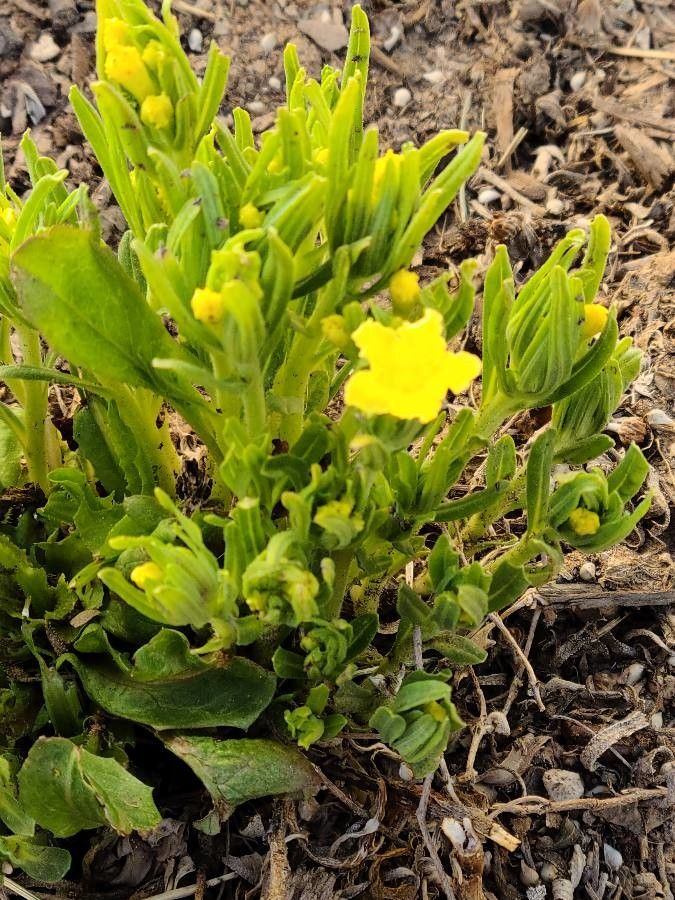
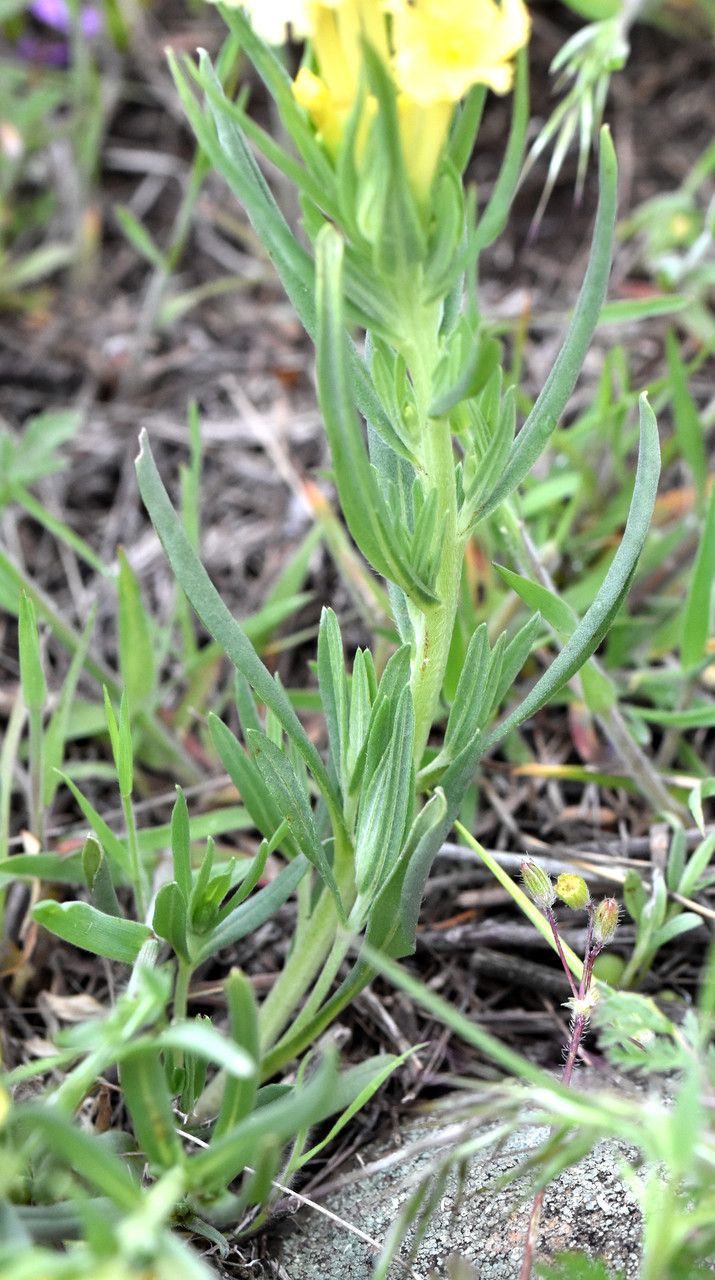
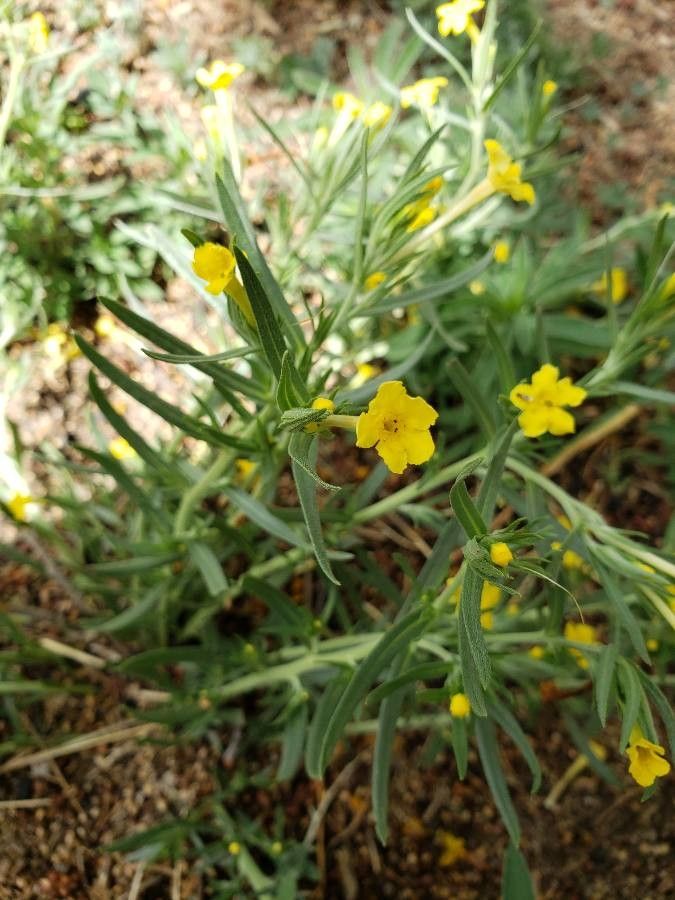
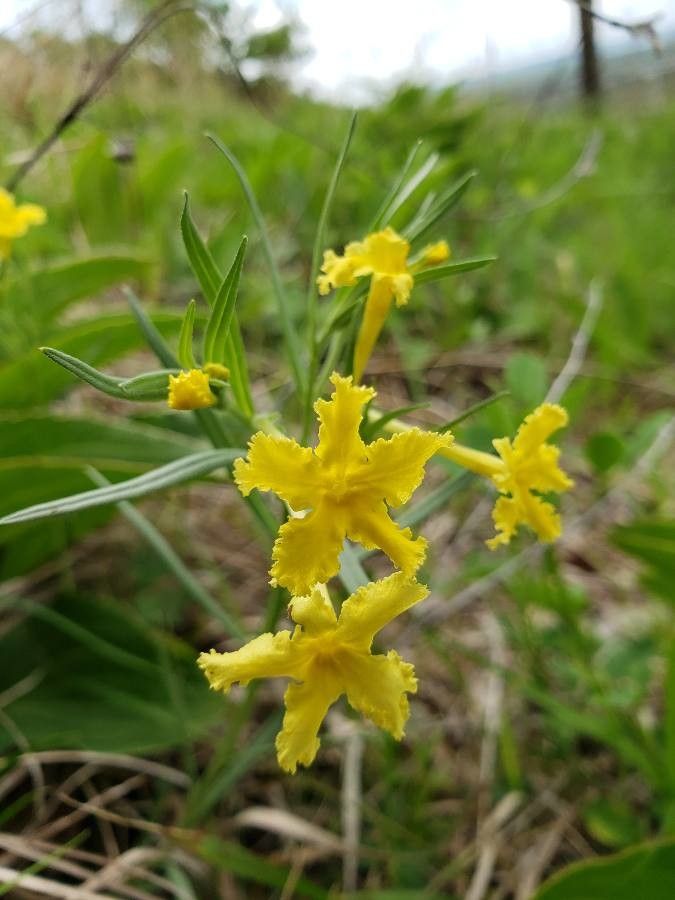
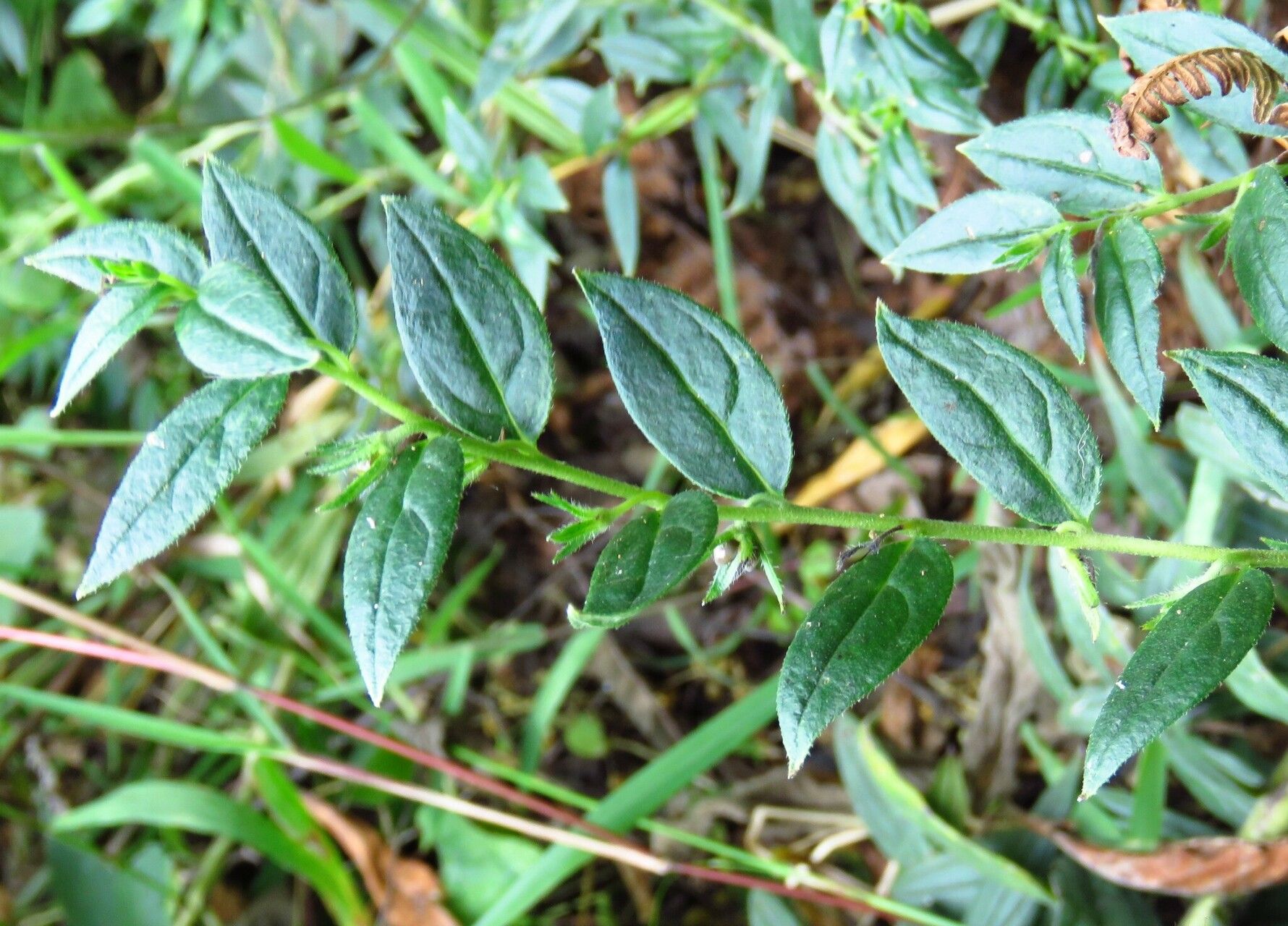
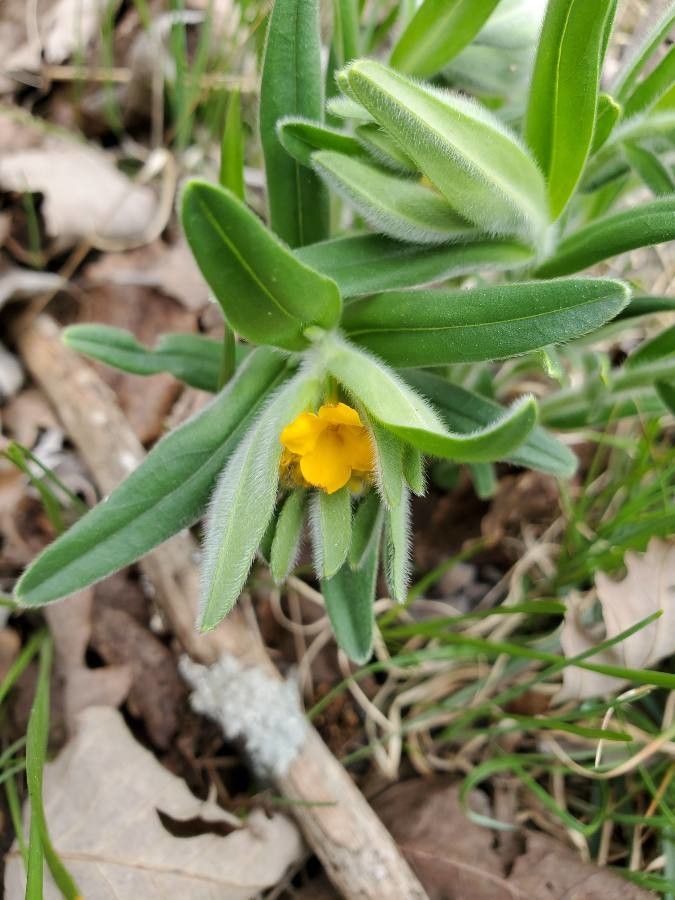
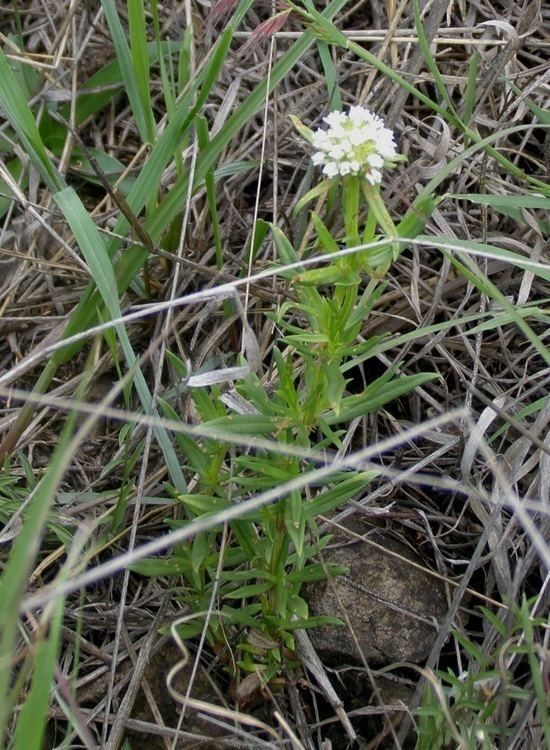
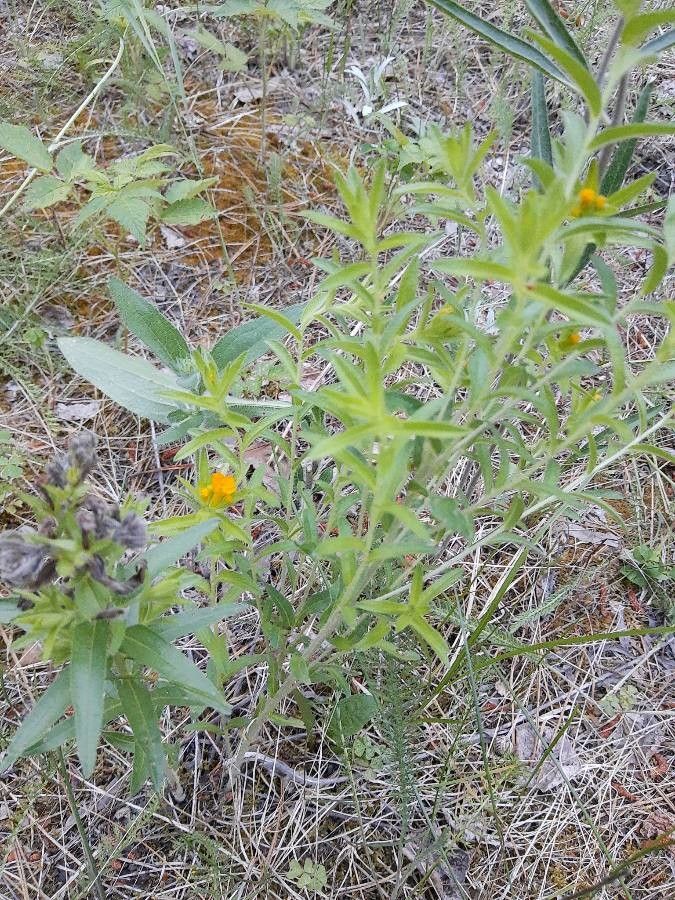
Lithospermum incisum is a species of flowering plant in the borage family known by several common names, including fringed puccoon, narrowleaf stoneseed, fringed gromwell, narrowleaf puccoon, and plains stoneseed. It is native to much of central Canada and the United States, where it is known from many types of habitat, but particularly piñon-juniper woodland. It is a hairy perennial herb growing from a taproot and woody caudex. It produces a cluster of stems up to about 30 centimeters long. The stems are lined with narrow, pointed leaves up to 6 centimeters long. The slender, trumpet-shaped flowers are pale to bright yellow or gold, and may approach 4 centimeters long. The corolla face is 1 to 2 centimeters wide, its lobes sometimes ruffled. The smaller cleistogamous (closed) flowers are the main producers of seed.
Narrowleaf Stoneseed has good disease resistance and is generally not prone to illnesses. However, it can be vulnerable to pests and diseases present in its environment. These infections are usually mild. In terms of care, this plant requires moderate maintenance. It should be pruned regularly to maintain a tidy appearance and healthy growth. Fertilizing can also help encourage flowering. Narrowleaf Stoneseed is suitable for anyone with outdoor space, such as a garden or patio, and does not require extensive care experience. It may need more attention when grown indoors.
How to keep Lithospermum Incisum.
Light
Narrowleaf Stoneseed performs best in abundant light conditions similar to those in its native habitats. It exhibits vigorous growth when it can take full advantage of the day's light hours. Conversely, inadequate light impedes Narrowleaf Stoneseed's development, resulting in less robust growth.
Water
Narrowleaf Stoneseed is well-suited for arid landscapes due to its high drought tolerance. It requires minimal watering, ideally just once a week, as overwatering can be harmful to the plant. This plant thrives in rocky terrains and benefits from well-draining soil that mimics its natural habitat, enhancing its water-efficient qualities.
Temperature
Narrowleaf Stoneseed is native to habitats with temperatures between 32 and 90 °F (0 to 32 ℃). It does well within this range but may need extra shade or water during hotter seasons to cope with temperature variations.
Fertilizer
For Narrowleaf Stoneseed, the primary time to apply fertilizer is in early spring when flowers are beginning to form. The appropriate fertilizer promotes better blooms and helps Narrowleaf Stoneseed produce attractive flowers. Fertilizing in early spring ensures strong flowers throughout the season and supplies energy for dormant growth phases.
Pruning
Narrowleaf Stoneseed, distinguished by its vibrant yellow flowers and slender leaves, thrives with proper pruning. Key techniques involve removing dead stems and shaping the plant to encourage healthy growth. The best time to prune is from early to late spring. Be sure to sterilize your tools to prevent infections, which will also improve air circulation. This not only enhances the plant's appearance but also reduces the risk of disease.
Botanical profile.
- Plant Type
- Herb
- Life Cycle
- Perennial
- Genus
- Lithospermum
- Family
- Boraginaceae
- Hardiness Zone
- 3-7
- Mature Height
- 10 cm to 40 cm
- Mature Spread
- 25 cm
- Leaf Color
- Green
- Leaf Type
- Deciduous
- Flower Color
- Yellow
- Flower Size
- 2.54 cm
- Bloom Time
- Spring
- Planting Time
- Spring, Summer
- Harvest Time
- Late spring, Early summer, Mid summer
- Native Area
- Mexico
Other names.
Reader questions.
How much water does my Narrowleaf Stoneseed plant need?
To water your Narrowleaf Stoneseed properly, water it generously without hesitation. Make sure the top two to three inches of soil are dry before watering. It's important to give the plant a deep watering that fully saturates the soil. Add enough water so that it flows through the drainage holes at the bottom of the pot. If you don't see excess water draining, it means you haven't provided enough water. Avoid letting water accumulate in the soil, as it can be harmful to the plant. Lack of drainage could also be due to poorly draining soils, which is not good for the plant's health. If the plant is outside, one inch of rain per week is sufficient.
What are the sunlight requirements for Narrowleaf Stoneseed?
Narrowleaf Stoneseed requires full sunlight, which means it needs more than 6 hours of sunlight daily. Watching how sunlight moves through your garden helps in picking the right spots that provide a perfect balance of light and shade. This balance ensures the plants thrive well. Narrowleaf Stoneseed's growth is robust when it can make the most of the day's light, similar to its native habitats. However, a lack of substantial light can impinge on its development, leading to less robust growth.
What is the ideal temperature range for Narrowleaf Stoneseed?
Narrowleaf Stoneseed thrives in environments with temperatures ranging from 32 to 90 °F (0 to 32 °C). It is highly cold-tolerant and can cope well without additional frost protection measures during winter. However, to manage temperature variations, especially during the hotter seasons, it might require extra care like additional shade or water.
How should I water my Narrowleaf Stoneseed plant?
To properly care for the Narrowleaf Stoneseed plant, it's best to use filtered water at room temperature. Tap water may contain harmful particles, so filtered water is a safer option. The water should be at room temperature or slightly warmer because the plant is used to warm environments, and cold water can be a shock. It's important to avoid overhead watering as it can cause issues with the foliage. Instead, simply water the plant by applying filtered room temperature water to the soil until it is fully soaked. This helps to provide moisture to the roots and enables them to spread and collect the necessary nutrients.
How can artificial lighting benefit indoor Narrowleaf Stoneseed plants?
Indoor Narrowleaf Stoneseed plants require adequate lighting for optimal growth. Artificial lights offer a vital solution when natural sunlight is insufficient, particularly in winter or in less sunny spaces. LED lights, a popular choice for indoor plant lighting, can be customized to provide specific wavelengths of light that plants need. Full sun plants need 30-50W/sq ft of artificial light, partial sun plants need 20-30W/sq ft, and full shade plants need 10-20W/sq ft. The light source should be placed 12-36 inches above the plant, mimicking natural sunlight, and most plants need 8-12 hours of light per day.
How should I prepare Narrowleaf Stoneseed for winter?
To prepare Narrowleaf Stoneseed for winter, it is recommended to water the plant generously before the first freeze in autumn. This ensures the soil remains moist and enters a frozen state, which helps prevent drought and water scarcity for the plant during the cold months and into early spring.
What should I do if I give my Narrowleaf Stoneseed plant too much water or too little water?
Overwatering is a common issue that can harm your Narrowleaf Stoneseed. When this happens, its stems and leaves may wilt and turn yellow. Over time, it can also lead to diseases like root rot, mold, and mildew, which can be fatal for your plant. On the other hand, underwatering is less common, as this plant can handle drought. However, if underwatering occurs, the leaves may become brittle and brown. It's crucial to recognize the signs of overwatering early and reduce watering immediately. Check the soil drainage and replace it if necessary. If your plant is receiving too little water, simply increase the frequency until the signs of dryness go away.
What are the signs of insufficient light in Narrowleaf Stoneseed plants?
Signs of insufficient light in Narrowleaf Stoneseed plants include smaller new leaves compared to the previous ones, leggy or sparse growth with longer spaces between leaves or stems, faster leaf drop as the plant tries to conserve resources, slower or halted growth due to the plant entering survival mode, and lighter-colored new leaves indicating a lack of chlorophyll and essential nutrients. Other symptoms include chlorosis (leaves turning yellow due to chlorophyll breakdown), sunscald (damage from intense sunlight exposure), leaf curling (a defense mechanism against extreme sunlight), wilting (loss of turgor pressure), and leaf scorching (brown, dry edges due to excessive sunlight).
What are the symptoms and solutions for Narrowleaf Stoneseed in low temperatures?
Narrowleaf Stoneseed is extremely cold-tolerant, but it's important to maintain the winter temperature above -35°C to prevent issues. If temperatures drop below this threshold, you may not notice immediate changes, but there could be a decrease in sprouting or no sprouting at all in spring. The recommended solution for affected plants in spring is to remove any parts that have failed to sprout.
How often do I need to water my Narrowleaf Stoneseed?
If your Narrowleaf Stoneseed plant is in a pot, the most precise way to determine if it needs water is by checking the soil. Simply stick your finger into the soil and see if the first two to three inches are dry. If they are, it's time to water. If you have planted your Narrowleaf Stoneseed outdoors in the ground, you can use a similar method. When the top few inches of soil have dried out, it's time to give it some water. Typically, during the spring and early fall, watering once a week using this method will suffice. However, during extremely hot weather, you may need to water twice or even more times per week. Nonetheless, it's worth noting that mature and well-established Narrowleaf Stoneseed plants have a remarkable ability to tolerate drought.
What solutions are recommended for Narrowleaf Stoneseed struggling with light conditions?
To help Narrowleaf Stoneseed plants struggling with light conditions, gradually move them to a sunnier location, ensuring they receive at least 6 hours of direct sunlight daily. Use south-facing windows and keep curtains open for maximum sunlight. If a plant is large or not easily movable, consider using artificial light for at least 8 hours daily. For outdoor plants, avoid sudden changes in light intensity to prevent sunburn. Obstructions blocking sunlight should be reduced by pruning or transplanting smaller plants to sunnier locations with good drainage during their dormant period.
What are the symptoms and solutions for Narrowleaf Stoneseed in high temperatures?
Narrowleaf Stoneseed is not tolerant of high temperatures. Growth halts and the plant becomes more susceptible to rot when temperatures exceed 32°C. To mitigate damage, you should trim away sunburned and dried-up parts of the plant. Moving the plant to a shaded location or using a shade cloth can protect it from the midday and afternoon sun. Additionally, watering the plant in the morning and evening helps keep the soil moist and supports the plant in coping with the heat.