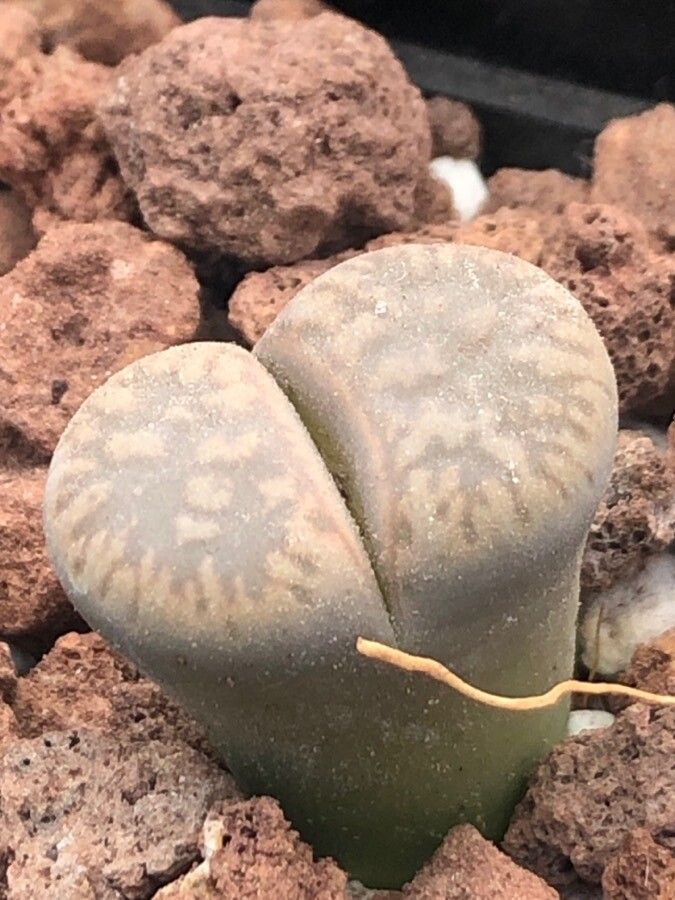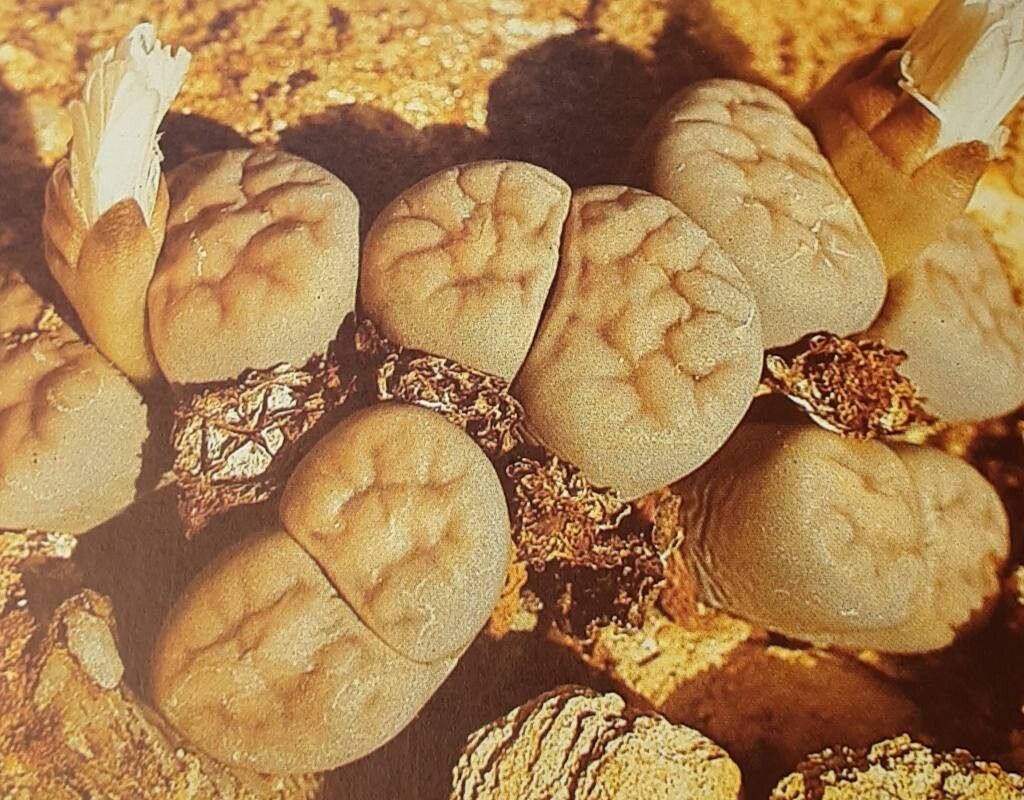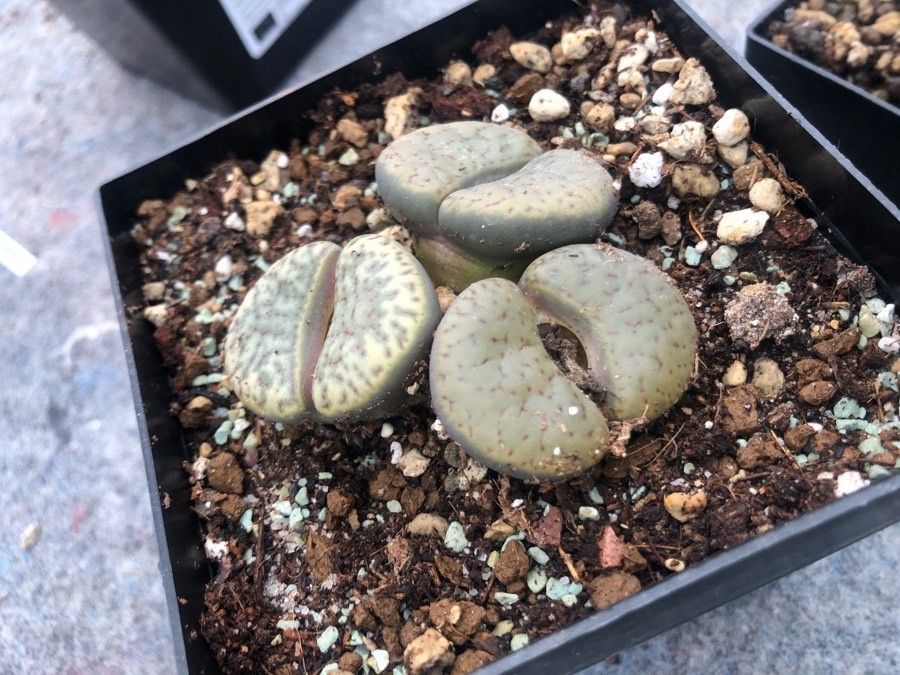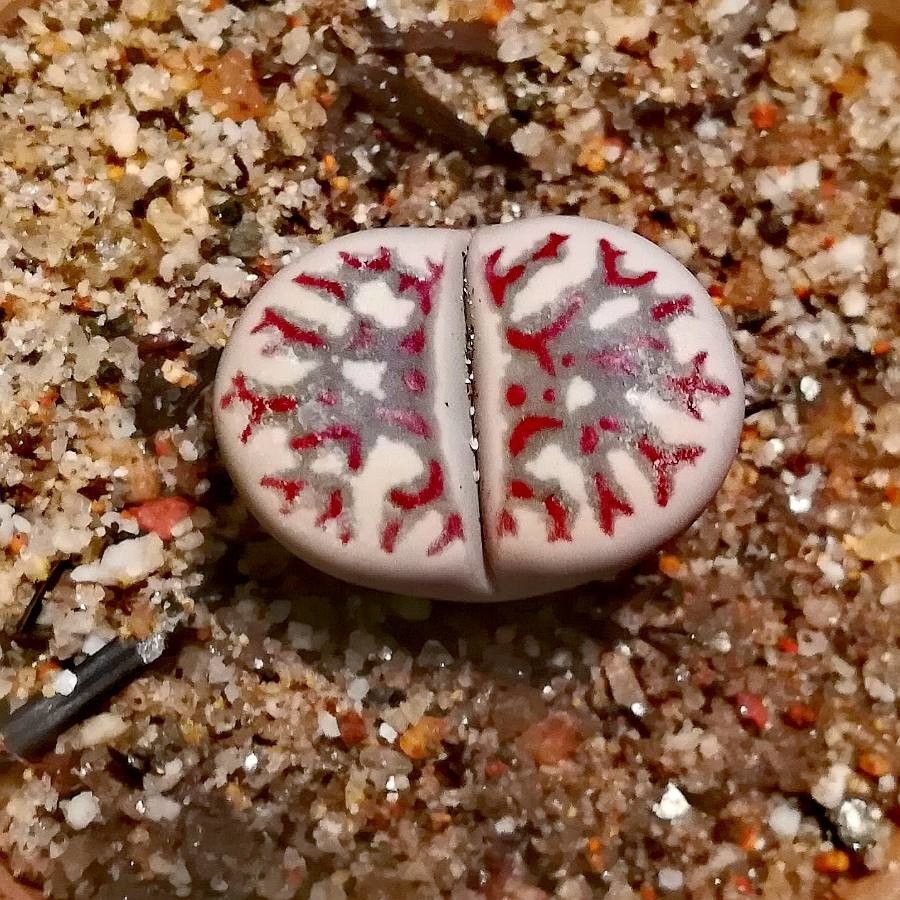
Lithops dorotheae is a species of Lithops found in South Africa. It was named after Dorothea Huyssteen, who discovered the plant in 1935. It grows on fine-grained sheared quartz and feldspar rock containing feldspathic quartzite.
Lithops dorotheae shows moderate disease resistance and is relatively sensitive to humidity. It becomes vulnerable to disease under high humidity and is likely to suffer root rot while dormant. In terms of care, Lithops dorotheae tolerates drought but requires more frequent watering during the growing season. Watering should be greatly reduced or stopped entirely during dormancy. Lithops dorotheae is best suited to growers with some experience, though it can be challenging to care for, especially during the dormant period. It is particularly appropriate for those who can dedicate time to its care over the winter months.
How to keep Lithops Dorotheae.
Light
Originating from dry regions, Lithops dorotheae performs best in full sun, since its natural habitat has intense sunlight and very little shade. It can also tolerate partial sun, providing some flexibility in its growth.
Water
Lithops dorotheae, a plant well-suited to arid environments, requires minimal moisture and should be watered sparingly—typically only once every three weeks. Often grown indoors, it adapts well to controlled settings and stores water in its leaves. This makes it an excellent choice for rock gardens or dry containers.
Temperature
Although Lithops dorotheae can tolerate some heat, it mainly prospers and grows during cooler seasons and becomes dormant in summer. In hot summer conditions, provide shade to avoid scorching from intense sunlight. Watering should be reduced or stopped during the hottest part of the year to prevent root rot. Winter and spring are the times of vigorous growth for Lithops dorotheae. As long as temperatures do not fall too low, it will keep growing steadily.
Fertilizer
Lithops dorotheae only requires light fertilizer applications once or twice a year during its growing season. Do not fertilize in winter or summer when it is dormant. Cut back on fertilizer for repotted plants and wait a couple of months after repotting before feeding. Fertilizing helps maintain healthy growth and encourages flowering.
Pruning
To help lithops dorotheae maintain its shape, trim any excessive or dense branches in the spring and autumn. For propagation, select thick stems with 5-6 leaves and cut them. Treat the cut surfaces with sulfur powder, and allow them to heal before planting. During the cutting process, ensure the soil remains slightly moist.
Pot & Repot
When repotting Lithops dorotheae, choose a container slightly larger than the current pot that has good drainage. Use a gritty, well-draining cactus or succulent mix. Gently remove the plant from its old pot, brush off excess soil, and set it in the new pot at the same depth. Wait several days before watering so any root injury can heal. Repot in spring or autumn and place it in a brightly lit spot.
Botanical profile.
- Plant Type
- Succulent
- Life Cycle
- Perennial
- Genus
- Lithops
- Family
- Aizoaceae
- Hardiness Zone
- 9-11
- Mature Height
- 1 cm
- Mature Spread
- 2 cm
- Leaf Color
- Gray, Light Gray, Tan
- Leaf Type
- Evergreen
- Flower Color
- White, Yellow
- Flower Size
- 2.03 cm to 3.05 cm
- Bloom Time
- Fall
- Planting Time
- Spring, Autumn
- Harvest Time
- Early winter, Mid winter
- Native Area
- South Africa