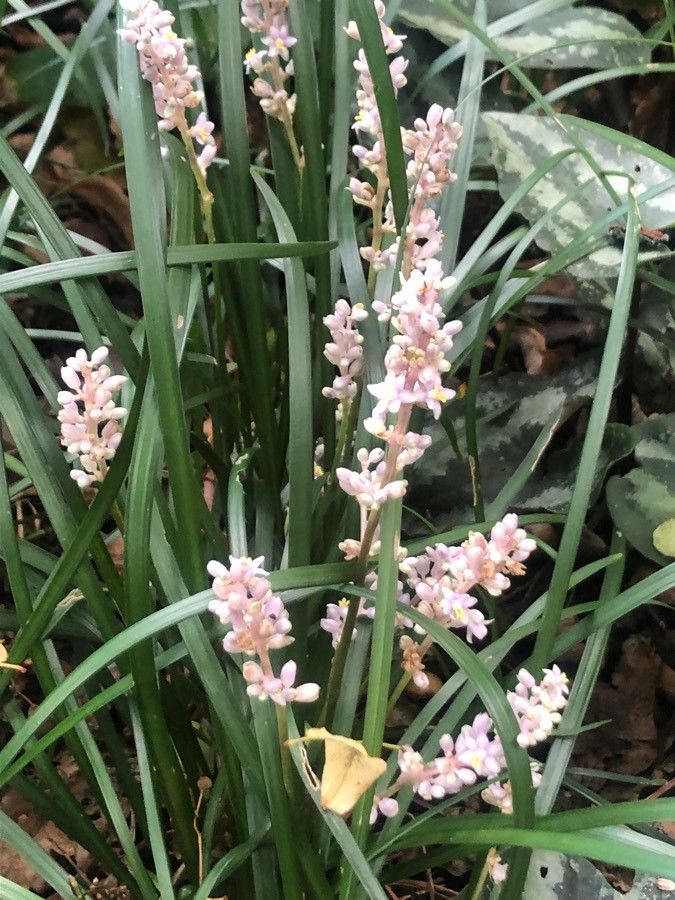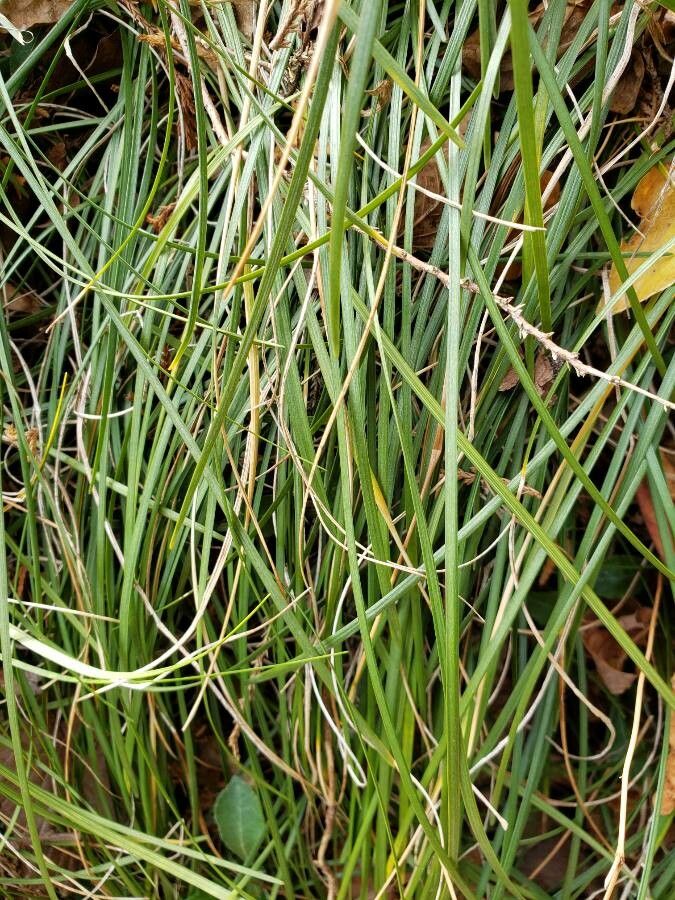
Liriope spicata, commonly known as creeping lilyturf, is a perennial herbaceous plant in the Asparagaceae family. Native to East Asia, it is typically found in China, Japan, and Korea. This plant features long, narrow leaves that form a dense clump up to 30 cm tall. The dark green leaves have a glossy texture.
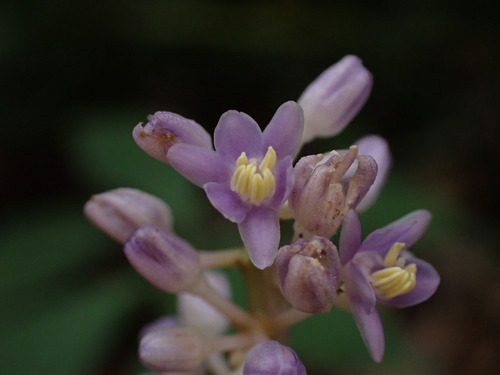
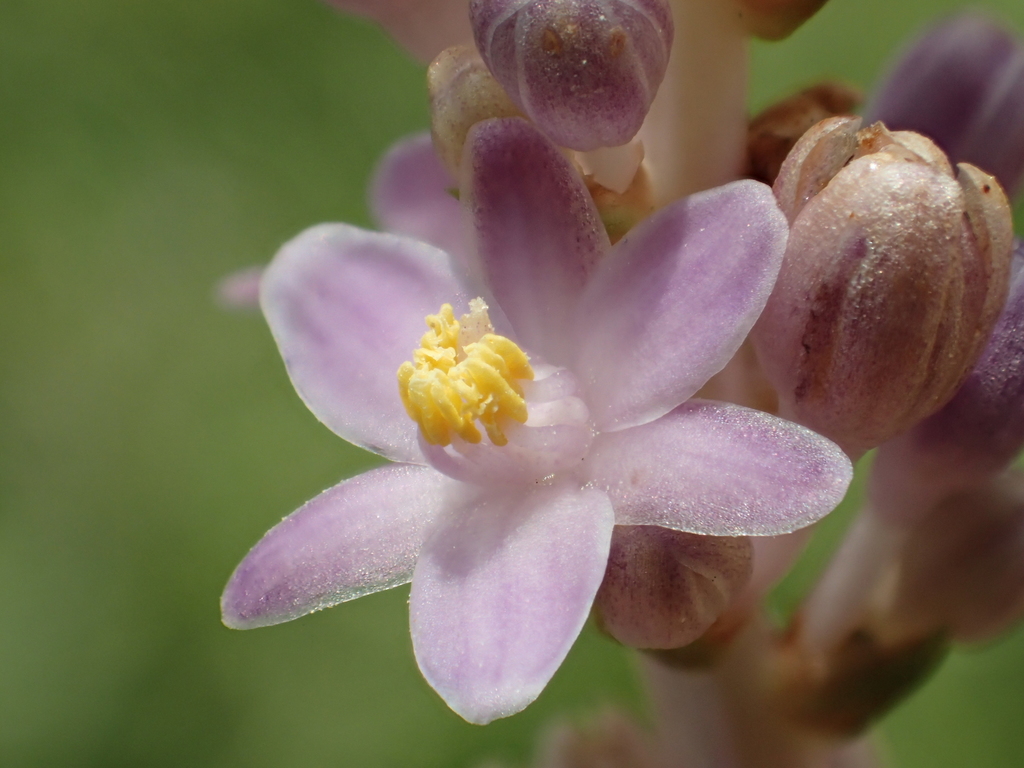
During late summer to early fall, Liriope spicata produces small flowers on spikes that rise above the foliage. These flowers are usually purple or white and consist of six petals with yellow stamens.
Commonly used as ground cover, Liriope spicata spreads quickly through rhizomes. While it can tolerate various soil types, it prefers well-drained soil with moderate moisture levels.
Once established, this plant requires minimal maintenance. However, it benefits from occasional pruning of old foliage in early spring before new growth emerges.
Overall, Liriope spicata is an attractive ornamental plant that adds texture and interest to gardens or landscapes. Its spreading habit also provides excellent erosion control on slopes.
Creeping lilyturf has relatively strong resistance to diseases and typically does not suffer from them. Nevertheless, it can be vulnerable to pests and diseases present in its environment. These outbreaks are usually minor. Regarding care, the plant needs a moderate level of attention. It requires regular pruning to keep a neat appearance and to support healthy growth. Fertilizing can also encourage flowering. Creeping lilyturf is well suited for anyone with outdoor areas such as a garden or patio and does not demand extensive gardening experience. It may need more care when kept indoors.
How to keep Liriope Spicata.
Light
Creeping lilyturf does best in moderate light but can tolerate conditions from very bright to almost no light. Its native growing environment reflects this adaptability. Adequate light supports healthy growth, while too much or too little can hinder development.
Water
Creeping lilyturf thrives in moist, forest-like soil and prefers areas with high humidity. While it can tolerate drought once established, weekly watering is essential. As an evergreen perennial, it requires consistent moisture during the growing season, but be careful to avoid waterlogging. This plant works well as ground cover.
Temperature
Creeping lilyturf has good temperature adaptability, tolerating high temperatures and wide temperature fluctuations. During hot periods, attention should be paid to watering and providing suitable shade to avoid sunburn. Conversely, creeping lilyturf is relatively sensitive to cold; it can endure some chill, but excessively low temperatures may cause frost damage.
Fertilizer
The best time to fertilize a Creeping lilyturf is in early spring, as it is coming out of dormancy and starting active growth. Fertilization supplies essential nutrients for healthy development. Although Creeping lilyturf needs relatively little fertilizer, applying it annually can improve its survival and encourage better, longer-lasting flowers.
Pruning
Creeping lilyturf features dense, grass-like foliage and striking purple flower spikes. To maintain its health and appearance, prune the plant in early spring. Use sharp shears to remove old or damaged leaves, which encourages healthy growth and prevents overcrowding. Additionally, clearing away debris enhances the plant's vigor and boosts flower production.
Pot & Repot
To maintain healthy growth, repot creeping lilyturf every 2-3 years during its early spring growth phase. Use a wide, shallow container for the best results. After repotting, place the plant in bright, indirect light and water it moderately, taking care not to overwater and saturate the roots. Be gentle while repotting to minimize stress on the plant and encourage vigorous growth.
Toxicity
Liriope plants are considered non-toxic to people and pets.
Further reading →
The toxicity and danger assessments provided are for reference only. We do not assure their accuracy, so it's crucial not to depend on them. Seek professional advice when necessary for accurate guidance.
Botanical profile.
- Plant Type
- Herb
- Life Cycle
- Perennial, Annual
- Genus
- Liriope
- Family
- Asparagaceae
- Hardiness Zone
- 4
- Mature Height
- 46 cm
- Mature Spread
- 40 cm
- Leaf Color
- Green
- Leaf Type
- Evergreen
- Flower Color
- White, Purple, Pink, Lavender, Violet, Mauve
- Flower Size
- 2.54 cm to 7.62 cm
- Bloom Time
- Mid summer, Late summer
- Planting Time
- Spring, Autumn
- Harvest Time
- Early fall, Mid fall
- Native Area
- Cambodia, Vietnam, Japan, Koppen, Laos, South Korea, China
Other names.
Reader questions.
How should I water my Creeping lilyturf plant?
To water the Creeping lilyturf effectively, it is recommended to use filtered water at room temperature. Tap water often contains harmful particles, so using filtered water is better for the plant's health. The reason for using room temperature or slightly warmer water is that the Creeping lilyturf is native to warm environments and can be shocked by cold water. It is also important to avoid overhead watering, as this may cause issues with the foliage. Instead, water the plant by applying filtered, room temperature water directly to the soil until it is thoroughly soaked. This helps moisten the roots and supports their spread through the soil, ensuring the plant receives the necessary nutrients.
What will happen if I put too much fertilizer on my Creeping lilyturf?
When caring for your Creeping lilyturf, remember that it doesn't require a lot of fertilizer each year. Giving it too much fertilizer can lead to problems. Overfertilization can cause fertilizer burn, where excessive amounts of fertilizer draw nutrients and moisture from the roots, leading to the plant's decline. It can also weaken the plant and increase the risk of disease. Additionally, overfertilizing may cause the Creeping lilyturf to produce fewer or no flowers, which is a significant drawback since its blooms are highly valued by many gardeners.
What are the sunlight requirements for Creeping lilyturf?
Creeping lilyturf (Liriope spicata) thrives under various light conditions, from moderate light levels to intense illumination, demonstrating remarkable adaptability in its native growing milieu. For healthy development, it requires about 3-6 hours of sunlight daily, known as 'partial sun,' while 'full sun' or 'full shade' conditions are defined by receiving more than 6 hours of sunlight. Indoor creeping lilyturf plants might necessitate artificial lighting, especially in less sunny spaces or during winter. LED lights are a good choice for indoor plant lighting, as they can be tailored to provide specific wavelengths of light needed by the plants. Depending on the light needs (full sun, partial sun, or full shade), artificial light intensity should range between 10-50W/sq ft, with the light source placed 12-36 inches above the plant for 8-12 hours per day to mimic natural sunlight conditions.
What symptoms indicate a creeping lilyturf is not getting the right amount of light?
Creeping lilyturf displays several symptoms when not receiving the appropriate amount of light. These include small or lighter-colored new leaves, indicating inadequate sunlight. Conditions such as leggy or sparse growth, faster leaf drop, and a halt in new growth suggest either insufficient light or a plant entering survival mode. Symptoms like chlorosis, sunscald, and leaf curling emerge from excessive light exposure, and wilting and leaf scorching are responses to overexposure or dehydration. Identifying these symptoms can help in adjusting the plant's light conditions to promote better health.
How can I adjust the light conditions for my creeping lilyturf to ensure optimal growth?
Adjusting light conditions for creeping lilyturf involves gradual transitions and adequate light supplementation. For indoor plants not easily moved or too large, consider gradually shifting them to sunnier spots weekly until they achieve 3-6 hours of sunlight or use artificial lighting such as desk or ceiling lamps for at least 8 hours a day. Outdoor plants should be moved to progressively sunnier locations to prevent sunburn. If trees block sunlight to ground plants, trimming branches might increase sun exposure. For smaller plants, transplanting during their dormant period to a sunnier spot can improve growth. Remember, damaged parts may not recover, but new growth after adjusting light exposure should be healthy.