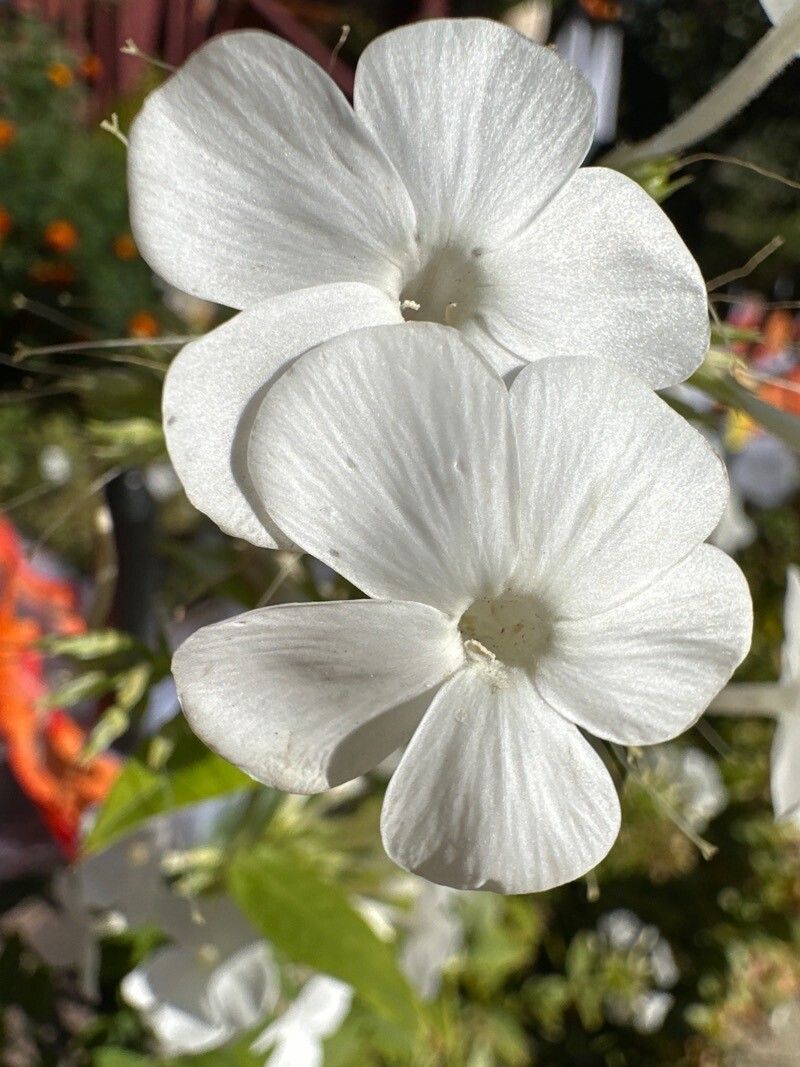
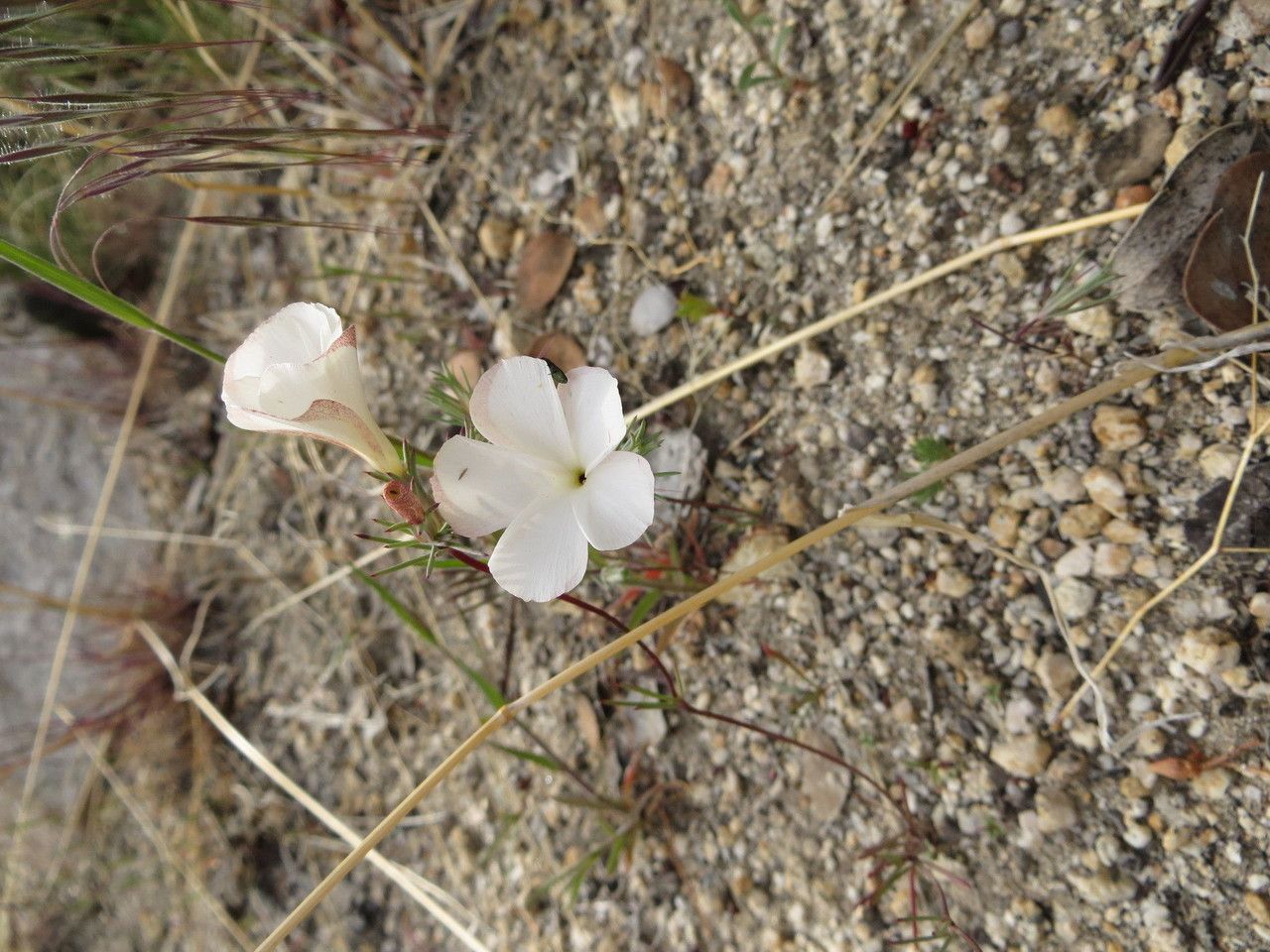
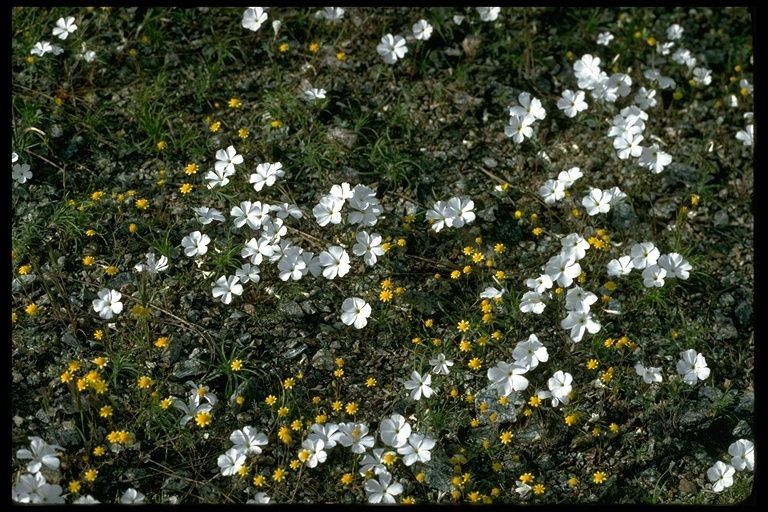
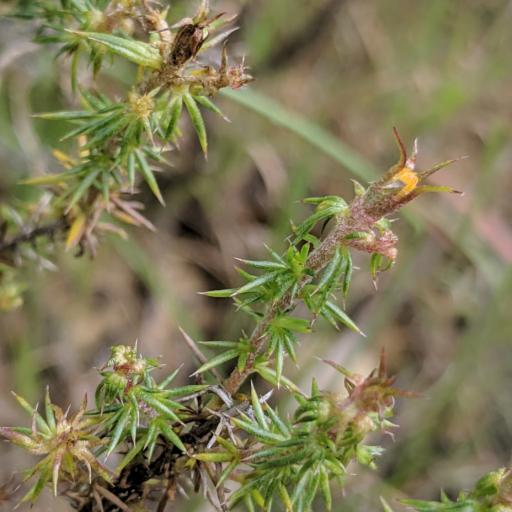
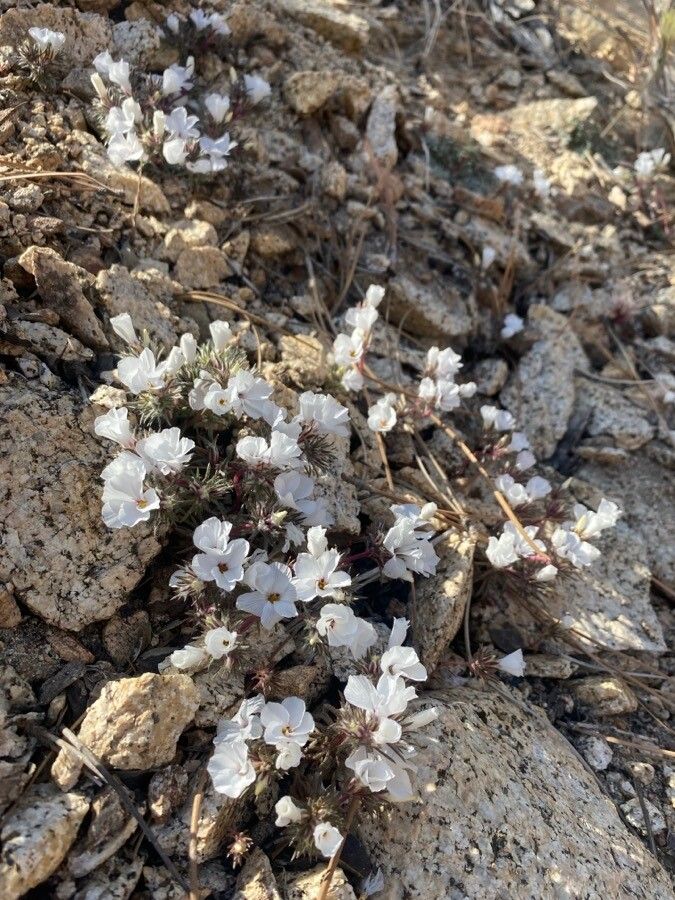
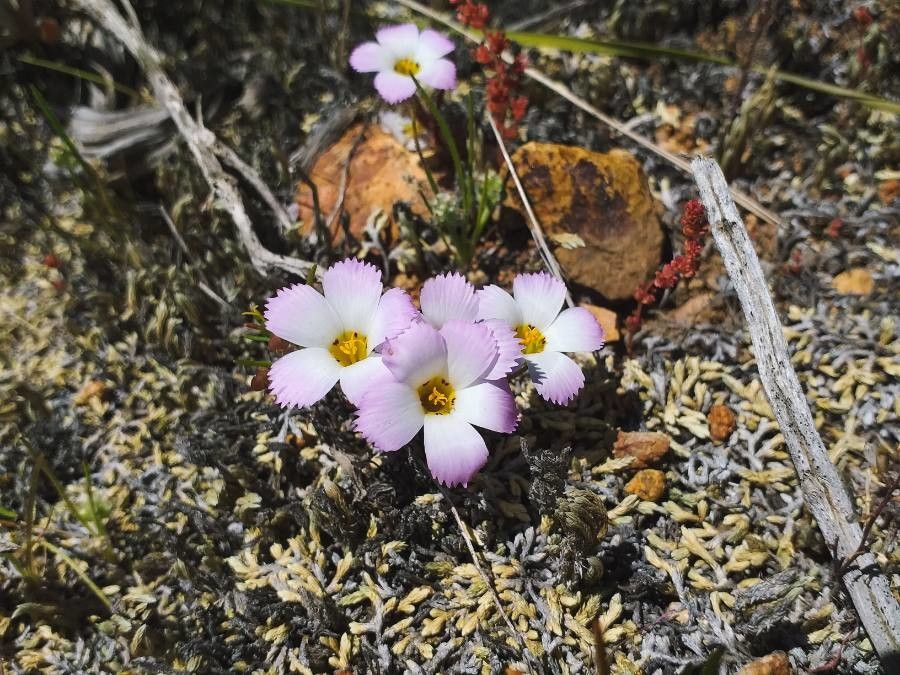
Linanthus dichotomus is a species of flowering plant in the phlox family known by the common name eveningsnow. It is native to western North America, including most of the southwestern United States, where it is a common member of the flora in a number of habitat types. It is often found on the serpentine soils of California. This is an annual herb producing several thin, waxy, erect stems up to 20 centimeters tall. The leaves are divided into linear lobes 1 or 2 centimeters long. The inflorescence produces a cyme of vespertine flowers which unroll into funnel-shaped corollas. The white lobes are just over a centimeter long and have purple shading on the undersides.
Evening snow has strong disease resistance and is generally not susceptible to illness. However, it can be affected by pests and diseases present in its environment. These problems are generally mild. Regarding care, this plant needs moderate maintenance. It should be pruned regularly to preserve a neat appearance and healthy growth. Fertilizing can also encourage flowering. Evening snow is appropriate for anyone with an outdoor area, like a garden or patio, and does not demand extensive care experience. It may require increased attention when cultivated indoors.
How to keep Linanthus Dichotomus.
Light
Evening snow comes from bright, open areas and does best in full sun. It can tolerate partial sun but prefers direct sunlight for optimal growth. This annual and biennial plant is noted for its sun-loving nature.
Temperature
Evening snow can tolerate a wide range of temperatures, but its distribution may still be restricted by various combinations of moisture and heat conditions. It performs best in warm summer climates with sufficient rainfall or watering. Extended periods of cloudy, rainy weather, as well as prolonged high temperatures, can raise the risk of Evening snow dying. In winter, proper protection from the cold can increase the plant's chances of survival.
Fertilizer
Evening Snow benefits from regular, dilute applications of fertilizer to encourage healthy leaf development. You should apply fertilizer to Evening Snow about once a month during the summer. Nitrogen is essential for the foliage, and adding nitrogen-rich sources helps Evening Snow thrive.
Pruning
The evening snow is a charming annual plant known for its white blooms that appear in the evening. For optimal growth, prune the plant from early to late spring to remove wilted flowers and long, spindly stems. This encourages compact growth and extends the blooming period. Proper pruning enhances the vitality and visual appeal of the evening snow throughout the growing season.
Botanical profile.
- Plant Type
- Herb
- Life Cycle
- Annual
- Genus
- Linanthus
- Family
- Polemoniaceae
- Hardiness Zone
- 7-10
- Mature Height
- 10 cm to 30 cm
- Mature Spread
- 5 cm to 15 cm
- Leaf Color
- Green
- Leaf Type
- Deciduous
- Flower Color
- White
- Flower Size
- 1.02 cm to 2.03 cm
- Bloom Time
- Mid spring, Late spring, Early summer
- Planting Time
- Spring
- Harvest Time
- Summer
Other names.