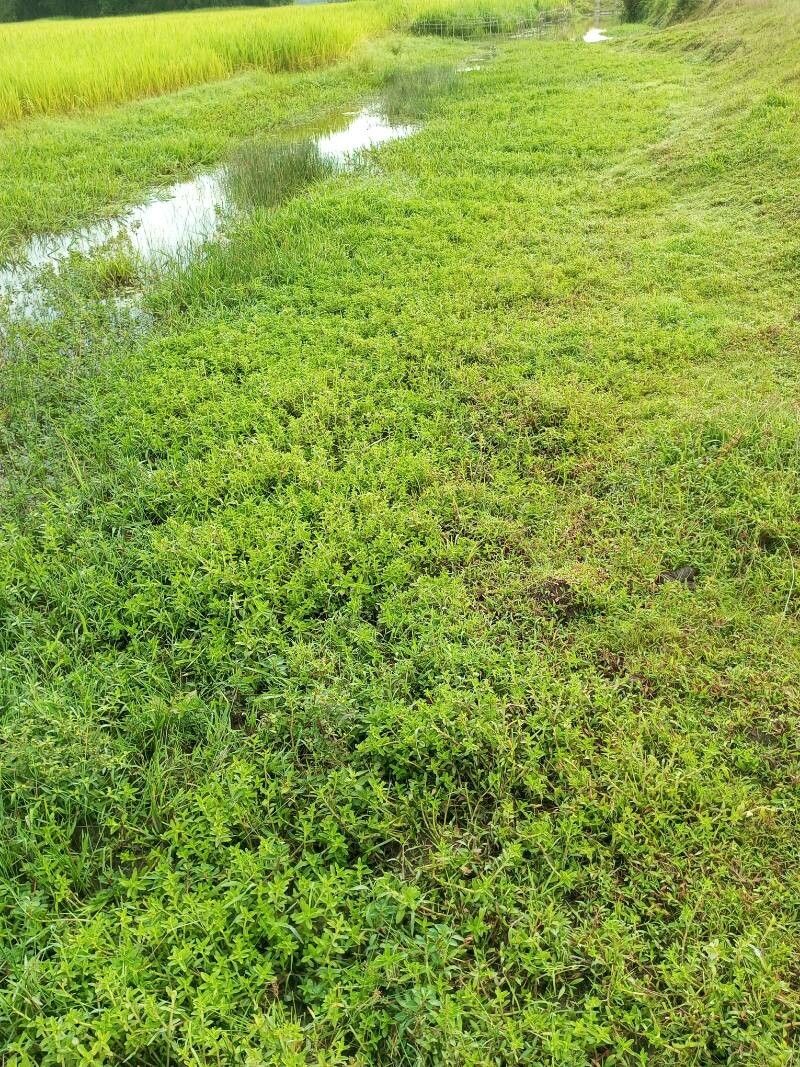
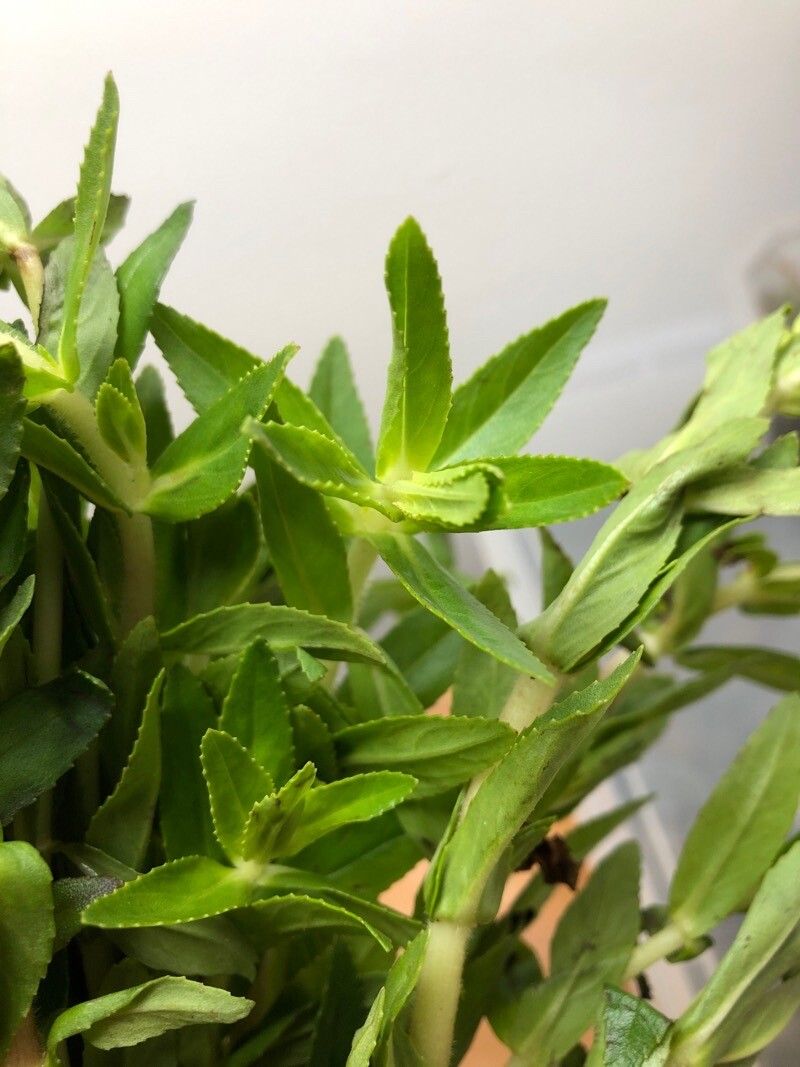
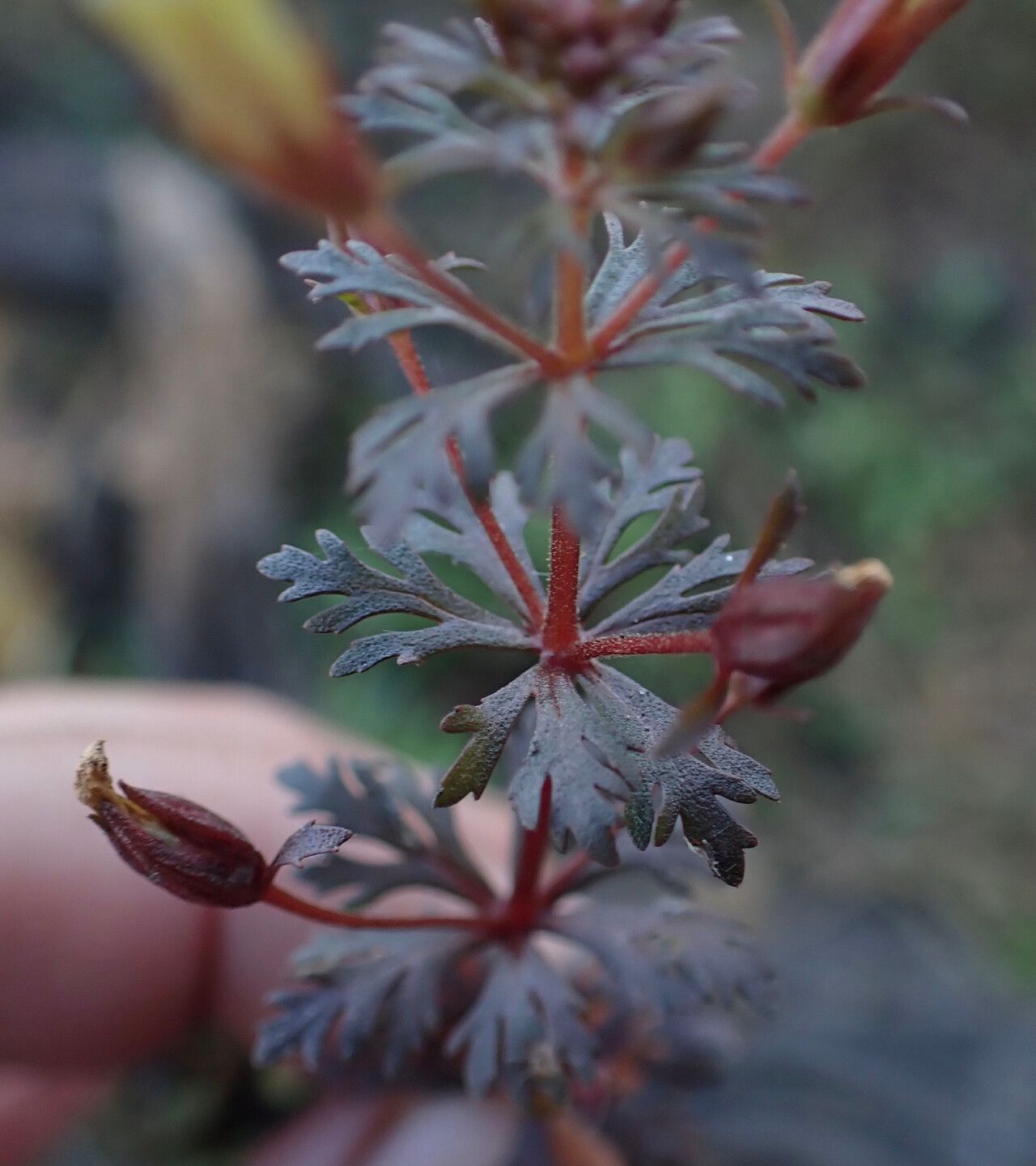
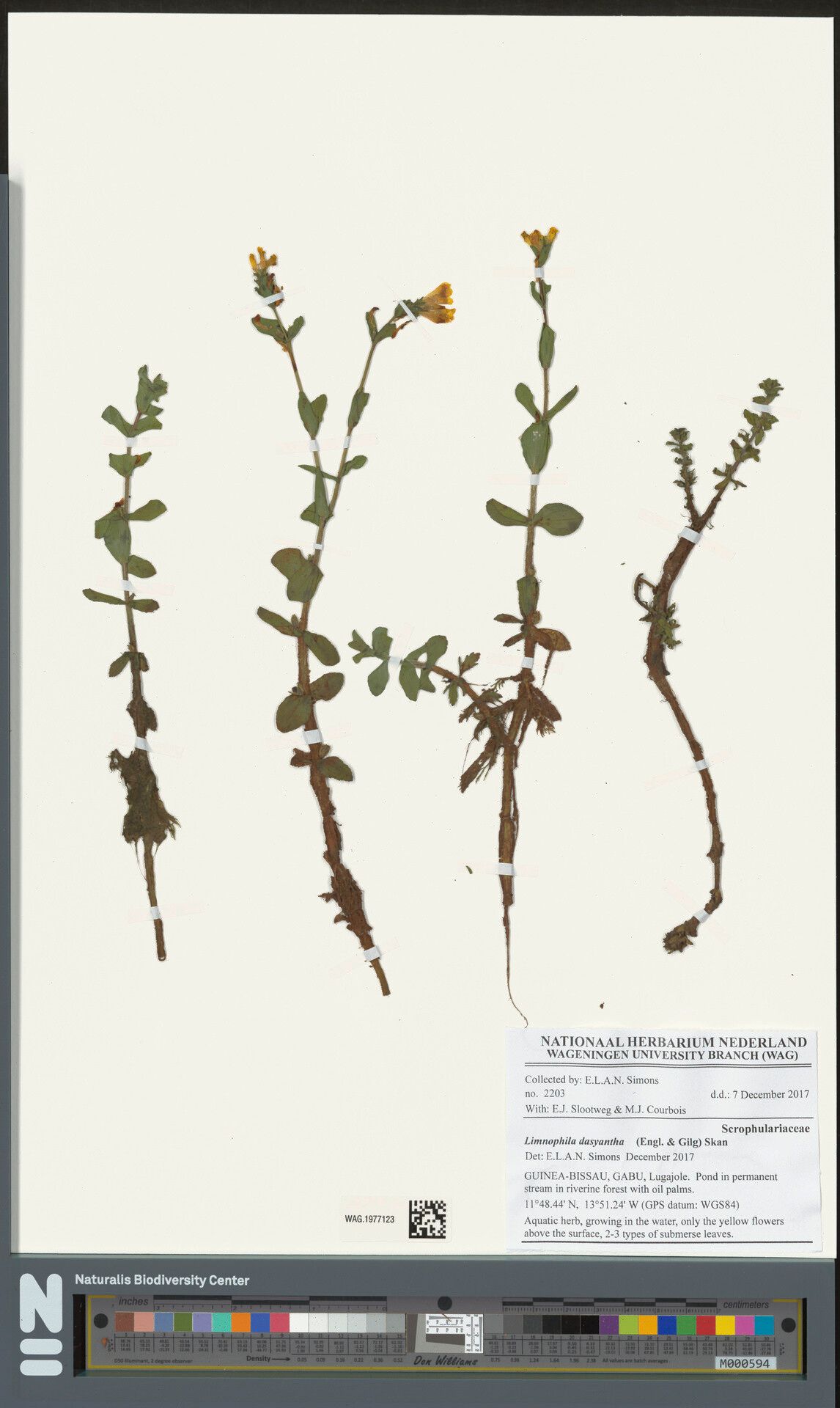
Limnophila aromatica, the rice paddy herb, is a tropical flowering plant in the family Plantaginaceae. It is native to Southeast Asia, where it flourishes in hot temperatures and grows most often in watery environments, particularly in flooded rice fields. It is called ngò ôm or ngò om or ngổ in Vietnam and used as an herb and also cultivated for use as an aquarium plant. The plant was introduced to North America in the 1970s due to Vietnamese immigration following the Vietnam War. It is called "ma om" (ម្អម) in Khmer. It is used in traditional Cambodian soup dishes and Southern Vietnamese cuisine. It can grow in flooded rice paddies during wet season but it grows best on drained but still wet sandy soil of harvested rice paddies for a few months after the rainy season ended. It dies out soon after it flowers. Rural Cambodians often harvest them and put them on the roof of their houses to dry for later use.
Rice paddy herb has moderate resistance to disease and can be prone to issues like leaf spot. Its vulnerability to insect pests varies by variety, though most types are relatively less resistant to pests. Regarding care, rice paddy herb requires consistent watering and fertilization, along with regular removal of yellowing leaves. It is important to address pests and diseases promptly when they appear and to harvest the plant at the appropriate time. Rice paddy herb is suited to people who can spend some time and effort on regular upkeep.
How to keep Limnophila Aromatica.
Light
Rice paddy herb comes from habitats that receive abundant sunlight, like open fields and sunny meadows. It prefers full sun but can also tolerate partial sun.
Temperature
For Rice paddy herb, moderate temperatures are preferable, similar to those most people find comfortable. It performs well in conditions that are neither overly hot nor too cold. The main problem with high temperatures is the danger of sunburn, so providing some shade in summer is advisable to prevent excessive heat. When temperatures decline, Rice paddy herb goes into dormancy. If you want it to grow continuously, you need to keep warmer conditions through the winter. Frost can damage the plant and should be avoided.
Fertilizer
To achieve maximum yield, Rice paddy herb responds well to regular applications of a balanced fertilizer, especially one high in nitrogen. Apply fertilizer before planting, at planting, and when seedlings are 2 inches tall. Adding compost or manure also supplies nutrients continuously. If soil nutrients are insufficient, leaves and stems remain underdeveloped, stems stay thin, flavors are poorer, and the plant can develop a bitter taste.
Pruning
To ensure rice paddy herb thrives, it's important to prune it carefully. This involves trimming overgrown stems, removing unhealthy leaves, and pinching the tips to encourage bushier growth. The best time for pruning is from early to late spring, during the plant's active growth period. Pruning at this time improves air circulation, prevents disease, and promotes a fuller, healthier plant.
Botanical profile.
- Plant Type
- Herb
- Life Cycle
- Annual, Perennial
- Genus
- Limnophila
- Family
- Plantaginaceae
- Hardiness Zone
- 10-11
- Mature Height
- 30 cm to 61 cm
- Mature Spread
- 20 cm to 30 cm
- Leaf Color
- Green, Light Green
- Leaf Type
- Semi-evergreen
- Flower Color
- Lavender, White
- Flower Size
- 0.51 cm to 1.02 cm
- Bloom Time
- Summer, Early fall, Mid fall
- Planting Time
- Spring, Summer, Autumn
- Harvest Time
- Late summer, Fall, Early winter
- Native Area
- Sri Lanka, India, Malaysia, Indonesia, Cambodia, Vietnam, Myanmar, Japan, Philippines, Bhutan, Bangladesh, Laos, South Korea, China
Other names.
Reader questions.
What is Rice paddy herb?
Rice paddy herb, known botanically as Limnophila aromatica, is a plant with a distinct fragrance and a unique flavor. It doesn't have additional details or identified symptoms related to it in the provided information.