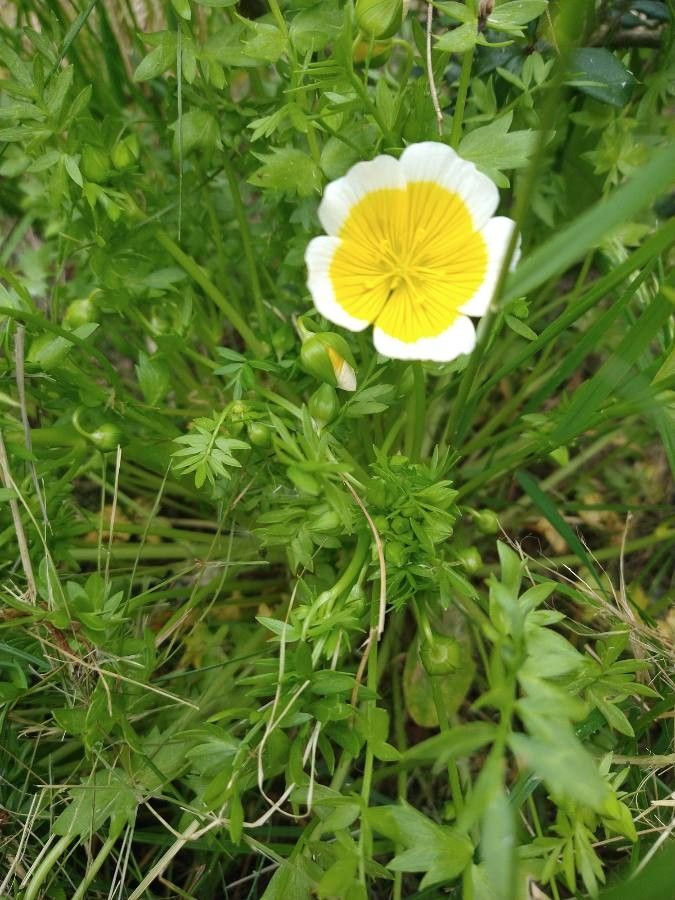
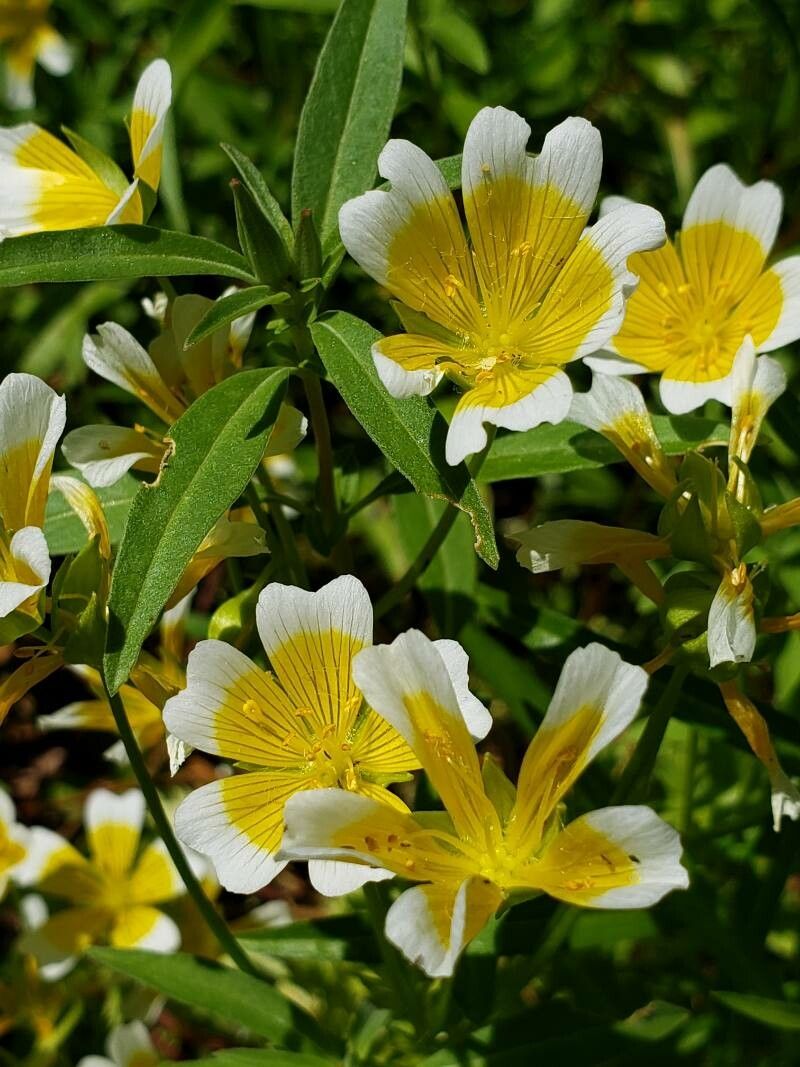
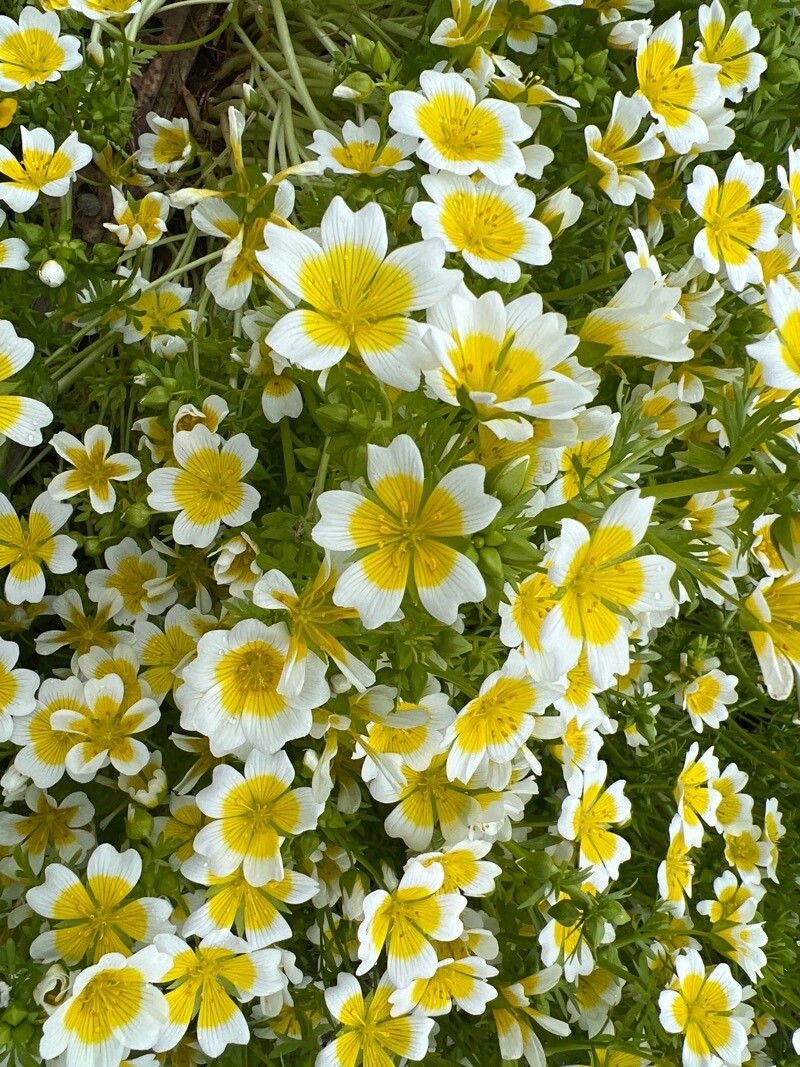
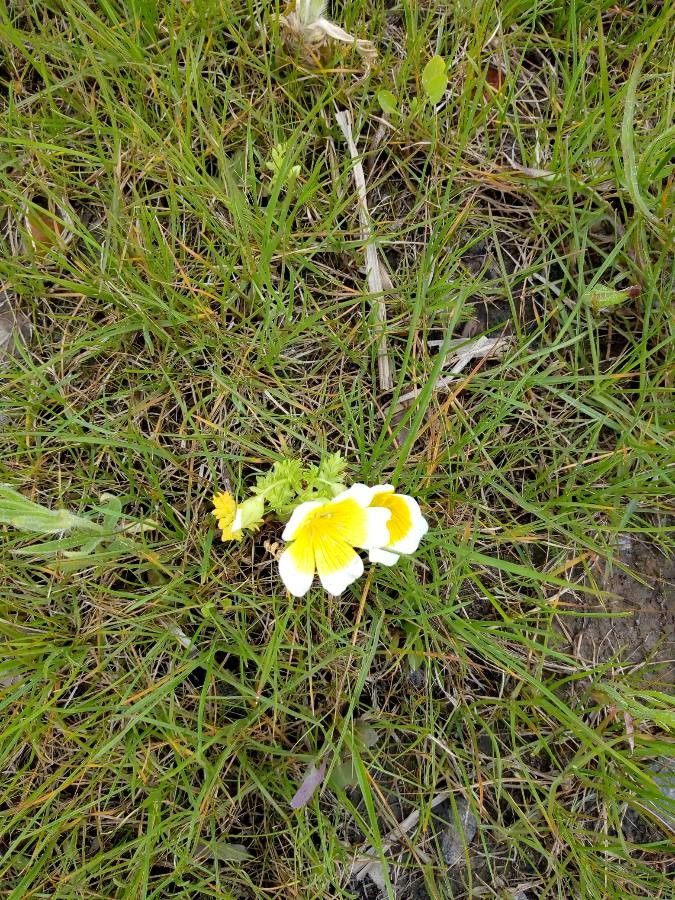
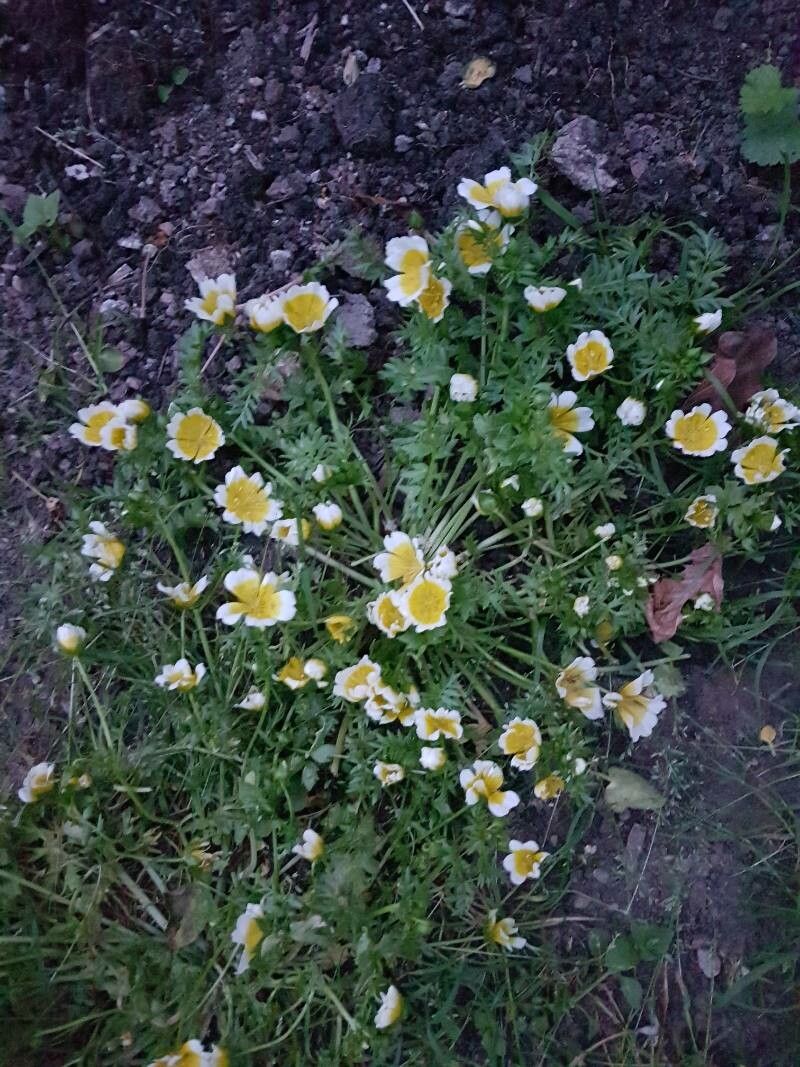
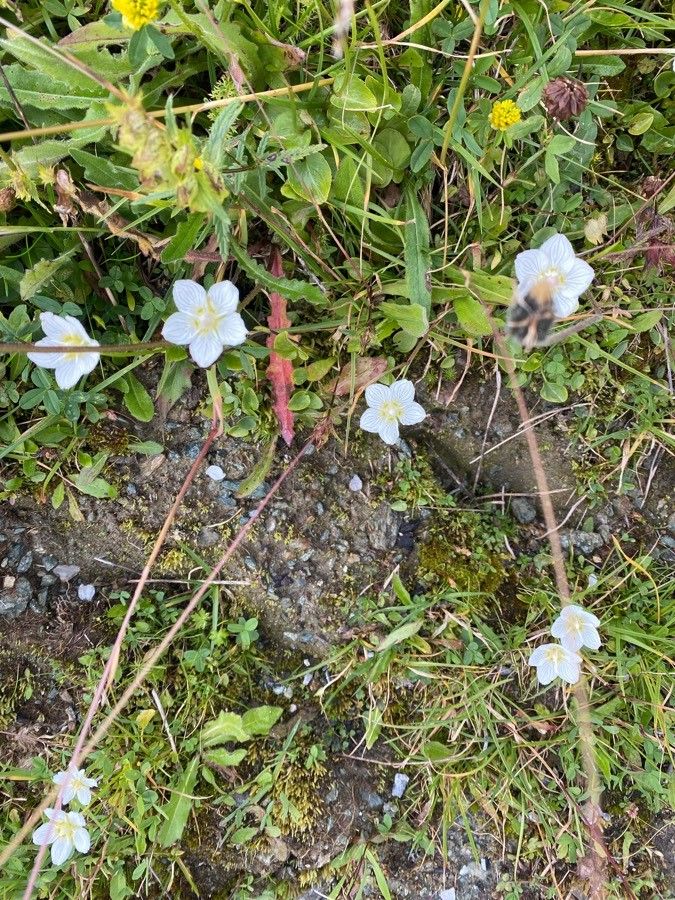
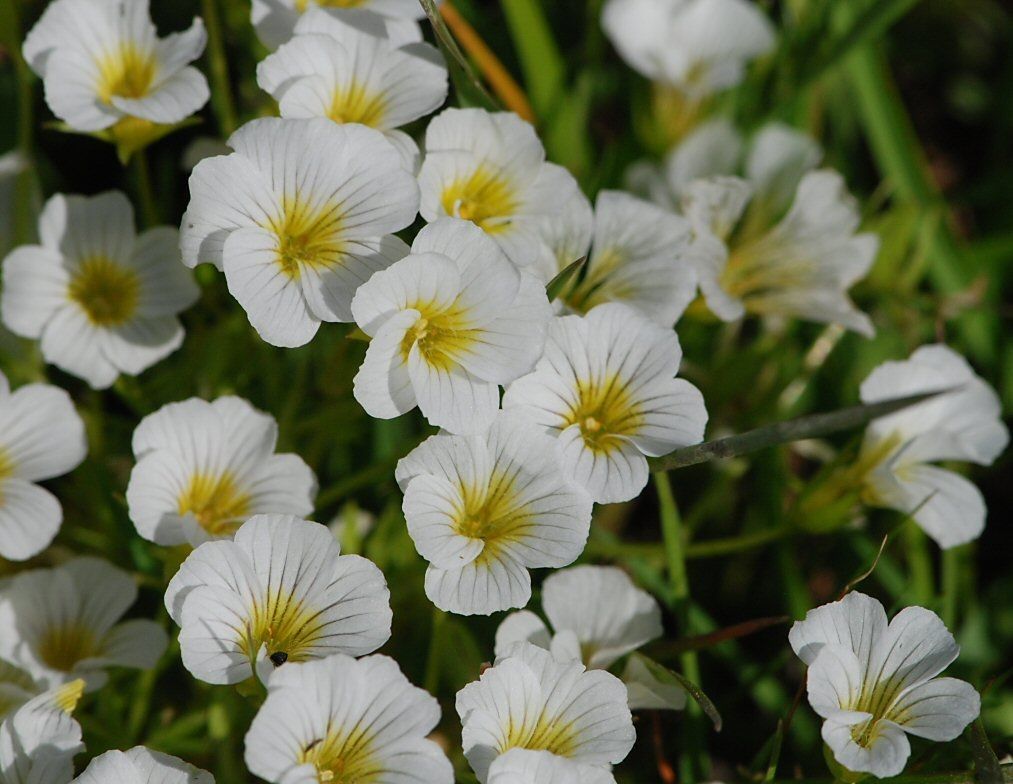
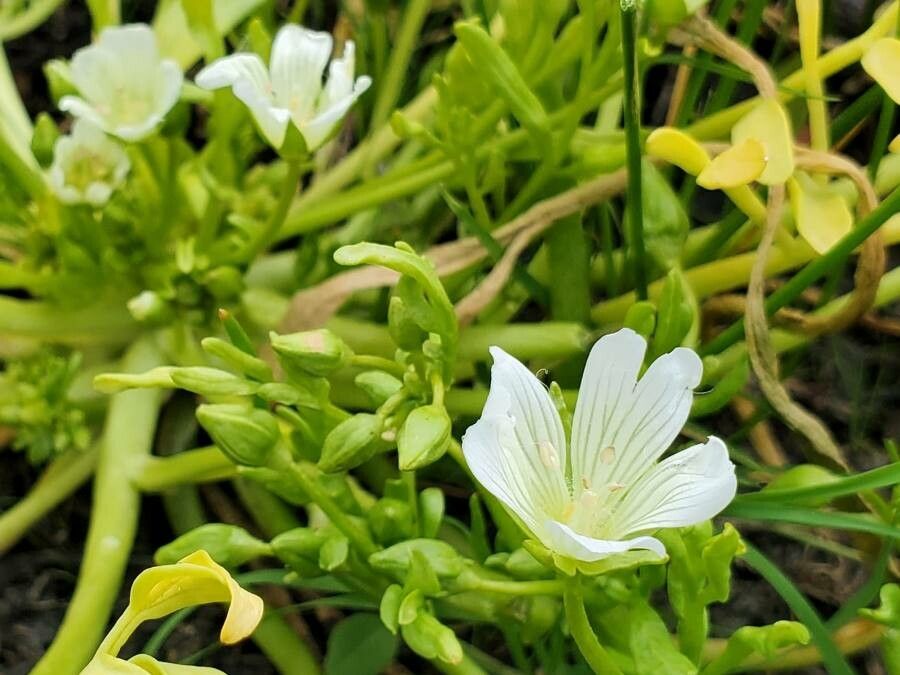
Limnanthes douglasii is a species of annual flowering plant in the family Limnanthaceae (meadowfoam) commonly known as Douglas' meadowfoam or poached egg plant. It is native to California and Oregon, where it grows in wet, grassy habitat, such as vernal pools and spring meadows. It can grow in poorly drained clay soils. The plant was collected by the Scottish explorer and botanist David Douglas, who worked on the west coast of America in the 1820s. The plant usually bears white flowers with yellow centers, hence the name "poached egg plant", but flower color can vary across subspecies. It is a popular ornamental plant. It attracts hoverflies and is pollinated by bees. It is self-seeding, even in a lawn. This plant has gained the Royal Horticultural Society's Award of Garden Merit.There are six subspecies:
L. douglasii subsp. douglasii R. Br., is native to the coastal mountains and valleys of southwestern Oregon south to the San Francisco Bay Area L. douglasii subsp. nivea (C.T. Mason) C.T. Mason, with mostly white flowers, grows in the coastal mountains of northern California L. douglasii subsp. ornduffii (E. G. Buxton), with 4 petals instead of 5, is endemic to California's San Mateo County L. douglasii subsp. rosea (Benth.) C.T. Mason, found in California's Central Valley and adjacent hills, often has pink veining on its petals L. douglasii subsp. sulphurea (C.T. Mason) C.T. Mason, is a rare yellow-petaled subspecies endemic to the Bay Area L. douglasii subsp. striata (Jeps.) Morin, has recently been subsumed into this species; it occurs in the Klamath range and the north and central Sierra Nevada
The poached egg plant is fairly disease-resistant and generally does not suffer from many illnesses. Nonetheless, it can be vulnerable to pests and diseases present in its surroundings. These outbreaks are typically mild. Regarding care, the plant requires moderate upkeep. Regular pruning is necessary to maintain a neat appearance and support healthy growth. Applying fertilizer can also help encourage flowering. The poached egg plant is suitable for anyone with outdoor space, such as a garden or patio, and does not demand extensive care experience. It may need more attention when grown indoors.
How to keep Limnanthes Douglasii.
Light
The poached egg plant does best with abundant sunlight, which promotes its growth and overall health. Its native habitat receives plentiful light throughout the day, clearly indicating it requires strong light for optimal development. Both too little light and excessively intense light can limit its growth or harm its wellbeing.
Water
The poached egg plant flourishes in moist environments and prefers consistent humidity. For optimal health, it needs to be watered weekly. As an annual herbaceous plant, it grows quickly during the rainy season, which may require you to adjust its watering schedule accordingly.
Temperature
The poached egg plant's natural growing habitat favors temperatures between 68 and 95 °F (20 and 35 ℃). Small seasonal temperature adjustments are recommended to reflect this preference.
Fertilizer
When the Poached egg plant has opened most of its blooms to full size, resume fertilizing. At the peak of bloom production, feed it every three to four weeks, as weather allows. Then, once the Poached egg plant begins producing fewer new blooms, stop fertilizing; there's no reason to feed it when it can no longer produce more blooms.
Pruning
The poached egg plant benefits from pruning between early and late spring. This promotes bushy growth and extends its blooming period. Regularly removing spent flowers, known as deadheading, encourages the plant to produce new blooms. Reducing the plant's height by one-third after mid-summer enhances its foliage while avoiding heavy pruning. This approach maintains the plant's health and tidiness and prevents it from becoming leggy.
Botanical profile.
- Plant Type
- Herb
- Life Cycle
- Annual, Biennial, Perennial
- Genus
- Limnanthes
- Family
- Limnanthaceae
- Hardiness Zone
- 4-8
- Mature Height
- 3 cm to 91 cm
- Mature Spread
- 15 cm to 30 cm
- Leaf Color
- Green
- Leaf Type
- Semi-evergreen
- Flower Color
- White, Yellow
- Flower Size
- 2.54 cm
- Bloom Time
- Spring
- Planting Time
- Spring
- Harvest Time
- Late spring, Early summer, Mid summer
Other names.
Reader questions.
How should I water my Poached egg plant?
To water your Poached egg plant, you have several options: a garden hose with a spray nozzle, a watering can, or any typical watering tool. The good news is that Poached egg plants are not too particular about how they get their water – they can thrive on rainwater, tap water, or even filtered water. However, it's best to avoid watering this plant from above as it can harm the leaves and flowers and potentially cause disease. Instead, a drip irrigation system is often the preferred method for watering. These systems ensure water is evenly distributed and goes straight to the soil. If you have a Poached egg plant in a container, a similar watering technique can be used. You can use a cup, watering can, or your tap to directly water the soil of the container-grown plant.
Why do I have to put plant food on my Poached egg plant?
Plants, including the Poached egg plant, rely on nutrients to survive. It is common knowledge for most gardeners that providing the right nutrients is crucial. Without nutrients, the Poached egg plant will not survive long after pollination. To keep the plant thriving and producing large, beautiful flowers throughout the blooming season, it is important to provide the appropriate nutrients in the right amounts. Fertilizer is particularly helpful for the Poached egg plant as it promotes the development of a strong root system. Since this plant has a thin and fragile root system, fertilizing during planting helps establish a sturdy foundation, ensuring stability and enhancing its ability to produce stunning flowers. Properly timed fertilization can also significantly prolong the flowering period of the Poached egg plant.
What are the sunlight requirements for a Poached Egg Plant?
The Poached Egg Plant (Limnanthes douglasii) necessitates more than 6 hours of sunlight daily to flourish. Ensuring that your garden has spots that offer a harmonious balance of light and shade is crucial for the happiness and health of your plants. The natural habitat of this plant is indicative of its need for ample light throughout the day for optimal growth and development. Insufficient light can impede growth, while overly intense light might harm the plant. Observing the sunlight's movement through your garden can help in choosing the ideal locations for planting.
What is the native growth environment temperature range for the Poached egg plant?
The native growth environment for the Poached egg plant (Limnanthes douglasii) favors temperatures in the range of 68 to 95 °F (20 to 35 °C). To accommodate its seasonal preferences, slight adjustments to temperatures are recommended to align with this preference. The plant has strong cold resistance, typically not requiring special frost protection measures. However, in areas expecting winter temperatures below -30°C, protective measures such as covering the plant with soil or straw are advisable. Additionally, watering the plant abundantly before the first freeze in autumn helps ensure the soil remains moist, preventing drought and water scarcity during the winter and early spring.
What should I do if I give too much or too little water to my Poached egg plant?
To remedy underwatering for your Poached egg plant, simply start watering it more frequently when you notice it lacks moisture. However, overwatering can be a more serious problem if not caught early. This can lead to diseases and ultimately the decline and death of your plant. To prevent this, choose a growing location that gets plenty of sunlight to dry the soil and has good drainage to avoid waterlogged soil. If your potted Poached egg plant is overwatered, consider switching it to a new pot with better drainage, using loose soils and an efficiently draining pot.
When should I fertilize my Poached egg plant?
The poached egg plant experiences tremendous growth after the last frost. It is best to fertilize the plant during the planting stage, whether it is planted in the ground or in planters. This initial dose of fertilizer will be sufficient until the blooms are in full force later in the year. Once the plant is at its peak bloom output, fertilizing should resume every three to four weeks, depending on the weather. However, when the plant starts producing fewer new blooms, it is no longer necessary to fertilize.
How can artificial lighting supplement natural sunlight for indoor plants?
For indoor Poached Egg Plants or when natural sunlight is not enough, especially during winter or in less sunny spaces, artificial lighting becomes essential. LED lights are favorable due to their ability to provide specific wavelengths needed by plants. The requirement for artificial light varies depending on the plant's natural light needs: full sun plants need 30-50W per square foot, partial sun plants need 20-30W per square foot, and full shade plants require 10-20W per square foot. Positioning the light source 12-36 inches above the plant mimics natural sunlight, and most plants thrive with 8-12 hours of artificial light daily.
How does the Poached egg plant react to low temperature conditions and what are the solutions?
The Poached egg plant is cold-tolerant, thriving best when the temperature stays above 20°C and should remain above 0°C during winter. If temperatures fall below -30°C, the Poached egg plant might not show noticeable changes during the winter, but there could be a decrease in sprouting or no sprouting at all in the spring. The solution for this scenario is to remove any parts of the plant that have failed to sprout in the spring.
How often do I need to water my Poached egg plant?
Poached egg plant requires regular watering throughout its growing season. In the spring, watering once per week is sufficient. However, as the season progresses and temperatures rise, you may need to water this plant two to three times per week. It's important to avoid overwatering, as this can harm the plant. Additionally, it's crucial to maintain moist, but not wet, soil for the plant. When growing the Poached egg plant in a pot, you'll need to water it more frequently compared to when it's planted in the ground. Potted plants tend to heat up and dry out faster, so watering them a few times per week is generally necessary, as opposed to just once per week for plants in the ground.
When is it not a good idea to fertilize my Poached egg plant?
Regular fertilizing is important for Poached egg plant, but it's crucial to apply it at the right time. There are certain situations where it's best to hold back on fertilizing. These can be related to the climate or controllable factors. When there are issues with the plant, soil, or climate, it's better to wait until things are resolved and the plant has recovered. For instance, if there are sudden severe changes in weather, like a cold snap in the middle of summer, it's advisable to wait until it warms up again before fertilizing. Similarly, if the soil is too dry or compacted, the fertilizer will not be properly absorbed and could harm the roots of the plant. It's also not recommended to fertilize during the hottest parts of the day when temperatures are soaring. Fertilizer can break down at different speeds depending on the temperature, so it's important to avoid rapid breakdown caused by high temperatures. Additionally, it's best to address any pests or diseases before re-fertilizing the plant.
What are the signs of inadequate light on a Poached Egg Plant?
When a Poached Egg Plant doesn't receive adequate light, it shows several symptoms. New leaves may be smaller, and the plant might experience leggy or sparse growth. There could be faster leaf drop as the plant conserves resources, alongside slower or halted new growth. Insufficient sunlight may cause leaves to lighten in color or result in chlorosis, where leaves turn yellow due to chlorophyll breakdown. Sunscald, leaf curling, wilting, and leaf scorching are also symptoms that can appear when the plant is exposed to excessively intense sunlight.
What are the symptoms and solutions for the Poached egg plant when exposed to high temperatures?
During summer, it's crucial to maintain the temperature for the Poached egg plant below 35°C. Exceeding temperatures of 38°C can cause the leaves to lighten in color, prone them to curling, make them susceptible to sunburn, and, in severe cases, cause the whole plant to wilt and dry out. To mitigate these issues, sunburned and dried-up parts of the plant should be trimmed away. It's beneficial to move the plant to a location that provides shade from the midday and afternoon sun or use a shade cloth. Moreover, watering the plant in the morning and evening to keep the soil moist is advisable.