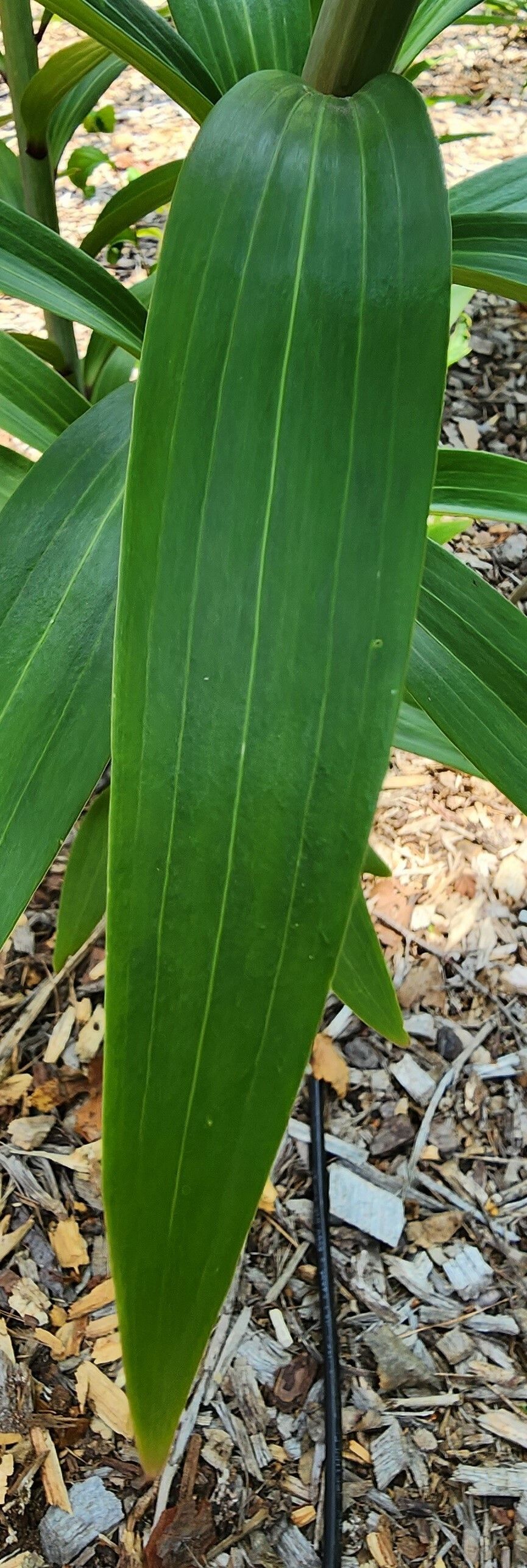
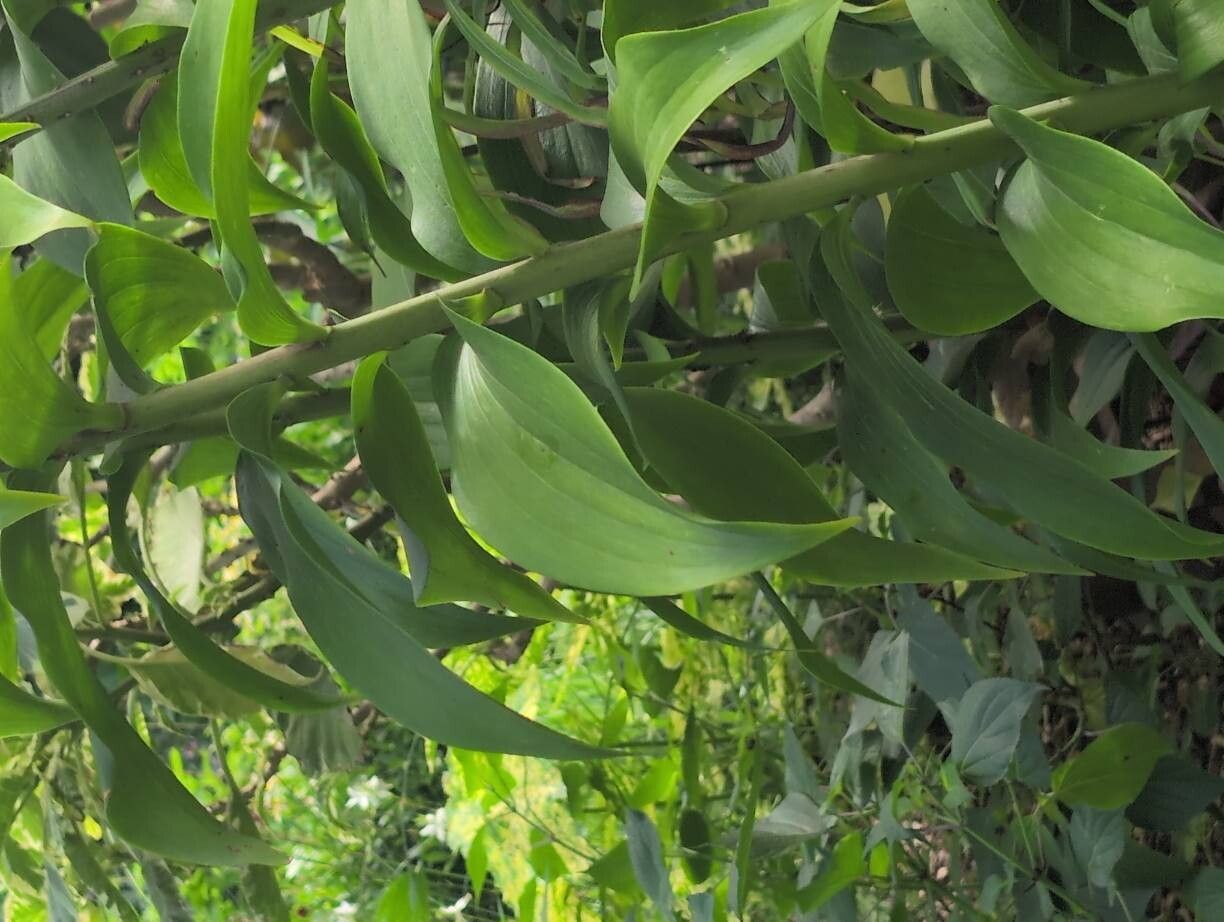
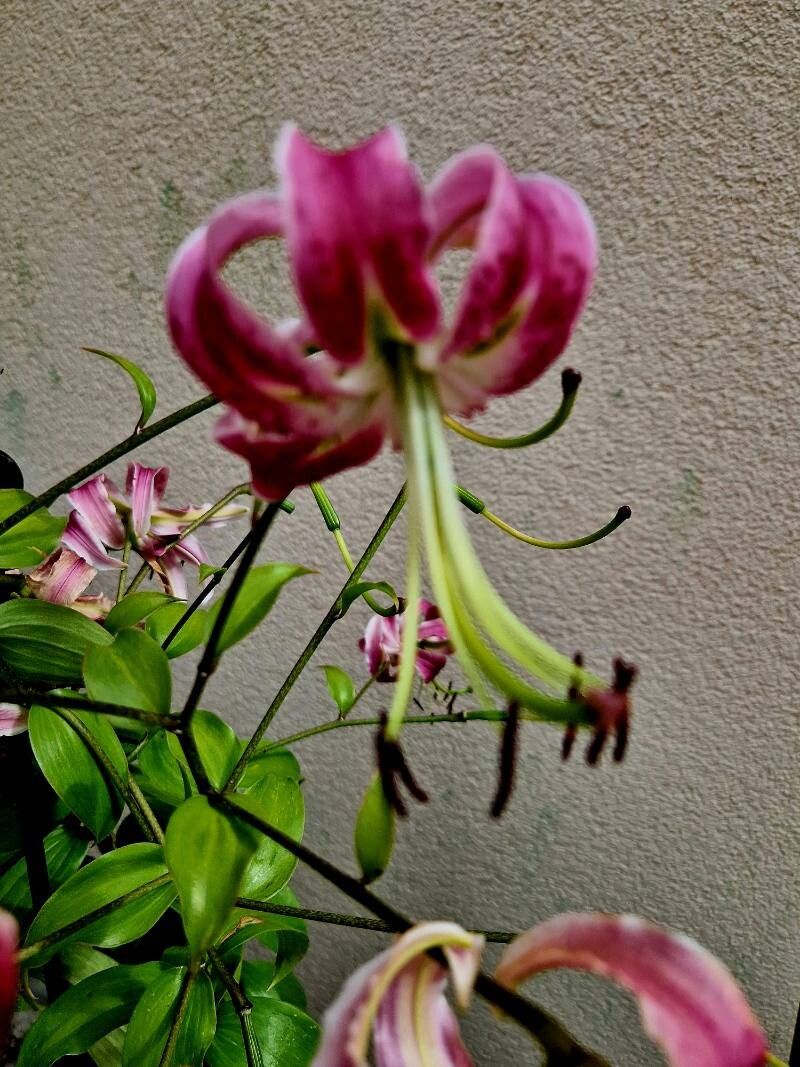
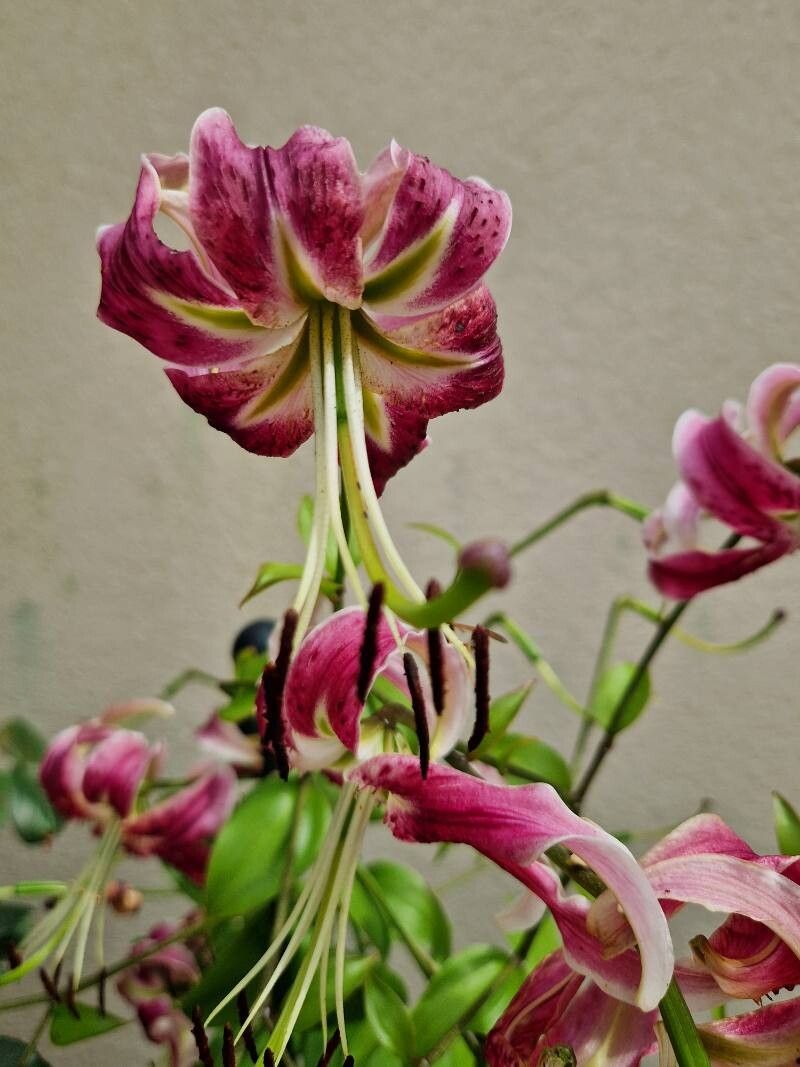
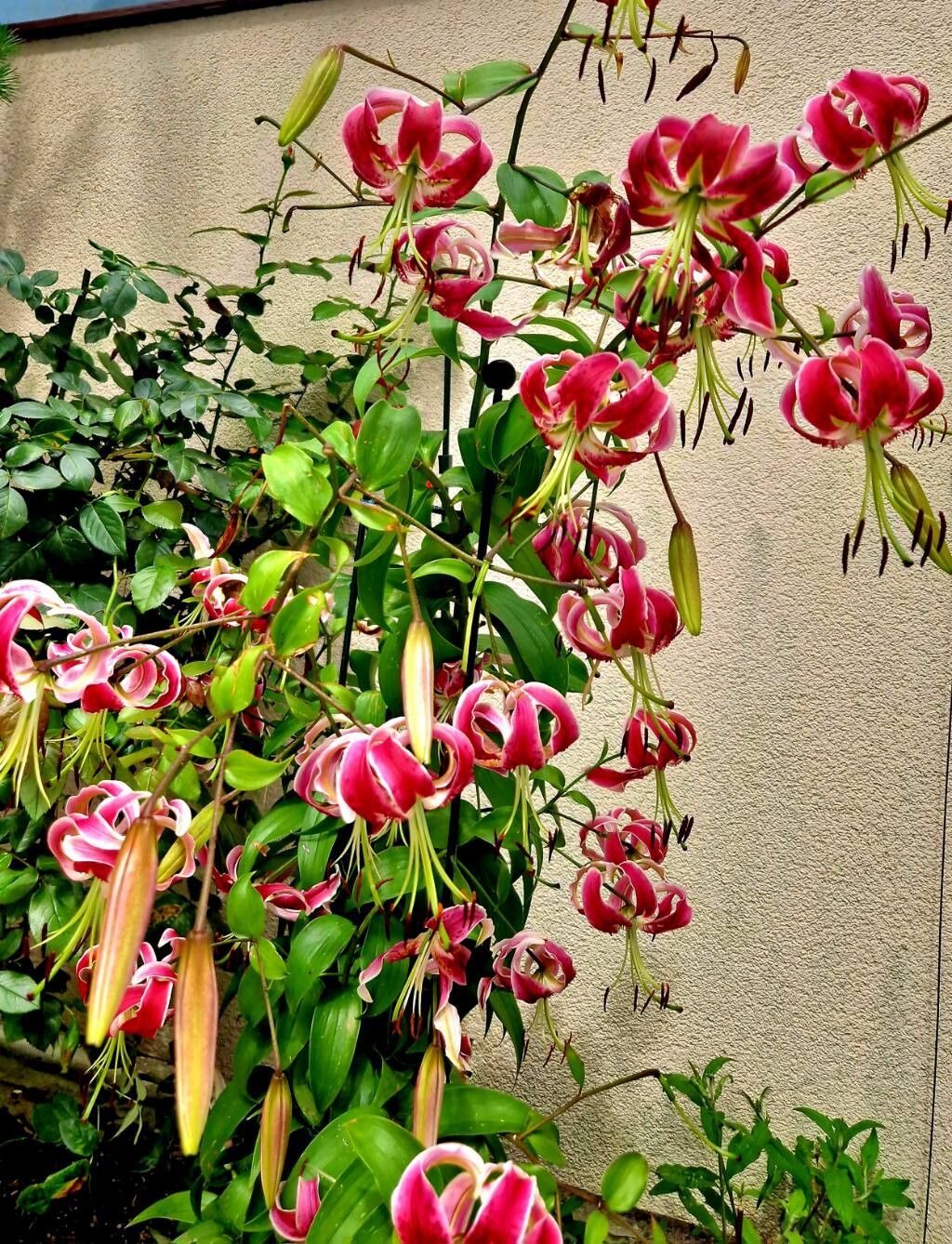
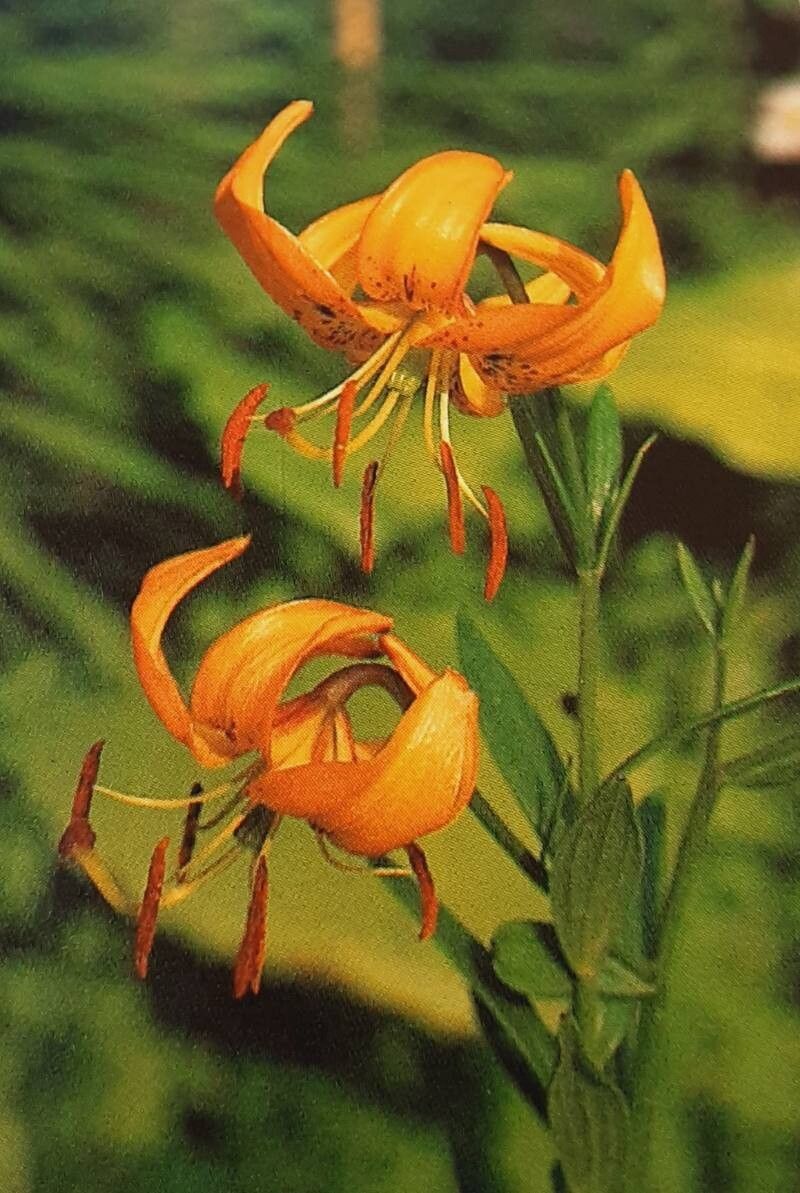
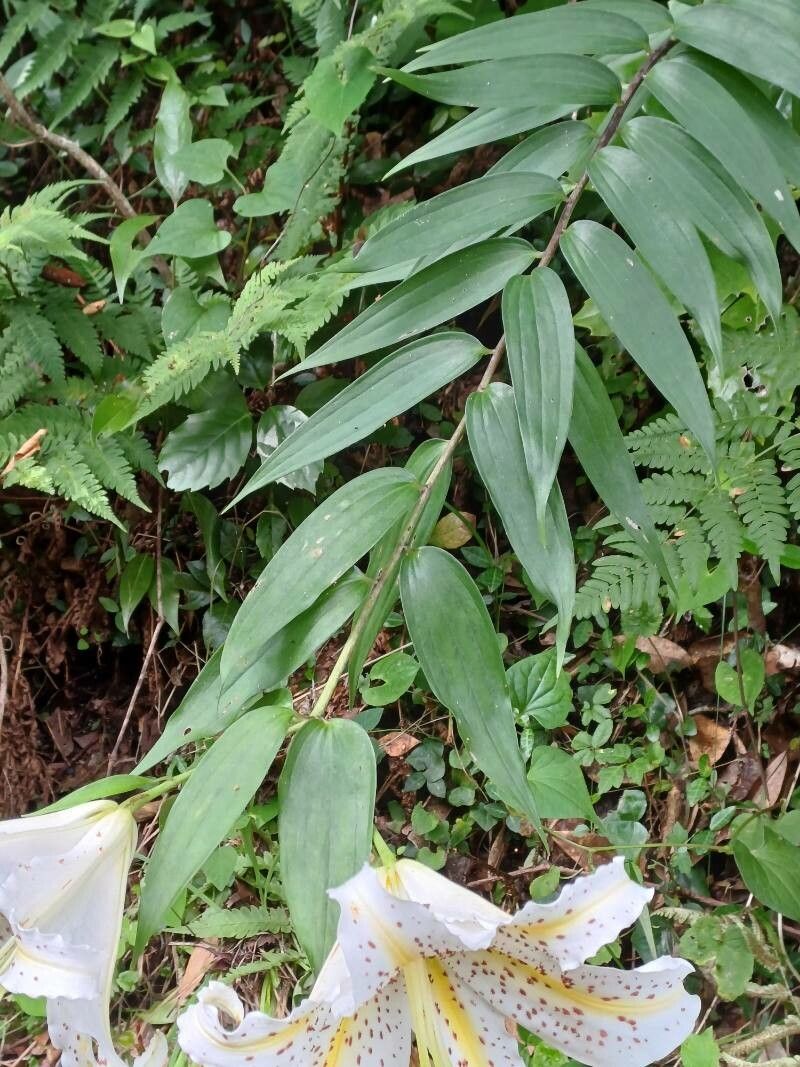
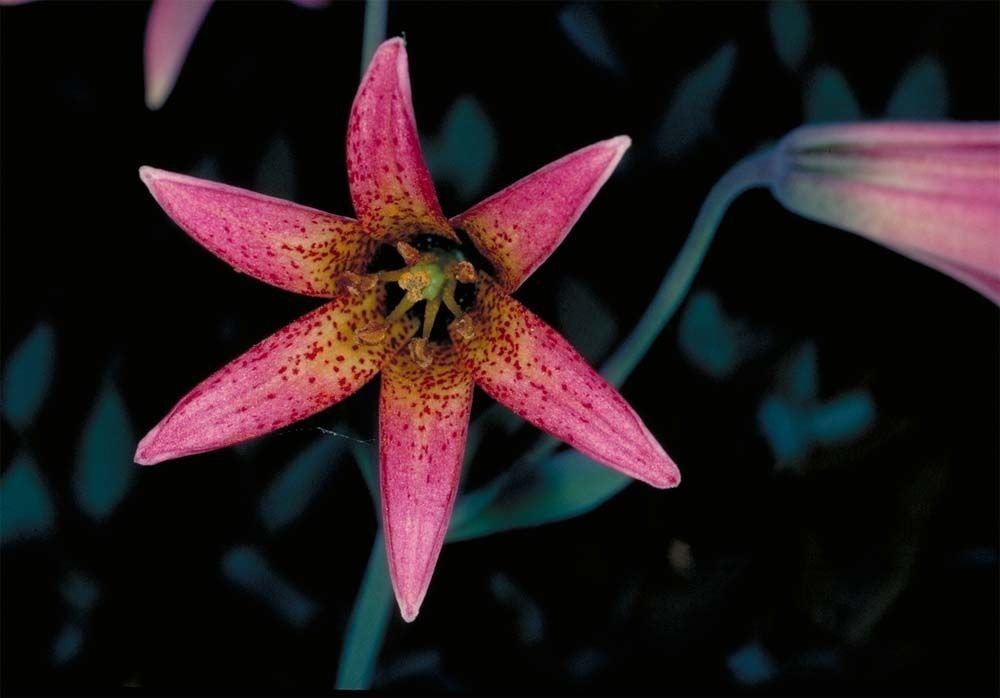
Lilium speciosum is an East Asian species of plants in the lily family. It is native to southern Japan and southern China, where it can be found at elevations of 600–900 metres (2,000–3,000 ft). It is sometimes called the Japanese lily though there are other species with this common name. Lilium speciosum grows up to 1.2 metres (3 ft 11 in) tall and 0.3 metres (1 ft 0 in) wide, blooming from August to September in north temperate regions. The flowers are white to pink in colour, and strongly scented. It is later flowering than most other species. Many garden forms are in cultivation, and the species has been widely used for breeding of garden forms. Lilium speciosum contains phenolic glycosides, such as 6′-O-feruloylsucrose and (25R,26R)-26-methoxyspirost-5-en-3β-ol 3-O-α-l-rhamnopyranosyl-(1→2)-β-d-glucopyranoside, and steroidal saponins. VarietiesLilium speciosum var. gloriosoides Baker - China, Taiwan Lilium speciosum var. speciosum - Japan (Shikoku, Kyushu)
The showy lily has good resistance to disease and is generally not very susceptible. Nevertheless, it can be affected by pests and diseases present in its environment, and such infections are usually mild. For care, this plant requires moderate maintenance. It should be pruned regularly to keep a neat appearance and support healthy growth. Fertilizing can also aid in encouraging flowering. The showy lily is suitable for anyone with outdoor space, like a garden or patio, and does not demand extensive care experience. It may need more attention when cultivated indoors.
How to keep Lilium Speciosum.
Light
The showy lily, showy lily, thrives when given plenty of sun each day but can also grow in places where sunlight is sporadic rather than continuous. Its native habitat is open areas that receive abundant sunlight. Too much or too little sunlight can negatively affect its health.
Water
Originating from moist, temperate regions, the showy lily flourishes in consistently hydrated soil. Water it every 1-2 weeks and use mulch to help retain moisture, simulating its natural environment beneath larger plants.
Temperature
The showy lily does best in a temperate climate and prefers temperatures from 41 to 95 ℉ (5 to 35 ℃). In its native habitat the plant can endure winter lows down to 23 ℉ (-5 ℃), but during its growing season it needs warmer conditions of 68 to 77 ℉ (20 to 25 ℃). It is advisable to adjust conditions seasonally—provide proper shading and ventilation to prevent overheating in summer and protect the plant from frost in winter.
Fertilizer
The best time to fertilize a Showy lily is in early spring, as it comes out of dormancy and begins active growth. Fertilization supplies essential nutrients for healthy development. Although a Showy lily has relatively low fertilizer needs, annual feeding can improve its survival and encourage better, longer-lasting flowers.
Pruning
The showy lily is known for its vibrant blooms and requires minimal maintenance. To keep the plant healthy, prune the stems after it has flowered and remove any damaged growth between early to late spring. Thinning out crowded areas can improve air circulation, while regular pruning encourages stronger blooms. By following these simple steps, the showy lily will continue to be a stunning addition to your garden.
Pot & Repot
Repot Showy lily in early spring. Choose a pot that is wider than it is deep and provides good drainage. Use a well-draining, loamy potting mix amended with compost. Gently remove old soil from the bulb and plant it as deep as the bulb is tall. Water thoroughly after repotting and place it in a sunny spot. Avoid overwatering to prevent the bulb from rotting.
Botanical profile.
- Plant Type
- Herb
- Life Cycle
- Perennial
- Genus
- Lilium
- Family
- Liliaceae
- Hardiness Zone
- 4-9
- Mature Height
- 1.83 m
- Mature Spread
- 30 cm
- Leaf Color
- Green, Blue
- Leaf Type
- Deciduous
- Flower Color
- Pink, White
- Flower Size
- 12.70 cm to 15.24 cm
- Bloom Time
- Mid summer
- Planting Time
- Spring
- Harvest Time
- Mid summer
- Native Area
- Japan, China
Other names.
Reader questions.
How should I change my watering routine for my Showy lily depending on the conditions?
The Showy lily is a resilient plant that can survive tough conditions. When planting it outdoors, you can rely on natural rainfall and it doesn't need much watering, but ensure the soil has good drainage. For potted Showy lilies, be cautious not to overwater as it can lead to bulb rot. Water less for indoor plants and ensure the pots have drainage holes and well-drained soil. During the growing phase, water approximately one inch per week to encourage blooming. Adjust watering based on the humidity and temperature of your area. Hot and dry climates may require more frequent watering, while humid climates may need less. Check the soil moisture regularly to ensure it is not overly wet. The Showy lily prefers well-drained, moist soil.
When is it not a good idea to put fertilizer on my Showy lily?
To properly fertilize your Showy lily, it's important to follow some guidelines. Avoid fertilizing throughout most of the year, except for late winter and early spring. This plant has low fertilization needs and only requires one annual feeding. Overfertilization can easily occur if you continue to fertilize during spring, summer, and fall. However, if you missed fertilizing in spring, it is acceptable to feed the plant in the fall. Additionally, there is no need to fertilize during the winter when the Showy lily is in a dormant phase and not actively growing.
What kind of sunlight does the Showy lily need?
Showy lilies require full sun every day and thrive with a minimum of six hours of sunlight. While many perennials also need six hours of sunlight, plants like the Orange Daylily or Giant Coreopsis can survive with only three hours of sunlight. However, they won't flourish as they would in sunnier conditions.
What temperature is best for Showy lily?
The temperature requirements for Showy lily vary depending on the time of year. There are two primary seasons to consider: the growing season and the dormancy season. During the growing season, when the Showy lily is sprouting, the ideal temperature range is between 65-80℉ (18-27℃). If the temperature drops below 15℉ (-10℃), the plant will suffer, with leaves browning and wilting. However, if it's a short cold snap, the Showy lily may survive with some assistance. In the warmer parts of the year, the Showy lily also needs protection from temperatures that are too high. The upper limit of its temperature range is 95-105℉ (35-40℃). Anything above this range can damage the foliage and blooms, leading to wilting, drooping, and even sunburn on the leaves. Recovering from these effects can be challenging for the Showy lily. Fortunately, there are quick and easy ways to address these temperature-related issues.
What should I do if I give too much or too little water to my Showy lily plant?
The Showy lily is sensitive to overwatering, which can cause bulb rot. Symptoms of overwatering include a mushy bulb, spotted and flopping stems, droopy flowers, and a yellowed stalk. Yellow leaves at the end of the blooming period are normal, but if they turn yellow before the flowers bloom, it's a sign of overwatering. Unfortunately, bulb rot cannot be reversed, but if caught early, you can carefully remove the rotting portions and replace the soil. Outdoor plants should be relocated to a different spot. Underwatering is less of an issue, but signs include no blooms, sagging stalks, and browning edges on flowers. If you've underwatered, give the plant a good drink without saturating the soil. Be cautious not to overwater, as extended periods in water can cause root rot and fungus growth. Symptoms of this include spots on leaves and buds, as well as discoloration and death of leaf tips.
Which fertilizer should I use for my Showy lily?
Showy lilies can benefit from a general-purpose fertilizer that contains balanced amounts of the main plant nutrients. However, there are specific nutrient blends that can be even more advantageous. Many gardeners believe that higher levels of phosphorus can promote stronger roots and better flowers, making a phosphorus-rich fertilizer a good choice for Showy lilies. You can use either granular or liquid fertilizer, as long as it contains ample nutrients. In addition to manufactured fertilizers, organic options like compost and manure can also be used to improve the soil for Showy lilies. These organic materials can greatly contribute to creating a healthy growing environment for your plants.
Should I make sure Showy lily doesn't get too much sun?
Certain perennial plants require ample sunlight to reach their maximum bloom. However, in warmer climates, some of these plants actually benefit from less sun. For instance, individuals residing in hotter regions might find it beneficial to shade their flowering perennials during the intense afternoon sun, especially during summer months. Although many perennial flowering plants prefer partial shade in the hottest climates, there are exceptions. Take the Giant Coreopsis, for example, as it is not bothered by excessive sun exposure. These plants can flourish even when placed in the full sun during scorching weather.
The first-year or baby Showy lily needs specific temperature conditions.
If this is the first year you have a Showy lily as a new plant, it may require extra care during the coldest months. Frost can cause significant damage to a first-year Showy lily and prevent it from regrowing healthily in the spring. To protect the plant, it should be kept at a temperature above 40℉(5℃) until it becomes established. This can be achieved by either bringing the Showy lily indoors for a couple of months or using mulch or fabric barriers to shield it from frost. During the first year or two, it is advisable to plant the Showy lily in a shadier area as smaller and weaker plants struggle to regulate their temperatures in hot weather. For optimal growth, limit the direct sunlight to no more than five hours per day, especially if the temperature exceeds 80℉(27℃). To control the summer heat, use shadecloth and ensure the Showy lily is regularly watered or misted.
How often do I need to water my Showy lily?
The Showy lily is a hardy plant that does not require a lot of attention. It is best to grow it directly in the ground in the hottest and brightest part of your garden, although it can also be grown in a pot. Since it is a bulb plant, it is important to avoid overwatering during its growth stage to prevent bulb rot. After initially watering the Showy lily, you can leave it alone until you see shoots appear. To ensure the best results, check the moisture of the soil after new leaves have grown by inserting your finger about 2-3 inches below the surface. If the soil is still wet, you do not need to water the plant. For potted plants, check the water collection tray for standing water, as this indicates that watering is unnecessary. For a more accurate moisture reading, use a moisture sensor inserted 2-3 inches into the soil, aiming for a reading in the middle of the 'moist' category. It is recommended to water the Showy lily once per week.
What will happen if I put too much fertilize on my Showy lily?
When taking care of your Showy lily, remember that it doesn't need a lot of fertilizer. Giving it too much can actually harm the plant. Overfertilizing can lead to fertilizer burn, which takes away nutrients and moisture from the roots and causes the plant to decline. It can also weaken the plant and make it more susceptible to disease. Additionally, overfertilization may result in fewer or no flowers, which is a shame since the blooms are what make this plant highly valued by many gardeners.
Can the sun harm Showy lilies? How can I shield Showy lilies from the sun and heat damage?
In warm climates, some Perennial Flowering Plants may struggle with excessive heat and suffer from sun damage. They can wilt, dry out, or even experience growth problems if they are consistently exposed to the intense afternoon sun. However, not all plants require protection from the light afternoon sun. For those that are harmed by intense afternoon exposure, it is recommended to provide them with some shade in warmer climates. Gardeners can achieve this by planting these plants in areas that do not receive direct heat during the afternoon, such as under trees or behind bushes.
What can I do to keep Showy lily safe from very hot or cold weather?
To protect Showy lily from frost or cold damage in temperatures below 15℉(-10℃) during the growing season, you can take a few measures. If it is planted in a container, bring the container inside with bright, indirect light until temperatures rise above the lower threshold. If it is planted in the ground, use mulch or horticultural fabric to create a protective barrier around the plant. This will shield it from frost and cold wind. On the other hand, if temperatures go above 80℉(27℃) in the shade during the day, take care to expose the Showy lily to no more than six hours of sunlight per day, preferably in the morning. To reduce direct sunlight during the hottest parts of the day, consider putting up shade cloth or a fine plastic mesh. Another option is to install a misting system that releases a cooling mist around the base of the plant, which can help lower ground temperatures during the day.