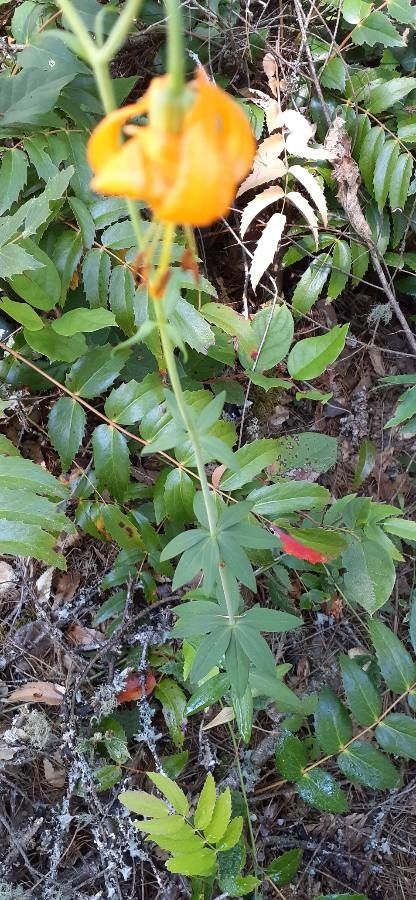
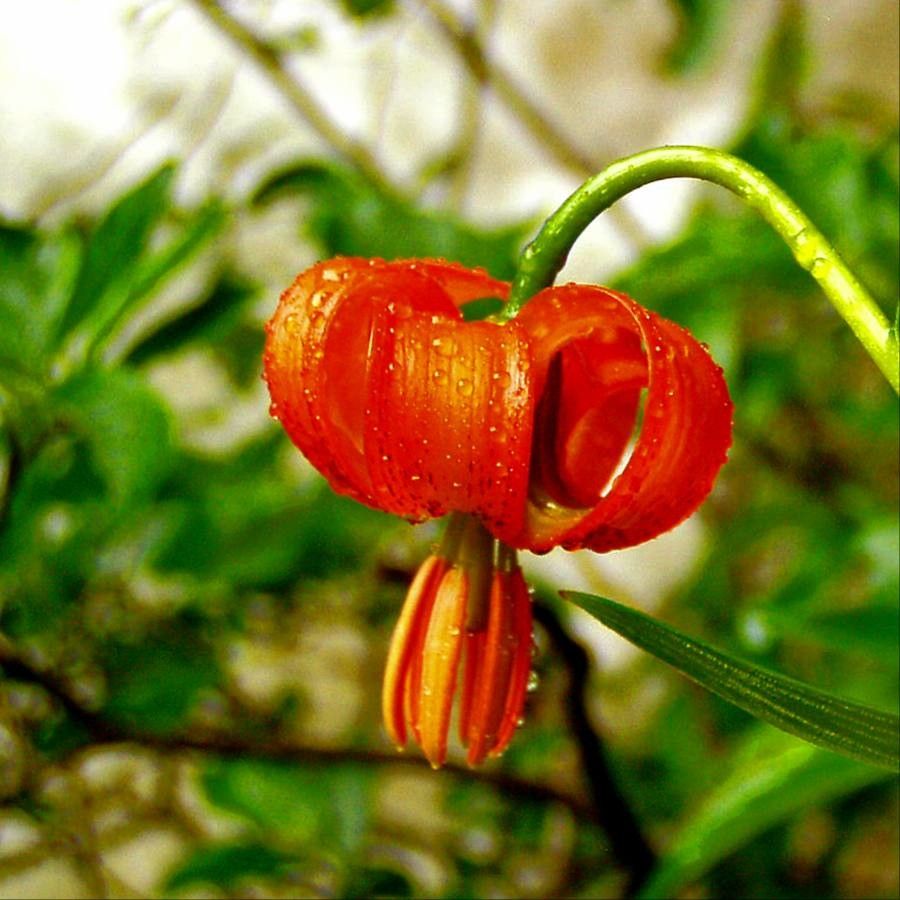
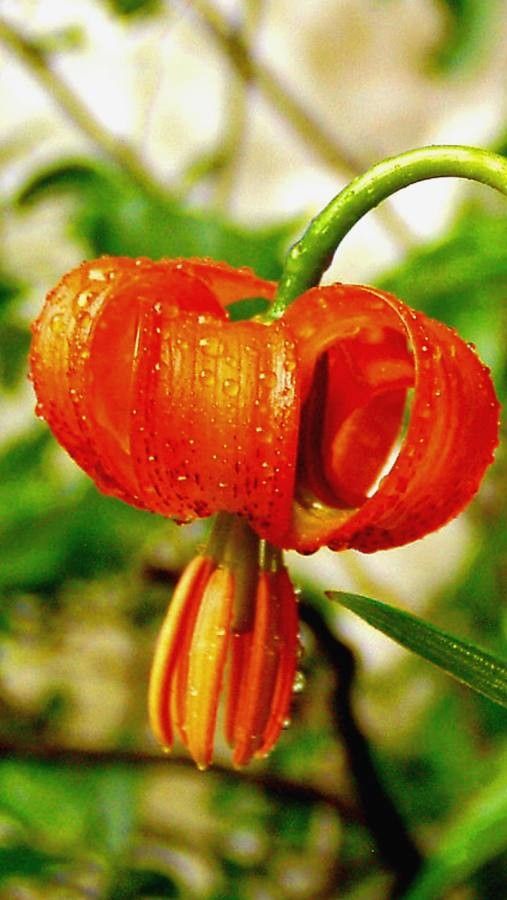
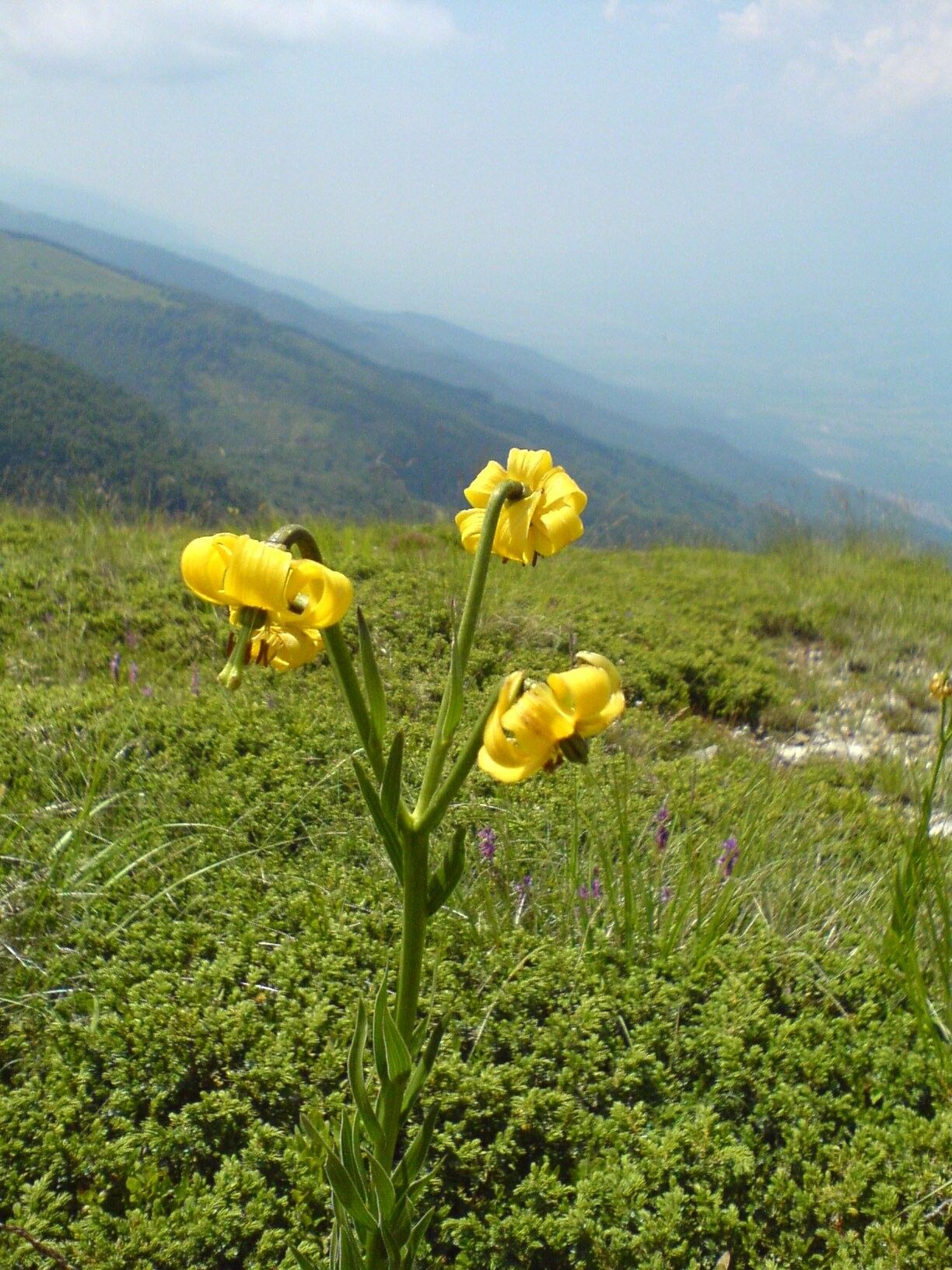
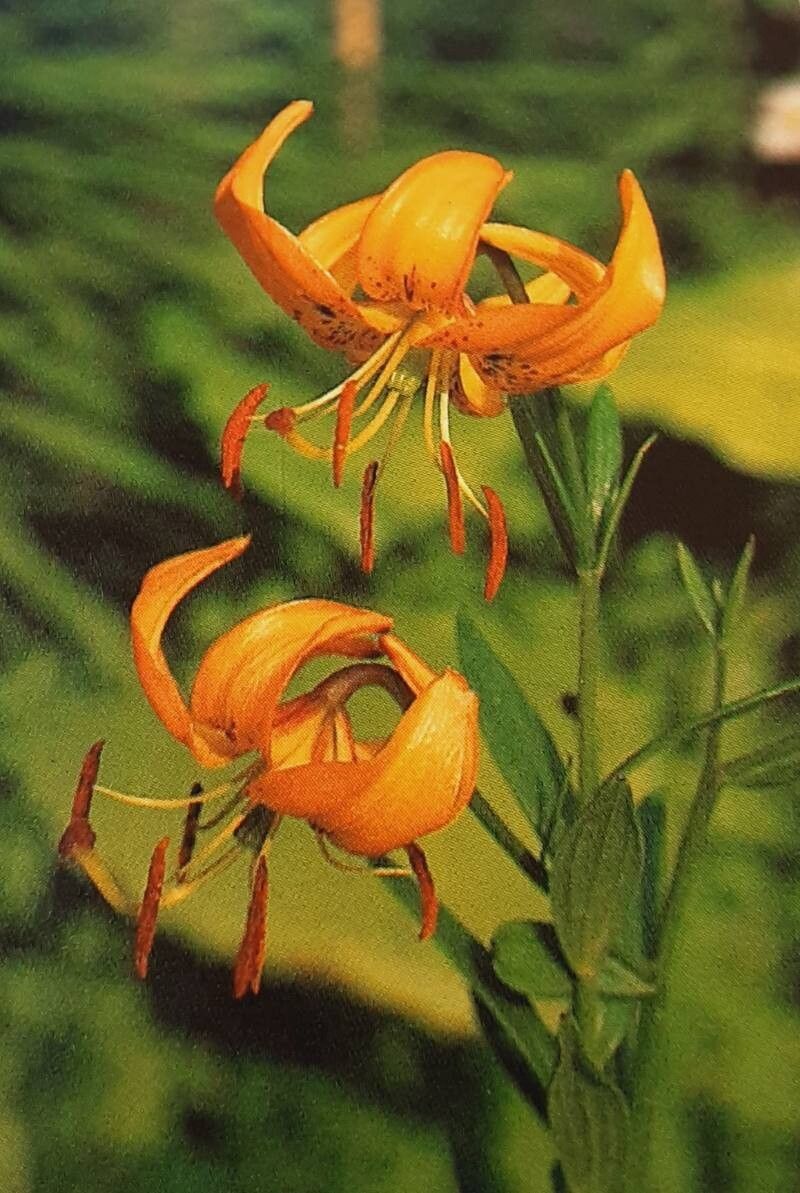
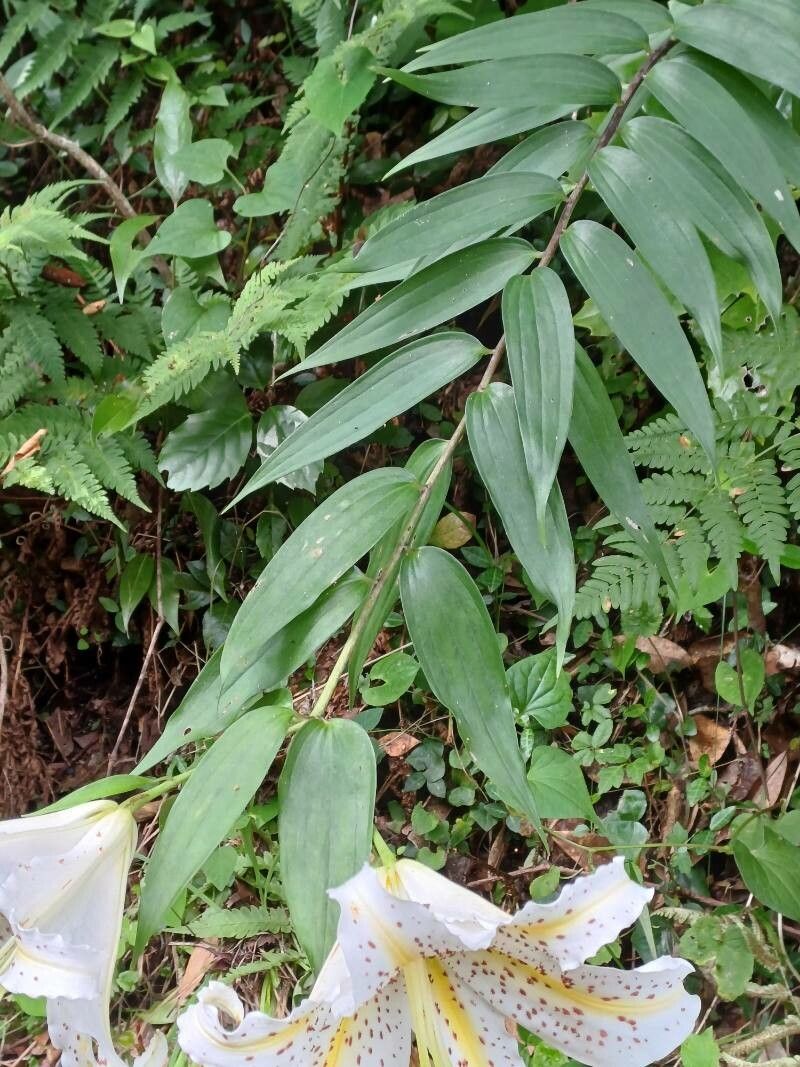
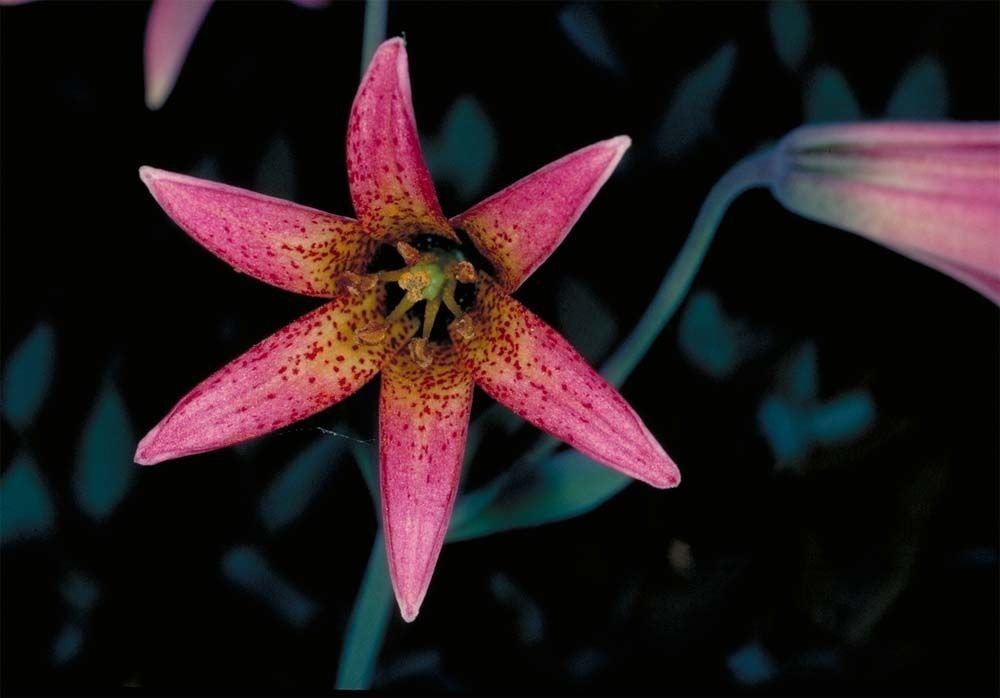
Lilium pardalinum, also known as the leopard lily or panther lily, is a flowering bulbous perennial plant in the lily family, native to Oregon, California, and Baja California. It usually grows in damp areas. Its range includes California chaparral and woodlands habitats and the Sierra Nevada.Typically L. pardalinum grows to about 2 metres (6.6 ft) high; the tallest and most vigorous plants can reach up to 2.5 metres (8.2 ft). The bulbs are small, and many are usually clustered together on a rhizomatous stock. The flowers are Turk's-cap shaped, red-orange, with numerous brown spots, usually flowering in July.
SubspeciesLilium pardalinum subsp. pardalinum Kellogg -- leopard lily - southern California, Baja California Lilium pardalinum subsp. pitkinense (Beane & Vollmer) Skinner -- Pitkin Marsh lily - northwestern California Lilium pardalinum subsp. shastense (Eastw.) Skinner -- Shasta lily - Oregon, northern California Lilium pardalinum subsp. vollmeri (Eastw.) Skinner -- Vollmer's lily - southwestern Oregon, northwestern California Lilium pardalinum subsp. wigginsii (Beane & Vollmer) Skinner -- Wiggins' lily - southwestern Oregon, northwestern CaliforniaThe subspecies Pitkin Marsh lily, Lilium pardalinum subsp. pitkinense, is federally listed as an endangered species.
Pitkin marsh lily is fairly disease-resistant and typically not prone to illnesses. However, it can still be affected by pests and diseases present in its environment. Such infections are generally mild. Regarding care, the plant requires moderate maintenance. Regular pruning is necessary to preserve a good appearance and promote healthy growth. Fertilizing can also help encourage flowering. Pitkin marsh lily is appropriate for anyone with outdoor space, such as a garden or patio, and does not demand extensive care experience. It may need more attention when grown indoors.
How to keep Lilium Pardalinum.
Light
The Pitkin marsh lily prefers strong light throughout the day for optimal growth. It can tolerate lower light levels to a moderate extent, but excessive shade can impede its development. Its native habitat was typically landscapes exposed to intense sunlight. Overexposure can cause damage, while insufficient light may result in poor leaf development.
Water
The Pitkin marsh lily, which is native to moist environments, flourishes with consistent moisture and requires weekly watering to stay optimally hydrated. As an herbaceous perennial, it is particularly important to meet its watering needs during the active growing season to encourage lush blooming. While the plant can endure short periods of dryness, it thrives best in consistently balanced moisture conditions.
Temperature
Pitkin marsh lily is native to habitats with temperatures ranging from 41 to 95 °F (5 to 35 ℃). It grows well in moderate temperatures. Depending on seasons and local climate variations, adjustments may be necessary to keep conditions within that range.
Fertilizer
The best time to fertilize a Pitkin marsh lily is in early spring, as it comes out of dormancy and begins active growth. Fertilizing supplies essential nutrients for healthy growth. While the Pitkin marsh lily needs relatively little fertilizer, an annual application can improve its survival and encourage better, longer-lasting blooms.
Pruning
To encourage robust blooms, prune the pitkin marsh lily from early to late spring by removing dead foliage and spent flowers. Be careful not to cut healthy leaves, as they store energy for the plant. This seasonal maintenance improves air circulation, reduces the risk of disease, and enhances the plant's overall vigor and flower quality.
Botanical profile.
- Plant Type
- Herb
- Life Cycle
- Perennial
- Genus
- Lilium
- Family
- Liliaceae
- Hardiness Zone
- 5-10
- Mature Height
- 0.91 m to 2.13 m
- Mature Spread
- 30 cm
- Leaf Color
- Green
- Leaf Type
- Deciduous
- Flower Color
- Red, Orange
- Flower Size
- 7.62 cm to 10.16 cm
- Bloom Time
- Early summer, Mid summer
- Planting Time
- Spring, Summer
- Harvest Time
- Late summer, Early fall
Other names.
Reader questions.
What should I do if I give too much or too little water to my Pitkin marsh lily?
The Pitkin marsh lily is prone to overwatering, which can result in bulb rot. Signs of overwatering include mushy bulbs, spotted and floppy stems, droopy flowers, and yellowed stalks. If the leaves turn yellow before the flowers have bloomed, it's a clear indication of overwatering. Unfortunately, bulb rot is irreversible, but if caught early, you can dig up the bulb and remove the rotten parts along with the soil it grew in. For potted plants, disinfect the pot and tools to prevent the spread of fungus. If you prefer outdoor planting, choose a different location. Underwatering is less of a concern, but signs include no blooms, sagging stalks, and browning around the edges of the flower petals. If you've underwatered your Pitkin marsh lily, give it a good drink without saturating the soil. Be cautious not to overwater, as extended periods in water can lead to root rot, fungus growth on the bulb, and noticeable spots on the leaves and buds, along with discoloration and dieback of leaf tips.
When should I not add fertilizer to my Pitkin marsh lily plant?
To ensure healthy growth, it is important to fertilize the Pitkin marsh lily at the right time. Late winter and early spring are the appropriate times for fertilization, as this plant has low fertilization needs and a single annual feeding is enough. Fertilizing during spring, summer, and fall can cause overfertilization and its complications, except if you skipped fertilizing in spring, in which case it is acceptable to fertilize in fall. Additionally, there is no need to fertilize during winter when the plant is in a dormant growth phase and does not produce new growth.
What are the sunlight requirements for the Pitkin Marsh Lily?
The Pitkin Marsh Lily thrives in conditions where it can receive robust illumination throughout the day, which is essential for its optimal growth. It can tolerate moderate shade, but excessive shade may impede its development. In its natural habitat, it is accustomed to powerful sunlight. While it can withstand some degree of overexposure, which may cause damage, underexposure leading to inadequate foliage formation is more concerning. It is essential to find a balance, ensuring the plant receives above 6 hours of sunlight for 'full sun' conditions or about 3-6 hours for 'partial sun' conditions. Watching how sunlight moves through your garden to choose the best spots for your plants can ensure their happiness and health.
What is the optimal temperature range for the Pitkin marsh lily?
The Pitkin marsh lily, or Lilium pardalinum, thrives in environments with temperatures ranging from 41 to 95°F (5 to 35°C). This range is considered moderate and favorable for its growth. The plant has strong cold resistance but requires certain adjustments depending on seasonal and local climate variations to maintain this optimal temperature range.
How much water does my Pitkin marsh lily need?
The Pitkin marsh lily is a hardy plant that doesn't require much attention. It does best when grown directly in the ground in the sunniest part of your garden, although it can also be grown in a pot. Since it's a bulb plant, be careful not to overwater it while it's growing, as this can cause the bulb to rot. After planting, give it a good watering and then let it be until shoots start to appear. To ensure the best results, check the soil moisture after the new leaves have grown. Stick your finger about 2-3 inches below the soil surface; if it's still wet, you don't need to water the plant. For potted plants, check the water collection tray for standing water, and avoid watering if there is any. To get a more accurate moisture reading, insert a moisture sensor about 2-3 inches into the soil; the reading should fall in the middle of the 'moist' category. Water your Pitkin marsh lily once a week for optimal growth.
Why should I add fertilizer to my Pitkin marsh lily?
Fertilization is important for the Pitkin marsh lily because it provides essential nutrients for the plant's growth. While the overall fertilization needs for this plant are low, annual fertilization can greatly benefit its survival and flower quality. Therefore, those who want their Pitkin marsh lily to thrive should make sure to fertilize it annually.
How important is artificial lighting for Pitkin Marsh Lily, and how should it be implemented?
Artificial lighting plays a vital role for indoor Pitkin Marsh Lilies, especially when natural sunlight is insufficient. This can occur during winter or in less sunny indoor areas. Artificial lights promote faster, healthier growth by supplementing the lack of natural light. LED lights are recommended because they can be customized to provide specific light wavelengths needed by plants. Full sun plants require 30-50W/sq ft of artificial light, partial sun plants need 20-30W/sq ft, and full shade plants need 10-20W/sq ft. The light source should be placed 12-36 inches above the plant to mimic natural sunlight effectively. Furthermore, the duration of artificial lighting should mimic natural daylight hours, typically 8-12 hours per day, to ensure the plant's health and growth.
How does Pitkin marsh lily respond to cold temperatures, and what protection measures should be taken?
Pitkin marsh lily is cold-tolerant and performs well when temperatures are above 5°C. In winter, the temperature should ideally remain above -20°C. Though the lily can endure colder climates, temperatures dropping below -25°C may lead to a decrease in or absence of sprouting during spring. To protect the plant from extreme cold, measures like covering it with soil or straw are recommended, especially if winter temperatures are expected to fall below -25°C. Additionally, watering the plant abundantly before the first freeze in autumn helps keep the soil moist and prevents drought and water scarcity during the colder months.
How do I water my Pitkin marsh lily appropriately based on different conditions?
The Pitkin marsh lily is a hardy plant that can survive harsh conditions. When planting outdoors, you can rely on natural rainfall as it does not require much water. Just ensure that the soil has good drainage. However, when potted, be cautious with watering to avoid bulb rot. Water less frequently indoors and use well-drained soil with added sand or rocks. During the growing phase, water about one inch per week to encourage blooming. Adjust watering based on humidity and temperature. Hot and dry climates may require more frequent watering, while humid climates may need less. Always check soil moisture to prevent overwatering.
When should I fertilize my Pitkin marsh lily?
The best time to fertilize a Pitkin marsh lily is in late winter to early spring when the plant is coming out of its dormant phase and starting to grow. Fertilizing at this time helps promote healthy growth and a good start to the season. It is also possible to fertilize the lily during the fall, although it is generally most beneficial in spring. However, it's not recommended to fertilize during summer or winter.
What are the symptoms of inadequate or excessive sunlight exposure in Pitkin Marsh Lily?
Symptoms of inadequate sunlight exposure in Pitkin Marsh Lily include the growth of smaller new leaves, leggy or sparse growth due to longer spaces between leaves or stems, faster leaf drop as the plant conserves resources, slower or no new growth as the plant enters a survival mode, lighter-colored new leaves indicating a lack of chlorophyll, and chlorosis where leaves lose their green color and turn yellow. Conversely, symptoms of excessive sunlight exposure include sunscald with pale, bleached, or necrotic areas on plant tissue, leaf curling as a defense mechanism against water loss and damage, wilting due to increased water loss, and leaf scorching characterized by brown, dry, and crispy edges on leaves. Both inadequate and excessive sunlight exposure can significantly affect the plant's health and development.
What steps should be taken if the Pitkin marsh lily is exposed to temperatures below its cold tolerance?
If the Pitkin marsh lily is exposed to temperatures colder than its tolerance level of -25°C, leading to a noticeable decrease or absence of spring sprouting, it is advised to remove the parts of the plant that have failed to sprout in spring. This helps the plant to recover and prepare for the next growth cycle.