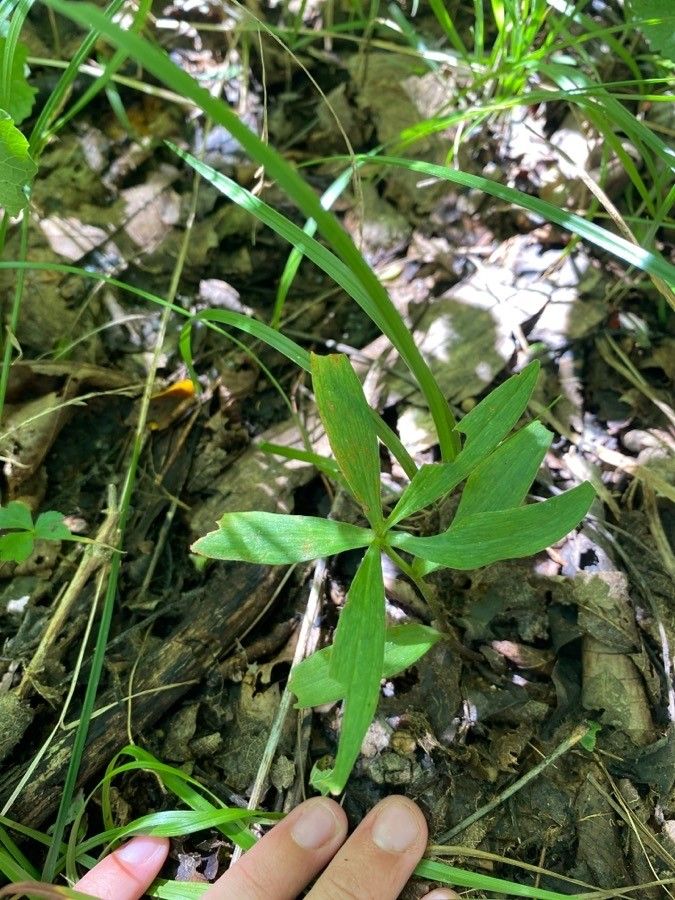
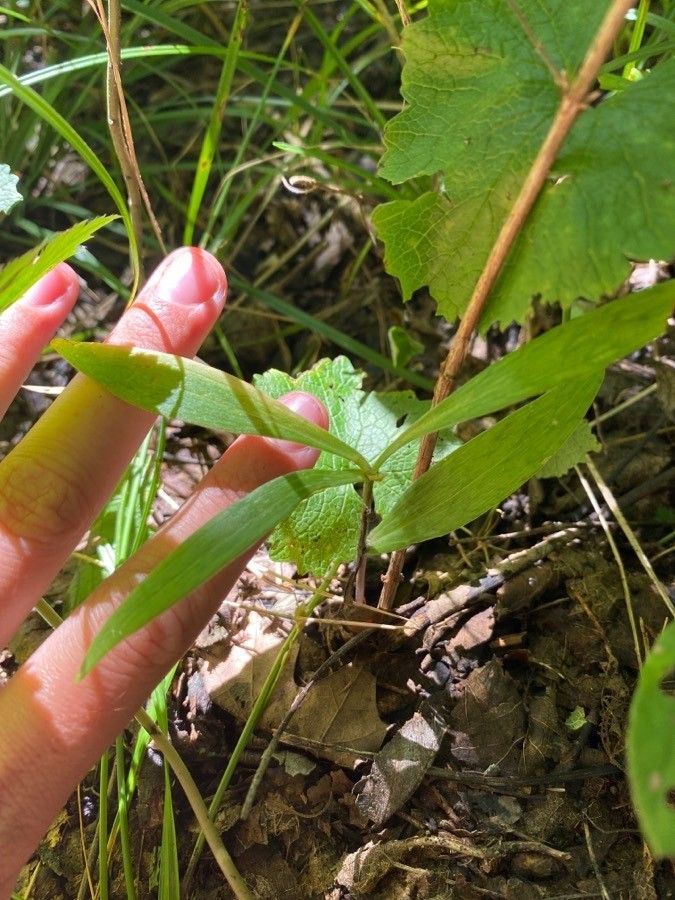
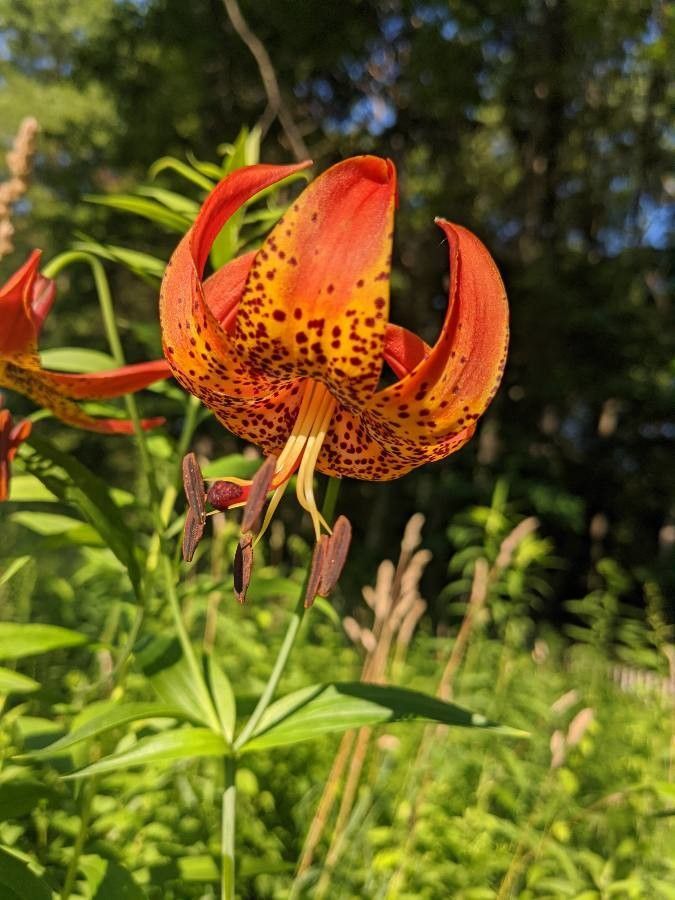
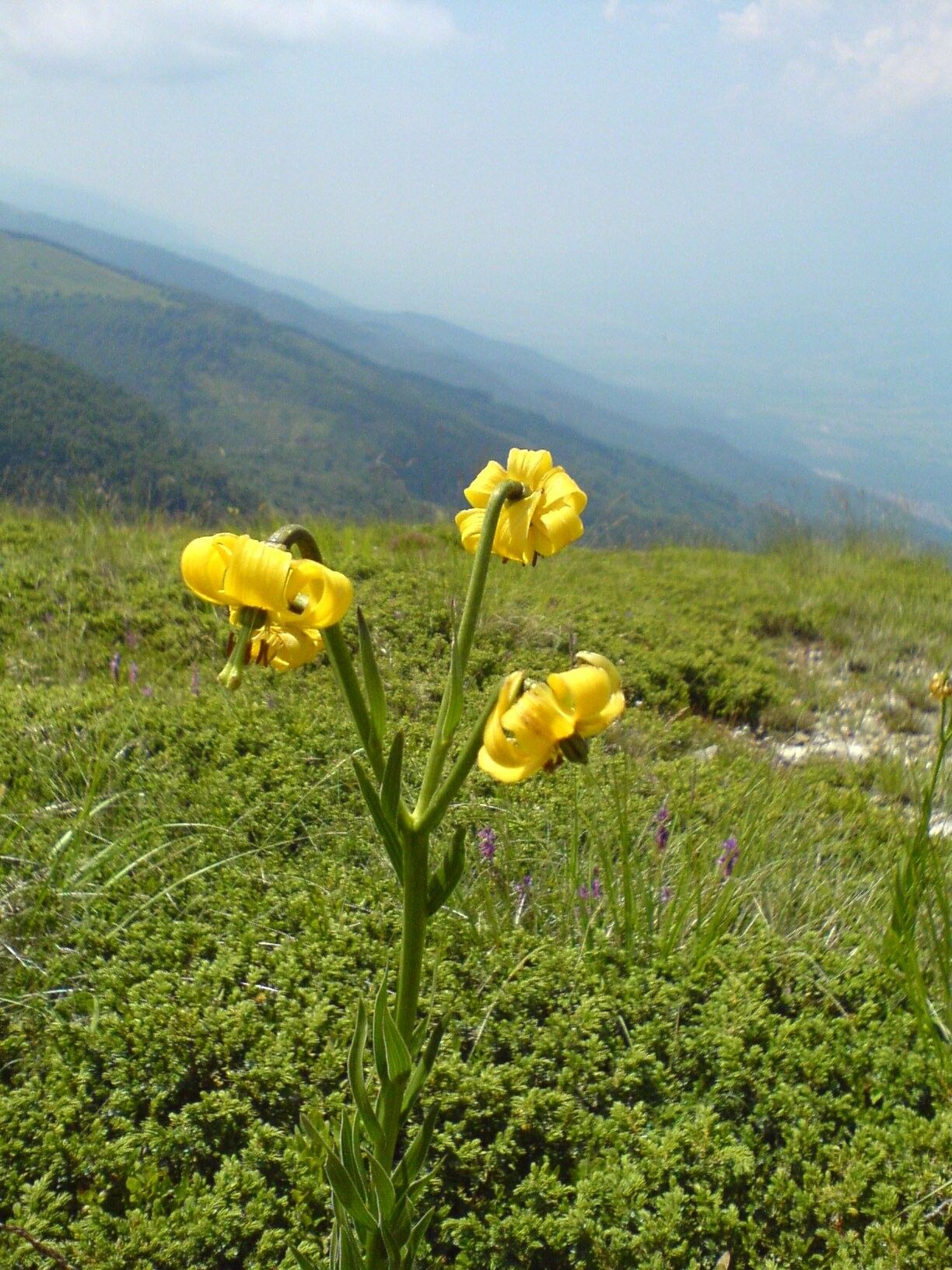
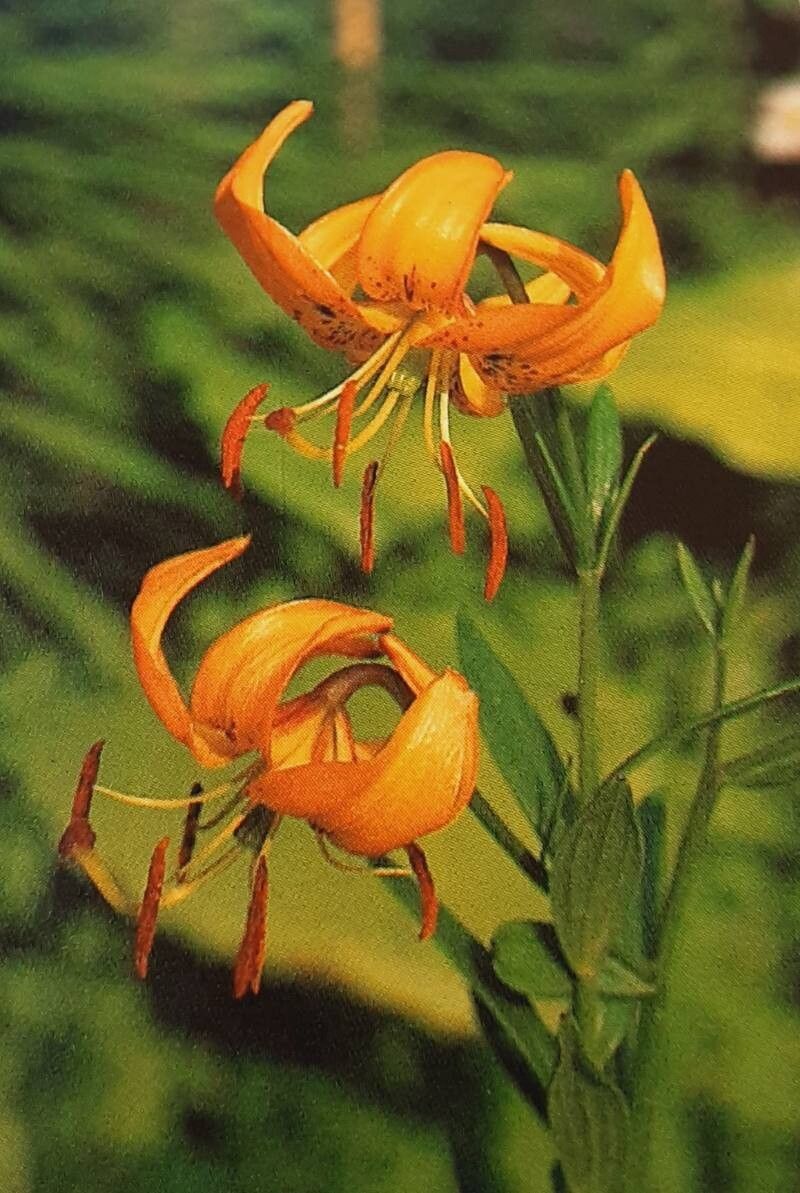
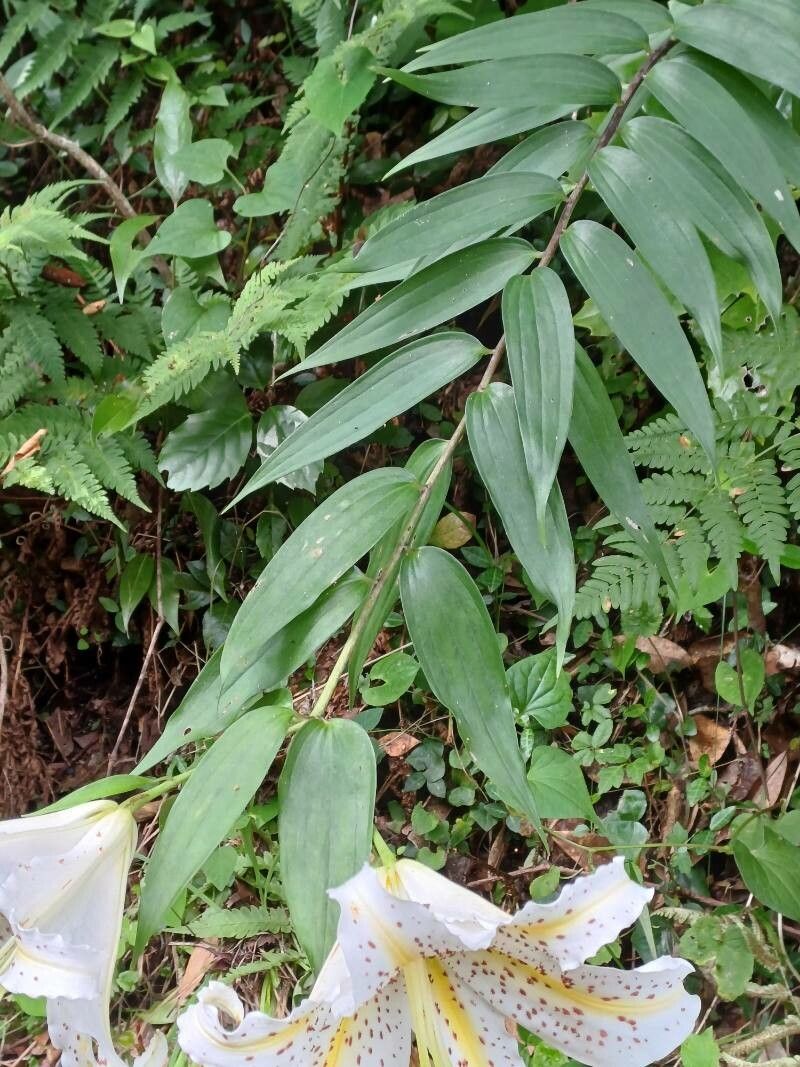
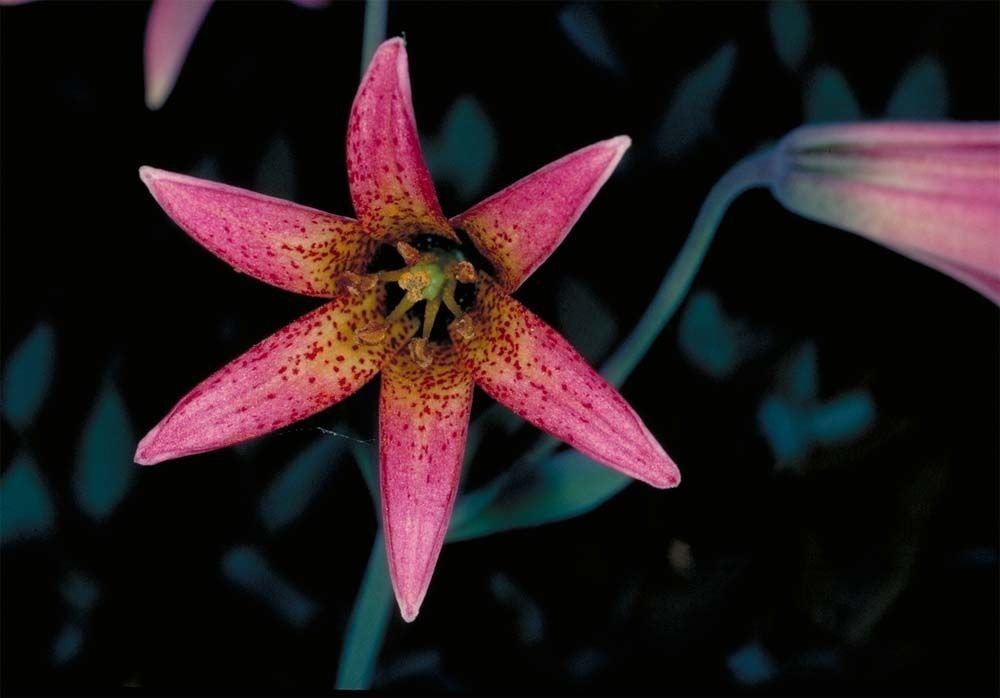
Lilium michiganense is a species of true lily commonly referred to as the Michigan lily. It is a wildflower present in prairie habitats in the Great Lakes and Upper Mississippi Valley regions of the United States and Canada, from South Dakota through Ontario to New York, south to Georgia and Oklahoma.Growing to 5 ft (1.5 m) tall by 2 ft (0.61 m) broad, Lilium michiganense is a bulbous herbaceous perennial with showy flowers in summer. The flowers are orange with dark brown spots and acutely recurved petals. This plant is widely cultivated as an ornamental. The Michigan lily is often confused with the Turk's cap lily (Lilium superbum) and with a naturalized Asian "tiger lily" Lilium lancifolium. The leaf arrangement is typically whorled, but sometimes alternate just below the inflorescence and at the very base of stem.
The Michigan Lily is fairly resistant to disease and generally not prone to illness. Nonetheless, it can be affected by pests and diseases present in its surroundings. These problems are typically not severe. Regarding care, this plant requires moderate maintenance. It should be pruned regularly to preserve a good appearance and support healthy growth. Fertilizing can also help encourage flowering. The Michigan Lily is appropriate for anyone with outdoor space, such as a garden or patio, and does not demand extensive gardening experience. It may need more attention when grown indoors.
How to keep Lilium Michiganense.
Light
The Michigan lily performs best in areas with abundant sunlight, though it can tolerate situations with lower amounts of light. This preference comes from its native habitats, which receive plenty of sun. At every stage of growth, sunlight supports its optimal development. Both excessive and insufficient light can harm the plant, potentially limiting growth or causing its leaves to discolor.
Water
The Michigan Lily flourishes in moist meadows, needing consistent moisture and can withstand short periods of dryness. Weekly watering helps maintain its lush growth. This herbaceous perennial is usually cultivated outdoors, where natural rainfall keeps the soil evenly moist throughout its active growing season.
Temperature
Michigan Lily does best in its native habitat where temperatures fall between 41 to 90 °F (5 to 32 ℃). As a gardener, consider adjusting temperatures seasonally to match its preferences.
Fertilizer
The best time to fertilize a Michigan Lily is in early spring, as it comes out of dormancy and begins active growth. Fertilization supplies essential nutrients for healthy growth. Although a Michigan Lily has relatively low fertilizer needs, annual fertilization can improve its survival and encourage better, longer-lasting flowers.
Pruning
The Michigan Lily showcases striking, downward-facing orange flowers adorned with spotted petals. To promote healthy growth and extend the flowering period, prune the plant from early to late spring. During this time, remove any damaged stems and deadhead the spent blooms. After the fall, trim back any yellowing foliage to help direct the plant's energy toward the roots, which will improve both its vigor and appearance.
Botanical profile.
- Plant Type
- Herb
- Life Cycle
- Perennial
- Genus
- Lilium
- Family
- Liliaceae
- Hardiness Zone
- 4-8
- Mature Height
- 0.91 m to 1.83 m
- Mature Spread
- 61 cm to 91 cm
- Leaf Color
- Green
- Leaf Type
- Deciduous
- Flower Color
- Orange, Red
- Flower Size
- 2.54 cm to 15.24 cm
- Bloom Time
- Early summer, Mid summer
- Planting Time
- Spring, Summer
- Harvest Time
- Late summer, Early fall
Other names.
Reader questions.
What do I do if I give too much or too little water to my Michigan Lily?
The Michigan Lily is susceptible to overwatering, which can cause bulb rot. Signs of overwatering include a mushy bulb, flopping stems with spots, droopy flowers, and a yellowed stalk. While yellow leaves at the end of the blooming period are normal, if they turn yellow before blooming, it indicates overwatering. Unfortunately, bulb rot cannot be reversed, but if caught early, you can dig up the bulb, remove the rotten parts, and disinfect pots and tools. Outdoor plants should be planted in a different location. Underwatering is less of a problem, but signs include no blooms, sagging stalks, and browning around the edges of petals. If underwatered, give the plant a good drink without saturating the soil. Be cautious of overwatering, as extended periods in water can lead to root rot and fungus on the bulb, which can cause spots on leaves and buds, as well as discoloration and death of leaf tips.
Which kind of fertilizer does my Michigan Lily plant require?
To care for a Michigan Lily, you can use a general-purpose fertilizer that has a balanced amount of the three main plant nutrients. However, certain nutrient blends can have even better results. Many gardeners recommend using a fertilizer with higher phosphorus levels to promote stronger roots and better flowers. You can choose between granular or liquid fertilizer as long as it contains adequate nutrients. Additionally, organic methods like compost and manure can also improve the soil for your Michigan Lily.
What are the sunlight requirements for Michigan Lily?
Michigan Lily requires full sun conditions, which mean it needs above 6 hours of sunlight daily to thrive optimally. It can also tolerate partial sun conditions, receiving about 3-6 hours of sunlight daily. It's important to observe your garden and choose spots that provide the right balance of light and shade, as the right amount of sunlight ensures the plant's health and happiness.
What are the ideal temperature requirements for Michigan Lily?
Michigan Lily thrives best in its native growth environment, preferring temperatures that range between 41 to 90 °F (5 to 32 °C). Gardeners should consider making seasonal adjustments to ensure the temperature reflects the plant's preferences. Michigan Lily possesses strong cold resistance, typically not requiring special frost protection measures during winter. However, if winter temperatures are expected to drop below the plant's cold tolerance limit, it's crucial to provide cold protection by covering the plant with materials such as soil or straw. Additionally, watering the plant abundantly before the first freeze in autumn is advised to keep the soil moist and help prevent drought and water scarcity during the colder months.
How often do I need to water my Michigan Lily?
Michigan Lily is a hardy plant that doesn't require much attention. It is best to grow it directly in the ground in the hottest and brightest part of your garden, although you can also grow it in a pot. Since it is a bulb plant, be cautious about overwatering during its growth stage, as this can cause the bulb to rot. After planting, give the lilies a thorough watering to initiate growth, and then leave them be until you see shoots appear. For optimal results, check the soil moisture after the new leaves have emerged. Stick your finger about 2-3 inches below the soil surface; if it is still wet, you don't need to water the plant. In potted plants, also examine the water collection tray for any standing water and avoid watering if present. For a more precise moisture reading, use a moisture sensor inserted about 2-3 inches into the soil, aiming for a reading in the middle of the "moist" category. To water your Michigan Lily, it is generally recommended to do so once per week.
How can I properly fertilize my Michigan Lily?
To fertilize a Michigan Lily, the most common method is to use a granular or pellet fertilizer. It's important to fertilize when the plant is done being dormant in winter and starting to grow actively. In early spring, wait for shoots to emerge and then apply the fertilizer. Instead of granular fertilizer, some people prefer using liquid fertilizer. If you choose liquid fertilizer, dilute it with water before application. Regardless of the type of fertilizer, it's best to moisten the soil before, during, and after fertilization.
Can Michigan Lily grow with artificial lighting?
Yes, Michigan Lily can grow with artificial lighting, especially when natural sunlight is insufficient, like during winter or in less sunny spaces. Artificial lights, including LED lights, can be customized to provide specific wavelengths needed by the plants. For full sun plants, 30-50W/sq ft of artificial light is needed, 20-30W/sq ft for partial sun plants, and 10-20W/sq ft for full shade plants. The light source should be placed 12-36 inches above the plant and turned on for 8-12 hours per day to mimic natural sunlight conditions.
How does Michigan Lily react to low and high temperatures?
In low temperatures, Michigan Lily shows a high degree of cold tolerance and performs best when kept above its minimum suitable growth temperature. During winter, temperatures should be maintained above its tolerable growing temperature minimum. Falling below this threshold might not show immediate adverse effects during winter but can lead to decreased or completely absent sprouting in spring. For plants that fail to sprout, it is recommended to remove the affected parts in spring. When exposed to high temperatures, especially above its maximum suitable and tolerable growing temperatures, Michigan Lily's leaves can lighten in color, become prone to curling, suffer from sunburn, or, in severe cases, the entire plant may wilt and dry up. The solution includes trimming away sunburned or dried parts, moving the plant to a shaded location, or using a shade cloth to protect it from the midday and afternoon sun. Additionally, watering the plant in the morning and evening is advised to maintain soil moisture.
How do I change the amount of water I give to my Michigan Lily depending on different conditions?
The Michigan Lily is a hardy plant that can survive harsh conditions. If you plant it outdoors, you can rely on nature to provide most of the water it needs, as it doesn't require much maintenance and can endure droughts. Just make sure the soil has good drainage. However, if you have a potted Michigan Lily, be cautious with watering because overwatering can lead to bulb rot. Water less frequently indoors and ensure proper drainage with the use of well-drained soil and additional materials like sand or rocks. During the growing phase, you should water the Michigan Lily about one inch per week to encourage blooming. Adjust the watering frequency based on the humidity and temperature of your climate. In hot and dry areas, more frequent watering may be necessary, while in humid climates, you can water less. Always check the soil moisture and avoid excessive wetness, as the plant prefers well-drained, moist soil.
Why do I have to add fertilizer to my Michigan Lily plant?
Fertilization plays a vital role in the growth of the Michigan Lily for several reasons. It provides essential nutrients that assist the plant's overall development, both above and below the ground. While the Michigan Lily has relatively low fertilization requirements, it can survive without fertilization in certain cases. However, consistent annual fertilization offers numerous benefits, including improved plant health and the potential for longer-lasting, more beautiful flowers. Therefore, those who want their Michigan Lily to thrive and showcase its best appearance should prioritize annual fertilization.
What are the symptoms of insufficient light in Michigan Lily?
Symptoms of insufficient light in Michigan Lily include smaller new leaves, leggy or sparse growth, faster leaf drop, slower or no new growth, and lighter-colored new leaves. Other symptoms like chlorosis, sunscald, leaf curling, wilting, and leaf scorching indicate excessive sunlight exposure. These symptoms highlight the plant's need for an optimal amount of sunlight for healthy growth.
When should I fertilize my Michigan Lily for the best results?
The best time to fertilize a Michigan Lily is in late winter to early spring when it is transitioning from a dormant phase to active growth. Fertilizing at this time promotes healthy growth and helps the plant thrive during the season. While early spring is generally preferred, fall is also acceptable for fertilization. However, it is not recommended to fertilize during summer or winter.