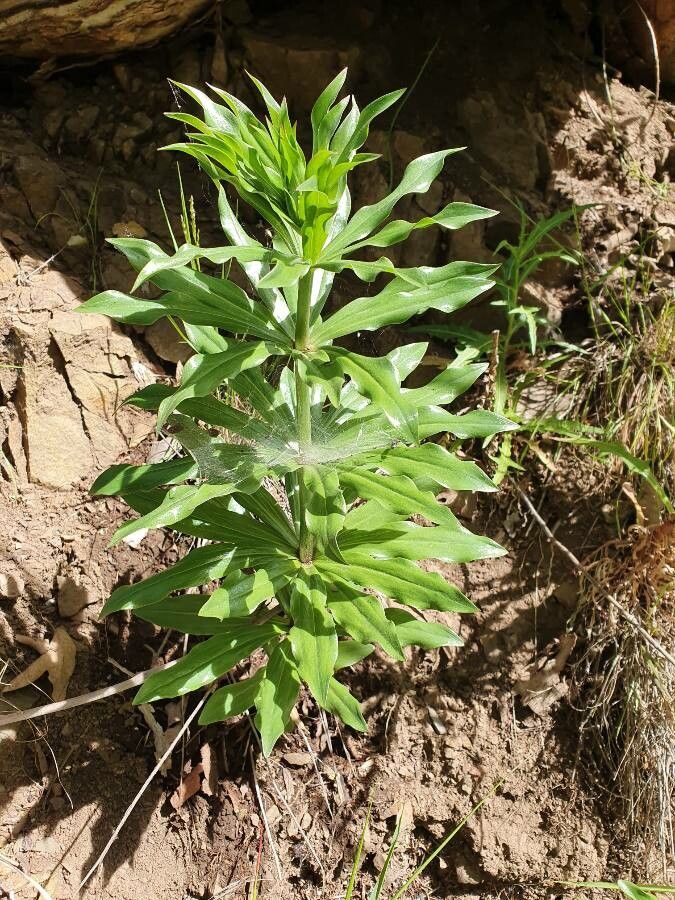
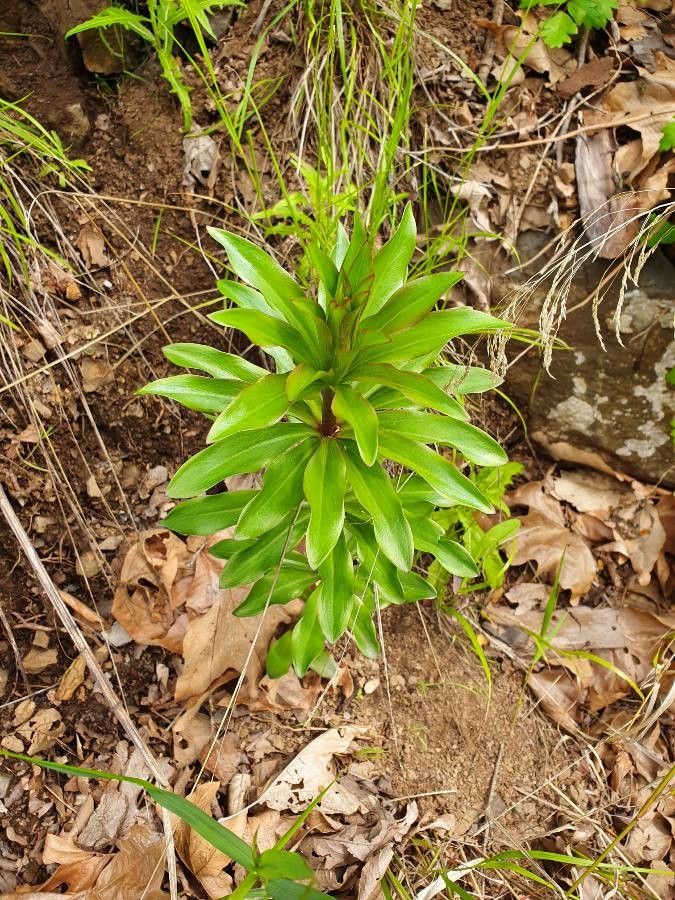
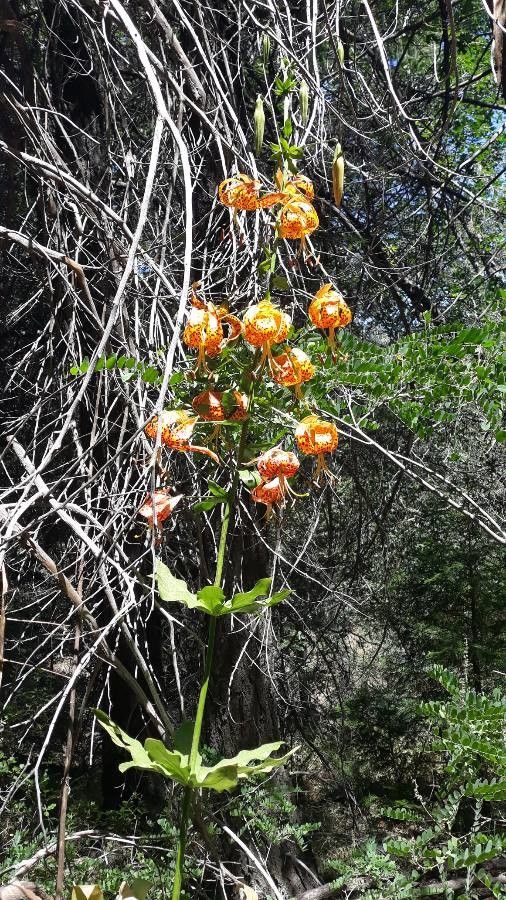
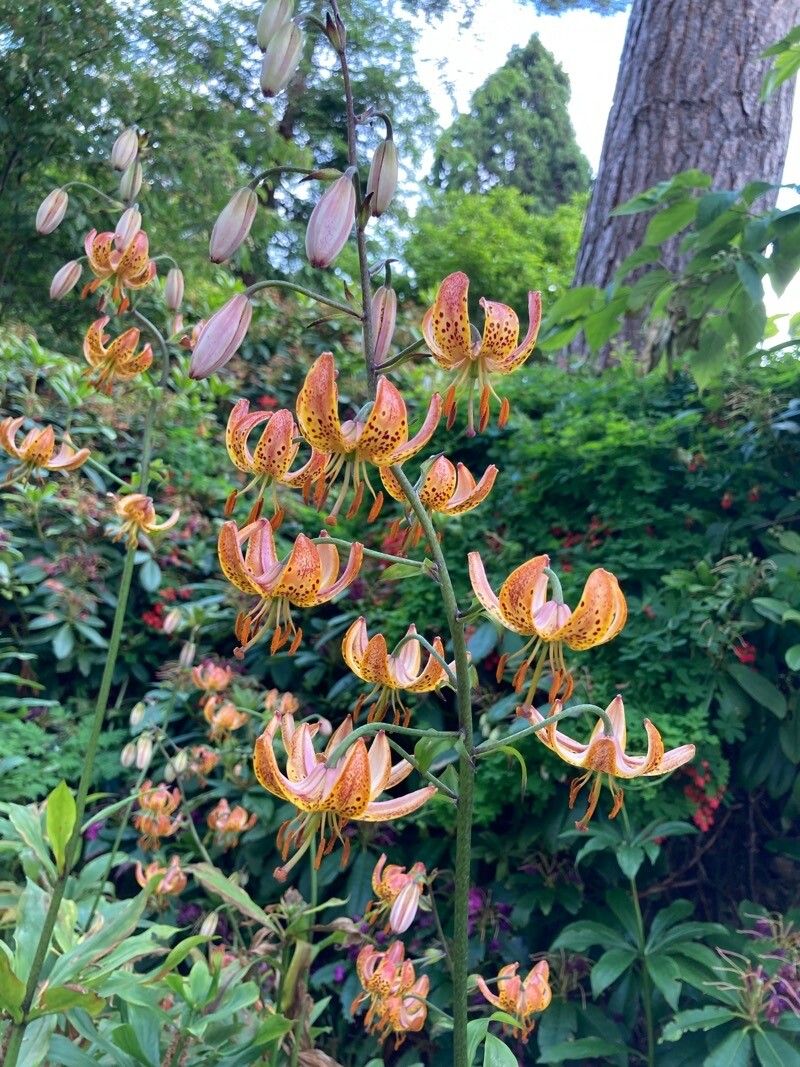
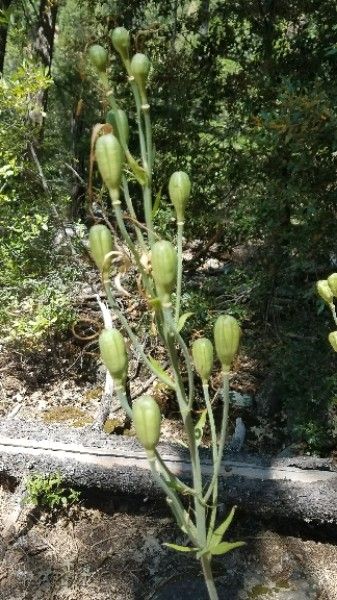
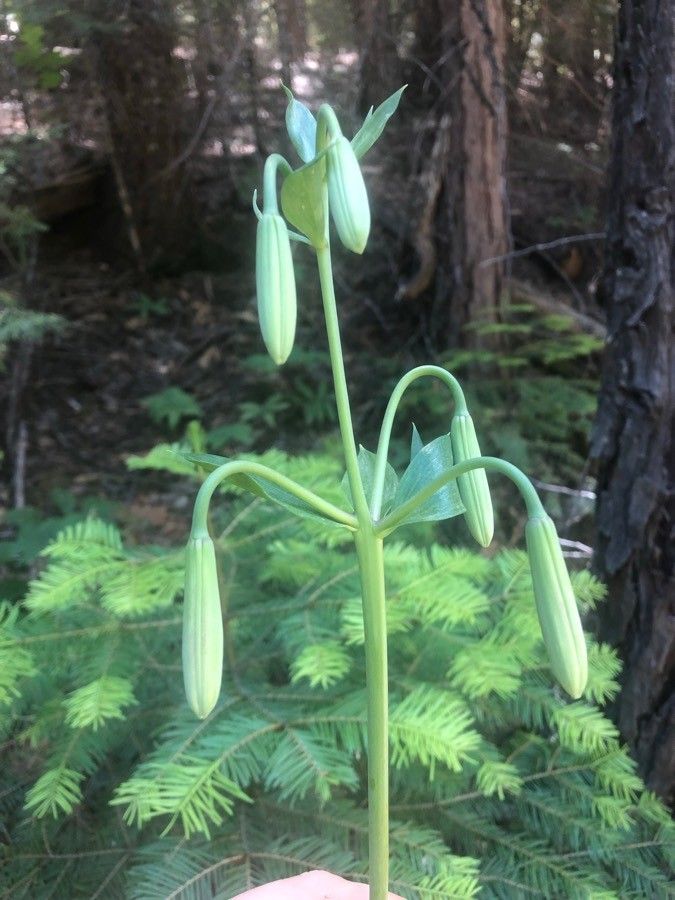
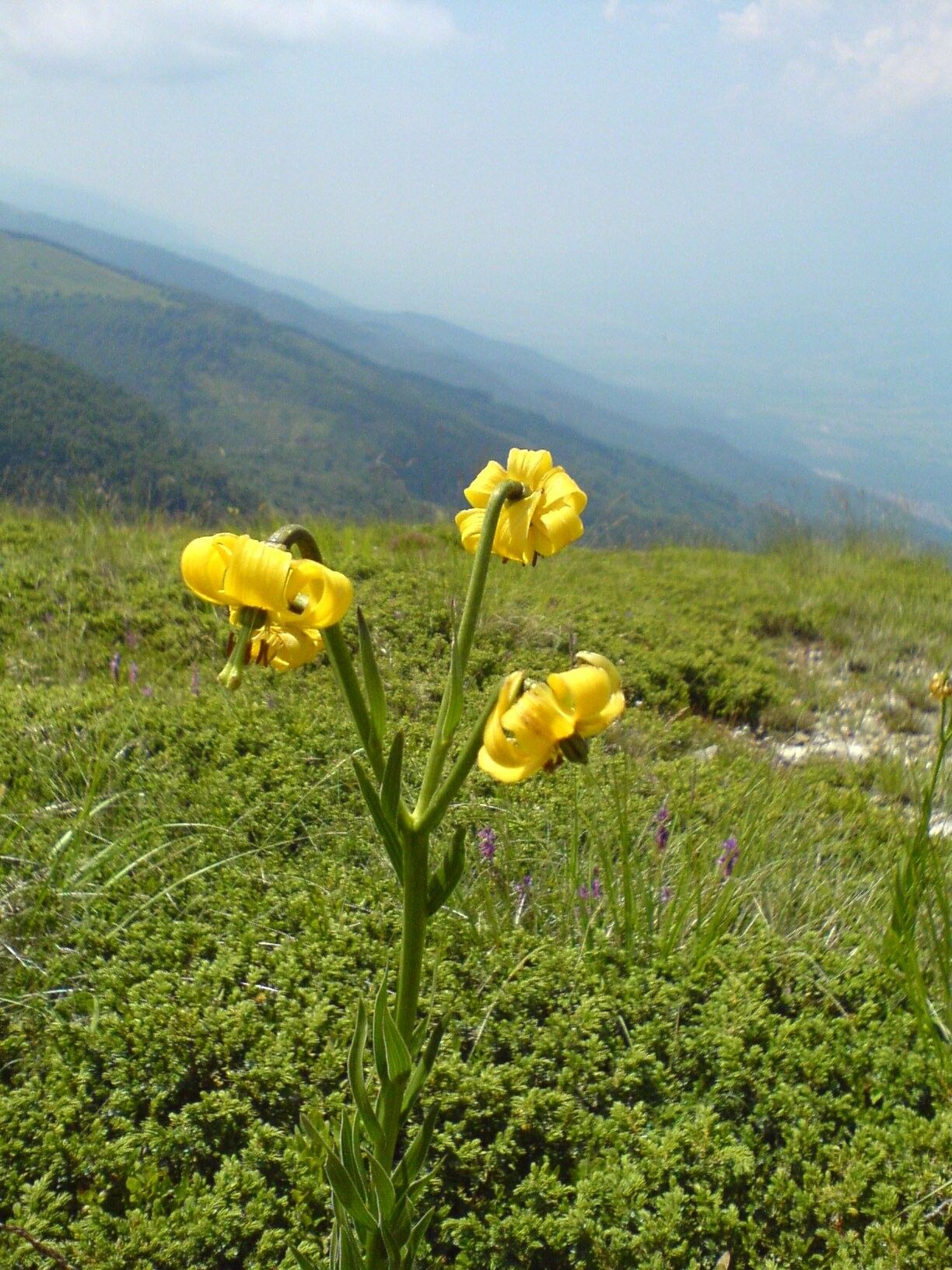
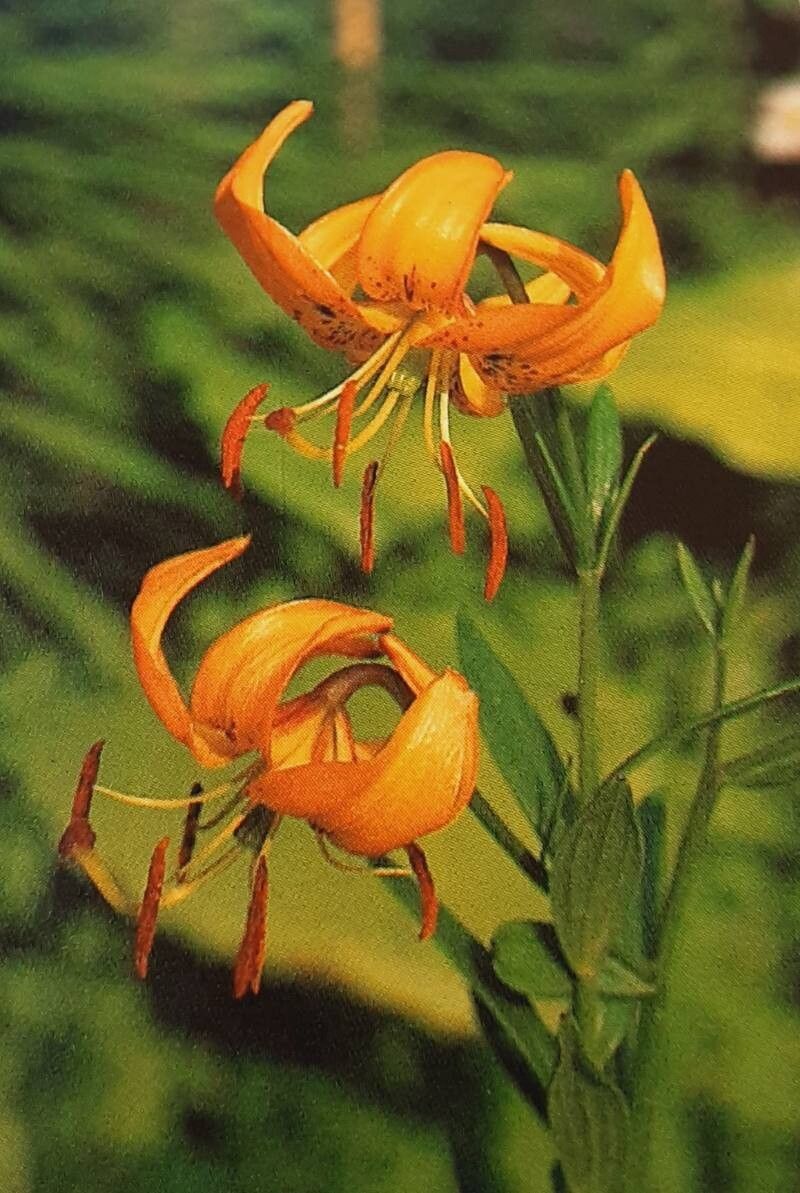
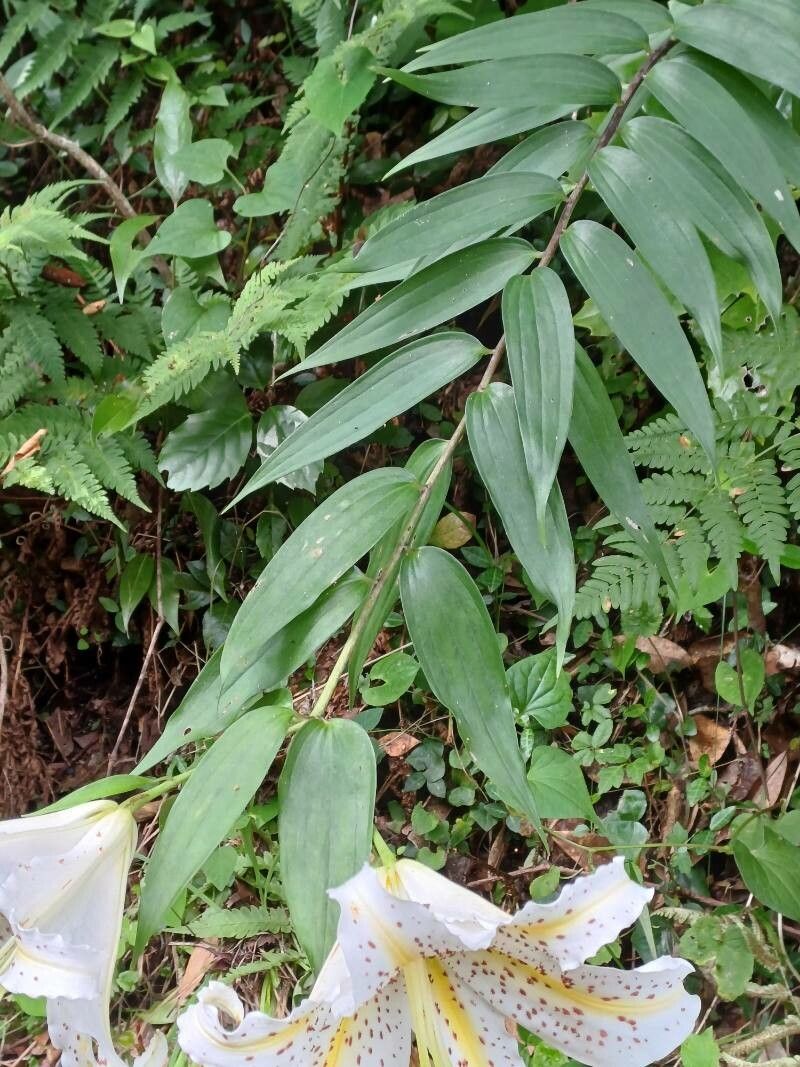
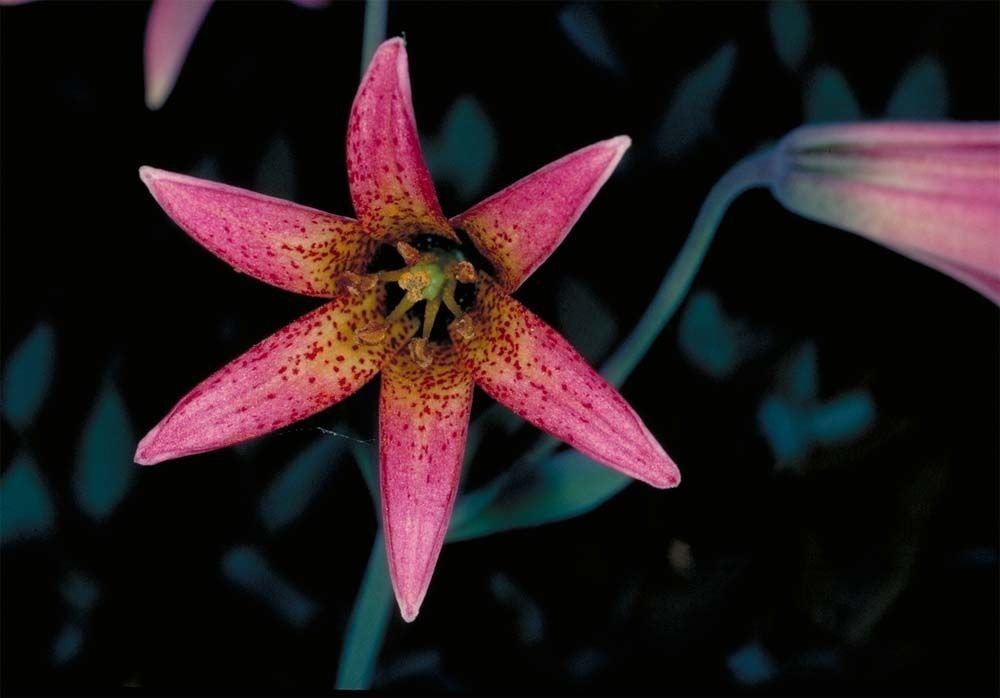
Lilium humboldtii, commonly known as the Humboldt lily, is a species of flowering plant in the lily family. It is native to California and Oregon in the United States, as well as Baja California in Mexico. The plant typically reaches a height of 1 to 2 meters and produces large, showy, trumpet-shaped flowers with bright orange-red petals that are speckled with dark spots.
The Humboldt lily prefers moist soil conditions and partial shade but can also tolerate full sun exposure. It blooms from late spring to early summer, attracting pollinators such as bees and butterflies.
Indigenous people have used the plant for medicinal purposes for centuries, thanks to its anti-inflammatory properties. However, it is important to note that all parts of the plant are toxic if ingested by humans or animals.
Lilium humboldtii is a popular ornamental plant due to its striking appearance but has become threatened due to habitat loss from urbanization and agriculture. Conservation efforts by organizations such as The Nature Conservancy aim to protect this species from extinction.
Humboldt's lily shows strong resistance to disease and is generally not highly susceptible to illnesses. However, it can still be affected by pests and diseases present in its environment. These problems are usually mild. In terms of care, the plant requires a moderate amount of attention. It should be pruned regularly to keep a neat appearance and maintain healthy growth. Fertilizing can also aid in encouraging flowering. Humboldt's lily is suitable for anyone with outdoor space, such as a garden or patio, and does not demand extensive gardening experience. It may need more attention when cultivated indoors.
How to keep Lilium Humboldtii.
Light
Humboldt's lily does well in locations that receive a moderate amount of sun and can tolerate places fully exposed to sunlight. In their native habitat, they grow best where sunlight is filtered through the tree canopy. Changes in sun exposure may affect their growth rate and overall health, with too little light causing weak or stunted growth and too much leading to sunburn.
Water
Humboldt's lily thrives in its natural environment when there is enough moisture and humidity. To support its growth, it is important to water it weekly. As an outdoor flowering plant, Humboldt's lily benefits from the rainfall, which helps meet its hydration requirements.
Temperature
Humboldt's lily comes from temperate areas and prefers temperatures of 41 to 95°F (5 to 35℃). Changes in temperature may require adjusting its care. In cooler seasons, provide warmer conditions to stimulate growth.
Fertilizer
The best time to fertilize a Humboldt's lily is in early spring, as it comes out of dormancy and begins active growth. Fertilizing supplies essential nutrients for healthy growth. Although Humboldt's lily has relatively low fertilizer requirements, applying fertilizer annually can improve its survival and encourage better, longer-lasting flowers.
Pruning
To maintain the health of Humboldt's lily, prune it from early to late spring. Remove any spent flowers and damaged foliage to promote better health. In late fall, cut the stems down to ground level. This practice encourages new growth, improves air circulation, and reduces the risk of disease. Proper pruning will lead to more robust blooming and a healthier plant overall.
Botanical profile.
- Plant Type
- Herb
- Life Cycle
- Perennial
- Genus
- Lilium
- Family
- Liliaceae
- Hardiness Zone
- 5-10
- Mature Height
- 0.91 m to 2.13 m
- Mature Spread
- 30 cm
- Leaf Color
- Green, Blue
- Leaf Type
- Deciduous
- Flower Color
- Orange, Yellow
- Flower Size
- 10.16 cm to 12.70 cm
- Bloom Time
- Early summer, Mid summer
- Planting Time
- Spring, Summer, Autumn
- Harvest Time
- Late summer, Early fall, Mid fall
Other names.
Reader questions.
How often do I need to water my Humboldt's lily?
The Humboldt's lily is a low-maintenance plant that can be grown in either a pot or directly in the ground. However, it thrives best when planted in the sunniest and hottest part of your garden. Since it is a bulb plant, it is important to avoid overwatering as it can lead to bulb rot. After initial planting and watering, you can leave the plant alone until shoots appear. When checking the soil's moisture, stick your finger about 2-3 inches below the surface. If it is still wet, no additional watering is needed. For potted plants, check the water collection tray for standing water and avoid watering if present. To get a more accurate moisture reading, use a moisture sensor inserted about 2-3 inches into the soil. The ideal moisture level is in the middle of the 'moist' category. Watering once per week is recommended for optimal results.
Why is it important to fertilize my Humboldt's lily?
Fertilization is important for the Humboldt's lily for various reasons. It provides essential nutrients for the plant's growth both above and below ground. Although the overall fertilization needs for a Humboldt's lily are low, annual fertilization can greatly benefit the plant, helping it stay alive and producing longer-lasting flowers. Therefore, those who want their Humboldt's lily to look its best should regularly fertilize it.
What are the sunlight requirements for Humboldt's lily?
Humboldt's lily typically flourishes in areas that receive a moderate amount of sunlight but can also tolerate full exposure to sun rays. This plant is versatile and can thrive in both partial and full sun environments, ideally receiving about 3-6 hours of sunlight daily for partial sun conditions and more than 6 hours for full sun conditions. In its natural habitat, Humboldt's lily benefits from sunlight that is filtered through a tree canopy. Watching how sunlight moves through your garden will help you choose the optimal spots for these plants that provide a good balance of light and shade, ensuring their growth and health. It's important to be mindful of varying sun exposures as they could affect the plant's growth rate and overall health, with inadequate light leading to weak or stunted growth, and excess exposure potentially causing sunburn.
What is the native climate for Humboldt's lily?
Humboldt's lily is native to temperate regions and thrives best in temperatures ranging from 41 to 95°F (5 to 35°C). This range of temperatures is ideal for its growth and health. The plant has strong cold resistance, allowing it to survive cooler conditions without the need for special frost protection measures in most cases. However, during the winter, if temperatures are expected to drop below -25°C, some cold protection should be provided, such as covering the plant with soil or straw. Additionally, to help the plant survive winter and early spring, it's recommended to water it abundantly before the first freeze in autumn to ensure the soil remains moist and enters a frozen state.
How should I change how much I water my Humboldt's lily depending on different conditions?
The Humboldt's lily is a sturdy plant that can endure tough conditions. When planted outdoors, it generally thrives without much water maintenance and can withstand drought. Just ensure that the soil has proper drainage. For potted Humboldt's lilies, watering requires more attention. Since it is a bulb plant, overwatering can lead to bulb rot. Indoors, water less frequently and ensure that the pots have drainage holes and well-drained soil, possibly with the addition of sand or rocks for enhanced drainage. During the plant's growing phase, watering is most important. Aim for about one inch of water per week to promote blooming. Begin watering after the stalk emerges. The amount of watering also depends on the humidity and temperature of the environment. In hot, dry climates, water may evaporate quickly, requiring more frequent watering. In humid climates, less watering may be needed. Always check for soil moisture to avoid excessive wetness. Humboldt's lilies prefer moist soil with good drainage.
When should I fertilize my Humboldt's lily?
The best time to fertilize a Humboldt's lily is in the late winter to early spring when it is transitioning from dormancy to active growth. Fertilizing at this time promotes healthy growth and helps the plant thrive for the season. While it is generally best to fertilize in the early spring, it is also okay to do so in the fall. However, it is not recommended to fertilize during summer or winter.
How do artificial lighting conditions affect Humboldt's lily?
For indoor Humboldt's lilies, when natural sunlight is insufficient, particularly in spaces that are not sunlit during winter, artificial lighting becomes crucial for optimal growth. These indoor plants require specific care under artificial lights to ensure healthy growth. LEDs are popular for plant lighting because they provide customizable wavelengths needed by plants. Full sun plants need 30-50W per square foot of light, partial sun plants require 20-30W, and full shade plants need 10-20W. The light should be placed 12-36 inches above the plant, mimicking natural sunlight conditions, and for a duration that reflects the natural daylight hours for the plant species, typically between 8-12 hours of light per day.
How does Humboldt's lily react to low temperatures?
Humboldt's lily is remarkably cold-tolerant, favoring temperatures above 5°C for optimal growth. During winter, it is important to keep the plant above -20°C to prevent damage. If temperatures fall below -25°C, Humboldt's lily may not show immediate damage during the winter; however, come spring, there might be a noticeable decrease in sprouting, or in some cases, the plant may not sprout at all. To manage these conditions, removing parts of the plant that have failed to sprout in spring can help.
What should I do if I give my Humboldt's lily too much or too little water?
The Humboldt's lily is a plant that is prone to overwatering. It doesn't need much water to begin with, so overwatering can lead to bulb rot. Signs of overwatering include a mushy bulb, flopping stems, droopy flowers, and a yellowed stalk. When the Humboldt's lily reaches the end of its blooming period, it's normal for the leaves to turn yellow. However, if the leaves turn yellow before the flowers have bloomed, it's a sign of overwatering. Unfortunately, bulb rot cannot be reversed, but if caught early, you can dig up the bulb and remove the rotten parts, as well as disinfect any tools or pots used. Outdoor plants should be planted in a different location. Underwatering this plant is not as much of an issue. While you don't want the soil to completely dry out, it's easier to solve an underwatering problem. Signs of underwatering include no blooms, sagging stalks, and browning around the edges of the flower petals. If you have underwatered your Humboldt's lily, give it a good drink but avoid saturating the soil. Be cautious not to overwater, as excessive water can lead to root rot and fungus growth. Spotting on the leaves and buds, as well as the discoloration and death of leaf tips, may indicate fungus damage.
When is it not a good idea to give fertilizer to my Humboldt's lily?
The Humboldt's lily should only be fertilized once a year, preferably in late winter or early spring. Overfertilizing during the rest of the year, including spring, summer, and fall, can cause problems. However, if you missed fertilizing in spring, it is fine to feed the plant in the fall. It is also important to note that fertilizing during the winter is unnecessary since the Humboldt's lily does not experience new growth in this season.
What are the symptoms of incorrect lighting for Humboldt's lily?
Humboldt's lily shows specific symptoms when grown under incorrect lighting conditions, whether due to insufficient or excessive light. Insufficient light can cause smaller new leaves, leggy or sparse growth, faster leaf drop, slower or halted new growth, and lighter-colored or irregularly patterned leaves indicating a lack of chlorophyll and nutrients. Excessive light exposure might result in chlorosis, where leaves lose their green color and turn yellow due to chlorophyll breakdown, impacting photosynthesis. Symptoms like sunscald, leaf curling, wilting, and leaf scorching can appear, characterized by damage or discoloration due to intense sunlight, reflecting the plant's stress in extreme light conditions.
What should be done if Humboldt's lily is exposed to high temperatures?
During the summer months, it's critical to ensure that Humboldt's lily remains below 35°C. Exposure to temperatures above 41°C can lead to the leaves turning lighter in color, curling, becoming prone to sunburn, and in extreme cases, the entire plant may wilt and dry out. To mitigate the effects of high temperatures, it is advisable to trim away any sunburned and dried-up parts of the plant. Relocating the plant to a shaded area or using a shade cloth to protect it from the midday and afternoon sun can also be beneficial. Additionally, watering the plant in the morning and evening will help keep the soil moist and further protect the plant from heat stress.